
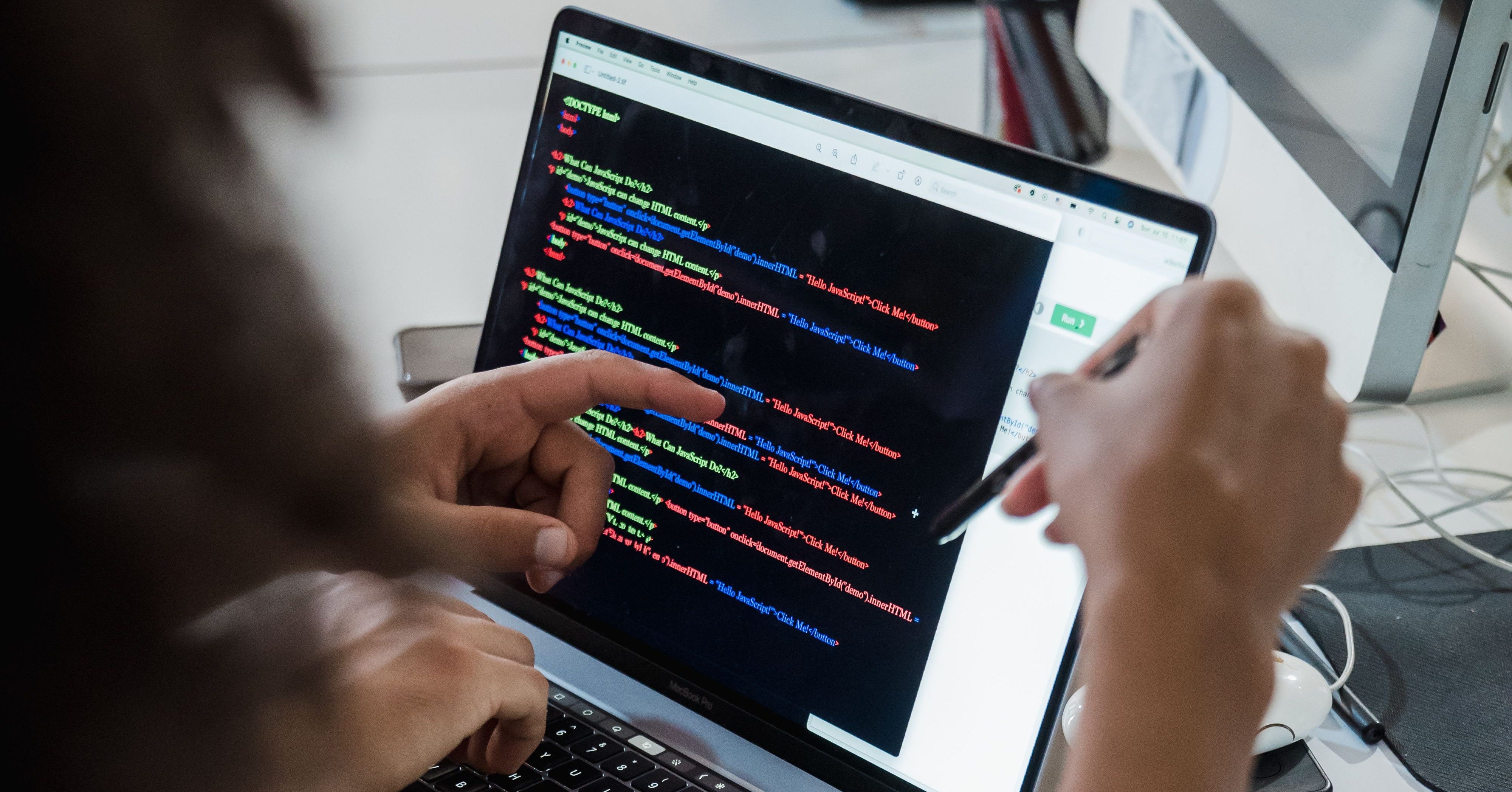
India’s biggest IT services firms are rethinking the traditional employee pyramid as AI and automation change what skills they need. Since FY27 began, seven of the top 10 IT companies have announced changes, but there is no one-size-fits-all approach.
Cognizant, Tech Mahindra and Sonata Software are looking to widen the base by hiring more junior employees, while Wipro, LTM and Coforge are building up their middle-management ranks. TCS is taking a different route, focusing on skills rather than years of experience.
The shift reflects a broader change in how IT projects are delivered. IT companies increasingly want engineers who can combine technical expertise with consulting and client-facing skills. AI is also making some junior roles more productive, potentially allowing companies to get more output from freshers.
For graduates, however, the message is clear: simply getting hired may no longer be enough. They will need to become productive faster and build skills that keep pace with rapidly evolving AI tools. At the same time, experienced professionals remain crucial for handling complex work and spotting errors AI cannot.
The result could be a workforce that is either wider at the bottom or heavier in the middle, depending on the company. Either way, the old pyramid is being reshaped, and margins could come under pressure as firms pay a premium for both AI-ready freshers and experienced talent.
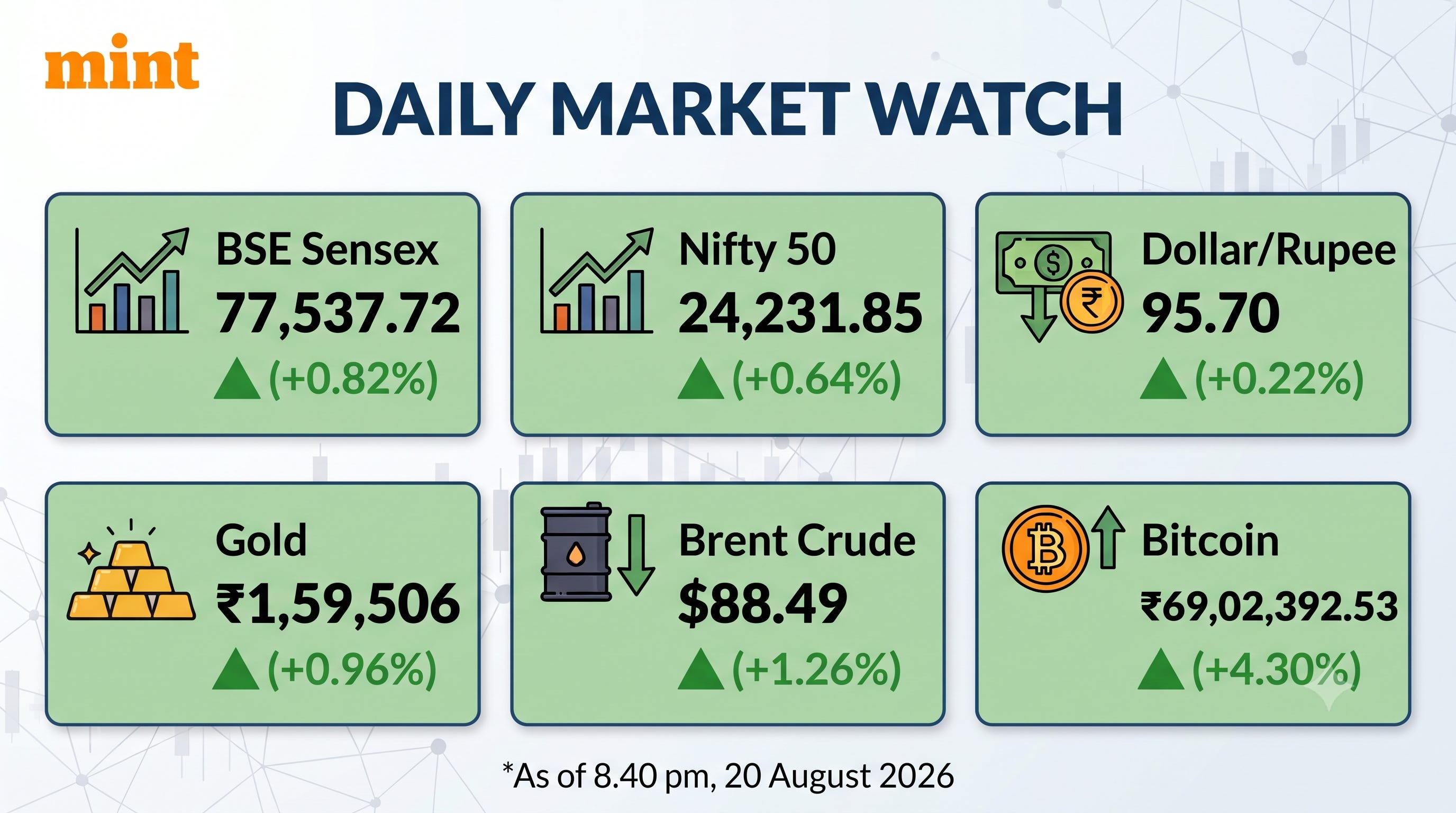
Worries about E20 petrol’s impact on mileage and engine life are pushing Indian consumers towards premium, high-octane fuels. Their share of petrol sales has jumped to 12-15% from about 4% in March, even though premium variants also contain 20% ethanol and cost ₹110-115 a litre versus roughly ₹102 for regular petrol.
Dealers say consumers believe higher-octane ratings and additives can offset E20-related concerns. Demand for ethanol-free Octane 100 is also rising, although its ₹160-170 price limits sales. Industry groups are calling for E10 or ethanol-free options, while the government maintains E20 is safe.
India may be known for frugal space missions, but launching satellites from the country remains costly. A peer-reviewed study puts India’s launch cost at $13,302/kg, more than four times the US figure and higher than those of Europe, Russia, China and Japan.
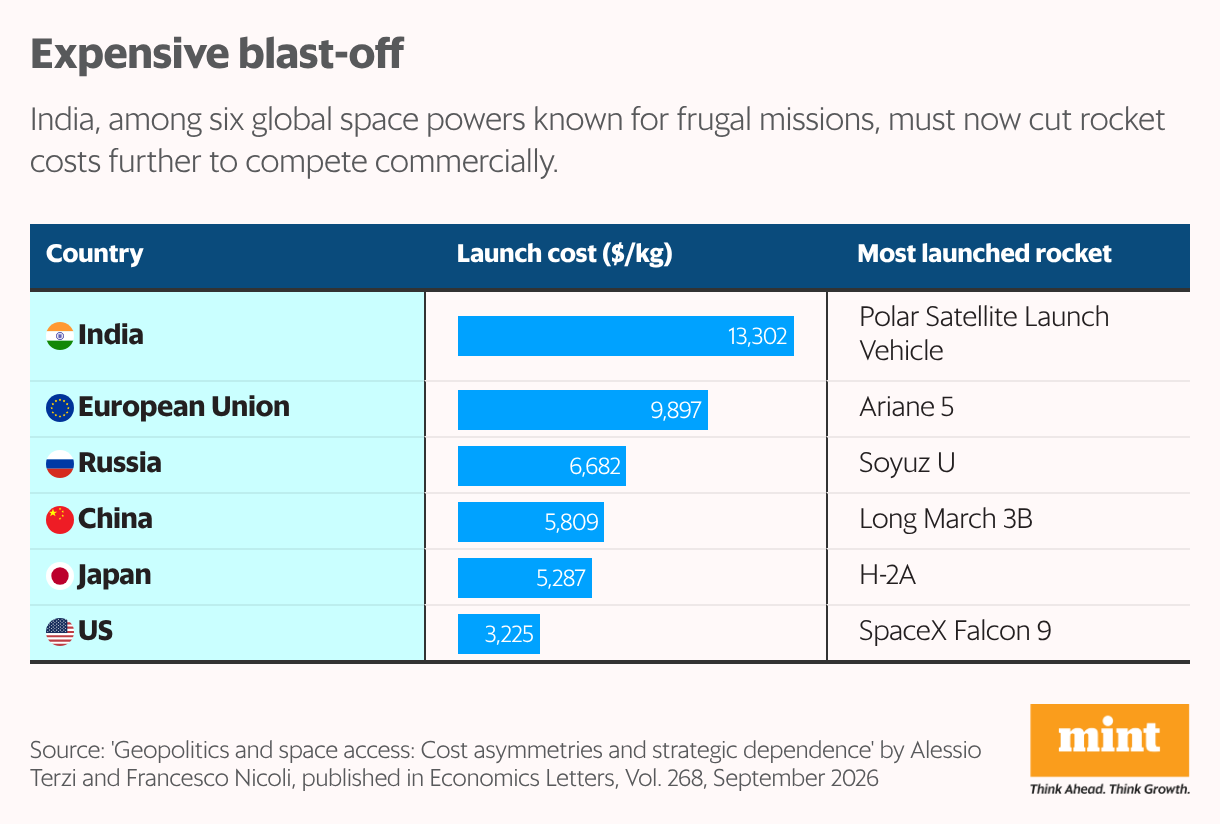
Limited launch frequency, smaller rockets and high fixed costs are key reasons. Even Skyroot Aerospace’s Vikram-1 could cost about $11,000 per kg at full capacity. That could hinder India’s ambition to capture up to 8% of the global space market. For private players, scaling launches and cutting costs will be crucial to compete globally.
MINT LONG STORY

A convocation controversy at Nalsar has sparked a backlash that has widened into a debate over the Bar Council of India’s powers, accountability and functioning. Read more.
Indian banks are racing to raise funds before the RBI’s early closure of its FCNR(B) deposit scheme, but deploying those dollars could prove difficult.
Lenders including ICICI Bank, Kotak Mahindra Bank and IDFC First Bank have tapped offshore markets, compressing weeks of planned fundraising into days. The resulting rupee liquidity could flow into government securities, pushing bond yields higher.
Some banks may also face “negative carry” if their funding costs exceed returns on investments. Foreign banks can disrupt short-term deposit pricing, while mismatched hedges and compressed timelines may leave some public-sector lenders abandoning planned overseas fundraising altogether.
Swiggy’s shares rose 3% in two sessions after shareholders approved a move to make the company Indian-owned and controlled. The change allows Instamart to own inventory, potentially improving margins by capturing the full product margin rather than earning seller commissions. Foreign ownership has been capped at 49.5%, while foreign investors have given up board nomination rights.
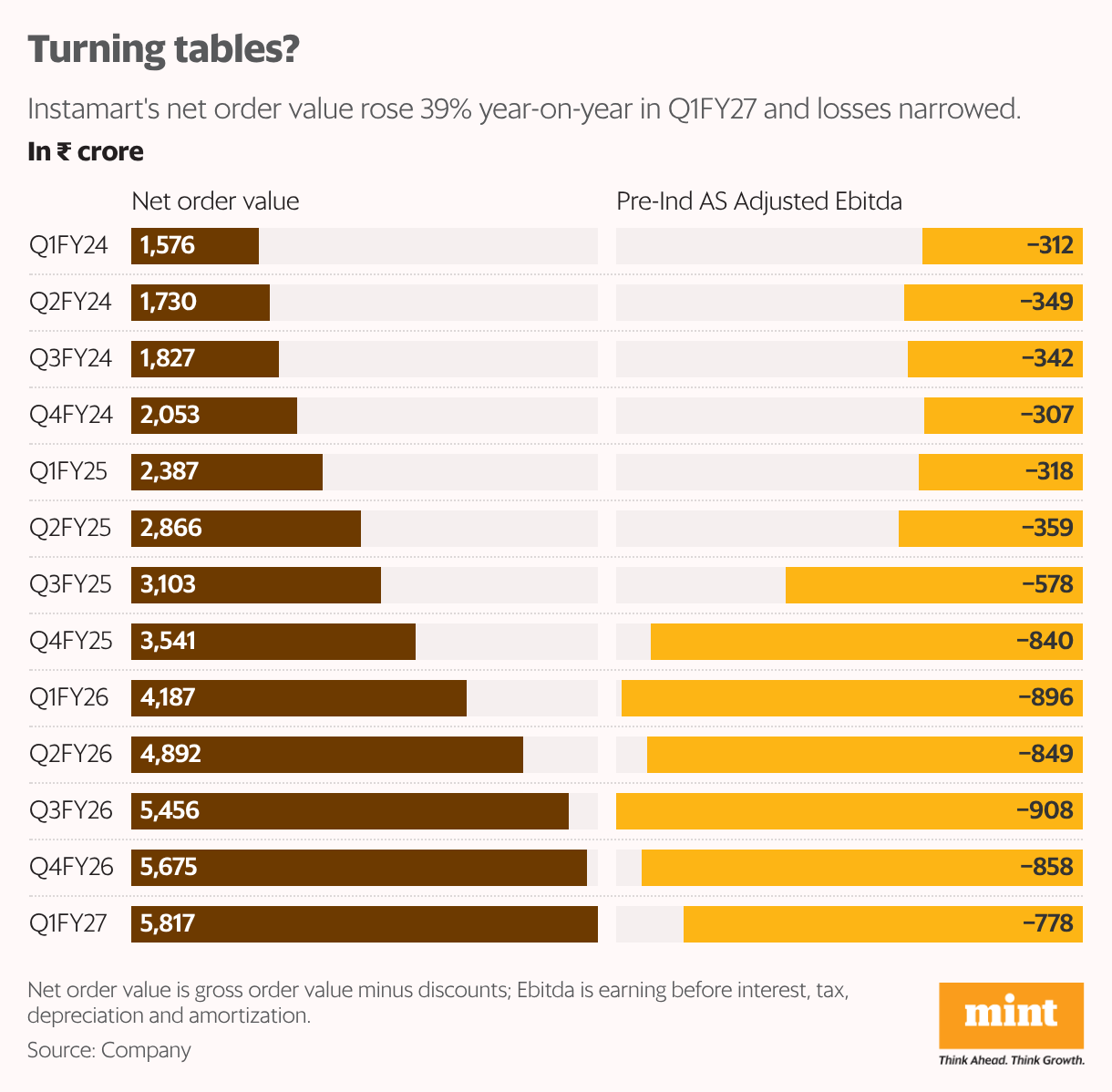
The move could trigger short-term outflows from foreign index funds, but analysts see longer-term benefits if Instamart’s finances improve. Its losses narrowed 13% year-on-year to ₹778 crore in Q1FY27, even as net order value rose 39% to ₹5,817 crore. Read more.
India Inc. delivered a stronger-than-expected June quarter, but the recovery is far from even. Nifty 50 profits grew nearly 18% year-on-year, twice the Street’s estimate, helped by commodities, credit growth, exports, a weaker rupee and stronger volumes.
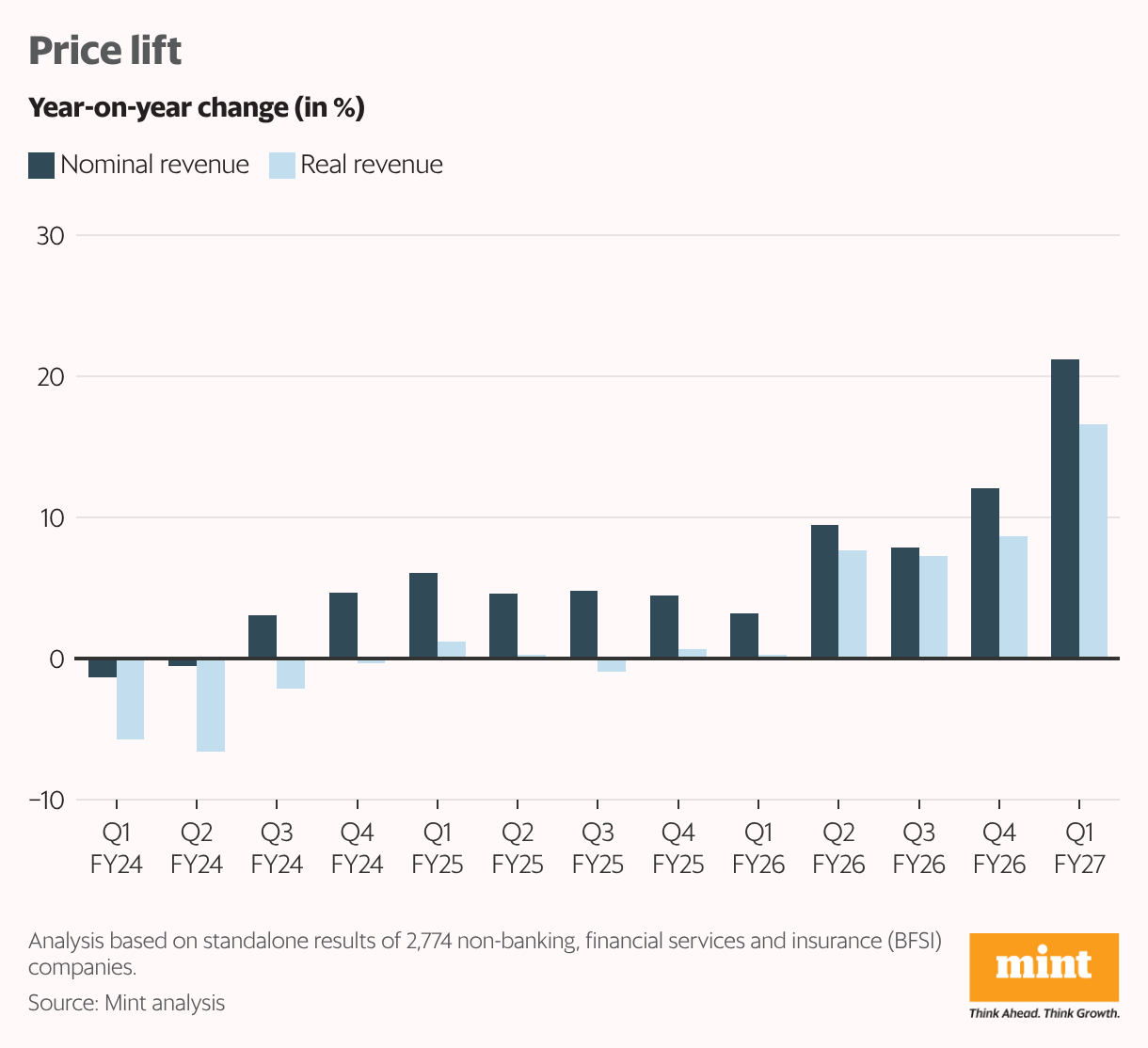
The midsized companies pulled ahead, with net profits rising 24%. Smaller firms, however, saw just 5% profit growth as higher input costs and weaker pricing power squeezed margins. The financial and IT stocks remained key profit drivers, while commodity companies added a boost. The big question now is whether these tailwinds can last, or if Q1 marked the peak of earnings acceleration. Read more.
🔢 NEWS IN NUMBERS
₹1 lakh
The fine imposed on Amazon Seller Services by the CCPA for allowing commercial sweets to be sold online labelled as “Shri Ram Mandir Ayodhya Prasad”.
$3.6 billion
The revenue reported by Estée Lauder Companies (owner of La Mer and Jo Malone London brands) in the June quarter, above analyst estimates, as its turnaround efforts gain momentum.
$5.5 billion
The estimated mark-to-market loss suffered by short sellers after Moderna Inc.’s shares soared 177% on Wednesday following positive late-stage cancer vaccine trial results.
410 km
The length that will be added to the Indian Railways network after the CCEA approved four track-quadrupling projects on the Howrah-Chennai route, covering eight districts across four states.
64.2 million
The total number of smartphone units shipped in the first half of 2026 in India, the lowest in five years, according to IDC data.
$600,000
The annual amount Prince Harry and Meghan Markle spend on mortgage payments and property taxes for their Montecito estate in the US.
₹70,000 crore
The estimated total assets of India’s family office ecosystem in 2024, projected to expand 1.5 times over three years, per Julius Baer-EY.
howindialives.com
Bessent leans into his role as America’s bond trader in chief
Trump’s plan to squeeze Iran’s economy will live or die in Dubai
Television isn’t merely about telling a story well. It’s about maintaining a relationship with an audience. And relationships, even very good ones, can go cold. Read more.

On this day in 1911, Leonardo da Vinci’s Mona Lisa vanished from the Louvre in Paris, setting off one of history’s most famous art heists. The thief was Vincenzo Peruggia, an Italian employee of the museum who believed the painting belonged in Italy. He hid it under his clothes and walked out of the Louvre.
The theft sparked a global frenzy, with newspapers publishing theories about the painting’s whereabouts. Peruggia was eventually caught in 1913 while trying to sell the masterpiece, which was returned to the Louvre.
Comments
Nothing yet. Say the first thing.
Sign in to join the conversation.