
In this age of hybrid work and unbroken connectivity, we can live anywhere, work elsewhere, direct events in a third place, and take a course that’s at the other end of the world. Where we are located no longer matters because technology has freed us from the confines of one place and allowed us to move to a peaceful hill or hide in a clean cave and still live urbanised lives. Yet, that’s not entirely true, is it?
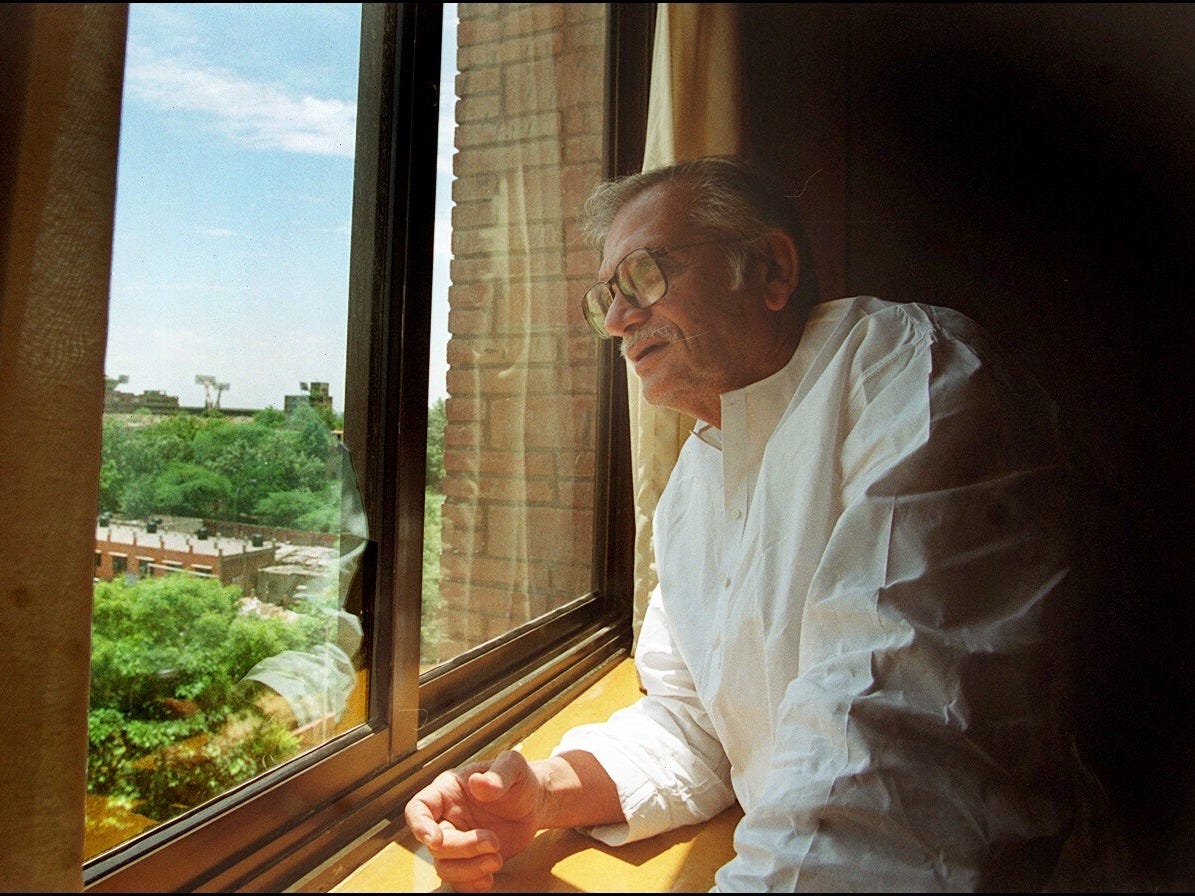
Data shows that talent, innovation, creativity, ideation, money and opportunity are still largely concentrated in urban areas, which therefore makes cities places of hope and despair. The cities we choose to live in shape us irrevocably, erasing boundaries we set for ourselves. For Gulzar, now 92, that place is Mumbai, where he arrived as a teenager, pottered about in as a young man, and built a life as one of India’s most respected poets and writers, as he tells Lounge.
Cities can be miserable places but they can also be spaces of incredible freedom, as Gulzar’s description of his time with the Progressive Writers’ Association shows—the young, near-broke writers would ride a tram on all-day tickets just so that they could talk, argue and discuss their many, many ideas undisturbed.

For Gulzar, Mumbai is a partner but his romance with the city doesn’t blind him to its pure love for commerce. It’s an interview that reminds us, as economist and urban expert Edward Glaeser wrote, to “free ourselves from our tendency to see cities as their buildings, and remember that the real city is made of flesh, not concrete”.
After you’ve read that, spend some time on Somak Ghoshal’s report from the 127-year-old Kodaikanal Solar Observatory the oldest continuously working one in the world that’s still contributing to research on the universe’s greatest mystery, the sun. If you’re looking for recommendations for your weekend watchlist, the US Open begins this weekend, and we suggest watching the new Amazon Prime documentary on Novak Djokovic, whose inat or dogged persistence will see him chasing his long-coveted 25th major.
Geetu Mohandas’ film Toxic, starring Yash, Nayanthara and Kiara Advani, is lurid and brash but offers little actual subversion. Not since Animal has a film tried this hard to get a rise out of the audience. But Sandeep Reddy Vanga at least knows his entire purpose is juvenile baiting.

Try as she might, Mohandas doesn’t have that innate nastiness, writes Uday Bhatia in his review. Toxic has a 14-year-old’s idea of transgression, ridiculous but not shocking—a distinction the film itself makes when Nadia (Advani) tells Raya (Yash) he’s not a bad guy, just toxic. It’s a macho Indian action film populated by female characters, but none of the women (with the possible exception of Huma Qureshi’s Elizabeth) are prime movers. Read more.
Cloud gaming is a small but important market in the larger world of gaming, populated by the likes of Microsoft’s Xbox Cloud Gaming, Nvidia’s GeForce NOW, JioGames Cloud. The latest entry is ONMO+ Smart Console that comes bundled with a cloud-gaming platform and is an inexpensive way to start gaming without getting tied to a particular ecosystem.
Inside the box is just a gaming controller. It can be used via a web browser or an app, and can play on a plethora of devices. From an Asus AiO to the Oppo Find X9 Ultra and from a HP OmniPad 12 to Lumio Vision 9, Sahil Bhalla finds that he was able to game no matter where he was, freeing up gamers from just one device or ecosystem. Read more.

A weak gut has entered wellness conversations as the root cause for a number of health issues. Bloating? Heal the gut. Acne? Low energy? inflammation? Heal the gut. Inevitably, packaged solutions have boomed: kombucha in sleek glass, kefir in pretty pours, sauerkraut in neat jars, probiotic powders and “microbiome-friendly” snacks that make good digestion feel like something one can outsource.
But a modern wellness label does not automatically make something better than what has existed in Indian kitchens for generations, writes Anushka Patodia. Kanji, chaas, dahi, batters, pickles and overnight soaked rice and lentils have always been part of the Indian diet as gut-health traditions long before the term entered popular wellness language. Read more.

Avant-garde artist Yayoi Kusama died at the age of 97 earlier this week. Best recognised for her polka-dotted pumpkins, the Japanese artist’s paintings, sculptures and installations were inspired by vivid hallucinations and represented her long battle with mental illness as well as a desire to become one with the environment. Many artists, including Andy Warhol, are said to have copied her ideas.
In this piece from the Lounge archives, Shunali Khullar Shroff walks through Kusama’s Infinity Mirrored Rooms, a show at London’s Tate Modern that ran for two years till 2023, and describes the elements of eccentric abstraction, surrealism, minimalism and pop art. Read more.
Shalini Umachandran is Editor, Mint Lounge.
No posts
Comments
Nothing yet. Say the first thing.
Sign in to join the conversation.