

Hello everybody,
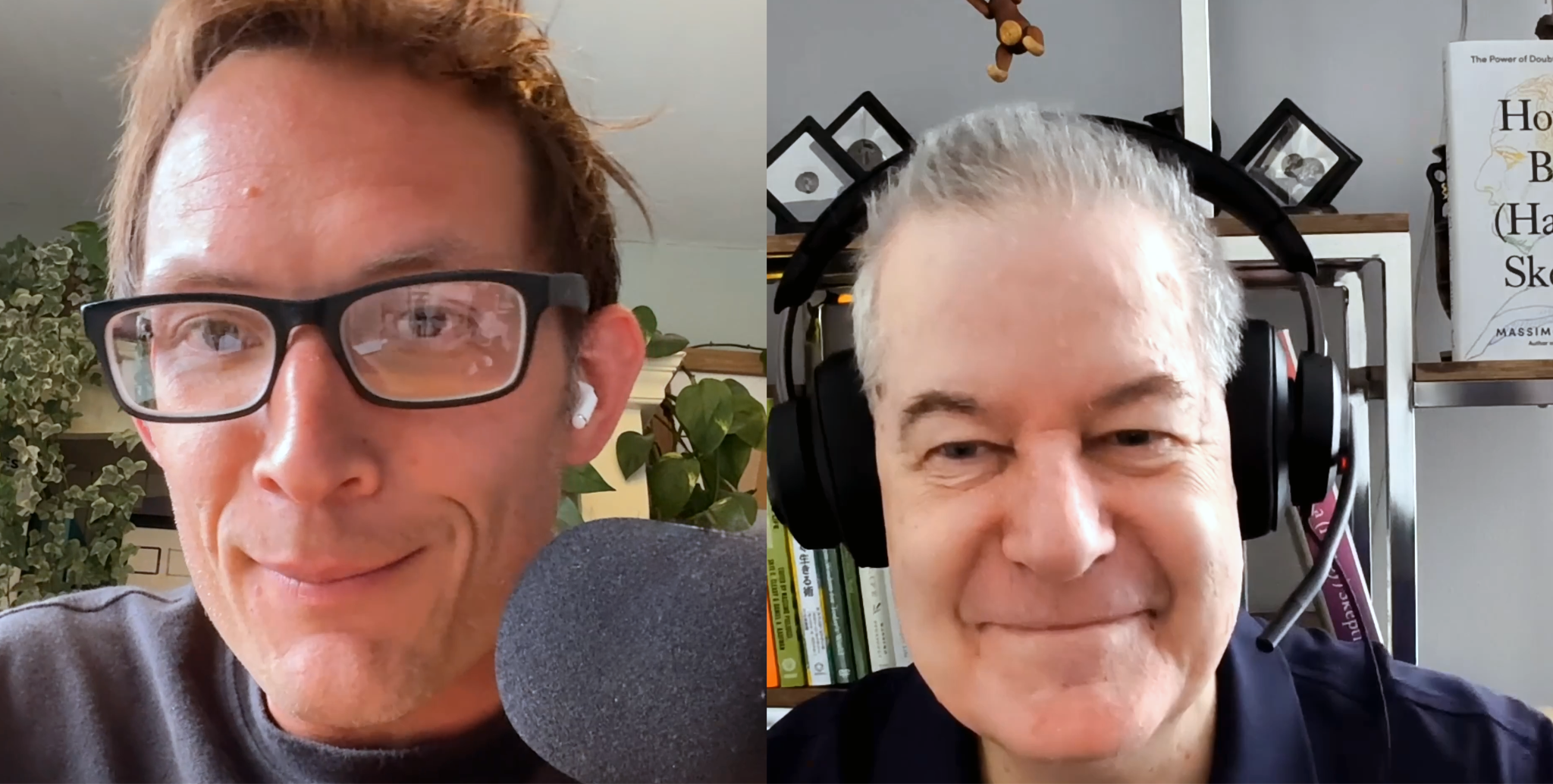
This week we’re looking at trusting other people with Massimo Pigliucci.
A video version of this newsletter is found at the end.
Generally, I don’t enjoy that moment of breathless tension as the coin spins in the air. I get far too anxious about it. But I can vaguely understand why others do like gambling. I can understand the adrenaline rush of potential self-destruction and the joy of spending imaginary winnings.
“Well, I’ll definitely want to buy a second home, but the question is: Do we go for an alpine cabin or a villa by the sea?”
The 17th-century samurai-turned-monk Suzuki Shōsan wrote about the value of “death energy.” When you choose to sit down with the Reaper and roll the dice of death, you are filled with a vital spark. When you face down your own destruction and — ideally — come back to life, you suddenly find yourself walking with a strut and a leather jacket. The gambler’s frisson of “I might lose everything” is a kind of death energy.
But I’m not one for all that. I like to fantasize about lottery winnings as much as the next guy, but I’m a risk-averse sort. Some boats are built for the buffeting storms of an ocean in a rage. Some boats are built for the safe and peaceful shallows of a lapping shoreline. Gambling makes me anxious. I don’t like being anxious.
And yet, I’m a compulsive gambler. We all are. In every minute of every day, we are gambling.
The world is unpredictable, and the people in it are even worse. The art of living is about getting used to uncertainty and ignorance. Are we alone in the universe? Maybe. Are the laws of science an accurate reflection of reality? Maybe. Is there even such a thing as “reality”? Maybe. Am I actually typing this newsletter right now from a desk in north Oxfordshire? Maybe.
From the small to the big, from the trivial to the momentous, all our beliefs are probabilities. And how much probability we need depends on who we are. We’re all epistemological gamblers, and this week we look at the philosophy of how to gamble better.
Go well,
Jonny
According to George W. Bush, there is an old saying in Texas, maybe in Tennessee too, that goes like this: “Fool me once, shame on you. Fool me… you can’t get fooled again.”
A human is born as a statistical inference machine — almost all animals are. This face is nice to me; I’ll try to be near them, a baby intuits. This food is yummy; I’ll eat more of that, the child thinks. And, as the good people of Texas-maybe-Tennessee know, this is never truer than when it comes to other people.
When it comes to other people, we are constantly revising how much we should trust them. How many good or correct things does someone have to do or say before they become “trustworthy”? How many bumbling fumblings are we willing to tolerate before we stop calling them for help?
A few weeks ago, I spoke with Massimo Pigliucci about his new book How to Be a (Happy) Skeptic (paid members can see the full interview here). Massimo introduced me to something we’ll call the “Carneades Confidence Ladder.” Carneades was an ancient Greek Skeptic, and he argued that because we will never be 100% certain about anything, we have to settle for pithanon, which, over the ages and via the Romans, is probably best translated as “probability.”
The original idea was about our beliefs. So, how certain are you that you have two hands? How certain are you that Costa Rica is in Central America? How certain are you that Hannah Arendt and Martin Heidegger once dated?
For Carneades and a lot of Skeptics who came after, there are essentially four categories of pithanon:
Plausible: Something seems right but you’ve not checked much. For example, the news anchor telling you that there’s flooding in the next city over.
Convincing: You have strong reasons for believing something. It’s been raining torrentially for three days. Floods are likely.
Coherent: The belief agrees with most or all of your other beliefs. The news channel is generally reliable, rain causes floods, and that city always floods when it gets bad.
Thoroughly explored: You’ve done an extensive investigation into the matter from multiple angles. “Right, darling, I’m off to double-check Witney is flooded. Would you mind calling the Environment Agency to see what they have to say?”
There is a version of the confidence ladder that would work with other people. In other words, we can take this ancient wisdom and use it to help us identify who our most reliable friends are or which colleagues to rely on.
The first step is almost instinctive in that it comes naturally to most of our initial human interactions. And this is where we simply take people at face value. If someone seems trustworthy, then we think they are. If someone says something confidently, we believe it. If someone gives us some information, we (usually) tend to assume they’re honest. Most of the time, this works, especially when it comes to casual interactions or strangers. A festival attendant tells you where to park your car. A waiter gives you the food you ordered. Good. Fine.
But for any relationship more than a five-second flyby, we need more. We need coherence. We need the other person to be consistent in their personality and in what they say or do. And for this, we need to see them often and for longer. If Brett tells you a story about his breakup five different ways over three different meetings, that’s a cause for concern. If someone says, “I’m a gentle, loving person,” and then tries to whack a passing pigeon for a laugh, you might turn a bit suspicious. In almost all trusting relationships, we need the other person to be consistent. This doesn’t mean they are always predictable, of course. I’m fond of a great many chaotic-good people. It just means that their words and behaviors align over a period of time.
For our most important relationships, though, you need to go through some stuff. The other person needs to be tested and ideally in a variety of settings. When you were hungover, ill, or just feeling antisocial, they were still there to chat or be by your side. When they were angry, upset, or desperately sleep-deprived, they didn’t morph into some vicious gremlin in want of a pigeon to hurt. You told them a secret, and they kept it. You asked them for advice, and it was good. You said you were fine, and they knew you were not. From multiple angles, in many ways, over a great deal of time, this relationship has been tested, and it’s passed each time.
If I were thrown back to 200 B.C., I think I’d find myself among the Epicureans rather than the Skeptics, but it’s a fool who does not call on wisdom, wherever it comes from. And so, I think I will be using a version of the Carneadean Confidence Ladder when it comes to the friendships in my life.
I hope that as you were reading this newsletter, a few faces popped up in your mind’s eye — both good and bad. You could picture the unreliable, inconsistent, say-one-thing-do-another kind of person in your life. But you could also picture the steadfast, reliable, and tried-and-tested friendships you have.
Because as they say in Oxford, maybe Cambridge too, “Be true once, good on you. But true me twice… and we’ll become good friends.”
IN A QUOTE


Jonny is the creator of the Mini Philosophy social network. He’s an internationally bestselling author of three books and the resident philosopher at Big Think. He's known all over the world for making philosophy accessible, relatable, and fun.
No posts
Comments
Nothing yet. Say the first thing.
Sign in to join the conversation.