
Cairo is 1,500 miles from Tehran, and for months Egypt did not figure prominently in the Iran War. As the conflict crosses the six-month marker, though, few places and fewer people in the region can escape its impact. A video out of Tehran showing a frustrated ice cream vendor, who explodes in anger as 400 pounds of his merchandise melts due to power cuts, went viral across the region because so many can relate to his loss.
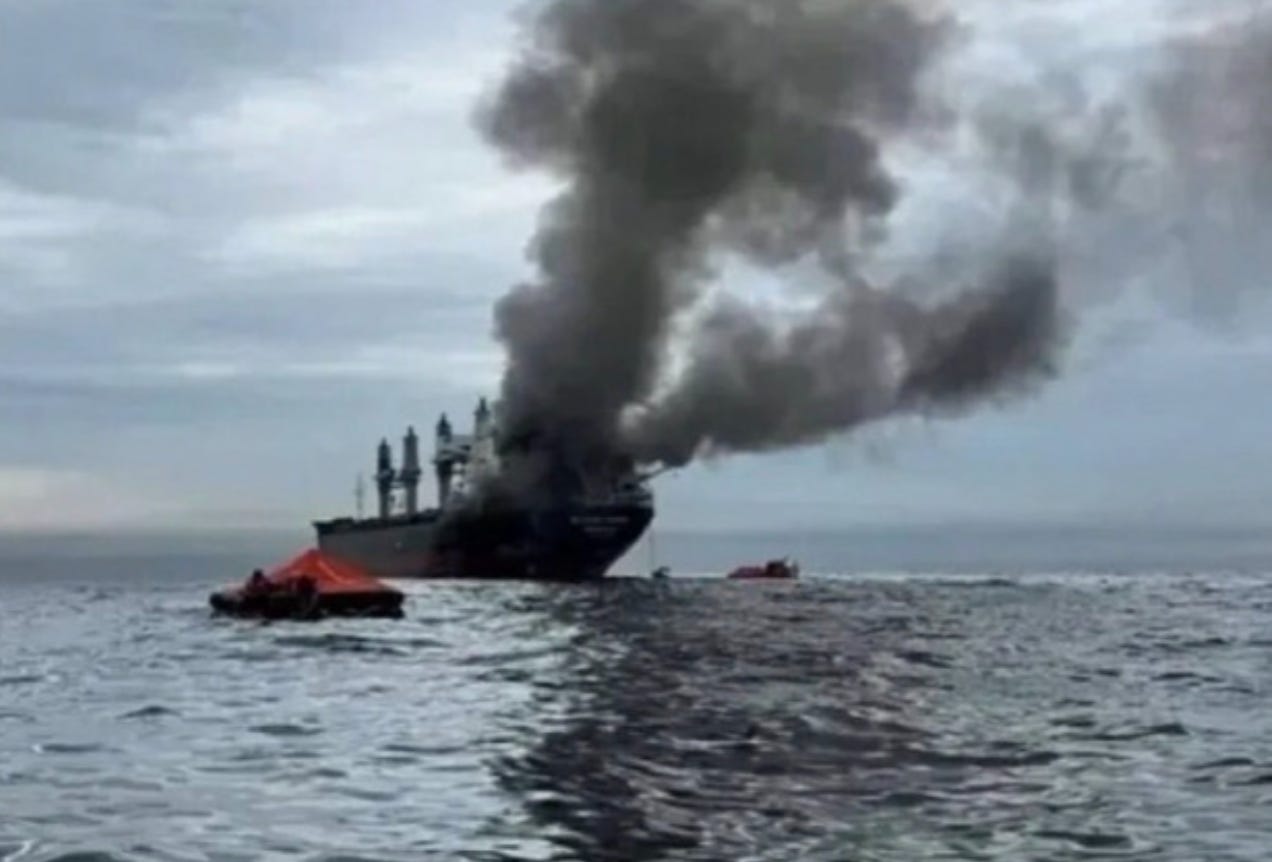
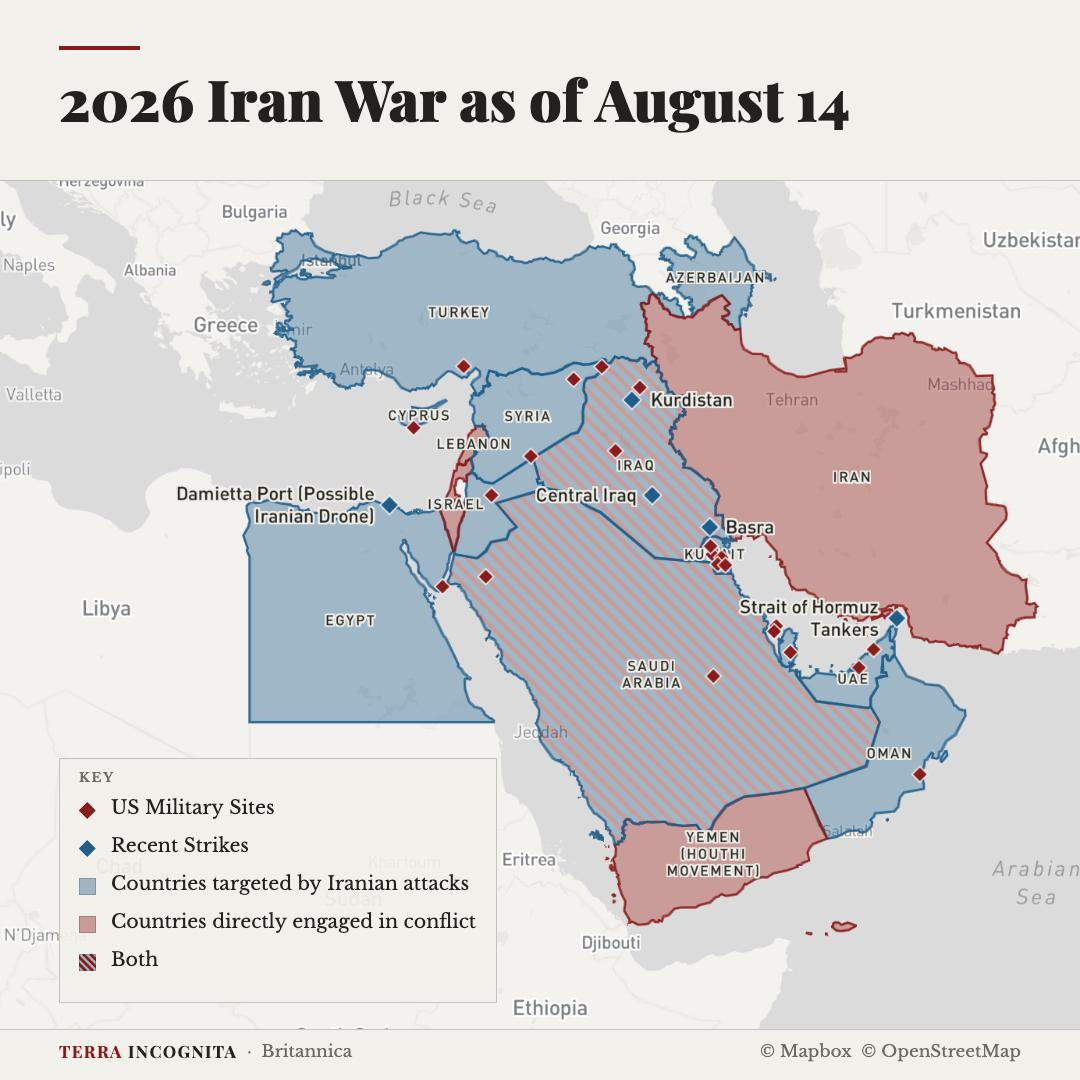
Technically, Egypt isn’t a combatant in the war. It hasn’t mobilized troops or taken military action. But a drone strike this month on an American tanker at the port of Damietta showed how quickly that may change. For many people, the question is no longer whether Egypt is a target but whether Damietta is only the first of future strikes in Egypt.
As the United States pledged on Thursday to keep the naval blockade in the Strait of Hormuz “indefinitely,” it begins to feel that for those even at the fringes in the region, they also have a target on their backs.
For those of us living through it, this war can only be described as weird, a distant conflict turned into a domestic emergency as the shipping lanes of the Strait have become the battleground. Shortages and outages showed up the first night of war.
Cairo at the height of Ramadan is supposed to be at its loudest by 10 p.m. Muslims do not eat or drink from sunrise to sunset during Ramadan, so they often get together and feast into early morning hours. We knew the war had begun when the digital billboards at 10 p.m. went dark and the restaurants were told to close in February.
The ordinarily bright, crowded street between my friend’s apartment and my room a kilometer away fell empty and silent. Lights were cut in all public areas. Power rationing became a way of life within days of the war breaking out, right in the middle of the holiday, when most of Egypt comes alive at night under lights. The Egypt I had grown accustomed to while studying in Cairo changed almost immediately.
Power generation depends heavily on gas. Across the Middle East, gas is responsible for 71 percent of electricity output. As fighting intensified over Hormuz, supply tightened, and governments began rationing. Countries with no stake in the war lost their electricity anyway.
These shortages were not new. Millions across the Middle East grew accustomed to rationing fuel and electricity during past regional conflicts. But the weirdness of this war, with on-again, off-again air strikes, the blockade, and the economic instability, has made the outages longer and more frequent. While suppliers like the United States and Canada stepped up their output to offset global energy losses, we in the Middle East are the last to experience a resupply. The strike on a tanker at Damietta, sitting in the Mediterranean and not the Strait, was a potent signal that war in strange ways is at our doorstep.
With summer months it became notably more dangerous everywhere, as daily temperatures spike to 110 degrees Fahrenheit and above.
“People are without power again, and it’s hot right now,” a friend in Iraqi Kurdistan told me a few weeks ago. “We’re also tired of the unknown.”
Alongside Egypt and Iraq, Kuwait and Libya have significant power grid issues. A contact in Tripoli has repeatedly told me they are losing power in the late evenings and at night as the country struggles to meet demand.
The outages have profound impact on daily life. They mean downed servers, so businesses can’t operate. Transactions fail. University exams are cancelled. “You lose the will to study because you never know if the exam will actually happen,” said one student.
The cost is not just showing in infrastructure. In a war that has no single front, Iraq is feeling the heat. Rebel groups, U.S.-backed in the north, Iran-backed in the south, have been fighting one another in proxy skirmishes. In late July, the United States and Saudi Arabia carried out joint strikes across the country, killing at least 20 Iranian-backed fighters, according to U.S. Central Command.
At the same time, the war is putting Iraq in a severe cash crunch. Because oil accounts for most of its economy, and Iraq cannot export enough oil through the Strait of Hormuz, the government is running out of money to pay workers in its sprawling public sector.
“War has made Iraqis pay the price yet again,” said one Iraqi, “where Iraq has become less of an independent actor and more of a battlefield where regional and international powers pursue their own interests on our soil.”
The constant outsider activity in the country has destabilized not just its systems, but also people’s minds and trust in each other, she said.
Yemen is another country that desperately needs recovery from a recent history of war but instead facing more instability. Last week Iran-backed Houthis targeted several camps run by the Emergency Forces of Yemen’s internationally recognized government, killing at least 30 people.
Israelis do not currently face power rationing, though they have endured regular retaliatory missile strikes from Iran. In Palestinian areas like the West Bank, my friends tell me they have no gas for cooking stoves, limited water access, and almost no electricity. The human toll of this latest war for them, especially in Gaza, is staggering.
When the war began, my family and friends back home in America called asking if I was safe, if I needed to come home. I did not, but I worried instead about the countries, homes, and families of my newfound friends in Cairo, fellow students from around the region. And I realized something: All of us, at the end of the day, are connected to events by the family, friends, and places we know are affected. When something bad happens, it’s the connection that brings us together. My first thoughts are about the families of those I know here. If I worry about the price of gas, it’s because it affects people and places I care about. It’s the human, personal cost that counts most.
Elsewhere in the region:
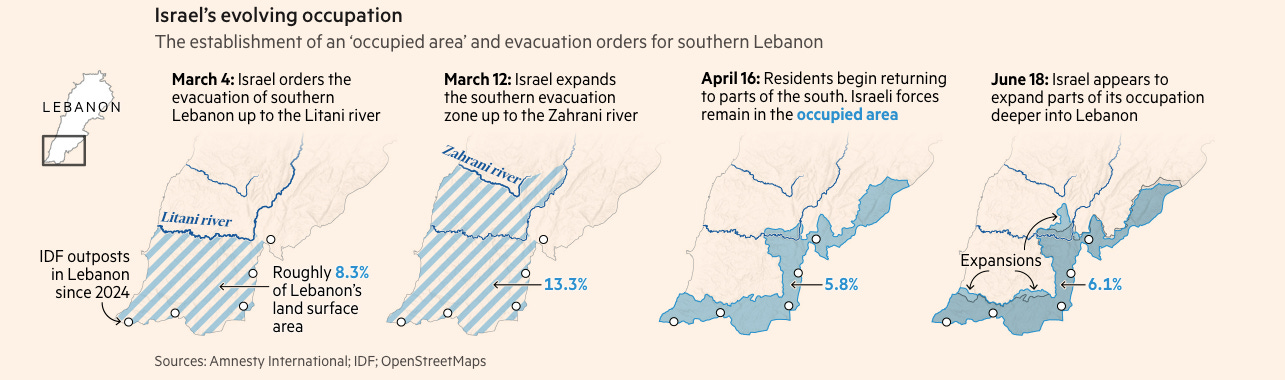
The offensive launched by Israel against Iran-linked Hezbollah in southern Lebanon, only days after the Iran War began, has continued to level whole villages and towns, much of it happening after an initial Israel-Lebanon ceasefire on April 17. The campaign, part of an evolving occupation by Israel documented by the Financial Times, now includes about 6 percent of Lebanese territory, a zone containing mostly Shia and some Christian towns. It’s resulted in at least 4,000 Lebanese deaths, 30 Israel soldiers killed, and 1.2 million people displaced.
Israeli defense minister Israel Katz this week said “under no circumstances” will Israel withdraw troops from Lebanon, Syria, or Gaza. The Likud government of Prime Minister Benjamin Netanyahu says it must have buffer zones inside bordering countries to prevent retaliatory strikes from Iran or Iran-backed militants.
For those in Lebanon who cannot go home, it’s another way people across the Middle East are made to confront remote warfare.
“We have become prisoners of satellites, prisoners of maps, waiting,” said Fadia Bazzi, who owns a home she cannot return to in southern Lebanon’s Bint Jbeil, a town near the city of Tyre.
Said Johns Hopkins’ Vali Nasr, an Iranian-American political scientist: The account of “deliberate destruction of civil life in southern Lebanon is harrowing. In inflicting these humanitarian tragedies Israel is planting seeds of more conflicts to come.”
(video via Financial Times and Israel Defense Forces; Amit Segal/Telegram; LBCI Lebanon News showing IDF strikes and detonations on southern Lebanon)
Off the coast of Oman, two oil slicks have appeared in Iranian waters outside the Strait of Hormuz in what could spell an environmental disaster in the Persian Gulf.
The Center for Strategic and International Studies has a deep dive on why U.S. military munitions are at an all-time low. Key takeaways: The war in Iran is an important driver; the Ukraine War, not so much.
More news:
About President Donald Trump’s dramatic plane switch in Turkey last month: Sitting presidents have duped the public on their whereabouts in a series of stunts for over a century. What’s extraordinary, given security around planes and airports today—
is that “the president had to be smuggled onto a different plane after a NATO summit in a NATO country,” said Holly Dagres, an Iran expert at the Washington Institute for Near East Policy. “While the Trump administration touts the weakness of the Islamic Republic, its reach remains extensive enough to allegedly try and kill the most heavily protected leader in the world.”
In Colombia, rescuers raced on Friday to free four people from a collapsed hotel, a rare sign of hope nearly four days after one of the strongest earthquakes to hit the Andean nation in decades left hundreds dead or missing. Monday’s 7.4 magnitude quake left major damage in Cali, the country’s third-largest city at about 2 million residents, and in Pereira and Manizales, hubs of Colombia’s coffee-growing region and home to about 500,000 people.
In Russia, officials released on Tuesday American Robert Gilman, whom family feared was “near death” from physical and psychological torture. The 32-year-old Marine veteran had been detained in Russia since 2022.
Here’s how a social media campaign snowballed after Spain’s Supreme Court ruled that migrants who swim to Ceuta cannot be returned to Morocco. At least 34 people died trying, and at least 60,000 have converged on the Spanish territory in the past week.
According to the International Office for Migration, the number of migrant deaths more than doubled on the central Mediterranean route and tripled on the eastern Mediterranean route in the first four months of 2026, compared to the same period in 2025.
As Fox News puts it, Britain’s Reform UK Party leader Nigel Farage “gambled his seat on the voters of Clacton siding with him over Britain’s political establishment—and won.” While the anti-immigration figure may have beat a field of fringe candidates in a special election called after he quit the seat in July, a parliamentary investigation into potential wrongdoing he seemed to want to avoid now can proceed again.
Upper-level students in Denmark will be required to defend their written assignments orally under new government measures aimed at combating cheating with artificial intelligence. The Ministry of Education said that an oral defense will become mandatory for all written assignments completed at home.
We’re following:
The U.S. State Department last week announced $2 billion in humanitarian-aid funding for faith-based groups, with U.S.-based Christian organizations overseeing $1.4 billion. Much of the funding, to be distributed over 5 years, will be overseen by World Vision in a consortium that includes Samaritan’s Purse, Compassion International, and others. The new funding, reports Christianity Today, comes after drastic cuts to foreign aid, including healthcare programs and disaster assistance, but is part of an “evolving funding approach” that doesn’t necessarily replace programs that were cut overseas. The National Association of Evangelicals said in a statement it “applauds” the “lifesaving support through faith-based partners,” while critics question limiting the consortium to Christian organizations.
Persecution around the world is growing, according to the Pew Research Center and others, yet the priorities of the United States and Europe are shifting, resulting in reduced political and financial support for defending religious freedom. That’s the conclusion of a new report from Dallas Baptist University produced by a team of former State Department researchers and human rights lawyers. It recommends a “bigger tent” approach to religious freedom by reversing the divisions that have grown among competing rights groups. The Bush Center, too, has a good summation.
—with reporting contributed by Mindy Belz
No posts
Comments
Nothing yet. Say the first thing.
Sign in to join the conversation.