
Northeastern Syria was a tense place in 2019, nearly 8 years into Syria’s civil war. Arriving in the town of Qamishli on a reporting trip, my driver and translator told me it wasn’t safe for a Westerner to stay in my planned hotel. Two Western aid workers had been kidnapped nearby. I agreed. A local democratic opposition figure I was interviewing that day, Gabriel Moushe, invited me to overnight with his family.
It was a bold gesture of hospitality, I learned. Gabi had spent three years in prison for activities against the Assad regime, and Assad’s army had a security checkpoint in the city, just at the end of Gabi’s street. As our group walked to his home in the dark, we could see the lights of the gate. Gabi’s only caution was, “Don’t speak English in the street.”
There were still a few more hours before the power went down, so Gabi’s wife Samara made tea and we all settled in. The topics of politics and war soon gave way to American movies. My translator, Malik, said he loved The Godfather. Zoah, another friend in her twenties, exclaimed, “Anything directed by Christopher Nolan.”
Soon everyone was asking my favorite Nolan movies, and debating whether Inception or Dunkirk was the best. This went on until I could ask how they could see such films (VPNs) and why Nolan’s work was so important. “He’s creating an order from the chaos,” said Zoah, “but not afraid to describe the chaos as it really is.” As heads around the room nodded, I realized each of them had been living the chaos of war since their teens, grabbing normalcy where they could.
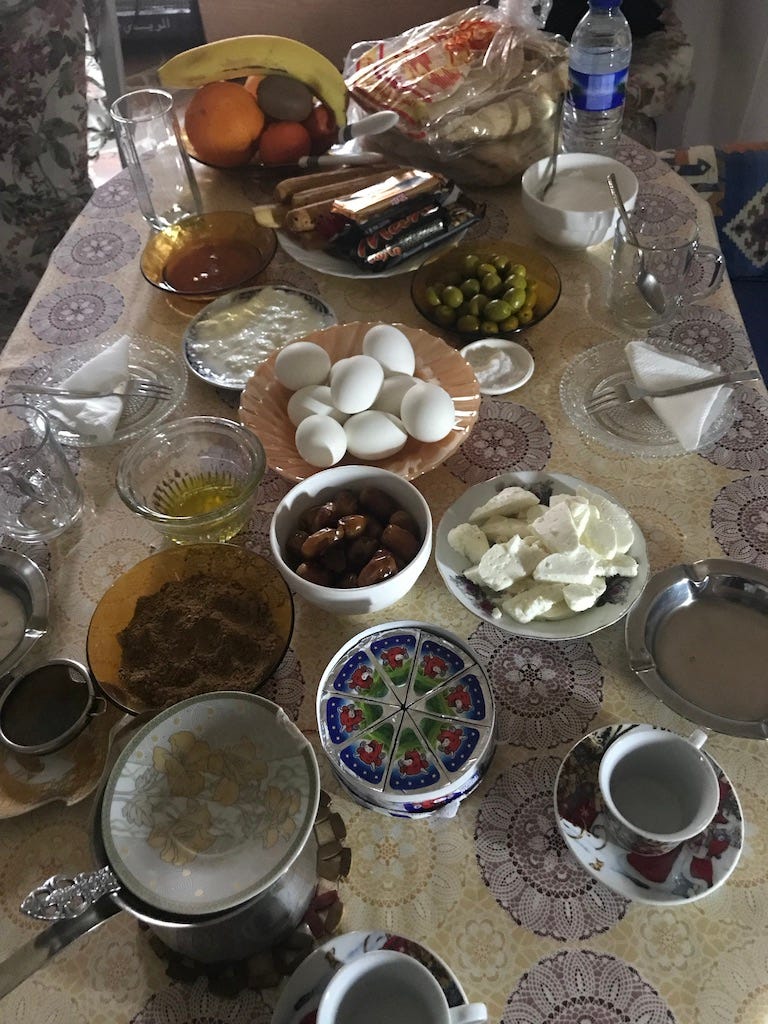
As if to make the point, Samara appeared and said, “Dinner is ready.” We ate from a spread of mezze, drank more tea, and finished with a coffee and whisky served only around Epiphany. And then the lights went out.
Christopher Nolan’s latest, The Odyssey, is again creating global buzz. Homer’s tale of Odysseus trying to find his way home in the midst of geopolitical upheaval looks poised to hit the $1 billion mark in box-office sales this weekend, just 3 weeks after its release. Most of the revenue is from international receipts, and that’s before it opened in China and Japan. This Nolan film seems to speak into the moment, capturing a stunning blur of humanity’s inhumanity, while uncovering the many ways a hero is made vulnerable. As Nolan’s Odysseus muses about himself near the end, “What if he knew that to burn the walls of Troy was to burn the world entire?”
The film has plenty of critics, including Nolan’s favored translator of Homer, Emily Wilson. But she concludes, along with others, its record-setting release “is an event to celebrate.” Wilson writes:
In what we are told is a time of declining literacy and the ‘death of the humanities’, translations of The Odyssey, including mine, are flying off the shelves. Some of those who buy the book or show up in cinemas to watch Tom Holland may go on to study ancient Greek. Perhaps the film will persuade a few college administrators not to cut their literature, language and history departments.
Indian critic Ayan Paul Chowdhury, writing in The Hindu, says it could be “the oldest film [Nolan] has ever made,” a bit of reverse engineering after decades of making films about men trying to get home.
The New York Times’ Ezra Klein gives a compelling case for the film’s appeal in a time of chaos and tricksters, saying Nolan “has smuggled the core of Judeo-Christian ethics into the film.”
The History Channel describes some of the archaeological discoveries linked to Homer’s work, where we learn one of the oldest examples of the “Odyssey” in writing is found on a potsherd from an ancient site in … modern-day Ukraine.
Postscript on Gabi: Last month Syrian President Ahmed al-Sharaa appointed Gabriel Moushe a member of the People’s Assembly, one of 70 named to the ruling body for their sacrifice and service to the country.
Saudi Arabia is bracing for attacks from all sides by pro-Iran militias in Iraq working with Iran-backed Houthis from Yemen as the Iran War widens to threaten a key U.S. ally.
Turkey, Saudi Arabia and Pakistan signed a joint defense agreement in Mecca on Friday, linking Sunni Muslim allies and a member of NATO in a pact stipulating an attack on one is an attack on all.
In Democratic Republic of the Congo, the number of women dying in childbirth has doubled since May at the epicenter of the Ebola outbreak. The average recorded number of maternal deaths in Ituri province has risen from 3.1 deaths per week to 6.2 as expectant mothers avoid hospitals, and Ebola cases near 4,000 with more than 1,700 deaths. “The danger doesn’t lie only in the epidemic itself, but in the silent collapse of access to essential health care,” said Josué Mungwete, deputy medical director at Panzi Hospital in Bukavu.
India’s ruling Bharatiya Janata Party (BJP) lost a by-election this week in a seat it had held for three decades, a sign the youth-led Cockroach movement is shaking Narendra Modi’s government. Good background here on the roots of the protest movement in a country with the world’s largest youth population.
In a marked difference from earlier generations who shunned politics and attention as a religious minority, Christian Gen Zers showed up at these demonstrations in large numbers.
A teenage gunman in Thailand has killed seven people, his grandparents along with staff and students at his school, before turning the gun on himself.
Across China and the Korean peninsula, a heat wave continues, as Typhoon Dolphin forced evacuations and closures across Okinawa in Japan before making expected landfall in northeast China.
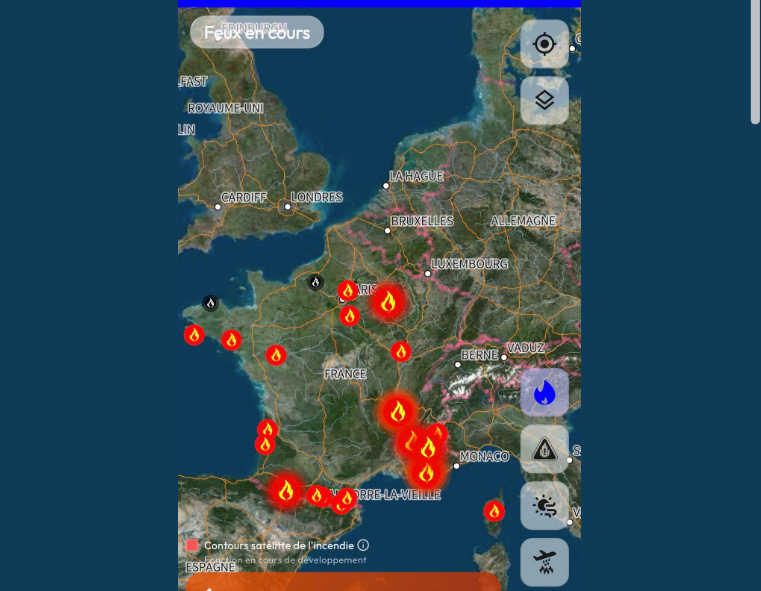
In France’s Bordeaux region, World War II-era underground ammunition depots are turning up as they explode inside ongoing wildfires. More than 99,000 acres have burned across the region in 10 days.
Inside the Arctic Circle, temperatures are topping 90°F this week, as scientists say the region is warming as much as four times faster than the rest of the world. Melting sea ice reflects less sunlight, meaning the ocean absorbs more heat, and more sea ice melts, a feedback loop. This week at Selagoncy meteorological station near the Arctic Circle border, the temperature hit 93°F.
In Myanmar, the U.S. State Department joined Asian nations in calling for the unconditional release of Myanmar's detained former leader Aung San Suu Kyi. Suu Kyi met with a representative of the International Committee of the Red Cross on Monday—the first sighting of the 81-year-old Nobel Peace Prize winner since she’s been held in solitary confinement following a 2021 military coup.
I’m reading … Ungrounding by Eyal Weizman and also American Ground by William Langewiesche ahead of this 25th anniversary of 9/11 attacks.
No posts
Comments
Nothing yet. Say the first thing.
Sign in to join the conversation.