
Hi and welcome back to another glittering episode of Mind and Iron. I’m Steven Zeitchik, veteran of The Washington Post and Los Angeles Times, senior editor of tech and politics at The Hollywood Reporter and lead air marshal on this newsy continental flight.
Every Thursday we seek to bring you the issues facing our new AI world at its most essential (but also most accessible). In fact, this edition marks the start of our fourth year. Thank you, sincerely, for being aboard our vessel.
This week: a few pressing issues.
First, you probably use at least one chatbot; you may use a second or third. But what exactly does the future hold in this regard? Will one app win out and rule them all, VHS-Betamax style? (That’s for the OG’s.) Or are we headed to a far messier world of co-existence and specialization?
Also, there’s been a lot of talk this week about the end of reading thanks to a big Atlantic piece and a whole new pivot to video on the part of text-based media companies. We’ve investigated this end-of-reading subject in the past, and will revisit it in this newsletter today, fully aware of the irony.
Finally, school just ended but already a whole debate is shaping up over AI next year, with students getting more accustomed and tools getting better — one big-city school district is practically in a fainting spell over it. We’ll fill you in and clue you out.
Quick reminder that we’re out next week for the second half of our July break-sandwich, then back for much of the summer all the way until late August. The daytripping carousel starts; the tech news doesn’t stop..
First, the future-world quote of the week:
—NYC Schools chancellor Kamar Samuels, sounding as confused as the rest of us
Let’s get to the messy business of building the future.
Chatbot roulette; reading still dying?; to AI or not to AI in 10th-grade English
1. ON WEDNESDAY I HAD THE PLEASURE OF TALKING TO the chief executive of Character.ai for a story I was working on for THR about the company’s move into the frothy, soapy world of microdramas.
A piquant topic (you can read the piece here). But I wanted to go in a different direction today, launching off something that said CEO, Karandeep Anand, noted about the future of chatbots.
Character.ai, you might be aware, has been in the AI companion business for a long time — it’s been nearly four years since their beta. And while they’ve had more than their share of bumps — major lawsuits over teen suicide and medical misrepresentations, and an update that seems to have irked their core fans to madness — they still pull in tens of millions of users to the platform every month.
The company has lately been swinging in an entertainment direction — essentially, “use our platform to build characters you can play with Roblox-style, not companions you can talk to coffeehouse or sultry style.” Which makes sense given all those obstacles.
Such pivots raise a question we don’t tend to think about much but is unfolding before our eyes: which AI interface will we most be engaging with in the near future? Right now you regularly pop open any of a number of ChatGPT, Claude, Gemini, Perplexity, Copilot (and as of this week, OpenAI’s “Sol”). Or maybe you use none of these but imagine one day you will.
Wherever you fall on this spectrum, the question remains which we’re going to be using most and which will fall by the wayside. After all, this is the way of so many of our tech relationships — AltaVista and Yahoo eventually gave way to Google; MySpace and Friendster yielded to Facebook; Reels and Spotlight cower to TikTok, and on. A rolling stone gathers no moss, but a giant tech platform gets progressively bigger until it pancakes all the others.
With AI models, though, that doesn’t seem to be happening, at least not yet. And the question is: will it?
The answer goes to the core of our relationship with technology — in what ways it will most touch our lives and in what ways we’ll be holding it at bay. Each of these chatbots work differently and have a different specialty, so which one wins out will tell us something about what we want from all these ones and zeroes we carry around.
Anand had an interesting thought on the question: none will win out. Or, none will lose out. “I think you’re going to see a lot of different swim lanes,” he told me. “We’ll use each one for a specific job.”
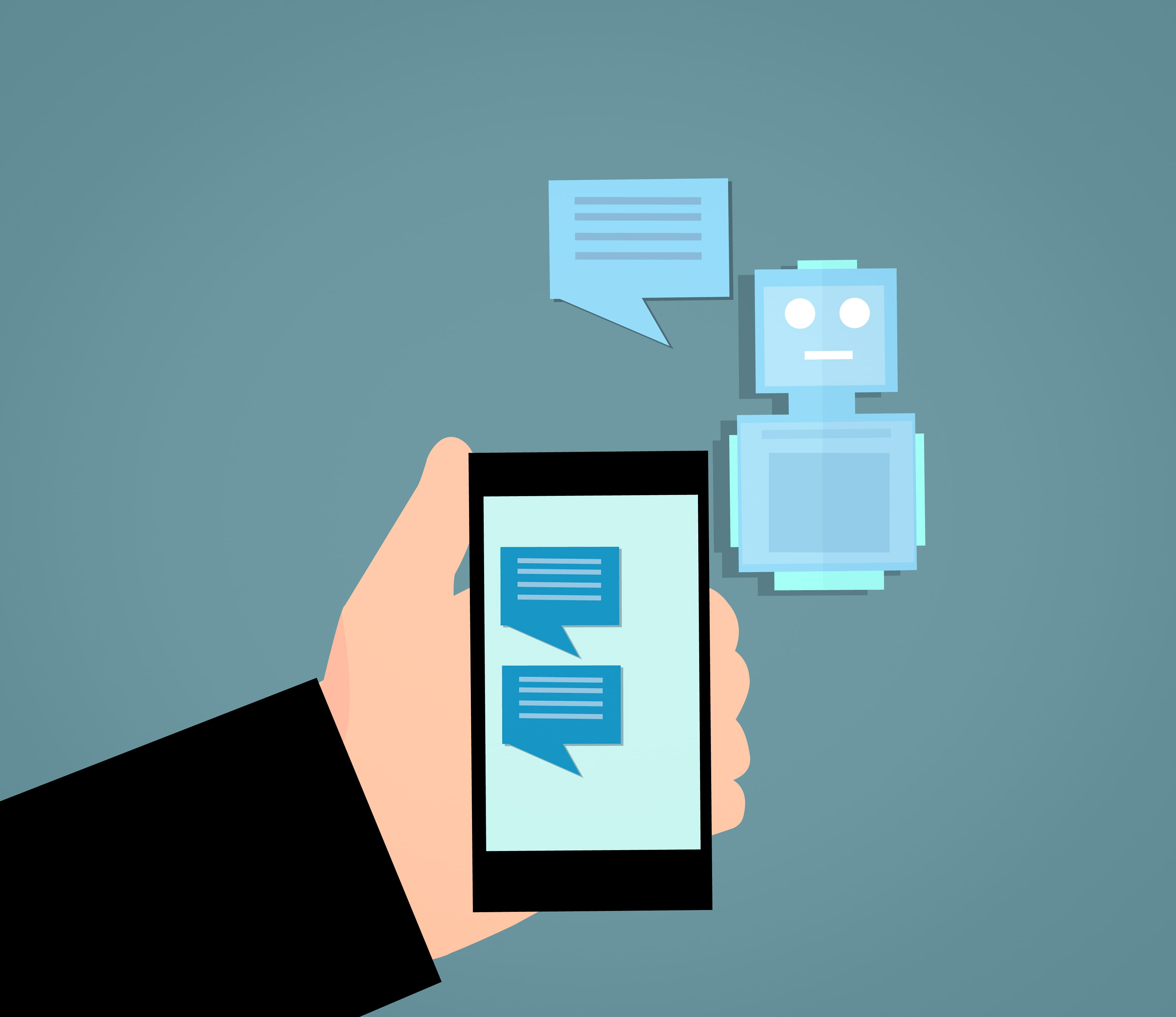
He believes each of these specialties will in a way double and harden, so that we will no more use an unrelated one to solve our problem than we would a hardware store to buy groceries. You’re going to want to fix something? You’ll go to ChatGPT. You’ll want to code? You’ll use Claude. You’ll want to look up source material? Perplexity. You’ll want a bonkers answer to make you swear off all technology forever? Grok. You’ll want to know who to vote for? You’ll —wait, who does this? (Apparently more people than you think.) That’s Anand’s argument.
I’m not as sure that will be how this stuff shakes out. For one thing, tech companies rarely stay in their lane, even if it’s in their interest to do so — the nature of profit-generation compels otherwise. So we’re going to see a lot of these companies make some inroads in what are supposedly the specialties of other companies.
Also, while I believe it’s true that any given interface could be better at certain modes of inquiry — just inevitable, really, given the differences in training data — I’m not sure we’ll really see users cherrypicking that way. I think most people want convenience — that’s what a chatbot brings in the first place — so the idea of firing up new apps for different use cases seem like a bridge too annoying. Instead convergence (that one’s also for the OG’s) will abide; we’ll gravitate to one app, individually or societally, even for areas where others outperform it.
What Anand’s answer doesn’t get at is how we’ll use these chatbots for something that goes beyond a task — so far beyond it really has nothing to do the any kind of tangible result. We’ll use it to counsel us when we’re confused, to cheer us up when we’re down, to accompany us when we’re alone. We’ll use it to feel like a person is there when they’re not, or a better being is there when we don’t like the person who is. We’ll use it, really for feelings.
This can seem like….not science-fiction, but a little out of the realm of our experience. But of course it isn’t implausible — in fact it’s already happening. The most persuasive proof of which is that, well, character.ai has 20 million monthly users, and many of those people are not using the platform to find out information. Anand knows this, of course, and has a vested interest in steering us in another direction — the emotion-reliance model is what’s gotten the company in so much legal and regulatory trouble in the first place. But the reality is people have many emotional needs that humans can’t solve, therapy is expensive and only goes so far, and a form of intelligence is right there for the programming. And as a result can do what a search engine never could.
Now, in this realm it’s even harder to tell who will win. Mainly because most of these platforms I’ve cited are not explicitly optimizing for feelings; they’re about optimizing for tasks. But these systems are all about adaptability, and so I think we will lead them — either literally with training or indirectly with their owners’ profit motive — to places where that does become the default use-case. So I’m not even sure we know the app that will be our biggest go-to, because it’s hasn’t been invented yet, or if it has then not in the form that will ultimately be most popular. Like, maybe ChatGPT or Gemini or Claude ends up being our go-to AI friend. But I doubt it.
A new YouGov study found that for most Americans seeking information “Search engines remain the preferred starting point” compared to AI bots — only 16% of consumers prefer the latter. I couldn’t help laughing when I read this. The whole study presupposes that we will use AI bots for the same thing we use search engines — for a purpose it wasn’t designed. It’s a little like asking the hardware store if it carries milk. It doesn’t. But someone’s gonna build a killer bodega that does.
2. A LITTLE OVER A YEAR AGO WE INVESTIGATED THE FUTURE OF READING — that is, what does the idea of taking in text information mean in an era when there is so much of it produced (thanks to bots) and so many faster ways to consume it (thanks to bots).
The subject is now coming up again for multiple reasons, in part because a lot more text-based media companies believe video is what will draw consumers’ attention, in part because The Atlantic just ran a story whose headline, ahem, read: “The End of Reading Is Here: Optimists once believed that universal literacy was inevitable. Now it seems that the age of reading might be a short anomaly in human history.”
With all this noise, who has time to do any reading? Also, who needs to read when machines are getting so good at summarizing long books and large documents and spitting out cut-to-the-quick bullet points?
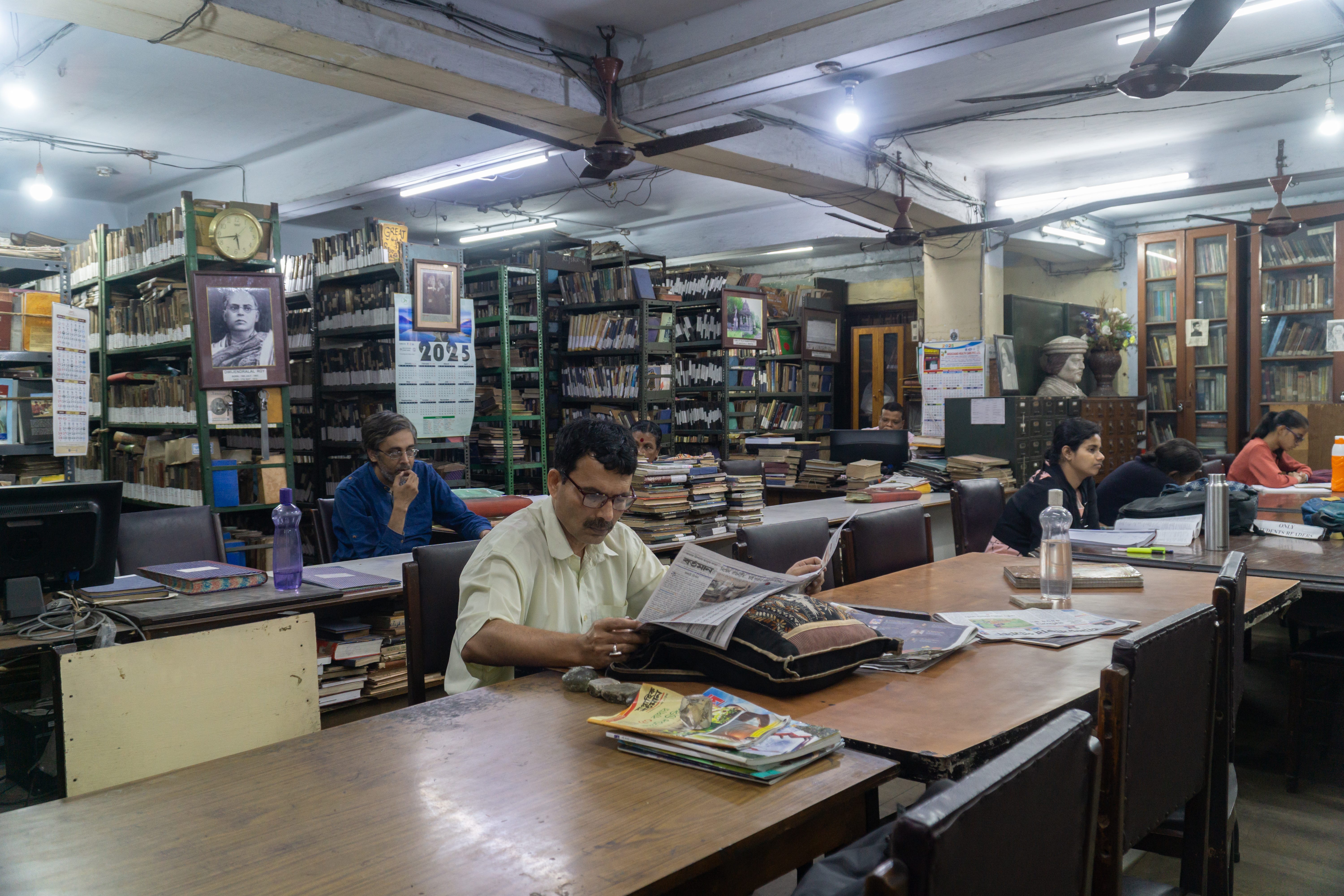
With this in mind I thought I’d revisit the piece from last year and excerpt the relevant parts. See what you think from the point of view of Summer 2026. But also remember how long reading’s end has been predicted, sacrificed on the altar of visual technology (”Fahrenheit 451,” e.g., more than 70 years ago), and how everything from longform to book clubs have risen in their wake. It may simply be that human beings like to process words and stories on a page. Anyway, our take on how this will all shake out:
What is the future of reading? I don’t mean that in a schoolmarmish scolding way, like kids today don’t read enough and what is the future of literature if Jane Eyre isn’t embraced like it was when I was your age?
I mean that in a very basic, bar-is-so-low-even-the-12th-man-on-the-Washington-Wizards-can-clear-it kind of way. As in the, the very act of reading: will it still exist when our grandkids are our age? Or, in, like, five years?
Last week I visited the Meta offices to get a glimpse at what its new Ray-Ban AI glasses could do. A lot, as it turns out. One of those things is read for us. You put on a pair of glasses, look at a block of text, and then hear an auto-generated voice in your ear telling you, in much more concise form, what’s on the page in front of you.
What the program is actually doing is combining several functions — capturing all the text with a camera, putting it through an image-to-word translator, using an LLM to synopsize those words, then using a multimodal program to read you that synopsis. But basically, it’s reading for us.
I should caution the tech is not quite there yet; the glasses only get a page’s most basic rudiments. But sitting through the demo I didn’t have to engage my imagination too hard to see a much different world than our own — one in which “reading” is little more than a quick stare at a page followed by a sweet summary in our ear.
For now, Meta is keeping the focus on something you either don’t want to read or don’t have time to read, like that museum blurb you just photographed you’ll absolutely return to once you’re home and off your feet. More critical applications also beckon — like medical information in a foreign language. If you’re in a hospital in Fes with suspected food poisoning, you don’t want a crash course in Darija. You just want to know how not to die. Meta Ray-Bans are here to help.
But these very specific inarguable use cases often bleed into more general-interest ones when the market and money arrive. I mean, the Internet was developed for the military. Reading summaries could easily go from hospital warnings to news sites, then to homework, to work email, to church bulletins and on. Pretty soon you’re putting on these glasses anytime you’ve got a book-club deadline. Colson Whitehead is great, but who has the time? Reading will be for the retired and the gullible. Why churn butter when a tub of Land o’ Lakes stares back at you from the supermarket aisle?
And we’ll absolutely see this in professional contexts, the AI reading where the person (employee) once did — the paralegal that once combed through case law, the Hollywood assistant slogging through spec scripts. It’s funny: we’ve focused so much on how ChatGPT and other programs can write for us, we’ve not much stopped to think whether it could read for us too. (Technically it’s actually a little harder, since the predictiveness element doesn’t apply. Still.)
“Your grandchildren will be the last generation to read and write. I think we’re at the dawn of a new era of AI-enabled communication,” said a tech executive named Victor Riparbelli in a recent Ted Talk, and while as the head of a video-based platform called Synthesia he’s hardly the most impartial person to make the case, he does offer a plausible argument for the ease of video and audio communication that, when combined with AI reading and writing, does inch us closer to that vestigial reality.
Now all this sounds suitably dystopian, and it is. We can deal with our brains forgetting how to puzzle out maps in the age of Waze. We can even deal with an AI scheduling our meetings or running our online errands, as it likely will soon do. But reading? Do we really want a machine doing that for us?
So allow me to go a little Yuval Harari on you for a second. I’m not sure this is reassuring. But it is...contextual.
For many centuries of course man didn’t read, first because writing wasn’t invented and then because publishing wasn’t invented. Movable type didn’t come around until the 15th century, and even in more educated societies about half of all people still didn’t know how to read at the start of the 19th century. That all changed over those 100 years, of course, and by the start of the 20th century most people in the developed world knew how to read.
Still, that means reading is hardly an innate human activity, historically or evolutionarily. The first man walked this earth around 2.8 million years ago, and for about 2.78 million of them most people didn’t scan their eyes across a bunch of characters to understand a set of meanings. Socrates actually didn’t think reading was that useful — in fact he thought it would make people lazy and erode memory; how hard did your brain have to work if you could put everything down for posterity?
That’s of course comical given what we now know about the importance of reading for memory and the human brain (and reminds how technology eventually proved beneficial is often initially feared). Yet recalling such Socratism it’s possible to see a future of human reading not as an inevitability but an uncertainty, insane as that sounds (and insane as it is to write knowing how you’ll consume this message). I mean, there are a lot of things we didn’t do for a long time, and it doesn’t mean we should go back to not doing them. But civilization was able to thrive and people could lead happy lives, so to assume that this is a skill that must be taught, practiced and cherished is to forget that history.
Now that we know, do we want to go backwards? Well, no. But humans militate toward the convenient, and if we can seemingly achieve the same effect while putting in a lot less labor we usually do it. Which makes me think the Meta glasses and their ilk will dramatically change our reading habits and abilities in the nearish future.
So where will that leave us? Evolutionary scientists simply have no recent fact pattern for the conscious abandonment of a skill like this. Reading has an incredibly beneficial effect on our brains and even our longevity, and what would it mean to let the muscle go flaccid?
Nor do social scientists know. It’s simply hard to decode a world so scrambled. Will reading in this AI-assisted age become a privilege only for the elite? Or could it be, head-spinningly, the opposite — only the POOR will be able to read because they can’t afford an AI to do it for them? This status stuff has a weird way of reversing. Corpulence used to be a sign of wealth. In the Ozempic age it’s the opposite.
There is one silver lining to an AI reading-program. Too much of our reading now, most of us feel in our souls, is done to no particular end. The average office worker receives 120 emails per day, and ten of them have the information we need. This didn’t have to be an email.
If some of our hours scanning text could be skipped thanks to an AI doing the grasping for us, does it free up our reading time for something more valuable, more pleasurable? That is, would we still spend the same amount of time in the day reading, just on the stuff we wanted to? Most of us can’t imagine ever giving up the joy of a “Harry Potter” or Stephen King or other literary property that lodges in our heart, and maybe now without all those emails to run our eyes over we’ll have more time for it.
That’s the optimistic view, anyway. And if there’s one thing reading all those self-help books have taught us, it’s to hold on to optimism.
3. FINALLY, IT’S BACK TO SCHOOL TIME.
OK not really, but you’d never guess it from the way school systems are panicking about AI for the September return.
In the New York City school system, the country’s largest, the chancellor Kamar Samuels this week told the principals of the system’s 1,800 schools not to buy any new edtech software for the moment.

“We know that we must prepare our children to thrive in a world increasingly shaped by new technology. We also recognize the need to consistently provide a safe, developmentally appropriate system with robust transparency and oversight,” went the email.
A nice assessment of competing needs. How to resolve that competition? Less clear.
Obviously “ed tech” is a broad category and runs the spectrum from lifesaving tools for struggling students to lazy cashgrabs that will ruin and addict young minds. We’ll take a look at products that populate various points on that spectrum as we get closer to the September return. But for now I just thought these two paragraphs in the Gothamist story today about Samuels’ letter said it all re where we are with AI in our schools, and generally.
>
“In a speech in May, American Federation of Teachers president Randi Weingarten called for a ban on AI in elementary schools, and no chatbots for kids under 16. She also called for a screen ban in pre-K through second grade.
That represented a shift from the powerful union. Last year, the union opened an AI training center in Lower Manhattan in partnership with Microsoft, OpenAI and Anthropic.”
What a difference a year and no raised-scores make.
Every week we bring you the TSAS — the TOTALLY SCIENTIFIC APOCALYPSE SCORE (tm). It’s a barometer of the biggest future-world news of the week, from a sink-to-our-doom -5 or -6 to a life-is-great +5 or +6 the other way. 2025 ended on an up note, but the score for the year was dismal — a horrendous -42.5. Can we turn things around in 2026? Last issue, we occupied positive territory for the fourth time in a row. This week? Not so much.

A CONFUSING MESS OF CHATBOTS: And some emotional-companions too -2.5
READING, IT STICKING AROUND? -3.5
EDTECH POLICY COULD USE A CRASH COURSE -1.5
No posts
Comments
Nothing yet. Say the first thing.
Sign in to join the conversation.