
Hi and welcome back to another sparkly edition of Mind and Iron. I’m Steven Zeitchik, veteran of The Washington Post and Los Angeles Times, senior editor of tech and politics at The Hollywood Reporter and glistening welcome center on this newsy road trip.
Welcome to all you subscribers old and new. Every Thursday we come at you with the future-world topics of great import. Join our trolley ride.
This week: data centers. Those airplane hangars of deafening servers and endless calculations, all to enable the AI boom that’s been promised/threatened us. It’s been a minute (or, eight months) since we’ve taken on these construction behemoths that literalize a movement. But a lot has changed since then. Attitudes our shifting, builders are building and communities across the country — a new one every day, it seems — are fighting. Where does this leave us? And why should we care? We’ll give you some ways to think about it. You have feelings, we’ve got insights.
Also, wondering what Kimi K3 is? And if this alphabet soup merits precious minutes from your attention-economy budget? Or maybe you’re simply asking what in the name of Moonshot AI CEO Yang Zhilin we’re talking about. We’ve got some thoughts on what’s happening with the biggest, gravest Chinese threat to American dominance since Yao Ming.
But first, the future-world quote of the week:
—Maine lawmaker Melanie Sachs, speaking for us all
Let’s get to the messy business of building the future.
Marginalizing the data center? Kimi kimi cocoa puff
1. DRIVE THROUGH RURAL PENNSYLVANIA THIS SUMMER — or, frankly, pretty much any part of the country not in the middle of a giant city — and you’ll see a play on the familiar “No Data Centers” sign, the “Ghostbusters” red line through either the words or an image.
On front lawns and backyards, people make their concerns felt. The campaign is personal — the worries over electricity and water bills, over the strain on resources and the toll on the environment. A movement organized, and becoming more so, with groups as wide-ranging as the conservative Humans First and the liberal NAACP.
A quick word of recap. So-called “hyperscale” data centers have of course become a defining topographic, energetic and climatic issue of our time. Unlike the more bespoke single-server facilities, these hyperscalers are mass operations, from the likes of Amazon, Oracle, Microsoft and Google. They generally contain at least 5,000 servers, measuring 10,000 square feet and drawing power at a scale equivalent to 50,000 homes.
By the middle of next decade these complexes are projected to suck up one-fifth all U.S. power — a greater percentage than we use for air-conditioning. Globally? By 2030 AI data centers all on their own would equate to the sixth-largest country in terms of power needs. And water usage by then will likely add up to the water needs of 1.3 billion people. A burden our water-starved Earth, needless to say, can hardly afford to add.
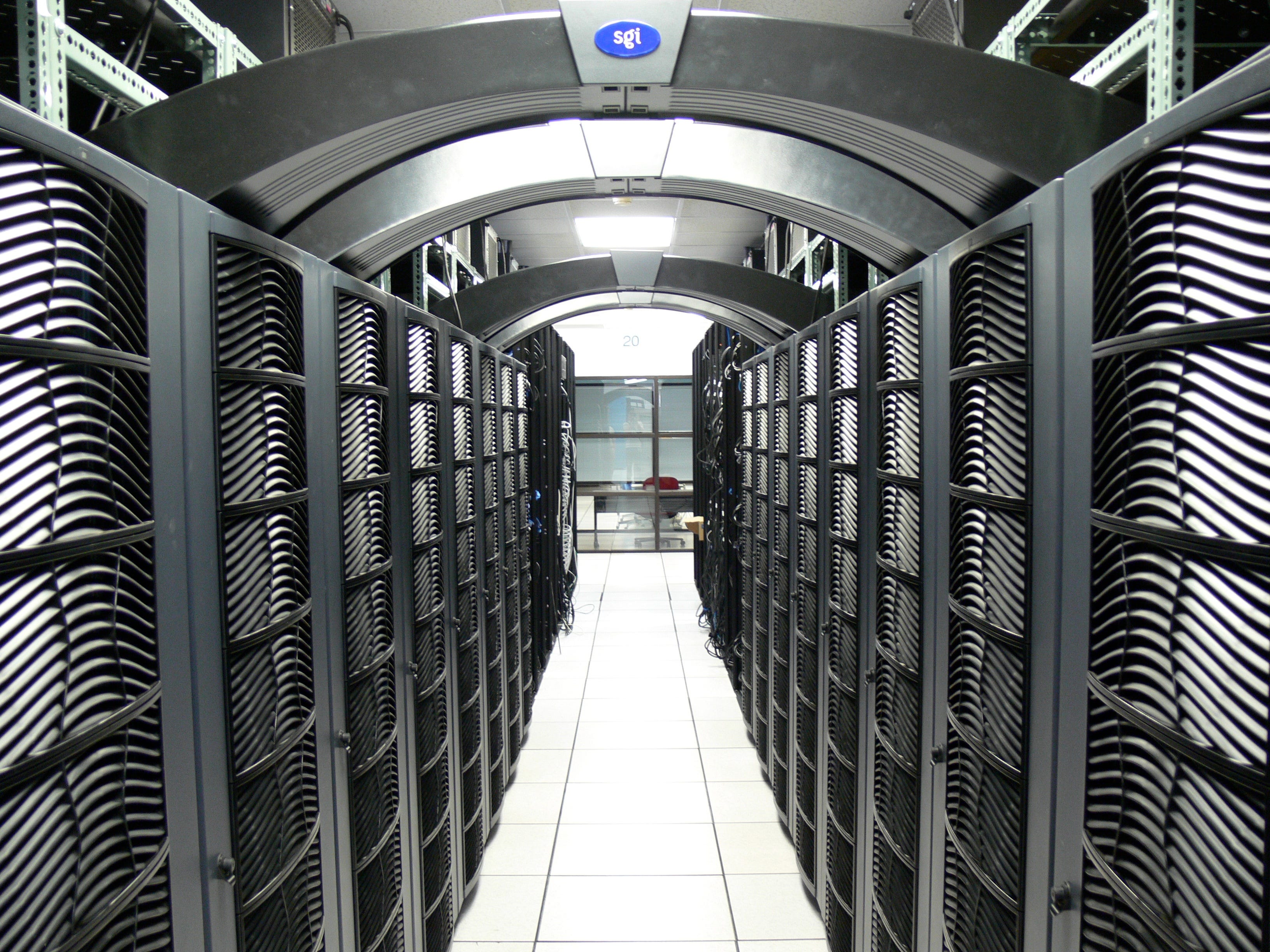
If we don’t get a handle on data centers -- or at least find some damn good justification for/solutions to why we’re completely upending our power grid in the United States to build them out — we’re going to be left with a country buzzing with the hum of a thousand servers and the din of a parched population sitting in the dark. That better be one hell of an AI meme.
So not for nothing can you throw a dart at a map and find a battle waging — and, especially in the past few months, a legislative groundswell brewing. The county in Wisconsin that just imposed an 18-month pause on new data centers. The suburban-Maryland county that a few weeks ago passed a two-year moratorium. The Fort Worth council about to vote on same.
Nashville has a data-center permit moratorium until December along with some other restrictions, after some geniuses at an Atlanta data-center firm bought land to put one next to a zoo. Henderson, Nevada, just rejected a six month moratorium but is considering other options. Michigan lawmakers are seriously warning residents to be more vigilant before selling land to data-center developers.
Not to mention the environmental blowback. The Ohio EPA just decided hey, maybe it’s not a good idea to discharge the runoff from data centers into local rivers and set up some regulations to stop that.
And the big news of the past ten days: New York governor Kathy Hochul signed an executive order hitting pause on any new hyperscale data centers for as much as a year, the first such state law.
These efforts aren’t just the indulgences of pen-happy lawmakers. They reflect what we all want. A new Politico poll found that the number of citizens who support a data center within three miles of where they live dropped from a (hardly persuasive) 37 percent in January to just 24 percent in July.
If you want to know how flimsy the efforts are to convince people they should actually want data centers, just ask the NY Times reporter who recently went to the small town of Jay, Maine, to find a few people sitting at a diner pining for a data center at the site of an abandoned mill, hoping to bring back jobs that left when the mill closed.
As the state lawmaker who fought the plans with a failed moratorium bill said: “It’s hard for me to wrap my head around vetoing a bill that would provide protections for 1.4m Mainers for the…promise of 100 jobs for one town.” Said lawmaker, Melanie Sachs, also provided our money quote above, “When you see the abuses that these data centers have done, I’m perfectly OK saying let’s pause.” (The Maine developer has for now abandoned the project.)
Of course all of this effort — and as you can see there is A LOT — is competing against something pretty formidable in its own right: the money of Big Tech companies. These guys have put together literal billion-dollar Super PACs to get the things built. Leading the Future, the Andreessen Horowitz and Greg Brockman Super PAC that has been trying to influence elections in a pro data-center way for a while now, is just one of many such groups.
And so for all this resistance some 3,000 data centers are currently being built. When one state pushes back, another steps up. Virginia is currently building 595 of the things, nearly doubling up the 663 they already have; Texas is developing 442 more, to go along with their existing 405.

And let’s be clear on the grassroots efforts. Some are massively successful but others aren’t. The Maryland county law, for instance, is in jeopardy. And even New York, held as a paragon, has been here before. It imposed a two-year moratorium on crypto data centers at the height of that madness. It lasted until 2024, then quietly expired and it was back to business as usual. Activists count on moratoriums as more palatable ways to push back since they’re temporary; tech companies, for their part, count on people losing interest a year or two later. Unfortunately, that latter reliance more often wins out.
And politicians? Data centers would seem like a pretty easy win for any local elected official given just how many voters don’t want the thing. You’d think. But plenty aren’t on board. Even Dems who you’d imagine would be swinging for the fences.
“Just having a blanket moratorium saying we’re just going to pack up, go home, hand AI over to China and let them beat us makes zero sense to me,” a New Jersey Democratic Congress member named Josh Gottheimer, who also happens to be the co-chair of the House Democratic Commission on AI, recently said. Never mind that China is becoming such a lazy boogeyman for anti-regulation types it’s tiring. It doesn’t even make sense in this context. The fear about China is them developing models faster than us. You don’t need data centers to do that. It would be like saying you’re afraid that math whiz in your class is getting better at solving problems than you so better stock up on graph paper.
But the real battle — schism, even — is among Republicans. If you thought the Middle East was splitting Democrats, just wait until the data-center battle really gets going among the GOP.
For instance, right now in Florida, Governor Ron DeSantis has staked out a very anti-data center position, trying to keep them out and pushing for a bill to stop citizens from footing the higher electric bills.
But the leading Republican looking to succeed him, the Trump-backed Byron Donalds, has been a lot friendlier to the industry and taken millions directly or indirectly from AI companies wanting to build data centers. If Donalds gets in, the state could become yet another data-center mecca. (His likely Democratic opponent David Jolly has hit him hard on this).

What we have here isn’t just a battle about real estate: it’s about what our technological future will look like. Tech companies of course need data centers to go up faster and harder than ever; without them, they can’t deliver on any promises to make AI our assistants or our meme-creators or city walking-tour guides, never mind do anything on the back-end to get companies to become more efficient and deliver on their promise to Wall Street.
So much of what we write about in this space centers on what we should and shouldn’t want , tech-wise, in everything from our education to our entertainment to our medicine to our media. All of that starts with the ability to get data centers built.
But as you see from the above instances, to succeed in doing that tech companies need a very messy patchwork of hyper-local municipalities to be OK with dropping these hangar-sized warehouses in their backyards. They’ve built more than 5,000 already, but they need more, and it’s getting harder, because the least-resistant places have already been targeted and the grassroots opposition is growing stronger. (One reason Elon Musk and Jeff Bezos have proposed building them in space. And you thought there were no bad ideas.)
Which makes all of this a fascinating case-study in civic dynamics — a pitting of the most powerful and well-capitalized global corporations against the smallest school-board-size grassroots groups. But in a realm where the grassroots groups have an advantage. Big Tech is not used to fighting at this micro-level, whereas local organizers pretty much do nothing BUT this. It’s like, maybe you can’t touch a chess grandmaster, but does he know you should go first and grab the middle square in that game of Tic-tac-toe you just suggested? So a normal narrative of national blitzkrieg becomes an unexpected story of trench warfare.
How the data-center fight plays out will be a key determinant in how much the AI boom remakes our day-to-day existence. Capital goes where the flow is smoothest, and if some rocks start popping up in the stream maybe the water diverts elsewhere.
Which means, yes, for all the Big Tech bluster, the shape of our future isn’t pre-determined. It just hinges on how good at skimming stones people from Michigan to Maine truly are.
2. WHAT DOES KIMI MEAN TO YOU? An F1 racecar driver? A Japanese processed snack? Gibbler?
If you’re in the tech world, it means a quake. Maybe.
This week a Chinese company called Moonshot AI released a new model. They called it Kimi K3, and it’s as powerful as its name is abstruse. Basically, Kimi K3 can outperform a lot of what’s already out there and even potentially become a new standard.
(Their own description, of a model with “long-horizon coding and end-to-end knowledge work,” is a delightful mix of wonkspeak and Altmanesque rock-the-world rhetoric.)
U.S. tech companies are scared — this thing can do just as much, if not more, than even the top OpenAI and Anthropic models at a fraction of the cost. That does technically put China in the AI driver’s seat in a way American industry worries about (but not necessarily everyone else, as it’s not like America winning spreads the wealth so evenly).
Don’t get too weepy for what China is doing either, though — it’s very possible they’re “distilling models,” also wonkspeak, this time for unethically training on another (likely American) company’s outputs. (They deny this.)
Of course it’s what gets done with these models that matters anyway. The Chinese models (unlike most American models) are open-source, which means ostensibly American companies can build on them too, to make them better or just deploy them in novel ways.
The last time China rattled American firms like this it was the winter of 2025 and DeepSeek suddenly showed how an upstart non-American model can be a lot more powerful and efficient than many of the Yank kinds. Now Kimi has come to take its place at the head of the table. American companies need to be careful, or they could end up eating dinner right in the kitchen.
Every week we bring you the TSAS — the TOTALLY SCIENTIFIC APOCALYPSE SCORE (tm). It’s a barometer of the biggest future-world news of the week, from a sink-to-our-doom -5 or -6 to a life-is-great +5 or +6 the other way. 2025 ended on an up note, but the score for the year was dismal — a horrendous -42.5. Can we turn things around in 2026? We’ve had a pretty good run this summer. Can it continue? Just maybe…

THE DATA CENTER PUSH IS HARD BUT THE PUSHBACK IS NO SLOUCH +2.5
KIMI KIMI: Another day, another model -1.5
No posts
Comments
Nothing yet. Say the first thing.
Sign in to join the conversation.