
Becoming a mom can be a profound yet daunting experience. When I first gave birth to my son, I equated motherhood to being out in the wilderness — lost, confused, and often trying to find one’s way back to what feels familiar. This is where the term motherness was birthed. Motherness — the wilderness of what we know as motherhood. The foreign territory that many women find themselves navigating, often in silo.
My Through the Motherness series highlights motherhood journeys far and wide. These Q&A styled conversations travel into the depths of how each mother is navigating her own Motherness season, and what she has discovered (and is still discovering) in the thick of it all.
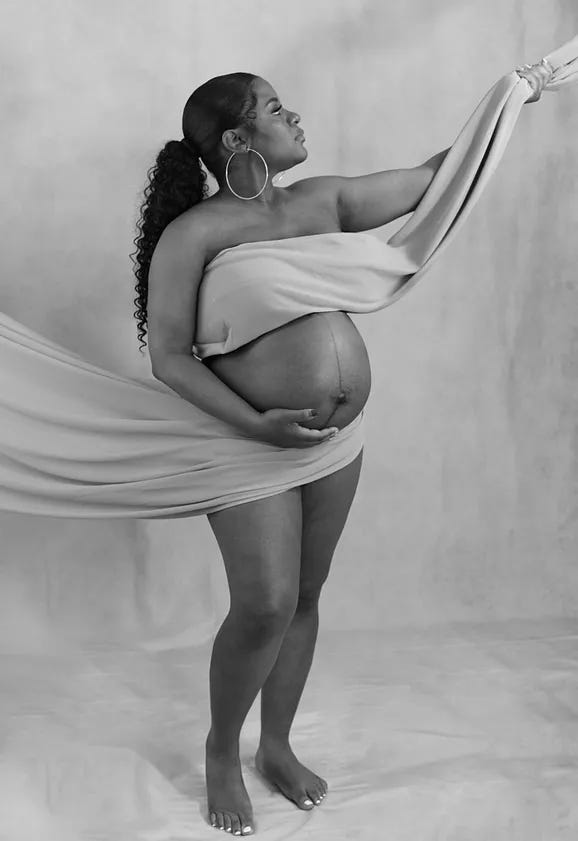
Motherhood is something that changes you completely. For Tiara, it has been a journey of balancing conflicting truths — “I’ve experienced joy coupled with grief, exhaustion coupled with a rewarding feeling, anxiety coupled with waves of sadness, love for my body as well as disdain... But I’ve also experienced overwhelming unconditional love, support, and feelings of gratitude.”
Q: You’ve been a mom for a little under a year. What would you say has been the most awakening part of the journey?
I think the most awakening part of the journey would be all that motherhood entails. In my opinion, there is no way to understand all that is involved until you get into it. From the body and hormonal changes, decision fatigue, and all the BIG emotions that come with it. If I had truly understood what comes with becoming a mother, I would have shown up more for my friends and family.
Q: You mentioned that your journey has been a series of conflicting truths. Can you dive deeper into how you hold these coexisting feelings? How do you honor even the ones that are hard/shameful to face or feel?
For others this may be a familiar space in general, but for me dealing with coexisting feelings was hard at first. I am a very black and white person — something I am currently unlearning thanks to motherhood. So it was hard at first to understand and process that two things can be true. Once I accepted this, it made space for me to honor how I feel. I honor my feelings by confronting them, which looks different every time.
For example, sometimes I allow myself just to feel exactly how I feel without trying to fix or explore it. Other times, I redirect myself especially when it comes to my body. I remind myself that I just had a baby and I did it naturally (with just laughing gas and one push — that’s some boss stuff!!) and I survived gestational diabetes, severe preeclampsia, and labor & delivery — something that I don’t take for granted in this climate. And other times, I allow my village of moms to validate how I feel. No matter the method, I try to make space for my feelings and know that it’s okay to feel how I feel.
Q: How has motherhood stretched you in this first year?
It has shown me that I cannot afford to stay the same. It is challenging me to move out of my comfort zone and let go of things that no longer serve me because my daughter is watching me and will be for the rest of her life.
Q: What do you wish others understood about the loneliness and isolation of a postpartum mom?
I wish others knew that looks can be deceiving. A mother can appear to have it all together, but that doesn’t mean she does. She may have a ton of support or very little — it doesn’t matter. If you don’t hear from a mother, don’t take it personal. Just check in on her. She may be feeling lonely or isolated, even in the midst of a supportive village.
One of my friends checks on me every time she feels I am too quiet. She did this even before I became a mother, but it has been a saving grace some days when I felt lonely but didn’t have the strength to reach out. Sometimes these feelings come out of nowhere and feel extremely hard to manage. And if you are feeling this way as a mother, I would challenge you to look into support groups or activities for moms in your area or virtually, especially if you don’t have a village.
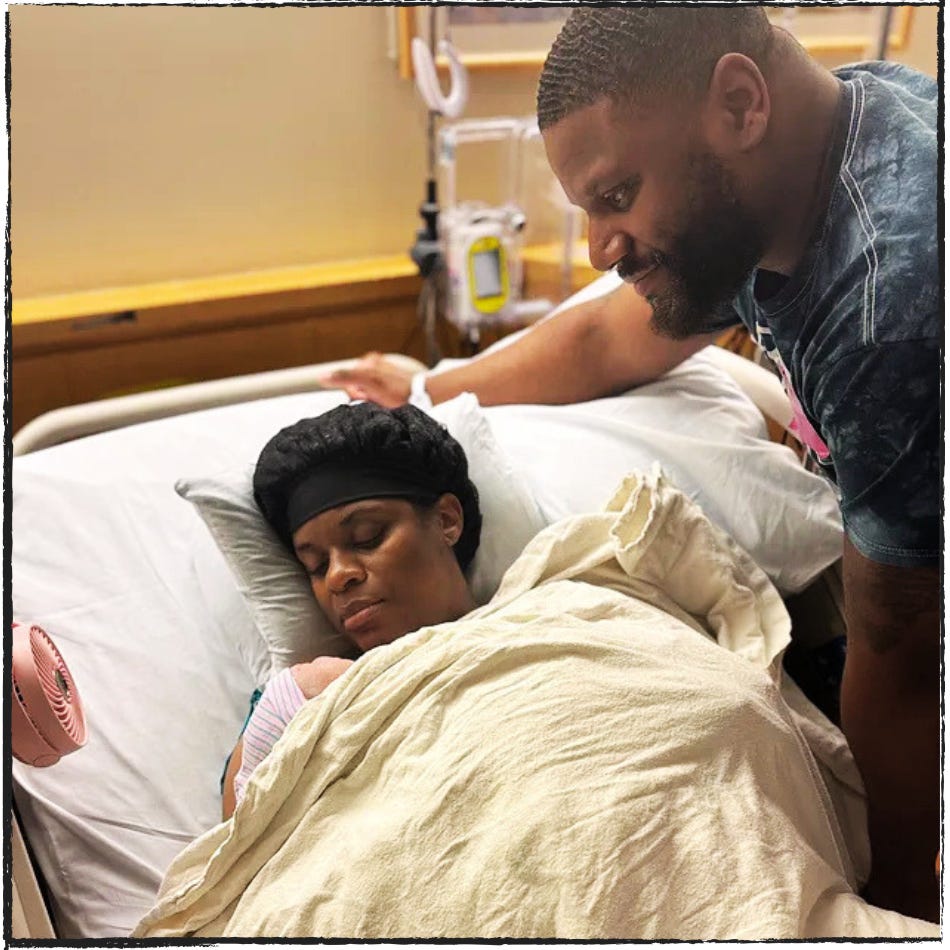
Q: How do you release the expectation for people in your village to show up more? What do you wish your village looked like? How are you redefining it on your own terms?
If I am being honest, my husband has been so instrumental in helping me let go of my expectations. He has very little expectations of people and has helped me learn to let go of mine in some situations. I love and care hard, so sometimes it’s hard for me not to expect that from others. But I am learning to extend grace because some people just do not have the capacity to show up for you or they don’t know how. And they don’t know how to ask what you may need either.
Many people during pregnancy say what they will do, and I am finding out that actions speak louder than words. So I am learning to allow my expectations to match actions and not just words.
My village is small, but amazing. If there is any wish that I had, it would be that my mom lived closer. I miss her so much. I bug her 1,000 times a day. I am redefining my village by allowing it to look different. It doesn’t just have to be family. My village extends to my friends and husband’s friends and sometimes even my coworkers who support me when I need flexibility at work, but have also shown interest in what my daughter is doing or giving her things. I am also allowing my village to be what it is. I am not interested in facilitating others when it comes to a relationship with my daughter. I will make space for them, but I am not forcing it.
Q: PPD is a silent condition. How have you been navigating it? What do you wish other people knew about it?
Ugh, if I’m being honest this has been tough because it hits you out of nowhere. I felt like I was fine up until 6 months, and then my feelings of sadness intensified. Up until that point I only experienced waves of sadness, so I spoke to my therapist about it. So that is one way I am managing it, but I’m also trying to take better care of myself. Since I am a part-time worker and a full-time SAHM, it is imperative for me to figure out how to take care of myself. I am home more than I am any other place. It has been hard at times with the weather, but as we roll into spring I think being outside more and increasing my physical activity will help tremendously. I am also managing it by building my community for women, Sis You Got This. I am also learning to voice my needs more.
I want moms to know it’s okay to have big feelings and deal with PPD. It’s also okay to get help, especially black women. Mental health stigma is real, but so is PPD. You owe it to yourself first and then your little one to feel and be your best self.
Q: You saw your mother sacrifice her needs for yours growing up. How has this shaped your understanding of sacrifice and motherhood?
It’s funny you asked that because up until recently, I did not understand how it shaped me. It wasn’t something I thought about until I had to. In my quiet time, I have been exploring why it’s so hard to care for myself in general, but especially as a mom. I come from a family of caregivers. I work in a caring field as a nurse practitioner, so caring is in my blood. Caring and helping others has shaped me so much that it’s nothing for me to care or sacrifice for others before myself. It’s rooted in me, but it’s something I am currently digging up. Sacrifice is often a way we show our love to others, especially in black families — but to what extent?
Q: You witnessed your mom get lost in motherhood. How are you resisting that in your own motherhood journey?
Resistance means doing things differently. As an adult, I know my mother had to do what she had to do because she was a single mother. But I wonder what she saw growing up (again, coming from a caring family). Maybe there wasn’t a model that you can do both — care for yourself and your children. So I am fighting to do things differently. I want my daughter to know you can do both — you can sacrifice for your family, but you don’t have to sacrifice yourself in the process. And when I say that, I don’t mean it in a selfish way. I will always do what’s best for my daughter and meet her needs and sometimes wants, but I will allow myself to be a woman outside of that role. I refuse to let motherhood consume me.
Q: What does surrender look like in motherhood without turning into martyrdom?
Surrendering in motherhood to prevent martyrdom, to me, looks like rediscovery and relearning myself. It looks like changing a narrative that I have to sacrifice myself fully for my child. I can hold space for myself and my daughter. It’s something I am still learning, but it’s something I will fight for daily so I don’t get lost in motherhood, which is very easy to do.
Q: What from your mother are you carrying forward in your motherhood journey? What are you releasing?
First let me say Hey Mom! ( because I know she’s reading this). Growing up, my mom was my hero — and she still is. She always did what was best for us even if it was hard for her. I would love to be half the mom she was. Her unconditional love and support will guide me as I mother my daughter. I will bring her resilience, hard work, care, and compassion on my journey. I will sacrifice for my daughter, but it will look different, as I said before. I will bring her ability to teach my sister and I how to function in this world on our own.
On this journey, I am releasing the need for sacrifice to look like my needs being unmet in order for my daughter’s needs to be met. I will find a way to make space for both our needs. But I want to publicly say: Thank you Mom for all you have done and continue to do. I would not be the woman I am today without you. You did an amazing job with us!
Q: How does God show face in your mothering journey?
Outside of my village, He has been my sustainer. He has carried me on days when I didn’t think I could carry myself. Whispering things like, “Motherhood is Worship,” as I struggle to find what I think time should look like with Him. Or, “Intimacy looks like incorporating Me into your daily life.” He’s given me grace for the journey as a mother.
He’s reminded me, “Allow yourself to be human in motherhood,” as I deal with everyday life. And He has taught me more of who He is as a Father. Now that I am a parent, I can understand the love He has for me as His child.
He’s also shown me that in order to love others as myself, I have to care and love for myself. Not selfishly, but in a way that love and care overflow from my abundance, from His love, and from the love I show myself.
Q: Who are you beneath your role as a mother? Who is the woman at the core?
Honestly, I am still discovering. But at my core, I am a woman with a heart to help others, especially other women. I am a lover of books and writing. I love to travel and get lost in a good show. I love to watch Insecure at least once a year. I am a woman who loves and cares hard, especially for her closest people. And I am a woman who feels and thinks deeply — and I am learning that is okay. It’s okay to be different. I am a woman who is figuring this thing called life out and how to love herself and her life in the process.
Q: In terms of “motherness” (equating it to being in the wilderness) how would you describe your current particular motherness season?
My current motherness season is transformational with a side of, “I have no clue what I am doing but I’m figuring it out.” What I mean by that is everyday since my daughter was born, I am just figuring it out. There is no road map ( just like in the wilderness). And although I feel supported by my close village, I still have to figure it out. This season has been transformational because it has grown me mentally, emotionally, and spiritually. It has lit a fire under me to become who I was created to be, as well as shown me who I am and what I am capable of.
If you feel moved to share about your Motherness journey, please reach out to me via email: milkandmuseco@gmail.com
No posts
Comments
Nothing yet. Say the first thing.
Sign in to join the conversation.