
A fake polling operation just admitted that it fabricated political surveys and watched those numbers spread through the media and political ecosystem as if they were legitimate. That should make everyone a little more skeptical when another eye-popping poll lands in their feed. Including here in Maryland.
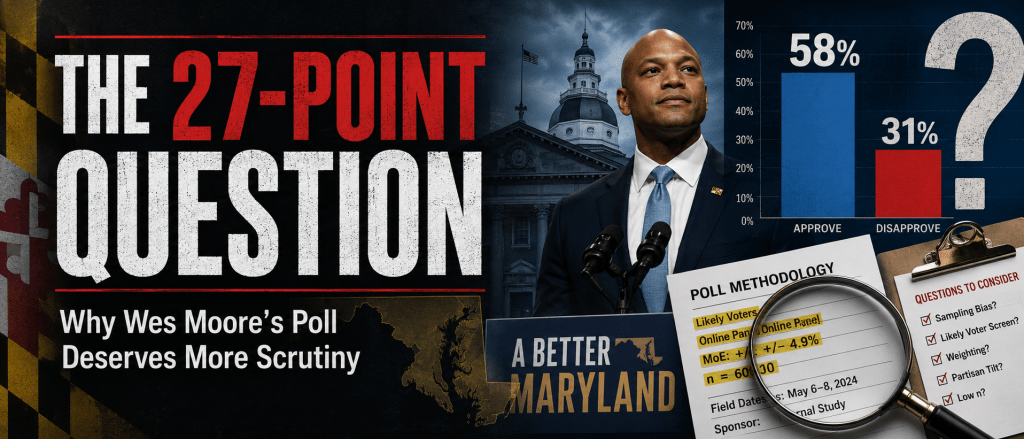
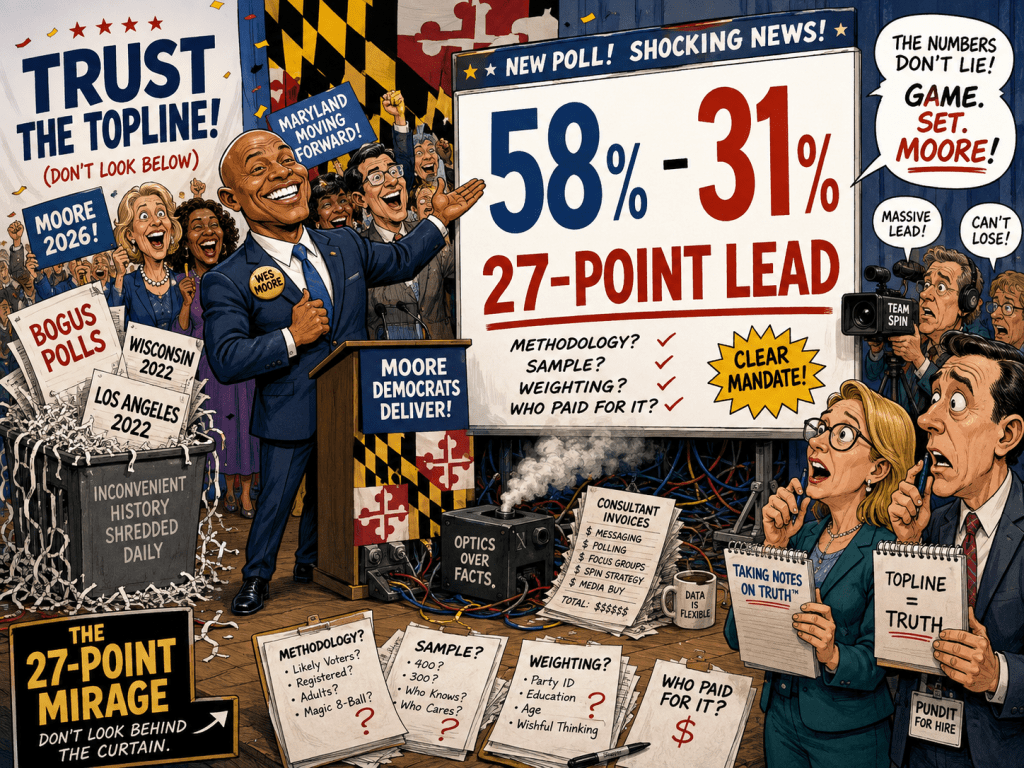
A recent survey showed Gov. Wes Moore crushing Republican Dan Cox 58% to 31% — a 27-point lead. Maybe Moore really is ahead by that much. Maryland is a heavily Democratic state, and nobody should pretend otherwise.
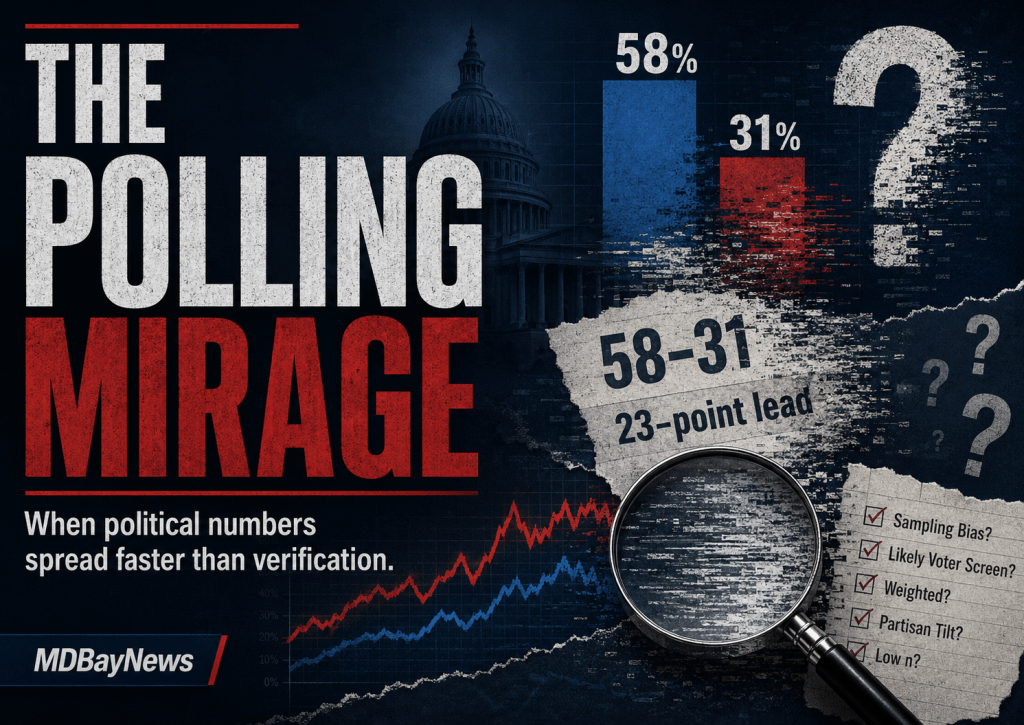
But this wasn’t some independent university poll or a survey commissioned by a major news organization. The poll was released by Blended Public Affairs in partnership with Perry Jacobson, Annapolis political and public-affairs operations. The Maryland Democratic Party quickly seized on the results and promoted them as evidence of Moore’s political strength.
That doesn’t make the poll fake. But after what just happened in Wisconsin and Los Angeles, it should make Maryland reporters a lot less willing to treat one dramatic topline number as settled fact.
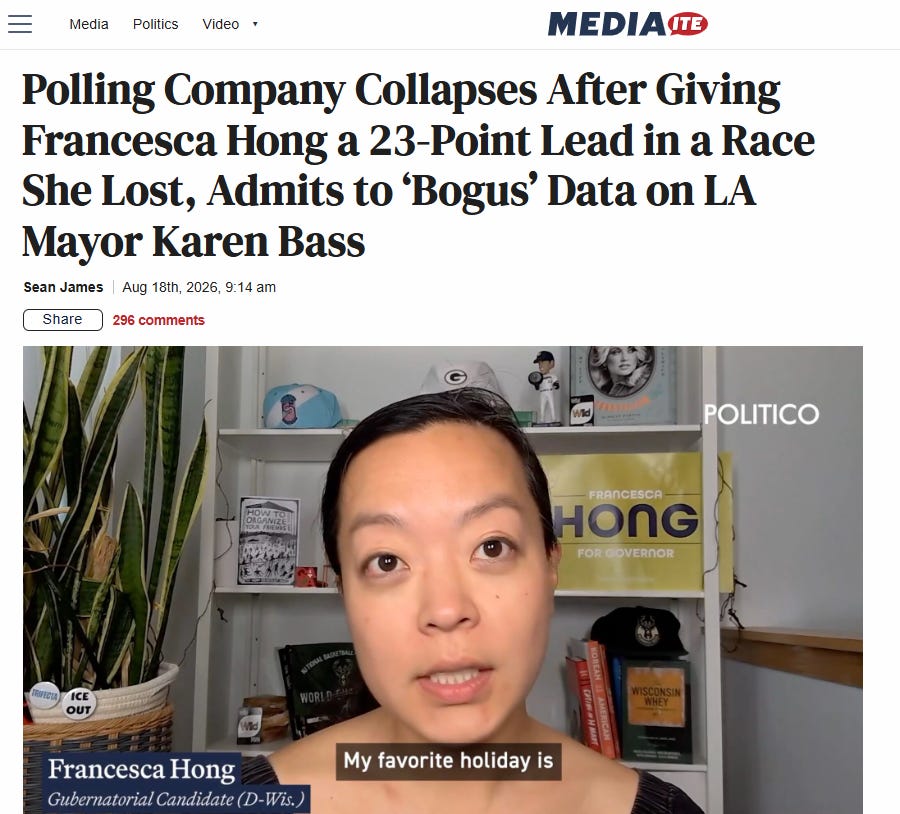
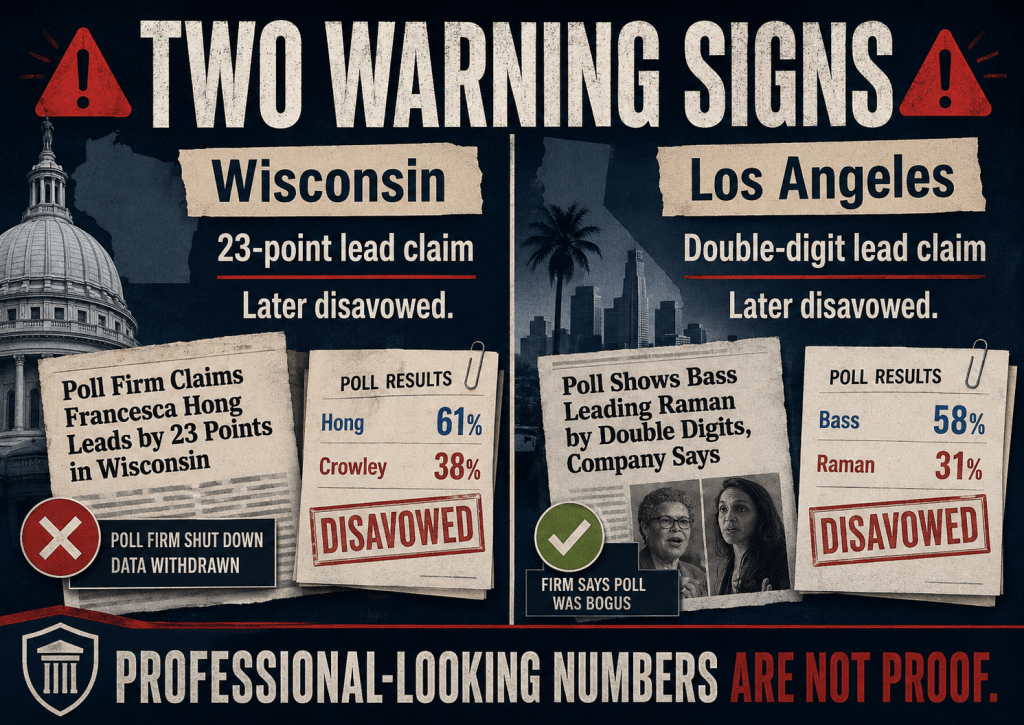
Median Strategies drew national attention after releasing a poll showing Wisconsin Democratic gubernatorial candidate Francesca Hong with a 23-point lead over David Crowley.
Then voters actually went to the polls. Crowley won.
Median Strategies subsequently shut down and acknowledged that its polling operation was bogus. The company said its surveys had been part of a “short-term social experiment” designed to examine how purported polling information could enter and spread through the political information ecosystem without independent verification. It withdrew all of its previously published polling and said the data should not be treated as genuine.
The important part is not merely that the Wisconsin poll missed badly. Real pollsters miss elections all the time, particularly low-turnout primaries. The important part is that there was no legitimate poll to miss with. The numbers themselves had been fabricated. And they still made their way into political coverage and helped shape the narrative around the race before Election Day.
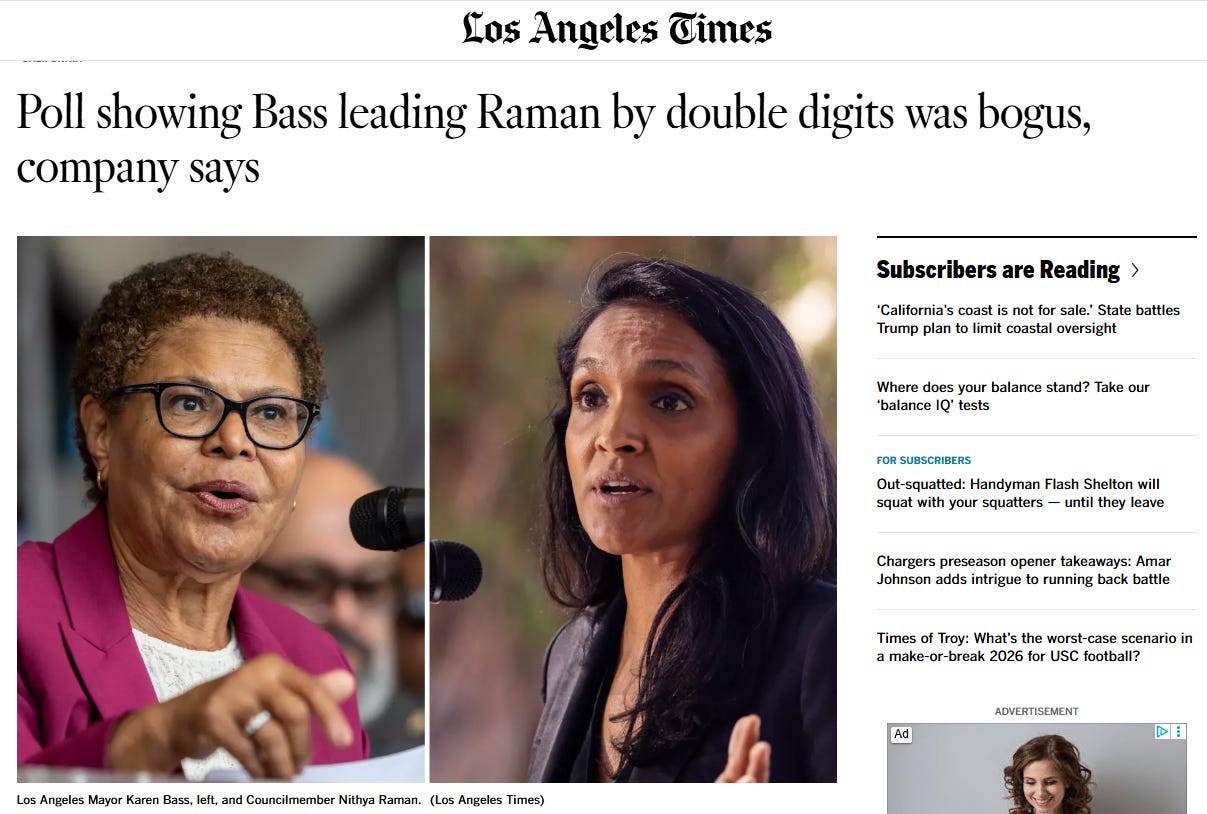
Wisconsin was not Median Strategies’ only experiment. The same supposed polling firm published a survey claiming Los Angeles Mayor Karen Bass led Councilmember Nithya Raman by nearly 12 percentage points in their November runoff. The purported survey claimed to have questioned 560 Los Angeles voters between July 30 and Aug. 5, with a stated margin of error of 4.1 percentage points. None of it was real.
After repeated questions from the Los Angeles Times, Median Strategies acknowledged that the poll was bogus and part of the same social experiment. That matters because the fake poll looked like polling.
It had a sample size. It had field dates. It had a margin of error. It had candidate percentages.
In other words, it contained exactly the kind of methodological shorthand that allows a political number to look legitimate when it gets copied into a headline, social-media post, or campaign talking point. The lesson is uncomfortable: professional-looking numbers are not the same thing as independently verified numbers.
That brings us back to the Moore-Cox poll.
The 58%-31% result may be completely legitimate. But the proper response to the Median Strategies fiasco is not to declare every poll fake. It is to demand more transparency before treating polls as political facts, especially when a survey is released by political and public-affairs firms, amplified by interested political actors, and then repeated across the media ecosystem.
Maryland’s 27-point number deserves exactly that kind of examination.
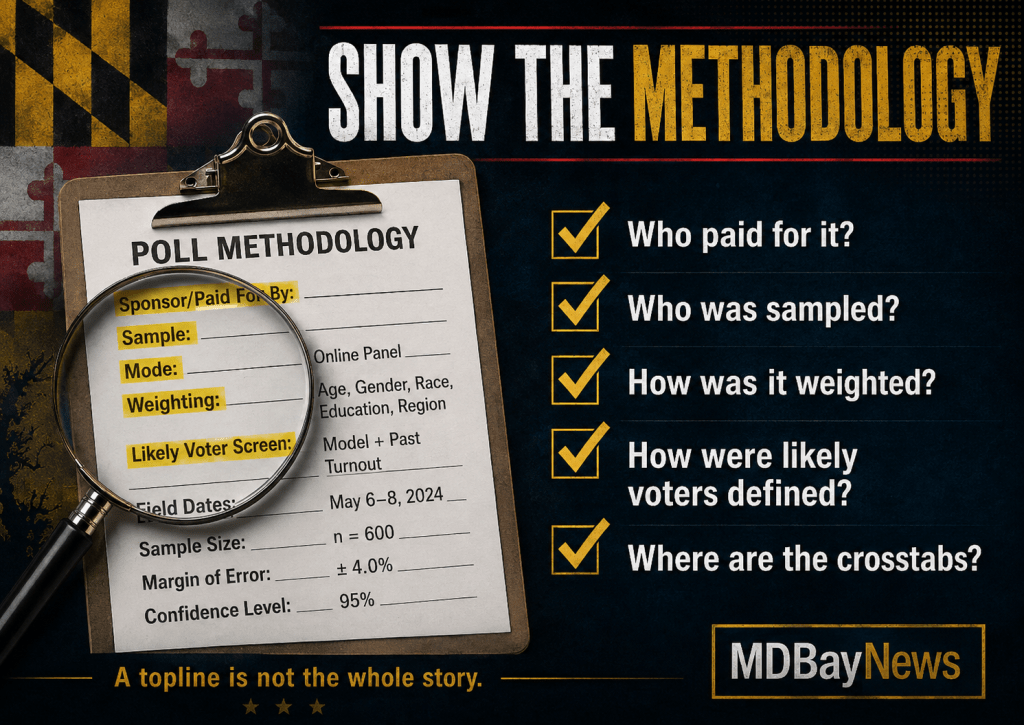
Who commissioned the survey?
Who paid for it?
Who selected the respondents?
How were “likely voters” defined?
What was the partisan composition of the sample?
How were respondents weighted by age, race, geography, education, and party registration?
How many independents were included?
What assumptions were made about November turnout?
Were respondents reached by phone, text, online panel, or some combination?
And is the full questionnaire publicly available — including question order and wording?
Those questions are not accusations. They are what scrutiny is supposed to look like.
A big polling lead does more than tell readers who may be ahead.
It can affect fundraising. It can influence whether donors write checks. It can convince activists that a race is already over. It can determine which campaigns receive serious media coverage. It can discourage voters from paying attention.
And it can become campaign advertising without the campaign ever having to purchase an ad. That is exactly why the Wisconsin and Los Angeles episodes matter beyond those two races.
Median Strategies said its entire purpose was to test how easily unverified polling information could spread.
The experiment worked. Too well.
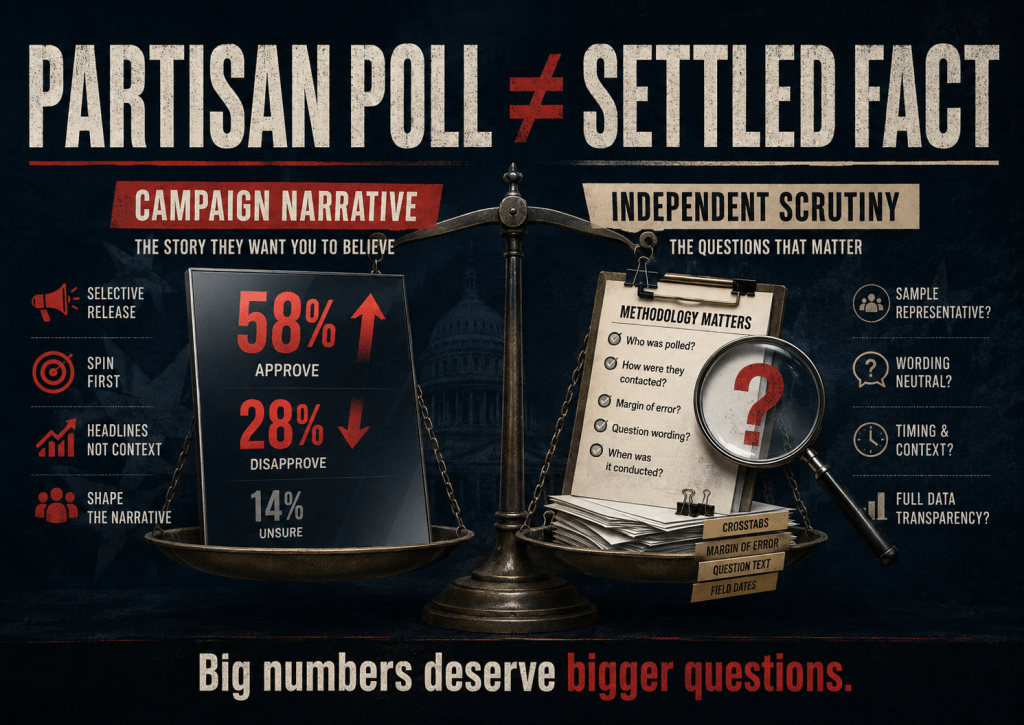
None of this proves Wes Moore is not 27 points ahead. It does not prove the Blended Public Affairs/Perry Jacobson poll was fabricated. And it does not mean Maryland polling should automatically be dismissed because Democrats like the result. But the burden should now be higher.
If a political poll is going to dominate headlines, shape perceptions, and be repeated as evidence of an inevitable outcome, the public deserves more than a topline number and a press release.
Show the methodology.
Show the sample.
Show the weighting.
Show who paid for it.
Show the questionnaire.
Show the receipts.
The lesson from fake polling isn’t that every poll is fake. It’s that “a poll says so” should never be the end of the story.
Comments
Nothing yet. Say the first thing.
Sign in to join the conversation.