
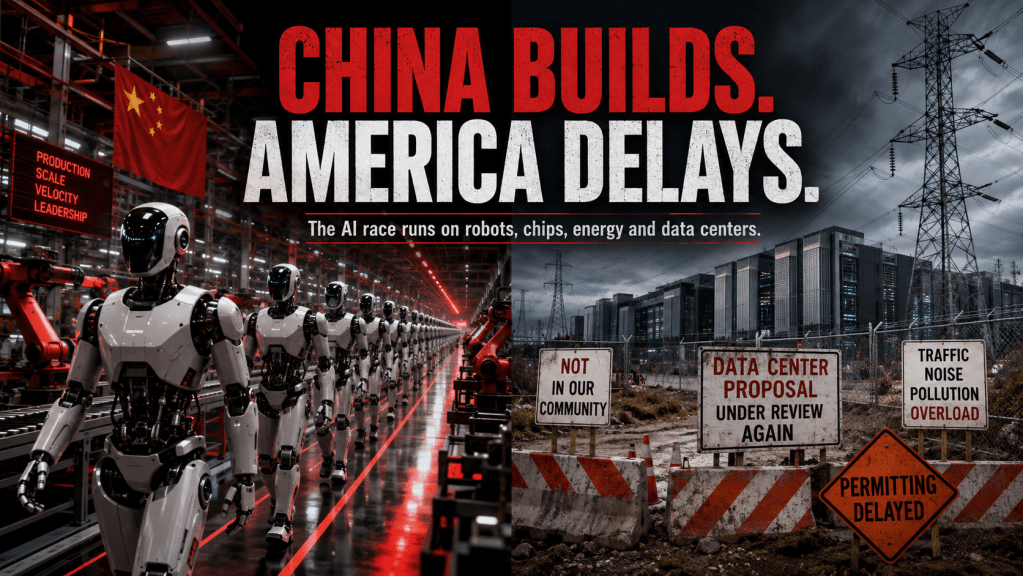
China is moving humanoid robots out of laboratories and toward larger-scale production.
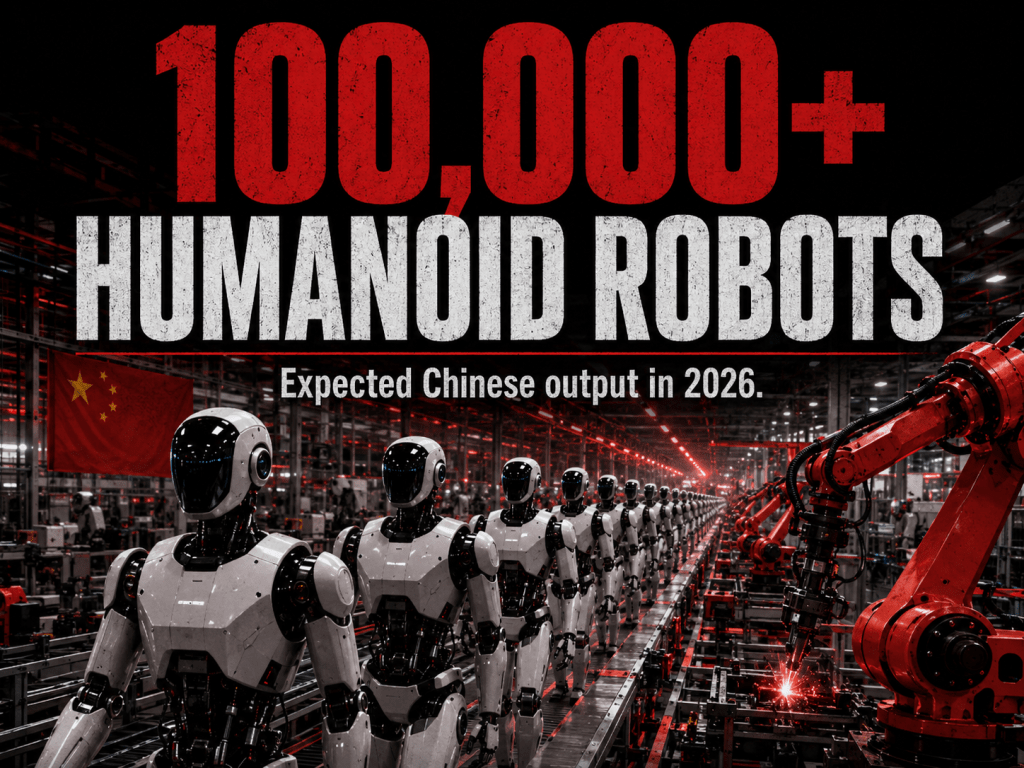
Chinese industry officials say the country is expected to produce more than 100,000 humanoid robots in 2026, as domestic robotics firms push toward wider commercial deployment.
That does not mean China has suddenly built a science-fiction robot army. Many humanoids still struggle with basic real-world tasks, and serious questions remain about how much genuine commercial demand exists. Recent demonstrations have shown impressive speed alongside plenty of awkward crashes and unfinished capabilities.
But the direction is unmistakable:
China is trying to industrialize robotics at scale.
Meanwhile, America is increasingly fighting over the physical infrastructure required to remain dominant in AI.
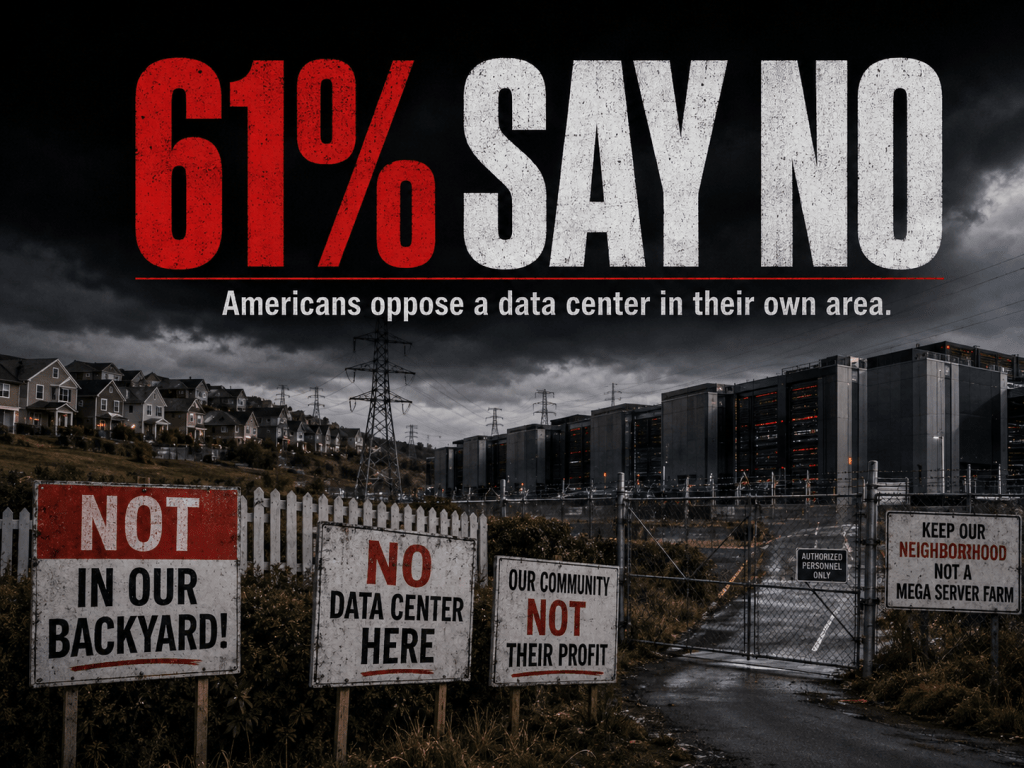
Data centers are facing resistance over electricity prices, water consumption, noise, land use, and massive power demands. A recent Annenberg survey found 61% of Americans oppose a new data center in their own area, including majorities or near-majorities across partisan groups.
And governments are responding.
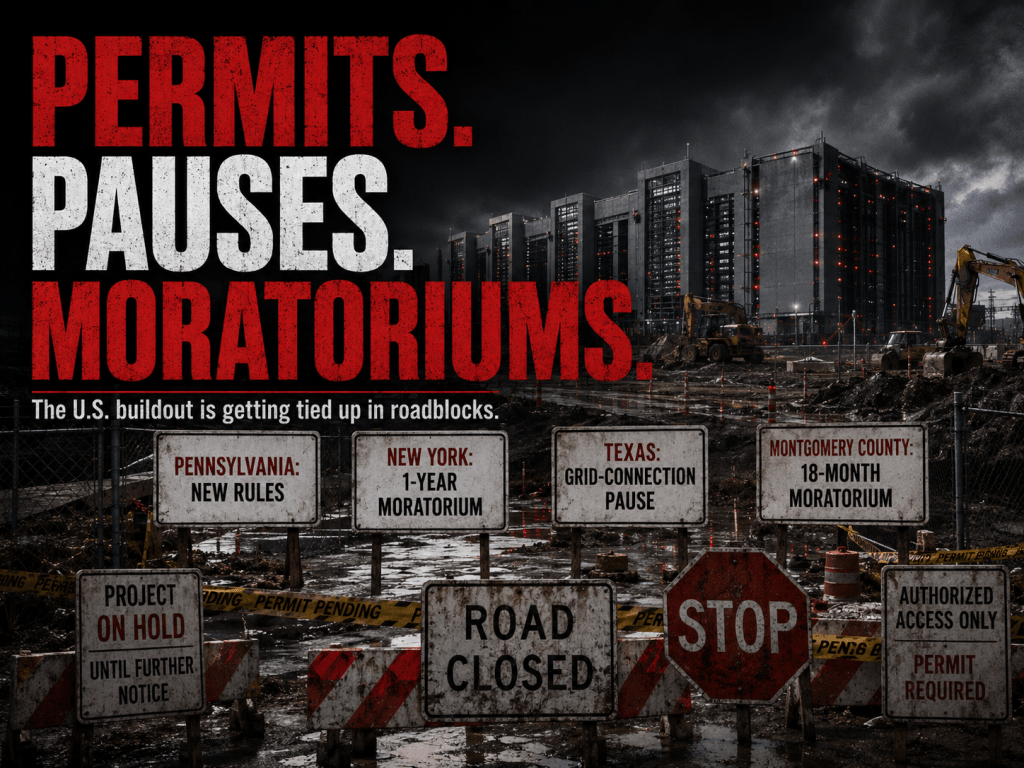
Pennsylvania has imposed new environmental, transparency, and local-approval requirements while removing data centers from a fast-track permitting process.
New York has enacted a one-year statewide moratorium on large data centers.
Texas has paused some approvals for projects seeking grid connections while officials review the impact on the power system.
In Maryland, Montgomery County approved an 18-month moratorium on new large-scale data-center permits while officials develop new regulations.
Some of those concerns are legitimate. Nobody should expect families to quietly absorb higher electric bills so a trillion-dollar technology company can get subsidized power. Developers should pay for the infrastructure they require, protect water supplies and deal honestly with communities.
But America cannot confuse responsible development with paralysis.
Artificial intelligence requires enormous computing capacity. Advanced robotics depends on AI infrastructure, semiconductors, manufacturing capacity and reliable energy. Countries that dominate those systems will gain major economic and national-security advantages.
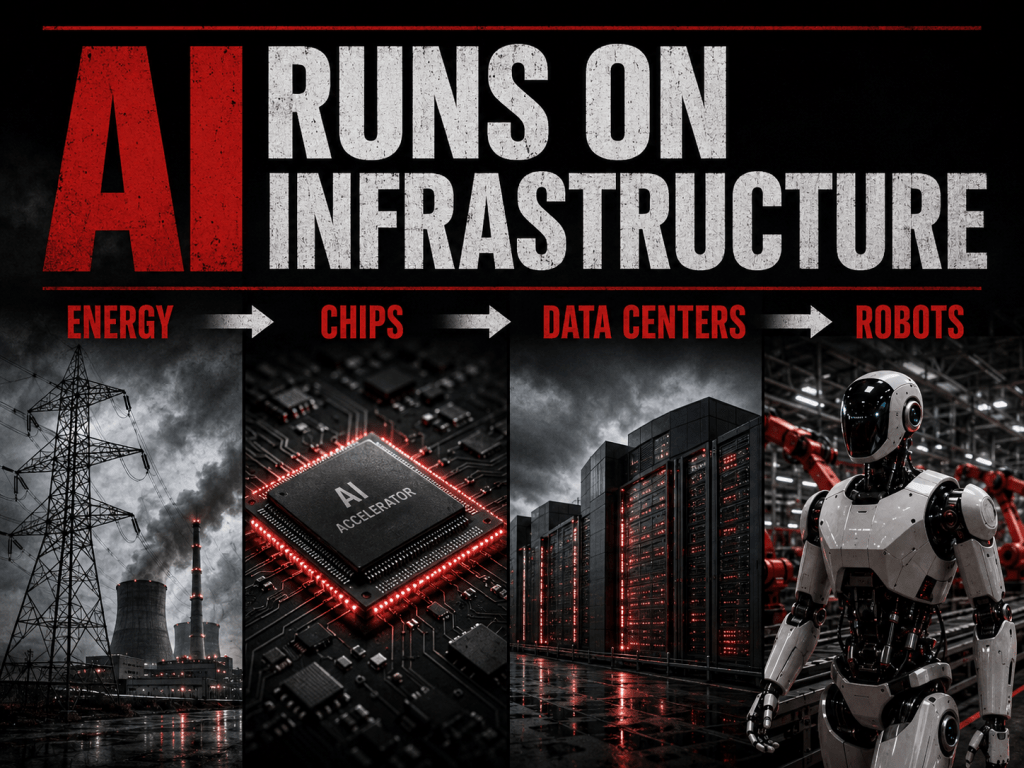
China is treating robotics as an industrial race.
In parts of America, the infrastructure needed to compete is increasingly getting bogged down in permitting fights, grid constraints, and local opposition.
The conservative answer shouldn’t be blank checks for Big Tech. It should be to build more energy, streamline permitting, make developers pay their own way, protect homeowners, and then build the infrastructure America needs to win.
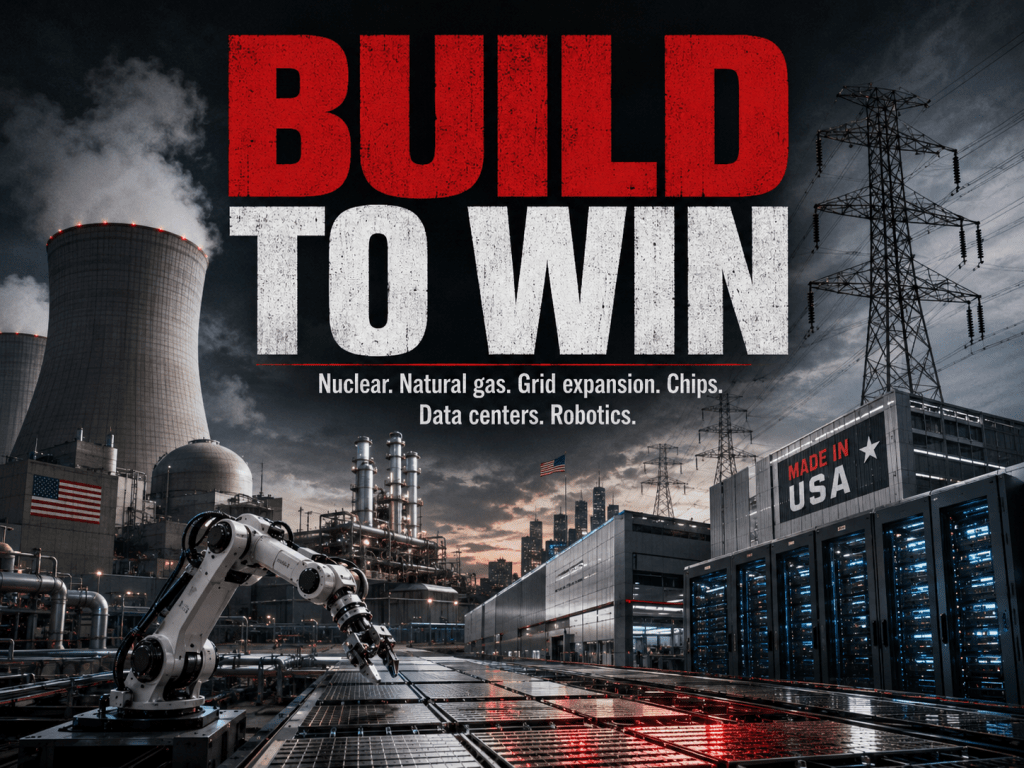
Nuclear. Natural gas. Grid expansion. Domestic semiconductor production. Robotics. Data centers.
All of it.
Because while Americans argue over whether the next data center should exist, Beijing is betting that the next generation of machines should be made in China.
The United States spent decades learning what happens when it outsources manufacturing.
We shouldn’t spend the next decade learning the same lesson about AI and robotics.
Sources: Reporting and data for this article were drawn from China’s Ministry of Industry and Information Technology, via Xinhua and the Hunan provincial government, which reported that Chinese humanoid-robot output is expected to exceed 100,000 units in 2026; the University of Pennsylvania’s Annenberg Public Policy Center, whose August 2026 survey found 61% of Americans oppose construction of a new data center in their area; Reuters reporting on Pennsylvania Gov. Josh Shapiro’s new environmental, transparency and local-approval requirements for AI data centers and Texas Gov. Greg Abbott’s pause on new grid-connected data-center approvals pending an audit; and Associated Press reporting on New York’s one-year moratorium on large data centers and the broader political backlash over data-center energy, water, noise and land-use impacts.
Comments
Nothing yet. Say the first thing.
Sign in to join the conversation.