
There have been arguments, conjecture and myth-making over the years about what went so terribly wrong for Syd Barrett in such a short amount of time. Many have attributed his disintegration to a steady over-consumption of LSD. He had taken the drug since his days in Cambridge, and in 1966 he lived in an apartment with people who ingested the hallucinogen regularly and purportedly fed it to Barrett whether he was aware of it or not. (“We never ventured inside,” said Nick Mason. “It was not a world the rest of us frequented.”) Others – including Roger Waters – believe that the psychedelics likely triggered a dormant schizophrenia in Barrett. Author Tim Willis, however, when researching Madcap: The Half-Life of Syd Barrett, Pink Floyd’s Lost Genius, discovered that Barrett had never been diagnosed with schizophrenia nor given medications, “on the grounds that he has an ‘odd’ mind rather than a sick one.”
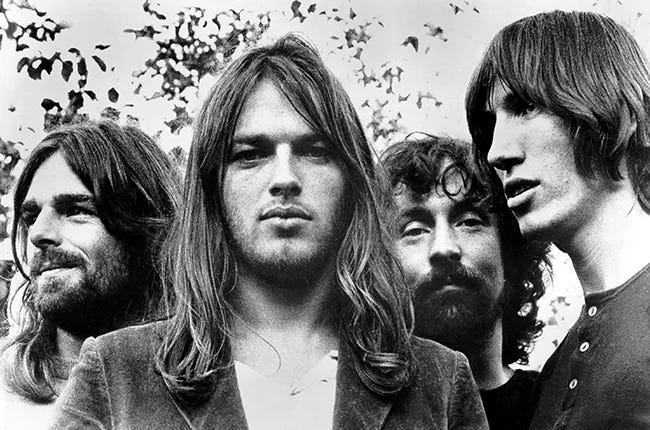
Barrett’s decline was made more confusing because the singer didn’t simply plummet in a steady decline. He had fully lucid and creative times when the band thought he had rebounded. But by Christmas 1967, after Barrett again stood still onstage at a major show, just staring, it was apparent to the others that things could no longer continue in the same way. At the beginning of the 1968, the band brought in Barrett’s old Cambridge friend, David Gilmour, to take Syd’s place on guitars and vocals. The hope had been that Barrett might continue as a songwriter – similar to the way that Brian Wilson still wrote material for the Beach Boys but no longer toured with the band – but even that seemed unfeasible. The band was having difficulty with Barrett’s newer material – “Vegetable Man” and “Scream Thy Last Scream” were songs they thought emanated from madness – and they later buried the recordings of those songs rather than release them. A crucial instance in Barrett’s final days with his band took place during a rehearsal session for a new offering, “Have You Got It Yet?” The song was designed like a riddle, with a shifting arrangement, and each time Barrett put the question to the band he was essentially telling them that they could never figure him out. A few days after Gilmour joined, the band minus Barrett were enroute to that night’s performance when somebody asked, “Shall we pick up Syd?” The response was: “Fuck it, let’s not bother.” The band drove on and performed Barrett’s songs that night without him and never played with him again. As Pink Floyd worked on its next album, Barrett would sit in the studio’s lobby with his guitar, waiting to be called into the sessions. He also stood before the stage one night at a club, glaring as David Gilmour sang his songs. The instance unnerved Gilmour so much that he came close to quitting the band that night.
Some saw the ejection of Barrett from the band that he had catapulted to fame as a tragedy and betrayal. Peter Jenner and Andrew King were so upset by the turn of the events that they dropped management of the band and stuck with Barrett. They thought the band had no future without him and told them so. (Nick Mason later admitted, “If we’d parted with him earlier, we’d have sunk without a trace.”) This rupture was the most pivotal point in the band’s history. It changed what Pink Floyd could and would be, and it also haunted the band forever in ways that resonated in their later work and troubled community. At the end of Pink Floyd’s second album, A Saucerful of Secrets, the band included Barrett’s farewell song, “Jugband Blues.” It’s doleful, even humorous, but its heartaching lyrics have always been seen as Barrett’s self-diagnosis of his own delusion: “It’s awfully considerate of you to think of me here/And I’m much obliged to you for making it clear/That I’m not here…/And I’m wondering who could be writing this song.” But those lines could work on another level as well, as Barrett’s way of saying to the band: How could anybody so damaged or dispensable write a song this beautiful and original?
At some point during Barrett’s deterioration, the band and its management arranged for him to visit with famed psychiatrist R.D. Laing, known for his unorthodox approach to the treatment of mental illness, particularly schizophrenia and psychosis. They would drive Barrett to Laing’s door, but he would refuse to leave the car. However, Nick Mason wrote in Inside Out, Laing did “make one challenging observation: yes, Syd might be disturbed, or even mad. But maybe it was the rest of us who was causing the problem, by pursuing our desire to succeed, and forcing Syd to go along with our ambitions. Maybe Syd was actually surrounded by mad people.”
ONE OF THE PERSISTENT MYTHS that attached itself to the ouster of Syd Barrett was that Barrett resented the others for wanting to move Pink Floyd into a more pop-wise, commercially certain direction. But it’s partly a revisionist claim. Barrett certainly hated – and suffered from – the pressures to follow “Arnold Layne” and “See Emily Play” with surefire hit concoctions (he reportedly didn’t like the idea of focusing on singles), but despite his gift for guiding the band in anarchic instrumentals, he was clearly foremost a pop songwriter: All of Barrett’s last recordings for Pink Floyd were concise and poetic – not to mention great – and the only reason some were never released was because Barrett kept them for himself, or because the band didn’t have the nerve to face their former songwriter’s convoluted genius.
In any event, Barrett was no longer a contributor to the band. Roger Waters, having set aside his higher education and any other ambitions, now made Pink Floyd his purpose, and he was determined that the group continue. “He was the one,” David Gilmour told Barry Miles in Pink Floyd: The Early Years, “who had the courage to drive Syd out, because he realized that as long as Syd was in the band, they wouldn’t keep it together, the chaos factor was too great. Roger always looked up to Syd and felt very guilty about the fact that he’d blown out his mate.” June Bolan, who worked for Jenner’s management firm and used to drive a van for Pink Floyd, thought that Waters in effect saved the ensemble’s future. “Having had two or three years of a band,” she told Nicholas Schaffner, “and suddenly one member falls by the wayside, why should your lifeblood, your livelihood, be stopped? Roger was determined that it wasn’t going to fall apart because Syd wasn’t there anymore, and he would show everybody…. And he did it against all adversity, because nobody gave him credence for being a creator.”
Others, though, also credited the band’s new guitarist and lead singer, Gilmour, with recasting Pink Floyd’s direction. In contrast to Syd Barrett, Gilmour was less inclined to a John Coltrane- or Ornette Coleman-like approach to inventing forays of melody and harmony in the moment, sometimes in contrary motions, and favored a more clearly structural and melodic approach to improvisation that gave room to the dominant mellifluence of his guitar. It was both this collaboration and competition between Waters and Gilmour that would now largely drive Pink Floyd in the direction of its triumphs, though it would also make for its troubles. In his early seasons in the band, Gilmour was already reacting to Waters’ domineering manner, describing him as “a pushy sort of person,” to a British music paper. It was a forecast of bitter years to come.
The band’s second album, A Saucerful of Secrets (1968), was a worthy successor to Piper at the Gates of Dawn – part-whimsical and part-forlorn pop, alongside two dark-edged sonic explorations, “Set the Controls for the Heart of the Sun” and the title track, both of which proved to have great life in concert for years. The latter, in particular, set forth possibilities that the band would extend over the years as a sort of signature mode, a different approach to improvisation. “Instead of the standard song structure…,” Mason later wrote, “Roger and I mapped it out in advance, following the classical music convention of three movements. This was not unique to us, but it was unusual. With no knowledge of scoring, we designed the whole thing on a piece of paper, inventing our own hieroglyphics.”
No posts
Comments
Nothing yet. Say the first thing.
Sign in to join the conversation.