
Last week I wrote about teaching our children to yearn for Israel. This week, writing from Jerusalem before we fly home, a harder question: are those of us in America sharing the burden?
This past Monday night, my husband and I stole a few hours away from the kids (thank you, Mom and Dad, for babysitting!) and went out in Jerusalem.
We started with dinner at Kikar HaMusica, a square in Nahalat Shiva where four restaurants share outdoor seating around a live band. At some point, the band turned to old Israeli songs. I looked at the two rows of older Israelis on benches singing along, and at dinner tables so full there was not a single empty seat, and I marveled at this country.
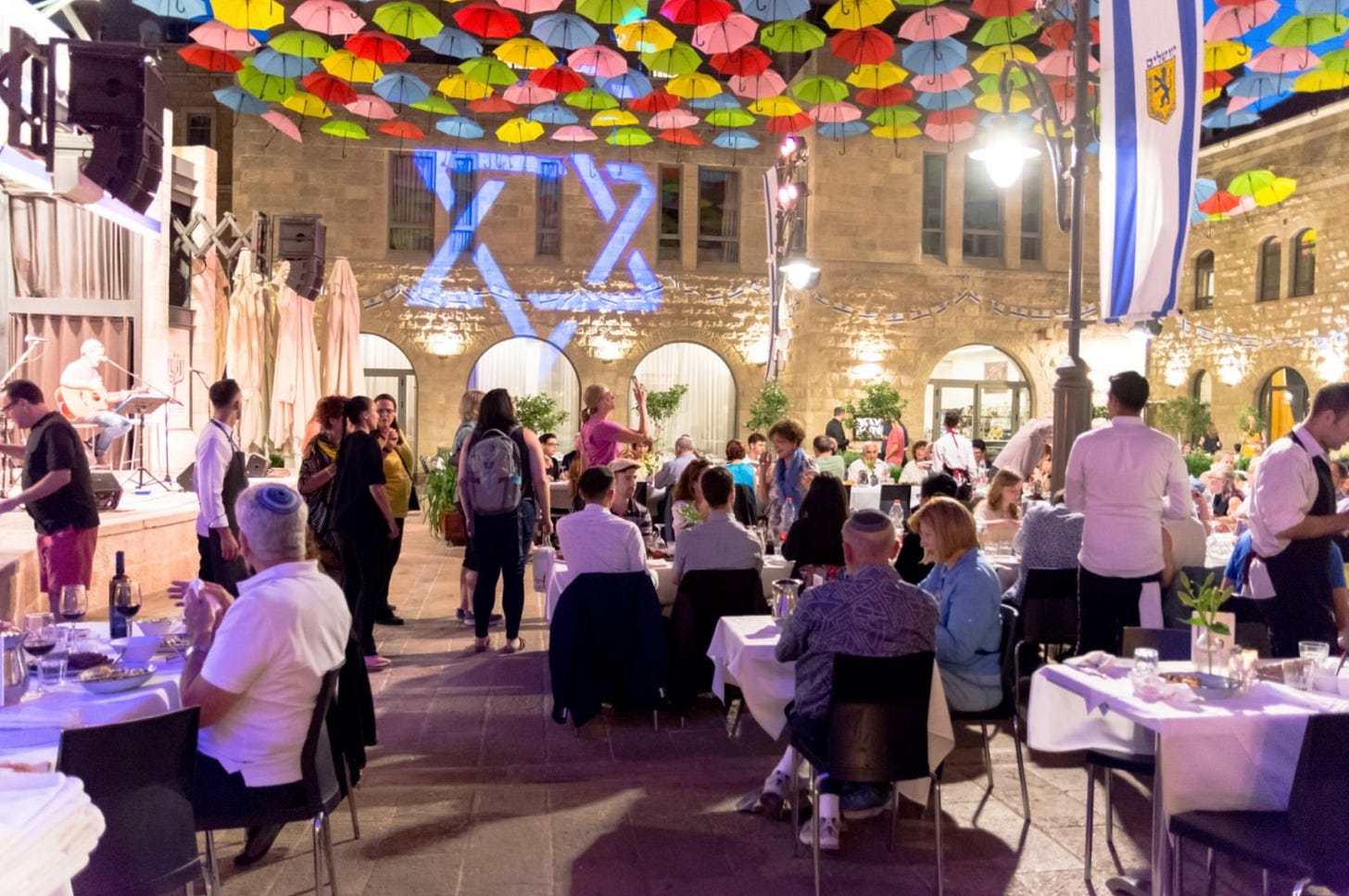
The most jarring part of this trip has been the dissonance. I walk through this land and see how good it is and how wonderful its people are, and I know that out there, Israel has become a symbol of evil. The demonization feels surreal: there is so much beauty here.
Later, walking home through the Mesila in Baka, the park built along the old train tracks, I asked my husband a question: could we think of a single place in Manhattan where children and families are out at 10pm and it feels safe? We couldn’t.
The park was packed that night, and it is beloved by the Arab residents of neighboring Beit Safafa as much as by anyone. The promise of coexistence here is imperfect and uneven, but it is real.
This trip was different from my previous dozen. I usually come to Israel for work and fill my days with meetings and teaching. This time I kept a strict family-only policy: my kids, my family, my husband’s family.
And one thing stood out. Nearly every person we spoke to urged us to move here. They mentioned antisemitism and Mamdani, and told us not to wait until it is too late, to come while we can still do so willingly.
I marveled at these people, whose husbands and sons now serve two to four months a year in reserve duty, who have spent years fighting and running to shelters, and who tell us, with warmth and without a trace of bitterness: come home.
This week we read Matot-Masei, the double portion that closes the book of Numbers. It is the end of the wilderness. The next book, Deuteronomy, shifts registers entirely, with Moses delivering his farewell speeches to prepare the children of those who left Egypt to enter the promised land.
Much of our portion reads like a travel log, station after station of the Israelites’ forty years in the wilderness, the long consequence of the spies’ rejection of the land.
But tucked into the portion is a story I like to think of as the founding of the first diaspora.
The tribes of Reuben and Gad, later joined by half the tribe of Manasseh, come to Moses with a request. They have enormous herds, and the land east of the Jordan is superb grazing country. They want to settle there, outside the borders of the land the entire nation has been journeying toward.
The request angers Moses, and his response lingers over the details. When the tribes describe their plans, they speak first of pens for their cattle and only afterward of towns for their children. Moses answers them by reversing the order: build towns for your children first, then folds for your flocks. The rabbis heard in this a rebuke, a portrait of people whose priorities had been hijacked by wealth.
And Moses suspects something darker, that they want to sit out the coming war. He asks them a question that pierces across the centuries: “Shall your brothers go to war while you sit here?” (Numbers 32:6).
The tribes promise that their fighting men will cross the Jordan and lead the conquest, returning home only when the land is won. Moses accepts the deal, and the first diaspora is born.
There is a sequel to this story, in the book of Joshua, that has always fascinated me. Years later, the eastern tribes build a huge altar by the Jordan (Joshua 22). The rest of the nation assumes the worst, that the altar is some forbidden form of worship, and prepares for civil war, fearing that God will punish the entire people for the sin of a few. First, though, they send Pinchas at the head of a delegation.
What the 2.5 eastern tribes confess is heartwarming and heartbreaking at once. They built the altar out of fear. They know their children are growing up far from the land, and they dread the day when the Jews living in Israel will look at their descendants and see strangers, and say to them: you have no share in the God of Israel. The altar will never hold a sacrifice. They built it as a witness, a massive stone reminder meant to teach their own children who they are and to whom they belong.
War is averted. But I have never stopped wondering about these 2.5 tribes. They can see their children drifting. They understand the danger clearly enough to build a monument against it.
And still they will not leave their green pastures.
They prefer the risk of their children forgetting who they are to the cost of giving up the comfort they have found.
I do not hold to shlilat hagolah, the old Zionist doctrine that authentic Jewish life can happen only in Israel. Our history testifies otherwise. We have always had strong diasporas, filled with Torah and Jewish joy. The battle to preserve Jewish life is being fought on many fronts, and America is one of them.
And still, for much of this trip, I have been sitting with Moses’ questions to those tribes.
How much of where we live, and how we live, is determined by comfort? I am dreading the return to the copious materialism of Jewish life in New York. Without romanticizing Israelis, a simpler and more idealistic life is easier to reach here.
One of my cab drivers this week showed me a handkerchief that belonged to his mother that he keeps in the car, to remember her, and to remember that even she could take nothing with her to the world to come. How many of us abroad are thinking about the world to come?
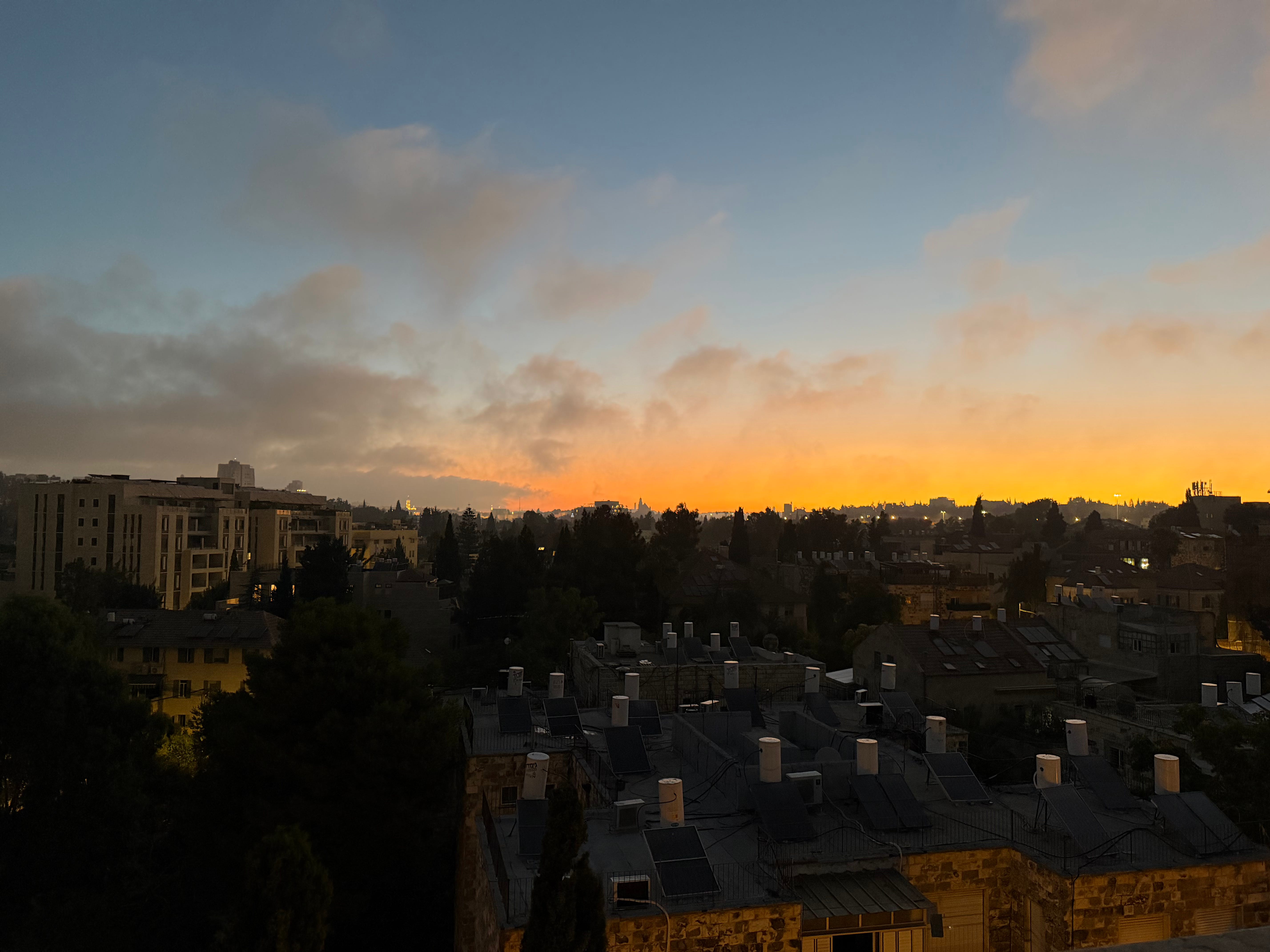
Then the harder question. My sister’s husband just left for a three-month stint of miluim, the reserve duty that hundreds of thousands of Israeli families carry year after year. She is not alone. So many of my cousins and my husband’s cousins are serving, leaving behind newborns and careers. Are we really doing what we can to share that burden?
I do not know what the future holds, or whether my cousins’ dark premonitions will come true. I have not accepted their fatalism about America and New York; I want to fight for our country. But if we choose to stay and fight, we have to be able to answer Moses’ questions.
And like those tribes on the far side of the Jordan, we had better keep building altars of our own: schools and communities strong enough to remind our children who they are, so that the Jews of Israel never look at them and see strangers.
We fly back to New York in a few hours, and I am so sad to leave. The words Caleb and Joshua spoke against the spies keep rising in me: tova ha’aretz me’od me’od, the land is very, very good (Numbers 14:7). It is.
I love this land, and these people, and I pray that God keeps giving us the privilege of coming back the way my cousins begged us to come: willingly.
Shabbat Shalom,
Mijal
🎙️ Loved my conversation with JBS’s Rabbi Justin Pines on Jewish Insights about America’s Golden Age. Give it a listen!
No posts
Comments
Nothing yet. Say the first thing.
Sign in to join the conversation.