
By Renai Edwards, MPH, Director of Training and Technical Assistance, and
Becky Stewart, PhD, MPH, FNP-C, Clinical Educator and Care Coordinator, Migrant Clinicians Network

The world’s oldest known contagious disease, one that kills more people every year than any other infectious disease, is spreading in a US Immigration and Customs Enforcement (ICE) facility once again. This outbreak of tuberculosis (TB) risks the health of our immigrant friends and neighbors, the surrounding communities, detention facility staff, and even countries receiving deportees. And it raises many questions about the spread of TB, the typical public health response to an outbreak, and the current reaction in this ICE facility.

On July 11, 12 people at the Aurora ICE Processing Center operated by the for-profit GEO Group in Aurora, Colorado tested positive for tuberculosis (TB) infection, according to a detainee. TB testing was reportedly offered to people detained in the facility after a person in the facility was diagnosed with active TB disease. GEO Group is also reported to be blocking the local county health department from investigating an outbreak, according to a court document filed this month. According to ICE, the person with active TB disease was identified on June 10 and then was “treated, cleared, and removed from the country” on June 25. As of July 15, according to a report, at least 61 people were known to be exposed to TB and one of them is being isolated, potentially because they are showing symptoms of TB disease.
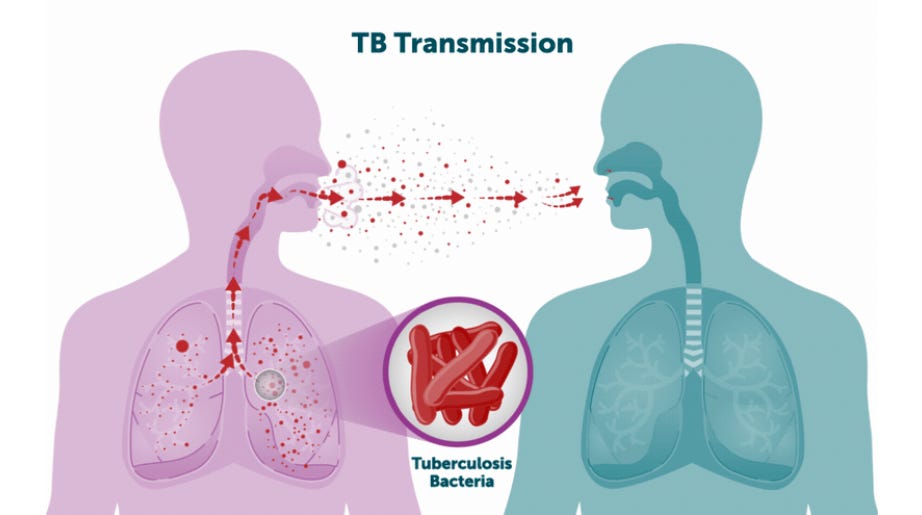
TB is the #1 infectious disease killer in the world. Over 1.25 million people die of TB every year – even though it is preventable and can be cured with antibiotics. TB is caused by bacteria (Mycobacterium tuberculosis). It is an airborne disease, meaning that it is spread by breathing, talking, and coughing. People who are infected with TB bacteria, but don’t have symptoms, have latent TB infection (LTBI). LTBI can’t be spread to other people. In about 5 to 10% of cases, LTBI develops into active TB disease. A person with LTBI who is or becomes immunocompromised (with HIV, diabetes, or other conditions that weaken the immune system) is at higher risk of their TB becoming active.
TB is a reportable disease in the United States. All health care providers, whether working in a clinic, hospital, or an ICE detention facility, are required to report confirmed cases to the state or local health department. The TB program at the health department will provide or advise on treatment and are responsible for making sure everyone who has been exposed to TB bacteria is evaluated and treated, as needed. In this current outbreak, initial reporting and treatment appears not to have followed typical protocol: “GEO has not provided all of the information or access necessary for ACHD and Denver Health Tuberculosis Clinic to complete the public health investigation,” noted the Adams County health spokesperson.
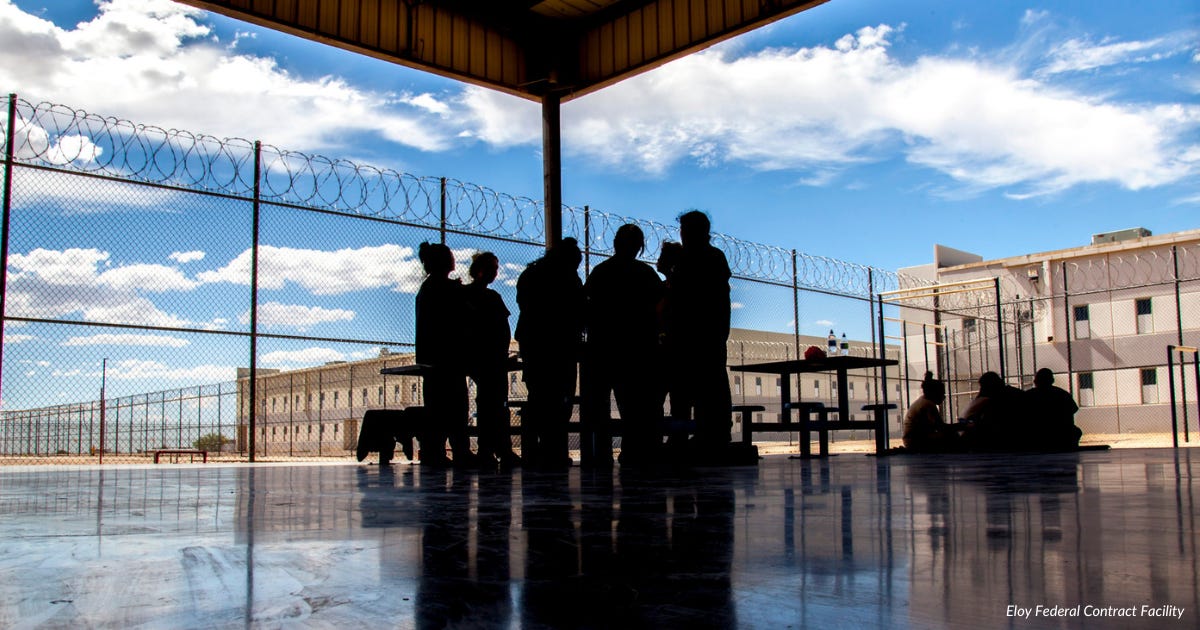
Because TB is an airborne disease, people held in crowded facilities for extended periods of time are at high risk of infection, if even one person in the shared facility has active TB disease. In ICE detention facilities, people live, sleep, and eat together in large groups. They often have very little access to fresh air. Inadequate medical care could make pre-existing health conditions worse, which could increase an individual person’s risk of developing TB disease if they are infected. Although relatively rare now, TB outbreaks used to occur frequently in US prisons, affecting incarcerated people, prison employees, and even surrounding community members.

TB transmission in prisons and ICE facilities is entirely preventable. Before detaining someone in a facility that is crowded with other people, each person should be screened for any evidence of TB. ICE’s own 2025 National Detention Standards require facilities to screen people for TB immediately upon entry, screen anyone with suspected symptoms with a chest x-ray, treat them immediately, and house them in an airborne isolation room with negative pressure ventilation until they are adequately treated and non-infectious. Standard treatment for TB usually requires at least six months of daily antibiotics; if a person has drug-resistant TB, the treatment can be even longer. No one with active, untreated TB disease should be detained in a facility with 1,500 other people and no one detained or working in a facility should be infected with this deadly disease as a result of their detainment.
The current outbreak raises numerous red flags.
How could someone with active TB disease not be identified during intake, and evaluated, treated, and isolated to prevent further spread?
How did 12 other people in that facility become infected before medical staff identified that someone was sick?
How many other detainees or ICE facility workers have become ill?
Are they receiving adequate medical care, or are they putting others at risk?
Was the initial person with TB disease still sick and contagious when they were deported?
Was their care transferred to a medical team in their destination country?
MCN’s Health Network frequently coordinates TB case management and care for people on the move within the United States and internationally and returns follow-up results to the originating US health care providers. Although we were not notified about this case, in the past, we have coordinated care for people with TB who were being forcibly returned to their country of origin by ICE and CDC’s website recommends MCN as a TB case management partner.
GEO Group is not permitting local and state public health officials to conduct a public health investigation. In addition to public health standards, Colorado State Law authorizes the Colorado Department of Health and Environment to inspect facilities that house or detain noncitizen individuals for health and safety standards. ICE policies require collaboration with local public health to identify exposures and facilitate testing and treatment. As of July 21, more than a month after a person with TB was identified, state and public health officials have still not been granted access to the facility to perform a standard public health investigation. Why won’t GEO Group answer questions posed by the Colorado Governor, U.S. House Representative Jason Crow, and state and local public health officials?
This isn’t the first time there have been concerns of inadequate TB health care and TB transmission in an ICE facility. The same facility had a TB exposure leading to quarantines last year. Detainees tested positive for tuberculosis at the Anchorage Correctional Complex in Alaska and Adelanto ICE Processing Center in California, according to news reports. An ICE death notice shows that one immigrant died days after a diagnosis of the disease in the Eloy Detention Center in Arizona. Federal and local health officials reported two active TB cases at the massive Camp East Montana ICE detention center in El Paso, TX in February 2026.

MCN’s Chief Medical Officer, Laszlo Madaras, MD, MPH, wrote last year about a patient of his who was detained by ICE, which interrupted his TB treatment. He was not provided treatment for his TB infection during his detainment.
A medical advocate with Doctors for Camp Closure, a nonpartisan network of health professionals seeking “to end the inhumane treatment of migrants, refugees and asylum seekers” reported to CBS Colorado that people inside the Aurora facility describe excessive heat, limited access to drinking water, respiratory illnesses, and concerns about access to medical care. They said people are being housed in cells made of solid metal slabs with inadequate ventilation during periods of extreme heat. One detainee told The Guardian that the air conditioning at the facility broke down in July while Aurora was under a heat advisory with an outside air temperature of 96F. On July 15, the temperature inside the facility was recorded at 83 degrees in one of the pods. Although it seems the air conditioning has since been fixed, it took several weeks to do so according to reporting by CBS. MCN also heard from the family of one person detained at the Aurora facility that in-person visitation has been restricted, reportedly following recent protests related to the TB cases. According to the family, the lack of visits has had a significant emotional impact on their loved one, who has described the separation from family as one of the most difficult aspects of his detention.
GEO Group, who runs the facility, has faced lawsuits over “inhumane and unsanitary conditions” at other facilities it also runs.
No human being should be detained in overcrowded, unsanitary conditions without access to adequate ventilation, food, and health care. No one should be put at risk for infection with a deadly disease because ICE cannot follow its own policies. No private company funded by US taxpayers should be allowed to impede a lawful public health investigation that could save lives and prevent an outbreak.
At Migrant Clinicians Network, we demand an immediate end to inhumane detention conditions that lead to exposure to preventable, potentially deadly infectious diseases. Entities that detain individuals have the responsibility to protect those individuals from harm while detained. Access to quality health care is a fundamental human right and we will keep working until this human right is realized for all immigrants, detained and free.
We call on ICE to follow their own standards to prevent TB transmission, to provide treatment to everyone who is infected or sick with TB disease, and to coordinate with public health to prevent more people from getting sick. Read our recent position statement for more on MCN’s position on health consequences of ICE operations and to access numerous resources for serving migrant and immigrant communities: Position Statement: Health Consequences of ICE Operations are Widespread and Severe.
No posts
Comments
Nothing yet. Say the first thing.
Sign in to join the conversation.