
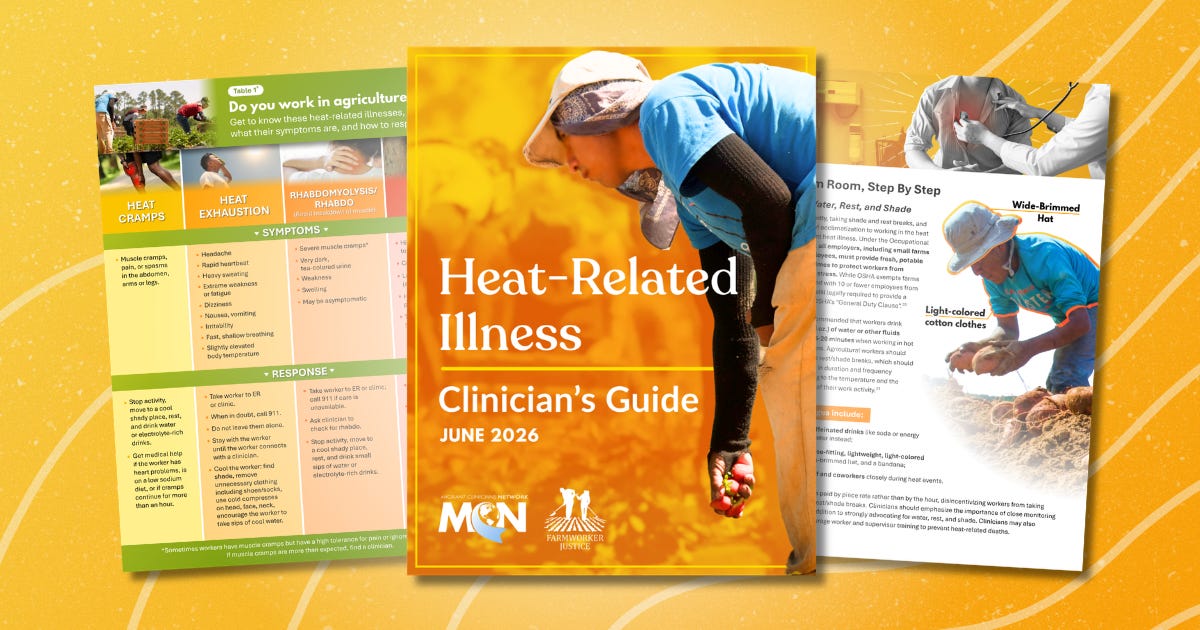
A fire hundreds of miles away, generating blankets of smoke. A new diabetes diagnosis. Exposure to organophosphates. Starting a new outdoor job. Taking an SSRI. A farmworker transportation bus that doesn’t have air conditioning. Low English language proficiency. High humidity. What do these factors have in common?
Each of these are a factor that increases an outdoor worker’s risk of heat-related illness.
This week, large swaths of the central, southern, and western United States are enduring or bracing for above-average dangerous heat. But not everyone is equally susceptible to heat-related illness.
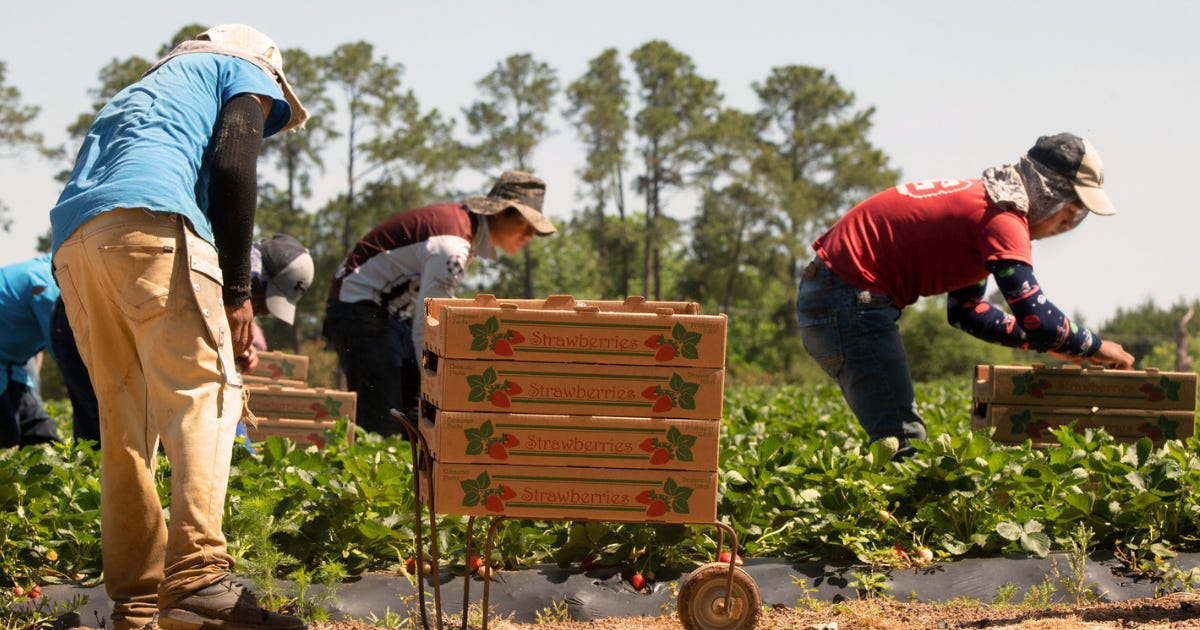
Heat risks are often framed around environmental, metabolic, and physical factors – and outdoor workers encounter all three of these factors:
working high heat, full sun, and high humidity (environmental),
doing strenuous work for many hours without breaks (metabolic),
often in long-sleeved clothing or personal protective equipment (physical).
But, in addition to these critical factors, many social, occupational, and behavioral conditions amplify heat stress by worsening heat storage or impairing heat dissipation across those three factors. Clinicians need to understand and assess the full range of risks that outdoor workers face, and they need tools to share these risks with their outdoor worker patients and communities to avoid heat-related illnesses in the first place.
To meet this need, Migrant Clinicians Network has partnered with Farmworker Justice to update its Heat-Related Illness Clinician’s Guide. The 12-page full-color guide, now available in English and Spanish, has been expanded and redesigned for more information in a more readable format.
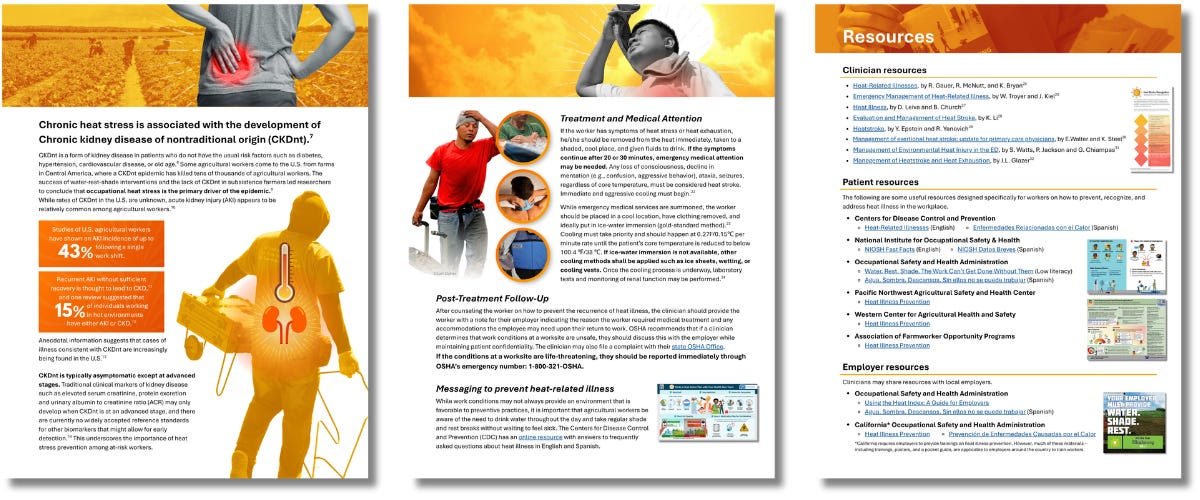
Health conditions, medications, environmental and occupational conditions, medications, and social conditions are broken down, and questions to assess a worker’s risk for many factors are recommended. An extensive updated resources list guides clinicians to additional tools. It also includes a one-page sheet that clinicians serving agricultural workers can pull out and hand to workers as they guide them to understand and recognize heat-related illness. It also dives into chronic kidney disease of nontraditional origin (CKDnt), an epidemic which continues to plague agricultural workers and for which occupational heat stress has been identified as the primary driver.
Access the new resource here: Heat-Related Illness - Clinician’s Guide 2026
Access other heat-related resources: Heat | Migrant Clinicians Network
Watch MCN’s recent webinars on heat and disasters on our YouTube channel, including:
No posts
Comments
Nothing yet. Say the first thing.
Sign in to join the conversation.