
Today, Migrant Clinicians Network released the following position statement:
The newly issued Executive Order (EO) on vaccines creates more confusion for parents, increases work burdens for pediatricians, and is currently impossible to implement. The EO will jeopardize the health of migrant and immigrant families who already struggle to access needed preventive services and will further erode their trust in the health systems.
The EO seeks to reduce the number of recommended vaccines for children and split MMR (measles, mumps, and rubella) and other multi-vaccine injections into single vaccine injections given at different appointments, without scientific justification. As a result, for example, the MMR vaccine would require six different injections at six different appointments to achieve full immunity rather than two injections at two appointments. This confusing, misleading, and unfeasible EO comes as the United States faces a significant resurgence of measles, with over 2,465 cases, the highest number of measles cases in the US since 1991. COVID-19 virus infections are starting to rise again, and the 2026/2027 Flu season is right around the corner. Across the country, children are heading back to school and need to show proof of immunizations to enroll. This EO will create unnecessary barriers and delays for our children to access life-saving vaccines, because:
The EO and accompanying press conference spreads misinformation:
Official statements suggested that a combined MMR vaccine could be lethal and that the current vaccine schedule is responsible for the higher rates of autism we see today. These claims are not supported by scientific evidence and have been contradicted by decades of research involving millions of people across countries and using a range of study designs. Such misinformation erodes trust among parents, increases fear, and leads to vaccine hesitancy. Health authorities have a responsibility to provide clear, consistent, and evidence-based information about vaccine safety and effectiveness—and to directly and unequivocally reject claims that are not supported by scientific evidence. As clinicians and public health workers speak with parents and communities, their task must now expand beyond providing health services and vaccinations to rejecting misinformation about vaccines that causes fear and leads to vaccination refusal.
The EO will result in additional clinic appointments on overburdened staff and families: More appointments will place a significant burden on clinic staff and increase the cost for clinics already operating with limited resources. In many areas, particularly in our rural communities, securing a preventive care appointment is already challenging as staff reductions and closing clinics reduce availability of care. Requiring additional appointments also creates a burden for parents and caregivers, who may need to take time off from work, arrange transportation and childcare, and potentially lose wages to bring their children to another visit. For families already facing barriers to care, these additional requirements could make it even more difficult to obtain timely preventive services. Rather than improving access to care, the EO risks adding costs and administrative burdens for both clinics and the families they serve.
Switching to single-antigen vaccines has no basis in data or scientific guidance: This change in policy is not based on current guidance from leading health organizations nor does it have scientific backing. Continuing with the MMR example, while the EO leans on European country schedules as support for the claim that children are purportedly overburdened by vaccines, all European countries and all other developed countries follow the World Health Organization’s guidance to provide the combined MMR vaccine for children. There is insufficient data on single vaccines, so determining the appropriate gap between vaccines would be speculative. Single vaccines would leave children unprotected as they wait for their next appointment – if they manage to get to that next appointment. Additionally, these single-antigen vaccines are currently unavailable in the United States or any other country, as the combined MMR is the standard of care. This EO will lead to the need for a new manufacturing supply chain, leading to potential further delays.

Text within this block will maintain its original spacing when published
Although this EO is dangerous and harmful for everyone, the negative impact will be greatest for migrant and immigrant children.
Migrants and immigrants already face significant barriers to health care. Migrants and immigrants are much less likely to have health insurance, a critical resource for accessing the expensive health care system in the US. Almost half of immigrants without legal authorization to be in the US do not have any kind of health insurance and frequently delay or go without needed care. Due to cruel immigration enforcement activities, many immigrants avoid interacting with the health care system altogether for fear of detention, family separation, and deportation. More than 5.5 million US-citizen children live in homes with at least one family member who lacks authorization to live or work in the United States and millions more have family and community members at risk of deportation; many of these US citizens from “mixed status households” may avoid care to reduce the possibility of exposing the authorization status of a household member. A 2025 survey from Physicians for Human Rights and Migrant Clinicians Network found that children were even delaying care for life-threatening illnesses. We have also heard many reports that children are not attending school due to fear of ICE operations. Language barriers, an issue for approximately half of immigrants, also make it difficult to interact with the health care system and understand confusing and conflicting public health guidance. Although historically migrant and immigrant communities from Latin America have been very willing to get vaccinated, health misinformation continues to circulate, including among immigrant and farmworker communities, and erodes trust in public health and health care personnel and institutions.
Migrants and immigrants are also at higher risk of exposure to vaccine-preventable diseases due to conditions encountered during migration and communal housing that is common among some farmworker and other immigrant families. Diseases like measles and influenza can spread rapidly in crowded places if everyone is not vaccinated. Tetanus infections, that make muscles seize and spasm uncontrollably, come from bacterial toxins found in the dirt getting into a wound. A child living on a farm or traveling by foot could be at risk if not fully vaccinated against tetanus.

In 2019, the World Health Organization listed vaccine hesitancy as one of the top ten global health threats. The threat has only grown in the ensuing seven years. Clinicians remain a trusted source of information for patients regarding vaccines. Clinicians, including Community Health Workers, are well positioned to manage difficult conversations about vaccines to improve acceptance by their patients with accurate information on timing of vaccines, and protecting the whole family and community – which is often important for immigrant families. The science on vaccines recommended by the American Academy of Pediatrics overwhelmingly shows that vaccines are safe, effective, and necessary to prevent diseases. The recommendations are based on decades of research and careful tracking of real-world experiences. Vaccines are recommended at specific ages based on when the child’s immune system will respond best and when they are most at risk for certain diseases. Vaccines save lives and guidance should be clear, easy-to-implement, and based in science.
Text within this block will maintain its original spacing when published
Although this EO will cause confusion, especially among immigrant communities, and add to mistrust of public health, it will become even more dangerous to our communities if states move to implement their own vaccine recommendations and schedules based on this flawed EO. Vaccine policy is primarily determined by states rather than the federal government and one likely result of this EO is greater disparity in vaccine access based on the state in which a person lives.
Text within this block will maintain its original spacing when published
Parents and communities need to know that vaccines and the vaccine schedule recommended by the American Academy of Pediatrics has not changed. Parents can still request and pediatricians can still provide immunizations based on the AAP schedule.

Eligible children in the US still have access to free vaccines through the federally funded Vaccines for Children Program. According to CDC, uninsured and underinsured children are eligible to receive VFC Program vaccine only through a Federally Qualified Health Center (FQHC), or Rural Health Clinic (RHC) or under an approved provider location agreement.

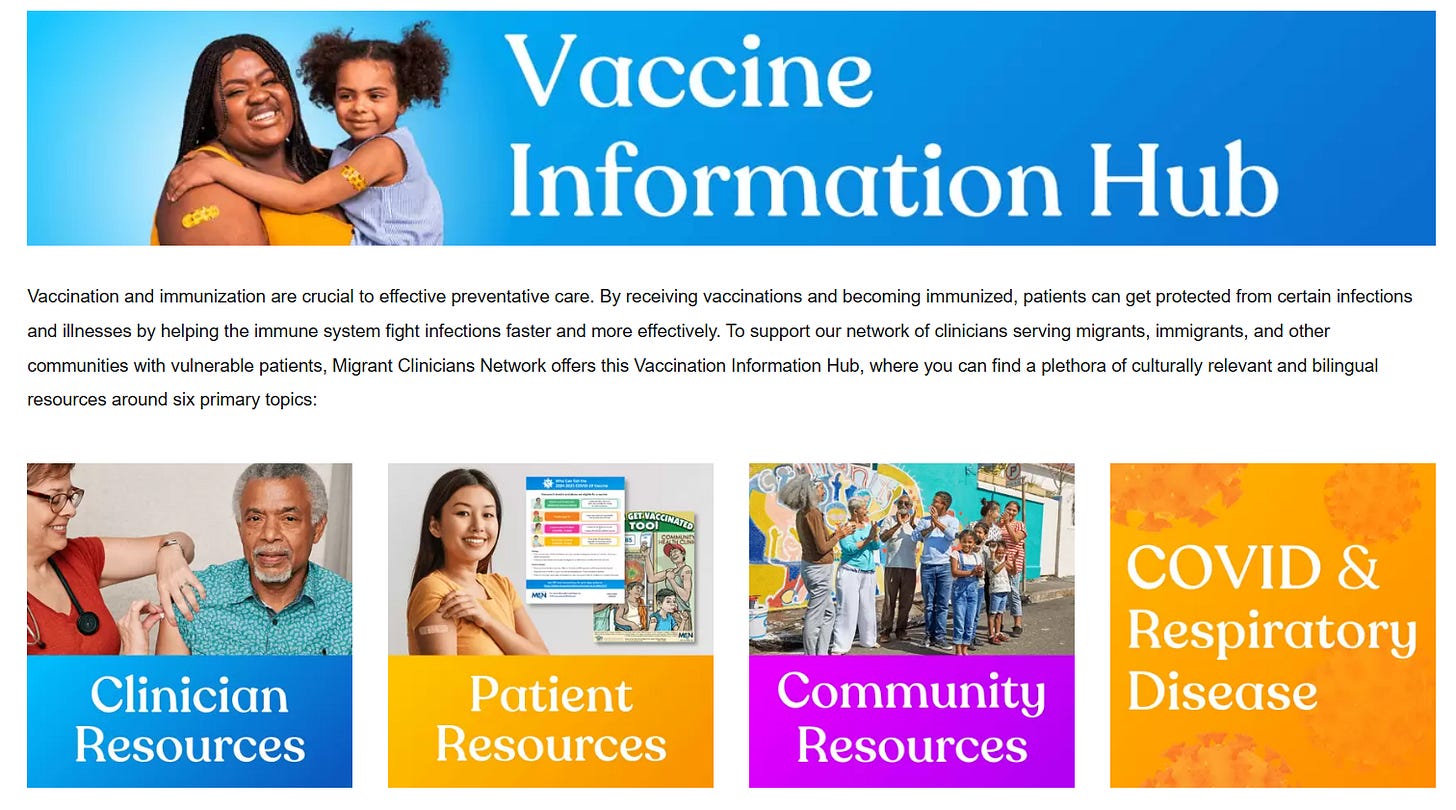
MCN has many bilingual vaccine resources that are useful for communicating accurate and understandable information about vaccines.
Whether you’re looking for patient education materials, clinician resources, or community outreach tools, MCN’s Vaccine Information Hub brings together trusted resources in one place to support vaccine conversations.
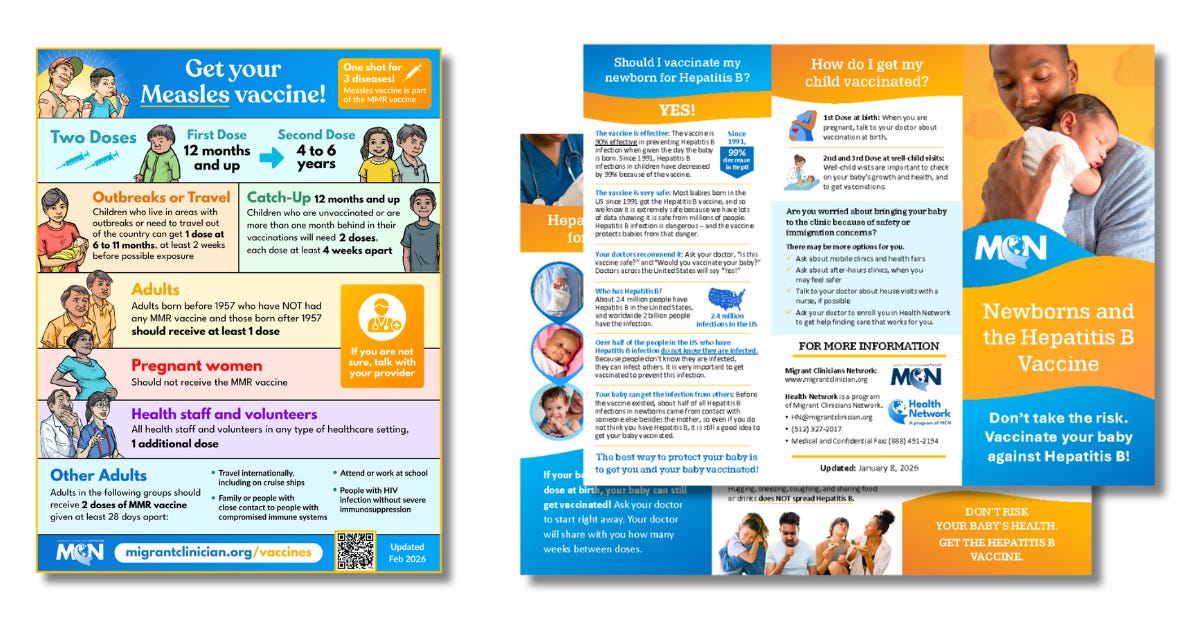
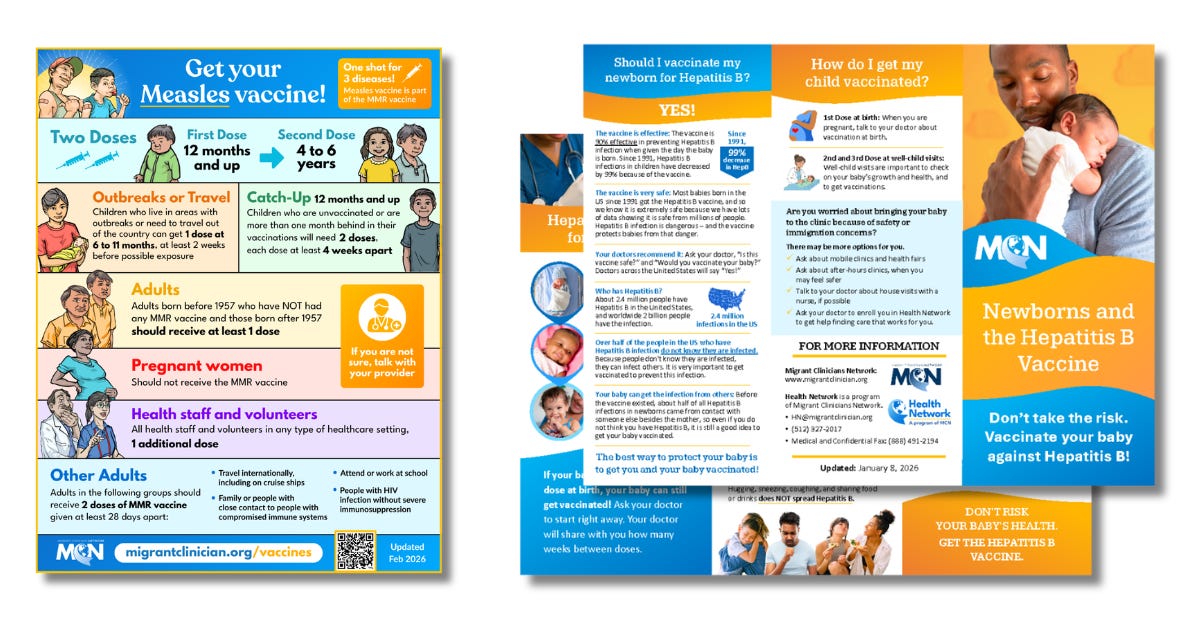
Get your Measles Vaccine and Newborns and the Hepatitis B Vaccine are MCN’s full-color handout with helpful information about vaccination in English and Spanish.
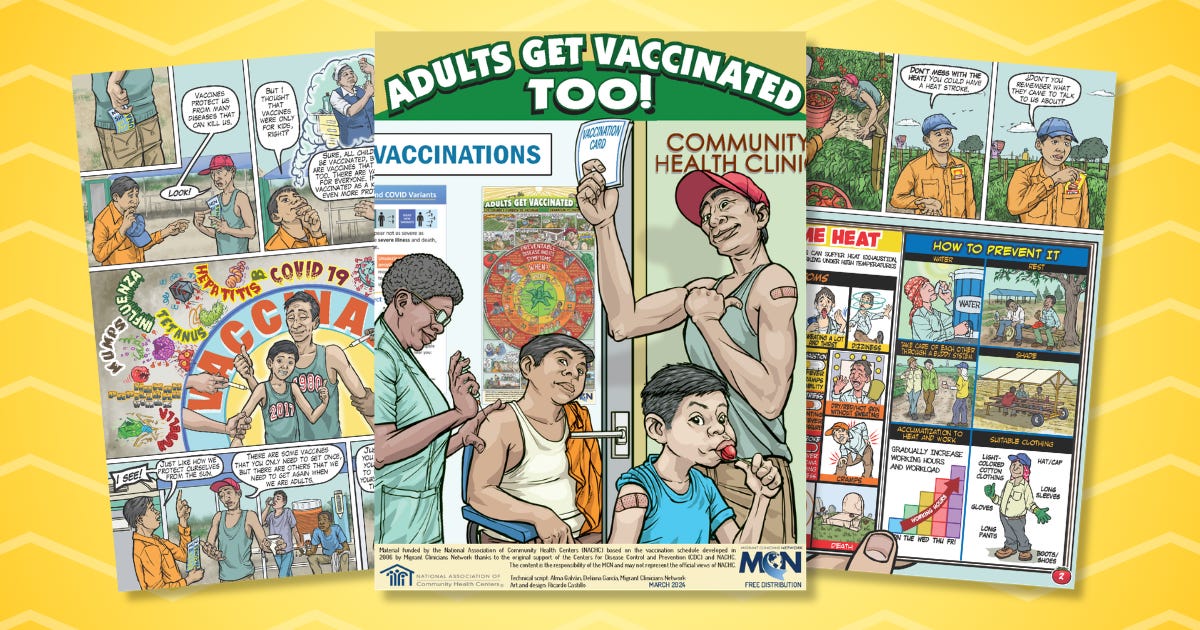
MCN’s bilingual comic book on adult vaccinations helps patients understand vaccination in adulthood.
The AAP also has an entire toolkit dedicated to helping health care providers, public health leaders, and other community-based organizations provide accurate information about vaccinations to the population you live in and serve. A special blog about FAQs for vaccine ingredients is helpful for some of the more tricky questions spurred by misleading health information.
MCN’s Health Network has Community Health Navigators that can help people find affordable vaccinations near them and transfer previous records to a new health care provider. Health care providers, community health workers, and community-based organizations can all enroll people into Health Network.
No posts
Comments
Nothing yet. Say the first thing.
Sign in to join the conversation.