

One website asserts “Sancerre is widely considered the benchmark for Sauvignon Blanc”. Indeed, it’s well-known that winemakers around Sancerre in the upper reaches of the River Loire produce some of the most refined white wines from this classic grape variety. With their racy acidity and distinct minerality they have a well-established place on the keen wine drinker’s wish list.
Another article headlines with “Why New Zealand remains the benchmark for Sauvignon Blanc”. All of this talk of ‘benchmarking’ implies an evaluation against some form of industry standard. So is Old World Sancerre or New World Sauvignon Blanc from NZ the true standard for this wine? Of course the truth is they are both reference point wines for the grape, but importantly they are two quite distinct styles.
Personally, although I’m not averse to a refreshing glass of NZ Marlborough Sauvignon Blanc, particularly with food I prefer the less strident flavour and subtlety of Sancerre or a glass from its neighbour Pouilly-Fumé across the other side of the Loire. But there’s a problem. The lovely wines from Sancerre and Pouilly-Fumé are quite pricey and, while there are some top-notch Sauvignon Blancs from NZ that command a premium too, there’s so much New World ‘NZ-style’ SB from the southern hemisphere on the market these days supply will soon be outstripping demand and making the price differential even harder to ignore. So what’s the solution?
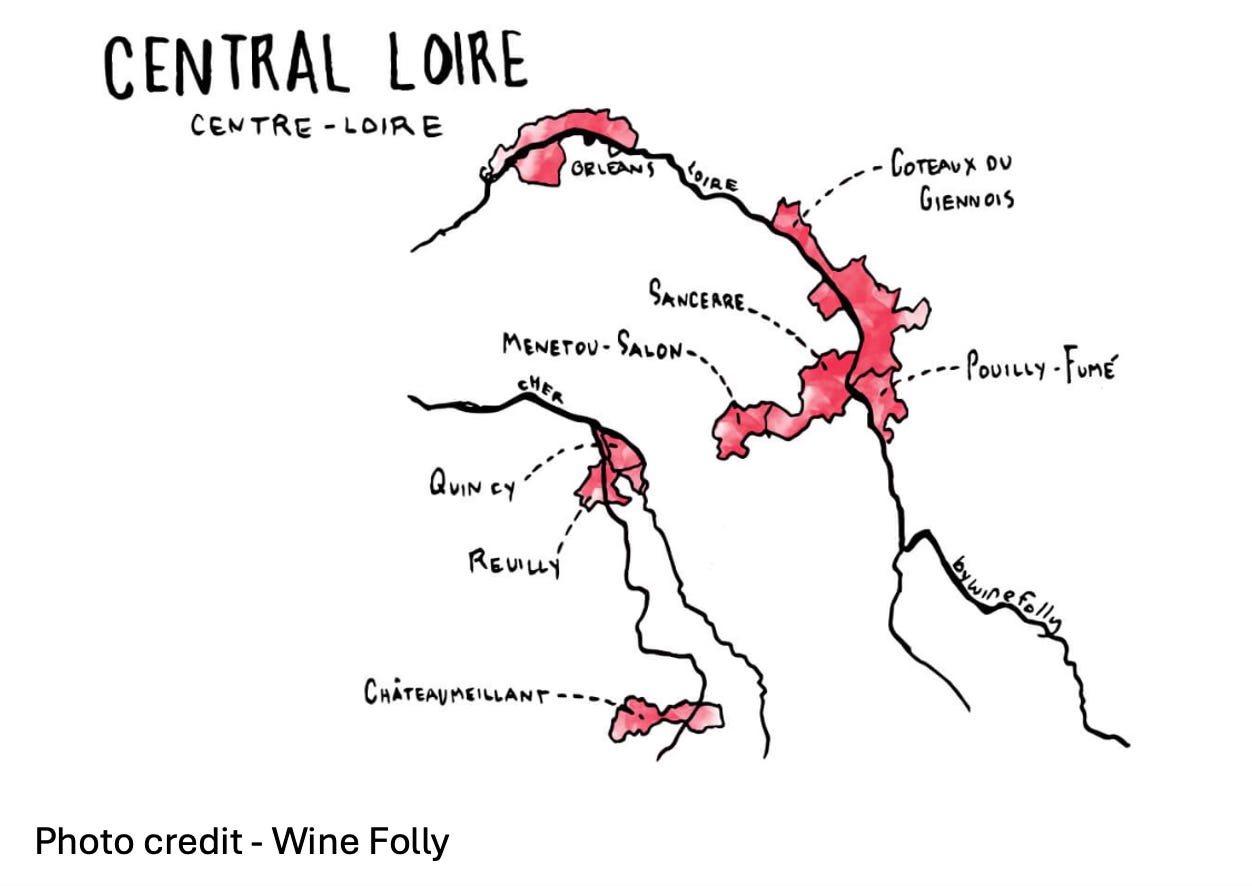
Although Sancerre and Pouilly-Fumé are the largest AOCs producing Sauvignon Blanc in the Central Loire smaller appellations nearby have steadily developed a reputation for making great wine from the same grape. Crucially they have a good record as more affordable substitutes for higher-profile Sancerre and Pouilly-Fumé. These alternatives include wines from the Menetou-Salon appellation immediately west of Sancerre and, a little further west and southwest from there two even smaller appellations Quincy and Reuilly which are practically adjacent to each other sitting beside the River Cher, a major tributary of the Loire. You can find a lot of detail out there about similarities and differences of terroirs in these satellite areas that impact on the wines (e.g. the sandy gravelly soils of Quincy compared with clay-limestone soils of Reuilly) but I decided to approach matters much more directly by setting up a tasting with a Sauvignon Blanc from each of these less-prestigious appellations just to see how they compare. They were all from the 2024 vintage.
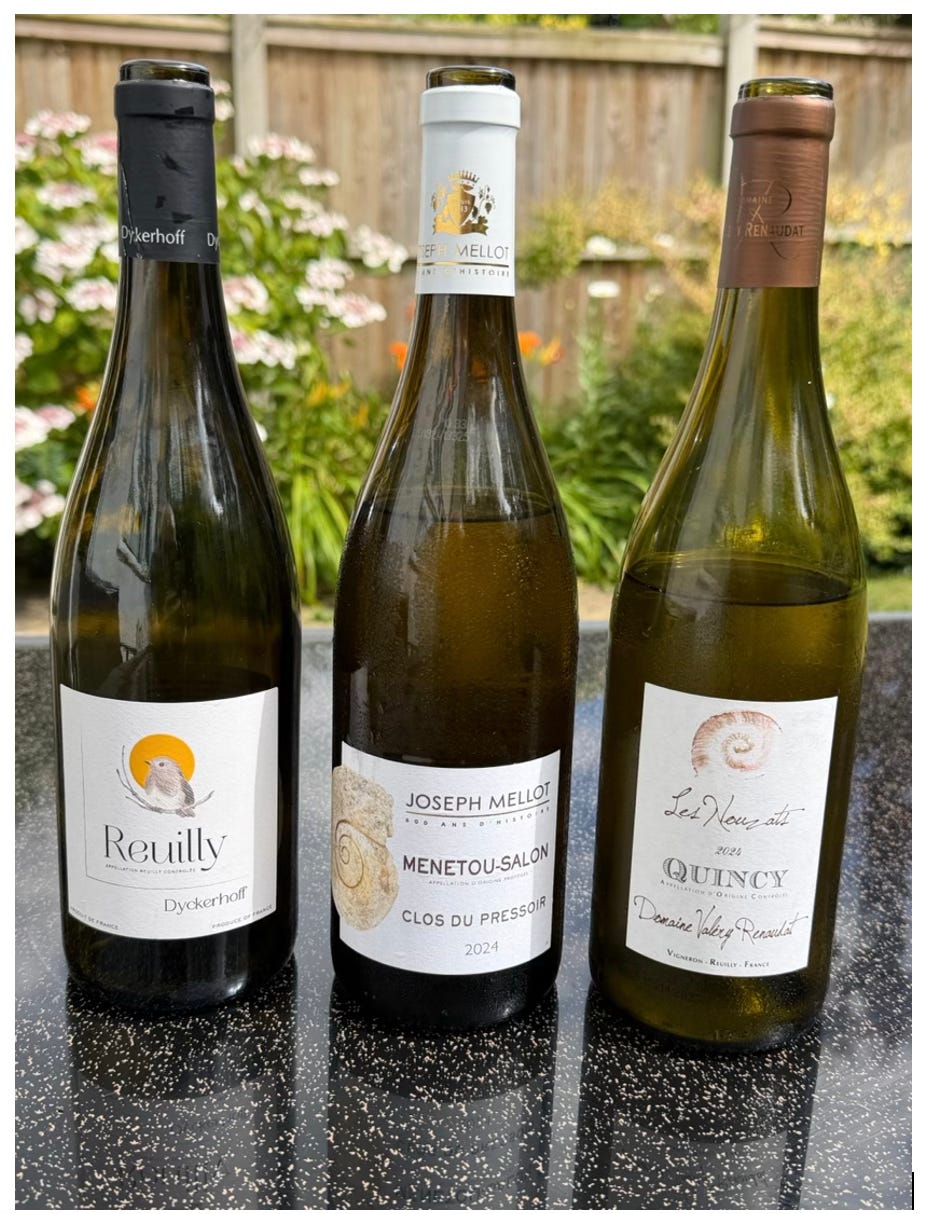
Domaine Dyckerhoff Reuilly 2024 12.5%
Pale yellow with gentle aromas suggesting orange blossom or perhaps a little tangerine but in the mouth tending more towards crisp citrus flavours. Dry (0.28 g/l residual sugar), light bodied with balanced acidity and a medium fresh finish. This was the cheapest wine of the three and as such was unlikely to reflect the depth of character suggested by the full Reuilly profile. Nevertheless, a well-made easy drinking wine and a perfect midweek wine.
Joseph Mellot Clos de Pressoir Menetou-Salon 2024 13%
From a producer with a significant stake in the area and a reputation for creating wines in all eight appellations of the Central Loire region. Deeper yellow than the wine above (verging towards golden) with a more persistent aroma suggesting almond and vanilla. Lively acidity, slightly spicy and mildly herbal. With a little more body this was the most fruit-forward of the three wines.
Domaine Valéry Renaudat Les Nouzats Quincy 2024 13%
This is the Quincy Sauvignon Blanc from a winery with vines across both the Reuilly and the Quincy appellations. Faced with the option of both wines I chose the Quincy because a couple of months ago in a restaurant my wife and I had particularly enjoyed a Quincy Sauvignon Blanc albeit from a different producer. Hopefully this was going to be another opportunity to confirm my preference.
Initial impressions of colour and aroma (pale lemon, lightly aromatic) are not unlike Wine 1 (the Dickerhoff Reuilly SB) but that is where the similarity ends. This is a far more subtle and characterful wine. Modest citrus aromas, warm tropical fruit flavours and an underlying flinty minerality in a wine of amazing freshness and length. We’re definitely looking forward to another bottle.
Should you be encouraged to consider trying Sauvignon Blanc from these less fashionable Loire appellations you’ll find them harder to find than expected. I’ve just checked the websites of the major high street retailers and this is how things currently stand:
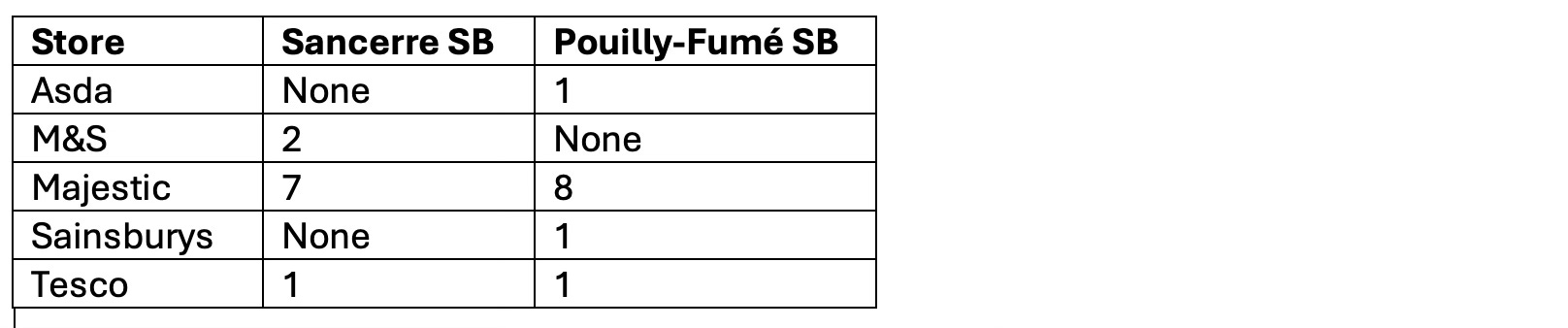
There’s not a single Reuilly, Quincy or Menetou-Salon to be found!
So, OK I need to confess that the first two of my wines here were bought in France and the last came from a UK independent. It is for this reason if you want to try any of these wines I would recommend an independent specialist Yapp Brothers Wine Merchant who have been importing regional French wines for over 50 years.
The following ARE available:
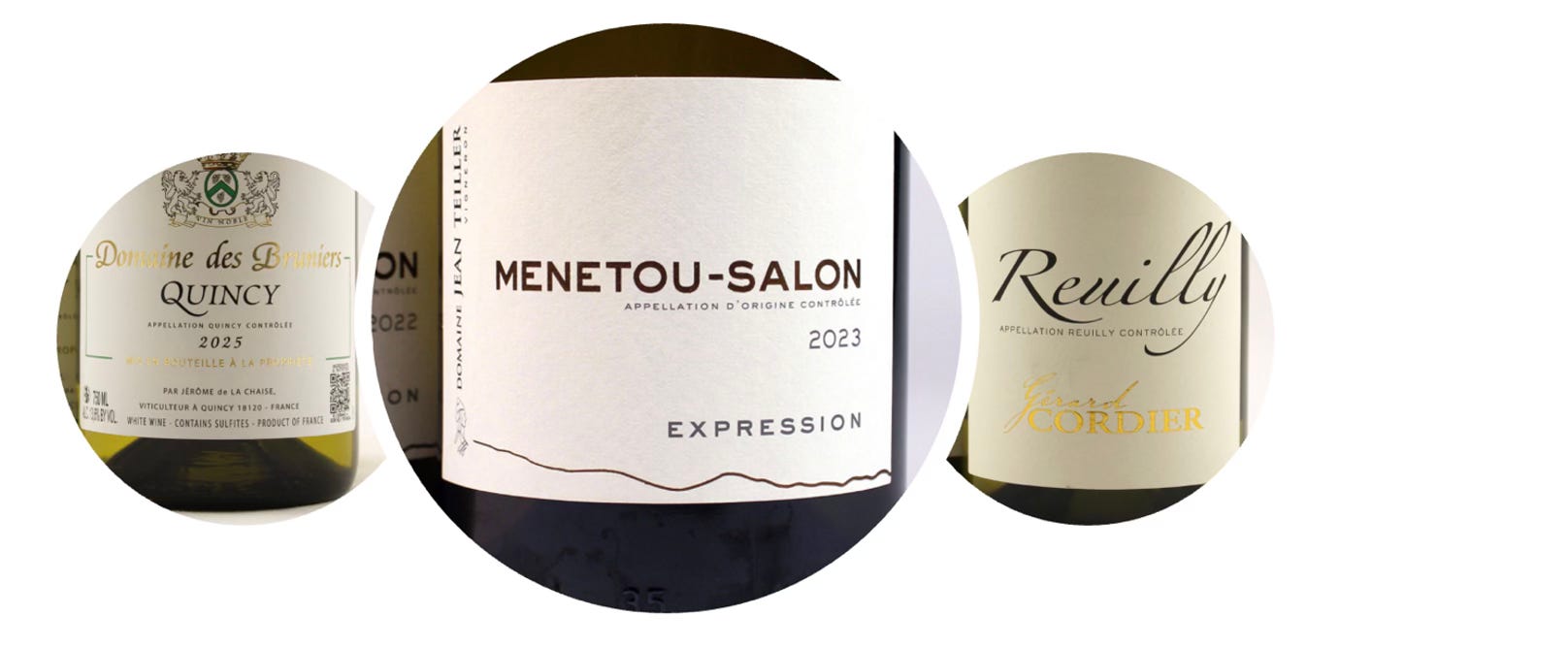
Reuilly: Gerard Cordier Blanc 2025 13.5%, £17.75
Quincy: Domaine des Bruniers 2025, 13.5%, £17.95
Menetou-Salon: Domaine Jean Teiller Blanc 2023, 13%, £21.50 (half bottle £11.75)
I recently bought a selection of Spanish wines from the Wine Society and one of the bottles was a Rafael Cambra Tinto, a Monastrell,Garnacha blend made by the winemaker mentioned on the label. It caught my eye as being familiar and it turned out I drank a red of his when I was out in Valencia,
He’s actually located south of Valencia and north of Alicante, meaning he gets to enjoy a dry, hot inland climate.
The bottle I sampled in Spain was not a Monastrell (although it did have a splash of Monastrell in the mix )
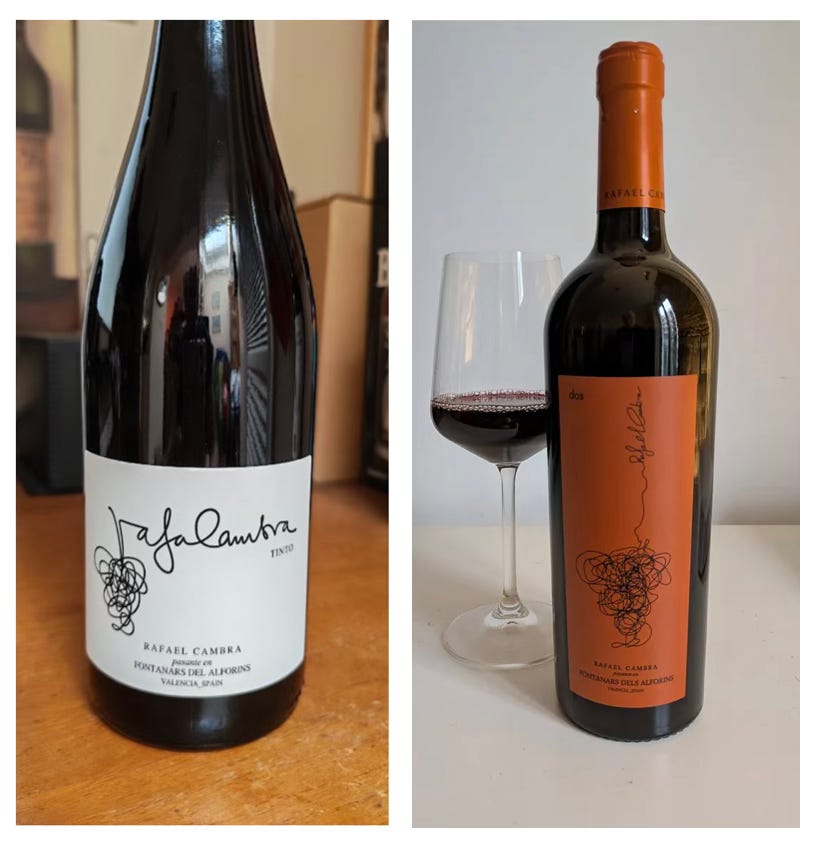
Blend of Monastrell and Garnacha
I must say his wines are very good and this Rafa Cambra is no exception, especially for the price. As I said it was a blend of Monastrell and Garnacha. It was a little dusty and herbaceous, but with bags of sweetish red fruits and a little spice,
There’s mouth watering acidity also which keeps it fresh, and it was pretty good. Check it out here.
This was the wine I drank in Valencia, despite its relatively cheap price, think I paid around 8 Euros, this was a classy red wine, and a more complex wine as well, this one and a blend of Cabernet Franc 40%, Cabernet Sauvignon 40% and Monastrell 20%.
Much fruitier than I thought it would be, full of cherries, ripe plums and redcurrants, surprisingly light tasting despite its 14% abv.
Bright acidity was to the fore, and tannins were noticeable, it did have a slight edginess and a hint of earth.
What I did do, and to benefit was decant it for around an hour.
Both excellent wines and I shall be keeping an eye out for more from Rafael Cambra.
Editor’s Note: If you have enjoyed Keith’s and Dave’s articles, and perhaps been inspired to seek out some of the wines, please consider giving a ❤️. It should encourage them to continue writing. Otherwise I will have to write more stuff as well as editing the Newsletters. Thanks!
MidWeek Wines Guild is free to all readers. If you have found something you think others will like, please consider Sharing and/or Liking this Post. It really helps us if you Subscribe, and we also love to read your Comments.
You can contact the Guild on any matter, directly, via midweekwinesguild@iCloud.com
Richard Wyndham - Let’s Talk Muscadet & Blind Tastings at Home
More Monday Top Tips from Brian Elliott
Dave Cronin - Supermarket wine aisles + Keith Evans’ Latest Recommendations
Note: Our ‘Thursday” Newsletters are usually published on Wednesdays at 19.00. And our “Saturday” Newsletters will be published on Fridays at 19.00. Brian’s Monday posts are published early on Monday mornings.
Thanks for reading! Subscribe for free to receive new posts and support our work.
No posts
Comments
Nothing yet. Say the first thing.
Sign in to join the conversation.