
One of the best things about building The ACL Hub has been the chance to sit down with athletes and actually ask them what it was like. Not what the protocol said. Not what the research says. What it was like, in the change room, on the couch, at three in the morning when the knee is throbbing and you cannot get comfortable.
I have now done a stack of these conversations, and recently I went back and read six of them side by side.
That is when it got interesting.
These six people have almost nothing in common on paper. Different countries, different sports, different codes, different ages, wildly different levels of support. Between them there is a first-timer, someone on their second ACL, and someone who lost a graft six months into rehab. And yet they kept saying the same things. Often in almost the same words. Usually without being asked.
So this piece is my attempt to pull those threads together into the things they wish someone had told them at the start.
Georgia Amoore. Australian point guard, drafted into the WNBA, and three days into her first training camp she tore her ACL at the end of a scrimmage. Missed her entire rookie season. Around nine months post-op when we spoke, back on court and yet to play a professional minute.

Lily Agg. Republic of Ireland international midfielder playing club football in England. Injured in a pre-season friendly in the depths of a UK January. Six months post-op when we talked, and not yet running.
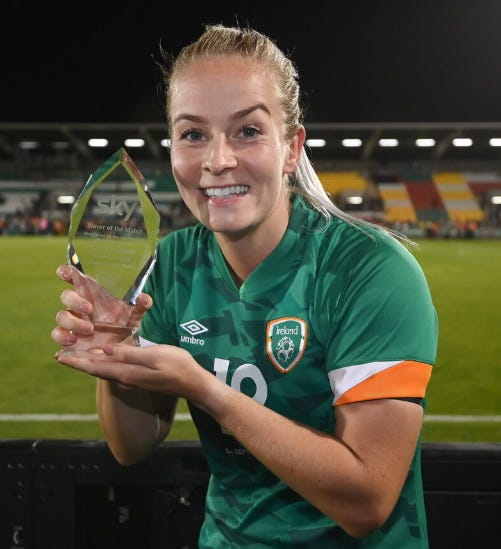
Lauren Pak. American flag footballer, trainer of twenty years, and mother of two. Tore her ACL at 38 while training for national team trials, in what she describes as the best shape of her life. Ten months post-op and back on the field.
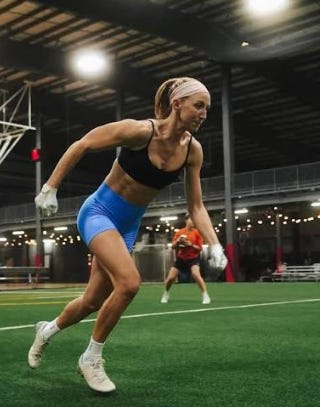
Marissa van der Meere. Professional footballer and a physio herself. Did her ACL on international duty, rehabbed well, then ruptured the graft six months in. Twelve months on from the revision and back playing.
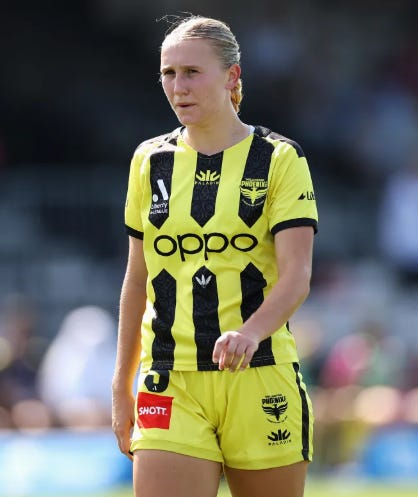
Andrew Nabbout. Men’s professional footballer and former Socceroo. Tore his ACL about a minute after scoring the winner. Five months post-op when we spoke, and deliberately choosing not to rush.

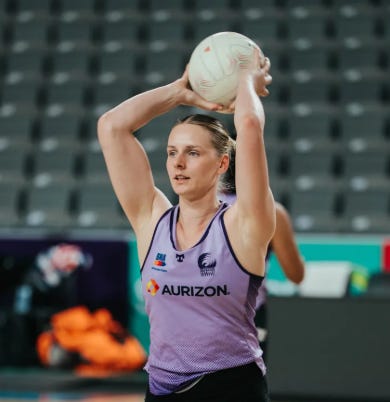
Maddi Ridley. Netballer and physio student. Second ACL at 23, this one on the other side, while working and studying full time and living interstate from her family. Six months post-op.
Six people is not a study. It is six people.
Five of the six are women. Almost all of them had a patellar tendon graft, most had an added lateral procedure, and all of them sit at or near the elite end of sport. That means most of them had access to daily physio, gyms, force plates and testing that the vast majority of you reading this simply will not have.
Four of the six also work in health, fitness or sports science. They knew what to ask for and they were not shy about asking. Most of your patients, and most of you if you are the one with the injured knee, will not have that advantage.
I have flagged this up front because it matters. If you read these stories and conclude that your rehab is substandard because you are not doing two sessions a day with ten sets of eyes on you, you will have taken exactly the wrong thing from it. Every one of these athletes warned against measuring yourself against someone else. It would be a bit rich of me to publish something that encourages you to do it.
Right. Let’s get into it.
It rarely starts on the day it happens
You will probably know before anyone tells you
The first month is not the time to be brave
Nobody could tell good pain from bad pain
Protocols are starting points, not verdicts
Your rehab has to compete with the rest of your life
The plateau is where people quit, so write things down
Comparison will find you, so choose what you compare to
You need numbers, and you need someone else’s eyes
Passing the tests is not the same as being ready to play
Rehab is lonely, and the fix is other people
You are more than the knee
Every one of these six could tell me a story about the weeks before, not just the moment.
Georgia was three days into training camp after a college season that ran to March, a draft in April and almost no gap in between. Fatigue was high, it was the end of a scrimmage, and it was a move she had made a thousand times.
Lily had come back from a Christmas “break” that was not one, straight into four consecutive days of testing, then a friendly on a pitch that was frozen solid, after a five minute warm up she flagged as inadequate at the time. She had also just moved house and was commuting over an hour each way.
Lauren was playing out of position, in a role she had never trained for, sprinting in at full speed on the last play of a tied game, on ground she describes as basically dirt.
Andrew had spent the previous two seasons rehabbing both Achilles tendons.
None of these are “they landed badly” stories. They are congestion stories.
Here is the thing though. Every one of them has also built a detailed personal theory of why it happened, and some of those reasons are almost certainly real risk factors while others are almost certainly noise. Lauren told me she could pinpoint a hundred different reasons. The cold. The surface. The position. The speed. Where she was in her cycle. She cannot know which ones mattered. Neither can I.
For what it is worth, we do see patterns. We saw ACL numbers climb after the COVID lockdowns here in Australia when everyone piled back into sport at once. We saw a spike in Achilles ruptures in the NFL after a lockout kept players away from clubs and then reopened the gates. We know reactive, defensive roles carry more risk than roles where you know what you are about to do. We know cross-coding into an unfamiliar sport bumps risk. And we know family history matters, with two of these six mentioning a parent or sibling.
But we can never hang the whole thing on one variable, and I would be lying if I told you otherwise.
For the physios: People will build a story about why it happened whether we help them or not. Our job is to help them build one that is accurate enough to be useful for prevention, without letting it curdle into self-blame, and to be honest that a chunk of it is genuinely unknowable. “Playing out of position on a rock-hard pitch when you were already cooked” is useful. “I should have known” is not.
This one surprised me by how consistent it was.
Georgia grabbed her knee, collected herself, and thought: I hope it is not the ACL, but I have definitely done something.
Lily said “I’ve done my knee” out loud, repeatedly, while the physio was telling her not to think like that.
Lauren heard the pop, felt the foot stick, and knew immediately. Then she got told by the first two clinicians she saw that it was not swollen enough, she was walking too well, and it was probably not an ACL. She was refused imaging for six weeks and eventually paid six hundred US dollars out of her own pocket to find out she was right.
Maddi, on her second ACL, felt the identical sensation and her first words were “not again.”
There is a mechanical reason we sometimes miss it. Georgia wondered aloud whether her tests came back equivocal because her quads were so strong, and she is probably onto something. If you cannot get hands on a knee within a few minutes, before the guarding and the spasm kick in, and the person in front of you has serious muscle tone, you can absolutely get a soft feeling test on a completely torn ACL.
One more thing worth knowing, from Maddi. It was the pain going away that frightened her. She felt the click, the pain vanished, she turned to the physio and said “it feels good now, that’s not good, is it?”
She is right. Patients may read resolving pain as reassurance. It is not.
For the physios: An athlete’s own read on the mechanism is data, not anxiety. If they are telling you they felt something shift and heard something pop, that belongs in your clinical reasoning with real weight, even when your tests are equivocal. And be careful with early reassurance. “Let’s not jump to conclusions” is well meant, but if you are wrong, you have spent credibility you are going to need later.
Almost everyone described the first four to six weeks as the physically worst part, and a couple of them made it worse by trying to tough it out.
Lily, who by her own admission will not take a paracetamol for a headache, found that every time she let the medication lapse the pain was excruciating. Once she started staying ahead of it, everything improved. She spent that month icing, medicating, watching Netflix and feeling sorry for herself, and she would recommend it.
Lauren described pain worse than she expected, and this is a woman who has been through two births and plenty besides.
Andrew looked down at his leg the day after surgery and found his quad was half the size it had been. Which, if you have had a quad graft, is exactly what happens, and it is confronting.
Two things I would add here as a physio.
First, control pain and swelling early and you buy yourself an enormous head start. Push hard into an angry knee in that first month and you can spend the next three paying for it.
Lily was told at three months that her knee was red, hot and angry and she needed to strip everything back. No bike, no weights, back to basics for two weeks. She felt lazy. She felt guilty. She felt like she was going backwards.
Her swelling settled, her extension arrived, and her quad started working properly for the first time. The thing that fixed it felt like failure while she was doing it.
Second, the donor site has its own story, and nobody warns people about it. A patellar tendon graft means an anterior knee that is grumpy about kneeling and about being touched for a few months. An added lateral procedure means the outside of the knee feels tight and burning. Georgia said it felt like she had sustained a separate injury altogether, and that when she was chasing range, the restriction she felt was lateral, not at the front.
She would still choose it again, for the record. But she would have liked a heads up.
For the physios: Tell people what the graft site is going to feel like, specifically and by location, before they feel it. Tell them the lateral procedure has its own four week story. And normalise deloading in advance, so that if you need to strip things back at week ten, it lands as good clinical judgement rather than as evidence they have failed.
If there is one lesson in here I would put on a poster, it is this one.
All six of them worked this out alone, by trial and error, and every one of them found it stressful.
Lauren was elevating her heel to chase extension, in a lot of pain behind the knee, asking herself constantly: am I helping this, or am I setting myself back?
Lily learned, eventually, that discomfort is fine and pain is not. And that if what you are doing through the day is stopping you sleeping at night, you are doing too much.
Georgia had the opposite lesson with her patellar tendon. You have to get uncomfortable with it to get comfortable again, which meant deliberately touching, rubbing and kneeling on the thing that hurt.
Both are right. They are just different problems. Tendon and scar discomfort you work into. A hot, swollen joint you back off. And nobody explained the difference to any of them.
There is also a lovely detail I had not heard before and have not heard since. Georgia described gagging, actually needing to burp, during soft tissue work and single leg extensions. Not pain. Just an overwhelming discomfort that came out through her guts.
If that has happened to you, you are not the only one.
For the physios: Teach the map explicitly and early. Which pain is fine to work into (graft site, tendon, scar, muscle soreness). Which pain means back off today (joint line, effusion, night pain). Which pain means call me (sudden, unexpected, giving way). Ask where the pain is, not just how bad it is. And check they can still sleep, because that is one of the better markers we have that the daily dose is about right.
Here is a fun one.
Lauren and Marissa both had meniscal repairs. Lauren was told non-weight bearing for six weeks. Marissa was weight bearing straight away, with two repairs. Different surgeons, different countries, both fine.
Lily’s surgeon put it to her beautifully. For any given movement, a physio might know six exercises that train it. There are two hundred. Those six might not suit this person.
Lily also, at four weeks, was being told she should have full extension by now and getting upset about it. She asked the obvious question nobody could answer: who exactly got their extension at four weeks? Were they hamstring grafts? Because she did not know a single person with her combination of procedures who had.
Lauren had the opposite experience, which is just as instructive. Her PT deliberately never gave her milestone numbers. Never told her where she should be. Just looked at where she started, where she had got to, and what was next. She reckons that is a big part of why she stayed sane.
Meanwhile Andrew’s complaint runs the other way. He is a famously fast healer who has beaten timelines by half his whole career, and he has been held back at markers he had already comfortably passed, because the calendar said so. His framing is the fairest I have heard, and he says it cuts both ways: if a player is not ready at ten weeks, do not push them out at ten weeks either.
The point is not that protocols are bad. It is that they describe a population, and you are treating a person.
For the physios: Progress on criteria, not the calendar, in both directions. If you are quoting a benchmark, be ready to say which population it came from. And if the person in front of you has a different graft, a concomitant repair or a big bone bruise, say so out loud. It costs you nothing and it stops them feeling like they are failing an exam nobody showed them.
This is the one that closes the gap between these stories and yours.
Maddi did her first ACL rehab in lockdown, in a garage gym, with nothing else in her days. Wake up, rehab, bit of uni, sleep, repeat. She ran at 12 weeks and played at 10 months.
Her second ACL came while she was working as a Pilates instructor and exercise scientist, studying full time, living in a different state from her family, and unable to work for six to eight weeks because her job requires a functioning knee.
At 24 weeks she had not run yet.
Same person. Same body. Same surgeon.
Her point, and I think it is the most useful thing in these six conversations, is that people badly underestimate the load of just doing the mundane daily tasks for yourself while you are also rehabbing.
Compare that with Georgia, who described rehab as literally her job requirement. Two hours of rehab, then a lift, most days, with facilities and staff and food weighed out to the gram. She was not working harder than Maddi. She just had fewer things to do.
Then there is Lauren, who ran a business with her partner and had a three year old and a six year old and could not carry either of them. When I asked her about the hardest part, that was the one that made her want to cry. Not the pain. Not the surgery. Not being able to pick up her kids.
So if you are the person reading this while working full time, doing the school run, or paying for physio out of your own pocket: a slower timeline is not underperformance. It is arithmetic.
For the physios: Ask what else is in their week before you write the program. How many sessions can they actually do? Do they have gym access? Can they drive? Is their job on their feet? A textbook program that does not fit their life will get 40% adherence and make them feel guilty about it. A modest program that fits will get done. And watch for the all-or-nothing types, the ones who skip the whole session because they could not do all of it.
Ask any of these six what the hardest phase was and you will get a version of the same answer.
The early wins are enormous and constant. I can lift my leg. I can walk. I hit 90 degrees. Then it flattens out, and you are putting in more and more work for less and less return.
Lauren gave me the numbers. She hit 70% quad symmetry at three months and was thrilled. It then took her another six months to get to 90%. Six months to move twenty points, seeing 1% change at a time. She described it as putting in more work than ever and getting less back than ever, and being talked off a few ledges by her PTs along the way.
Georgia put it more bluntly. That flat patch is where people quit on themselves. Not at the start, when it is painful and dramatic and everyone is rallying around you. In the middle, when it is boring.
Two fixes came out of these conversations, and I like both because they cost nothing.
The first is maths. Maddi sat down with a friend and broke it down. 35% asymmetry, six months to go, that is about 5% a month, about 1% a week. Suddenly the job is not “close a 35% gap.” It is “find 1% this week.” She said it changed how the whole back half felt.
The second is a journal. Lauren kept one and told me flatly that she is not a journal person and never has been. But the value was not the writing, it was the reading back. When you feel stuck, you flip back three weeks and discover you have actually moved a long way.
The plateau feels flat partly because nobody can perceive 1% a week in real time. A written record gives you back the ability to see it.
That second one also solves a problem Lily had. She could not bring herself to celebrate small wins, because in her head you do not celebrate until you are back. Fair enough. A written record does the job without requiring you to feel anything about it.
For the physios: Warn them the plateau is coming, before it arrives, and tell them it is normal rather than a sign something is wrong. Show them their own data plotted over time, not just today’s number. And suggest the journal at week one, not week twenty, because its whole value is in having something to look back on.
All six raised this. Every single one, unprompted, and several named it as their main piece of advice.
Lily made an actual list of everyone she knew who had done an ACL so she could follow their journeys. She would look at their three month posts and think, hang on, should I be doing that exercise? Why am I not doing that? She describes it as becoming a bit of an obsession, and she has been actively working to stop.
Georgia was comparing herself to athletes her age and older and asking why her rehab did not look like theirs.
Lauren, and this is my favourite, compared herself to a professional NFL player who had torn his ACL the same week and was documenting the whole thing. On paper that is the worst possible choice. Elite athlete, unlimited resources, no chance of keeping pace. But she found it helpful, because she was not using him as a scorecard. She was using him as a preview. Oh, he is doing that. I did not know that was going to be possible. That is coming for me too.
And Maddi is comparing herself to herself. Her own previous rehab, same body, same surgeon, ran at 12 weeks last time and has not run at 24 weeks this time. That is the sneakiest version of all, because it feels like a fair test.
It is not.
The distinction, I think, is whether you are using someone else as evidence something is possible, or as a verdict on you. The first one is useful. The second one will eat you alive.
Special mention to Lauren, who went down a Reddit rabbit hole of ACL horror stories and came back with the best advice in the whole set: do not read horror birth stories and do not read horror ACL stories. Neither is helpful.
For the physios: Assume they are comparing, because they are. Ask who they are following and what they are taking from it. Then give them something better to measure against, which is their own numbers from six weeks ago. “You’re behind” is never a useful sentence. “Here’s where you were, here’s where you are” almost always is.
Georgia and Lily had almost mirror image experiences here, and together they make the point better than I could.
Georgia had jump counts, accelerations, decelerations and high speed metres tracked and gradually progressed every week. She found it reassuring, which I did not expect. Her reasoning: there are ten sets of eyes in that building, and if I were doing something wrong, somebody would say something. The data meant she could stop policing herself.
Lily was asking for exactly the same thing and not getting it. At six months she was told she was good to run, and she declined. She had no strength numbers, her operated leg felt obviously weaker, and she had already tweaked her calf on the good side from overcompensating. She wanted to see figures first.
That is a mature call, and I said so at the time. But look at what she had been left to do. Make a clinical risk decision on her own, with no data, based on how her leg felt.
Same mechanism, opposite supply.
For what it is worth, on running: some papers suggest 60% symmetry is about the earliest anyone gets away with it, 70% is probably the most commonly quoted figure, and the more recent guidance is drifting toward 80%. My own experience is that at 80% they are still running a month later. At 60 or 70 it is a coin toss. Half of them are fine and half have picked up a calf or a hamstring and gone backwards a month.
The other half of this lesson is human, not numerical.
Marissa is a physio. Lauren is a trainer with twenty years of experience. Maddi is studying physio. All three said the same thing: the knowledge helps, but you still need someone else looking at you.
Marissa’s reason was the sharpest. She needed someone to tell her when she was ready, because left to herself she would have held back too long. Lauren handed her programming to a colleague who sees post-ACL athletes every day, and called it dropping the ego.
I am in no position to judge, by the way. I have rehabbed my own calves with all the discipline and objectivity of a bloke who has decided he knows best. It goes about as well as you would imagine.
For the physios: Give people numbers even when the numbers are not flattering. Uncertainty is more stressful than a bad result. And if the honest answer to a question is that you are not sure, say so. Andrew told me the three most powerful words in the English language are “I don’t know,” and that admitting it earns you far more trust than answering for the sake of answering. He is right.
Lauren hit over 90% symmetry on quads and hamstrings, passed her jump tests, passed her force production tests. Everything within 10% side to side.
She went out and took one drive. Ran a go route. Caught a touchdown. Could have stopped there, got excited, stayed in for a bit more.
It cost her a full week of training. Swollen, sore, and questioning whether she had done something serious.
She had not. She had just done something she had not trained for. Her conclusion: passing the return to sport tests did not mean she had built the capacity to play a whole game, because she had never trained to play a whole game.
Andrew describes the same gap from the other side, and I think his version is the best articulation of it I have heard. He is sprinting, doing ball work, doing skills, feeling close. He looks over at the team and thinks, I could do that. Then he reminds himself he is miles off, because everything in rehab is controlled. They set the speed. In a game, nobody sets the speed.
That is also why he chose not to come back when he could have. His surgeon was comfortable at seven months and would have preferred nine. Seven months landed mid off-season with nothing to play for. Round one was at eleven. So he took day one of preseason at about eight and a half, and he was refreshingly honest that if it had been his last contracted year, he would have been pushing for six and a half and taking the risk.
I have said this before and I will say it again. I reckon we have named the thing badly. “Return to sport testing” gets heard as “cleared to play Saturday.” It is much closer to return to full training testing. There is a whole bridge to build after it, and the reinjury numbers suggest we are not building it often enough.
For the physios: Say the quiet part out loud. Passing the battery means they are ready to train, not ready to play 90 minutes. Then build the bridge: small sided games, chaotic and reactive exposure, progressive minutes, and a plan for that first game that includes what happens the week after it. And be explicit that some soreness after the first hit out is expected, so they do not spend three days convinced they have re-torn it.
Not one of these six got through it alone, and every one of them volunteered that without being asked.
Lauren’s partner took over the business, the housework and the school run, and left a little cart by the couch before surgery with tea, a blanket and a journal on it. I thought that was a fairly outstanding effort.
There were mums. Maddi’s, who got a phone call her daughter could not finish. Lily’s, who sent motivational quotes and old clips of her daughter playing.
There were friends who turned up with food and sat and watched a movie. Georgia had a therapist, and a group of mates who could be relied on to tell the truth rather than blow smoke.
But the one I want to highlight, because it is free and almost nobody does it deliberately, is the rehab buddy.
Two of these six had one. Marissa did her rehab alongside a teammate who was a month or two ahead of her, and when the squad travelled they would hang out and watch the games together. Andrew, a senior professional, ended up in the rehab room with a 17 year old who had torn his ACL two months earlier. He went in thinking it was his job to mentor the kid and quickly discovered the kid was pushing him.
The ones without a buddy described the alternative. Turning up flat, not wanting to be there, the same room and the same physio and the same plinth every single day. Marissa called it groundhog day.
She and Lily landed on the same answer, which I love. You are not going to be at 100% every day, so be kind to yourself and get done what you can get done. That is a version of permission that rehab content almost never gives people.
And then there is the single most immediately useful thing anyone said to me across all six conversations, from Lily.
Two weeks post-op, on crutches, back in at the club, and roughly a hundred people a day asking “are you okay?”
She is not okay. She is on crutches. There is no answerable response, so she would say “yeah, all right” and feel worse.
Her suggested alternatives: ask how their weekend was. Ask about their family. Ask what they got up to. Or just pay them a compliment. Tell them their arms are looking good. Tell them the quad is coming back. Anything that lets them be a person for thirty seconds instead of a knee.
That is not physio advice. That is advice for everyone.
For the physios: Book two ACL patients into the same slot on purpose. Seriously. It costs you nothing and it might be the highest value intervention in this entire article. Beyond that, ask about something other than the knee at least once per session. And if the low patches stop lifting or start running into each other, say something and help them find someone to talk to. Flat days are normal. Weeks of them are not.
I will finish with the one that took me most by surprise.
Maddi tore her ACL for the first time at 19, having just moved interstate on her own, straight out of a childhood of school, training, bed, repeat. During that first rehab she did serious work with a sport psychologist. Not on the knee. On identity and values. Who am I if I am not this?
The payoff came years later. When she made her debut it was one of the best days of her life and she is rightly proud of it, but it did not define her, and she says realising that was its own strange challenge.
Then she tore the other one. And she arrived at that second rehab already knowing who she was without the sport.
You can hear versions of this from the others.
Georgia, sidelined for her entire rookie year, asked herself why she was pouring so much of how she felt about herself into a sport she was eventually going to stop playing anyway. She decided rehab was a decent time to work on not needing external validation from it.
Andrew, who has had a rough trot with injuries, reframes rehab as a challenge rather than a failure. He is now studying sport science, because all that time in the rehab room has shown him what he wants to do next.
Marissa found she appreciated family, friends and the beach in a way she had not when she was fully absorbed by the game.
None of this makes the injury worth it. Nobody is arguing that. But if you are 12 weeks in and the only thing you can see is your knee, it might be worth knowing that several people who have walked this road say the identity work was the most valuable thing they got out of it.
One small, practical note before I let you go. Almost everything Maddi used to unwind was physical. Pilates, yoga, the sauna. The injury took all of it at once. So she lost her sport and her coping strategy in the same afternoon.
That is worth asking about.
For the physios: Ask what they do to switch off, and whether the injury has taken it. It is a thirty second question and it changes what you suggest next. And ask about their life outside the sport occasionally. Not as a wellbeing box-tick, but because the person who has something else going on tends to travel this road better than the person who does not.
I went into this expecting the common ground to be physical. Quad strength, swelling, milestones, the usual suspects.
It is not.
The thing all six of these athletes converged on, from six different countries, codes and circumstances, is that the rehab that works is the one built around the actual person doing it. Their life, their week, their personality, their pain, their goals.
Every one of them said some version of the same thing when I asked what we could do better, and it was never about exercise selection. It was: know who you are dealing with. Tell me why. Give me the numbers. Warn me what is coming. Ask me what I need.
And every single one of them, without exception, told the person reading this not to compare themselves to anybody else. Including, and I want to be really clear about this, not to the six of them.
Your knee had its own trauma. Your surgery had its own extras. Your week has its own demands.
Your race is your race.
I have chopped six long, warm, funny conversations into twelve tidy lessons, and a fair bit gets lost in that. If any of these stories landed, go and hear it in their own words. All of them are free.
Georgia Amoore [link]
Lily Agg [link]
Lauren Pak [link]
Marissa van der Meer [link]
Andrew Nabbout [link]
Maddi Ridley [link]
To Georgia, Lily, Lauren, Marissa, Andrew and Maddi: thank you. Sitting down and talking openly about the worst thing that has happened to your career, so that a stranger scrolling this on their couch at three weeks post-op feels less alone, is a proper act of generosity.
If you got to the bottom of this and found yourself thinking about the “for the physios” boxes more than the stories, you are my people.
A lot of what is in those boxes is the soft stuff. How you communicate, how you set expectations, how you read the person in front of you. But the hard stuff still has to be right underneath it, and that is where I spend most of my working life.
Over at Learn.Physio we have built out ACL education with some of the best surgeons, researchers and clinicians in the world, covering the bits that are genuinely difficult to get right: criteria-based progressions, testing that actually means something, managing the graft site, and building the bridge between passing a test battery and playing a game.
No pressure at all. It will be there when you want it.
Until next time.
Over to you. If you are in the middle of ACL rehab right now, which of these twelve landed hardest? And if you are a clinician, which one are you going to change on Monday? Drop it in the comments. I read all of them.
No posts
Comments
Nothing yet. Say the first thing.
Sign in to join the conversation.