
THE LAKE
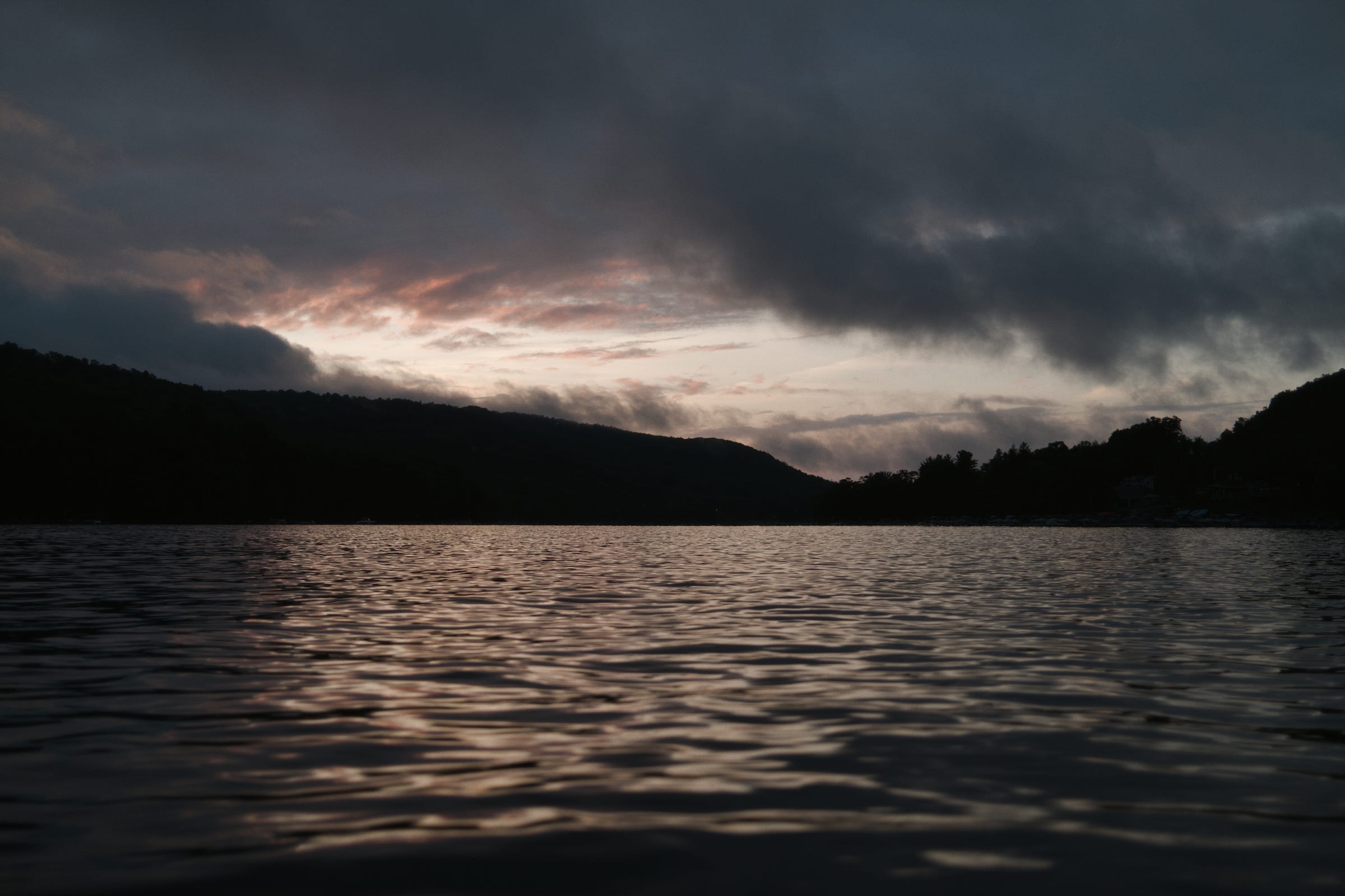
I am scrubbing lunch off the pans in the kitchen when the storm blows the boy in off the lake. His slight frame appears from behind the seething rain. He careens blindly into the wooden dock. His paddle and board are upended, his limbs bent and limp in the tumult. Lightning obscures his headlong descent into the murky water. And then at last he is thrown by a wave onto the daisy-pocked shore.
He scrambles up the steep driveway and taps on the sliding door, a mute noise among the rain and the waves. We let him in and wrap him in a towel and ask his name. He tells us, and stares out the window at the churning water, at the scattered boughs from off the trees now racing down the road in torrents of floodwater. He asks to call his folks and I offer him my phone. They don’t answer. My heart tightens and I think about the baby asleep in the other room.
The boy tells us he was paddling with his father when the storm rose up. He lost his way and couldn’t tell the air from the water. He paces by the door. Cait assures him he’ll be okay. She asks him where he’s in from. The clouds part at last. I say ‘Well, shall we find your parents?’
We hop in the car and follow the road north to where he thinks they set out from. I see his people pacing up and down the shore. A girl in a sweater is weeping as pontoon boats captained by grim men make sweeps along the lakeshore. The father is wringing his hands on the marina. I park the car and roll down my window. I holler ‘Are you missing your son?’ Now they are upon them, talking over each other, pulling at him desperately. I shake someone’s hand in thanks.
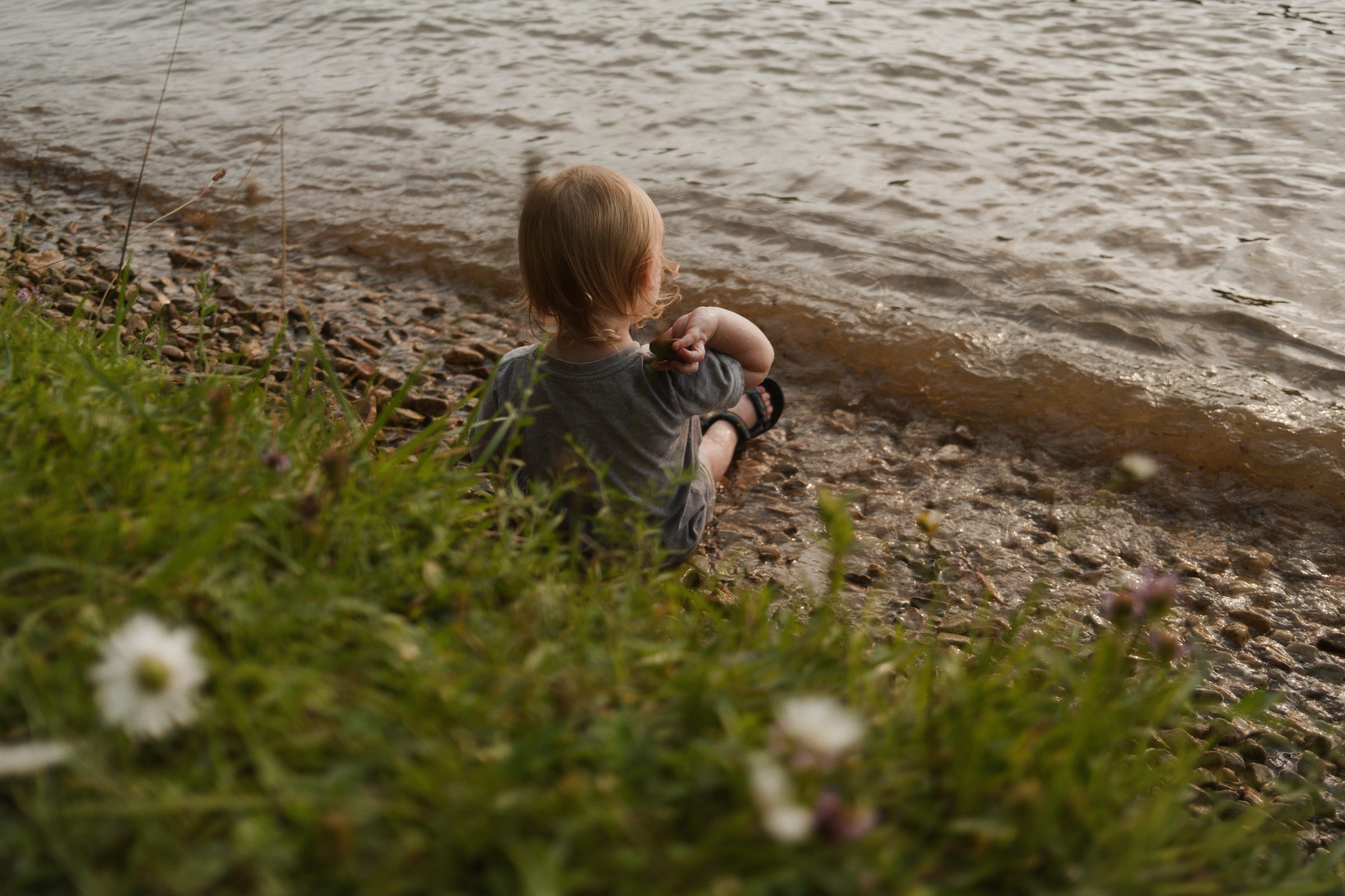
On the way back down the road, the sun is warm and casts its rays along the water. Before long, we are diving off the dock and swimming circles in the warm and placid shallows of the lake. The youngest sits in the daisies and drops rocks into the water, one after another, and watches them sink under the waves.
THE NIGHT
The antique shop smells like cinnamon and old wood. We look at cut glass and dead men’s fishing lures and speckled ashtrays and I settle on a sticker of the great seal of the town of Accident. Cait buys the baby a ceramic tiger for his shelf. At the register she makes small talk with the silver-haired proprietor while I skim a stack of postcards. ‘Greetings from Accident.’ A map of Deep Creek Lake. And one that lists the rules of Appalachia: Never be in the woods from dusk till dawn. Never leave the marked trail. If you hear voices close to you, they’re far away. If they’re far away, they’re near. If they say your name, don’t answer. Don’t whistle. Don’t sing. Don’t look too hard into the trees. You might not like what you see. If you hear something in the woods, no you didn’t.
That night we drive up Eagle Rock Road with our cameras and tripods in the back seat. The high beams catch chicory and hemlock and coneflower swaying into the light and then vanishing back into the dark once we pass. Katydids and tree frogs sing a dissonant chorus in the unseeable trees. Above us the windmills turn where we can’t see them, only hear the low sweep of the blades, and past that the sky is thick with stars. Across the valley a thunderhead is building, lit from inside every few seconds in orange and purple bursts.
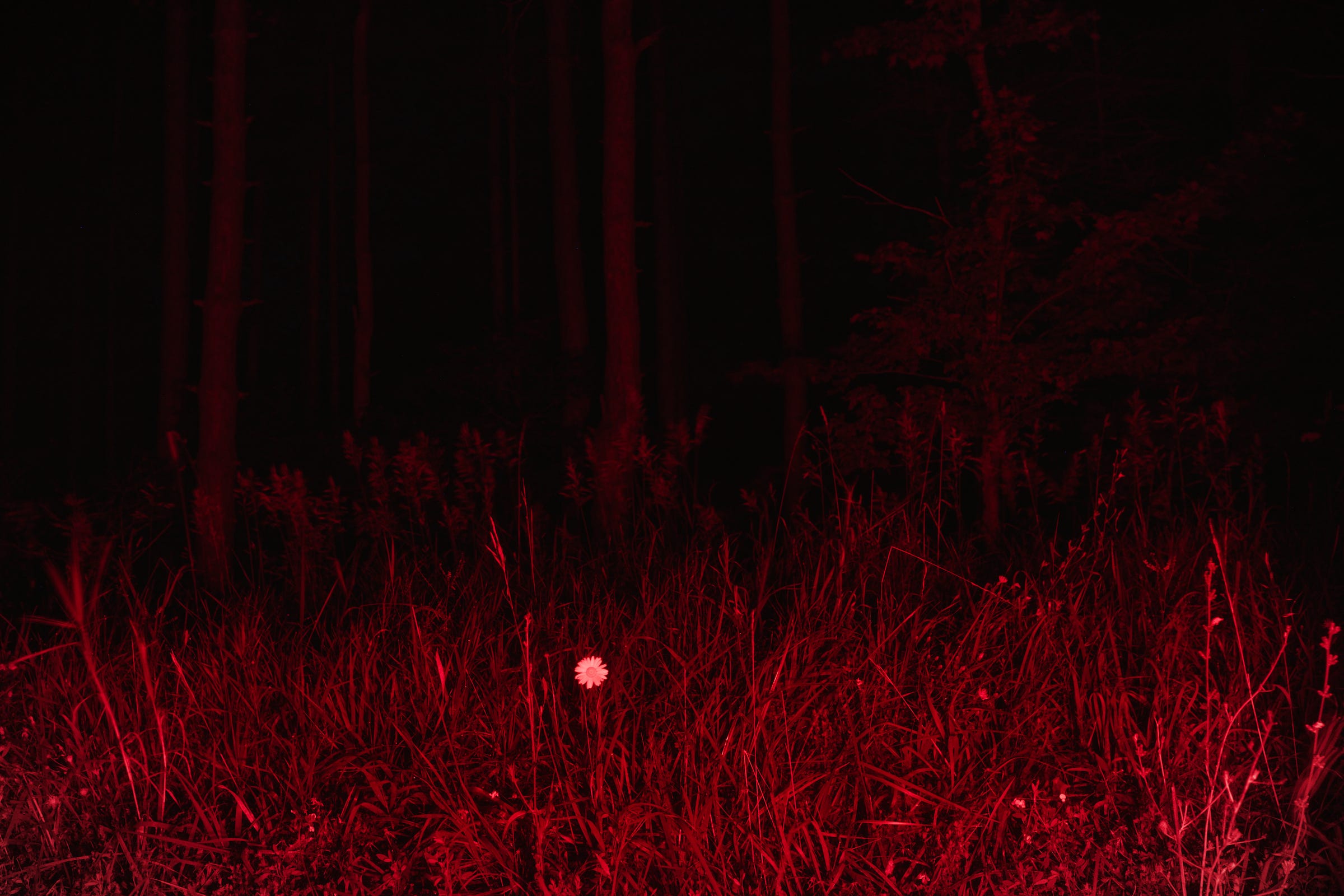
We set up on the shoulder and my son vanishes into the dark while I photograph the flowers painted red from the car’s tail lights. The shutter opens. I don’t see him for a time, and in the quiet between the tree frogs I think I hear him call my name, said once and low from somewhere off in the trees past the windmill road. I don’t say anything for four minutes. The shutter closes. He comes out of that dark field and says ‘I’ve never seen so many stars.’
We start down the mountain as the wind picks up. The fog is already sitting in the hollow before we reach the fork in the road. I’m turned around and so I follow the ridgeline road further into the woods. The ruins of an old church appear in the headlights. Fog has climbed halfway up the walls. Something moves at the edge of where the light falls off, upright between two trunks set too close together to let anything stand there, and it's gone before I can look straight at it. My son shivers and I look for something light to play on the stereo. I think about stopping to take a photo but decide not to.
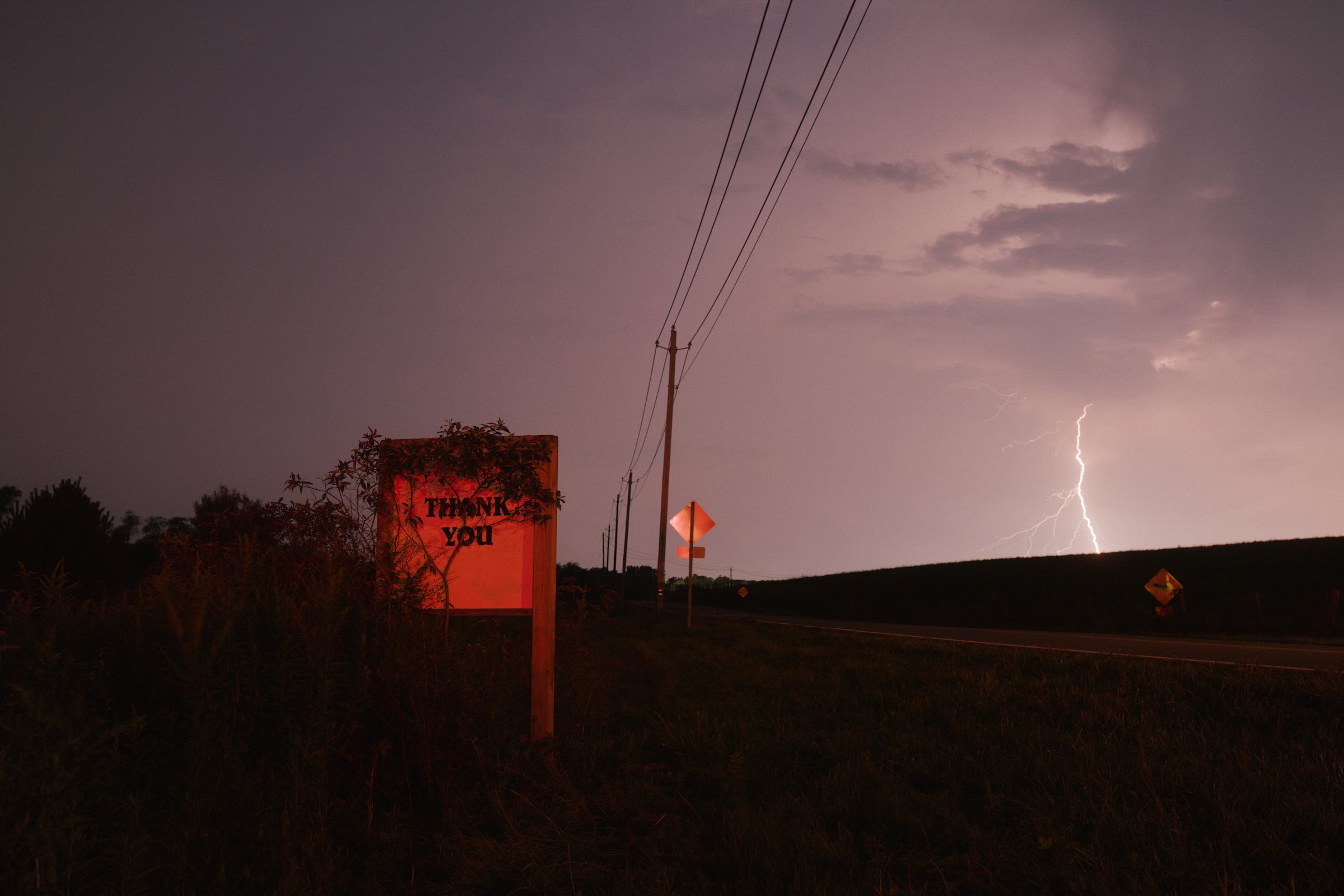
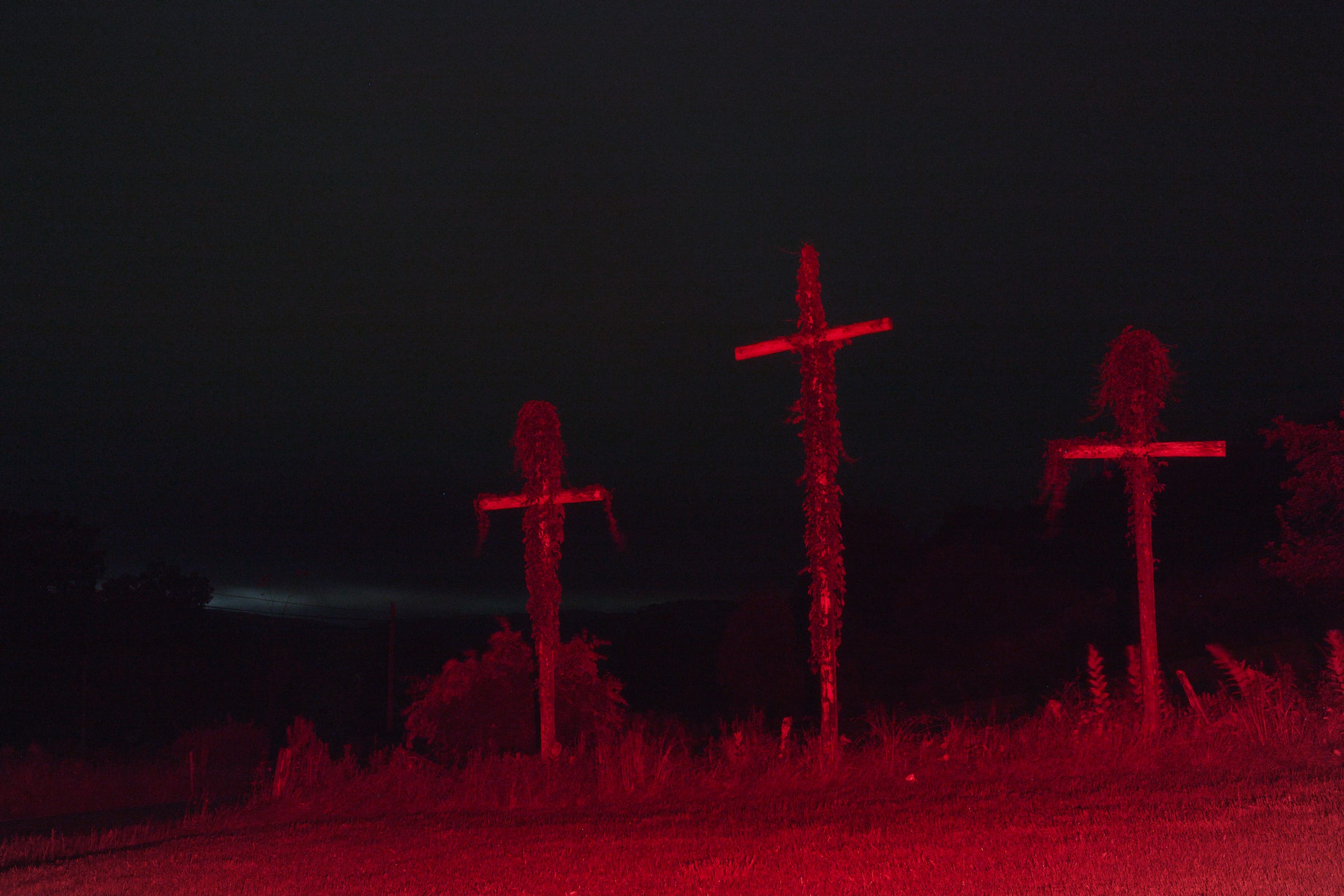
At the bottom of the mountain I see a sign that says ‘Thank You.’ I’m not sure for what. I drive past it for a mile or so and watch the clouds spark. I sigh and spin around, heading back. I tell my son I’ll only be a moment.
I set the tripod at the edge of the cornfield and start the exposure, sixty seconds. Wind whips through the tops of the corn. The trees behind me hiss. Thunder rumbles somewhere beyond the field, but still not on us yet.
Ten seconds in, headlights swing up the road behind me and a truck stops alongside me. I can’t see past the beam of its headlights. I don’t move.
‘You all doing alright?’
‘Just fine, thanks.’ I say it toward the light. The driver is a silhouette.
‘You in any sort of trouble?’
‘Just taking a photo of this sign.’
The wind doesn’t let up. I keep counting in my head. Twenty seconds.
‘See, I thought you were broke down.’
‘Nope, just taking a photo.’
‘Well,’ he says.
Nobody says anything for longer than anybody’s said anything yet. Almost done.
‘Say, what’s your name?’ he asks suddenly.
Lightning bursts on the horizon and the thunder comes seconds after. The shutter closes right then, and there’s nothing stopping me now. I could move. I could say it.
But I don’t say.
THE FOREST
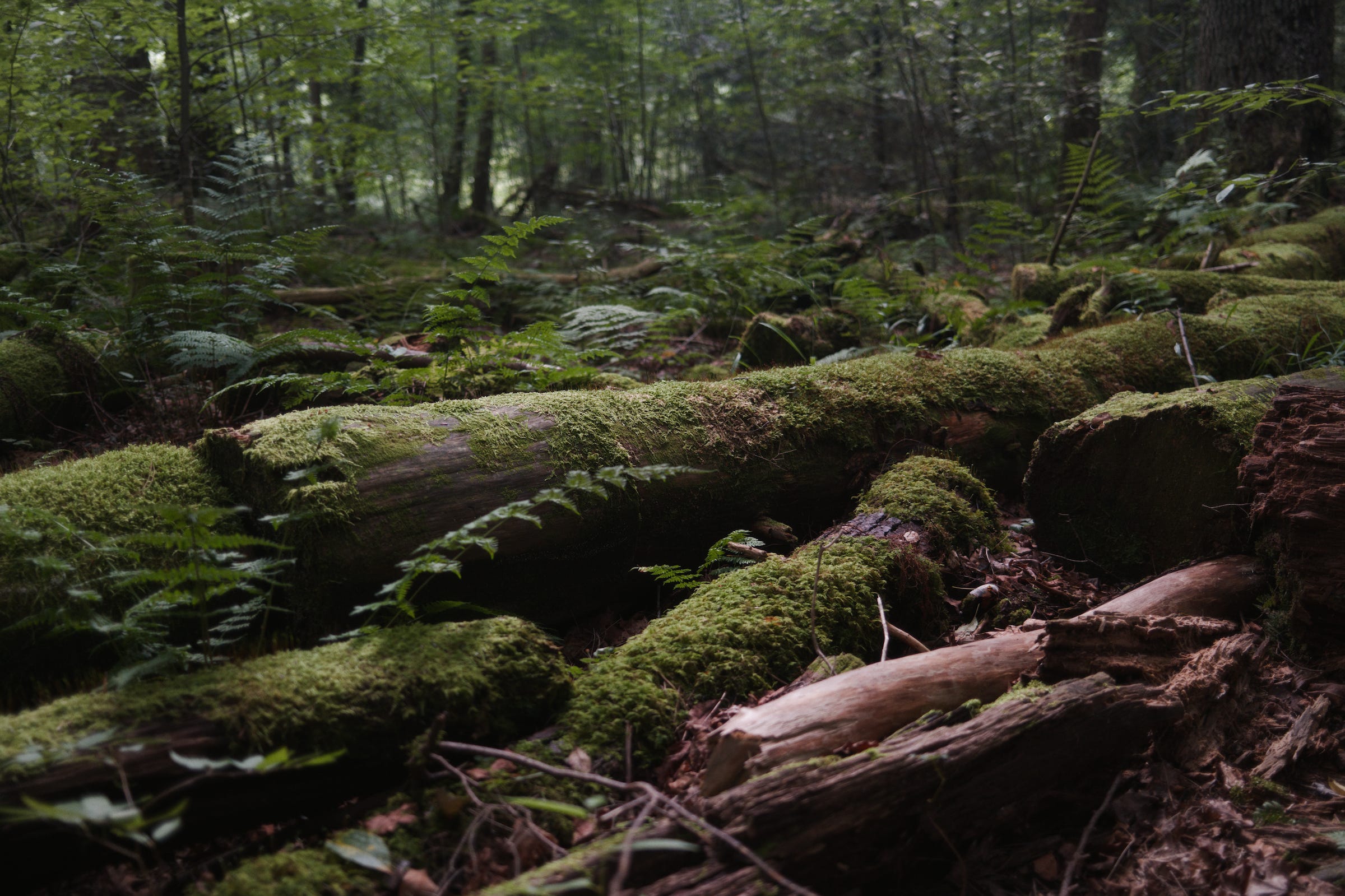
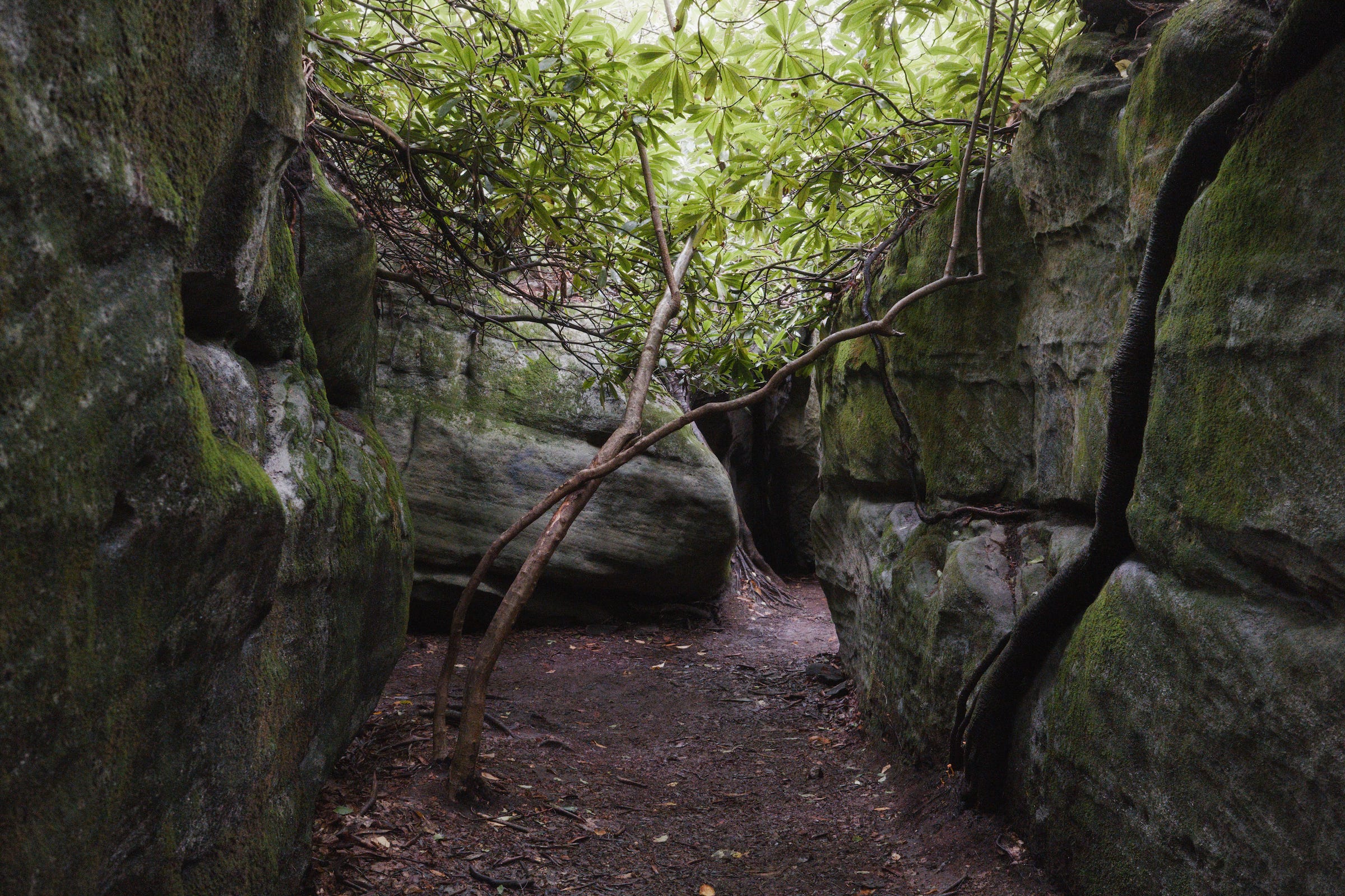
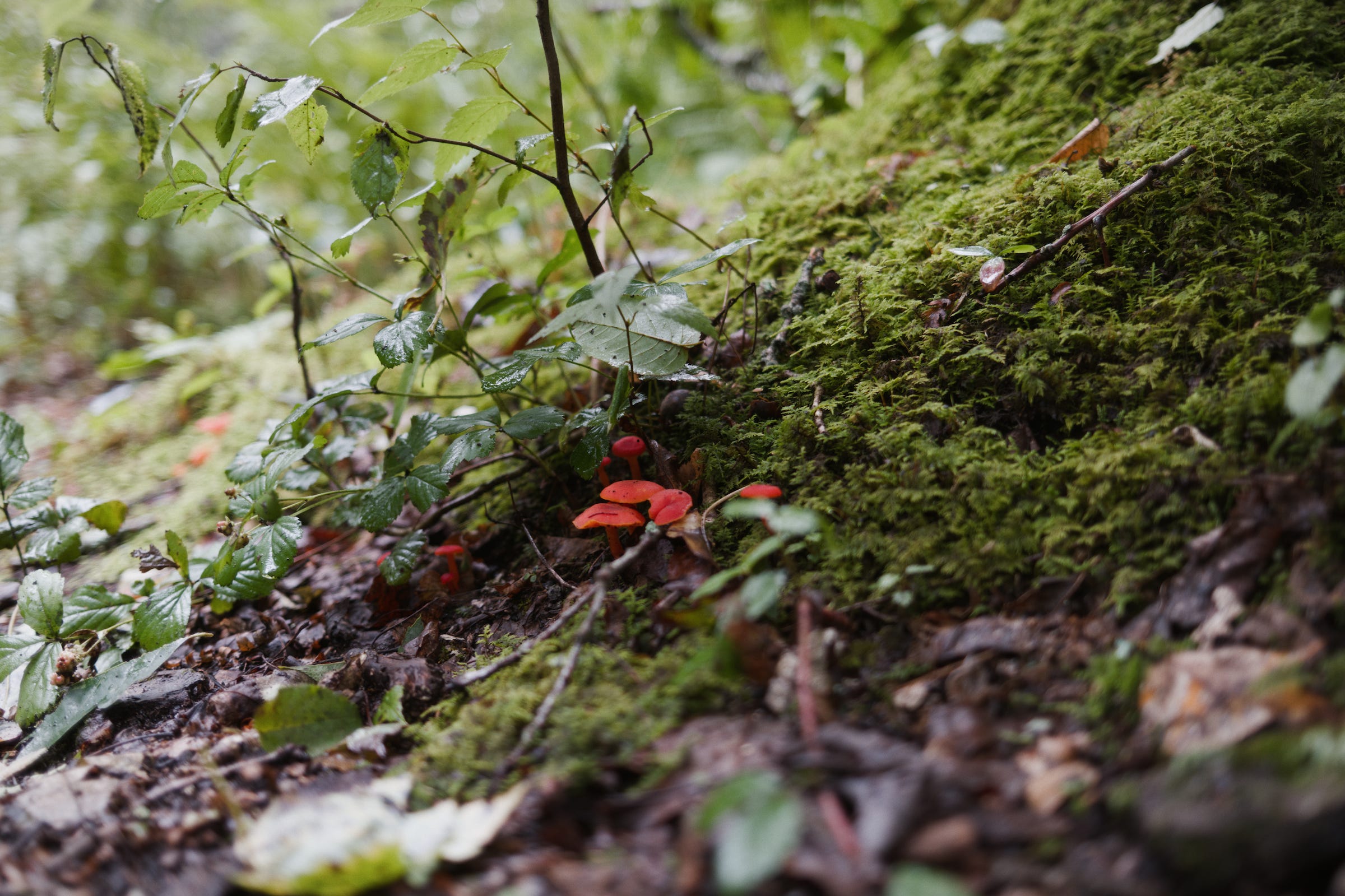
I am muddy to my shins and the air still smells of the rain that just passed, and the children are laughing in the maze of boulders in a forest of rhododendron, and I crouch down to a stand of mushrooms no bigger than a fingertip, red as an ember, and through the lens they are the size of the universe, and I wonder at the little things, so much bigger than me.
THE TIME
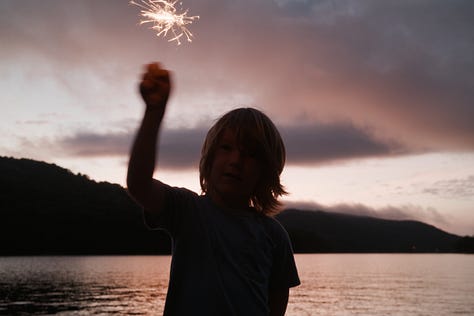
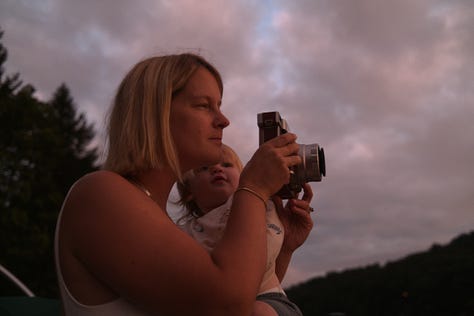
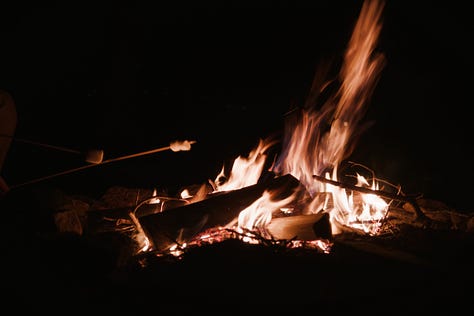
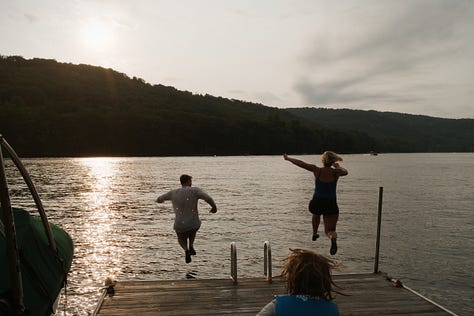
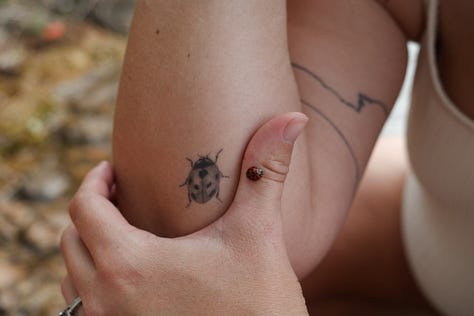
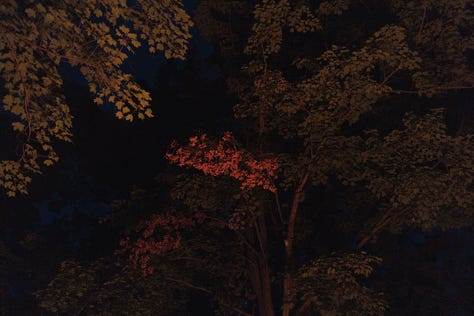
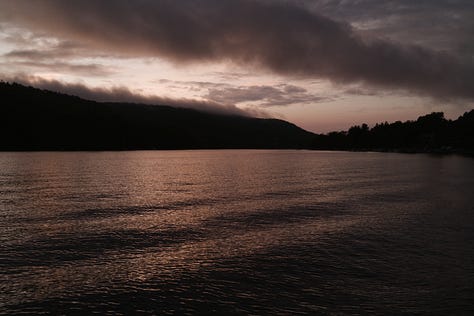
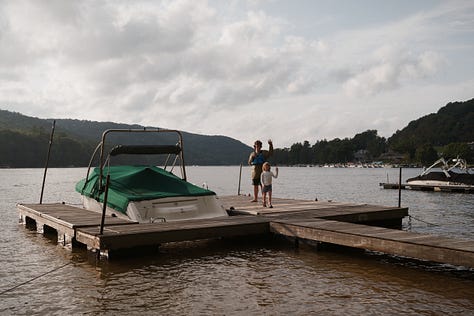
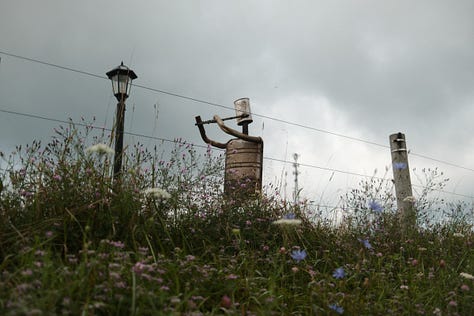
Nobody tells you, when your children are small, how fast the time goes. Every summer costs you one you don't get to see again. And nobody tells you that the mountain will still be exactly how you left it long after the boy who ambled in its meadows beside you has grown into someone who soon faces their own waning summers, or that the lake will go on being that lake and the storms will go on coming down out of the sky the same as they always have, uncaring whether you are there to see it or whether you have already moved along; nobody tells you this because it would be its own cruelty, because you would spend every summer that came after grieving the one you were standing in instead of living it, and so you have to learn this by yourself, the only way it can be learned: over time. By standing in a field at midnight with your son beside you or wading into the warm water at sunset and knowing, all at once and completely, that these exact moments, this exact precious time, is not going to come again, not next year and not the year after, and that there is nothing at all to be done about this except stay in that moment for as long as it is still happening, and perhaps make of it what images you can to remember it by, and then, when it is over, let it be over.
Comments
Nothing yet. Say the first thing.
Sign in to join the conversation.