
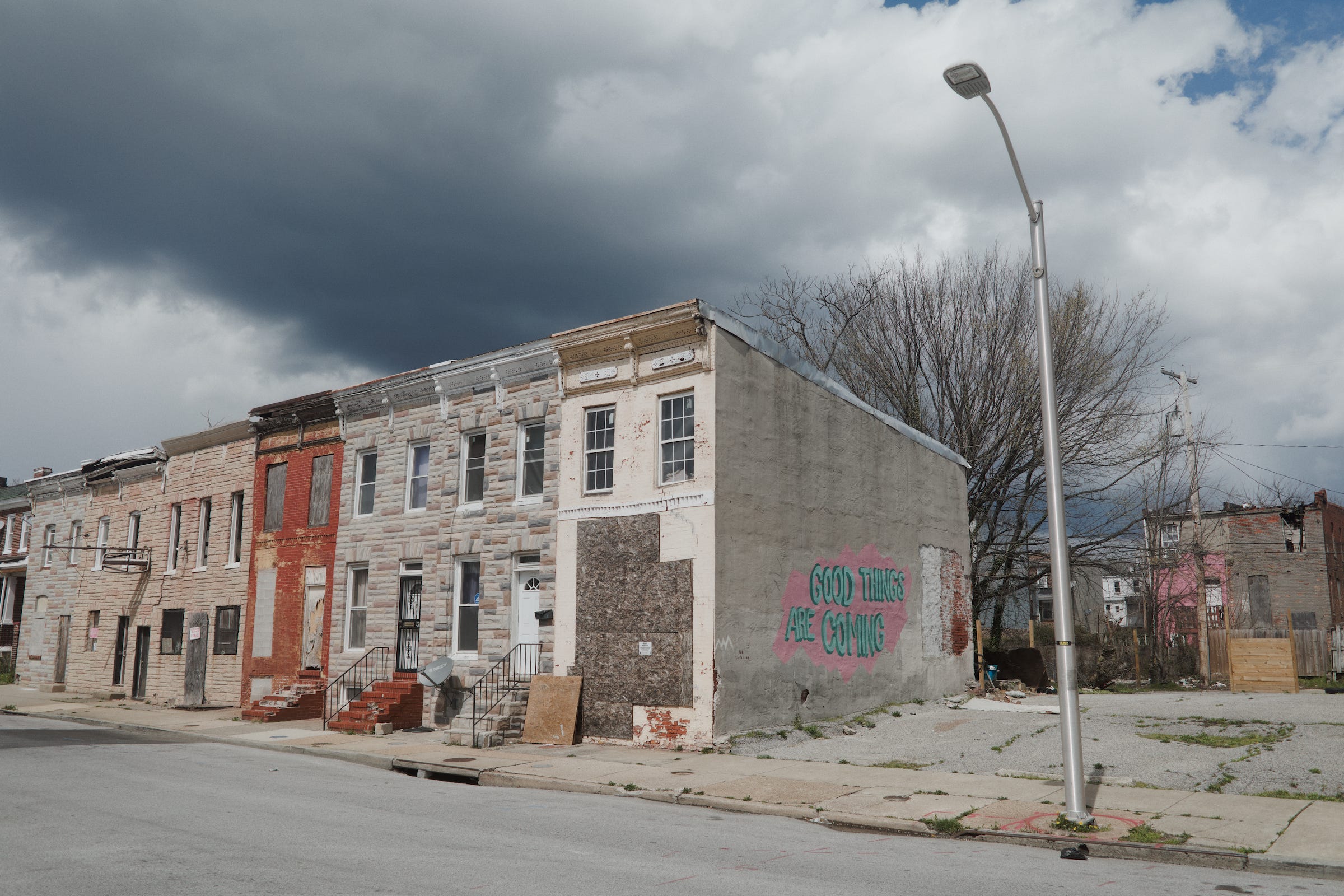
Baltimore’s praises are being sung on high this month in a trio of articles released by the Wall Street Journal and the New York Times. One extols the city’s falling homicide rate. Another celebrates Baltimore’s take on the aperol spritz — a Miller High Life-based concoction called the “Spaghett.” And yet another details the bidding wars currently taking place for Baltimore’s abandoned rowhouses.
Here on Substack, Cara Ober , executive director of BmoreArt and prolific writer of all things art, recently wrote in depth about what this national attention means for a Baltimore at a turning point — from a maligned and blighted city that drew presidential derision and whose mere mention invoked in Americans a sort of recoiling sense-memory of horror, to where we are now.
Ober writes:
“If the murder rate stays at this historic low, and if the vacant houses being bought right now are actually purchased and inhabited and rehabbed — not land-banked the way speculators have been allowed to do for years — what does Baltimore look like in 2036?
“I want to believe it looks like Johnston Square and Harlem Park: longtime residents like Regina Hammond watching a former drug market become a community garden, and people like Alex Queen coming home to a city that will actually let them buy a house without losing five bidding wars first.
“But I also know what happens when national attention and outside capital arrive in a city with cheap, beautiful housing stock and a deep, under-monetized creative culture. I’ve watched it happen to Brooklyn, where the artists, musicians, and longtime Black and Latino residents who built neighborhood after neighborhood (Williamsburg, Bed-Stuy, Bushwick) were largely priced out of them within a generation. The culture that made those neighborhoods desirable didn’t get to stay and enjoy the desirability.
“That is the real question Baltimore has ten years to answer: not whether we can attract capital, but who gets to keep living here once we do.”
Amen.
In an interview with Michael Howard for the Foto podcast last year, I spent a not insignificant portion of that conversation ranting about bricks.
A very different WSJ article from 2019 documented then-Mayor Catherine Pugh's partnership with a non-profit that shipped recycled building materials from demolished Baltimore rowhouses across the country for use in luxe D.C. condos, shopping centers, and more. (An aside: is there a word more grating than "luxe"? I see it so frequently these days, and each time it gives me a frisson akin to licking an electric fence and conjures the worst sort of mental associations.)
On the surface, this all seemed like a perfectly good use of otherwise derelict material. But inside, it felt like a cannibalization of a city with so much potential — a gutting of neighborhoods that could be so much more than a statistical call-out in another urban horror story starring Charm City.
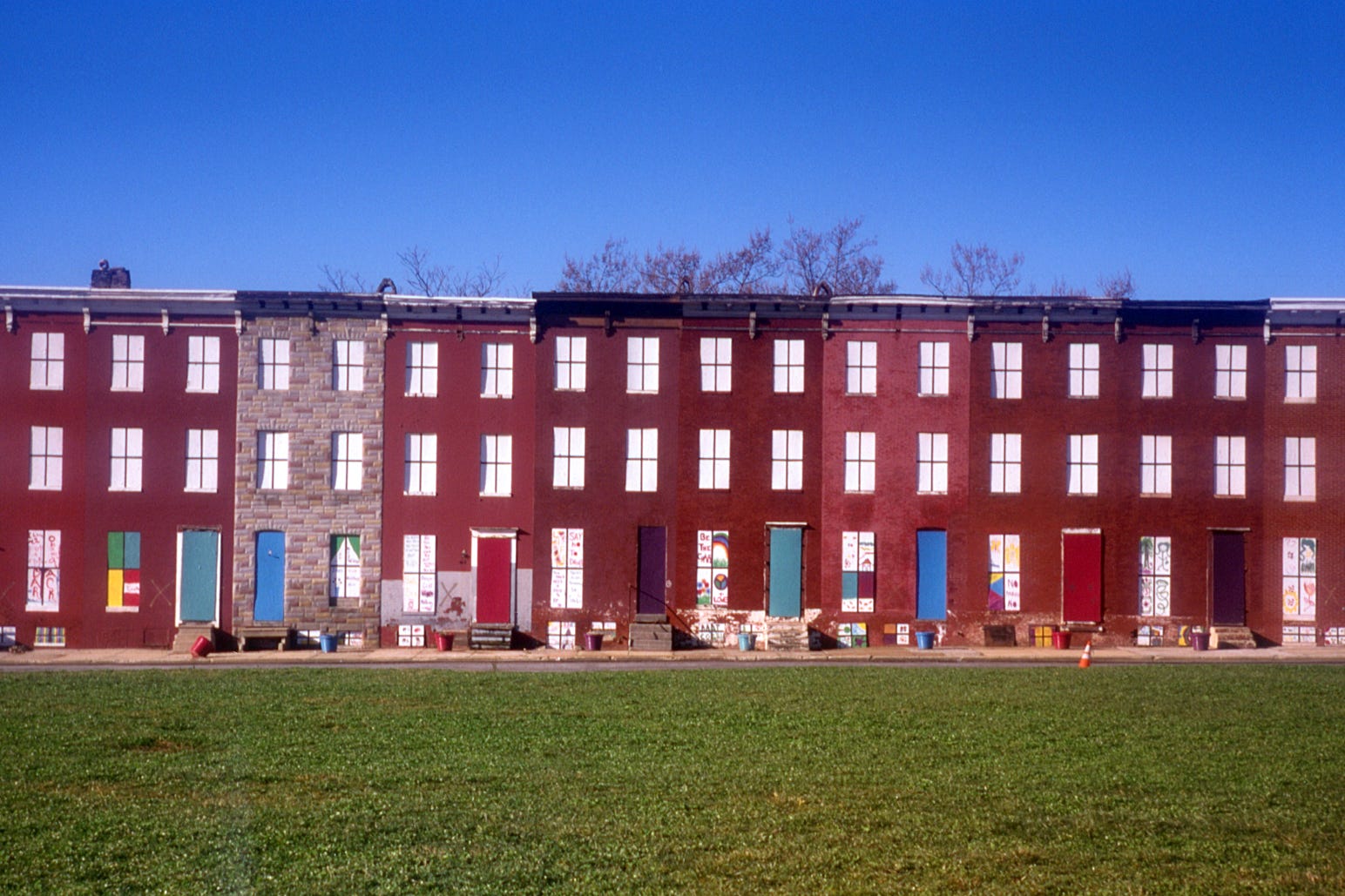
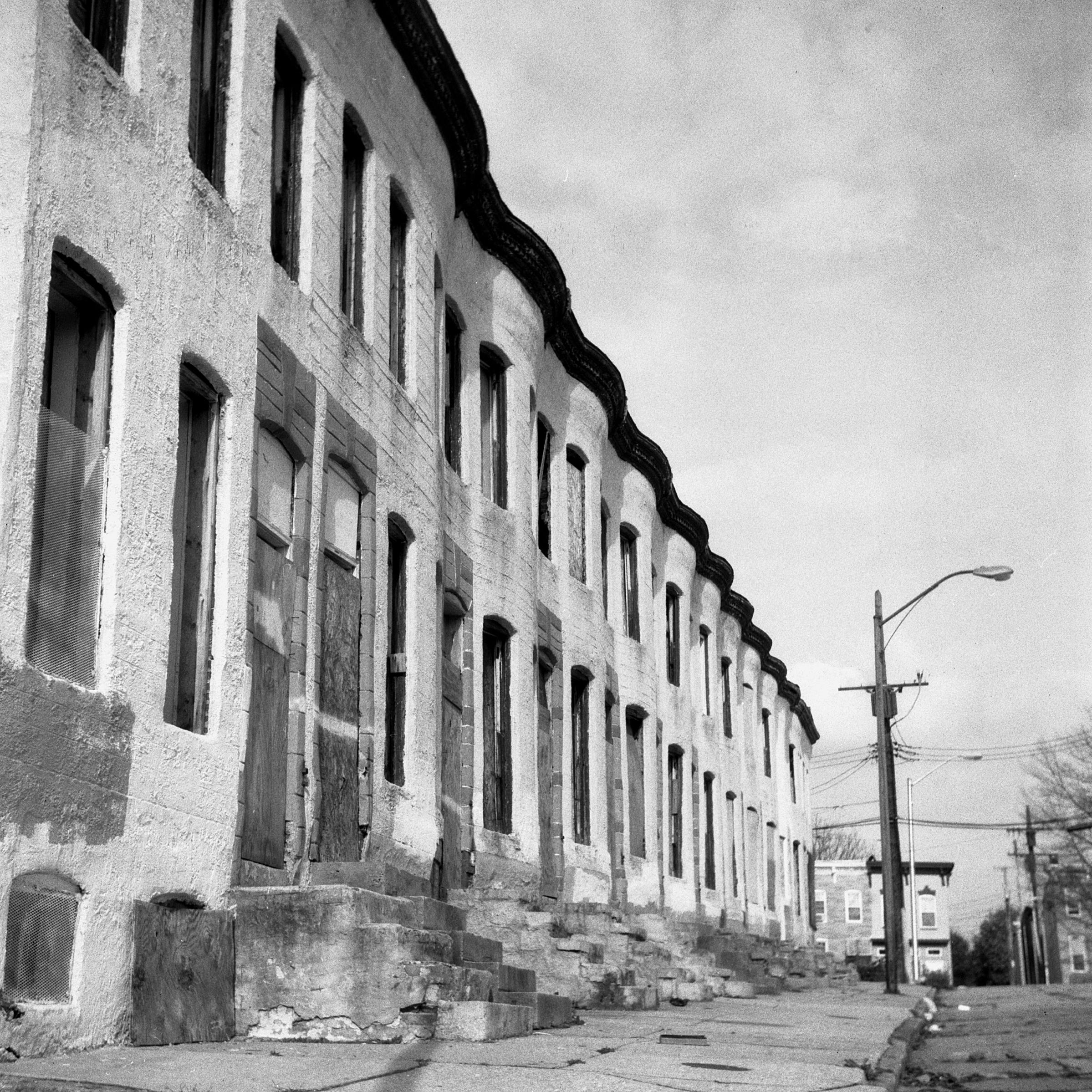
In my early 20s, I spent a lot of time wandering and photographing the city. Abandoned rowhouses turned up throughout that work. I was fascinated by these looming brick husks, how ubiquitous they were in the labyrinthine streets of the city's vast east and west wings, and how decay like this could persist at all in early 21st century America. I know better now.
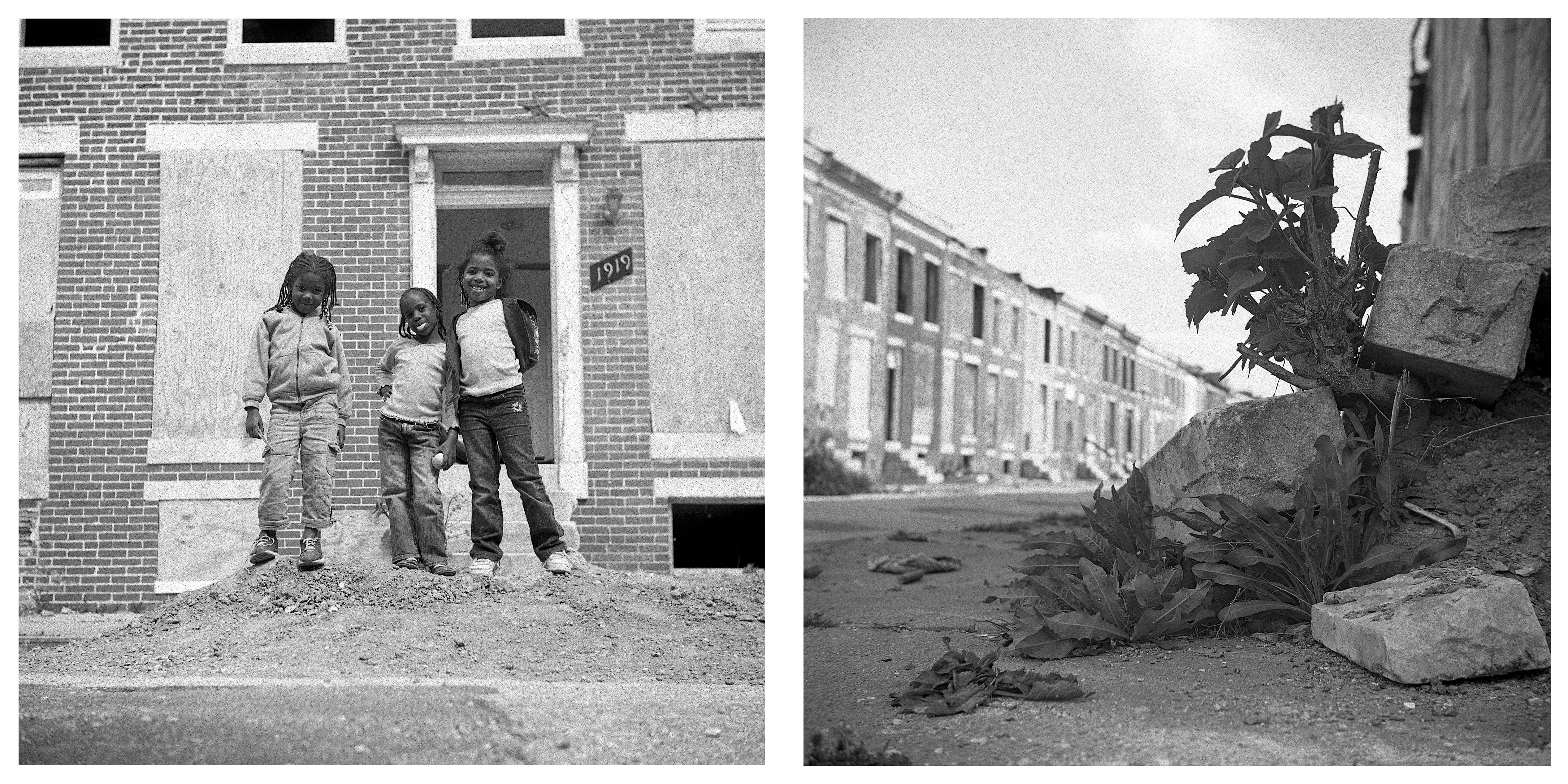
In April of 2010 I photographed the last days of Perlman Place in East Baltimore. The Baltimore Sun ran those photos with an article about the block's demolition, back when the Sun was still a respectable paper. The afternoon I was there, three girls played king of the mountain on a gravel pile left behind by the house that came down across the street.
A few years earlier the same street had served as a principal shooting location for Hamsterdam, the free-zone drug market Major Bunny Colvin creates in season three of The Wire by instructing his officers to “look the other way.”
What is strange about watching those episodes now is how much of Colvin's reasoning the city eventually adopted — more or less. His premise was that arrest-driven enforcement had failed and that the people who could actually change conditions on a corner weren't wearing badges. Baltimore's Safe Streets program, launched in 2007 and later expanded into a ten-site operation under Mayor Brandon Scott, runs on that same premise. Safe Streets hires violence interrupters straight from the neighborhoods they work in, many of them formerly incarcerated, and sends them to mediate the disputes most likely to end in a shooting. The city closed 2025 with 133 homicides, its lowest total in more than fifty years, and recorded seven in July of this year, the fewest for that month on record. Colvin got fired for his experiment. Scott got a second term.
Today, Perlman Place is still a vacant lot. Sixteen years after I photographed the demolition, the block is grass and weeds and whatever the wind has deposited there.
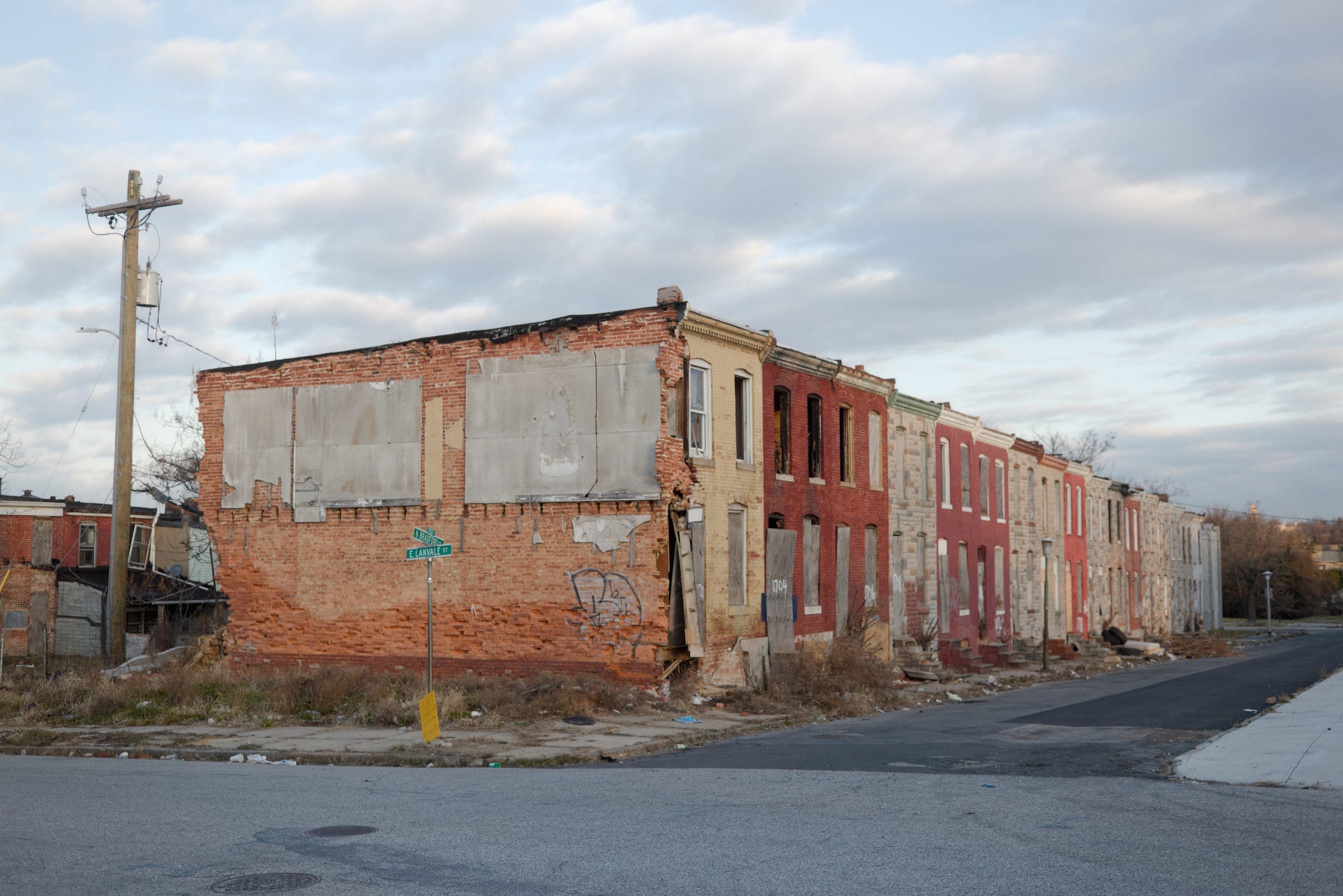
In 2021 my friend Patrick Joust wrote about Chicken Castle, a corner store at Greenmount and Preston that was condemned after lightning set the row beside it on fire and the roof came down over the winter. He predicted the building would almost certainly be torn down and that what replaced it was uncertain. It is an empty lot now. That corner is the western edge of Johnston Square, the neighborhood in the Times story — the one with the community garden where the drug market was, the one everybody points to when they want to say Baltimore is on the rebound. In true Baltimore fashion, both of those are true at the same time and within the same few blocks.
Patrick writes:
“The loss of these buildings also links to a general lack of care for these spaces and a lack of imagination over what can be done to keep them and the neighborhoods they occupy whole. Destruction at this level, whether organized or haphazard, reflects a collective choice that follows the typical lines of discrimination based on race and class. A fact that can be learned about through reading and statistics but also viscerally felt by anyone walking through these neighborhoods, as long as you don’t walk too quickly.”
I do a lot of slow walking. I did it for years before I understood that's what I was doing, mostly because I had a camera and nowhere in particular to be, and what you learn on foot that you cannot learn from a vacancy count is that the lots aren't distributed by accident.
Baltimore has cut its vacant structures from roughly 16,000 to fewer than 12,000 over the last decade, WSJ reports. But there are more than 20,000 vacant lots on top of that, which is a figure the Journal and Times pieces don't mention. Every one of those lots was a block once.
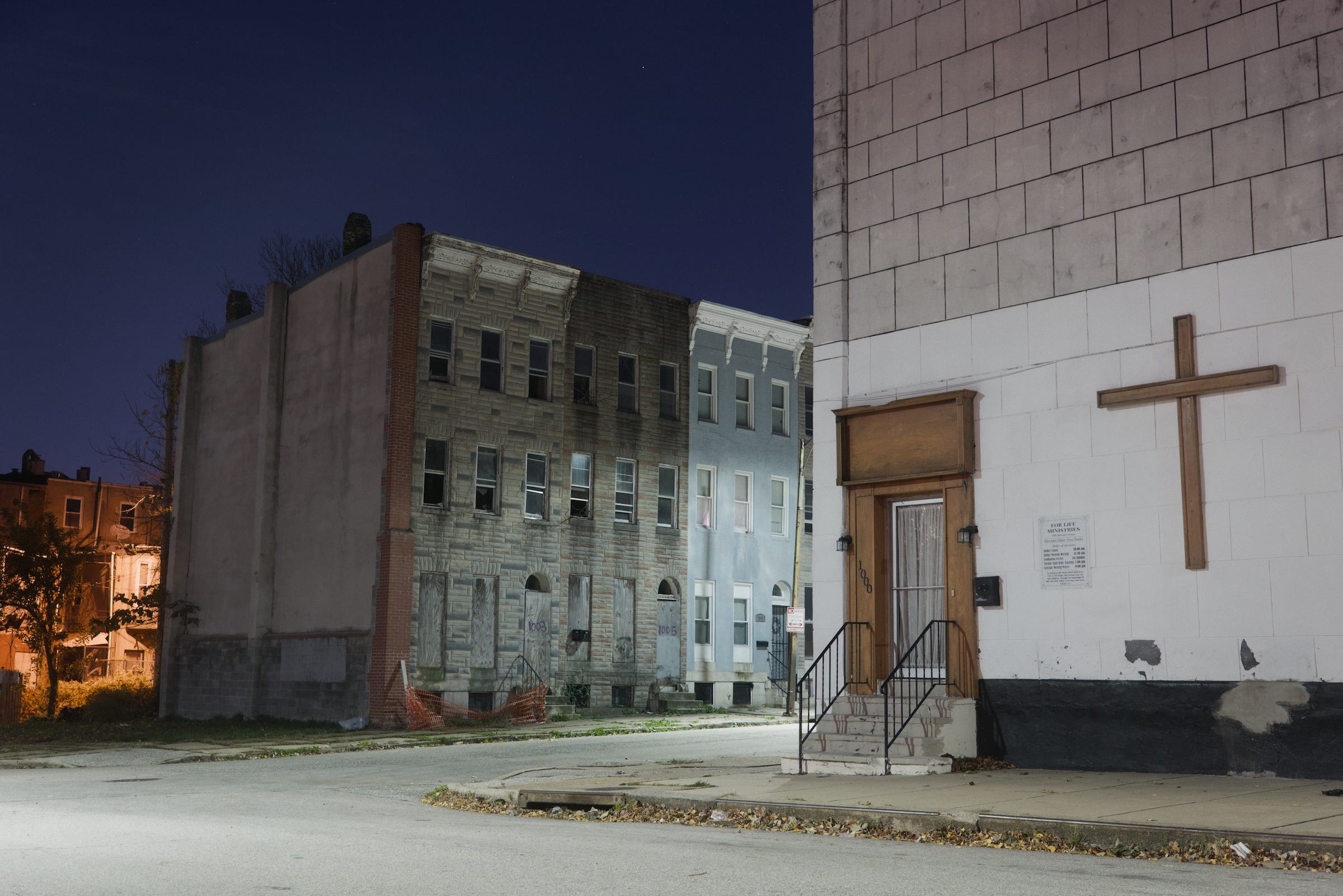
I was recently talking to a fellow photographer who lives in the South — a part of the country where abandonment and dereliction sit out in the open for anyone to see. We got to talking about the compositional pull of a vacant building, and how hard it is, if you’re photographing the modern American condition, to pass one up. I can think of no better metaphor for this country than a vacant house in a housing crisis.
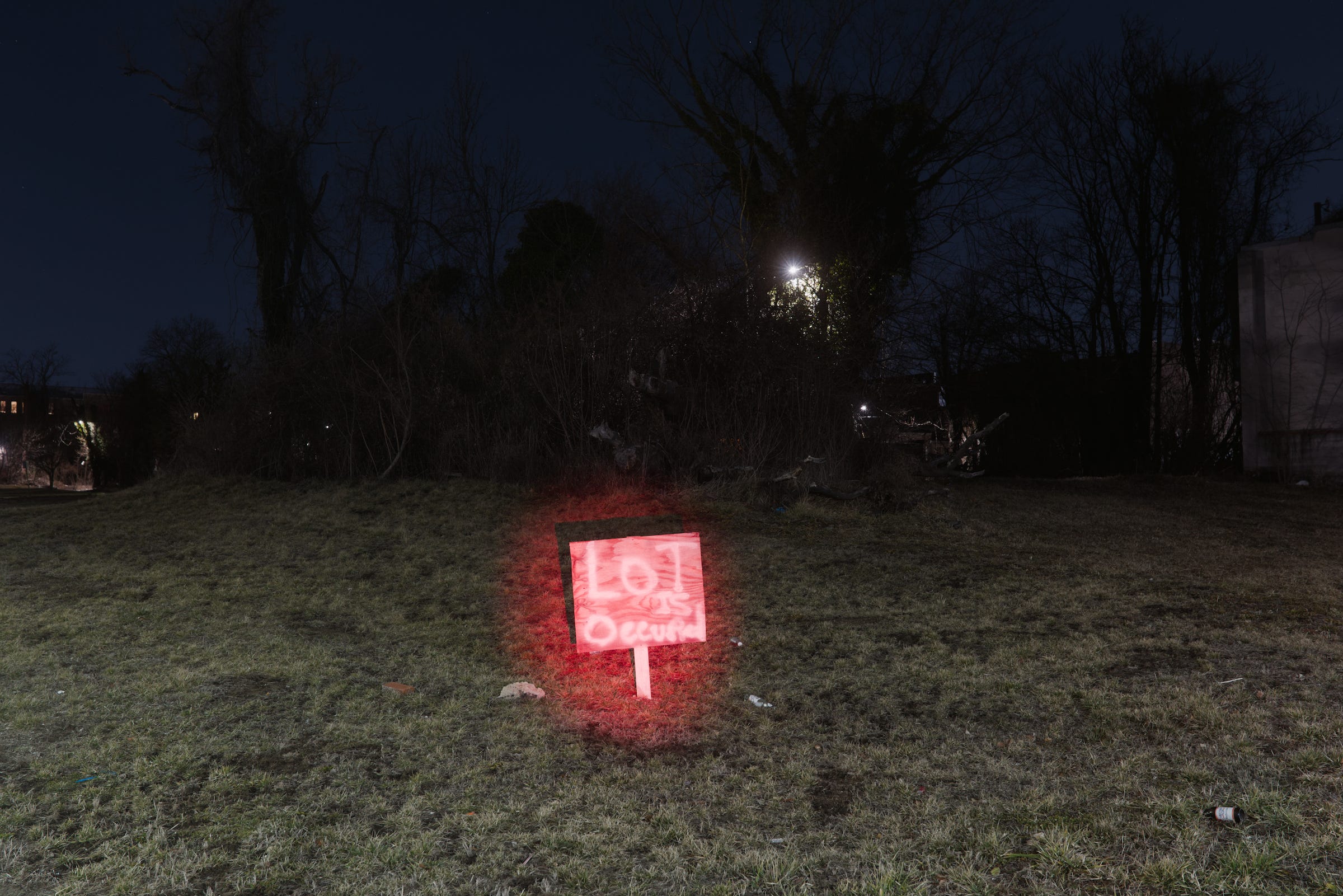
He asked how I felt about Baltimore’s vacants — “bandos,” short for “abandoneds,” as they’re known in some quarters of the city — disappearing.
“Pretty good,” I told him.
Look, nobody wants to live surrounded by urban decay, despite how fascinating a photographic subject it is. That decay represents real problems that real people have to contend with — and no, I don't mean the faulty theory of “broken windows” criminality and the over-policing that comes with it. I mean problems in the form of a roof that caves in on the house next door, or a fire that doesn't stay contained to the vacant house it started in. Three Baltimore firefighters died on Stricker Street in 2022 while rescuing a person from vacant building nobody was supposed to be living in.
But I also mean a disinvested neighborhood that crumbles, physically and spiritually, just enough to get called “blighted” (I hate that word), and then disintegrates further to the point that getting food means a cross-town bus ride — which, in Baltimore, may or may not show up on time.
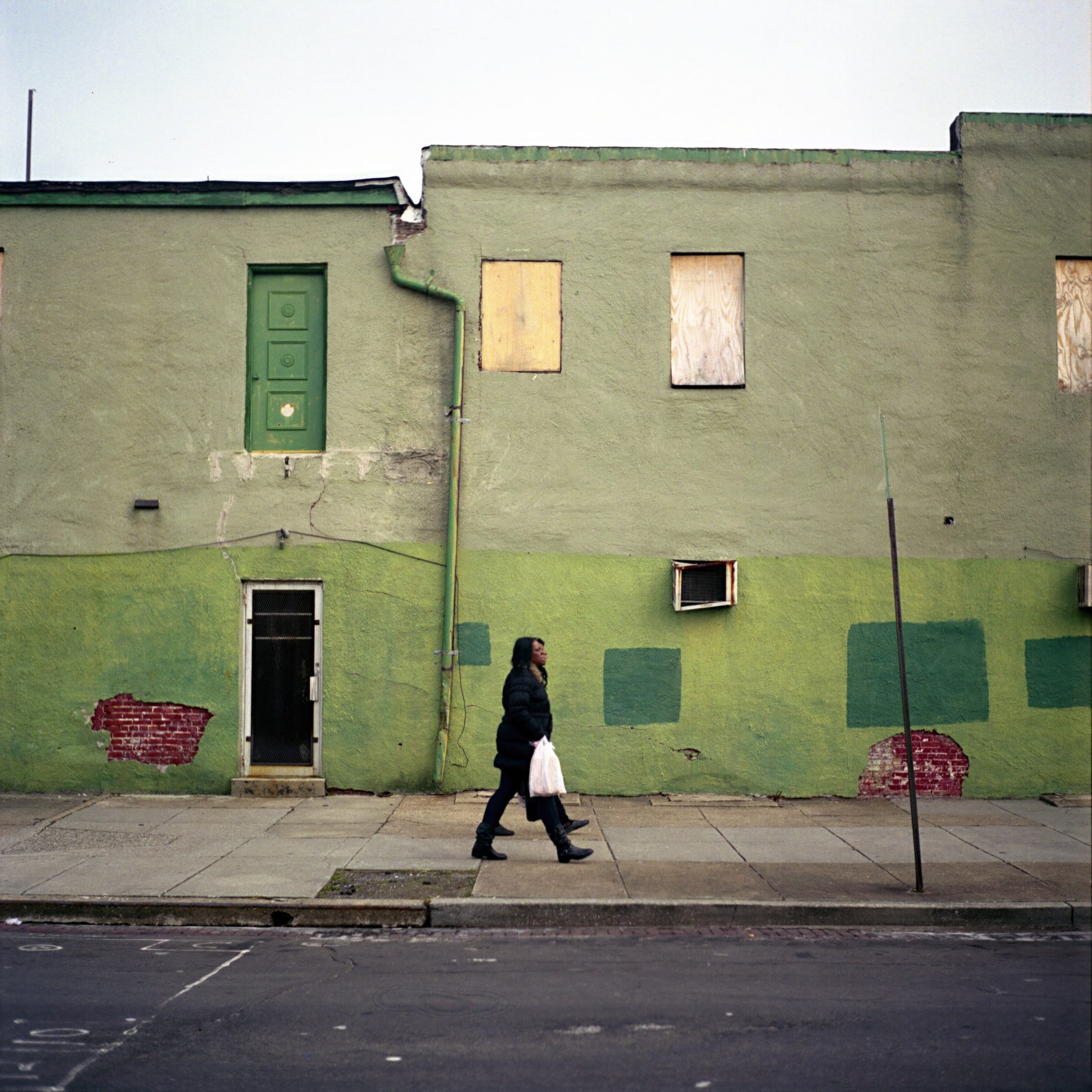
My interest in urban decay in Baltimore has only ever been of a storytelling nature. The story I'm interested in telling now is this new chapter in Baltimore's history. Five-over-one architecture will probably never inspire songs and imagery and art in the way Baltimore’s rowhouses have — but who knows? That’s for future storytellers to decide.
Last summer I wrote about the empty lot where Madison Park North used to stand — eight acres in Reservoir Hill that the city and its residents both called the “Murder Mall” before it was torn down in 2016. For four years it was a fenced field of rubble, and I kept photographing it, unable to stop checking on the crater in the middle of our neighborhood. It is Reservoir Square now — hundreds of townhouses with front steps, an employment office for the city, and a grocery store supposedly on the way.
This new section of the neighborhood doesn’t have much to do with the Baltimore I came up photographing — there’s no Formstone, no marble steps, and the houses are nothing a person would stop to look at twice. But somewhere around a hundred new families moved in, and the neighborhood festival got louder for it. Come October, the kids will have more doors to knock on than ever before. I meet more people ambling the alleys behind the new rows than I ever did wandering the old ones, back when there was nothing behind them but a hole in the earth.
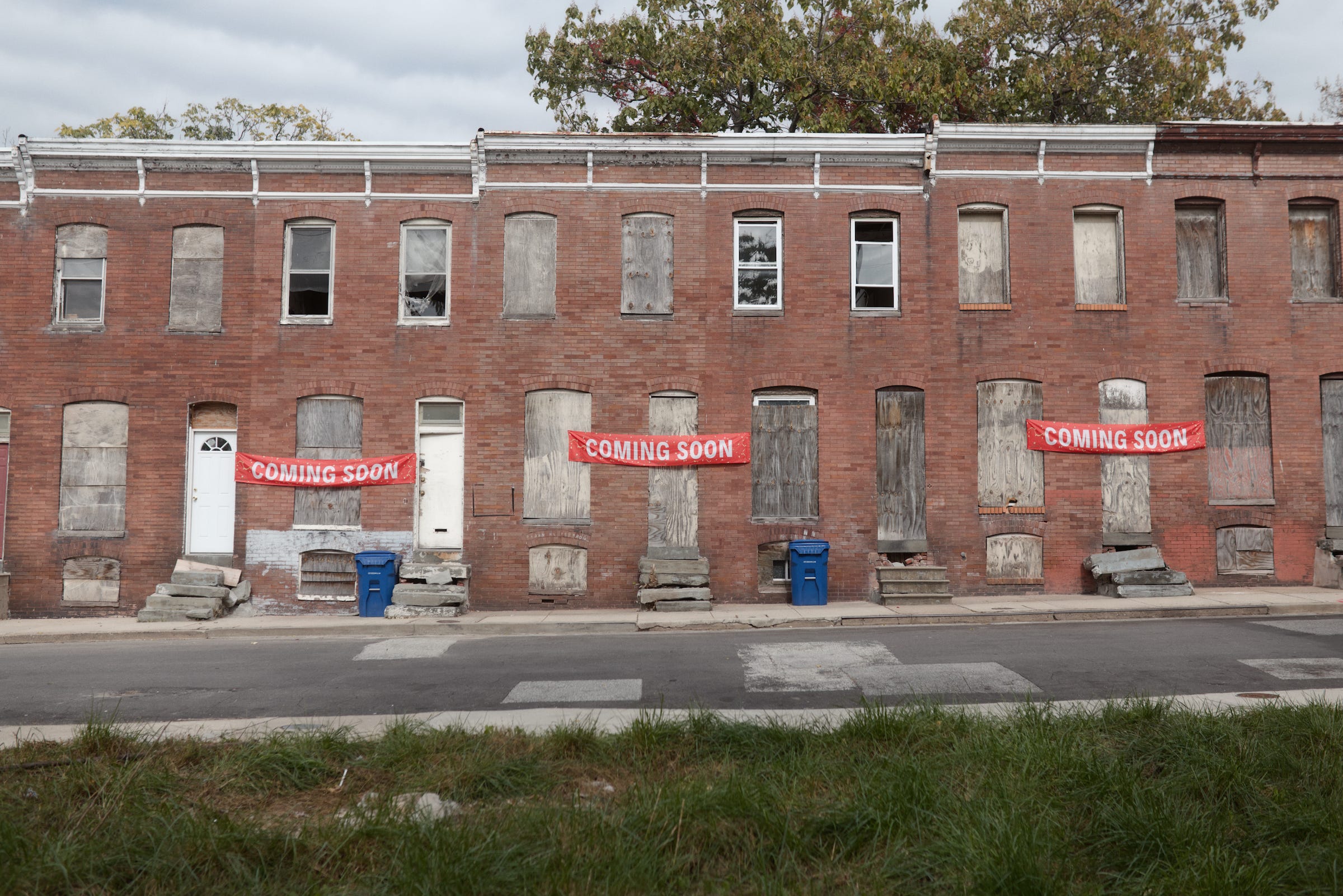
I'd trade the abandoned buildings for that any day. Give me a Baltimore in true renaissance, where legacy Baltimorioles thrive in new houses and rejuvenated blocks, and I'll find something better worth photographing than the husks of yesterday’s promise.
Comments
Nothing yet. Say the first thing.
Sign in to join the conversation.