
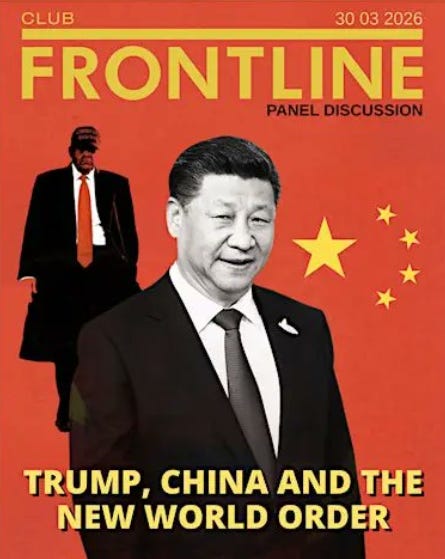
What kind of world does the Chinese Communist Party want? It’s not trying to overthrow the international system in one dramatic rupture. Instead, amidst the current chaos, it’s moving more subtly: embedding itself in existing layers of order, preserving institutions and rules it can exploit for control and influence, while working to purge the liberal elements that constrain its Leninist and realist geopolitical logic.
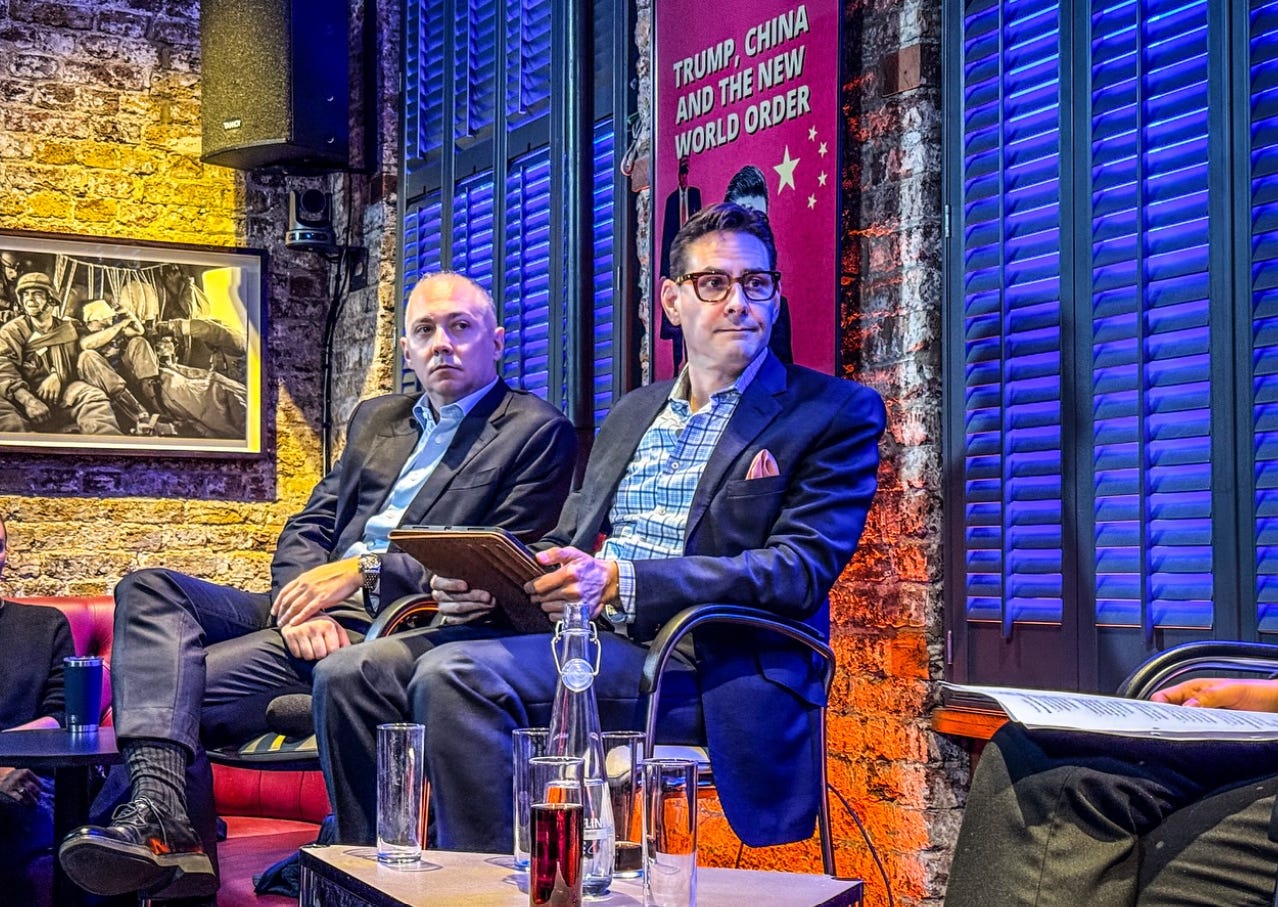
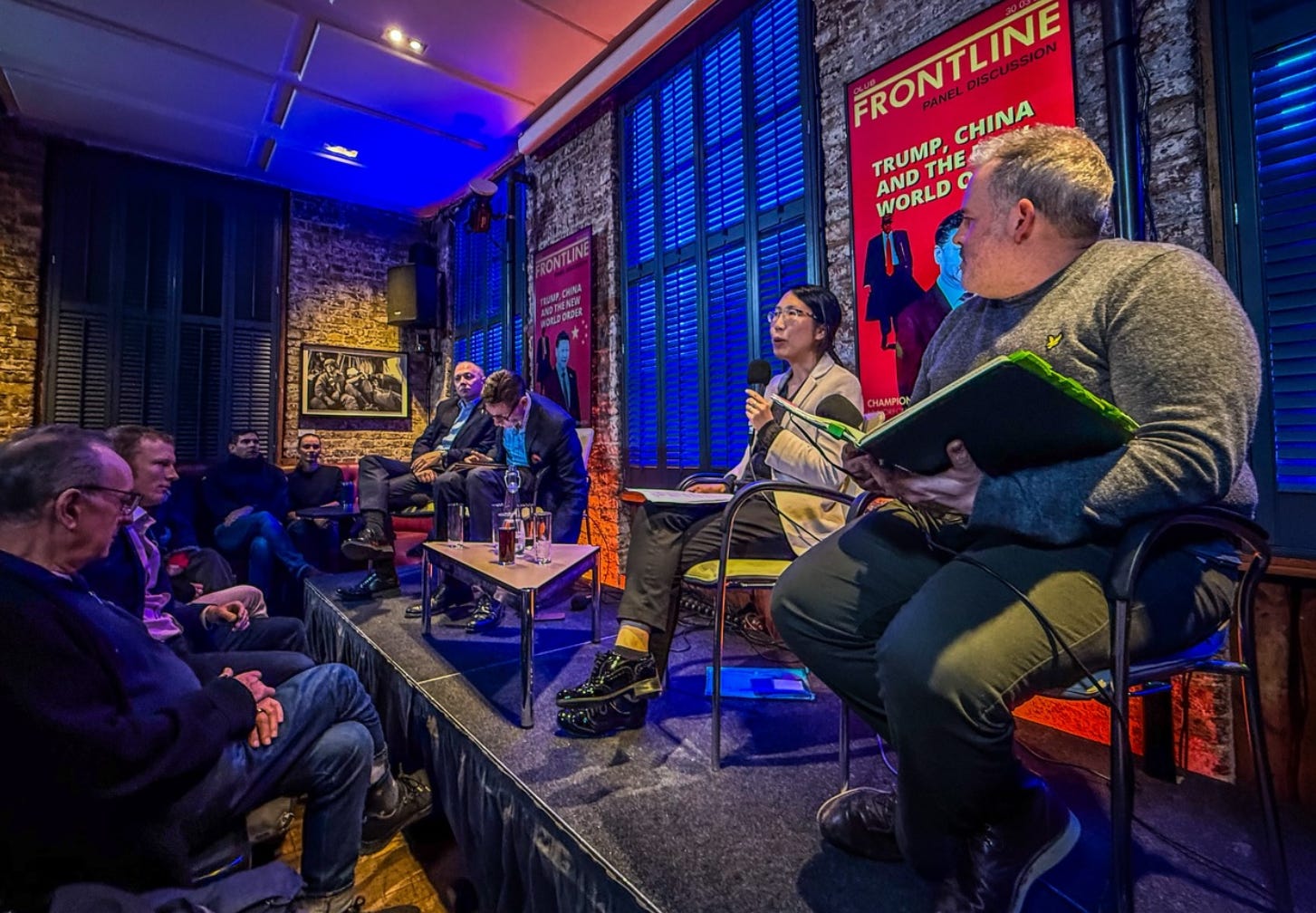
That question was at the heart of a panel discussion I recently had at London’s Frontline Club with King’s College London scholar Olivia Cheung and Carnegie Russia Eurasia Center director Alexander Gabuev, moderated by former BBC China correspondent Robin Brant. Organized by the China Correspondents’ Club of London, our conversation focused on General Secretary Xi Jinping’s ambitions and understanding of power, and the opportunities he sees in the disruption of the Trump era and resulting Western disunity. We also touched on China’s economy and its relations with Europe, Iran, Russia, Taiwan, Ukraine, and the Global South. I hope you enjoy this edited transcript of our March 30 discussion.
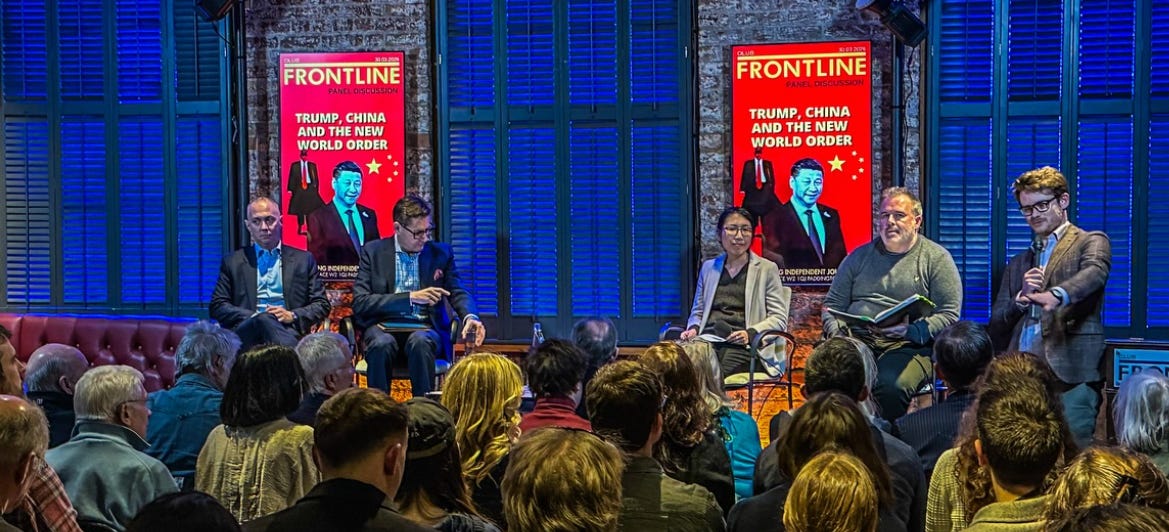
Olivia Cheung: China is aiming for global preeminence, but not global hegemony. From a Western perspective, that distinction might seem purely academic. It might not make a difference, but for countries that do not share Western values or take them with skepticism, it matters. So how does that distinction look in practice? There are many examples. If we look at current events, we can make it more concrete, but in broad terms it means that China is there to defend its bottom line, red line core interests as defined by the Chinese Communist Party, and the successful defence of these is considered absolutely necessary.
These core interests include security, China’s political system and way of governance, sovereignty, and development. It also means the Chinese Communist Party takes very seriously the need to resist unwelcome influence or leverage from other countries, including the ability to impose costs on countries that challenge these core interests. This kind of bottom line or red line thinking remains crucial in CCP mentality.
The other part of China’s perception of global preeminence is the desire to be recognized as a global moral force for good for all humanity. There is some messaging in that, but China is serious about it, so it should not be dismissed as a slogan. Materially, it means China wants the world to embrace it as a force for modernization, economically and technologically, and in a more “spiritual” sense, to stress its identity as an alternative power without colonial baggage, and as a reliable partner to uphold a rules-based international order while also changing the rules to make them more “just and fair”, and in that sense democratizing international relations in a way that would uphold the interests of the Global South, with China at the centre.
China sees global relations not in terms of competition with the United States, but as a pursuit of global preeminence on these terms. To do that, China has a global strategy with two main components: The first is to democratize international relations by cultivating support from the Global South, and the second is to prepare to take Taiwan and achieve this ambition.
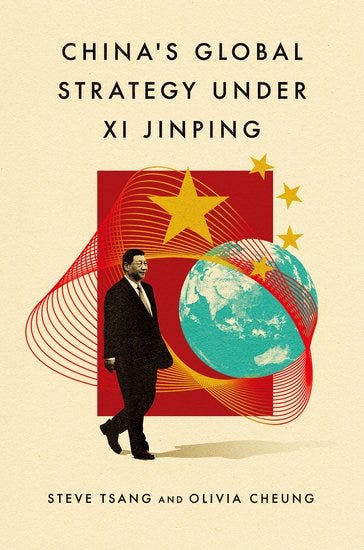
These two goals are what my colleague Professor Steve Tsang and I conceptualize as the “double pivots” of China’s global strategy in a forthcoming work we are publishing with Oxford University Press in September.
Robin Brant: China as a force for good—its ability to persuade those who may need persuading—is that possible? Do you see that happening in the years ahead?
Michael Kovrig: The Party-state and its propaganda organs are investing billions to persuade the world of that. There are people within that system who may not quite frame China as a “force for good,” but who believe their system is highly effective at accomplishing ends.
The Party-state runs on a blend of Leninist ideology, political culture, and organizational behaviour. It’s not a government in the way a Western liberal democracy operates, with a focus on short-term deliverables and responsiveness to voters. The Party-state is different. It’s oriented toward long-term grand goals, with elements of utopianism, even alongside political corruption, internal infighting, and contradictions.
It’s mobilizing toward those goals and wants to embed itself in the international system, which makes it a revisionist power. It seeks to change the system to make it more amenable to an authoritarian, one-party state that, in many ways, behaves as an offensive realist actor. It views the liberal rules-based international order—the post–World War II order led by the United States and its allies—as a hostile environment.
So it wants to reshape that order. It doesn’t necessarily want to cause revolution or act as aggressively as Vladimir Putin’s Russia, but to move more subtly, reshaping and in some ways hollowing out the system into something it can influence and control. It prioritizes state power and the preservation of Chinese Communist Party rule. In many ways, it believes in what it’s doing.
But from the perspective of Western liberal democracies, or those who emphasize the United Nations Charter, Universal Declaration on Human Rights, and Enlightenment principles, this is a hostile geopolitical agenda. It ultimately seeks to weaken the United States and push it down the hierarchy of countries, while dividing and weakening Western nations.
I would disagree with the idea that this is about “democratization of international order”. It reflects a hierarchical view of the world.
It does aim to push back against what it sees as American hegemony, and I agree with Olivia’s characterization that it seeks preeminence rather than hegemony. That distinction can resemble a rising power seeking more influence without taking on all the responsibilities that come with it. Part of what the Trump administration grapples with is the reality that the established hegemon was growing tired of those burdens. China’s seeking greater influence without assuming all the associated costs.
At the same time, China wants to present itself as a leader of the Global South that offers those countries a greater voice in world affairs. For some, that’s appealing. But expectations that this would produce a genuinely more democratic system overlook how the CCP operates. The system would be authoritarian and hierarchical. For smaller or weaker countries, any influence they gain would be limited and exercised within a China-centric hierarchy, with China as the central state shaping the system.
Robin: Alexander, Donald Trump—certainly in his second iteration—and the lack of movement around him, and those around Xi Jinping more broadly, share disruptive tendencies, don’t they? They are similar in that respect. There is quite a lot that these two men, and the political acolytes around them, share, particularly in the disruption and change they want to see?
Alexander Gabuev: If anyone really knew what Trump is trying to achieve, they could write a memorandum, enlighten all of us, and probably make a lot of money. The famous Western “philosopher” Roger Federer said that success in a game is not about hitting more winners than your opponent, but about making fewer mistakes. If I look at what Trump does and what China does, we can agree that China makes plenty of mistakes, particularly in economic policy, suffocating entrepreneurship. There are aspects of Chinese policy that are mistakes not just because of value differences, but because they do not bring China closer to its aims of preeminence.
Robin: Michael, can I talk to you a bit about Western countries and the NATO alliance, and what Donald Trump has forced NATO to do—finally get its act together, he would say—certainly in terms of their own military spending? But a stronger NATO is not really what Xi Jinping wants to see, is it? And more broadly, the reaction from parts of the West to Trump and what he is doing to some of these international institutions.
Michael: The Chinese Communist Party is making hay while the sun shines. It’s seizing some advantages from what the Trump administration is doing, particularly in the way it’s doing it. What Party-state wants is a weak and divided European Union and a broken, non-functional NATO, because it views any coalition of states, particularly liberal democracies, as a potential check on its room to maneuver and its power to shape the global system.
Since the second Trump administration began, there has been what the Chinese have called a “访华潮” (fǎng huá cháo): a wave of leaders going to visit China—more this year, in just the last 2–3 months, than in any year since the G20 Hangzhou Summit, which was before COVID. Why are so many Western politicians—Keir Starmer, Friedrich Merz, Emmanuel Macron, Pedro Sánchez—rushing to Beijing? What are they trying to achieve with these visits?
In some cases—like Canada, the UK, and Australia—they’ve been trying to get out of the doghouse. They were put there by China, or relations went into a deep freeze due to various disputes, and they’re trying to repair those relationships. But all of them are also looking for narrow economic benefits—cutting tariffs, securing market access, or increasing exports. They’re also trying to establish personal channels with Xi Jinping, because Xi is now so centrally powerful that without access to him and his circle, it’s very difficult to resolve problems.
They’re worried Trump is going to create more chaos, and that when he visits Beijing, he may cut a deal with Xi that leaves them exposed or puts them in a more forward-leaning or hawkish position on China than Trump himself. So they’re behaving like cyclists in a peloton that’s lost its leader, where no one wants to be at the front taking the wind.
In trying to ingratiate themselves, they’re acting on China’s stage and validating CCP narratives about China’s inevitable rise, the failure of decoupling, and the relative weakness of the West. This creates a collective action problem: while each country’s behaviour is individually rational—they want access to Xi, they want to stabilize relations, and they want to hedge against uncertainty from Washington—in aggregate, they’re reinforcing Xi’s sense of self-importance and China’s narrative of centrality.
In trying to protect themselves in the short term from what Trump is doing, they’re contributing to exactly the outcome they seek to avoid. This is producing a particularly disordered dynamic that’s breaking down many of the traditional patterns and rules of diplomacy.
Robin: Olivia, on China’s foreign policy, how much of it is driven by geopolitics and design—perhaps toward some kind of grand bargain when they meet in May, which may bring Taiwan’s future into the fold? Or is it also driven by practical realities, like the fact that there are large numbers of Chinese expatriates living in places like Dubai, and the movement of Chinese investors and workers abroad? Which is more powerful at the moment in shaping that dynamic?
Olivia: Many things drive Chinese foreign policy. A baseline that makes China somewhat different from most great powers is the unusually important role of domestic politics as a driver. This is tied to Xi Jinping’s centralization of power and to China’s nature as a one-party system. Domestic politics is key. At a basic level, whatever the Chinese Communist Party does is about security. If protecting Chinese nationals abroad becomes necessary for China’s security, then it becomes a priority. If not—and most of the time it is not—then Chinese foreign policy shows a strong element of pragmatism and adaptability, which Michael highlighted. There is a capacity to take advantage of opportunistic circumstances, as we see in China’s engagement with Western leaders, while at the same time operating from what I would describe as a neorealist balance-of-power calculation. China pushes harder when it has the capability to do so, with regime security at the centre.
Alongside that, you have Xi Jinping’s focus on cultivating support from the Global South. Whether or not we are convinced by it is less important than the fact that, for many countries, it can make sense to engage with China and feel they may benefit. China can offer things that Western countries often cannot, and engaging with China does not prevent those countries from also engaging with others.
What makes China’s approach difficult to conceptualize is that it is quite nebulous. China has many “friends” and “partners,” and these categories are broadly applied. Unlike Western countries, which tend to draw clearer distinctions, in Chinese terminology almost everyone is a friend. That allows relationships to deepen in flexible ways, making alignment with China easier for many states. Countries are not asked to commit heavily upfront, and when China does seek something, it is often negotiated case by case, allowing partners to seek benefits from multiple sides simultaneously.
There is an inherent attractiveness to this approach. It also connects to the idea of “democratizing” international relations. At a basic level, it is a numbers game. The majority of countries in the world identify as part of the non-West, and China’s objective is for those countries to look at China and see something that aligns more closely with their identity and interests than what Western countries offer. In many cases, countries do see elements of that. So what is emerging is a real competition over identity, values, and the ability to present an appealing model.
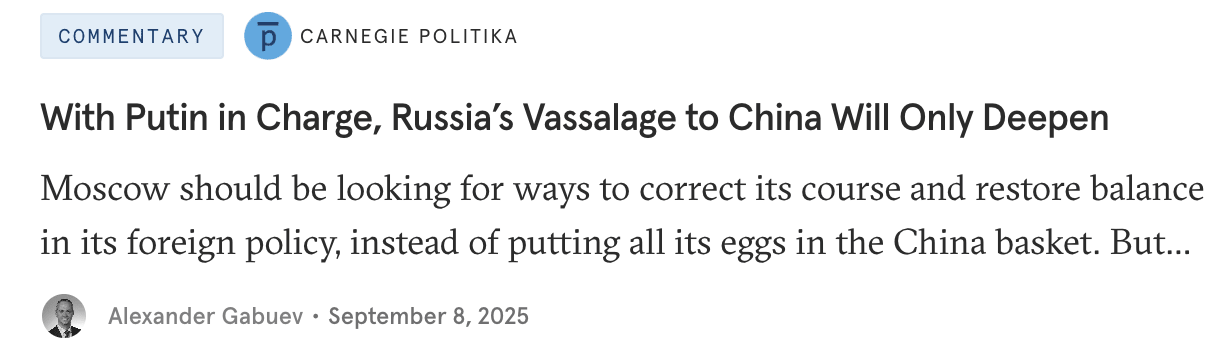
Robin: Alexander, can we talk about the relationship between Moscow and Beijing? They say it has no limits, but it surely must have limits. Can you touch on where those vulnerabilities may be, and how significant Vladimir Putin and Russia continue to be for China’s project of preeminence?
Alexander: There are obvious limits, and those limits are Chinese preferences and national interests. The relationship is deep and fairly comprehensive, based on pragmatic national interests on both sides. They went through confrontation in the 1960s and 1970s and do not want to return to that because it was very costly. When the opportunity opened in the 1980s for normalization and resolving territorial disputes, they took it, and since then have followed the principle of not always being with each other, but never against each other.
If you look at the economic dimension, there is significant complementarity. Russia has natural resources but needs capital, technology, and infrastructure. China has those capabilities. There are also similarities between the regimes: two authoritarian states, both permanent members of the UN Security Council, that align on many aspects of global governance. Then you have Vladimir Putin and Xi Jinping, contemporaries with similar narratives, both resentful of U.S. dominance and seeing it as a threat to their regimes and great power ambitions.
At the same time, the relationship is deeply asymmetrical. China is a rising peer competitor to the United States, with a strong manufacturing and technological base, while Russia is on a path of relative decline due to decisions made under Putin. Russia once had access to both the European Union and China, and broader Asian markets like India, Japan, and South Korea. The war in Ukraine has burned many of those bridges and pushed Russia into China’s orbit.
For China, there is still value. Russia provides security along the northern border, reducing the need for Chinese resources there. It offers natural resources, increasingly flowing to China on favourable terms. It contributes niche military technologies, while China’s support to Russia’s war effort has also been significant.
Russia is also a meaningful, if limited, market. Not comparable to the EU, but at roughly 150 million people, it matters for certain sectors. It also serves as a testing ground for Chinese firms operating under Western sanctions, allowing experimentation with workarounds to U.S.-led pressure.
At a broader level, Russia acts as a strategic distraction for the West, consuming resources and attention. But because the relationship is so asymmetrical—China accounts for about 40 percent of Russia’s trade, while Russia accounts for less than 4 percent of China’s—China has far greater flexibility. It can engage selectively, while Russia has fewer alternatives.
That asymmetry is the real limit in what is called a “no limits” partnership.
Robin: Michael: the European Union. You described leaders visiting Beijing. The Germans probably still have the most important relationship. But where does the EU sit between Donald Trump in his second term and Xi Jinping?
Michael: The EU is not uniform and is increasingly contested terrain. On security, there is no real prospect of separation from the United States, but China wants to keep it as distant from Washington as possible. Trump has, in some ways, helped that.
China is also trying to cultivate individual EU member states. It previously did this through the “16+1” or “17+1” initiative, targeting Central and Eastern Europe. Now it uses bilateral engagement, including with Hungary and Spain, testing who can become China’s closest partner. This is a divide-and-influence strategy aimed at weakening collective EU responses.
The core issue is geoeconomic. China’s exports to the United States have declined with rising trade barriers, and restrictions are likely to tighten. That leaves China with fewer large markets. At the same time, China is doubling down on its economic model: manufacturing expansion, overcapacity, subsidies, and technological self-reliance while increasing others’ dependence. This reflects a conception of power rooted in control over production and supply chains. China is on track to account for a large share of global manufacturing. If U.S. access is constrained, it needs alternative markets, and the EU is critical.
So China wants key states like France and Germany to struggle to coordinate on tariffs or protections. If the EU cannot act collectively, it cannot match U.S. barriers. That allows China to export excess production and sustain its model. Disunity becomes a structural vulnerability that China can exploit.
Robin: Olivia, institutions like BRICS and the Shanghai Cooperation Organization—how successful are they, and how important are they now?
Olivia: Is China building an alternative universe? Yes and no. Institutions like BRICS and the Shanghai Cooperation Organization serve a role, but are often underwhelming in concrete outcomes, for example in cases like Iran. That is because they are not alliance systems pursuing hegemony, but part of China’s pursuit of preeminence. They are not about organizing allies for collective action, but platforms to cultivate goodwill with emerging powers. Most members do not expect China to deliver much directly, but still see value in alignment.
China’s main focus is the United Nations. It emphasizes a UN-centred order but argues the system has been shaped by the West. Its role, from its perspective, is to “correct” that imbalance by increasing non-Western influence. BRICS and similar forums help build coalitions, including in UN bodies like the Human Rights Council. These institutions are not ends in themselves, but tools to reshape how the United Nations functions and how international norms are defined.
Robin: “Made in China 2025”, Olivia. It’s been a huge success, hasn’t it?
Olivia: It’s worked well, but it’s a mixed success. Xi Jinping is quite honest and open about China’s economic and technological weaknesses. In many ways, he has a more sober view than what some optimists in the West might think. A weakness is China being unable to get the West on board with its technological output. That is a serious problem for China.
Xi Jinping takes the view that although China has a lot of tech talent, the quantity is not sufficient, and China lacks top-end tech talent. Technology is constant competition—when you get there, you realize there is more to achieve. A problem for China, and for Made in China 2025, is how to get investment going into goals that require continuous funding.
We are at a time when China’s economy is facing significant difficulties, and we have not touched on demographics, which are another major problem. China is getting old before getting rich. All of this raises questions about financing China’s technological model. To address that, China needs the goodwill of countries willing to invest, and investors need to trust China and trust that their governments have good relations with China.
This means having good relations with the West is key for China’s technological project. China is working on this gradually. We still have some time, and if the geopolitical climate holds, there may be more success on that front.
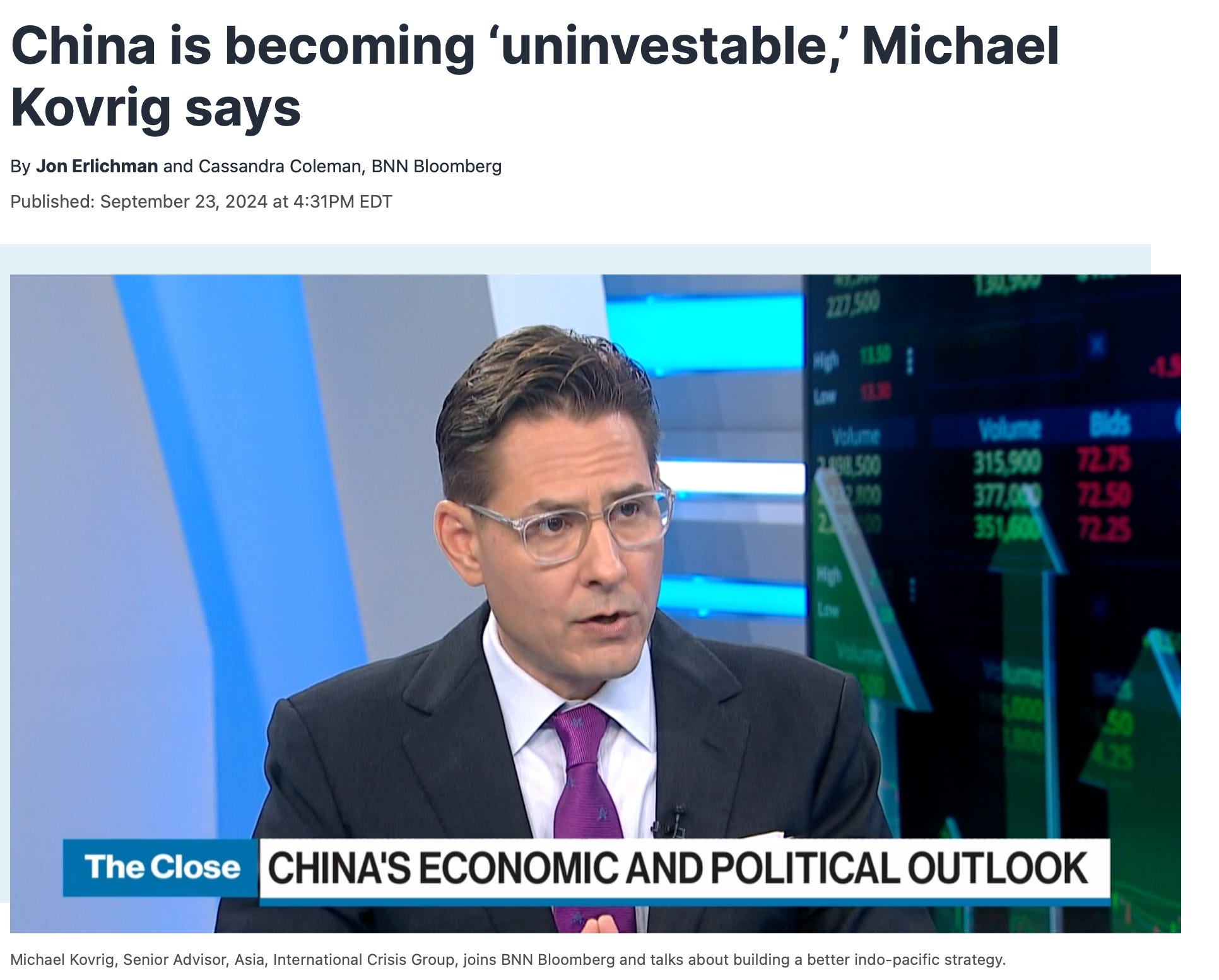
Robin: There was a time a couple of years ago when China was not seen as investable. Michael, in terms of the advice you give, and this being a big part of the Five-Year Plan, to drive more foreign investment—for exactly the reason Olivia outlined—is China now more investable?
Michael: Short answer: no. But it depends on who you are and your jurisdiction. For most Western investors, China is not a prudent investment, though in certain specialized niches, possibly.
There’s a difference between massive growth across an economy (which China used to have) and concentrated success in something like Made in China 2025. China has enormous capacity to mobilize resources and large numbers of people toward major projects. It’s demonstrated that if you harness that kind of state capacity, if it puts its mind to dominating robotics, biotechnology, and AI, it has a strong capacity to do so, even with flaws. But that does not mean even those sectors are a prudent investment. Most companies involved are not necessarily profitable. There’s intense competition, subsidies, and overproduction—companies grow large but are not making money and are not delivering returns.
The overall economy is unbalanced. Consumption is in the doldrums. Real growth is low. There are many other problems: transparency issues, insider trading activity, and non-market factors affecting performance. From the 15th Five-Year Plan, it’s clear they’re doubling down on technological self-reliance, industrial resilience, and selective openness. They want foreign investment in sectors they can harness and control, but not broadly. There’s weak commitment to consumption-led rebalancing and a more explicit ambition to reshape the international system.
Then there is the geopolitical element. If strategic rivalry with the West increases, it becomes increasingly problematic to hold investments in China. Once you factor in geopolitical and other risks, it becomes a bad bet. China is retooling its economy toward a more controlled model focused on preserving regime power, and hardening itself against a more difficult geopolitical environment, even as it tries to attract investment.
Robin: The Chinese consumer is going to save the day, aren’t they?
Michael: I would not count on that. Their model is not prioritizing the consumer. It’s production-focused—they see the producer as king—and they repress domestic consumption. So where does all that production go?
Audience Question: What is China waiting for to take Taiwan?
Alexander: A landing operation, given the terrain, is very complex. If you want to force the Taiwanese leadership to negotiate reunification, you need to be very credible. China budgets for an error margin. It is not ready.
Part of the delay is also Russia’s experience in Ukraine, where the military appeared effective but in reality had deep weaknesses. If you look at procurement, logistics, and armaments in the People’s Liberation Army, the leadership recognizes there is fraud and inefficiency that still needs to be addressed. So they are not ready yet. My assessment is that this is more a threat than something they intend to do immediately.
Robin: And it’s important to remind ourselves that Taiwan has had two or three generations to prepare for this invasion, in terms of its military capabilities. Michael, what is Xi waiting for?
Michael: I would agree with everything Alex said. This is one of the most contentious forecasting questions in China analysis—”will they or won’t they, and on what timeline?” The U.S. intelligence community has revised earlier estimates, such as 2027, pushing them back. That may reflect political signalling.
There is strong consensus that Xi Jinping wants to incorporate Taiwan. If he’s able to, he wants to do it in his lifetime as part of his vision of national rejuvenation. He would prefer to do it peacefully through coercion—pressure, propaganda, political influence—rather than war. The strategy is to build overwhelming capacity—ships, missiles, landing craft—until Taiwan capitulates and the United States decides it’s not worth intervening. But to make that credible, China needs real capability.
Alexander: The key risk is timing. If Xi sees a window of opportunity—U.S. weakness, disunity among allies—he may act. The uncertainty is whether decisions are made through a structured process or a more centralized one.
Michael: There is still structured discussion within the Central Military Commission, even though it’s highly concentrated. (Joking)
Robin: Isn’t it striking that the Central Military Commission currently has only two members, effectively one in uniform?
Olivia: It is unexpected. On Taiwan, Xi has tied reunification to national rejuvenation by 2049–2050. The CCP is risk-averse, but Taiwan is a high-risk objective. So there is tension between short-term caution and long-term ambition. Taiwan is central to China’s vision. If China cannot achieve it, broader claims about its rise weaken.
At the same time, Xi’s rhetoric may increase urgency but also risks provoking counter-coalitions. Xi is risk-averse but has taken major risks—on the economy, COVID, diplomacy, and shifting toward the Global South. Taiwan fits into that pattern.
Audience Question: Soft power: is there space for it in the new world order?
Alexander: China is trying to exercise soft power on Russia, a society that does not have China as a reference point and has had anxiety about a rising China. But given current conditions—more flights, visa access, educational links—many Russians are visiting China for the first time. They come back impressed, seeing it as a country of the future. In some cases, this soft power works and attracts people.
Robin: Soft power as a tool of statecraft is obviously not a new phenomenon. But how important is it to China’s relationship with the rest of the world? And I don’t just mean things like CGTN or the resources spent on that, which are absolutely vast. But other aspects of Chinese culture—dance, theatre—are these things also a key part of trying to export a different view of itself to the world as it pushes for that preeminence?
Olivia: From a Xi Jinping perspective, the CCP is really central. So if we see that, then we are already ahead in thinking about Chinese soft power—being convinced about the CCP and its ability to generate attraction, which he does believe in.
But the other aspect about Chinese soft power is that it’s not just Chinese fans. It’s dancing robots, TikTok, RedNote—it is about the Chinese technology platform economy. What is interesting is these are also sectors that Xi Jinping regulates, and that the Chinese government finds need a lot of improvement, and finds them to be falling short of state expectations. But if you think about the spread of Chinese influence, they are a lot more effective than telling the rest of the world how amazing the Chinese Communist Party is. That would reach some audiences, but have a limited level of reach. But TikTok, dancing robots, electric vehicles—those can be Chinese soft power. So sustaining Chinese tech capability is actually really crucial to that.
Robin: Yeah, the problem with those is that they’re tools of the state, to an extent. I know there’s a huge amount of private financing involved, but in my view, China’s leadership is not willing to liberate the true leaders of soft power, and so will never let them achieve their full potential. And the potential is huge, isn’t it, Michael, for a country as vast, with such a history.
Michael: Absolutely. China has a highly educated population that produces all kinds of amazing things. It has enormous cultural resources to draw on to be appealing in many respects. The main damper on its appeal to the average person, and to many of its own citizens, is the authoritarian weight of the Party-state on it, the obsessive control, and many of its other nasty elements. The fact that it’s currently imprisoning about 50 journalists and about 4,000 political dissidents, and engaging in other extreme human rights violations—that’s not great PR, and it knows that.
That’s why you can’t really think of Chinese soft power as one discrete thing. The Party-state is quite good at engaging in a whole spectrum of influence tactics that range from state media to disinformation, misinformation, propaganda, and soft power influence through social media, to outright coercion.
A lot of the language it’s been using in meetings with leaders lately is that it wants foreign countries and governments to show a correct perception of China and demonstrate mutual respect. A “correct perception” means things like respecting China’s right to its own development model. However, that development model also involves a $1.24 trillion trade surplus that’s hollowing out Western manufacturing and preventing many Global South countries from climbing the ladder of development, because they can’t compete.
So it’s about strategic narratives that manipulate perceptions, hide and censor, downplay, or condition—through fear—people from saying critical things, and accentuate a positive, glorifying narrative. Often that acts in a very subtle way, particularly in Western societies.
The Party doesn’t need people to believe everything or think China is wonderful. It just needs them to be sufficiently confused, to stop countries from doing necessary things to protect themselves against hostile aspects of its influence—elite capture, foreign interference, transnational repression, and other malign activities—and from taking measures against aspects of its economic policy that are making countries dependent on China. So this soft power narrative is about lulling you into a false sense of security from thinking “it’s not that bad.”
There are great aspects of China, but you still need to protect yourself from the harmful aspects.
Audience Question: Is there a role for China as a mediator or facilitator of peace settlements in Ukraine, particularly if Trump walks away?
Robin: I think this is fascinating, given China’s de facto support for the aggressor. Olivia, what do you think about China as a global peacemaker?
Olivia: The Chinese government takes the view that it has scope to play a mediator role, but also stands for non-intervention, and that conflicts ultimately require the warring parties to sort things out. If the willingness is there, China would like to push things along a little bit.
But there isn’t an interest in providing security guarantees. China doesn’t want to be dragged into conflicts created by others, and it doesn’t provide security guarantees. Those are hard limits on how China would act in mediation. The interest is there, provided conditions are right, but China would not do too much to create those conditions.
Robin: Can you be a credible potential peacemaker if you’re supporting one side?
Alexander: The Chinese understand that the positions of the two sides are still miles apart, and both Russia and Ukraine have the capacity and will to continue fighting. That is the most likely trajectory this year, since neither is in a position to capitulate.
The outcome China would consider acceptable would also involve getting something out of it. A simmering conflict that drives Russia toward China on China’s terms and diverts U.S. attention and resources is acceptable. Why stop that?
China is not directly involved enough to incur major downsides. So if you want China’s help, there needs to be a price. That’s what China asks European interlocutors: what’s in it for us? Are you ready to do something in return? The answer is usually no, because these are core European interests. So China follows a path of imitative diplomacy: initiatives, “friends of peace” groupings, envoys traveling between capitals. They are very good at that. But they are not in a position to deliver peace, at least for now.
Olivia: China has been saying it can improve relations with Europe because Europe now recognizes China’s “principled neutrality” in the Ukraine war. That has been a Chinese narrative over the past year. From China’s perspective, its position has been successful. It does not want to pay a cost through serious mediation. This reflects the distinction between global hegemony and global preeminence: China is looking for leadership in a low-cost way.
That also means limits. For countries, that can be reassuring because China is unlikely to intervene militarily. But it raises a more difficult question: how do you harness China’s weight to deliver global public goods like peace when it is reluctant to do so?
At a time when U.S. leadership is retreating, Europe is squeezed in the middle. China is not fully stepping up, and the U.S. is creating uncertainty. So how do you create a workable framework for coexistence with China? That still needs to be thought through more clearly.
Audience Question: The Global South not being one bloc, could you elaborate on how countries navigate between China and the United States?
Alexander: China brings a lot to the table, especially in manufacturing and trade policy. The U.S., under Trump, also has an assertive trade policy, though not always welcome to those affected. Countries are trying to create space and engage both sides. China is more forward-leaning in offering opportunities, while the U.S. appears more defensive. Europe is trying to play a stabilizing role, but internal divisions and other pressures limit its effectiveness.
Robin: Olivia, what about India? Where does it sit?
Olivia: The Global South is a loose political concept in China’s framing. It refers to countries with shared grievances. China is flexible in defining partnerships, so India, and even Singapore, can be included if they identify that way.
Robin: China’s relationship with India is not easy—they compete.
Olivia: It’s not easy, but engagement is flexible. Countries can participate in some initiatives and not others. That makes China’s relationships both hard to define and easy to enter.
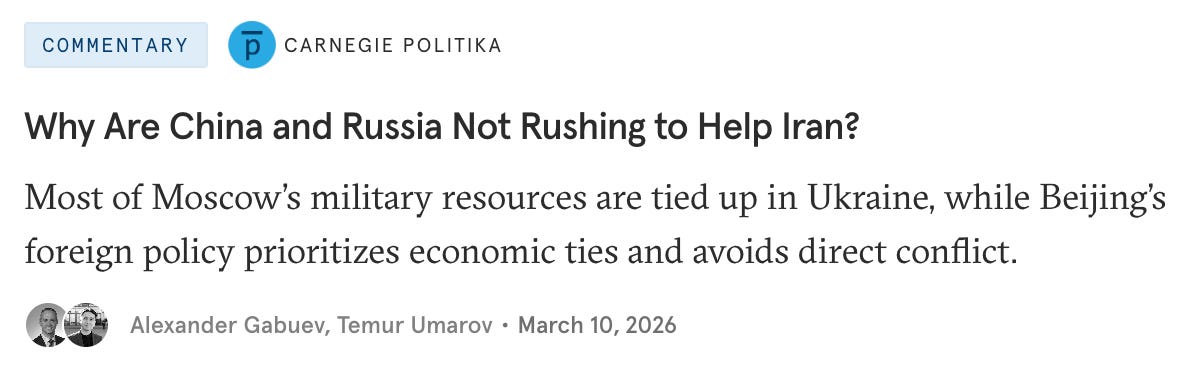
Robin: Olivia, why isn’t China doing anything about Iran? It’s an opportunity to be a peacemaker. Why not flag all the ships with a Chinese flag and come through the Strait of Hormuz?
Olivia: China is doing a lot. Beijing is talking to countries and engaging in diplomacy. From a business perspective, the concept is preeminence, which means seeking leadership without paying a heavy cost. This is a textbook example.
It is not surprising if you look at China’s approach to Ukraine, Iran, and after the October 7 attack. You see a consistent pattern. The question is whether China can persist with this low-cost approach. It has a tangible negative impact on the Chinese economy. Can China maintain a low-cost approach without paying a cost? The answer is no.
This is a real test for China. The question becomes what other countries China claims to be close to will pressure it to act collectively. Pressure on Chinese leadership exists, but what exactly the world wants China to do is unclear. Neither the West nor the Global South has articulated a clear answer. More work can be done here. I would be interested to hear what Michael has to say.
Robin: Michael, a war that distracts your main opponent may be good, but a war that could lead to regime change and more democracy in Iran might not be good for China. Is that right?
Michael: Whether the U.S.-Israel war with Iran is a net positive or negative for China is debated. The relationship is asymmetric: Iran is much more dependent on China. China can live without Iran, but it gets real benefits from the relationship. The question is whether those benefits would continue under a different regime in Tehran.
Right now, China is taking a position of calibrated ambiguity, criticizing U.S. intervention without confronting it. This follows the classic line: never interrupt your opponent while they are harming themselves.
On the negative side, China risks losing a strategic partner that provided discounted energy and kept the U.S. focused on the Middle East. The 25-year strategic partnership underperformed and never reached the $400 billion headline. Iran is less important for China economically than the Gulf states and Saudi Arabia, but it still matters.
U.S. military success also has a psychological impact. Chinese analysts have been struck by U.S. capabilities, which may influence thinking on Taiwan. China’s energy insecurity has also been exposed. It has strategic reserves, but they are not infinite. There is also the postponement of the Xi-Trump summit, which could affect broader relations.
On the positive side for Beijing, the U.S. is expending strategic munitions and advanced weaponry, potentially creating opportunities for China to make moves, including in the South China Sea. It also diverts U.S. resources. The situation supports China’s global narrative presenting itself as responsible while portraying the U.S. as destabilizing. Economically, higher energy costs create short-term inflation pressures for China. In the long term, however, higher fossil fuel prices could benefit China as a major supplier of green technology such as wind, solar, and batteries.
Robin: Strategically, if the Iran situation weakens Donald Trump, that could benefit China.
Alexander: I agree with much of the analysis, but I would not conclude that the U.S. has demonstrated total superiority. This is not the first Gulf War. Intelligence capabilities, especially from Israel, have been strong. If Iran can still disrupt shipping, and if resolution requires a large-scale operation with significant risks, it is not clearly a major success. If the war ends with U.S. withdrawal and a declared victory by Trump, that is not unfavourable for China.
China is active behind the scenes. Russia is more forward in providing assistance, which suits China because Russia absorbs more pressure. China is well hedged: its investments in renewables, coal, and diversification have been effective, and it has access to Russian hydrocarbons. This could be the moment China advances major projects and expands existing ones.
Audience Question: What lessons is the PLA learning from Iran? What does it take from Trump’s command of a powerful military, and from a capable force struggling in a conflict less complex than Taiwan?
Alexander: The U.S. has struggled to absorb lessons from Ukraine. Ukraine’s military has improved significantly with U.S. support, particularly in drone warfare. Weaknesses in airbase defence highlight vulnerabilities. China is likely studying how well its own defences would perform and what lessons apply to drone warfare. It also benefits from observing Russia, which is a major innovator in drone use in this conflict.
Robin: China leads in drone technology. The PLA has undergone significant professionalization and anti-corruption reforms under Xi Jinping. How much is it learning, and how different is it from 20 or 30 years ago?
Olivia: China is learning that Trump is unreliable. This affects any idea of negotiating over Taiwan, because there is uncertainty about how he would interpret or uphold agreements. That makes him both a risk and a potential opportunity, but not necessarily one China is eager to exploit.
The argument that 2027 is a likely timeline for action against Taiwan is not convincing. U.S. unpredictability creates risk China may prefer to avoid. Observing U.S. actions in Iran reinforces the perception that escalation carries high uncertainty. If China considers increasing coercion toward Taiwan or taking more aggressive action, it will factor in the risks demonstrated in Iran. This suggests caution rather than urgency.
On military and technological lessons, including drones and PLA capabilities, lessons exist, but they are not immediately translated into action. Xi Jinping operates on a long timeline focused on predictability, gradual adaptation, and course correction.
China has adjusted through outreach to Europe, export controls on rare earths, and calibrated signalling of capability. But there is no indication of a major move to exploit perceived opportunities created by U.S. behaviour under Trump. The Iran situation does not appear to be pushing China toward higher-risk action.
Audience Question: Is Europe’s absorption of Chinese green energy infrastructure, batteries, and EVs an opportunity? Could it be a win-win for Europe, enabling a quicker shift toward renewables?
Alexander: The right exercise for the Commission and nation states is to assess which industries are viable. Which still have the scale and profitability to remain competitive and should be protected? Which cannot be rebuilt or are already lost Large parts of green tech are gone and not where Europe should compete. The automotive sector is worth protecting. A one-size-fits-all approach does not work. Policymakers should evaluate industries individually, protect what matters, and lower costs by allowing China to dominate where Europe cannot compete.
Robin: Michael, the UK recently excluded Chinese wind turbine manufacturers on national security grounds. Meanwhile, the U.S. automotive sector finds CATL’s battery technology difficult to avoid and is being pushed toward partnerships because of its dominance. There are two sides to this.
Michael: In some areas, Chinese green tech offers a low-cost advantage where no local competitor exists. This benefits consumers and accelerates the green transition. But there are cybersecurity and national security concerns, as seen with wind turbines, electric vehicles, and telecommunications infrastructure.
Dependence on a strategic adversary for critical components creates vulnerability. It can be weaponized for coercion or conflict, and creates long-term strategic dependence. Even if products are not made in the EU, sourcing entirely from China introduces risk. China’s use of rare earths illustrates this.
This requires strategic industrial policy: deciding what to produce domestically while diversifying supply from trusted partners. There is also the problem of deindustrialization. Service-based economies may work nicely for highly-educated finance professionals, but for working-class people they limit upward mobility and deepen regional inequality.
A diversified economy matters. Losing manufacturing erodes process knowledge, production capacity, and the defence industrial base. It can also make production prohibitively expensive. Diversified commercial supply chains may be feasible, but limited domestic military production creates national security risks if competitors can scale much faster.
Audience Question: We’ve heard the view that China wants to see the post-World War II rules-based order hollowed out. But over the last two or three years, the West has done much of that itself. Given China’s pursuit of global preeminence, soft leadership, and soft power, how will it exploit that collapse to establish a new world order?
Robin: Michael, briefly, a New World Order?
Michael: That raises the question of what a Chinese-led or Chinese-dominated world order would look like. There’s not enough thinking about what kind of world China wants, or more precisely what kind of world the Chinese Communist Party wants.
It would be more realist, transactional, and power-based, leveraging China’s size to deal bilaterally with smaller countries. It would preserve parts of the rules-based order. China is not looking to eliminate bodies like the International Civil Aviation Organization or other standard-setting institutions. Rather, it wants discourse power, the ability to set standards through future technologies, make those technologies dominant, and exercise influence in bodies like WIPO or the FAO. That’s why it has placed senior officials in overlooked UN organizations over the last two decades.
China wants to preserve regulations where they provide regularity and predictability, but purge the liberal elements of the system: institutions of liberal economics, which it uses through the WTO and pays lip service to but does not follow, and anything related to human rights, good governance, democracy promotion, or values it sees as hostile to its own governance model.
This is a struggle between a Leninist vision and a Kantian vision of world order. Liberal democracies have not always practiced what they preached, but there has always been a liberal aspiration in that vision. A Chinese world order would be purged of that aspiration. It would be state-centric, with less room for independent media, civil society, the primacy of the individual, and civil and political rights.
Robin: Much of this depends on China’s domestic economic success. Xi Jinping has to sustain growth, or none of this works outside China’s borders. How challenging is the domestic economic problem?
Olivia: This brings us back to China’s 1.4 billion people, and whether they can become a real source of economic power. As Michael said earlier, China has not succeeded in harnessing its consumer market, and this remains a major problem in the 15th Five-Year Plan.
The plan mentions the need to boost consumption, but Xi Jinping is committing to a 7 percent annual increase in scientific research and development from 2026 to 2030, while there is nothing nearly as ambitious on consumption or the social safety net for lower-income populations.
At the same time, China is seeing an expansion of the gig economy and informal labour markets. Aging migrant workers who came from villages and worked in cities in the 1980s and 1990s are now too old for factory production lines, while the real estate sector has collapsed. Many have been absorbed into the gig economy, and they make up a large share of China’s workforce. What happens to them?
This points to a broader challenge: whether the Chinese Communist Party can live up to its promise of common prosperity. That may be necessary if China is to deliver the national rejuvenation Xi Jinping has promised.
It also raises the question of what the Chinese government will actually do to raise living standards for lower-income populations. Local government finances are severely squeezed, creating more unfunded mandates even as local governments bear much of the burden for social welfare provision. That is not sustainable.
So the difficult question is whether relentless investment in technology is the best path for China. From Xi Jinping’s perspective, it is strategic and tied to security. But from the perspective of China’s working class, the priorities may look very different.
Robin: I’m glad you touched on that, because for me China, its political leaders, and China’s people have always been very different things, and it is wise to keep them separate. Thank you.
My thanks to the Frontline Club and China Correspondents’ Club of London for organizing. Visit the Frontline Club for more thoughtful discussions with leading journalists, scholars, and practitioners on the major issues shaping world affairs.
Check out Olivia Cheung’s excellent books with Steve Tsang, The Political Thought of XI Jinping (video summary) and China’s Global Strategy under Xi Jinping.
Alexander Gabuev’s insightful writing for Carnegie is here. He also has a Substack.
Comments
Nothing yet. Say the first thing.
Sign in to join the conversation.