
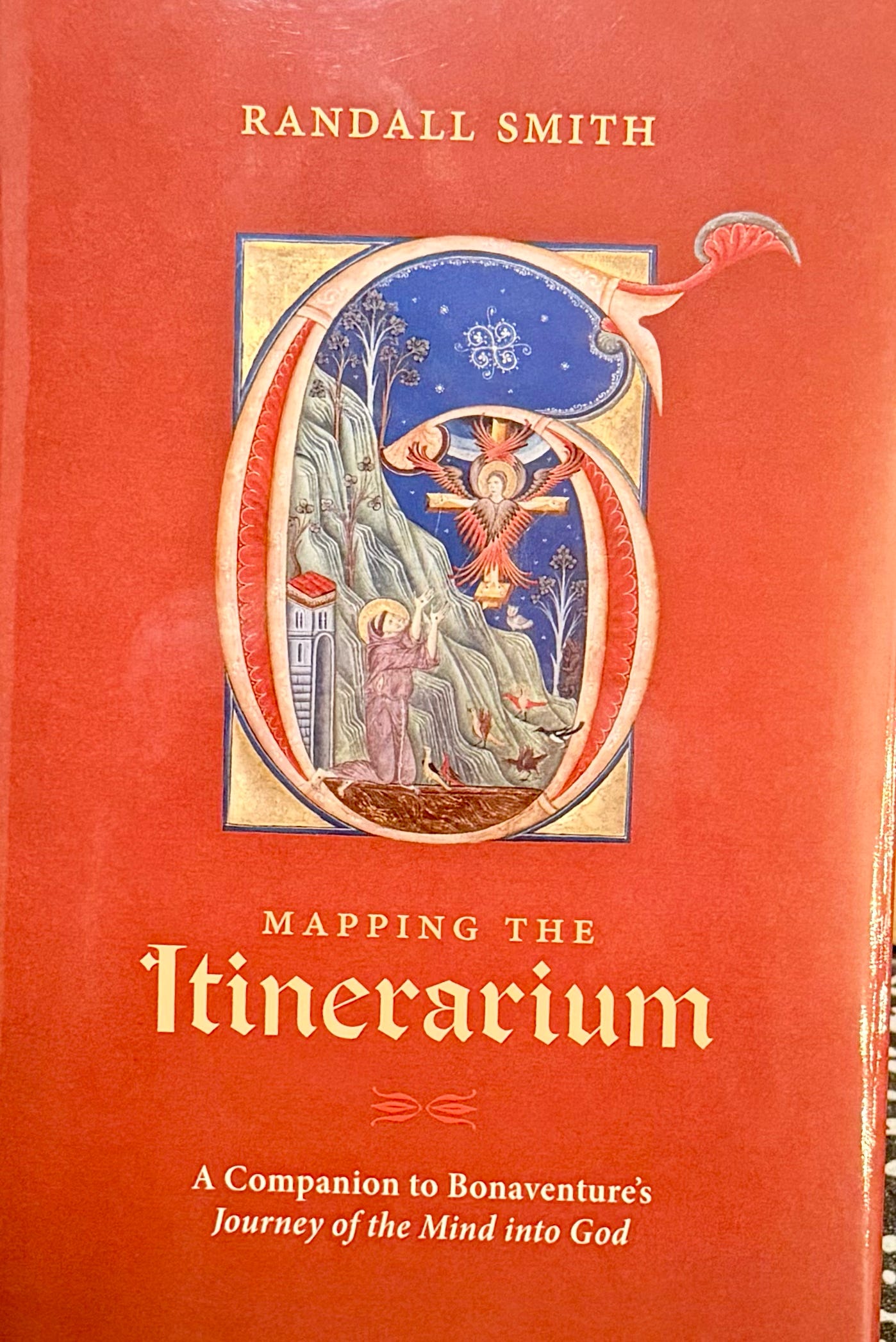
It’s a good deal. Blurb a book and then get a complimentary copy.
Better deal: blurb a book by a fellow contributor to The Catholic Thing and get a copy of that brilliant theologian’s latest academic work.
Even better deal: discover, when you get the book, that a colleague from your own university, and fellow member of the Gibbons Institute, Joshua Benson, has also contributed a blurb, along with that consummate theologian, Matthew Levering.
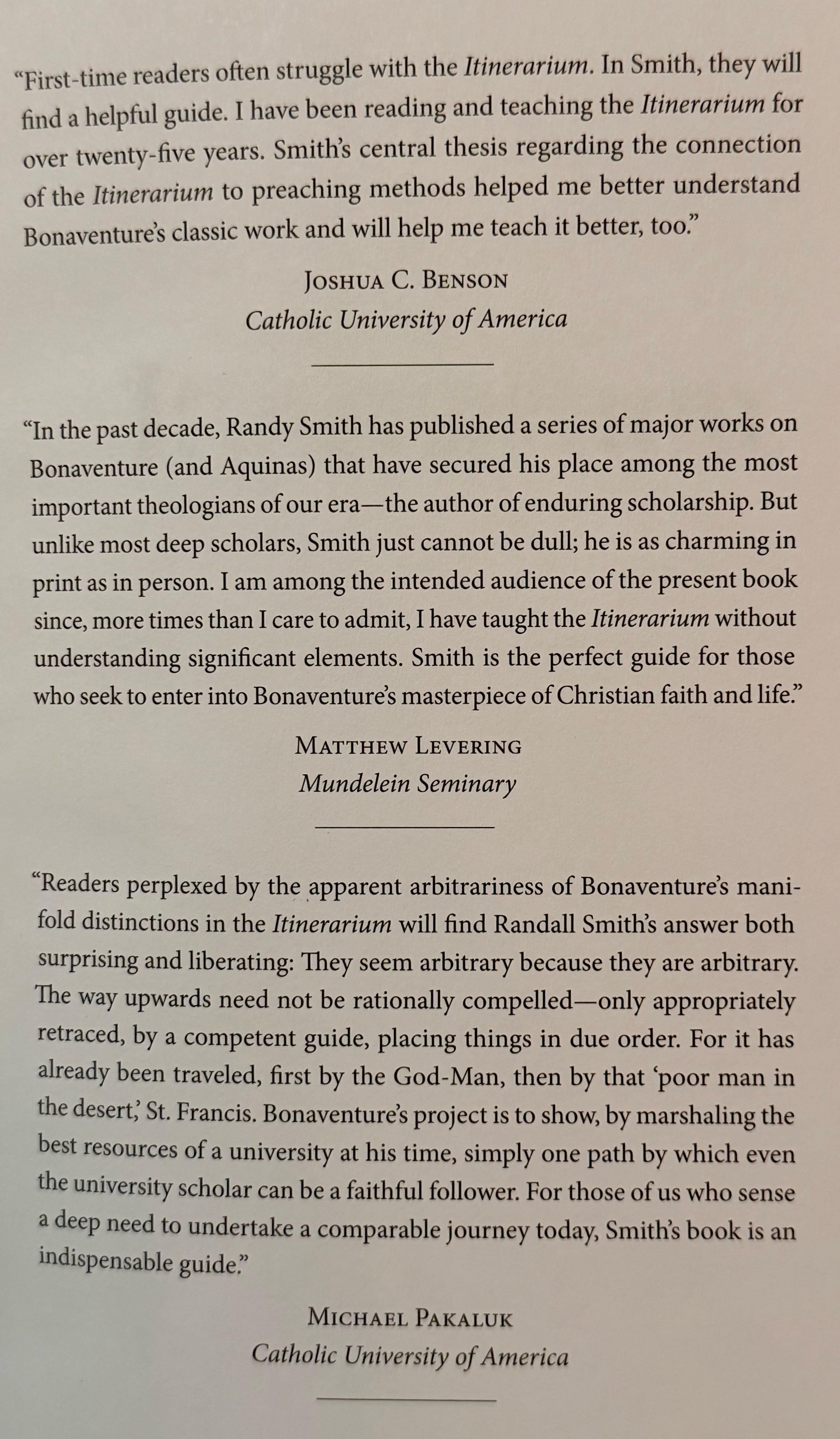
This is a book highly to be recommended. From Emmaus Road Academic publishing. Release date was just two days ago, August 24. Congratulations, Randy!
Yesterday hedge fund investor Stanley F. Druckenmiller published an essay in the Journal entitled, “Let the Bond Market Speak.”
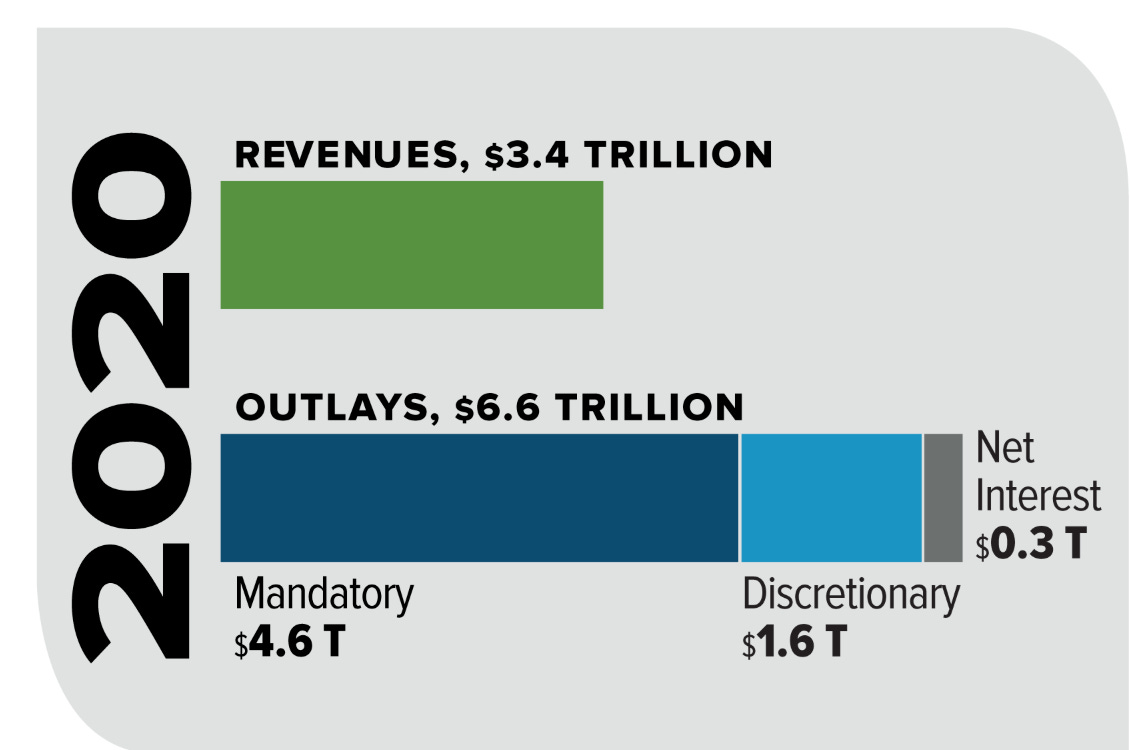
(We borrowed half of what we spent in 2020. Source: CBO.)
It has many good lines. Its points and arguments seem to me sound. Here is how it sets the stage.
The Treasury Department announced on Aug. 19 that it would double the size of its long-dated bond buybacks, from $2 billion to at least $4 billion per operation, aimed at the 10- to 30-year sector and running from Sept. 9 through Nov. 4. The announcement came after the 30-year yield touched a 19-year high. Yields fell within minutes. By the next afternoon they had round-tripped to levels above where they started. The market’s verdict was swift and correct: This wasn’t liquidity management, it was price management—and a mistake far larger than $4 billion suggests.
Druckenmiller points out the market was orderly. No special intervention was justified. He then gives a thumbnail that the bond market’s movement was rational and hardly extreme:
Consider what the machine was pricing. Inflation is 3% to 4% and has been above the Fed’s target since 2021. Unemployment is 4.1%, full employment by any definition. The deficit is running near 6% of gross domestic product, a number America has never before produced in peacetime at full employment. The national debt crossed $40 trillion the same week Treasury intervened. Net interest will exceed $1.1 trillion this fiscal year, more than the defense budget. The 10-year yield, even after the summer selloff, sits at or below the economy’s nominal growth rate. That means a borrower (federal government) running 6% deficits at full employment, with above-target inflation, still funds itself at roughly the rate its economy grows.
My favorite line of the essay is a restatement of Hayek:
I have spent five decades trading on a simple premise: Markets aggregate information no committee possesses, and prices are how that information reaches decision makers.
Ah but what’s going on? What is the price signal telling us?
The long-term Treasury yield is the most important price in the world. It is also the only fiscal disciplinarian the U.S. has left. Neither party will run on entitlement reform. Both have spent the past decade expanding commitments while ignoring arithmetic. Democracies don’t repair their finances because a budget office publishes a table. They repair them only when the cost of inaction becomes visible and immediate, when mortgage rates bite, when auctions tail, when the political price of a rising long bond finally exceeds the political price of touching spending.
Druckenmiller has been beating this drum for a long time.
During the debt-ceiling fight in 2011, I said a brief technical delay in payments would be terrible, but less terrible than another decade of can-kicking without reform. In 2013, Geoffrey Canada and I toured college campuses calling the entitlement trajectory what it is: generational theft. Transfers that accounted for roughly a quarter of federal outlays in 1960 consume 70% today. I told students, “I love entitlements, but I want them for you guys,” when they turn 65, not merely for my generation at their expense. In 2023 I said Washington was spending like drunken sailors, with federal outlays up from 20% of GDP before Covid to 25% after, and I called Secretary Janet Yellen’s failure to term out the debt at generational-low rates the biggest blunder in Treasury history. Every household and corporation in America locked in low rates, and the one borrower that needed to most, didn’t.
Ouch. Painful but true. But how should the government act in response to this price signal?
What should happen instead [of Bessent’s misguided buybacks] is straightforward. Return buybacks to their stated purpose: small, scheduled, off-the-run liquidity operations announced at quarterly refundings, never off-cycle responses to yield levels. Term out the debt honestly and pay the price the market sets. If the 30-year must trade at 5.5% to clear, that isn’t a crisis. It is an invoice. Then do the only thing that durably lowers long-term yields: address the primary deficit. Reform entitlements gradually and honestly, through means testing, indexing changes, eligibility adjustments phased in over decades—so that the burden is shared across generations instead of dumped on the youngest.
And now comes a sentence that many commentators have quoted:
Governments defending prices against fundamentals always lose.
Druckenmiller concludes:
The only variable is how much they spend before conceding. The U.S. shouldn’t put itself on the wrong side of that trade, not with the most important price in the world, and not when that price is trying to say the one thing Washington most needs to hear: Let the bond market speak.
Amen, I say.
After the essay appeared, it was examined carefully by AI detection software and found to have been written using AI. Druckenmiller didn’t deny it, saying the ideas were his but that the writing was improved by AI. He said that his case is no different from someone who relies on a speech writer or staff assistant.
I think that this is correct. Besides, the essay is not important for its writing style, which is not distinctive. It is not in line with Druckenmiller’s usually mediocre prose—but, again, who would have criticized his reliance upon a ghost writer? The essay is important for its analysis and arguments.
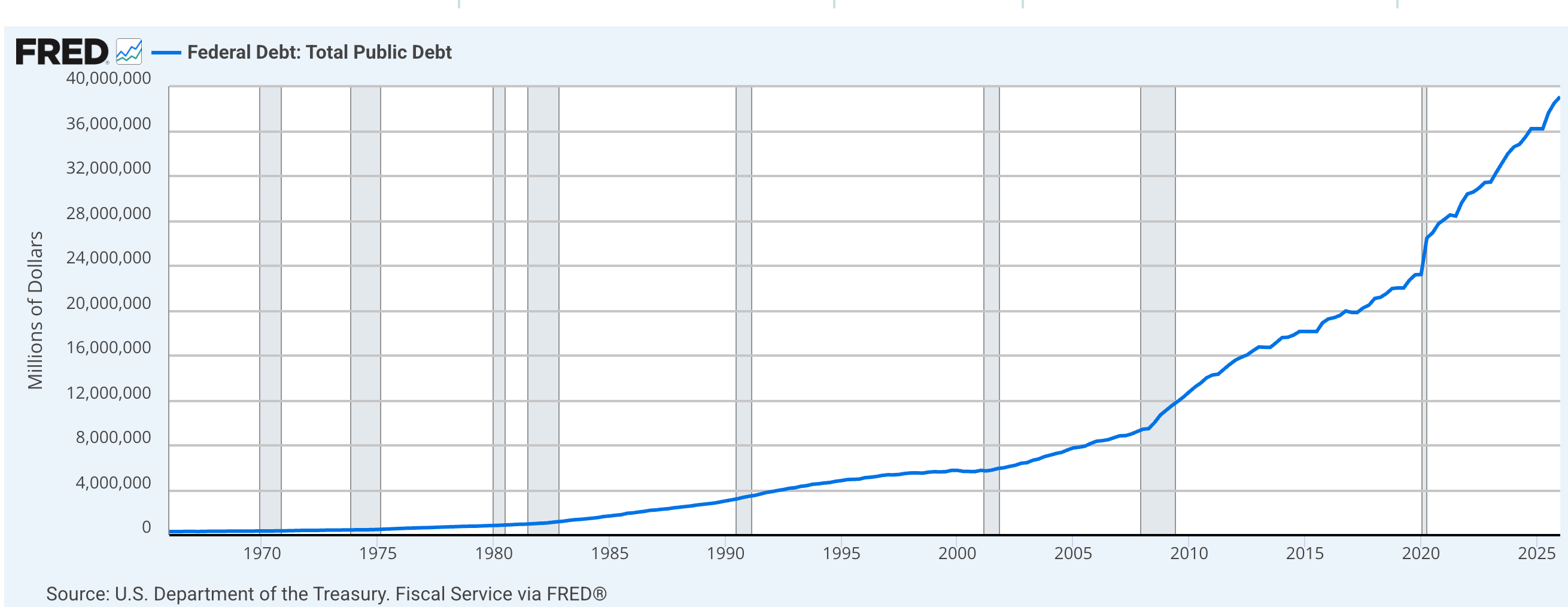
Below, the growth of the public debt since the “Nixon Shock” and conversion to fiat money:
A small philosophical point to conclude. Hume saw (or people take him to see—his actual view is not so clear) that a gap opens up between “is” statements and “ought” statements, once we reject natural teleology.
All ends imply oughts. If the end of a plant is to grow to about 48” and flower and produce fruit and seed, then “the plant is to grow to about 48” and flower and seed.” If it is to grow to about 48” etc. , then it is to receive water and sunlight each day.
The gerundive is logically prior to the ought statement. If the plant is to receive water and sunlight each day, then, pro tanto, it ought to receive water and sunlight each day. These are what are “due” to it (Latin: debita).
That is how “is” implies ought. When St. Thomas writes that the first principle of practical reason is that good is to be done, he is setting down the principle for bridging “is” and “ought,” not (contra Finnis) reaffirming the Humean position that there is an unbridgeable gap.
Good (that the plant is to grow to about 48” etc) ought to be done. This is St. Thomas’s principle.
What makes it seem that there is still a gap is that, so far, no agent is such that that agent ought to make it so, that the plant is watered and given sunlight. But then assign this job to someone—that is, make it so that it is good for this person that he water the plant and put it in the sun —say, a child given this responsibility. Then, “the child is to water the plant and put it in the sun,” that is “the child ought to water the plant and put it in the sun.”
The gap between “is” and “ought” is bridged by a confluence of goods, when what is good for the plant is made what is good for some agent.
Ciao!
No posts
Comments
Nothing yet. Say the first thing.
Sign in to join the conversation.