
I’ve never known how to feel about Jesus. Mostly because I’ve never understood Christianity. It’s never made a lick of sense to me. I’m more than willing to admit that’s due to my own ignorance, but the whole concept of a tripartite deity who is both the Creator of the Universe and his own son, and, additionally, some sort of “spirit” whose function has never been clear to me. Then there’s the notion that this Son of God/Son of Man died for my sins. Why would he do that? And how does his death absolve me of my wrongdoing? And then on top of that, you’ve got this whole pantheon of saints who aren’t, themselves, deities, but you can pray to them and sometimes they’ll toss you a miracle to be nice.
What?
I’m not trying to be disrespectful to any believers. It makes sense to you and that’s fine by me. I’m just saying I’ve found the entire thing to be maddeningly obtuse from an outside perspective. Which is why I’m so glad to have finally – finally – read the religious scholar Reza Aslan’s historical biography of Jesus of Nazareth entitled Zealot.
You may remember Zealot. It came out in 2013. At one point, I owned a copy but I don’t think I ever read the thing. And then it was lost somehow and I’ve only just completed it after picking it up at the local library (support your local libraries, people).
There is some controversy about the book. In fact, I remember my mother-in-law telling me years ago that the book’s scholarship had been highly criticized. I accepted her word at face value since I have no particular stake in the veracity of Aslan’s central claim, which is that Jesus of Nazareth was not the intentional founder of a new religion. Aslan argues that he was primarily a political revolutionary interested in overthrowing Roman rule.
I knew that Jerusalem was under Roman occupation during Jesus’s life. After all, didn’t he command his followers to render unto Caesar what was Caesar’s? But I didn’t understand the extent to which the Romans controlled Jerusalem’s religious life. They did this by appointing the High Priest of the Temple, which was, in essence, the city’s top political and religious job. It was also a great way to get rich - kind of like being Ken Paxton.
It was in this environment that Jesus began his ministry. According to Zealot, it was a ministry which preached independence for the Jews. The word “messiah” as Jesus would have understood it, was a political word. The messiah was the person who would throw off Rome’s imperial yoke and restore Israel. In fact, Jesus was just another in a long list of failed messiahs. “Wandering messiah” was just kind of a thing people did back then, the way “wellness influencer” is a thing people do now.
Had Jesus remained in the region’s backwaters, he probably would have never drawn Rome’s attention. But marching into the Temple and causing a ruckus did Jesus no favors with the religious and civic authorities. Such a spectacle probably sealed his fate.
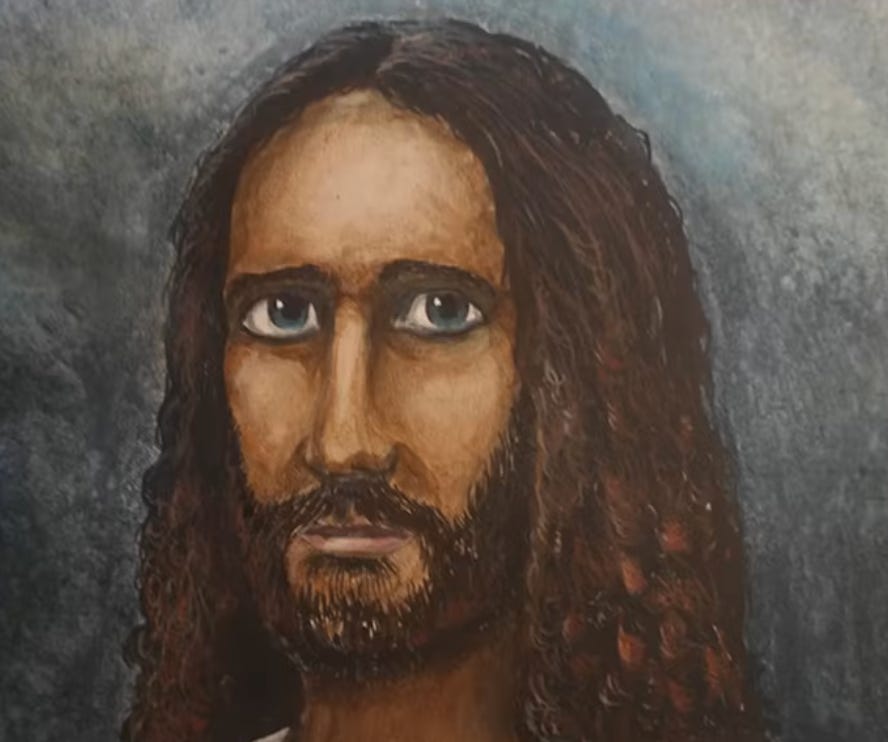
Moreover, Jesus almost certainly knew his actions would force the hand of the authorities. Was he hoping to provoke a Les Miserables style revolution? If so, he succeeded about as well as they did. Like the gang in Les Miz, the Romans dispatched with Jesus and his Apostles in short order. Like the gang in Les Miz, a musical would be written.
What we think of as Christianity doesn’t really arise until Paul’s conversion. (Again, you probably know all this, but I did not.) It was Paul’s controversial ministry that created the split between Jesus and Judaism, Paul who brought in Gentile believers, Paul who transubstantiated Jesus from a Jewish messiah into the divine savior of a universal faith. It was Paul’s vision of this new religion that, eventually, beat out that of the original Apostles, especially that of Jesus’s brother, James, who inherited Jesus’s ministry upon his brother’s crucifixion. I’ll be honest, at least in Aslan’s telling, Paul comes across like kind of a nut.
What I liked about Zealot is that Aslan gives me a Jesus whose motivations I understand. He’s a poor kid from the wrong side of the tracks. He’s mad at injustice and hypocrisy. He begins speaking. He attracts followers. He is a healer. He gets a little confidence. Takes his act on the road. Eventually, he makes his way to Broadway, where the reviews are vicious. They kill the guy. His followers pick up the mantle, even going so far as to claim his resurrection. I don’t know where the history ends and the myth begins, but at least I feel like I understand the context and traditions from which such a person might emerge. Jesus of Nazareth was a healer and wonder worker. Zealot makes the case that, more than anything, though, he was a revolutionary. That’s a Jesus I can understand.
Comments
Nothing yet. Say the first thing.
Sign in to join the conversation.