
Honor Thy Music
-The Country Music Hall of Fame and Museum
I am a traditionalist, and reverentially so at times. I am also incredibly irreverent when it comes to tradition. I like finding boundaries – real or imaginary – and pushing on them as hard as I can. But, I firmly believe to push at those boundaries, to stretch them, to explore what one can achieve or find beyond them, you must understand the traditions, and you do that by living inside them – figuratively and literally. I was lucky to be mentored – even if they didn’t know it – by some folks that were there when some of what I love so much was being created. That list would include musicians (obviously) but just as many writers and radio hosts – anyone who would put up with my never-ending thirst to know more. That same thirst still resides within me. Listening is just as key as asking. I had a dinner a bunch of years ago in Nashville with Johnny Phillips and Mark Maynard – both music industry lifers. Johnny and Mark – roughly ten year separated their ages and then me another ten – were talking industry stuff from way before my involvement. Honestly, I can’t remember what we were talking about – really what they were talking about – but I know I hung on every word.
Tradition and inspiration are often closely associated – getting back to one’s roots for inspiration is an oft-told story. There’s no doubt that inspiration can lie inside of tradition. I don’t believe that one is tied to the other. I also feel that purist and traditionalist have become interchangeable, intertwined. I firmly believe they are not. I have questions – which have been developed over time – that cannot be answered by some of the people (both purists and traditionalists, separately and together) I would ask for they have left us. I’m sure the Delta and Piedmont blues musicians, the purveyors of Mountain Music, and any mostly acoustic-based musicians of a certain period were just thrilled to be “discovered” becoming the face, the standard-bearers, the antiquated sound of a new movement – finally making a living with their music rather than being a farmer or a bus driver or a whatever. What if they had been asked about how they saw themselves, what they wanted to play, how they wanted to sound? Maybe the answer would be just what happened. Maybe it wouldn’t. What if they had been able to make a living with the recordings they made decades prior? What if they had been in the public light that whole time? Would their sound have changed and developed with amplification the way Muddy Waters’ style and sound did needing to be heard over the din of the Chicago bars and clubs – thus becoming the genesis of the guitar-powered rock’n’roll band? I firmly believe that Robert Johnson, had he survived and thrived into the 1960s, would have been standing right next to Jimi Hendrix with a Strat, a Fuzz Face, and a Marshall playing updated blues for a new world order. To all the naysayers, why not? The Delta blues musicians all played standards and show tunes to win over their audiences. Why not plug in?
I would love to have had this discussion with Sam Charters, Chris Strachwitz, or Moses Asch. Or, Dick Waterman, who I had met in my various travels to Oxford, Mississippi. But, the ideas and questions – or questioning the accepted ideals – took a lifetime of work, thinking, talking, and listening to form. I believe they would disagree with my suggestion and supposition here. They would see themselves as purely documentarians. They would not be wrong, and that is why a hearty discussion would be in order. Like most record company men or people who worked for record companies, they were also in business to make money. I certainly do not begrudge or question their business acumen. If not for that, we would not have these wonderful, essential documentations of artist and music. But, I also feel it is not out of bounds to question whether in that sense of business they were content to not push the envelope or let it organically expand. The industry of making music was always about business first, and the music second. That is just as true of Ralph Peer in Bristol, Tennessee/Virginia a century ago next year as it is with the remastering of back catalogue for greater profit today.
I believe it is very easy for some people to point this out as racism at work – to see these rediscoveries and recordings as musical Jim Crow in practice. I understand and see that perspective, including from people that I have worked with. But, I believe it misses the greater picture or point. It is akin to what I wrote two weeks ago: The Civil War was as much about economics as it was about racism – slavery was good for business. Just for the record, and because of the times we find ourselves living through, I must state again I find that completely reprehensible in any day or age. The recording industry in the 1920s saw no color. It took advantage of poor, uneducated whites and blacks. It is simply a continuation of the wrongs, the evils, the crushing burdens of socio-economics that have played out in this country since before its actual founding two hundred and fifty years ago. It is also simply human nature.
Artists need to create. We don’t have any choice, and the powers that be – the man – know and exploit this. Over and over. It’s almost like the lifecycle of an insect – from egg through the complete metamorphosis to the crushing defeat of being squashed by someone’s shoe on the sidewalk. Tradition. Can we, will we break that tradition? I do not know. The answer is just as varied and complicated as all the figures that play their individual roles. But, we can honor the tradition of being obsessed with what we are creating, and making the best possible art that we individually, deeply believe in – trends and fads aside. Tradition is what we rely on whether we realize it or not. We are constantly referring to, inferring, drawing on, and expanding tradition as we create our new art and traditions.
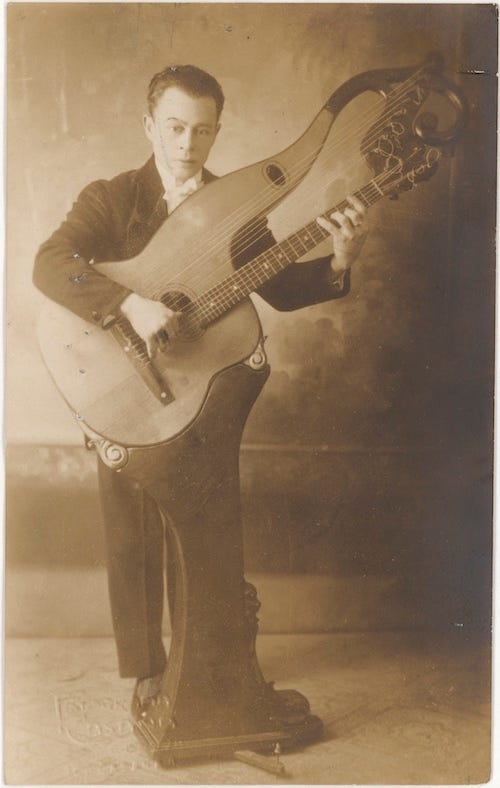
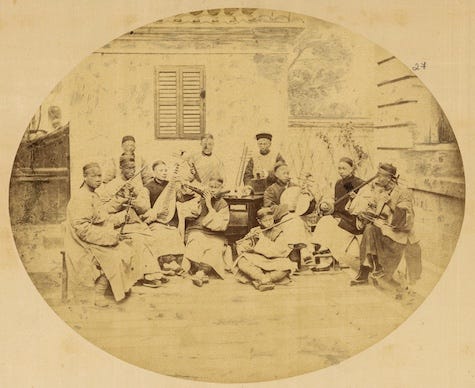
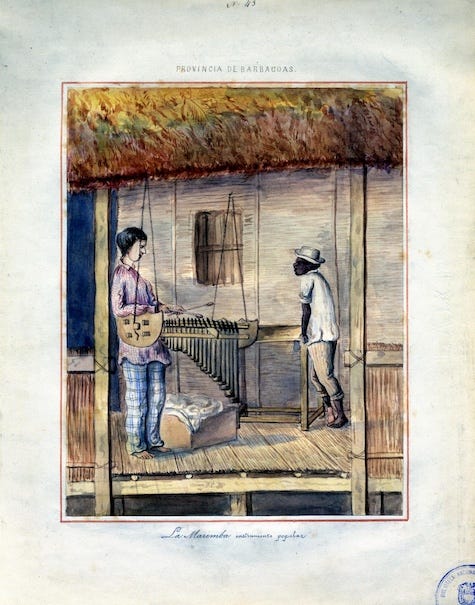
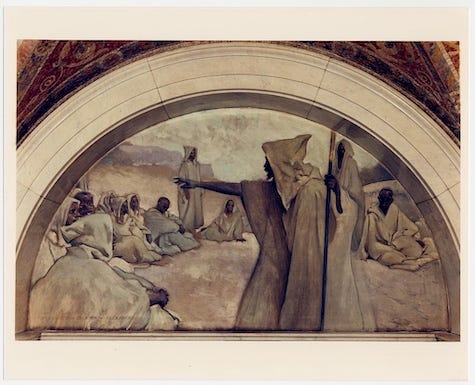
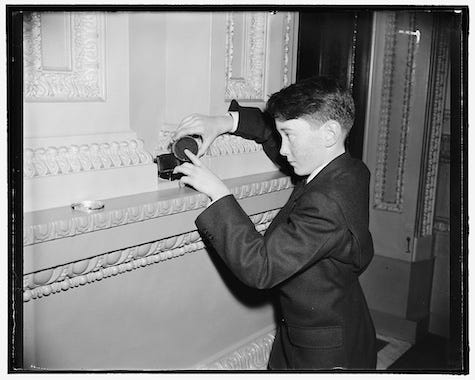
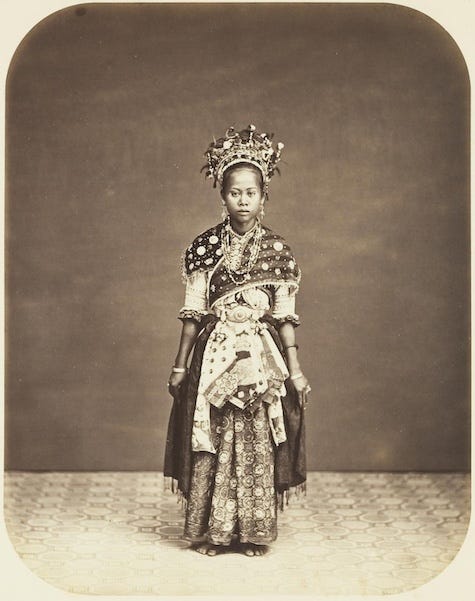
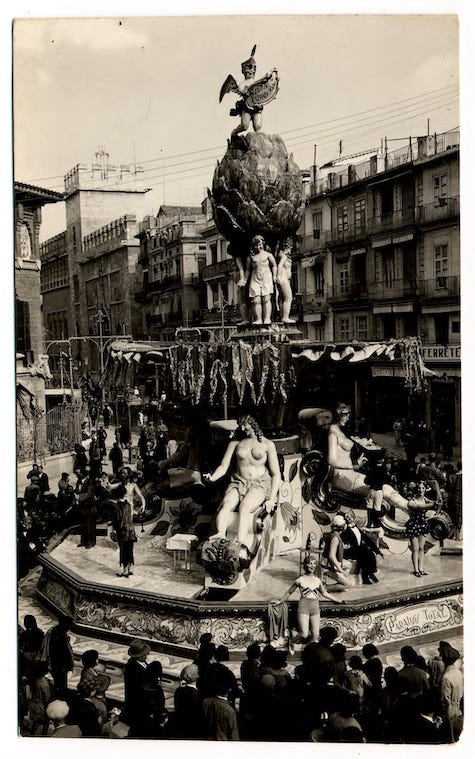
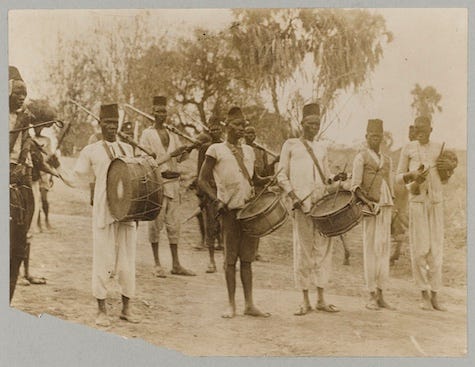
A word about the images, which all come from the Library of Congress. Just like at any site, the Library of Congress searches work best with the most specific keywords. I wasn’t sure what I was going to get when I typed in “tradition” and then “traditional instruments” and then again “traditional musical instruments.” This is a sampling of the images that appealed to me most. And, most have no direct connection to the essay other than the word tradition. But, I dig ‘em, and I think most folks will too. And, since they’re traditional, they work for me. All the descriptions come from the Library of Congress.
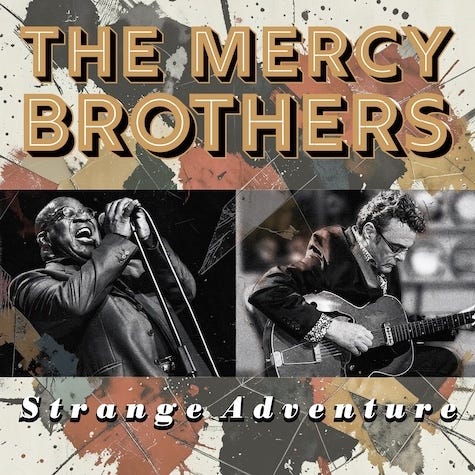
Find Strange Adventure at your preferred music delivery service here.
My playlist for Saturday, July 11, 2026 on WICN 90.5fm in Worcester, Massachusetts, and globally at wicn.org:
Frank Stokes “Downtown Blues”
Charlie Rich “I Washed My Hands in Muddy Water”
Jerry Lee Lewis “Release Me”
Johnny Cash “I Still Miss Someone”
Warren Smith “I Don’t Believe I’ll Fall in Love Today”
Conway Twitty “It’s Only Make Believe”
Elvis Presley “After Loving You”
Tony Joe White “Willie and Laura Mae Jones”
Dusty Springfield “Willie and Laura Mae Jones”
Shelby Lynne “Willie and Laura Mae Jones”
Mickey Newbury “Why You Been Gone so Long”
Guy Clark “Baby Took a Limo to Memphis”
Doc & Merle Watson “Poor Boy Blues”
Mark Knopfler & Chet Atkins “Poor Boy Blues”
Patsy Cline “A Poor Man’s Roses (Or a Rich Man’s Gold)”
Johnny Rivers “The Poor Side of Town”
Merle Travis “Blue Smoke”
No posts
Comments
Nothing yet. Say the first thing.
Sign in to join the conversation.