
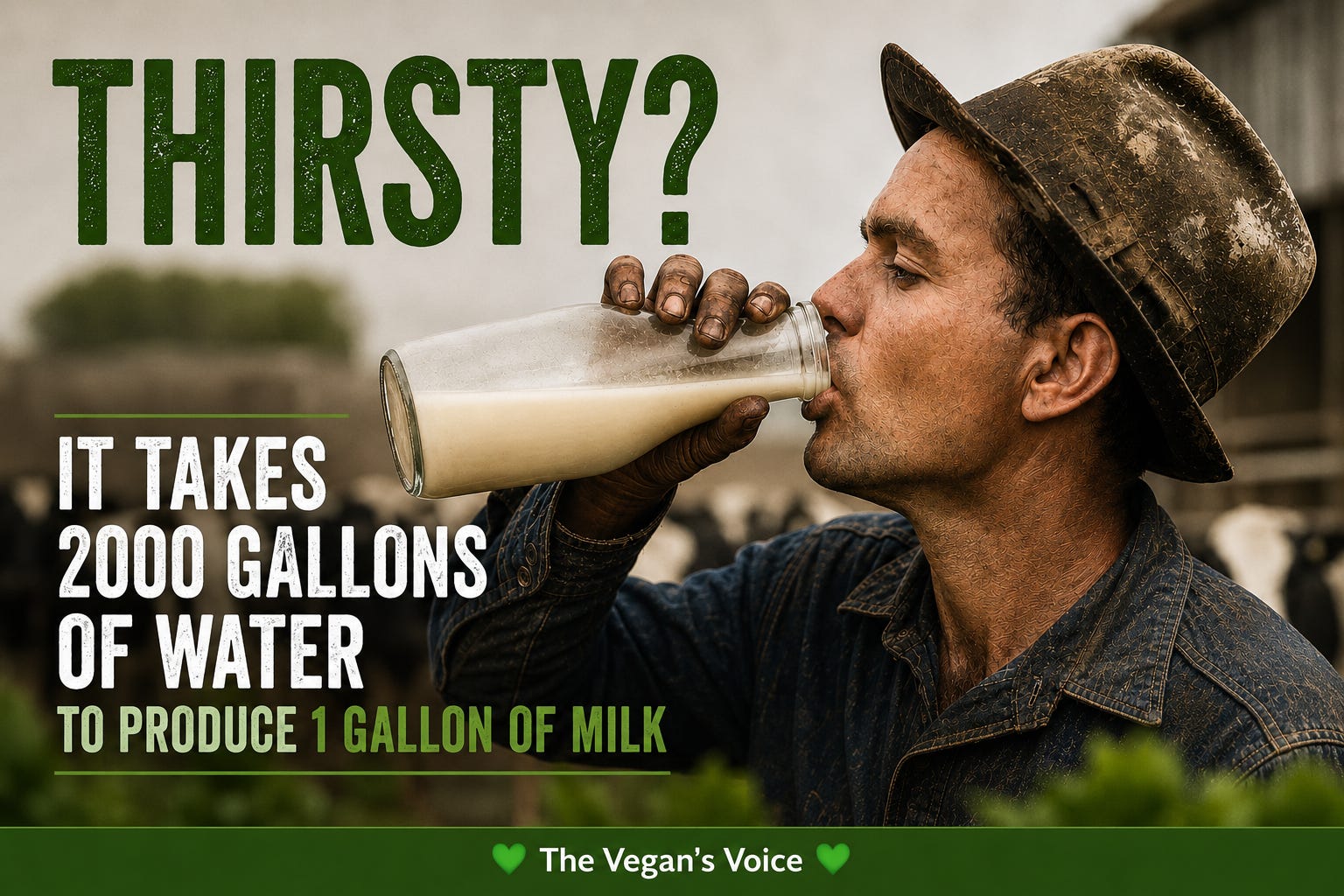
A gallon of milk looks simple. What we do not see is all the water used before it ever reaches the refrigerator.
Dairy cows need water to drink, but that is only part of the story. Far more water can be tied up in growing the corn, soy, alfalfa, and other crops used to feed them. Water is also used to clean barns and equipment, process milk, and manage the waste produced by large dairy operations.
That is why dairy can carry such a heavy water footprint.
The exact number varies by region, climate, farming methods, and how researchers count water use. Estimates near 2,000 gallons per gallon of milk are on the high end, not a universal rule. Still, the basic point holds: producing milk requires far more water than what a cow drinks.
Plant foods need water too. But when we grow crops, feed them to animals, and then consume the animal product, we add another resource-intensive step.
That matters in a world of worsening drought, shrinking aquifers, and growing pressure on freshwater supplies.
Choosing plant-based milk is not just about animals. It can also be a practical way to use less water and reduce the environmental cost of what we consume.
Want to put compassion into practice? Download The 7-Day Compassion Challenge, a practical 17-page workbook from The Vegan’s Voice designed to help you make kinder, more consistent choices for animals. It’s free, or pay what you want. Get your copy here.
I know some may not want to commit to a paid subscription, but if you’d like to support my work, you can always buy me a coffee on Ko-fi. Your contribution helps sustain independent writing rooted in consciousness, compassion, and social renewal. Every bit of support truly makes a difference. Thank you!
Comments
Nothing yet. Say the first thing.
Sign in to join the conversation.