
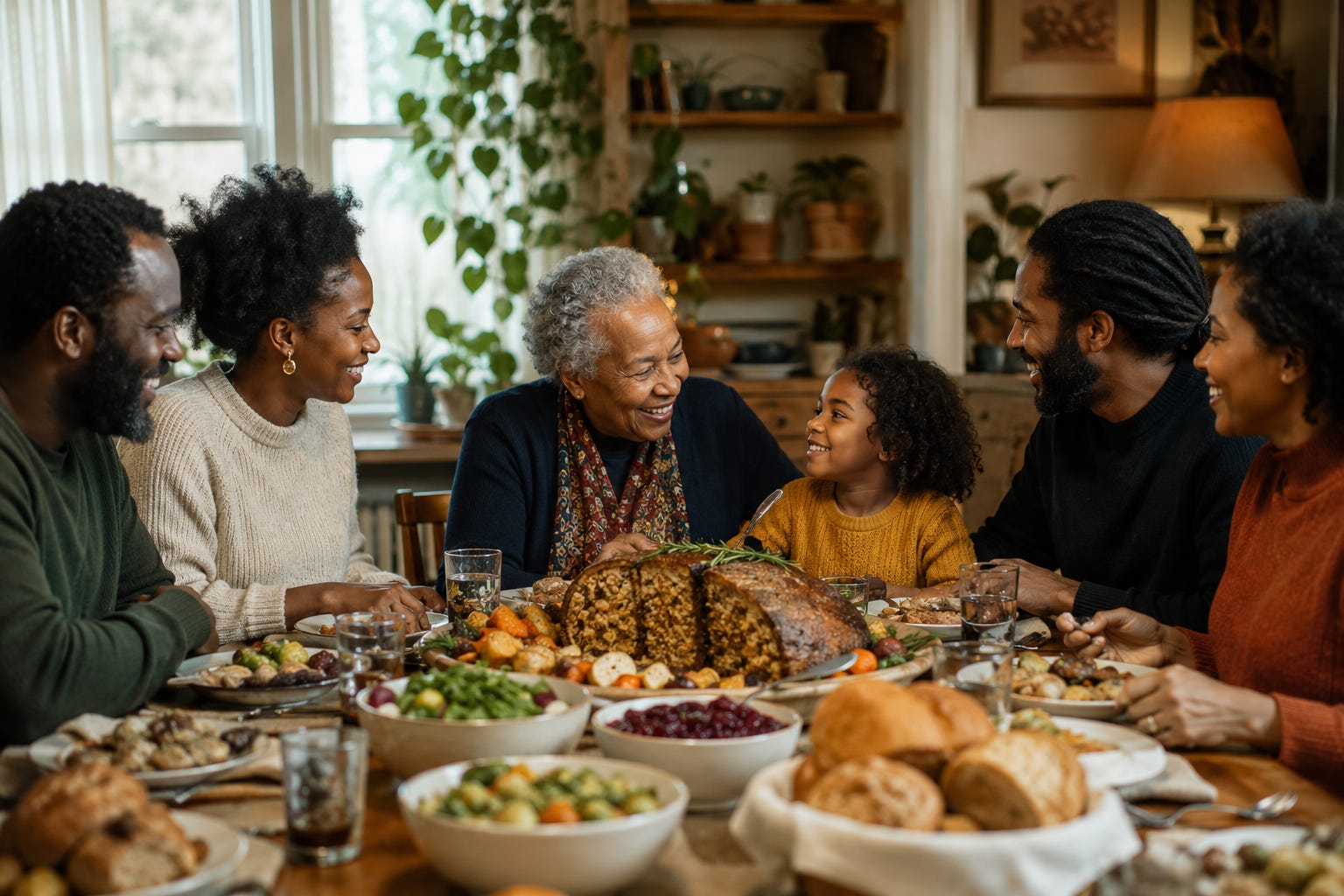
“People may think they’re defending a food when they’re really protecting a memory.”
Ask someone why giving up meat seems difficult and you will hear the usual answers. They like the taste. They would miss burgers. They could never give up cheese. Thanksgiving without turkey would not feel like Thanksgiving.
But some of that resistance may have less to do with food than we think.
A new study from researchers at the University of Stirling examined how nostalgia shapes people’s attitudes toward adopting a vegan lifestyle. Researchers interviewed 24 regular meat consumers about childhood meals, family gatherings, traditions, identity, and the possibility of changing what they eat.
Again and again, the emotional attachment turned out to be tied not simply to meat, but to everything surrounding it. Sunday dinner. Christmas at a grandparent’s house. The smell of a familiar meal in the kitchen. The people around the table. The recipes that seemed to belong to the family as much as any photograph or story.
People may think they are defending a particular food when they are really protecting a memory.
That makes sense.
Food is one of the ways we remember where we came from. Certain meals become shorthand for home, family, childhood, celebration, and belonging. One smell can bring back a person who has been gone for years.
Vegan advocates should take that seriously.
If someone says they cannot imagine Christmas without their mother’s roast, simply telling them to eat lentil loaf instead misses the emotional point. The attachment may not really be to the roast. It may be to their mother.
That distinction matters.
The Stirling researchers found that when participants reflected more carefully on what they valued about these food memories, many recognized that the shared experience mattered more than the animal ingredient itself. After that reflection, most became more positive about dietary change, and some began to see vegan food as a chance to discover new dishes rather than simply give something up.
That is encouraging because it suggests tradition is not nearly as rigid as it sometimes feels.
We often talk about traditional foods as if they arrived fully formed and have remained untouched for generations.
They have not.
Family recipes evolve. Ingredients change. Cooking methods change. New foods enter a culture and old ones disappear. What one generation considers essential may have been completely unfamiliar to the generation before it.
There is no reason compassion has to be excluded from that process.
What matters most about a celebration is rarely the animal on the plate. It is the gathering itself. The conversation. The laughter. The children running through the house. The argument in the kitchen. The stories told for the hundredth time. The empty chair that reminds everyone of someone they still miss.
None of that depends on eating a turkey.
Once that becomes clear, a harder question follows.
If the part we truly value is togetherness, why should another sentient being have to die for us to preserve it?
Veganism does not require anyone to erase the past.
It asks us to decide which parts of the past deserve to continue unchanged.
A family can still gather on Thanksgiving. A grandmother’s recipe can be adapted. A cultural dish can evolve. The spices, preparation, presentation, stories, and rituals can remain even when the animal ingredients do not.
And then something interesting happens.
New traditions begin.
A child growing up today may remember helping her father prepare a plant-based holiday meal. Thirty years from now, that may be the dish she associates with family and home. Her nostalgia will be every bit as real as ours.
Traditions are not fossils. We create them continuously.
What feels new today can become beloved surprisingly quickly.
The study also found that people often expected more support from friends than from family when imagining a move toward veganism. That rings true for many people who have already made the change.
Ordering a vegan meal with friends may attract little attention. Declining Aunt Susan’s casserole at Christmas can somehow turn into a referendum on family loyalty, agriculture, protein, masculinity, tradition, and the collapse of Western civilization before dessert arrives.
That is why simple inclusion matters.
Families do not have to become vegan overnight to make the transition easier for someone who is. They can make sure vegan relatives are part of the meal rather than treated as an inconvenience. They can prepare dishes everyone can share instead of isolating the vegan food in a little corner of the table marked “special.”
Those gestures matter because people are far more willing to reconsider traditions when they do not feel they are being pushed out of the group.
This was a small qualitative study involving 24 people, so it does not prove that nostalgia explains everyone’s resistance to veganism.
But it does point to something important that discussions about protein, cholesterol, greenhouse gases, and animal suffering can overlook.
People do not make food choices through reason alone.
They make them through memory, identity, habit, family, and belonging.
That means effective vegan advocacy cannot be only about what people should stop doing. It also has to show them what they do not have to lose.
You do not have to give up Sunday dinner.
You do not have to give up Christmas.
You do not have to give up your grandmother’s recipes, your cultural heritage, or the feeling of coming home.
You can keep the people, the stories, the smells, the laughter, and the ritual.
You can keep what actually mattered.
The memory was never the meat.
Sources:
Kosla, A. M., & Jasper, C. (2026). Looking Back and Feeding Forward: An Analysis of Food Nostalgia on Meat Eaters’ Attitudes Toward Transitioning to a Vegan Lifestyle. Psychology of Human-Animal Intergroup Relations.
https://doi.org/10.5964/phair.22465University of Stirling. Nostalgia and family traditions are major barriers to adoption of plant-based diets.
https://www.stir.ac.uk/news/2026/july-2026-news/nostalgia-and-family-traditions-are-major-barriers-toadoption-of-plant-based-dietsstirling-study-finds/
Compassion matters most when we live it. The 7-Day Compassion Challenge from The Vegan’s Voice is a free 17-page workbook filled with simple, practical ways to make your daily choices kinder to animals. Download it free, or pay what you want. Get your copy here.
☕ Not ready for a paid subscription? That’s perfectly fine. If you enjoy my work and would still like to support it, you can buy me a coffee on Ko-fi. Your support helps keep independent writing about consciousness, compassion, and social renewal going. 🌱 Every contribution, large or small, is genuinely appreciated.
Thank you for being here. ❤️
Comments
Nothing yet. Say the first thing.
Sign in to join the conversation.