
On August 24, 1966, President Lyndon B. Johnson signed what was then called the Laboratory Animal Welfare Act into law.
Sixty years later, the legislation we now know as the Animal Welfare Act remains the principal federal law governing the treatment of certain animals used in research, exhibition, commercial breeding, transportation, and other regulated activities.
The anniversary deserves recognition. The law created federal standards where few existed and established government oversight of specific uses of animals in commerce.
But sixty years is also long enough to ask what the law still fails to address.
The central question is hard to avoid:
Which animals did America decide to protect, and which ones did it leave behind?
The history of the Animal Welfare Act is surprisingly personal.
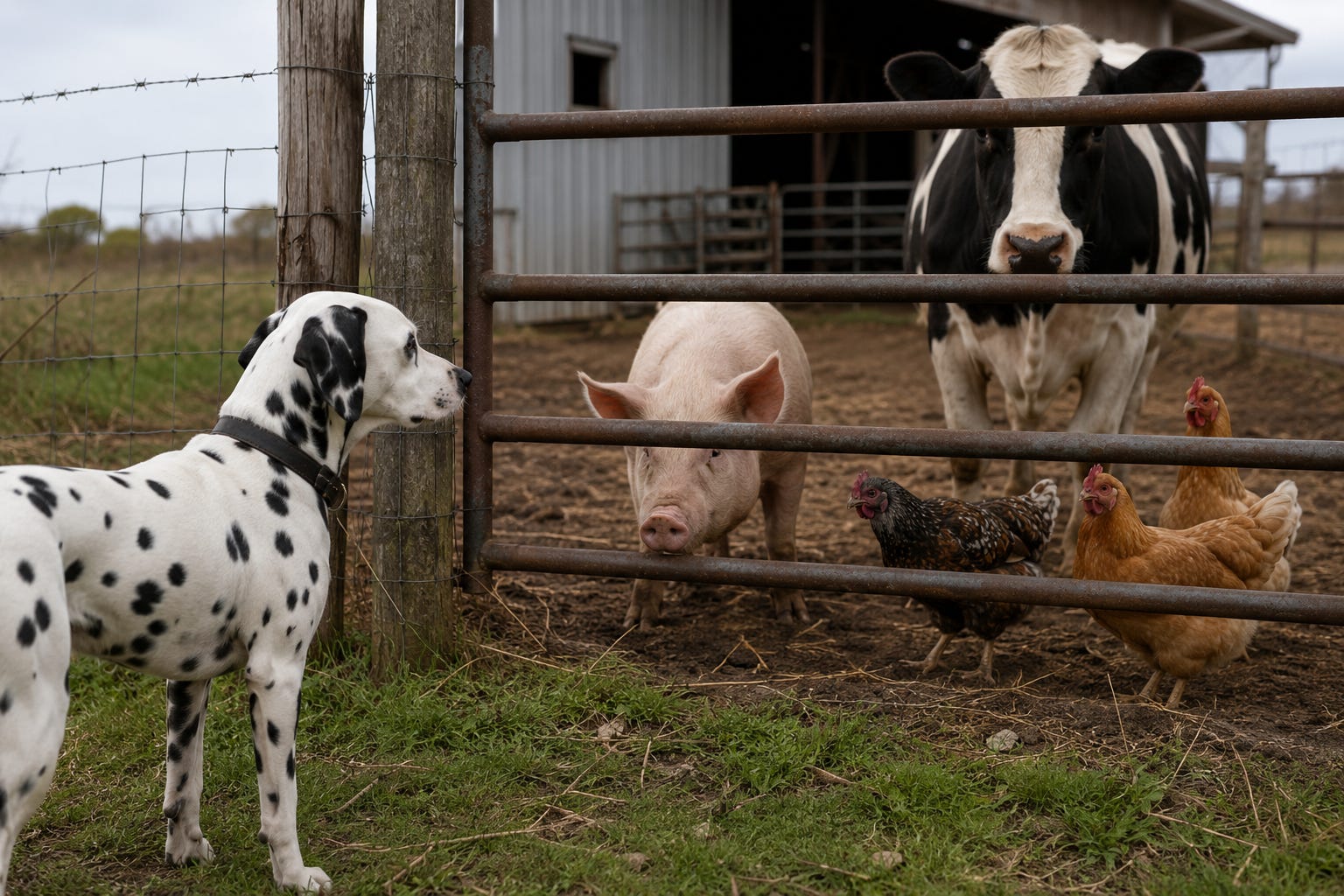
In 1965, a Dalmatian named Pepper disappeared from the Lakavage family’s farm in Pennsylvania. She had been stolen and eventually sold to a research facility in New York, where she died.
The case received national attention and intensified concern about stolen pets being sold to laboratories. Pepper’s story helped inspire Representative Joseph Resnick of New York to introduce legislation that eventually became the 1966 law.
The original act covered dogs, cats, nonhuman primates, guinea pigs, hamsters, and rabbits used in research. Congress expanded the law over time.
The 1970 amendments extended coverage to additional warm-blooded animals used in research, exhibition, or as pets. The 1976 amendments strengthened protections during commercial transportation and addressed animal fighting. In 1985, Congress added requirements involving exercise for dogs, the psychological well-being of primates, consideration of alternatives to painful experiments, and Institutional Animal Care and Use Committees.
Those changes represented genuine progress.
But the law also developed around a system of exclusions that remains with us today.
Veganism is more than a diet. It is a way of looking at our relationship with animals, the planet, and our own choices.
The Vegan Handbook offers a thoughtful introduction to vegan living, answering common questions while exploring the ethical and practical foundations of a compassionate lifestyle.
Get your copy here: https://payhip.com/b/we29N
Read the current federal definition closely and something strange happens.
An animal’s legal status can depend on what humans intend to do with them.
Under the Animal Welfare Act, the federal definition excludes birds, rats of the genus Rattus, and mice of the genus Mus bred for research. It excludes horses not used for research. It also excludes farm animals, including livestock and poultry, when they are used or intended to be used for food, fiber, or agricultural production.
Consider what that means in practice.
A rabbit used in a regulated laboratory may fall under the Act.
A pig used in certain research or exhibition settings may receive federal protection.
But a pig raised to become pork is excluded from the Animal Welfare Act because that pig is being raised for food.
The pig did not change.
Our intended use of the pig did.
That says a great deal about the way American law has traditionally approached animals. Protection often depends less on whether an animal can feel pain, experience fear, seek comfort, form social bonds, or resist suffering than on the category humans assign to them.
Pet.
Research subject.
Exhibition animal.
Livestock.
All capable of suffering. Very different legal status.
Precision matters here.
Being excluded from the Animal Welfare Act does not mean farmed animals exist entirely outside American law.
Other federal statutes address limited parts of their treatment. The Twenty-Eight Hour Law, for example, establishes requirements for rest, food, and water when certain livestock are transported for extended periods. The Humane Methods of Slaughter Act regulates the handling and slaughter of livestock covered by that law. States also have their own animal cruelty and agricultural welfare statutes.
But large gaps remain.
Most notably, poultry are not covered by the Humane Methods of Slaughter Act. Chickens and turkeys therefore fall outside the federal humane slaughter law that protects certain mammals.
That distinction has nothing to do with whether chickens or turkeys can suffer.
It is simply where the law drew the line.
There is another important lesson in this anniversary.
The Animal Welfare Act is a welfare law.
It does not recognize animals as individuals with an inherent right to their own lives. It does not prohibit humans from breeding animals for sale, experimenting on covered animals, displaying them, transporting them commercially, or using them in many other ways.
Instead, it establishes minimum standards governing particular forms of human use.
Animal welfare asks how animals should be treated while humans use them.
Animal rights asks a more fundamental question:
When do humans have the moral right to use another sentient being in the first place?
Those approaches can sometimes lead to the same reforms. Better housing, less suffering, veterinary care, restrictions on painful practices, and stronger enforcement can all improve animals’ lives.
But they begin from different assumptions.
One attempts to regulate exploitation. The other asks whether some forms of exploitation should exist at all.
Sixty years after the Animal Welfare Act, that difference deserves serious attention.
A cow does not experience pain differently because she is classified as livestock.
A chicken does not become less capable of fear because she is destined for a slaughterhouse.
A mouse does not lose the capacity to suffer because someone bred him for an experiment.
The morally relevant question is not whether an animal lives in someone’s home, behind a laboratory door, in a zoo enclosure, or inside an industrial barn.
It is whether there is an individual there who can experience what happens to them.
That is the deeper problem with legal categories built around human use.
We tend to protect animals we recognize as companions or individuals. Others are placed inside economic systems where their suffering becomes easier to overlook.
The legal distinctions may be enormous.
The moral distinctions are often much smaller.
The Animal Welfare Act was an important achievement.
Its history should be remembered, and the people who fought for it deserve credit. It created federal standards, expanded oversight, and helped change the national conversation about our responsibility toward animals.
But progress should not become a reason to stop asking harder questions.
Sixty years later, we should be able to move beyond the question lawmakers were primarily asking in 1966:
How should we regulate the treatment of certain animals?
We should also ask:
Why should an animal’s protection depend on what humans intend to do to them?
Pepper mattered because she was a dog with a family who loved her and wanted her back.
Her story helped awaken the country to one kind of injustice.
The unfinished work is recognizing that suffering does not become less important when the animal experiencing it has no name, no collar, and no human family searching for them.
Sixty years after Congress passed the Animal Welfare Act, that may be the most important lesson left for us.
Compassion should not stop at the boundary of a legal category. It should extend wherever there is a sentient life capable of suffering and experiencing what we choose to do to them.
Source: USDA National Agricultural Library, Animal Welfare Act. It confirms the law was signed on August 24, 1966, explains its scope, and provides the legislative history and amendments. USDA: Animal Welfare Act
For the specific exclusions of farmed animals, rats, mice, and certain birds, the current federal definition is here: Cornell Legal Information Institute: 9 CFR § 1.1
I know some may not want to commit to a paid subscription, but if you’d like to support my work, you can always buy me a coffee on Ko-fi. Your contribution helps sustain independent writing rooted in consciousness, compassion, and social renewal. Every bit of support truly makes a difference. Thank you!
Comments
Nothing yet. Say the first thing.
Sign in to join the conversation.