
‘‘We cannot give these animals their lost years back. We can, however, stop taking more of their lives from them.’’
For years, they lived behind fences and concrete.
The lions and tigers at Argentina’s former Zoo Luján were animals built to roam, explore, rest, play, and choose where they wanted to be. Instead, many spent their lives in cramped and inadequate enclosures. At its height, the facility held roughly 200 big cats. (see video at the bottom)
The zoo finally closed in 2020 after years of animal welfare and public safety concerns. Closing the gates, however, did not immediately solve the problem. Many animals remained while rescue groups faced the difficult task of finding suitable homes, arranging veterinary care, securing permits, and organizing international transportation.
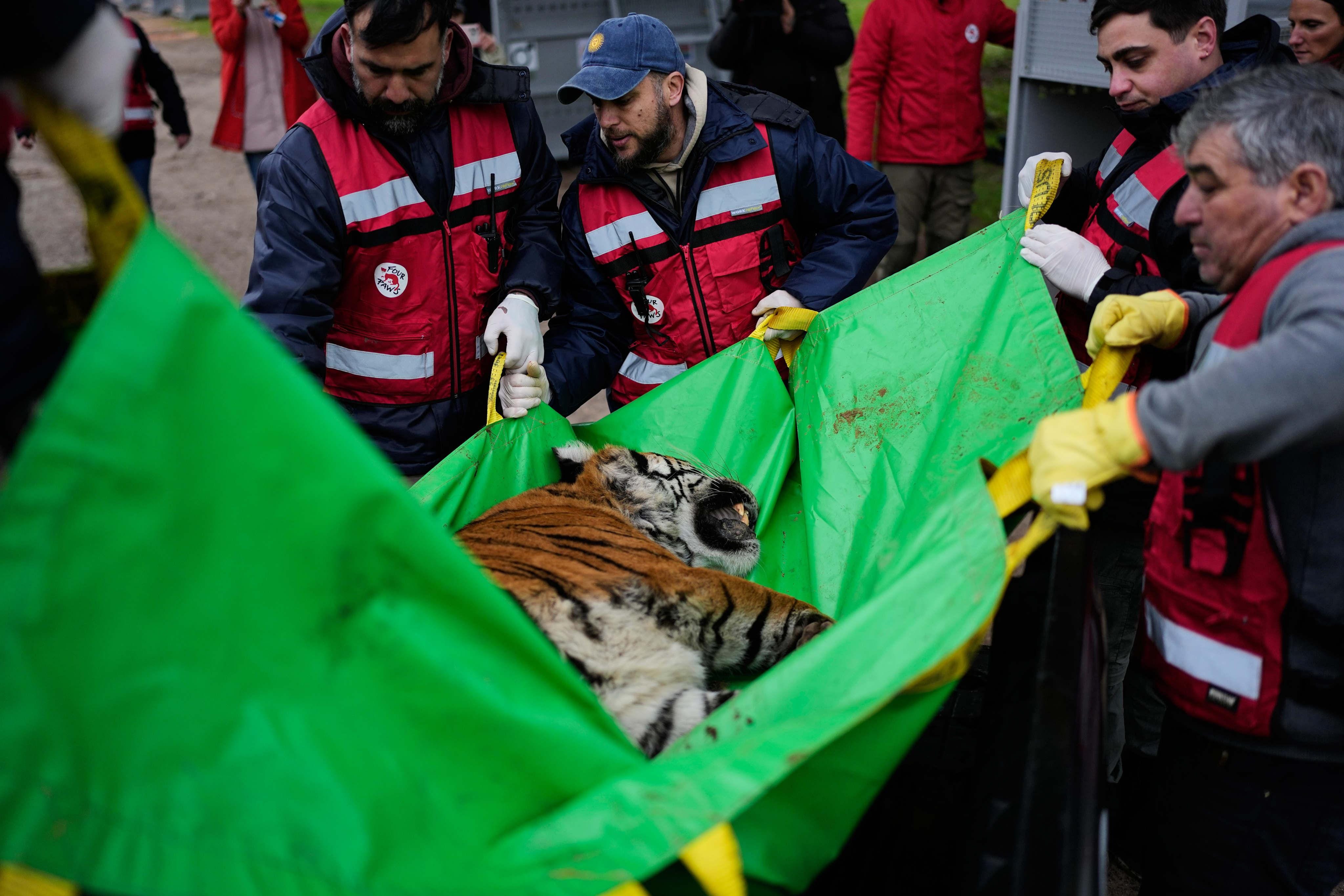
This month, 30 of those animals finally left.
Fifteen, nine tigers and six lions, were transported to LIONSROCK Big Cat Sanctuary in South Africa. Another 15, eight tigers and seven lions, went to The Wild Animal Sanctuary in Colorado.
For animals that had known little more than confinement, it was the beginning of a very different life.
Moving these animals was never as simple as opening a cage.
When FOUR PAWS veterinarians and wildlife specialists examined animals at the former zoo, they found the physical consequences of years of inadequate captivity. Among the problems were open wounds, infections, kidney disease, damaged teeth, ingrown nails, spinal deformities, and badly affected paws.
Some animals had been declawed.
Scar, a tiger who spent more than a decade in a small concrete enclosure with his father and two brothers, had been declawed as a cub, along with his brother Joe. Removing a tiger’s claws is not the equivalent of trimming fingernails. It removes part of the toes and can permanently affect the animal’s movement and behavior.
Scar and his family are now at LIONSROCK.
Another tiger, Negus, needed dental treatment and continuing specialist care.
These injuries remind us that captivity does not disappear when an animal is moved somewhere better. Years of poor conditions leave their mark. Muscles weaken. Teeth deteriorate. Feet and joints suffer. Some animals learn to fear people or develop repetitive behaviors as they struggle to cope with confinement.
Sanctuary cannot erase any of that.
Want to put compassion into practice? Download The 7-Day Compassion Challenge, a practical 17-page workbook from The Vegan’s Voice designed to help you make kinder, more consistent choices for animals. It’s free, or pay what you want. Get your copy here.
The most moving part of a rescue like this can also be the simplest.
A tiger walks onto grass. A lion has room to move away from people. An animal can choose whether to sit in the sun or find shade, investigate a new smell, wander farther, or simply be left alone.
Things that should be ordinary become remarkable when an animal has been denied them for years.
At their new sanctuaries, the rescued cats will receive veterinary care, proper nutrition, enrichment, and access to larger, more natural environments. Caregivers hope that some will regain strength, develop healthier behaviors, and form or rebuild social bonds.
These animals have not been returned to the wild, and it would be misleading to suggest otherwise. Many have spent too much of their lives in captivity to survive independently.
But sanctuary offers something fundamentally different from exhibition.
The animal is no longer there to entertain us.
It is easy to look at photographs of these lions and tigers entering their new homes and feel good about the ending. We should. An extraordinary amount of work went into getting them there.
But an animal rescue should also force us to ask how the animal came to need rescuing.
Wild animals have been bred, traded, confined, displayed, handled, and photographed because people wanted to see them up close. Their natural lives became secondary to our entertainment.
That assumption deserves much more scrutiny.
Animal welfare asks whether a cage can be larger, cleaner, or better managed. Animal rights asks an earlier question: Why was a wild animal placed in that cage for our amusement in the first place?
Those questions are not identical.
We can improve the treatment of captive animals while also recognizing that some forms of captivity should gradually disappear altogether.
The rescue from Zoo Luján is not finished. More than 20 big cats remained at the former facility as the latest group departed, and efforts continue to find appropriate permanent homes for them.
But for these 30 lions and tigers, life has changed.
They are no longer exhibits at a zoo known for controversy over its treatment and handling of wild animals. Their days will now be shaped, as much as possible, around what they need rather than what visitors want from them.
There is something deeply hopeful in that.
Not because sanctuary can undo the past. It cannot.
The hope lies in what happens next, and in what we learn from it.
Compassion should not begin only after an animal has suffered enough to require rescue. The better goal is a world in which fewer animals are bred into captivity, fewer are treated as attractions, and fewer ever need rescuing at all.
Primary source: FOUR PAWS, Argentina Big Cat Rescue Mission
Additional reporting: Associated Press, Lions and tigers begin a long-awaited rescue from a notorious Argentine zoo
I know some may not want to commit to a paid subscription, but if you’d like to support my work, you can always buy me a coffee on Ko-fi. Your contribution helps sustain independent writing rooted in consciousness, compassion, and social renewal. Every bit of support truly makes a difference. Thank you!
Comments
Nothing yet. Say the first thing.
Sign in to join the conversation.