
The general prospects are clear. Trumpanyahoo’s illegitimate war against Iran has thrown the global economy into disarray. Instead of collapsing, Iran responded by cutting off oil supplies through the Strait of Hormuz, with the effect of immediately raising oil prices, disrupting the petrochemicals industry, and threatening stagflation across the board. No-one seriously doubts the prospect of global economic crisis, but no-one can say how deep it will go, not only because that depends on how long it goes on, but also because economic forecasting is inherently unreliable. My first question is why is it necessarily fallible?
The answer I shall essay here proceeds crabwise. My information is second-hand, culled from reports and commentaries, given that I’ve not yet felt the effects, not even the rise in petrol prices, since I don’t drive a car. Also, I’m not an economist and I’m not interested in an orthodox economic analysis, but in seeing where it leads if you ask awkward questions about all too readily made assumptions – read on, and you may be surprised where it takes you.
So let me begin by suggesting that perhaps it’s not the fault of the economists but the politicians who not only put their faith in the economists’ findings but draw the wrong conclusions from them. Is this because economics is not a science, even a social science, any more than the conduct of politics is? Should we then call forecasting an art? Or is it no more than a minor craft, an esoteric subdiscipline within economics whose raw materials are economic data and whose product is prediction? Is this not more like numerical alchemy?
The first thing to say is that economic processes are neither self-determining, nor objective and independent of extraneous influences of an ideological nature. Leaving aside the financial markets, which behave as counterweights to government planning, I suggest two other main reasons why these predictions don’t play out. The first is historical contingency. As the patrician Prime Minister Harold Macmillan said when he was asked what he was most afraid of, ‘Events, dear boy, events’. In March this year, the Chancellor of the Exchequer Rachel Reeves found herself announcing the latest economic forecasts only to find them already rendered useless before they were published by Trumpanyahoo’s declaration of war. Here, however, I want to look at the second reason, namely, magical thinking.
Economists use systematic methods which are selective, dubious and untestable abstractions, whereas hard science depends on experiment and testing by means that are not available to economists. But they are to politicians. Some policies can be piloted in the field, like Universal Benefit in the UK, which was rolled out nationally in 2018 after five years of pilots, although still full of flaws. Or UBI (Universal Basic Income), which has been piloted in several countries and never adopted, but remains on the agenda. Yet when politicians apply their preferred economic theory tout court, because it conforms to their ideological principles, in reality they’re taking a risk, and have to hope that it won’t have unintended counter-effects (which they try to ignore when they occur, or else try to mitigate by adding new counter-measures). They rely on economists to provide the rationale but it’s a delusion that the economy is strictly predictable. It’s obviously too complex, and escapes control. This is because it’s like an octopus but without a central brain, whose tentacles act independently.
The data may identify trends but markets are vulnerable to all sorts of disturbances, which have a tendency to cascade. Each sector of the economy is liable to effect others, often unpredictably. The operative division into economic sectors is often arbitrary. Does a musician who gigs in a pizzeria belong to hospitality or culture? Does a farmer who sells their produce at a farmers’ market belong to agriculture or retail? As for finance capital, it has its own rules of behaviour because it’s supranational; it also has a dark side, the shadow banking system. Nor is it entirely a law unto itself – it’s conjoined with the major transnational corporations which dominate sectors like fossil fuels, extractive industries, big pharma and nowadays above all information technology in its various guises, all of which behave as if they’re beyond the control of the countries where they operate, too big for the individual state to encroach upon them. An elaborate apparatus of international agreements and financial institutions serves to hold in place a system based on monopolies, cartels, oligopolies and unequal exchange. Marx, of course, see this rather differently
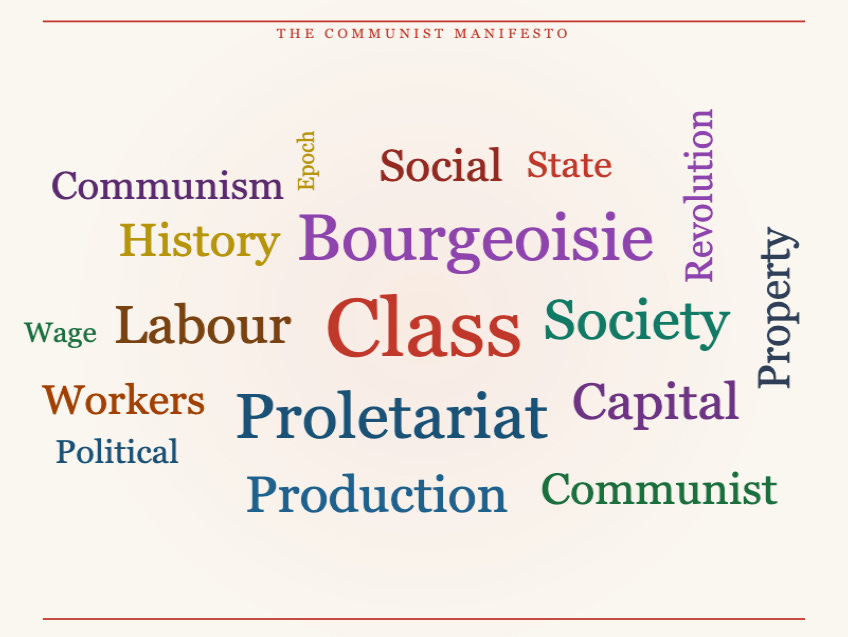
This apparatus is not immune to cascading disturbances which violate the economists’ forecasts. Of course, this depends on which economists. There were a few mavericks who predicted the near-death experience of capitalism in 2008, and it came as no surprise to Marxists, who expected just such a crash without being able to prophecy when and exactly how it would occur. For a brief period, the pundits proclaimed the end of neoliberalism, but the politicians took control and on the one hand, saved the banks by issuing fiat money, and on the other, imposed austerity to reduce the burden on the state, squeezing the public sector. The result was stagnation, a mild form of degrowth, but not the kind our over-consuming society needs.
The most pernicious part of the worldview of both right and left in parliament is that the country’s economic health depends on growth. Leaving aside for the moment that there are different types of growth, this seems to be true everywhere in the world, although I’m speaking here of the country I belong to, where for several years parliament has been in more than usual disarray. Here the politicians spoke as if unaware that in voting for Brexit, the UK was removing itself from one of the poles of a geopolitical system which was already in deep economic trouble, because growth rates in the so-called advanced economies have all stalled since 2008. (This denialism has begun to change, as the damage has become too great to ignore.) ‘Advanced economies’ is a euphemism for what used to be called the First World, in other words, the home territories of capitalism; in 2025, the UK (depending on how it’s counted) ranked as the fourth richest country in the world.1 Growth is measured by GDP (Gross Domestic Product), but GDP tracks only certain parts of the economy. What it measures is market-based economic activity, whatever is ascribed a value that gets added to the balance sheet, even if it’s useless, or worse, destructive. War and armed conflict add to GDP through the production and sale of weapons, whether deployed or not, and the repair of the destruction that ensues when they are. Gambling causes financial ruin for individuals and families, but adds to GDP. Advertising adds to GDP regardless of whether the products or services being advertised are useful or not.
What GDP doesn’t measure is also critical. It doesn’t measure unpaid labour, much of it by women, in the home, the voluntary sector and the informal economy: housework and babysitting, caring, community support groups, people who grow their own food, people who work for cash-in-hand – domestic cleaners, the odd-jobber, the sex worker – and illegal activities like drugs. It also fails to register environmental impacts, the depletion of the soil, the loss of natural habitats, the extinction of species, all of which derive from the spoliation of the environment by a system that treats nature as there for the taking. It takes no account of the social sphere, the health, happiness and fulfilment of the citizen, the value of leisure, and engagement in culture and sports, in short, for those things that are either not traded or not fully commoditised, although nowadays almost everything is.
The money market imposes its own concept of value, while ecological consciousness tells us that a society that destroys its environment destroys itself. The exclusion of these things from GDP, which follows from capitalism’s narrow focus on short term economic growth, is also a way to obscure the underlying class relations of exploitation that drive the capitalist system, and to deflect attention away from obstacles to the accumulation of profit. The underlying contradiction, however, is that capitalism cannot function without growth, without continual accumulation, because without it, it contracts. It cannot abide stasis. This kind of growth is tendentious, and quite different from growth in nature. Biological growth is cyclical and seasonal, and replenishes itself by seeking homeostatic equilibrium. Instead of which, we get too much growth of the wrong kind in the wrong places, devoted to the kind of production that only makes matters worse. Not enough growth of renewable energy and sustainable agriculture. Not enough investment in environmental protection, reforestation, rewilding. Reports suggest that the War of Iran is stimulating the shift to renewable energy, but that alone will not be sufficient to satisfy these needs.
Actually existing capitalism is riddled with contradictions that are hidden behind euphemistic labels. For example, the informal or shadow economy, not to be equated with the black market, because it isn’t necessarily illegal. Only part of it is. Usually defined as activities outside a formal legal framework, generally paid with cash in hand, sometimes in kind, and conducted without being recorded in any formal accounting system; susceptible to low earnings, evasion of labour regulations, no job security or benefits. Domestic work, street vending, various forms of self-employment, even small-scale manufacturing. Estimates of its size are obviously guesswork but its extent depends on the wider economy. In poor countries – to call them ‘emerging’ or ‘developing’ are euphemisms – the underdevelopment of the formal sector, in other words a lack of ‘proper’ jobs, may drive people into the informal sector, which is proportionately larger than in rich countries. Why so? One of the reasons advanced for this difference is that stronger institutions and state regulations make it more difficult for informal businesses to operate. It’s also true that in ‘advanced’ economies there is greater access to credit for both businesses and individuals to start new businesses which grow the formal sector, but this is also a trap. More credit means more debt. Debt is a driver of capitalism, but also, when it turns into bad debt, an Achilles’ heel. When the banks collapsed in 2008, it was because they had huge amounts of bad debt, largely in the form of subprime mortgages which had been traded on the debt market – a strange pocket within finance capital that deals in fictitious money – but as the journalist Paul Mason put it, the system was so opaque that nobody knew who was carrying how much bad debt.
The informal economy is the inevitable collateral of the formal economy, and there are certain parallels. For example, illegal activities like drug dealing provide a rich source of tax evasion using the same methods employed by the captains of society on the sly, which if exposed in the media becomes labelled as corruption. For another thing, evasion of legal responsibilities is also practised by companies and corporations, sometimes even with the connivance of government. The gig economy is a case in point. Yet the informal economy provides a space of survival in the face of poverty and exclusion which is reinforced by factors like distrust of the state and barriers to securing employment.
If you enjoy reading this, please give it a like, leave a comment, or share
To call it the shadow economy is apt. The thing about shadows is that you can only see outlines, and as they move, you get all sorts of strange shapes. This is no basis for reliable prediction. But it’s not only inexact. The trouble is that while the informal part economy is productive of succour, the shadow banking system operates like a blood-sucking parasite. It seems that governments have no control over either, but that’s not true. It’s the result of an abdication of political will. To deal with the shadow banking system would need closing the tax loopholes they rely on and applying the same rules that govern legitimate banks and require them to disclose their operations, with the object of bringing private equity under much tighter control so it can’t buy up assets and asset-strip them for profit. To be fully effective, these measures need to be agreed internationally.
The informal economy could be supported by extending the principles of the welfare state to the universal public provision of healthcare, childcare, housing and education outside the market, eliminating the private provision that distorts the distribution of social wealth. The welfare system would be reformed, abolishing means-tested benefits in favour of a universal basic income, no conditions attached, thus supporting unpaid labour like caring and volunteering, as well as advanced education and training and other pursuits of social and personal value, rather than treating them as an absence of real work. Funding would be directed at non-profit community centres and projects. Small or irregular earners would be freed from burdensome and complicated tax rules, high earners would be subject to steep progressive taxation.
Of course this won’t pass muster with my straw-man economists, who will say there’s no way of quantifying it, and if the experts can’t give them the evidence, the politicians won’t give it the time of day. Yet it stems from a certain faith in the beneficent side of human nature, to which the politicians merely pay lip service, while in fact there’s evidence for it all around us. Politically, it’s true, it’s a mountain to climb to get there, but it’s better than going to the moon, and more virtuous and easier than aiming for Mars. .
Comments
Nothing yet. Say the first thing.
Sign in to join the conversation.