
Going to start this by dedicating this post to Terry Green (1947-2025), whom I interviewed 25 years ago for The Danforth Review. Green was the author of The Ashland Trilogy: Shadow of Ashland, A Witness to Life, and St. Patrick’s Bed (2017) among other titles. I first crossed paths with him, though, at East York Collegiate Institute. He was never my teacher, but one of my English teachers (circa 1987) assigned one of Terry’s stories, and I remember it to this day. RIP, my friend.
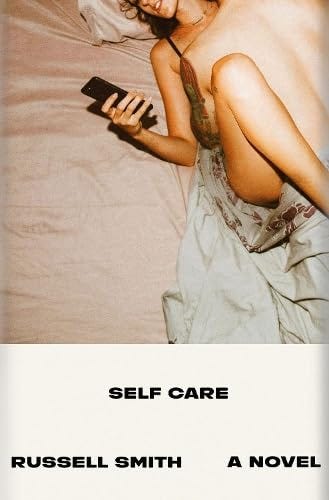
Here’s a list of the books I’ve been poking away at since my last reading update:
In Crisis, On Crisis: Essays in Troubled Times by James Cairns (2025)
Careless People: A Cautionary Tale of Greed, Power, and Lost Idealism by Sarah Lynn Williams (2025)
Demon Copperfield by Barbara Kingsolver (2022)
Poet of the Revolution: The Making of John Milton by Nicholas McDowell (2020)
Self Care by Russell Smith (2025)
The Pugilist at Rest by Thom Jones (1993)
Schopenhauer: A Very Short Introduction by Christopher Janaway (2002)
Super-Infinite: The Transformations of John Donne by Katherine Rundell (2022)
Jonathan Swift: His Life & Works by Leo Damrosch (2014)
A Short History of Ireland: 1500-2000 by John Gibney (2017)
Tender is the Night by F. Scott Fitzgerald (1934)
Robinson Crusoe by Daniel Defoe (1719)
The Club: Johnson, Boswell and the Friends Who Shaped an Age by Leo Damrosch (2019)
Notes from the Underground by Fyodor Dostoyevsky (1864)
One thing that ought to jump out immediately is the ENGLIT 201 quality of much of this list: Milton, Swift, Donne, Johnson, Boswell, Defoe. If we are going to go outside of England, Schopenhauer, Dostoyevsky, even that Barbara Kingsolver title, which is delightfully American, though also an update of the Dickens classic, David Copperfield, which I made notes on earlier this year.
Not sure why that happened, exactly. One choice followed another, part of my ongoing quest to refresh, update, fill in the gaps of my ENGLIT education.
There are only two new CANLIT titles in the list: the new novel by Russell Smith and the new essay collection by James Cairns. Each of those is starkly contemporary.
Then there are the Americans: classic Fitzgerald, classic Jones (actually a re-read by me to support my post on 2011), and a devastating memoir about the enterprise known as Facebook. Plus, in the middle, a short history of Ireland.
All of the above represent each its own take on troubled times, otherwise known as the human condition.
All right. Let’s get into it.
In Crisis, On Crisis: Essays in Troubled Times by James Cairns (2025) and Careless People: A Cautionary Tale of Greed, Power, and Lost Idealism by Sarah Lynn Williams (2025) provide takes on the world, here and now, broadly. Cairns is an Ontario-based professor, writing from a Marxist point of view. Historical materialism isn’t afraid of conflict, and Cairns certainly isn’t, but he’s often moderate. If the world is in crisis, what do we mean by crisis? Isn’t it often just the regular rough and tumble of life and history. He dismisses, for example, moderate perspectives of Trumpian chaos by arguing that neoliberal chaos was no better. In comparison to the broad historical perspective he often provides, he tells tales of his blackout drunk alcoholism, which started in his teen years and extended through his PhD. Sober, as of the writing of the book, he dismisses the 12-step process; as a Marxist, he recognizes no “higher power,” just the force of will. The mix of world-historical and personal-confessional doesn’t always mix well, but he has a lively mind and “shows his work.” Essays originated in the French “to try,” and try he does, rewarding readers with the effort.
Sarah Lynn Williams also tries, tries, and tries again to bring Facebook within a moral framework that lives up to her youthful idealism. Spoiler: she fails. A former United Nations diplomat for New Zealand, she pitches herself to Facebook in the earlyish days, arguing the company will need formal diplomatic advice as it advances its mission “to connect the world.” She is repeatedly rebuffed initially, then taken on, seemingly without clear purpose. Belatedly, she realizes the mission isn’t about connecting; it’s about becoming really fucking rich. Though Zuckerberg eventually sees the need for professional diplomatic advice, it isn’t in advance of Williams’ idealism. It’s in advance of Mark’s view of himself as the contemporary Emperor Augustus. You know, sometimes you need to enable a genocide, if you are going to ensure your brand achieves the global dominance you dreamed of back in your Harvard dorm. The Rohingya genocide is central to Williams’ story. The dumbed down Facebook platform in Myanmar contain none of content safeguards used in more developed parts of the world. The country had only two content moderators, and they were both in Ireland, and one of them supported the genocide. Google easily highlights the results in articles like “Facebook and Genocide: How Facebook Contributed to Genocide in Myanmar and Why It Won’t be Held Accountable” (Harvard Law School, 2021).
The Pugilist at Rest by Thom Jones (1993) and Schopenhauer: A Very Short Introduction by Christopher Janaway (2002) can be swiftly dealt with. Thom Jones and his 1993 debut short story collection, especially the story, “I Want to Live!”, was the focus of my memoir of 2011. Schopenhauer features prominently in the Jones title, so I did a little refresher on the German philosopher also. Not a lot of it stuck in my memory, frankly, except much of it is grounded in pessimism (antidote to Williams’ idealism, maybe?), and also it highlights that meaning comes from the here and now. The character in “I Want to Live!” is dying of cancer, yet she has never felt more alive, for example. Awareness of suffering highlights the senses and makes one keenly aware of what is important. Life is a struggle, thus the admiration for the pugilist. He lived large, he lived on the edge of death. Some of Jones’ stories feature war in Vietnam or veterans returned to the home front. There is nostalgia for the arena of battle. Joyce Carol Oates was a fan. It’s bracing stuff, not for all readers, no doubt.
Okay, John Milton. One of the giants of English literature. In 1995, as part of my MA, University of Toronto, I read his so-called “free speech” essay, “Areopagitica,” subtitled “A speech of Mr. John Milton for the Liberty of Unlicenc'd Printing, to the Parlament of England” (1644). To print something, then, one needed a license from the government. Milton argued one shouldn’t need a license, because there should be a “marketplace” of ideas. Bad ones could be suppressed later LOL. The 1640s was the era of the English Civil War (1642-1651). What did I understand about that? Next to nothing. Into the breach, then, arrived Poet of the Revolution: The Making of John Milton by Nicholas McDowell (2020). This book, as the title suggests, traces Milton from his childhood through to his development as a major figure. He became an anti-Monarchial propogandist and, of course, poet and author of “Paradise Lost” (1667), which I still haven’t read. McDowell dwells less on the work and more on the influences and events that shaped Milton’s life. He also aims to correct earlier interpretations of Milton, of which there are many. I remain confused, however, as the social, political, religious pressures of the period are complex and swirl about. I would, however, recommend this book as a good introduction to the life of Milton — for those interested. More reading related to this era, at some point, is in my future.
Following my reading on Milton, I thought why not catch up on Donne and Swift? Thus, Super-Infinite: The Transformations of John Donne by Katherine Rundell (2022) and Jonathan Swift: His Life & Works by Leo Damrosch (2014). Of the three poets, Swift is my favorite, perhaps because he’s only minorly a poet and more often a prose satirist. Rundell’s book made some big noise when it came out. It struck me as competent and breezy. Donne (1571-1631) ended his life as Dean of St. Paul’s Cathedral, but interestingly (to me) he started his life as a Catholic, and his mother was a great-niece to Thomas More (1478-1535), who was beheaded by King Henry VIII, a tale recounted in the play, A Man for All Seasons (1960). More refuses to renounce Rome and loses his head; Donne does so with seeming ease and keeps his.
You may be more familiar with Donne as the writer of dirty poems, such as “The Flea”:
Mark but this flea, and mark in this,
How little that which thou deniest me is;
It sucked me first, and now sucks thee,
And in this flea our two bloods mingled be;
Thou know’st that this cannot be said
A sin, nor shame, nor loss of maidenhead
What I took away from Rundell is that Donne was an excellent self-promoter, great at delivering sermons, deeply wise (for personal advancement) about navigating the social, political and religious pressures of the age. And he had a dirty mind, which most folks didn’t realize until many of his poems were published after his death. Meh.
To be fair to Donne and Rundell, the author embraces a totalizing argument about Donne’s quest for the infinite. As Lara Feigel wrote in The Guardian (April 28, 2022):
In embracing infinity, he [Donne] turned eternity into a mathematical concept, and there is pulsing excitement to his quest for this quality, which runs through his writing about sex, death and God – his three great subjects. To read Donne is to grapple with a vision of the eternal that is startlingly reinvented in the here and now.
Swift (1667-1745) is the one I had the greatest relationship with previously, though what had I read by him. Nothing I could remember. Yet, what kid doesn’t know Gulliver’s Travels (1726)? And what undergrad doesn’t cross paths with “A Modest Proposal” (1724)? I even knew that Swift spent time (1694) in Kilroot, Antrim, which includes a graveyard with my 4th-great-grandfather, James Bryson (1770-1832) and other related kin. It doesn’t appear Swift crossed paths with the Brysons. In any case, Wikipedia reports his time in Kilroot was no party: “Swift appears to have been miserable in his new position, being isolated in a small, remote community far from the centres of power and influence.” The Brysons were also Presbyterians, and Swift had no time for them, concentrating as he was on working his way up the Church of Ireland hierarchy. He is remembered, in part, for his Irish nationalism, but his roots — and his thinking — are largely English. He ended his career as the Dean of St. Patrick’s Cathedral, Dublin. He was less successful in his career management than Donne, but mostly because he was perpetually writing satires, usually anonymously, poking at the absurdities of everyone around him. Reader, I quite liked the guy.
Following Swift into Ireland led me next to A Short History of Ireland: 1500-2000 by John Gibney (2017). I’ve got a grip on 20th century Ireland, I think, and a general sense of my own family’s history. My great-great grandfather Samuel Bryson (1823-1879) of Kilroot, Antrim, arrived alone in ~1840 in what would later become Ontario, Canada. The family line can only be traced as far back as James, above (1770-1832), but what can be presumed is the ancestors crossed the Irish Sea from Scotland at some point, perhaps in the 1600s as part of the Plantation of Ulster. It’s possible future research will reveal more details, but currently those facts are lost to the fog of time. What is known is that they were tenant farmers, not land owners. None seem to have distinguished themselves in the annals of history. But what is the history? Again, I was curious to find out more. Here I was again, back to the time of the English Civil War and its aftermath. What is the short history of Ireland, 1500-2000? Conflict, conflict, conflict. Perpetual pressure from the English Crown, or in Cromwellian times, just the English state. That said, Gibney tells the story of significant inter-relationships, arising out of medieval times. There is much brokerage and competition for power and land, leading eventually to the emergence of the Irish Free State (1922-1937) and current Republic and separate jurisdiction of Northern Ireland. This separation, obviously, didn’t exist when my Samuel emigrated nearly 200 years ago. Though Northern Ireland is where my mother was born, so there’s that. LOL. What I liked about the Gibney book was its broad scope, its, erm, swift pace, and how it ended each chapter with a summary of the competing opinions of various historians. This is how it should be done, I think; with recognition, even celebration, of the polyphonic conversation. I’m ever more curious about Irish history now, too.
I was quite taken with Damrosch’s take on (and approach to) Swift, so I looked for another title by him and found The Club: Johnson, Boswell and the Friends Who Shaped an Age by Leo Damrosch (2019). Johnson was another throwback to my MA. I spent a half-term reading him and wrote a paper about his notable dictionary (1755). In the social and political conversation between Whigs (liberals) and Tories (conservatives), Johnson was reliably conservative, but he had a progressive view of language. In France around the same time, for example, a dictionary of the French language was being written that would codify the meaning of words once and for all. Johnson didn’t see language that way. He knew the meaning of words evolved over time, and he sought different sources for words and highlighted how they could mean different things at different times. His common sense approach remains in use today, as does the conflict between different views of language and meaning: stable or in flux. A lot of The Club is spent on the lives of Johnson and his biographer, James Boswell (1740-1795), a womanizing, aristocratic, bad lawyer, over talker and over drinker, reliable journal writer — and author of Life of Samuel Johnson (1791), which relies heavily on Boswell’s daily journal that captured Johnson’s many verbal bon mots and secured a place in literary history for Boswell, Scottish rogue. But what is The Club? A regular social gathering, organized by invitation, to men of the age, who included Adam Smith (moral philosopher and economist, 1723-1790), David Garrick (actor and theatre producer, 1716-1779), and others. Yes, the book is a portrait of “the Age,” keeping Johnson and Boswell at its centre. Damrosch is an honest historian; he does not just focus on the men; he comments on what their perspectives would have excluded, notably the women. Johnson, who had women friends, comes off far better here than Boswell, who had many dalliances and regularly engaged prostitutes. Indeed, Boswell’s poor character kept many details from history for many, many decades, as his family for multiple generations kept his source journals from public view. They also kept his portrait in the attic for many generations until, Damrosch notes, one great-granddaughter brought it out for display so guests could take pot shots at it. Generously, it now has a home in Britain’s National Portrait Gallery.
Reading about Swift and Gulliver, I thought to check if the Toronto Public Library has this Defoe classic as an audio book: Robinson Crusoe by Daniel Defoe (1719). They did. It was an, erm, swift read. This is another story often absorbed in childhood, as it is often echoed in the broader culture.

More significantly, I have in mind that J.M. Coetzee has returned to the Defoe story multiple times, notably in his 2003 Nobel Prize lecture, which was actually a short story written in the voice of Crusoe. As an adventure story, Defoe’s novel is compelling; as a cultural artefact, it is so much more. It remains shocking to me to read of slavery referenced so casually, for example. Coetzee’s interest in Defoe is integrated with interests of his own work: one of his novels is Foe (1986), which like his Nobel piece re-treads the ground of Defoe’s work to examine and undermine the nature of storytelling. In particular, the confrontation between Self and Other. Is any stable description of this encounter possible? As the 21st century deepens, this question remains ever relevant. (See also Dionne Brand’s brilliant 2001 take on Coetzee and related topics in A Map to the Door of No Return: Notes to Belonging.)
My thoughts returning to Dostoyevsky (who I wrote about here earlier this year), I sought out what might exist at the Toronto Public Library and found an audio version of Notes from the Underground (1864). Years ago, I’d attempted to read this, and it stopped me cold. This time, I found it fascinating. Told in the first person, the novel is a confessional, early modern recitation of alienation. The protagonist could well be a contemporary anti-vaxxer — also a critic of the techno utopianism of the AI boom. Which I guess means Dostoyevsky was onto something here, anticipating the culture, articulating its conflicts, and demanding accountabilities, as much as art can or should. Kundera dismissed Dostoyevsky because he thought it shouldn’t. I think it should only if it reaches open-ended conclusions: the conversation must always continue.
Moving on to Tender is the Night by F. Scott Fitzgerald (1934) is perhaps a dramatic shift. I also got this audio title from the Toronto Public Library, but I had to wait six months for it. By contrast, there was no wait for Dostoyevsky. Fitzgerald remains popular in the Six, anyway. With this title, too, I had attempted to read it years ago and given up. I wasn’t sure I was going to make it this time either in the opening pages (minutes?). Idle rich, young, beautiful (white) Americans lolling about Europe in the 1920s, oh, the Jazz Age, the … barf! And yet, something interesting started to happen. Conflicts and context emerged. The protagonist and his inner narrative became more defined, grew in focus. Dick Diver (terrible name) is described in the Goodreads summary as “a brilliant young psychiatrist” and “both husband and doctor to Nicole, whose wealth goads him into a lifestyle not his own.” There are parallels here to Fitzgerald’s marriage to Zelda Sayre (1900-1948), though Scott was no psychiatrist and one wonders about his choice of lifestyle. Certainly Zelda came from money and demanded Scott provide her with a standard of living she expected, but I’m uncertain how well the biographic parallel holds. In any case, as the novel progresses Diver descends into his own private hell, as his early promise is withered away by alcohol and a failure to ground his personality. He has it good, does he not? So, what’s the problem? Entropy, perhaps. Decay. Collapse. The Underground Man would have an opinion. There is much Fitzgerald lightness in this book, but none of the lyricism of The Great Gatsby (1925). Gatsby had a tragic ending, but Tender is the Night is brutal. I didn’t know Scott had that in him.
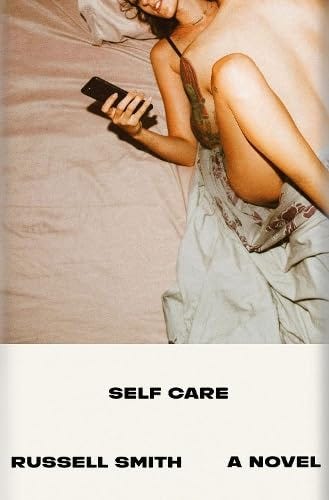
Speaking of brutal (I mean this in a good way), holy shit to Russell Smith’s new novel, Self Care (2025). Just look at the cover!
I have read all (or at least part of) each of Smith’s novels as well as his short story collections. I thought I’d written a review of Confidence (2015), but I only wrote a brief response on Goodreads: “I don't think of Smith as a short story writer, but I admired his first collection, and this one might be the best he's ever written. A darker book than he's done before, too. Comic, but unsettling.”
My only other comment about Smith has been one I’ve repeated verbally many times: “We could use more novels like Russell Smith's How Insensitive (1994).” The opening sequence of that novel will live rent free in my brain forever. Certain sequences of Self Care probably will, too, but for different reasons. The darkness I picked up in Confidence is full blown in the new novel, which could be described as a noir take on Romeo and Juliet, where Romeo is an incel and Juliet has given up on romance.
The emotion this novel provoked in me was simply sadness. Here’s the plot (circa 2020s Toronto): two twenty-somethings cross paths, hook up, break up. There’s some spoilers I’m not going to give away. Gloria has a weekly column for an online publication. Perhaps she once wanted to be a journalist, instead she is a content creator of clickbait. Often she writes about sex and the social customs of what one well-placed joke in the novel calls the “wokerati.” She has a couple boys for sex on speed dial, one of whom chokes her even though she’s told him repeatedly not to. He says it will help her come. It doesn’t. She can’t come because she’s on anti-depressants. Daryn has a retail job in the suburbs. He’s deeply lonely, paranoid, and misogynistic. Gloria sees him at an incel rally and is drawn to him. Perhaps she can write a column about him. How do incels get so fucked up, anyway? Quickly, she’s no longer interviewing him, she’s brought him home, fed him, and instructed him to peel back his underwear and lie still on her bed, his erection throbbing, his voice pleading.
Yes, there’s some S&M elements here. Daryn quite likes being bossed around. Gloria gets more sexually excited than the choking ever provoked. What future can these two have, though? Within every scene is the threat of violence. Suicide is never far away, close to their circle and within the downtown creative class. Early in the novel, Smith sketches out the social conflict between the so-called woke literati and the reactionary forces symbolized by the incels. Ultimately, though, he doesn’t get deep into it. I detect no theory about the “man crisis.” The conflict is ultimately embodied at the interpersonal level by Gloria and Daryn, but one wonders where Smith’s satirical dagger is pointing. There is “a plague o’ both your houses” sense here (Mercutio, Act 3, Scene 1):
Tybalt, a kinsman of the Capulets and cousin to Juliet, is dueling with Mercutio, a friend of Romeo from the Montague family. Romeo and Benvolio attempt to break up the fight. Mercutio, distracted, does not see his opponent and is fatally wounded by Tybalt under Romeo's arm.
Reconciliation of the polarities, as in Shakespeare, proves impossible, and neither side is redeemed. Violence and destruction, viewed retrospectively, appear inevitable. While the novel depicts genuine moments of human connection, they are fleeting — often undermined by fear, miscommunication, weak and distracted senses of self. The cover of Self Care might be the sharpest image of distraction I’ve ever seen. The novel presents an image of something sharp, too. Of what, though, I’m not sure. Strangely, there are echoes here of both Tender is the Night and Notes from The Underground. The specifics of 2020s Toronto may matter less, ultimately, than the long arc of alienation between the sexes and misplaced idealisms and anti-idealisms (that is, hopes of transcendence and blame narratives for blocking the same).
What’s so crazy about peace, love and understanding, hey? Try a little tenderness!
No posts
Comments
Nothing yet. Say the first thing.
Sign in to join the conversation.