
In a Nutshell
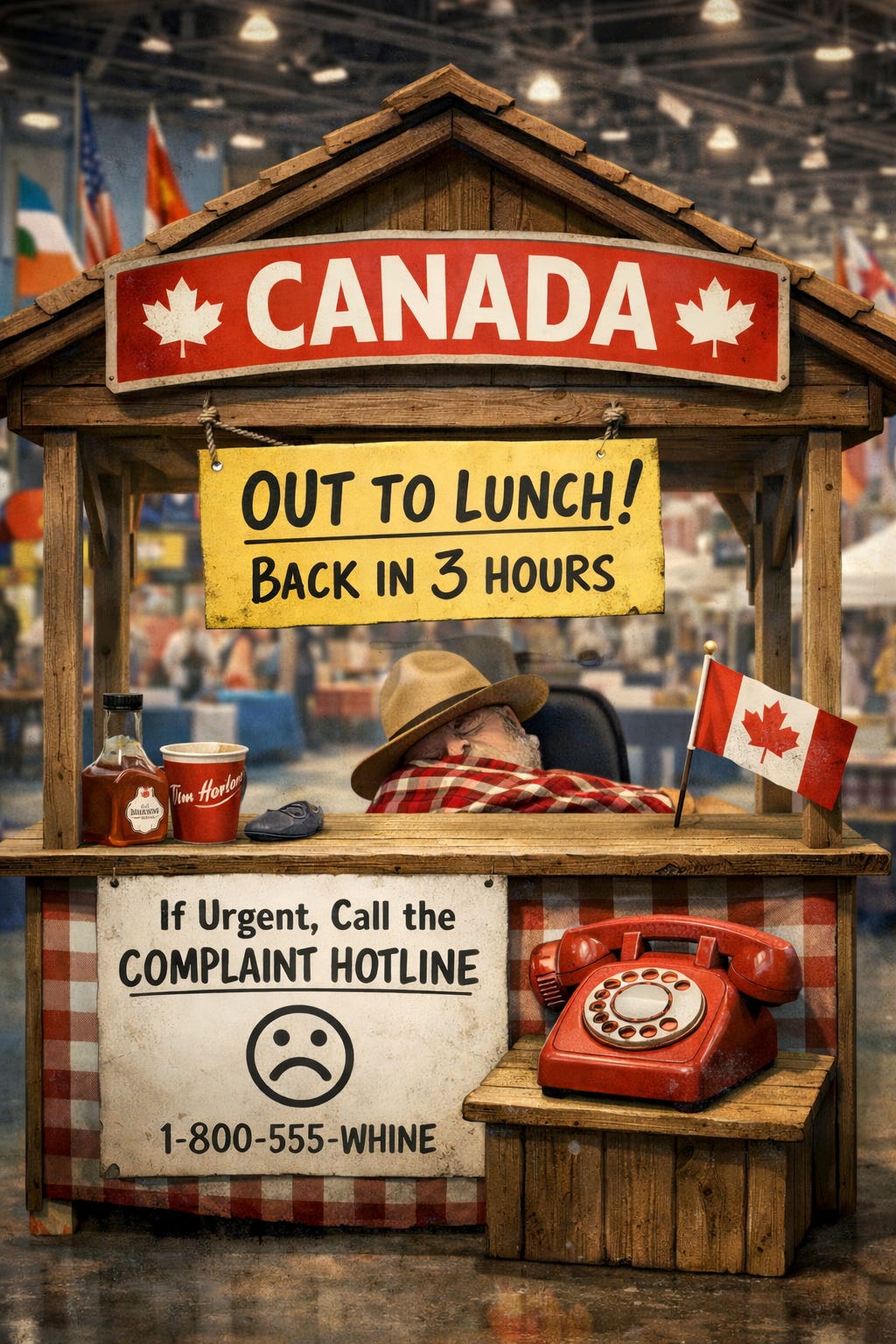
Canada still calls itself a middle power. In reality we have drifted into something smaller: a middling power that talks about leadership while avoiding the responsibilities that once earned global respect. A middle power leads when it must. A middling power explains why it cannot.
In Brief
Canadian politicians have long described Canada as a “middle power,” a country that, while not a superpower, plays an important and constructive role on the world stage. The phrase is self-flattery. Prime Minister Carney is especially fond of it.
But today the label rings hollow. A more honest description may be that Canada has become a middling power, still speaking the language of leadership while steadily shrinking from the responsibilities that once justified it.
There was a time when Canada genuinely punched above its weight, respected not for size but for judgment, courage, and reliability. During the Second World War Canada mobilized enormously for a country of its size. In the decades that followed, Canada helped build key pillars of the post war international order. Canadian diplomats contributed to the development of modern human rights institutions. Canada pioneered peacekeeping, helping stabilize conflicts from Cyprus to the Sinai. Canadian development programs built schools and institutions across Africa, Asia, and Latin America, while scholarships brought thousands of students to study in Canada.
Canada was never a superpower, but it was a respected contributor to international stability. That role has largely disappeared.
Canada now contributes almost nothing to United Nations peacekeeping operations. Our military readiness is widely seen as inadequate, and our ability to defend Arctic sovereignty remains uncertain. The dismantling of the Canadian International Development Agency in 2013 marked a shift away from long term development toward commercial and political priorities.
Environmental credibility has followed a similar trajectory. Canada repeatedly commits to ambitious climate and biodiversity targets yet consistently fails to meet them.
At the same time, Canada’s global economic footprint remains dominated by resource extraction. The industry is often criticized for performance on environment, human rights and worker safety.
Instead of building economic leadership based on innovation and advanced technologies, Canada continues to rely heavily on exporting raw commodities. An economy defined primarily by exporting unprocessed resources risks strategic marginalization and increasing dependence.
Canada’s foreign policy also remains deeply attached to an outdated vision, one of UN centred internationalism. The UN system increasingly struggles with corruption, politicization, and paralysis. Authoritarian regimes often wield influence within institutions meant to defend human rights. Iran’s past presence on UN human rights bodies illustrates how compromised these structures have become.
Meanwhile Iran continues to fund terrorism, repress its own people, destabilize the region, and threaten Israel’s existence. Yet much of the international response consists of diplomatic choreography while many countries continue business as usual, some in the arms trade.
Canada increasingly appears content to stand on the sidelines.
A genuine middle power builds institutions, contributes capabilities, and acts when principles are at stake. Canada once understood this. Today we seem uncertain what role we intend to play in the world.
A middle power leads when it must.
A middling power explains why it cannot.
Canada must decide which it intends to be.
The Full Story
Canada: Middle Power or Middling Power?
Canadian politicians have long described Canada as a “middle power.” The phrase flatters us. It evokes a country that, while not a superpower, plays an important and constructive role on the global stage. PM Carney is especially fond of this expression.
But today the label rings hollow. A more honest description might be that Canada has become a middling power, a country that still speaks the language of leadership while steadily shrinking from the responsibilities that once justified it.
There was a time when Canada genuinely punched above its weight, respected not for size but for judgment, courage and reliability.
During the Second World War, Canada mobilized enormously for a country of its size, contributing decisively to the Allied victory in Europe and the Atlantic. In the decades that followed, Canada helped build key pillars of the post war international order. Canadian diplomats were influential in shaping the modern human rights framework. Canada pioneered peacekeeping, helping stabilize conflicts from Cyprus to the Sinai.
Canadian development programs built schools, institutions, and infrastructure across Africa, Asia, and Latin America, while scholarships brought thousands of students to study in Canada.
Canada was not a superpower, but it was a serious and respected contributor to international stability. Regrettably, that role has largely disappeared.
Today Canada contributes almost nothing to United Nations peacekeeping operations. Our military readiness is widely acknowledged to be weak. Even our ability to defend our own Arctic sovereignty is increasingly uncertain.
Canada’s international development efforts also have lost much of their former purpose and credibility. The dismantling of the Canadian International Development Agency in 2013 marked a shift in philosophy. Foreign aid became a tool of commercial and political interests rather than long term development goals.
Environmental leadership has followed a similar trajectory. Canada has repeatedly committed to ambitious climate goals and biodiversity targets, yet we have failed to meet virtually every major commitment.
At the same time, Canada’s global economic footprint remains heavily concentrated in resource extraction. Mining companies are among Canada’s largest international actors, but the sector’s global record on environmental protection, labour standards, and human rights has been controversial in many jurisdictions.
Instead of building global leadership in innovation and cleaner technologies, Canada continues to rely heavily on exporting raw commodities, uranium, oil and gas, raw logs, seafood, and meat. Resource exports are not inherently problematic.But an economy defined primarily by exporting unprocessed resources risks strategic marginalization and increasingly dependent.
The decline in Canada’s international influence is not simply a matter of budgets or trade patterns. It also reflects a deeper confusion about the institutions and alliances through which Canada seeks to exercise influence.
For decades Canada placed enormous faith in the United Nations as the centrepiece of international cooperation. Multilateralism became a defining feature of Canadian foreign policy thinking. Yet the UN system has increasingly struggled with corruption, politicization, and structural paralysis. Authoritarian regimes often wield disproportionate influence within its institutions, while resolutions substitute for meaningful action. Iran’s past membership on UN human rights bodies illustrates how compromised these institutions have become.
Despite this reality, many Canadian policy voices remain deeply attached to an outdated vision of UN centred internationalism. Prominent figures from the past, including Lloyd Axworthy and Allan Rock, continue to advocate for this model, often presenting it as the moral high ground of Canadian foreign policy.
Their intentions are not in doubt. But the world in which that vision once functioned has changed dramatically. Institutions that cannot enforce norms or restrain aggressors ultimately weaken the credibility of the rules they claim to defend.
Nowhere is this failure clearer than in the Middle East.
For decades Iran’s regime has openly funded terrorism, destabilized neighbouring states, brutally repressed its own population, and repeatedly threatened Israel with annihilation. The regime combines authoritarian rule at home with revolutionary ambitions abroad.
Yet the international response has often consisted of little more than sanctions, diplomatic choreography and self-interest. Many European countries continue to do business with this fanatical regime as do China, Russia, Turkey and N. Korea that also exchange technology and weapons with Iran.
Whether one agrees with every action taken by the United States or Israel, it is difficult to ignore a broader reality: most Western democracies have been reluctant to confront this profound source of instability for 47 years.
Canada increasingly appears among those standing on the sidelines. Prime Minister Carney’s waffling and the moralizing of his Foreign Minister offer nothing but confusion and disappointment.
The same hesitation can be seen in Canada’s economic diplomacy. At a time when geopolitical tensions are rising and democratic alliances should arguably be deepening; Canada eagerly expand trade relationships with regimes whose political systems and strategic interests diverge sharply from our own. Engagement with countries such as China or Qatar may offer commercial opportunities, but it raises questions about coherence and values in Canadian foreign policy and risks Canadian independence. And, selling uranium to nuclear nations, such as India, is deeply troubling.
Meanwhile, the long-term economic opportunities that could strengthen both our economy , including advanced technologies, resource efficiency, and ecological restoration industries, receive far less strategic focus. We don’t even have a national water policy when we know, sure as hell, the Americans are going to come knocking.
This pattern reflects a broader shift that has affected many Western institutions. As I have argued elsewhere in discussing the “prophets of profit,” short term gain increasingly displaces long term responsibility. Governments chase quarterly growth figures and electoral cycles. Corporations focus on immediate returns.
Over time, this short termism erodes the capacity of Western societies to think strategically about their role in the world.
Canada’s drift from middle power to middling power reflects that larger trend.
The problem is not that Canada lacks resources, talent, or opportunity. It is that we increasingly lack clarity about what kind of country we intend to be.
A genuine middle power does not merely issue statements. It builds institutions, contributes capabilities, and accepts responsibilities when global stability requires it. It aligns its policies with its values and long term interests and recognizes that credibility in international affairs comes not from rhetoric but from consistent action.
Canada once understood this. We helped build parts of the international system that still shape the world today. Our diplomats, soldiers, scientists, and development professionals were widely respected as thoughtful, principled, and effective.
That legacy has not disappeared entirely but has faded. If Canada wishes to remain a serious participant in global affairs, it must rediscover the qualities that once made its influence meaningful. Strategic clarity. Institutional competence. The willingness to act when principles are at stake.
A middle power leads when it must.
A middling power explains why it cannot.
Canada must decide which it intends to be.
No posts
Comments
Nothing yet. Say the first thing.
Sign in to join the conversation.