
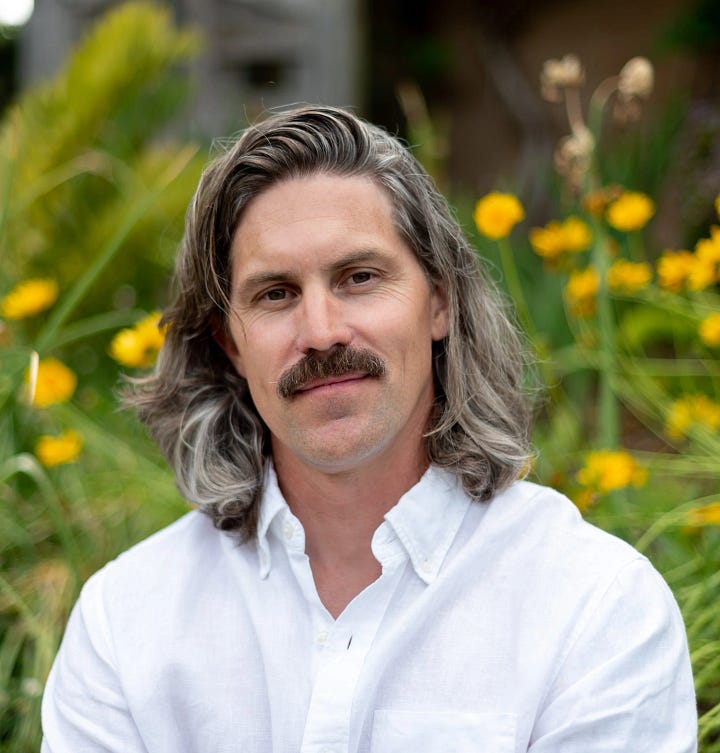
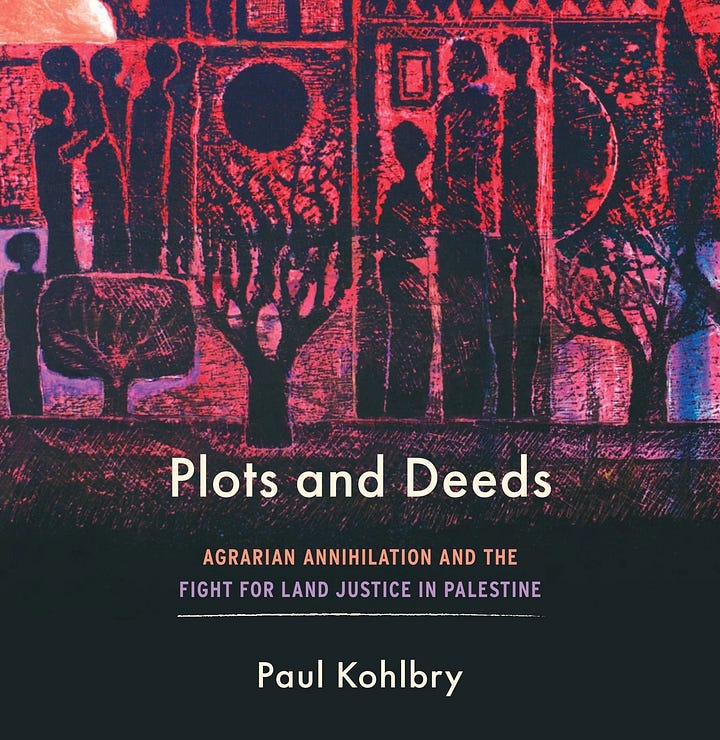
This post is an interview with Paul Kohlbry, an anthropologist and Assistant Professor of Global Studies at the University of California, Santa Barbara, and one of the most original voices working at the intersection of politics, property law, and agrarian transformation. He is the author of Plots and Deeds: Agrarian Annihilation and the Fight for Land Justice in Palestine (Stanford University Press, 2026), which draws on more than a decade of ethnographic fieldwork in the central highlands of the West Bank that investigates a deceptively simple question: what does it mean to fight for land when the rules are stacked against you? His answer is anything but simple. Kohlbry shows how Israeli occupation, Palestinian Authority land titling, and the encroachment of real estate markets have together produced what he calls "agrarian annihilation" — a process in which state violence and market coercion combine to destroy not just access to land, but the social and economic relationships that make agrarian life possible. Along the way, he upends traditional narratives and stereotypes on all sides: Palestinian farmers are neither tragic victims nor heroic embodiments of national resilience, property rights are as likely to facilitate dispossession as to defend against it, and land defense has as much to do with delay, ambiguity, and the slow accumulation of legal documents as with open resistance. With the war in Gaza ongoing and Israeli settlement expansion accelerating across the West Bank, I turned to Paul to understand what Palestinians in the West Bank have been doing with their land — and what it tells us about the broader struggle for land and survival in one of the world's most contested places.
1. Can you give us a sense of the communities you worked in when writing this book?
I did research across the West Bank (in the south around Hebron, and further north in villages outside of Nablus), and I did my most sustained fieldwork in three villages located in the central highlands of the West Bank. There are some fundamentals of Palestinian geography and history that are important to understand.
First, the West Bank is not large. So, even with the checkpoints and various access restrictions, rural places in the central highlands are not far from urban centers. The closest is Ramallah, which is also the de facto capital of the Palestinian Authority (PA). If people could travel (they can’t), they’d be able to drive to Jerusalem in less than an hour, and Tel Aviv in less than two. Some people would probably reject even calling these villages “rural” without serious qualifiers, since village residents’ center of life, whether it be cultural, social, economic, or otherwise, is really anchored in Ramallah now. I think it is important to talk about them as rural spaces to get a sense of what is at stake for land politics. But either way, they are not “remote” in any sense of the word.
Second, Ramallah was not, until relatively recently, the most important urban center for the central highlands. The loss of historic Palestine in 1948, and then of Jerusalem in 1967, cut West Bank villages off from long-standing economic and social networks. And it reoriented them: some people migrated to the United States, the Gulf, or Europe, and many, many more became workers in Israel. It is really only after the 1990s that Ramallah becomes such a center of gravity for development aid and private investment, and policed by well-funded security forces.
Third, the landscape of these villages—small villages surrounded by terraced hillsides planted with olive trees—is one of the quintessential Palestinian landscapes. I use this landscape as an entry point for the book, because this landscape stands in for a kind of unchanging traditionalism that has been used to both decry and celebrate its inhabitants. One of the problems, of course, is that this narrative passes over how the people who live there have transformed (and still continue to do so) these landscapes. The second is that most people that live in these villages today cannot make a living farming. I spend a lot of time talking about why this is the case in the book, but the basic point here is that there is an important contradiction: a seemingly traditional agrarian landscape inhabited by people who increasingly have little choice but to make a living working elsewhere and, more recently, by selling their land.
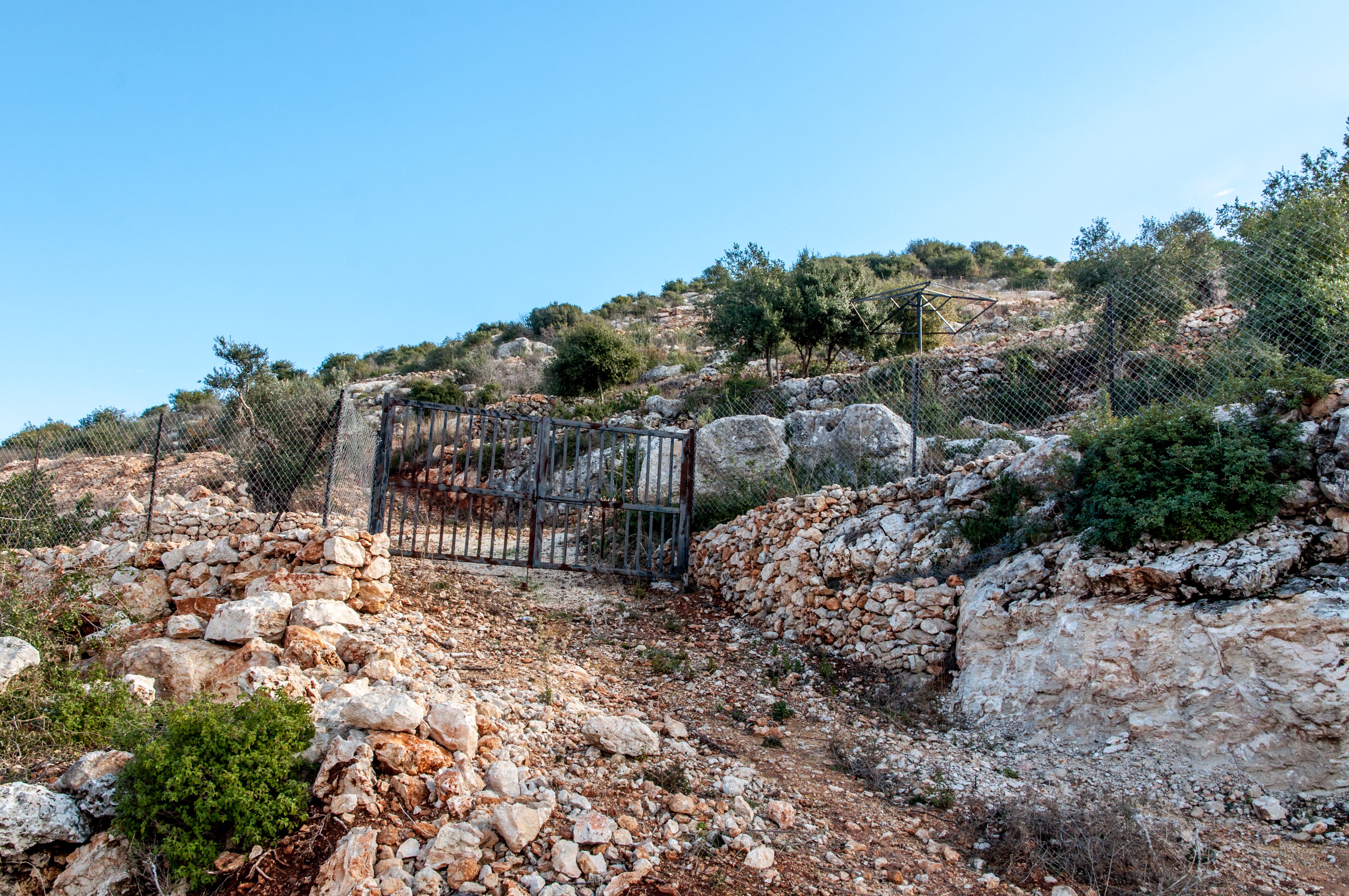
And people have land to sell. In the first half of the 20th century, many villagers in the central highlands would have worked as tenant farmers on larger estates, and powerful families controlled significant portions of village land. But these estates declined and landholdings became more dispersed by the 1950s and 1960s. Israeli occupation after 1967 only accelerated these trends. So what you have is not agrarian capitalism, plantations, or any of that. Instead, you have an increase in smallholders and the continuation of peasant farming alongside wage labor. This dispersal of land ownership, rather than concentration or landlessness, is important for what happens in the 2010s when I did fieldwork.
2. Land rights in the West Bank are messy, overlapping, and contested. The history here is long and complex, interwoven with the Ottoman Empire and the creation of the state of Israel. Can you briefly explain the broad contours of the overlapping and fragmented land registers and the difficulties this produces for people on their land?
In the West Bank, property is governed by elements of Ottoman, British, and Jordanian law, Israeli military orders, and Palestinian Authority law. And then we have to overlay this law with the administrative zones created by the Oslo Peace Accords. There is Area A and B, which is about the 40% of the West Bank where the PA has some nominal jurisdiction, and Area C, the 60% (mostly rural) where Israel does not even allow Palestinians the pretense of self-rule. This palimpsest of law and administrative zones produce a contradictory hierarchy of registries, jurisdictions, and enforcement mechanisms. And whichever way you look at them, the Israeli state manipulates the law to ensure territorial fragmentation and maximum losses for Palestinians. The guiding logic is, and always has been, as much land with as few Arabs as possible.
My main interest here, and where I bring something that is new, is on what Palestinians do with this situation, why they keep making property claims even though they know the rules are not in their favor, and what that ultimately does outside of the immediate land claims.
There are a few points that I raise in the book. The first is about Palestinians who can make land claims both against and to the Israeli authorities. Like many other settler colonial situations, Palestinians have to make their land claims through what is effectively a settler legal system, and therefore transform their land tenure into evidence that is recognizable to settler law. But because of how Israeli colonization proceeded after 1967 in the West Bank, Israeli courts and tribunals will nominally accept only private land claims from Palestinians. In other words, the Israeli state is usually claiming land as state property, and so the only form of Palestinian property right that is formally recognized is private ownership. As a result, private property became important for land defense. This has had all sorts of consequences that far exceed whether or not any given land claim is successful.
Second, I think that ambiguity is important. When people bring old documents to court, when surveyors draw new lines, when new land registries are created, questions emerge: does this document count as evidence of ownership? Was this land sale real? Did that state land declaration cover this hill or that hill? These create temporary openings for Palestinians, and they are the sites of struggle that have really determined the shape that the property regime has taken in the West Bank. I’m interested in these sites not because one is more promising than another but because they all have different ways of pushing property further into Palestinian political, social, and cultural life, and have real consequences regardless of whether or not a claim has been successful.
Third, I’m interested in temporality. Both those who study and make property are often interested in things like clarity, stability, and security. For Palestinians who are dealing with the Israeli state though, time is a key concern. It is not a question of whether a plot of land is or is not secure, but when it will be taken. And so land struggles, often quite self-consciously so, are about delay and postponement. One man likened it to “when you get cancer”—basically, you know this is eventually going to kill you, but you do what you can to prolong your life.
Finally, I’m interested in the kinds of narratives that people can construct through property. By narratives I don’t just mean stories, or even the kinds of evidence that people need in court. I also mean how the theft of private property becomes a way for Palestinians to make their claims to all sorts of audiences and institutions that, often, are less than sympathetic to their plight. There is this trope that, once you see it, you see it everywhere: Israel takes “private Palestinian land.” I think that property claims are one way that Palestinians make their rights recognizable, but again, this also narrows what one can defend, and who is seen as a relevant political actor.
3. The Palestinian Authority and its international backers promoted land titling and state-building as paths to Palestinian sovereignty and rural security. One of the book’s most important arguments, which reflects longstanding critiques of market capitalism, is that property ownership itself can ironically become a vector of dispossession rather than a safeguard of security and rights. How does that work in practice in the West Bank villages you studied?
Land titling has been going on in the West Bank for the past 20 years. First the World Bank was involved, then they threw a fit and left, and then they got involved again after the Palestinians showed that they could do things quite well without international assistance. Other international actors—NGOs, foreign states, and a whole army of consultants—have also been involved. The PA created an entirely new body, the Land and Water Settlement Commission (LWSC) to run land titling, or “settlement of title” as it is formally known. A significant part of the West Bank has been surveyed and titled. Basically, lots of work has gone into this project, and it is pretty consequential.
One thing that is important to differentiate is sovereignty and marketization. For the World Bank, and some of the other early funders of land titling, sovereignty is not what they care about. Occupation is a problem, sure, but these are not projects to upset the status quo, but to work around it. For the PA though, and I think we should take their word on this, land titling was also a project of asserting control over the land, and ultimately one element (or perhaps more accurately a performance) of a sovereign claim. The PA knows full-well that it cannot enforce any claims against Israeli settlers or the state. Instead, the hope is that these legal documents could be the basis of future recognition, after a political settlement. The settler groups were alarmed by this prospect, claiming that by allowing Palestinian surveyors to title land, especially in Area C, that they were weakening future Israeli claims to land. In this sense, everyone is making property not for the present, but in the hopes (or fears) of a different political future.
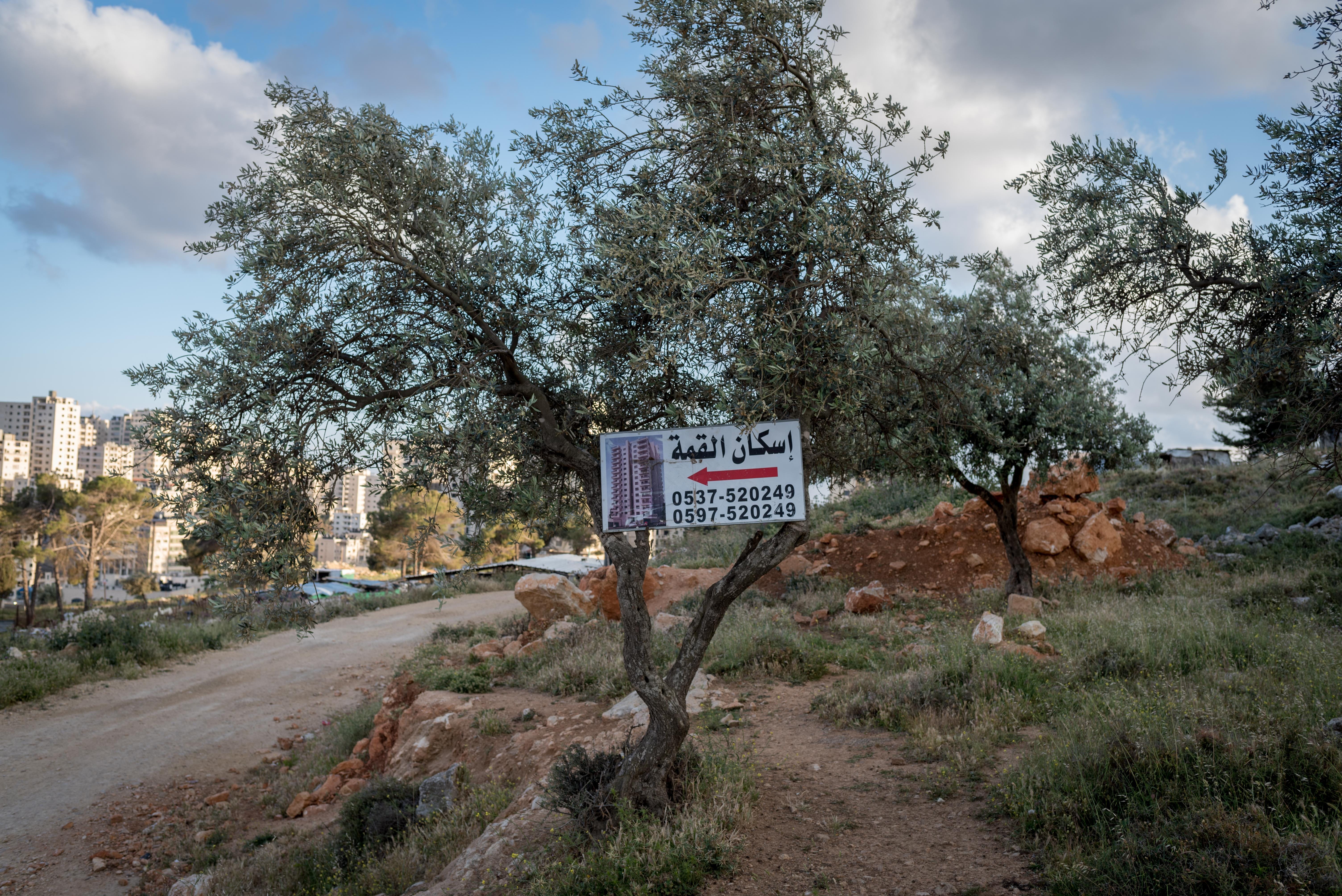
What land titling does now though is facilitate land transfers between Palestinians. Specifically, market transfers. I want to be careful here, and not overstep. I studied one small area of the central highlands, and for a limited period of time, so I don’t want to have what I found stand in for the entirety of the West Bank. What I found there was that, generally, the political economy was set up in such a way that two things were happening. First, that those in the most difficult conditions were selling early, and getting locked out of appreciating asset prices. And second, because my interest was really in farming and land defense, that the commodification of land was undermining agriculture in all sorts of ways, even if people held onto their land. But dispossession is not creating a clear corporate or class enemy; instead, it’s more diffuse and speculative, bringing people unevenly into the property market. This is probably not the same everywhere in the West Bank, but I feel confident that it expresses one important trend.
Finally, I’m really interested in the ways that, when property becomes part of land defense, it can become the grounds for all sorts of political projects. One of the first things that I studied in the central highlands was the way that this one real estate company was trying to make the argument that titling village land, and then selling off that land to outside owners, was an act of land defense. There are other examples in the book, but what was striking to me was how this company was trying to combine human rights and anti-colonialism to do land defense in rural Palestine not by strengthening villagers’ property rights, but by selling as much of their land as possible to other, non-resident Palestinians. This sort of endeavor, and there have been a few copy-cats, are anti-agrarian and play on old tropes about peasant backwardness. But they do have an interesting history within the Palestinian national movement, and today have a certain appeal to those with means, and a certain coherence for their supporters.
4. You spent over a decade doing ethnographic fieldwork in this region, beginning in 2013. How did the political situation – the changing realities of Israeli occupation, settlement expansion, and the Palestinian Authority’s evolving posture – alter what you were seeing on the ground and how you understood it?
My fieldwork for Plots and Deeds ran from 2013 until my final visit in 2022. But I also worked in Palestine in the late 2000s, for three years and change. That is both when my questions began to take shape, and when the political conjuncture I study began. There are three things that happened over this period: the decline of the popular movements, the collapse of the neoliberal project, and the beginnings of a new phase of colonial expansion.
First, the decline of the popular movements. When I got to Palestine, it was in the midst of a grassroots struggle, much of it occurring in rural places, against construction of what is often called the Separation Barrier, and what Palestinians more accurately call the Apartheid Wall. The Wall was a massive land grab, and it saw the mobilization of popular committees and the elaboration of all sorts of new forms of resistance. I ended up in Palestine in support of that movement. What was happening through the 2010s—the result of repression, of fatigue, of the lack of official support, many reasons—was the gradual decline of that struggle. This is not to say that there is no resistance to land grabbing, but that it is far more limited than it was before, and does not inspire the same sort of hope that I think it once did.
One of the reasons for the decline of the popular movements was what people refer to as Palestinian neoliberalism. Many people have written about this, and I think the books by Andy Clarno and Kareem Rabie do the best job of telling it. The basic story is this: the post-2005 settlement continued the demobilization of the 1990s, and rather than throwing government support behind the rural struggles for land, the PA instead insisted on a sort of capitalist state building, one that imagined that through the creation of a liberal market economy, a state would follow. Land titling is one part of this, of course, and I think the part that probably was most felt in the countryside. What I saw over the course of my fieldwork was this project run out of steam. If in the early 2010s you had all this enthusiasm about state-building, new signs of wealth, planned cities, and the rest of it, the party was over by the end of the decade. There was no sovereign state, and no end to violence or dispossession. And rather than a productive economy, there was debt, inequality, and speculation. The figures that replaced the first prime minister had none of the energy, and it felt like they continued the project not out of any commitment to its principles or horizon, but because there was nothing better to do.
Finally, and this became quite clear after 2023, I was also witnessing the beginning of the next phase of land grabbing. The last time I was in Palestine in 2022, there were far more incursions that I had seen before. There was an Israeli archeological dig in the village next to where I did fieldwork. A new pastoral settlement in the hills above one of the places I had done work at for almost a decade. A new state land confiscation. These sorts of things set the ground for the massive expansion in settlement, driven by both official state and ostensibly paramilitary forces.
5. The book connects Palestine to a global struggle for land justice. What are some of the most important contours of this broader struggle, and where do you find the most illuminating parallels to what Palestinian farmers are living through?
One of the things I struggle with is how we can think about what Palestinians do without immediately calling it “resistance”. My issue here is that when we invoke resistance we think we know what we mean. And what we mean is often a reduction of rural places into simple, and frankly misleading, terms about how rural people relate to agriculture, to land, and to the countryside. It gets us back into an unhelpful agrarian imaginary that misses the dynamism and differentiation of rural places, and the real material and political difficulties involved in organizing people to stay on the land.
So, what does land justice do? For me, it provides a way to look at the contradictions of what it means to fight for agrarian places. I am really interested in the people who still think this is possible, because they are fighting against the Israeli army and settlers, and also against the ways that capital devalues agrarian land and people. I’m interested in the connections between these two problems. Yes, how colonial capitalism produces dispossession, but more importantly, how those engaged in land defense read these problems, and how they create projects to address them. There is a lot of good work on settler colonialism, but far less on how settler colonialism might be an agrarian question. When we take it there, we see that rural Palestinians face many of the same challenges that other rural populations—small farmers, peasant farmers, peasant workers, whatever we want to call them—face globally.
It is this latter that I find valuable, and it opens up some really generative ways of placing Palestine in the world. Part of that means rethinking common connections, like to South Africa. So rather than asking to what extent Israeli rule is or isn’t apartheid, we can look at agrarian change and semi-proletarianization under apartheid, land reform in the aftermath, and the persistence of the land question in both rural and urban settings. And we can look at places that Palestine is not often read next to. For me, it was really eye-opening to study south and southeast Asia. In particular, the scholarship on Indonesia is really illuminating, and there are so many parallels to Palestine, from the legal means of disposession, to the experience of genocide.
Finally, thinking in terms of land justice does not always mean thinking in terms of social movements. One of the most important lessons for me about the places that I write about are that yes, several have strong anti-colonial movements, but there is also not the resistance to land commodification, corporate purchases, or speculation. This is important too, and the ways that people in these places grapple with these problems, which often is not resistance, is important for understanding how they think about land justice.
6. The book was completed and published against the backdrop of the war in Gaza and the escalation of violence in the West Bank. Does what you documented in these three villages – the resilience, the practices of land defense, the refusal of annihilation – look different to you now than it did when you were in the field? And how does it prompt you to consider the future of this region?
I ended research, and most of the writing for this book, in 2022. I finished it amidst the genocide in Gaza. And what I was writing about was a conjuncture that, at least from my vantage point, is over.
I was never able to visit the Gaza Strip, and my fieldwork was entirely in the West Bank. Like so many people, I followed the testimony and reporting over the past years with a mix of sadness, horror and rage. This quarter I taught a course on food and justice, and I tried to think more systematically about how Gaza’s food system was subordinated to a logic of counterinsurgency. I had to teach my students how aid distribution points were weaponized; how it was often fathers and elder brothers who, with a duty to provide for their families and the shame of watching them starve, risked their lives to secure aid; and how when they were murdered by Israeli soldiers and US mercenaries, their children had to live with the knowledge that their parents and siblings had died to feed them. I don’t think anything I could say, and anything I’ve written, is adequate to talk about those experiences.
But at the same time, I do think that what I’ve written about in Plots and Deeds will help us understand what will happen in Gaza in the years to come. This is not the first act of mass violence against the Palestinians. The Nakba of 1948, as we know very well, was followed by decades of Israeli legal work to absorb refugee property and dispossess those that remained. It is that legal system which was brought into the West Bank. The various “reconstruction” plans promise something similar, albeit in ways much more appropriate to our moment of mafia capitalism and luxury real estate. And at the same time, we’ve also been able to glimpse the people who, even in the midst of unimaginable conditions, have done all they could do not only to survive, but to make agrarian life more than a question of survival. Their projects will live on as well, although the forces against them are massive.
In the West Bank the prize has always been the land, and what we have is far more continuity than rupture. Yes, places that once were deemed “safe” (which was always relative) are now colonial frontiers. Farkha, a village where I did work and where, I think, we have real models of what it might mean to make agrarian life viable again, is now actively under siege. There are settler gangs attacking residents and destroying property, backed by a legal land grab and the expansion of a settlement to a nearby hill. This is the West Bank in a microcosm. We have mob attacks and paramilitaries, cruel acts of military destruction, the bombing of camps and clearance of villages. And at the same time, we have the Israeli state announcing that it will begin its own land registration campaign in the West Bank, and that it will change the law to encourage the creation of more land markets, giving Palestinians the “right” to sell their land to settlers. Violence and law have always gone together in Palestine, and this moment is no different.
When I think about the future, I think about the ways that all of these developments have really suffocated popular movements, and the sorts of political and social visions that they had. There are many reasons for this suffocation: bondage to debt and property, lack of support from the PA, and active repression from the PA. And more importantly, increasing repression from the Israeli army and settler paramilitaries (there isn’t much of a difference), such that even a march or protest might be risking one’s life. The possibilities of the kinds of land defense that I studied, in other words, are really being closed down. There are, of course, other forms of resistance. But they face an unrestrained Israeli state and an international order that has shown itself completely unwilling to curb unimaginable brutality. And so we are seeing the spread of the so-called “Gaza Model” to Lebanon, to Syria, and to the West Bank, sanitizing and legitimating scorched earth tactics. I wish I had a better note to end on, but the future is grim.
No posts
Comments
Nothing yet. Say the first thing.
Sign in to join the conversation.