
What’s on My Screen is, literally, what’s on my TV when I’m decompressing after work or during the weekends. Sometimes, I’ll talk about a film, but I’ll almost always talk about old series and new reality shows I choose to binge-watch. REVIEW is a subseries under What’s on My Screen—because sometimes I need to yap about something a LOT. Spoilers ahead. If you care about that, don’t read until you’ve watched the series. You’ve been warned!
My husband remarked that he’d never seen the first film of the Highlander franchise, so we put it on our to-watch list and finally watched it together sometime last year.
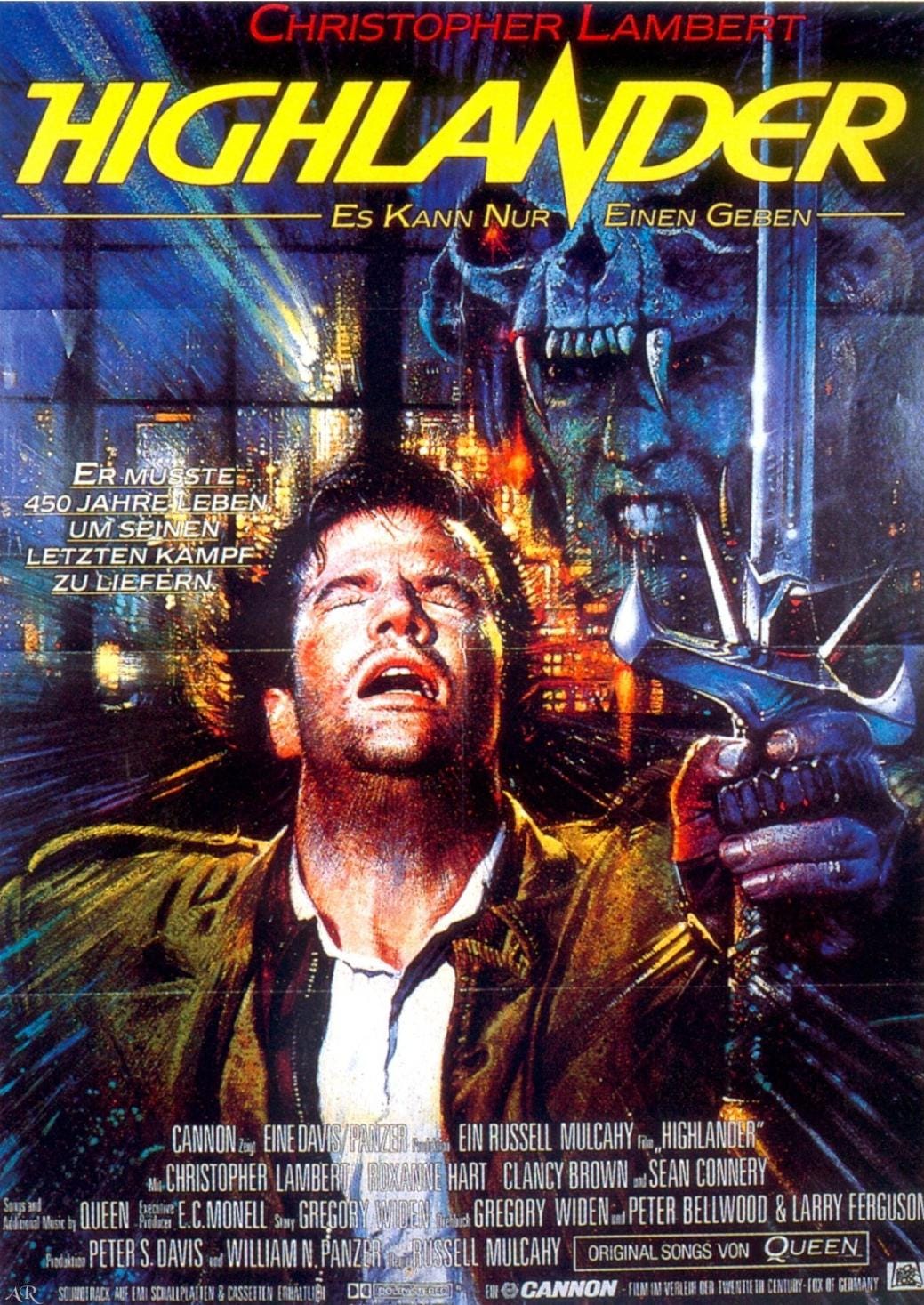
Rewatching old films is a kind of ritual. It’s not about nostalgia for nostalgia’s sake—it’s about remembering who we were when we first saw them. When I press play on Highlander (1986), I still feel that familiar hum of our old VCR in Cubao, the hiss before the lightning.⚡ I’m not just watching an immortal warrior; I’m entering a moment when cinema still believed emotion could be myth. Watching it with my husband feels like I’m sharing a part of myself that he wasn’t introduced to all these years we’ve been together.
Old films invite us to time travel emotionally. They reveal what a decade hoped for, feared, and loved. Sometimes they even whisper something about who we’ve become since.
I didn’t watch the film on the silver screen. It was a commercial failure and probably didn’t last long in the cinemas in the Philippines. But my Dad was a big fan of action movies, especially ones that didn’t rely on guns. So he rented a VHS tape of the film, and I watched Highlander with him and probably my older brother with our small TV📺 in our cramped living room in Cubao. I likely didn’t understand half of what I heard—how could I, with a Frenchman playing a Scotsman and a Scotsman playing a Spaniard from Egypt in a movie where everyone spoke in English—but I understood awe.
In a country always rebuilding—after floods, after departures, after goodbyes—the idea of living forever felt both alien and alluring. Maybe immortality wasn’t about escaping death, but about refusing to forget. As a Filipino child, I think that’s what I really wanted: for the things I loved not to fade.
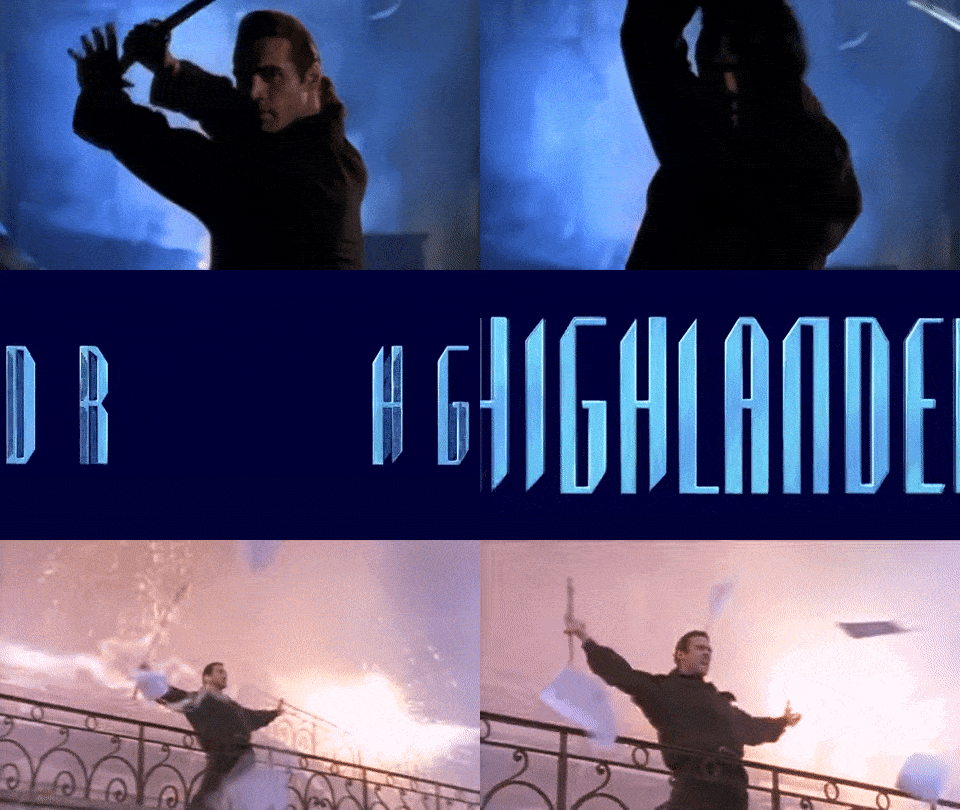
But in Highlander: The Series (1992–1998), the tone of the franchise shifted. Duncan MacLeod (Adrian Paul) was more monk than mercenary—his battles quieter, his sadness deeper. The series turned violence into philosophy and made immortality feel like penance. As a child, I struggled to understand how the TV series connected to the original film—how Duncan was related to Connor MacLeod (Christopher Lambert), how “there can be only one” could tell the story of multiple heroes.
I remember catching the series and watching it on my own in the Philippines, probably when my childhood home and the city outside were relatively quiet. The Queen theme song—“Princes of the Universe”—felt like a promise and a curse, and connected the series to the film. Watching Duncan wander from city to city, I recognized a kind of loneliness that felt strangely familiar: that of someone trying to live meaningfully in a world that keeps forgetting itself. Now, as an adult living away from Cubao, I understand that loneliness even more.
Like its characters, the Highlander franchise refused to die. Sequels, cartoons, comics, even a card game—each tried to capture that first film’s lightning, and each failed in its own beautiful way. But the franchise never forgot itself.
It’s ironic, really. The series about immortality became trapped in its own. Each retelling felt like a duel between past and present—a reminder that some myths can’t be replicated, only remembered. The TV series and the first film are what stuck with me, and what I remember when I think of Highlander. And the song from Queen, too. I think I must have watched the sequel films with my Dad, but I don’t remember them.
It was around the time the TV series was popular that my Dad and his best friend, Tito Manny, started growing out their hair and wearing ponytails. In my brain, this connected them to the Highlanders Connor and Duncan, and instilled in me the belief that they were also immortal. (My Dad and his best friend are no longer here, which sadly puts that belief to rest.) No worries, though. I will never forget them, even when the world eventually does.
Connon MacLeod’s accent wandered across continents, but his eyes told stories from centuries, even though he looked like he barely understood what was going on in every single scene. This was probably due to Lambert’s limited understanding of the English language and his myopia.
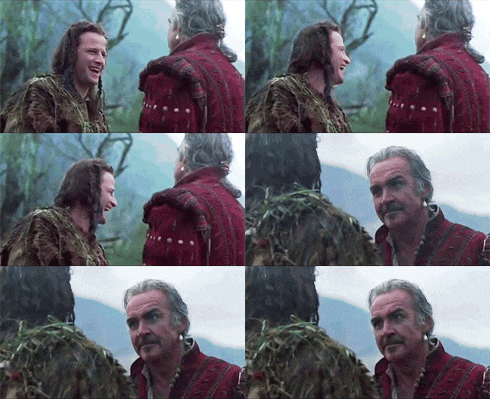
Ramirez (Sean Connery), somehow both regal and ridiculous as Connor’s Spanish-Egyptian mentor with one outfit throughout the long flashback that included him, radiated charm that needed no logic. And Kurgan (Clancy Brown)—terrifying, unhinged, unforgettable—was the darkness every hero needs to define himself against. When I learned that Brown is also the voice of Mr. Krabs in SpongeBob SquarePants (1999-), I was flabbergasted but also amazed at the level of his acting talent.
Their chemistry was chaos and poetry. Watching them now, I see how sincerity saves absurdity. They didn’t wink at the camera; they believed. And that belief made Highlander immortal long before its characters ever were. You wouldn’t pick Highlander as the best film of Lambert, Connery, or Brown. But it’s certainly one of the most memorable.
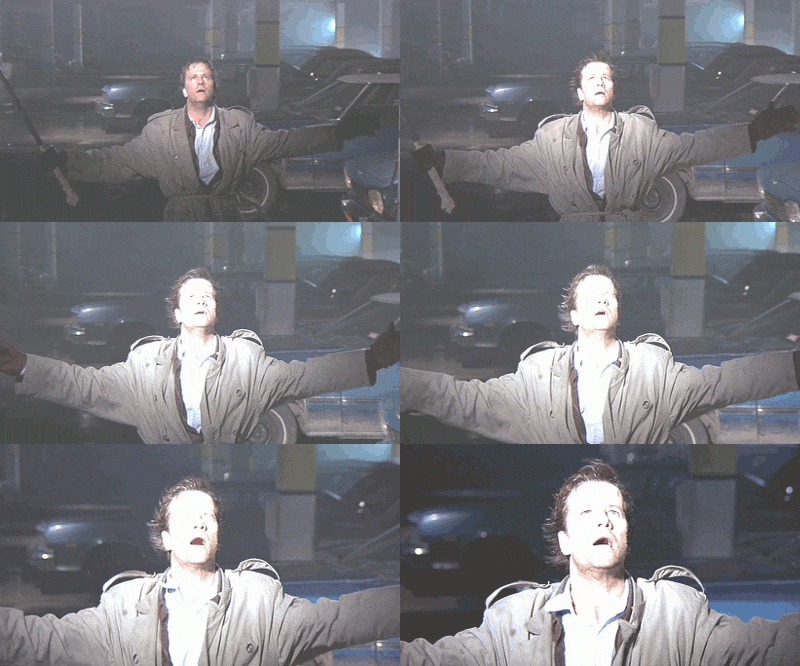
Underneath the lightning and swords, the Highlander isn’t just an immortal warrior—it’s an exile. Someone cursed to remember everything. Someone who can’t stay, even when they want to. It’s a myth about surviving time, about carrying memory as both weapon and wound. Maybe that’s why it resonates with me now, as part of the Filipino diaspora. We are all, in some way, Highlanders—cut off from the land that birthed us, trying to make sense of forever in foreign light.
Some films are technically flawless but leave no trace. Others—like Highlander—are messy, uneven, stitched together with pure conviction. And yet they stay.
Critics can lambast Highlander all they want. It meanders, the story beats are messy, the point is lost in endless flashbacks, the romantic lead’s plot points go nowhere, and the action scenes don’t deliver on the hype the film creates for them early on. I get it. But it’s also a lesson on seeing the forest for the trees. It’s forgiving small faults and celebrating huge efforts. It’s feeling the energy everyone involved put into it. It’s believing that the Highlander is a Prince of the Universe.
To me, a good film alters your emotional rhythm. It becomes a pulse that syncs with your own long after the credits fade. A bad movie vanishes. Highlander lingers like thunder long after the storm has passed.
Revisiting Highlander now feels like stepping into a dream from my childhood—half-forgotten, neon-lit, strangely profound. It’s camp and tragedy and myth, all crashing together under a rain of sparks. It reminds me that immortality isn’t about living forever—it’s about being remembered, retold, rewatched. We keep these old films alive the same way we keep our memories alive: by returning to them, again and again.
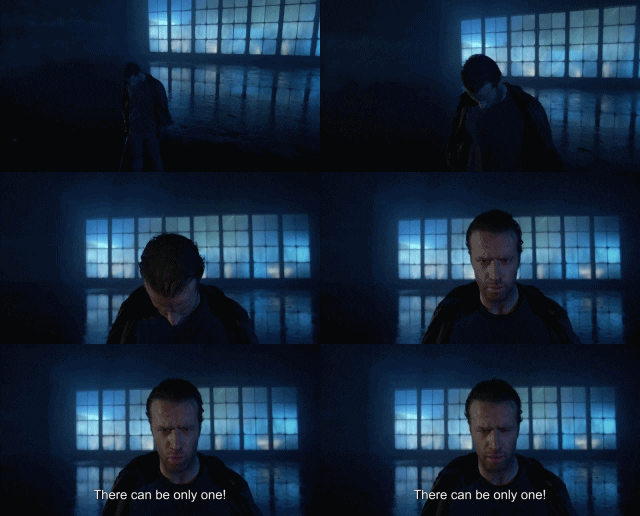
Because maybe there isn’t “only one.” Maybe there are countless versions of us, each remembering a different moment, each watching the same immortal story—still searching for forever.
Photo by Highlander on IMDB
If you’ve enjoyed reading this or something else I’ve written, please consider clicking the subscribe button or buying me a coffee. ☕ Thank you!
Comments
Nothing yet. Say the first thing.
Sign in to join the conversation.