
Picture two people with the same sleep schedule.
One of them sleeps properly. No negotiation, no overthinking, no tossing and turning. By the morning, they’re warm, refreshed and clear.
The other one lies there. They’re genuinely tired, but the body just can’t sleep. They do eventually fall asleep from mere exhaustion, but wake up a few hours later with a strange alertness. They lie there, staring at the ceiling, wondering why this keeps happening.
The difference is what’s happening inside the body when the lights go out.
Sleep is not a passive state. Your body doesn’t simply shut down at night. Rather, it turns inward. Repairs, clearing waste, building hormones, resolving inflammation and setting up for high function. This is active and expensive work. It requires fuel, steady hormones and a nervous system that feels safe.
A body that can afford this expensive process, easily sleeps. A body that can’t, sleeps lighter and less restfully. The body doesn’t trust the night to fully let go.

That trust is the difference between the two sleepers.
Multiply either night across months and years, and you get two completely different lives. One person wakes up warm, recovers well, handles stress easily, trains well, and has a metabolism that spends freely. The other simply performs worse. Recovery takes a hit, mood is unstable, and the body conserves. Think feeling colder, having less motivation, less willingness to simply do things.
Good sleep and recovery is one of the biggest advantages you can have.
Bad sleep is usually the night telling you something about the day, your fuel, your chemistry, or the tempo of your whole system. It’s not an isolated problem.
We’ll cover what deep sleep actually requires from your body, why it breaks in specific ways, what those patterns mean about your physiology, and how to rebuild in the right order, from the foundation up.
One thing before we start: you don’t have to figure this out alone. I work with people directly, mapping your sleep, fuel, and stress chemistry to your own physiology and building the plan with you. It’s called the Comprehensive Metabolic Analysis, and you can apply at metabolicblueprint.io.
If you’d rather run it yourself, everything you need is right here.
Sleep is often thought of as fully turning off. That’s not really the case.
Sleep is one of the most metabolically active states your body enters. It’s when heavy maintenance happens; the work that can’t run properly while you’re awake and spending energy outwardly. Tissue repair, hormone production, immune calibration, brain waste clearance, nervous system resetting… all of it costs energy and requires hours of uninterrupted, low-threat downtime to complete.
When you’re maintaining well, you wake up warmer, sharper and you become more resilient. If the process is curt short or stays shallow, you accumulate a deficit that shows up in many ways. Worse mood, recovery, metabolism, motivation and even your body composition.
Sleep is not an absence of activity, rather it is high activity, just pointed inwardly.
Your brain produces metabolic waste all day. These are byproducts of normal brain activity, including proteins like amyloid-beta and tau that are linked to Alzheimer’s disease when they accumulate.
The body has a system for clearing this waste. It’s called the glymphatic system, and it works by flushing fluid through brain tissue along the spaces around blood vessels, carrying waste out.
This system runs almost exclusively during deep sleep. During wakefulness, glymphatic clearance drops by roughly 90%. The brain simply cannot clean itself while it’s working.
In 2024, researchers at Oregon Health & Science University confirmed this waste-clearance network in living humans for the first time, using imaging in neurosurgery patients. Before that, it had only been directly observed in mice. A January 2025 paper in Cell identified the actual mechanism, with rhythmic pulses in brain arteries during sleep that physically drive fluid through brain tissue. The pump runs when you’re in deep sleep.
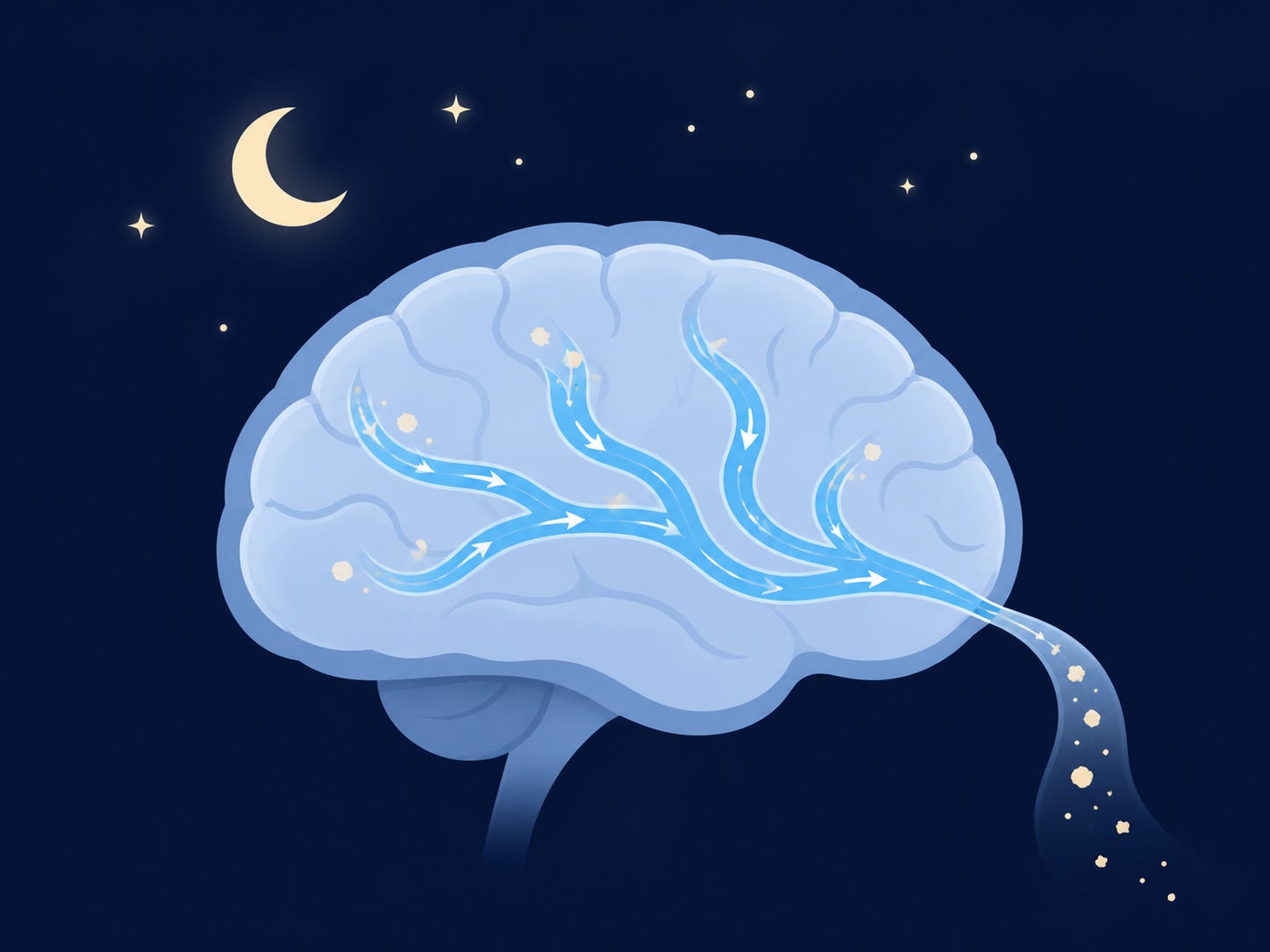
A single night of sleep deprivation measurably impairs the brain’s ability to clear this waste. A 2026 trial published in Nature Communications showed that normal sleep enhanced overnight clearance of amyloid-beta and tau into the bloodstream (where they can be disposed of), while sleep deprivation blunted that clearance.
This is a nightly process. Every deep night clears waste. Every shallow or broken night leaves more behind. The long-term implications for neurodegeneration are serious, but the short-term effect is a brain that didn’t get cleaned overnight. Such a brain doesn’t work as well the next day. The fog, the sluggishness and poor focus – part of that is actual waste sitting in tissue that should have been flushed out.
Around 70-80% of your daily growth hormone release happens during the deep restorative phase of sleep. Growth hormone drives tissue repair, muscle recovery, fat metabolism, and connective tissue support. If deep sleep is disrupted, even without reducing total hours, growth hormone output can drop dramatically.
Testosterone is similar in this regard. The majority of daily testosterone release in men happens during sleep, with levels peaking during REM phases in the early morning hours.
In a study published in JAMA, one week of sleeping just five hours per night dropped daytime testosterone by 10-15% in healthy young men. These were not sick or elderly men, but healthy guys in their twenties.
A 10-15% decline is equivalent to 10-15 years of natural aging, all from one week.
The men also reported declining energy and well-being as the study progressed. Testosterone affects muscle mass, mood, drive, fat distribution, and the willingness to do things. Reduce it with bad sleep and you feel the difference fast.
In women, the damage is different but just as significant. Sleep deprivation raises cortisol, and cortisol competes directly with progesterone. When the body is stressed and under-slept, it diverts resources toward stress hormones and away from reproductive and protective ones. Progesterone drops. I call progesterone the hormone of safety in my other work, since it is anti-inflammatory, pro-metabolism, calming to the nervous system, and protective of mood. When it falls, women feel more anxiety, more irritability, worse PMS, lighter and more fragile sleep, which then makes the whole pattern worse.
A population study of over 800 young women found that sleeping five hours or less per night was significantly associated with menstrual irregularity, even after adjusting for age, weight, and mood. Women with delayed sleep phase syndrome were twice as likely to have irregular cycles. A systematic review in BMC Women’s Health confirmed that short sleep tracks consistently with disrupted cycles. And a recent study reported that as sleep duration increased, luteal phase progesterone concentrations increased alongside it. This is extremely protective to a woman’s well-being.
Insulin sensitivity takes a big hit too. Multiple studies have shown that even moderate sleep restriction (five to six hours for a few nights) worsens glucose handling the next day. Cortisol stays elevated later into the evening, more fat is in circulation, which crowds out clean glucose burning. Blood sugar is handled more poorly. You become a metabolically aged version of yourself, since your ability to burn glucose well is a key characteristic of youth and metabolic health.
More on free fatty acid mechanism later in this article, but the short version is that when sleep is poor, stress chemistry rises, fat breakdown increases, and those circulating fats make glucose handling rougher. It’s a problem that starts with the night and reaches into the next day’s meals.

Beyond hormones and waste clearing, sleep is when the body runs its larger repair program. Immune cells recalibrate, where inflammation is reset, damaged cells are cleared, and the immune system prepares for the next day. The nervous system consolidates memory and recalibrates emotional processing.
All of this costs ATP. All of it requires a body that feels safe enough to commit fully to inward work, not concerned with the outside world.
When the body feels underfunded because fuel is low or stress hormones are high, it cannot commit fully to this maintenance. Sleep stays lighter and more stress takes place. The maintenance shift either gets cut short, or is run at a reduced capacity. You still sleep, but you don’t get the full return.
Sleep quality is incredibly important. Eight hours of shallow, fragmented sleep can leave you worse off than six hours of continuous, deep sleep. The body needs uninterrupted time to run these programs, and every interruption harms the queue.
We tend to overfocus on “eight hours in bed”.
Hours are the container for good sleep, but the depth is the actual content.
You can spend eight hours in bed and wake up feeling like you barely slept. You can be unconscious for a long time and come out inflamed, foggy and heavy.
Sleep moves through a repeating cycle. Non-REM stages deepen progressively, leading to deep sleep, then rising back through lighter stages into REM. This cycle repeats roughly every 90 minutes across the night. The earlier cycles tend to be heavier in deep sleep, the later ones more in REM. A full night needs both.
Deep non-REM sleep is where the heaviest physical restoration happens. Growth hormone peaks here, repair and glymphatic clearance runs hardest.
REM sleep handles emotional processing, nervous system posture and memory consolidation. REM is what shapes the feeling of the next day; whether you wake up emotionally settled and whether the day feels manageable. Cut sleep short by an hour or two, and you’re disproportionately reducing REM, as the longest REM periods are concentrated in the last stretch of sleep.
A good night needs to go through these phases without being interrupted. Duration gives the opportunity, but only continuity is what makes use of it.
Regarding sleep trackers such as Oura, Whoop, Apple Watch, the rest – they can be useful for showing trends, like your sleep getting worse during a stressful week, or whether late meals are hurting your continuity. They are not really accurate for the specific sleep stages though. They estimate deep sleep and REM through heart rate and movement, not through brain waves. Use them for general information over time, but understand that they’re less useful for a specific nightly verdict. How you feel in the morning is still the better tracker. If you slept well and the tracker says you didn’t, trust your body. If the tracker says you slept great and you feel awful, trust your body.
Some people also develop anxiety around their sleep score, which itself degrades sleep. If the tracker is making you worse, stop wearing it.
Every time sleep breaks, the cycle resets. The body gets pulled back toward wakefulness where heart rate rises and alertness returns. Then it has to start the descent again. A night with four interruptions gives you four incomplete descents that never reach the depth or the duration needed for the heavier repair work to finish.
A fragmented eight hours can feel worse than a solid six.
Many people would benefit more from fewer interruptions than from more time in bed. If you’re sleeping seven hours straight, you’re probably getting more restoration than someone sleeping nine hours in three broken chunks.
By the time you lie down, most of the night has already been decided.
Morning light should have anchored your clock, movement should have built sleep pressure, meals should have filled the overnight buffer, caffeine should have mostly cleared. The stress of the day (work, conflict, under-eating, overtraining, too many hours indoors) has already affected you. Your body arrives at bedtime carrying all of that.
This is why bedtime advice often falls so short, in my opinion.
You can darken the room, you can put the phone away, you can do the breathing exercises and follow the routine perfectly. Despite that, the body can still refuse to descend, because the fourteen hours before that moment were deciding a lighter, more fragmented night.
A person who spent the entire day indoors under dim artificial light, skipped lunch, drank caffeine late, trained hard at 8 p.m., then tried to fall asleep at 11, didn’t magically become unable to sleep at night. The sleep problem was being built all day. The final hour before bed cannot fix what the previous fourteen hours reinforced.
Obviously, a lot of sleep advice helps. Temperature, darkness, wind-down routines and such. We’ll cover them later. But they’re the finishing touches, not your foundation. The foundation is the day.
A strong day with real light, real movement, proper meals, actual output and managed biological stress, produces a night that mostly organizes itself. A weak or chaotic day produces a night that struggles no matter how good the routine looks.
Sleep is a whole-day project, and the sleep is just the actual result.
The next section introduces a framework I find very useful for understanding what your body actually checks before it commits to deep sleep. There are four prerequisites — four gates.

Your body “checks” a set of conditions before falling asleep. If they’re met, sleep tends to organize itself. If one or more is missing, a specific kind of problem shows up.
I think of these as four gates. Each one is a prerequisite the body evaluates before committing to deep, continuous sleep. They work in order of timing, sleep pressure, fuel security, then arousal state.
When I work with a client who has broken sleep, working through them in this order usually finds the issue quickly.
Your brain runs on a 24-hour rhythm.
Cortisol, insulin sensitivity, body temperature, appetite, sleep pressure… all of these follow a daily cycle that needs an anchoring signal from the environment to stay accurate.
The strongest anchor is bright light through the eyes in the morning.
I covered this extensively in the previous article “Do Not Fear The Sun”, but to quickly recap – outdoor daylight runs at tens of thousands of lux. A typical office sits at a few hundred. Direct sunlight exceeds 100,000. Your circadian system was calibrated for that contrast. A few hundred lux doesn’t register as “daytime” in the way your biology means it. You can sit in a well-lit room all day and your clock can still not be anchored properly.
When the signal is strong, cortisol rises hard in the morning (this is what you want, it’s the body’s natural “on” switch), peaks early, and falls through the evening. You don’t carry cortisol to bedtime. Body temperature rises during the day and drops at night, and that drop is one of the triggers for sleep onset. Insulin sensitivity is highest earlier in the day, so food is handled more cleanly. The whole system runs with a clear on/off!
When the signal is weak, everything flattens in the worst way possible. Cortisol doesn’t rise enough in the morning so you feel groggy, and doesn’t fall enough at night so you feel wired. Temperature stays flatter, so sleep onset is harder and depth is worse. The body stays in a grey zone between active and restorative, doing neither well. Worst of both worlds.
Consistent wake time matters more than consistent bedtime. Your wake time is the anchor. It reaches forward into the whole day. A body that wakes at different hours each morning keeps receiving contradictory instructions.
Light at night is the inverse of this. A single night of sleeping with moderate room light significantly worsened next-day insulin sensitivity in a controlled study. The body perceives light during sleep as a mixed signal. Part of you stays in day mode when you should be repairing.
Bright days and dark nights produce the cleanest metabolic performance. Dim days and bright nights produce the worst.
You should memorize that line, it’ll pay dividends.
There’s a deeper point here in that the circadian clock doesn’t only respond to light. It also responds to metabolic activity and food availability. In one study on cyanobacteria, when sugar supply was stable, the clock maintained rhythm even in total darkness. When sugar was removed periodically, the clock reset to match the feeding schedule. The researchers concluded that the clock responded primarily to metabolic activity when both signals were available.
Practically, this means that a chaotic eating pattern of skipping meals, eating at random times, long gaps followed by large meals, can blur the body’s sense of timing beyond just light exposure. Strong morning light plus regular meals creates a double anchor. The body hears the same message from both inputs.
This is why I strongly recommend my clients to not skip breakfast, even if it’s small.
There isn’t one bedtime that is clearly best for everyone, but most adults sleep best when they’re in bed somewhere between 10 and 11 p.m., as it matches their natural melatonin rise. Going to bed at 1 a.m. regularly means you’re shortening the most restorative part of the night. Deep sleep is concentrated in the first half of the sleep period, so when your bedtime drifts late, you lose deep sleep first, not REM.
If your bedtime has drifted late, walk it back 15 minutes every few days rather than trying to jump it by hours.
Fatigue and sleepiness are similar enough to almost be interchangeable, but different enough to wreck a night.
Fatigue is heaviness and drag. It is a strained kind of tired where you feel worn down but nothing is pulling you toward sleep. Feeling sleepy is different, where your eyes want to close, thought becomes sluggish and actual descent into sleep begins.
You can have plenty of fatigue and very little sleepiness. That mismatch is extremely common. You’re exhausted, but you don’t drop.
Sleep pressure builds through activity engagement with the day. Your brain accumulates adenosine (a byproduct of being awake and active) and that adenosine is part of what creates the feeling of sleepiness. Daylight, walking, thinking, work, purposeful activity and socializing all contribute. A proper day gives the body a reason to sleep.
A flat, indoor day with lots of doomscrolling leaves behind dullness and the feeling of being underpowered, yet you haven’t built enough pressure to drop into deep sleep. There wasn’t enough demand, the day never became purposeful enough to descend deeply. You become tired, but not sleepy. Laying in bed drained, but restless.
This is one reason high-input, high-output living tends to produce deeper sleep. Lots of fuel in, and lots of activity. I write about this as a core principle in my book, as a system that spends itself properly during the day earns a real night.
The opposite problem exists too. You can build enormous sleep pressure through long days, heavy training, chronic stress and under-recovery. In that case, pressure isn’t the missing piece. The nervous system won’t allow the downshift even though the body is desperate for rest. That’s Gate 4.
This is the gate that’s often overlooked, but is extremely important.
Deep sleep asks the body to trust the fast. It has to stay down for hours without panic, without mobilizing stress hormones to keep blood sugar stable. When that trust is there, the night deepens and the body lets go. Otherwise, sleep becomes more superficial.
The overnight buffer
Your liver stores around 80-120 grams of glycogen. This is the body’s overnight fuel reserve, which holds blood sugar steady when not eating. If the buffer is full, the night is calm because the body doesn’t need adrenaline or cortisol to keep blood sugar stable.
When the buffer is low (which it often is due to modern health advice), from undereating or low carb diets, the system has to improvise. A few hours in, blood sugar levels become unstable, so the body responds by raising adrenaline to keep fuel moving, and cortisol to maintain supply.
This is often felt as waking up at night with a hard pulse and a weird alertness. Maybe hunger, maybe a need to go to the bathroom. That wake-up is the “rescue”. The body decided that deeper sleep was no longer safe and pulled you back to the surface to defend blood sugar.
This pattern is extremely common and has everything to do with fuel.
Glucose as a direct sleep signal
There’s a very underlooked mechanism here.
Neurons in a brain region called the VLPO (the ventrolateral preoptic nucleus, the brain’s main sleep-promoting center) are directly excited by glucose. These neurons have glucose-sensitive channels that increase their activity as glucose availability rises.
Basically, glucose in the brain supports the sleep switch to turn on. Stable glucose keeps the signal strong.
A carbohydrate-rich dinner and a small pre-bed snack can significantly improve sleep. They’re also directly supporting the brain’s ability to initiate and maintain deep sleep. There’s a real mechanism behind having something sweet before bed.
If your nights keep breaking in the middle, look here first. The fix is usually simpler than people expect. Eat enough carbohydrate, refill your stores and don’t enter the night on empty batteries.
The night only deepens when the body doesn’t perceive threats.
Timing can be perfect, sleep pressure can be strong, and the liver can be full, but if the nervous system is too activated to let go, sleep still suffers. This gate catches the person who does everything “right” and still lies awake.
Threats are wider than what might be initially assumed. A racing mind is one layer, sure. But pain belongs here too. Caffeine, overly hard training, gut irritation, inflammation, overheating, breathlessness, unresolved conflict and general stress all belong here.
Stress hormones keep tension in the system. When arousal stays high, sleep can still happen, but it happens poorly. The body remains partly outward-facing, still checking, still braced, not giving itself over to repair.
There’s a chemical side to this. The nervous system can’t soften well when basic minerals are poor. Magnesium (which is extremely common to have too little of, the vast majority do), sodium, calcium and potassium all determine whether the body can relax.
Magnesium alone is involved in ATP use, nerve excitability, muscle relaxation and glucose handling. A person who is low in magnesium can do everything else right and still struggle to let go. We’ll cover these in detail in the supplement section, but the point here is that arousal also has a chemical side to it. A body low in the minerals that support relaxation will struggle with this gate.
If the first three gates are handled and sleep still fights you, this is usually where the problem is. Lower the arousal through minerals, through a calmer evening, through less late stimulation, through addressing gut health, less extreme strain and the body often starts letting go on its own.
Broken sleep often has a specific pattern, and that pattern tells you something about what’s going wrong. If you can identify your pattern, you can trace it back to the right gate and fix the actual problem.
Here are the most common ones.
You’re tired, you lie down, but nothing happens.
The body won’t sleep. You might toss for hours, even if you don’t have a racing mind.
This usually goes back to the first half of the day. Timing is blurred (the clock wasn’t anchored strongly enough by morning light), or wake time has been changing. Sleep pressure is under-built if the day didn’t have enough real output, enough daylight or enough physical engagement. Or arousal is still too present with caffeine taken too late, hard training in the evening, looking at screens before bed, or unresolved work stress.
Cold hands and feet should be noted here. Sleep onset requires a shift of warmth outward to the extremities, and that is one of the body’s signals for sleep. A body that doesn’t shift warmth outward easily stays slightly too online. If your hands and feet are cold at bedtime, that alone can delay sleep.
This pattern points back to Gate 1 (timing), Gate 2 (sleep pressure) and Gate 4 (arousal). Start with the morning, build a real day, and lower the intensity of the evening.
You fall asleep fine, but a few hours pass and you’re suddenly wide awake. Heart might be pounding, you might feel a weird hunger, need to use the bathroom and might even feel slightly panicked.
This is almost always fuel insecurity. The overnight buffer ran low, and the body responded by raising adrenaline and cortisol to keep blood sugar from dropping further. The wake-up is the rescue. The body decided that deeper sleep was no longer safe and pulled you back to the surface.
Low food intake, a light dinner, a dinner too low in carbs, long fasting windows, hard training without enough food, alcohol… all of these can produce this pattern. So can poor glucose handling in general, where the body has fuel but can’t hold steady production through the night.
This points back to Gate 3 (fuel security). Of all six patterns, this one responds fastest to the fix. Eat more at dinner, include enough carbohydrate, and even consider a small pre-bed snack (milk with honey and a pinch of salt, fruit with dairy, something simple). My clients have been benefitting majorly from it.
You make it further into the night with no night waking. But then you wake up too early, something like 5 a.m,and sleep simply won’t return. The body acts as though the night is over whether or not enough restoration actually happened.
This can feel better than the night waking, as it’s generally less dramatic. Just a flat sense that sleep has ended too soon. You’re awake, but not ready. The day hasn’t started, yet the night is gone.
Circadian timing is often involved here, with a weakly anchored clock, insufficient morning light, too much evening light… these can all pull the waking point earlier. The whole night may have been shallower than it looked, and dawn is simply where it shows up.
Stress load and low overall fuel reserves compound this. So does alcohol, which often pushes you down in the first half of the night and then destabilizes the second.
This points back to Gate 1 (timing) and to the overall metabolic strength of the system. Anchor the clock harder with consistent wake time, strong morning light and dark evenings. Look at whether the body is arriving at night with enough fuel.
This one is more confusing and vague.
You slept enough hours, there may have been no dramatic waking, you might even feel like you slept heavily. But morning arrives with dullness, puffiness, coldness, flat mood, brain fog, or stress. On paper you slept enough, but you did not get much out of it.
This pattern is often a slower kind of dysfunction. Sleep architecture may be poor where the body spent time unconscious without cycling deeply enough through the restorative stages. Breathing may be weaker than it looks, with nasal congestion or mild obstruction keeping things shallow. Inflammation may be running underneath the whole night, which is a topic on its own (and often personal, I use different strategies for all my clients). Or the metabolism may be slow enough that the system never generates the kind of internal heat and activity that proper requires. That ties back to thyroid health (many of my clients improve their sleep as they take thyroid hormone). More on this in the physiology section-
I’ll be posting a long thyroid article soon, alternatively you can apply for coaching, read more at metabolicblueprint.io
If you feel like the night was sufficient in time but absent in quality, this is your pattern.
This points back to Gate 4 (arousal), breathing, gut health, and the broader metabolic health.
Sleep happens, but it never really deepens.
There’s frequent half-waking, and you’re easy to pull out of sleep. Dreaming feels excessive, overactive, almost cinematic. Morning arrives with stress or high reactivity. You slept, but it doesn’t feel like it.
This often is a system carrying too much stimulation into the night. Fuel may also be less secure and the gut may still be noisy. The nervous system never truly lets go, so sleep becomes a sequence of partial descents rather than a real dive.
The dreams may be memorable, but the body never got far enough down for the heavier repair work.
This points back to Gate 3 (fuel) and Gate 4 (arousal). Secure the overnight buffer and lower the arousal load.
This one is deceptive since it can look like sleeping fine from the outside.
You don’t fall asleep because the body is secure, instead you fall asleep because it’s fully fatigued. There’s a difference. Exhaustion can force unconsciousness, but it doesn’t guarantee restoration. The crash comes late, or it comes after a day of pushing, under-eating, too much caffeine, too much stimulation. Sleep becomes more of a collapse rather than descent into rest.
Morning comes with the same fatigue that was present the day before. You’re not recovered. The body shut off because it had nothing left, which is different than feeling safe enough to repair.
This points back to overall energy status, Gate 3 (fuel) and Gate 4 (arousal). The answer is to stop running the day on such thin margins. Eat more, stress less, recover more, push less. The night can only give back what the day allows.
This is for the reader who wants to understand the machinery. It explains what’s actually happening chemically when the night is good, and what’s happening when it isn’t.
If you want the protocol without the mechanism, you can skip to the next section. But I find that when people understand the physiology, the interventions make more sense, and they do better.
The whole night depends on one question: can the body keep the brain supplied through the overnight fast without needing alarm?
The brain is metabolically expensive. It represents about 2% of body weight and uses roughly 20% of your daily energy. It runs almost entirely on glucose under normal conditions, and it doesn’t tolerate supply interruptions well. If blood sugar drops too low, the consequences are immediate. Confusion, shakiness, eventually loss of consciousness. The body has multiple systems in place to prevent this from ever happening.
Liver glycogen is the first line of defense. Roughly 80-120 grams of glucose sits stored in the liver, ready to be released when blood sugar starts to fall. During the overnight fast, this buffer is what keeps everything steady. The brain stays supplied and the body doesn’t need to mobilize anything else.
When the buffer is full and working well, sleep is calm, while adrenaline and cortisol stay down. The brain gets what it needs without the body having to raise an alarm.
When the buffer is weak, the second line of defense kicks in. Adrenaline rises to mobilize glucose through other means, mainly by breaking down fat and by stimulating gluconeogenesis (the liver making new glucose from proteins and other sources). Cortisol supports this process. These hormones keep the brain alive when primary fuel is unstable.
The problem is that they also raise arousal. You can’t have a cortisol and adrenaline surge without it reaching the brain. The result is a nightly wake. You wake up with a hard pulse, heat, alertness, and that sharp uneasy feeling. The body decided that the night was no longer safe and pulled you back.
The quality of glucose handling matters as much as the quantity of fuel. If carbohydrate is being burned cleanly, where it becomes CO₂, ATP and heat, the overnight chemistry stays calm. If glucose handling is rough, stalling and backing up into lactate, that is a stress signal. A person may eat enough carbohydrate and still have fragile nights, because the machinery that processes it isn’t running cleanly.
The night is often the truest test of metabolic health. You can get through the day with stimulants, stress chemistry and willpower. The night strips all of that away and exposes your true state.
When steady fuel isn’t to be found, the body keeps functioning with emergency chemistry. Adrenaline and cortisol are useful as they keep the system running when primary inputs are insufficient, but they’re also expensive. A body using them regularly pays a price.
Free fatty acids are a unique property here.
When stress hormones rise, they trigger lipolysis (the breakdown of stored fat into free fatty acids that circulate in the blood). This is a normal, useful process under normal conditions. Fat is fuel, and breaking it down makes it available for tissues to burn.
The problem is that high levels of free fatty acids interfere with glucose burning. This is called the Randle cycle, and it’s one of the most important mechanisms in metabolic physiology. When free fatty acids are elevated, they compete with glucose in the mitochondria. Glucose burning gets inhibited, and more glucose backs up into lactate. The system runs rougher and needs more stress support to keep moving.
A body running this pattern during the day can look functional. The night is where the bottlenecks get exposed.
This is also why restoring glycogen is more than simply having fuel. It’s just as much about not needing to excessively break down fat, which is the norm for a stressed system. A full liver means less lipolysis, less free fatty acid elevation, less glucose-burning interference, less lactate, less cortisol.
A warm body sleeps differently. Warmth is a direct result of your metabolic rate (how fast and how cleanly your body is producing energy). Sleep onset goes more smoothly when warmth can move outward to the extremities, letting the core temperature reduce slightly. Cold hands and feet at bedtime mean tight circulation, and the body is slightly on-guard. Descent into sleep is harder.
Thyroid is the foundation of all of this. Thyroid hormone helps set the pace at which cells burn fuel to produce ATP, heat and CO₂. A well-functioning thyroid produces a warm, active body with good CO₂ production, good circulation, and the right conditions to calm down at night. A slower thyroid often means colder mornings, more fragile sleep, slower recovery, worse motivation and a system that has to lean more on adrenaline to function.
CO₂ has a reputation as a waste product, but it isn’t. It’s a product of clean fuel burning, and it plays an important biological role. When your body oxidizes glucose and fat efficiently through the mitochondria, you produce more CO₂. That CO₂ has calming effects on the nervous system and actually helps oxygen get delivered to tissues more efficiently. This is called the Bohr effect, where higher CO₂ causes hemoglobin to release oxygen more readily where it’s needed.
A CO₂-rich internal state tends to be calmer and less overly reactive. A CO₂-poor state, which happens when metabolism is slow, is more stress-prone.
The warm body has more CO₂, better oxygen delivery, a calmer nervous system, and more capability to relax. The cold one has less of everything that benefits the night.
Bad gut health can make the whole night more superficial. The body doesn’t sleep deeply when irritation keeps rising from the gut. You can do everything else right and still have a gut keeping the night non-restorative.
When digestion is weak and food reaches the lower gut in poor condition, bacterial byproducts can pass from the intestine into the bloodstream in larger amounts. The most relevant of these is endotoxin (also called lipopolysaccharide or LPS), a component of the outer membrane of certain gut bacteria. Small amounts reach the bloodstream under normal conditions, and larger amounts reach it when the gut is irritated, inflamed or moving too slowly.
Once in circulation, endotoxin drives inflammation. It increases histamine and stress signals. That means lighter sleep and a less calm nervous system.
The liver is just as relevant here. A liver dealing with higher endotoxin loads will have impaired glycogen handling and less room to keep you steady. Gut health, liver function and sleep quality are tied together more tightly than one might expect.
If your sleep is light and your gut is irritated, it’s likely the same problem.
I’ve seen articles and discussions about how serotonin converts to melatonin, and therefore promotes sleep.
Serotonin itself, in excess, appears to be more of a wakefulness and arousal signal than a calming one. Research has linked elevated serotonin to insomnia, agitation and restlessness. Some studies have identified hyperserotonemia (chronically elevated serotonin) as a driver of both insomnia and certain neurological conditions.
Roughly 90% of the body’s serotonin is produced in the gut. When the gut is inflamed or irritated, serotonin production rises with it. If serotonin stays elevated in the body and the brain, the nervous system remains more activated. Sleep stays lighter.
You need some serotonin to produce melatonin, but the relationship between “more serotonin” and “better sleep” is not linear, and at commonly unbalanced levels, it’s the opposite.
A person with an inflamed gut, elevated histamine and high serotonin may struggle with sleep in ways that no supplementation will fix. The issue is upstream, with excess serotonin driven by gut irritation.
The view I’m describing here; that excess serotonin, particularly from gut inflammation, works against sleep, is supported by clinical observation and plausible mechanisms, but it’s not the default framing in most sleep medicine literature.
If your sleep is fragmented and your gut is irritated, you may need less serotonin, and that means addressing the gut, lowering inflammation, and reducing the conditions that drive excess serotonin production in the first place.
This is the practical part.
The rebuild has five layers, ordered by leverage. Each one assumes the one before it is in place.
Starting from the bedroom and working backward (which is how a lot of sleep advice is set up) gets the order wrong. The bedroom is the last layer, since good sleep has many prerequisites before bed.
A well-built day produces a night that mostly takes care of itself. A broken day will produce a broken night. Work through these in order.
The night begins just as the day begins.
The body needs a firm start for a proper ending. If wake time is always changing and morning light is weak, the whole rhythm is worse. By evening, neither cortisol or temperature have risen and fallen properly, and sleepiness doesn’t come properly.
Fix your wake time. Pick one and keep it within a 30-minute window, even on weekends. This single change is so powerful. Wake time is your anchor, as it sets the cortisol curve, the temperature cycle, and the timing of sleep pressure building across the day. If you sleep an extra two hours on Sunday, you’ve essentially given yourself jet lag going into Monday.
Get morning light within the first hour of waking. Get outside. Either near a very bright window, but it’s best to be outside. Even a cloudy sky delivers several thousand lux, which is more than any indoor lighting can produce. Ten to twenty minutes on a clear day, twenty to thirty on an overcast one. Don’t stare at the sun, just be outside with your eyes open.
This is the single most underrated sleep intervention. Morning light is what makes the night possible in the first place. It improves the cortisol rise, starts the temperature climb, and begins the countdown to when sleep pressure will peak that evening.
If you can’t get outside, use a 10,000-lux light box. Sit at arm’s length for twenty to thirty minutes in the morning. It’s not a replacement for real daylight, but it’s significantly better than a dim morning under indoor lighting. This is especially important in winter at higher latitudes, where outdoor mornings can be dark for months.
A body that wakes at random hours and only sees dim lights in the morning keeps receiving a weak, mixed signal. Fix the morning first.
A deep night is earned by a real day.
The body sleeps better when it’s actually spent itself properly. Sleep pressure builds through daylight, movement, cognitive use, work, social life. When the day has good demand, the night has something to recover.
A low-output life creates a weird tiredness. You feel drained, but without real pressure to fall asleep. A good day has work that engages the mind, intelligent training that doesn’t overdo stress, and socializing in some form. That gives the body a reason to rest.
Walk after meals. It’s one of the highest-ROI habits you can adopt. Ten to twenty minutes of walking after a meal improves how your body uses fuel and meaningfully contributes to sleep pressure. It’s low-stress, doesn’t require recovery, and stacks with everything else.
Training is useful (but needs timing). Lifting and sports are all good, but hard training in the last three to four hours before bed can leave the nervous system too alert. Cortisol and adrenaline stay elevated longer than people realize. If your evenings are the only time you can train, fine. But know that it carries a sleep cost even if you’re used to it (I’m a victim of this), so try to structure the rest of the evening more carefully around it.
With regards to naps, short ones (15 to 30 minutes) can help if you’re under-slept or need a midday reset, and they don’t usually interfere with nighttime sleep. Longer naps (over an hour) or late naps (after 3 p.m.) often do interfere. If you regularly need long naps to function, that’s usually a signal that the night itself is suffering and that there’s an upstream problem.
The goal is a day that actually demands something from you. A body that has worked, moved, thought and engaged will sleep better than the body that never performed.
Dinner and general food intake decides how the body enters the overnight fast.
A well-structured dinner fills the liver, stabilizes the nervous system and gives the night steady fuel to run on. A poor or absent dinner often leaves the body under-fueled and promotes nightly wake-ups.
Structure dinner around carbs with enough protein. Carbs refill the liver’s overnight buffer. Protein gives the meal structure and helps with satiety. Starches like white rice, potatoes and pasta work well. Fruit and honey are also great. This is not the time for keto or aggressive carb restriction, as the liver benefits from fuel here.
A little fat is fine and helps the meal feel satisfying, but too much slows gastric emptying, worsens reflux, and makes the night feel heavier without benefit. If you feel like dinner is still sitting in your stomach at bedtime, fat is often a reason.
Time it right. Two to three hours before bed works for most people. Enough room to begin digesting comfortably, close enough that you’re not entering the night on empty. Eating dinner at 6 p.m. and going to bed at 11 is often too long a gap, especially for lean or active people. The buffer empties faster than you’d expect.
Regularity matters across the whole day. A body that has been under-eating or skipping meals reaches the evening already biased toward stress. Dinner then is trying to undo twelve hours of stress compensation in one meal. That’s harder than eating steadily through the day, so eat regularly.
The pre-bed snack. This is a personal recommendation of mine. If your nights keep breaking by waking up at night, a small pre-bed snack is one of the easiest interventions you can make. It gives the body a steadier line through the first half of the night.
Consider: milk with honey and a pinch of salt. Fruit with some dairy (yogurt, cheese, cottage cheese). Nothing heavy, just enough to tilt toward a calmer state.
Fructose is particularly useful here. It replenishes liver glycogen more directly than other sugars, which makes it especially good for overnight buffering. Honey, fruit, orange juice, they all contain fructose and work for this purpose.
If you’ve been under-eating, this layer can change your sleep in a week.
By the time you’re trying to sleep, the day’s chemistry should be winding down.If your evenings are intense with hard training, bright light, more work and high stimulation, the nervous system will still be overly “on” at bedtime.
Move caffeine earlier. Caffeine has a half-life of five to six hours in most people, and even longer in slow metabolizers. A coffee at 3 p.m. has a meaningful amount still circulating at 10 p.m. For most people struggling with sleep, caffeine after midday or early afternoon is reaching too far. Start by cutting it off eight hours before bed and adjust from there. Some people tolerate more, some less.
Dim the lights after sunset. Bright light in the evening suppresses melatonin, delays the clock and keeps the nervous system in day mode. Shift to warm lighting below 3000K. Dim screens and use red filters on phones and computers if you’re using them late.
A word on alcohol. Alcohol wrecks sleep in a specific but misleading way. It feels like it helps because you fall asleep faster, often within minutes, but it destroys the second half of the night. Once alcohol gets metabolized, usually a few hours in, the body goes through a rebound. Adrenaline rises and heart rate goes up, so REM sleep gets suppressed, which then overcompensates. This produces fragmented, dream-heavy sleep toward morning. Liver glycogen handling takes a hit, which makes overnight fuel less reliable.
Even one or two drinks with dinner can do this, not just heavy drinking. The effect is dose-dependent but it starts earlier than commonly assumed. If your sleep has been breaking and you drink regularly in the evening, this is worth experimenting with.
Avoid hard training in the last 3-4 hours before bed. Late heavy training leaves cortisol, adrenaline and core temperature elevated longer than people realize. If the evening is your only training window, keep it lighter or make sure the rest of your evening is extra calm.
Brain dump unfinished thoughts. If the mind keeps circling on tomorrow’s tasks, unresolved issues or things you don’t want to forget, write them down. Keep a pad next to the bed.
These tools lower late friction. They work best when the physiology underneath is already moving in the right direction.
The body sleeps best when irritation is low. This layer concerns the environment, both internal and external.
The room. Darkness is key. The nervous system needs a clear night signal, and any light leak during sleep registers as “partially daytime.” Get the room as dark as you reasonably can. Blackout curtains, tape over LEDs. If blackout isn’t possible, a sleep mask fixes a lot.
Temperature is also incredibly important. A cool room, somewhere around 18°C (65°F), helps the body’s natural nighttime temperature drop. A hot room keeps the system too active. It’s better to have a slightly too cold room and use extra blankets, than a too warm one.
Sound can affect sleep. Even sounds that don’t wake you fully can lift you out of deep stages. If your environment is noisy, earplugs or a white noise machine are worth using. Even fans can be good background noise to drown out other sounds.
Nasal breathing is important. If you’re congested at night or waking up with a dry mouth, you’re probably mouth-breathing. This is one of the simplest ways sleep quality can degrade. Mouth breathing bypasses the nitric oxide production that nasal breathing provides, dries the airway, and negatively affects the nervous system. Nasal strips, saline rinses and managing allergies will all benefit. If it’s structural, it’s more than worth it to address..
Reflux. If food sits heavily at night or if there’s acid reflux, it should be addressed. Raise the head of the bed slightly, don’t eat the heaviest meal right before bed and reduce the amount if fat you eat before bed.
The gut is a huge part of the bedroom. A calmer room lowers external disturbance, and a calmer gut lowers internal disturbance. Sleep gets deep when the body stops having to work around irritation both internally and externally.
That’s the protocol. Fix the morning first, build a real day, feed the night, lower late arousal, and clean up the environment. If you do all five layers consistently, sleep should improve within weeks. Many of my clients start seeing changes within days.
Next we’ll cover the tools that can help when the foundation is solid but the body still needs support. These are the supplements that work.
When the foundations are in place and sleep still needs help, these are the tools that actually work.
Supplements for sleep get oversold constantly, and a lot of what’s marketed doesn’t do much. A few specific tools have real evidence and real mechanisms behind them, and those are the ones worth using. I’ve separated them into what to prioritize based on both evidence and how much difference they tend to make.
Don’t stack everything at once, I’d rather you add one tool at a time so you can actually tell what’s working. If your sleep improves, that tool is doing something. If it doesn’t, reassess.
Magnesium sits close to almost everything we’ve covered in this article.
ATP, the cell’s energy, is used as Mg-ATP. Without magnesium, the energy you produce isn’t actually usable. Magnesium also helps restrain excessive calcium signaling, which is one of the main drivers of nerve excitability. It quiets an overactive nervous system, supports cleaner glucose burning and is involved in over 300 enzymatic reactions in the body. For our purposes, the relevant reactions are the ones related to energy, nerve function, and glucose handling.
The vast majority are insufficient in magnesium, it’s an extremely common state for many reasons. It feels like being tired but weird, twitchy, crampy and shallow sleep. Modern diets, soil depletion, and high sweat losses from training or hot weather make it easy to be low without knowing it. Very many people who start supplementing magnesium notice benefits within the first week, which tells you how common the deficit is.
Magnesium doesn’t “sedate”, but it makes letting go easier when the body is struggling to do it on its own. You’re not knocking yourself out, it’s more like restoring a calmer baseline the body should have had all along.
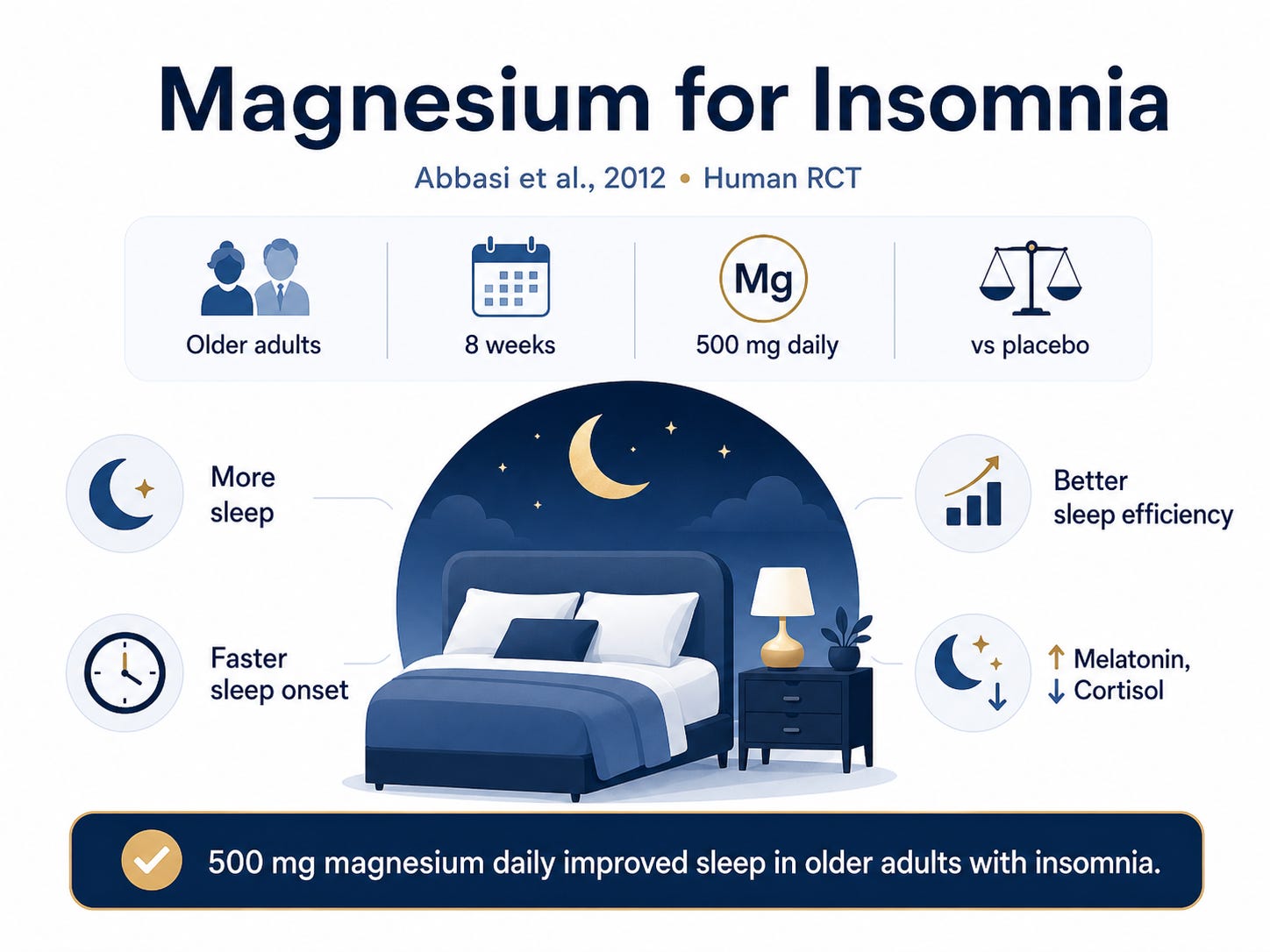
In a 2012 double-blind study on elderly insomniacs (Abbasi et al., 2012), 8 weeks of 500 mg magnesium daily significantly improved sleep quality. The magnesium group had longer total sleep time, higher sleep efficiency, shorter sleep onset latency, and lower “Insomnia Severity Index” scores compared to placebo. They also had better melatonin and cortisol levels.
There are many forms of magnesium, so don’t waste your money. Magnesium glycinate is my top pick for sleep. It’s well-absorbed and carries the calming effect of glycine with it. Magnesium taurate is also excellent. Magnesium citrate works for absorption but can loosen the gut at higher doses. Magnesium oxide is cheap and poorly absorbed.
Dose: 200 to 400mg of elemental magnesium in the evening is a reasonable starting range. Start lower and work up. Loose stools mean the dose is too high or the form isn’t right. Either split the dosage or build up.
Glycine is one of the most underrated amino acids in my opinion, and it has a direct relationship with sleep.
In a randomized controlled trial by Yamadera and colleagues in 2007, 3 grams of glycine before bed improved subjective sleep quality and sleep efficiency. It shortened the time to fall asleep, shortened the time to reach deep slow-wave sleep, and it did all of this without altering overall sleep architecture. Participants reported less daytime sleepiness and better cognitive performance the next day.
A follow-up trial by Bannai and colleagues in 2012 took it further. Healthy adults were restricted to 75% of their normal sleep and given either 3g of glycine or a placebo before bed. The glycine group had less daytime fatigue and better mental sharpness the next day. Same short night, better next day, just from glycine.
Why does it work? There’s two mechanisms.
First, glycine lowers core body temperature by widening blood vessels at the surface. The body’s natural nighttime temperature drop is one of the signals for sleep onset, and glycine amplifies it. You’re essentially supporting the body to make the transition it’s already trying to make.
Second, glycine acts directly on glycine receptors in the brain. These are inhibitory, meaning they have a calming, quieting effect on nervous system activity. It’s a reduction in background noise (not sedation).
Beyond the sleep mechanism, glycine rebalances the body’s amino acid profile in an incredibly therapeutic way. Modern diets are heavy in muscle meat, which means dominant in methionine, tryptophan, and cysteine. These amino acids have their uses, but in excess they can push the system toward inflammation and stress chemistry. Glycine opposes this, and is concentrated in connective tissue, collagen, and bones, which most people don’t eat much of anymore. Adding glycine back restores a balance the diet is usually missing.
Dose: around 3-5 grams before bed. Collagen powder has a lot of glycine in and of itself, and is a convenient way to hit the dose through food. Alternatively, you could make collagenous stews.
L-theanine is an amino acid found naturally in tea. It’s what makes green tea feel calming even with caffeine in it.
L-theanine increases alpha brain wave activity, which is the electrical pattern associated with calm focus. You’re awake, but quiet. Relaxed, but alert. It’s the state that meditation is trying to produce.
A 2025 meta-analysis of 19 trials by Bulman and colleagues found that L-theanine consistently improved subjective sleep quality and reduced the time to fall asleep. Objective measures like actigraphy and polysomnography didn’t show dramatic changes, which tells you that L-theanine isn’t forcing sleep, but calming the nervous system enough to let sleep come. The effect is reduced arousal rather than sedation.
In a randomized trial by Lyon and colleagues in 2011, children with ADHD given 400mg of L-theanine daily had fewer nighttime disturbances and more efficient sleep. The benefit came from more stable, less easily disrupted sleep.
A triple-blind trial by Evans and colleagues in 2021 showed that 200mg of L-theanine increased alpha brain waves during a stress challenge and blunted the cortisol spike. That’s genuine anti-stress action, and it showed up within 1 to 3 hours.
L-theanine helps when the problem is a nervous system that can’t stop being on, even when you’re physically tired.
Dose: 200 to 400mg before bed. Stacks well with magnesium and glycine.
A little more sodium can calm a system that’s been experiencing too much adrenaline.
When blood volume is low, whether from under-eating, heavy sweating, or low salt intake, the body compensates by raising adrenaline to maintain blood pressure and fuel delivery. That adrenaline keeps the system more stressed than it should be, especially at night.
A salty meal or drink can be grounding as it directly reduces the need for that adrenaline compensation. The body suddenly has what it needs, so it stops having to force it.
A pinch of salt in the pre-bed snack, salted warm milk, or simply not avoiding salt at dinner can make a real difference for someone who’s chronically under-salted. This is a common issue in people who follow clean eating or low-sodium advice.
Don’t eat excessive sodium, but know that too little creates a kind of stress.
Calcium supports calmer signaling at night, steadier respiration, and less catabolic sleep.
Calcium supports mitochondrial respiration and opposes some of the excitatory effects of excess phosphate. Dr. Peat wrote extensively about the connection between calcium, sugar, and lower nocturnal stress, and the physiology holds up.
Dairy before bed, whether milk, yogurt, or cheese, provides calcium alongside protein and some carbohydrate. A glass of warm milk with honey addresses glycogen buffering, calcium, and protein in one go.
If you’re not getting much dairy in general, this is one of the highest-ROI additions you can make to your diet for sleep.
Taurine is an amino acid with a calming, inhibitory effect on the nervous system.
It also supports bile acid conjugation, which helps digestion and gut health, acts as an osmolyte that helps cells manage water balance, and has modest anti-inflammatory effects. The sleep benefit comes mostly from its action on the nervous system, but the other roles make it worth having in the picture.
Taurine fits best when the nervous system feels overactivated even after everything else has been addressed. The person who’s perfected light, dinner, minerals, environment, and still feels too keyed up. Taurine can help close that gap.
Dose: 500mg to 3g before bed. Start at the lower end.
Melatonin is the most popular sleep supplement in the world. I don’t take it, and I don’t broadly recommend it to clients.
People widely believe that melatonin is “the sleep hormone,” your body makes it at night, and then conclude that supplementing it helps you sleep. That’s not the whole story.
Firstly, most melatonin sold over the counter is 3 to 10mg per tablet. Your body’s natural nighttime peak is in the range of 0.3mg or less. The supplements are delivering 10 to 100 times physiological levels. That’s a hormone signal that’s flooding in your system when it was meant to be subtle.
Secondly, most people think of it as a direct “sleep switch”. That’s not true. Melatonin is a metabolite of serotonin, and it carries a lot of serotonin-like effects with it. Research has shown that giving melatonin increases brain serotonin, often within minutes. So if you’re in the group of people whose sleep is already fragile because of imbalanced serotonin from gut inflammation (which I described earlier), adding melatonin may be pouring fuel on that fire.
Thirdly, melatonin has measurable inhibitory effects on other hormones. In animal and cell studies, melatonin suppresses the enzymes that make testosterone.
At high pharmacological doses in women (300mg daily), it significantly suppressed LH and progesterone in a 1992 clinical trial. High-dose and chronic melatonin also appears to suppress thyroid activity in multiple animal studies and may do the same in humans at sustained high doses.
Chronic nightly use at high doses, over years, pushes in the wrong direction on your protective hormones.
For occasional specific uses, like jet lag or shift work, tiny doses around 0.3mg can be useful without the heavier downsides. But as a nightly sleep aid for the average person, it’s pushing the body toward the opposite of what you actually want:
A warm, well-fueled, androgen-sufficient, thyroid-sufficient system – the pro-metabolic body.
If your natural melatonin rhythm is weak, the cause is almost always upstream. It might be too little morning light, too much evening light, too much serotonin or stress. Fix those, and your body produces the right amount of melatonin at the right time, in the right tissues, at the right dose. That works far better than exogenous hormones.
Mainstream medicine treats melatonin as low-risk and low-reward. I think low-reward is usually right. Low-risk depends on what you mean by risk, but there’s almost always something better you can do than simply taking more melatonin.
A very conservative starting stack for someone whose sleep is actively breaking is 200mg magnesium glycinate, 3g glycine, and 200mg L-theanine in the evening. This covers the most common mineral and nervous system gaps and is low-risk across the board.
Adjust magnesium dose up or down based on response. If the foundation is solid and this stack isn’t helping, the problem is usually upstream and the answer is to go back to the gates.
Don’t overstack – more isn’t always better. These tools work because they fill specific gaps. Piling on everything at once makes it impossible to tell what’s doing what.
Some tools sit further downstream and matter most when the foundations are already in place. But the following levers are not casual supplements, rather they’re real interventions with real effects, and each one belongs to a specific pattern rather than being useful across the board.
I’m including them because some readers will need them. If the foundations and quieting tools haven’t fully resolved your sleep, one of these might be the missing piece (with clinical guidance).
If you haven’t worked through the earlier layers yet, go back and do those first. These are not shortcuts.
Thyroid belongs to one who experiences the colder, slower, more underpowered night.
Thyroid is often the case when you notice that sleep onset drifts, sleep depth is poor, mornings feel heavy and you’re generally cold through the day.
It usually comes with lower body temperature in general, flatter drive, slower digestion and weaker recovery. You can eat well, train well, sleep enough hours on paper, and still feel underpowered. That’s often a thyroid issue.
Thyroid hormone sets the pace of oxidative metabolism, which is how fast the body burns fuel to produce heat, energy, and CO₂. When thyroid is running well, you produce warmth easily, CO₂ levels are healthy, circulation is steady, and the body has the metabolic capacity to relax at night. When thyroid is slow, you produce less heat, less CO₂, and the body leans harder on stress hormones to maintain function. That stress shows up the worst at night.
A slower thyroid tempo means the whole system functions slower. Sleep is one casualty of many in that case.
It needs to be mentioned that thyroid is a hormone with significant effects. It’s not a simple supplement. What I’m saying is that if the colder, slower pattern describes you, getting thyroid function properly evaluated is worth doing.
Testing TSH alone is often not enough. Many people have normal T4 and TSH levels while still having low thyroid output. A proper evaluation includes TSH, Free T3, Free T4, reverse T3 and your waking oral/axillary temperature.
If thyroid is genuinely low, addressing it properly with a practitioner who understands the full picture can change your entire life, not just sleep. I’ve seen many miraculous stories from clients and people I know, by addressing their thyroid health. A vast majority of lived experience in life is downstream from metabolic rate, so when your metabolism is better, life often improves with it.
One nuance: I maintain that there’s almost always an upstream lever that’s reducing thyroid function. It can be chronic stress, under-eating, gut dysfunction, seed oils, or low carbohydrate intake over years. Address those and the thyroid often recovers some of its ground. But I also work with clients who have had hypothyroid symptoms for decades, and many of them truly need exogenous thyroid hormone to feel their best. Years of suppression don’t always reverse, and there’s no point pretending otherwise. The right move depends on the person and how long the dysfunction has been running. It’s highly personal.
Progesterone belongs to someone with a more stress-heavy night.
It’s often due to estrogen dominance and inflammation, along with biological stress. In women, issues show up particularly around PMS, perimenopause, and menopause, but it can exist at any age when progesterone is low relative to estrogen. Men can have relevant progesterone deficits too, though it’s less discussed.
Progesterone is one of the body’s primary anti-stress steroids. I call it the hormone of safety in my other works. It supports a calmer nervous system, opposes part of the stress response directly, is anti-inflammatory and moves the body toward a more protected, less reactive state.
When progesterone is low, whether from aging, chronic stress, estrogen dominance, or menopause, the night becomes significantly more brittle and the system loses one of its most important calming factors. Clinical observation has identified low progesterone, not low estrogen, as the primary driver of night sweats and insomnia in menopause.
Progesterone can be used topically or orally, but dosing and form matter significantly and should be guided by someone who understands its full role. It belongs especially where sleep fragility comes with broader stress chemistry.
For reference, Dr. Peat often spoke about women benefitting a lot with 5-10mg of progesterone spread over the day, starting from 2 days after ovulation, up until menstruation.
I use progesterone frequently with my female clients as they rebuild, and the difference it makes is often dramatic. The caveat is that it has to be matched to the right pattern and used intelligently, which is why I don’t recommend people self-experiment with it.
Aspirin belongs to someone experiencing a more inflamed night. Restless, achy, irritating. There’s a low level of inflammation sitting under everything.
Aspirin is a real drug with real effects and it needs to be treated with appropriate care. It improves inflammation directly through COX inhibition, which reduces prostaglandin production. It has broad anti-inflammatory effects that goes well beyond simple pain relief. In the right terrain, it can ease a night that is inflamed.
I go in depth about aspirin in my other article The Aspirin Bible.
The Aspirin Bible
·
Apr 20
It’s one of the strangest drugs in medicine. Dirt cheap, commonly known, probably in your drawer, and nobody asks what it actually is.
Use with real care. Aspirin thins the blood, can irritate the stomach lining, and interacts with other medications. I strongly recommend reading my article on aspirin, linked above. It’s not a first-line sleep tool. It belongs where the inflammatory, prostaglandin-heavy pattern is clearly present and the foundational layers are already in place.
Cyproheptadine is more situational than the other levers, but is a powerful tool as well.
It fits specifically when excessive gut serotonin, histamine, gut irritation, congestion, and stress waking are all worse than they should be. The body may feel hot, itchy, wired, stuffed up, or chemically reactive.
Cyproheptadine is an antihistamine and antiserotonergic, meaning it blocks both histamine and serotonin receptors. In studies, it increased slow-wave sleep and suppressed the early-morning cortisol rise. These are exactly the effects that would ease the kind of night described above.
This is a prescription medication in many countries and is not the center of sleep repair, and I don’t want anyone reading this to think it’s a first-line tool. It’s one of the later options that can matter when the pattern has a very specific shape, where serotonin and histamine are clearly running too high and nothing else has fully worked. That often comes with gut dysfunction.
If you’ve already worked through the foundations and the earlier supplement layers without full resolution, while still struggling with gut serotonin and histamine, it’s worth discussing with a prescriber who understands its mechanism. Otherwise, it’s probably not relevant.
If you’re not sure where to start, find your pattern below. Each one points to the most likely problem and gives you the first moves.
Go back to the start of the day. Wake time needs to be stable, and morning light needs to be present.
If you have cold hands and feet at bedtime, that’s a strong stress signal. Avoid late caffeine, avoid late hard training, avoid bright screens and intense work before bed. Lower late arousal in general.
This is almost always fuel. Dinner may be too light, too late, or too low in carbs. Total daily intake may be too low, even if you’re trying to lose weight. Training may be overly draining based on your capability. Avoid excessive fasting.
When waking up, if you feel a hard pulse, heat, hunger, sudden alertness or dread, all of these point to adrenaline and cortisol stepping in to defend blood sugar.
Add a pre-bed snack (milk with honey and a pinch of salt works well), make dinner more carb-anchored, and check that your total daily intake is actually enough for your output.
Look at your rhythm and the overall strength of the night. Weak morning light, too much evening light, shallow sleep throughout, alcohol before bed, these are common culprits. The whole night may have been lighter than it looked, and dawn is where the night breaks.
Low fuel and accumulated stress pushes this pattern further.
Anchor the clock with strong morning light and a consistent wake time, then make the whole night steadier with better fuel and lower arousal.
Here, we’re thinking of hyperarousal. Absence of calm, high stress load, low mineral support, overtraining on top of under-recovery, they make it so the nervous system doesn’t feel it can soften, so you end up exhausted enough to want sleep and too wired to enter it.
Try magnesium, glycine, and L-theanine in the evening. Lower the intensity of the last two hours of the day, and truly assess whether you’re genuinely over-stressed, because if life itself is pushing too hard, supplements will only help so much.
Look at continuity, breathing, inflammation, temperature, and overall metabolism. Cold waking, puffy waking, flat waking are common symptoms here. The night was sufficient in length but poor in quality.
Address nasal breathing and gut health first, because irritation from either keeps the night shallow no matter how long you sleep. Then assess the thyroid terrain if the colder, slower pattern fits. Make sure the whole system is warm enough to actually produce restoration, which usually comes back to fuel and metabolic rate.
Follow the mechanics of the meal. Heavy fat sitting too long in your gut, reflux, a reactive gut, or poor timing, are all factors here. The body can’t settle while it’s still working excessively hard on digestion.
Simplify dinner, reduce how much fat you have late at night, improve digestibility, and eat earlier. If symptoms persist after that, treat the gut itself as the problem. A reactive gut makes everything perform worse.
The body has spent too long leaning on survival mode in these instances. Glycogen needs to be restored, carb handling needs to be rebuilt, and stress chemistry needs time to reduce.
Stop pushing harder. That instinct is usually the wrong move here. Increase carbs gradually, especially around dinner and before bed. Reduce the overall stress load while the system rebuilds. This takes weeks, not days. Give yourself time to improve.
If you’ve gone through all the layers and nothing has moved, the problem is usually one of three things.
First, something you haven’t addressed yet. Gut health is a common one, so is chronic low-grade inflammation from something specific (food sensitivity, mold exposure, an untreated infection), and so is sleep apnea, which can exist even in people who don’t fit the typical profile.
Second, you might not have given it enough time. Sleep rebuilds on a scale of weeks to months if the damage is deep. If you’ve been running on stress chemistry for years, a few weeks of better habits won’t fully restore the night. Stay with it.
Third, one of the stronger levers might apply to you and you haven’t tried it yet. If the colder, slower pattern fits, look at thyroid. If the brittle stress-heavy pattern fits, look at progesterone. If the inflamed pattern fits, consider aspirin. Get guidance on these rather than experimenting blindly.
Sleep apnea is massively underdiagnosed, especially in people who don’t fit the stereotype. You don’t have to be overweight, nor a loud snorer to have it. Waking up frequently to pee, morning headaches, dry mouth, and genuine exhaustion despite long hours in bed all point here. If any of that describes you, getting a sleep study done is truly worth the time.
The foundations fix most sleep problems, and the rest is for the stubborn cases, and stubborn cases usually have specific causes that should be identified.
Restored sleep feels like the body has stopped struggling with the night.
The hands and feet are warmer, sleep comes easier while the descent is quieter and less dramatic. There are fewer abrupt wake-ups and fewer strange surges of alertness. You go to bed and, mostly, you sleep.
The morning feels different as a result. You wake up with a proper appetite, the mind feels steadier, and there’s very little morning heaviness. You’re starting the day from a better place, which often ends up in better sleep the following day. A positive loop.
Overall mood improves, you’re more resilient to stress, digestion improves, training benefits, and you have energy to start doing things you haven’t felt like doing in a while.
A deeper night gives the body back a lot of its margin.
Good sleep travels together with warmth, digestion, libido, patience, recovery, and emotional steadiness. These things move in the same direction because they’re all outputs of the same organism. When the organism is doing well, they all improve at once. When it isn’t, they all struggle together.
People often treat sleep as a standalone problem, and it usually isn’t. If your sleep is bad, something else is probably bad too. If your sleep gets better, other things will get better with it.
The work to get here is real, but it’s not complicated. Fix the morning, build a real day, feed the night, lower late arousal, clean up the environment, and add the quieting tools when you need them. Use the stronger levers if the pattern calls for it. Give it weeks, not days.
And when sleep comes back properly, the return is larger than sleep itself. You get your body back with it.
This guide is built so you can run it yourself, and most people can. But sleep sits downstream of your whole metabolism, and sometimes the pattern is tangled enough (thyroid, gut, stress chemistry, fuel, all interacting at once) that you’d rather have someone map it for you.
That’s what the Comprehensive Metabolic Analysis is. You complete an intake covering your case, and I produce an in-depth written analysis of your metabolic state and the upstream patterns driving your sleep, and whatever else travels with it, with your levers ranked and a phased plan to rebuild.
No posts
Comments
Nothing yet. Say the first thing.
Sign in to join the conversation.