
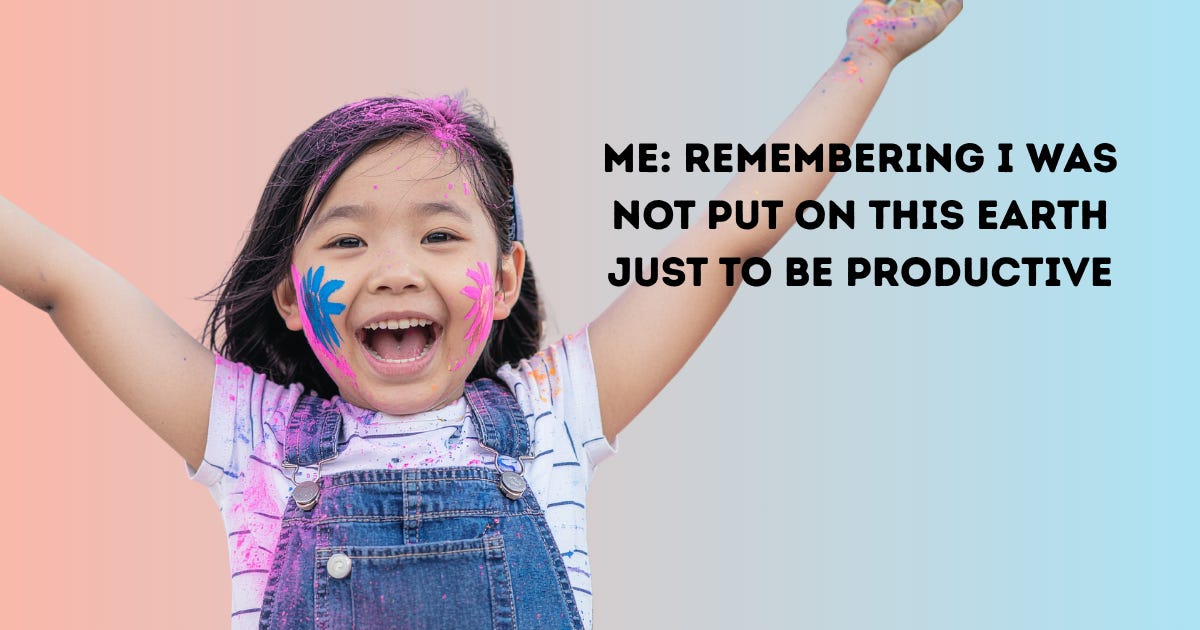
👋 Hello to the woman who remembers being sensual, playful, and alive… and would like to know where that version of herself went.
I met Eva through LinkedIn, and during our call we connected over our personal stories, this strange midlife chapter, and what it feels like to start something new when life is already changing.
We both talked about the challenges of building something of our own, finding our place in the menopause space, and still somehow enjoying the process, even when it is not easy.
I was inspired by Eva’s story and asked her to write about her life, her work, and her take on menopause, because I think many of you may recognize parts of yourselves in what she shares.
Enjoy.
Being tired is normal, right?
As soon as I am alone in the car, I hear myself mantra-ing things like “I’m fine. It’s totally fine.”
I’m tired in the way so many women are tired. (And honestly, I’m even tired of talking about how tired I am. Even making this list makes me tired.) Three young kids, marriage, work, school forms, meals, camp packing lists, aging parents, appointments, logistics, the endless invisible labor of keeping life moving. Because the more I do, the more life moves, right? Did I mention the laundry? And and this spring we got guinea pigs. Yup. Guinea pigS plural.
To me, it seemed that every other woman at drop off was so put together. I mean, how are they finding the time to shop for matching sweatsuits? I wanted to keep up. I wanted to be part of the “I’m put together” club. Meanwhile, my kids rolled their eyes and asked me to “calm down, and stop yelling.” I continued grasping for control. Control is why we’re so efficient, right?
But somewhere inside all of that competence, something had gone quiet.
It wasn’t dramatic. I didn’t wake up one morning and declare that I had lost myself. Quite the opposite. I was defiant. I began to fantasize about living like a hermit in a cave somewhere. No responsibility. No deadlines, no paperwork, and no dishes. So when my husband asked me, gently, when we might be intimate again, I responded “Whaaaaaaat do you mean? Everything’s totally fine. Aren’t you totally fine?”
Do you think I wanted to be confronted with this choice? On one hand I could continue as things are, with my precious efficiency, exhausted atop a pile of completed to do lists, and and on the other hand maybe get divorced? Or… I could address the fact that a significant part of my life had gone dormant and deal with the potential outcome of …letting someone give me pleasure? (I mean, clean countertops give me a lot of pleasure, let’s be honest.)
The truth is, I had energy for everyone else, but less and less access to myself. And because so many women around me were living the same way, it didn’t look like a problem. (Why don’t we talk about this?)
So many women move through midlife assuming that low energy, low desire, fogginess, disconnection from the body, and the strange feeling of “I don’t quite feel like myself” are simply the price of being a grown woman. We are told, directly or indirectly, that this is what happens after motherhood, after marriage, after stress, after hormones start shifting, after enough years of being responsible for everything and everyone.
And when we do look for help, the message is often some version of: just relax. (Thanks kids. How about I stop yelling when it stops taking you 20 minutes to find your lost shoe.)
Lower your cortisol. Calm your nervous system. Sleep more. Stress less. Take the adaptogen. Drink the tea, but not the wine (wine is over for you, Lady). Whatever you do, breathe.
To be clear, I believe in rest. I believe stress is real. I believe cortisol matters. I believe women are carrying impossible loads, and many of us desperately need more calm, more support, and more room to exhale.
But the more I looked around, the more I felt that the wellness world was missing something essential. It was missing my rage, reflected. I don’t want to relax! I need energy! I don’t need your permission! And I am angry that I’m resentful of this life that I have worked so hard to build. And I was afraid because I didn’t know what would happen if I …felt pleasure again. Would it mean that I would care less about that sock that I’ve seen for the last 2 weeks on the floor that no one else apparently sees?
Turns out, it doesn’t. I still see that sock. I just don’t let it get to me anymore.
Because desire is not just a mood. Pleasure is not just a lucky bonus. Feeling connected to your body is not frivolous. It is one of the ways we know we are still here. Still ourselves. Still alive in our own lives.
For many women, especially in midlife, desire does not disappear because they stopped caring. It often changes in the middle of a much larger physiological and emotional transition. Hormones shift. Sleep changes. Energy changes. Mood changes. Circulation changes. Stress changes. The body’s responsiveness changes. And yes, testosterone and other androgens, which can play a role in energy, motivation, and sexual desire, decline over time too.
Thankfully, the conversations around these topics are being amplified. Women’s wellness is finally “having a moment.”
It is easier to talk about wrinkles. Hair loss. Weight. Toning. Sleep. Stress. Skin. Hormone balance in the abstract. And trust me, I’ve never been more vain. Maybe as a Gen X’er, brought up in grunge and dissatisfaction with the status quo, online judgment is harder to get used to.
And maybe that’s why it’s so much harder to talk about how a woman might miss the act of wanting. Maybe that’s why it’s daunting to want to feel like herself again.
That is the space Women’s Lib was built for.
I did not want to create another product that told women to calm down, shrink down, or manage themselves better. Women are already managing everything. I wanted to create something that took energy seriously. Something that understood that pleasure requires more than a quiet nervous system. It also requires vitality, circulation, mood support, hormone-availability support, and a body that has enough fuel to feel responsive again. It also speaks to empowerment, to that masculine side of femininity.
Women’s Lib is a non-hormonal daily libido tincture made with intentionally selected botanicals and patented bio-delivery technology designed to support better delivery, stability, and absorption. The formula includes Epimedium, Shatavari, and Tongkat Ali, botanicals chosen for their different roles in supporting arousal, vitality, energy, circulation, and women’s wellness.
I think of female desire as an ecosystem, not a switch.
If we treat desire like an on off switch, we search for the right button to push and never find it. We assume it is just stress, or just hormones, or just relationship, or just mindset. But most women know it is not that simple. Desire lives at the intersection of energy, body trust, emotional safety, blood flow, hormones, sleep, stress, identity, and whether a woman still feels like she has access to herself. Not to mention that gentle communication.
That is why Women’s Lib is not just about libido in the narrow sense It’s about fatigue too.
Not “I stayed up too late” tired. Not the kind of tired fixed by one good night of sleep. I mean the deeper fatigue so many women describe in midlife: the heaviness, the fog, the sense that even pleasure sounds like effort. The feeling that desire has become one more thing someone wants from you, instead of something that gives something back.
That was one of the most important realizations for me: Pleasure is not supposed to be another task. Pleasure is supposed to return something to you.
When you are exhausted, disconnected, hormonally shifting, and responsible for everyone else’s needs, intimacy can start to feel like another demand. That is not because women don’t care about pleasure. It is because the body is asking for support, not performance.
Women’s Lib was created for that honest moment.
The moment when a woman realizes she does not want to fake desire, force desire, or perform desire. She wants to feel desire again. She wants to feel energy again. She wants to feel connected to her body in a way that belongs to her. And when pleasure starts to come back, it does not stay neatly in one corner of life. Pleasure begets pleasure.
That may sound simple, but I think it is profound. When a woman begins to feel more connected to her body, more energized, more present, more open to wanting, other things often begin to shift too. She may feel more playful. More creative. More honest. More willing to take up space. More interested in music, movement, touch, beauty, intimacy, food, laughter, rest, ambition, life.
Pleasure has a way of reminding the body that life is not only something to manage, it’s something to feel.
This is why I believe pleasure belongs at the center of wellness. Not because sex is the only measure of health. Because it isn’t.
A healthcare and wellness culture that ignores pleasure is missing something fundamental about women’s quality of life. Desire, comfort, intimacy, sensuality, and feeling alive in the body are not vanity metrics. They are part of what it means to be fully well.
For too long, women have been sold two narrow stories: One story says: Be desirable. Stay young. Stay toned. Fix the wrinkles. Fix the hair. Fix the body so it remains pleasing to others. The other story says: Be calm. Be regulated. Be less stressed. Be more balanced. Manage the symptoms and keep going.
Women’s Lib is interested in a different story. What would it feel like to have energy that belongs to you? What would it mean to stop treating pleasure as embarrassing, optional, or inconvenient? What if desire is not something women should quietly lose, but something worth supporting with seriousness, science, and care?
I built Women’s Lib because I needed that question. And once I started asking it, I realized how many women were asking it too, even if they did not yet have the language.
Like me, they were saying it in other ways. “I’m tired.” “I don’t feel like myself.”
And I think what surprised me most was what happened on the other side of pleasure.
I had spent so long treating pleasure like a luxury, or a reward, or something I could get around to after the house was clean, the kids were asleep, the emails were answered, the forms were signed, the groceries were bought, the guinea pigs were fed, and every visible sock had been returned to its ancestral homeland.
In other words, never.
But when I started actually paying attention to this part of my life, something shifted. Not in a movie-montage way. Not in a suddenly-I’m-wearing-silk-robes-and-floating-through-my-kitchen way. I still live in the real world. There are still lunches to pack. There are still appointments. There is still laundry. There is always laundry.
But I began to understand something that now feels obvious and somehow still radical:
I deserve to feel good.
Not eventually. Not when everything is finished. Not when I have earned it by being useful enough, thin enough, calm enough, low-maintenance enough, or grateful enough.
I deserve to feel good because I am a person living in a body, and that body is not only here to work, worry, provide, manage, improve, age gracefully, or be judged. That realization changed more than my sex life. Although yes, let’s be honest, it changed that too.
I started to understand that orgasms were not some frivolous bonus feature of being a woman. They were good for me. Good for my health. Good for my nervous system. Good for my relationship. Good for remembering that my body could be a place of release and pleasure, not just effort and maintenance.
And with communication, authentic, sometimes awkward communication, the kind where you have to say things out loud that you have maybe only muttered in your head while unloading the dishwasher, intimacy became less about performance and more about closeness.
For a long time, I think I had confused being loved with being useful, and efficient. But receiving pleasure required something else from me.
It required surrender.
And surrender is not exactly the first language of a woman who has been running a household, a career, three kids, a marriage, and, again, two guinea pigs.
But allowing pleasure to come to me, instead of trying to manage it, schedule it, control it, or prove I deserved it, became its own kind of practice. It asked me to stop bracing. To stop monitoring. To stop thinking about whether someone had taken the wet towel off the bed (Sometimes they had not). Spoiler alert: I survived.
And the more I investigated this part of my life, the more I realized that pleasure is not contained to the bedroom. It does not politely stay in its lane.
Pleasure is expansive and it leaks into everything.
When I felt more connected to my body, I felt more confident in conversations. When I remembered that I could want, I became clearer about what I wanted in other places too. When I stopped treating my own pleasure as embarrassing or inconvenient, I became less willing to apologize for my needs in general.
That confidence bled into my work.
It bled into my marriage.
It bled into my friendships.
It bled into the way I moved through the world.
Not because pleasure fixed my life. My life was not broken. But pleasure made my life feel more mine.
That is the part I wish more women knew.
Rediscovering pleasure is not just about having more sex. It is about remembering that you are allowed to participate in your own life with appetite.
Women’s Lib came from that remembering.
It came from my own need to stop treating desire as something embarrassing, optional, or inconvenient. It came from realizing that fatigue and disconnection are not personality traits. They are signals. It came from believing that women deserve support for the biology of energy and desire, and language that makes pleasure feel like part of wellness instead of something we are supposed to whisper around.
Because on the other side of pleasure, I did not become someone else.
I became more myself.
More honest. More awake. More willing to feel good without apologizing for it.
And that is why I built Women’s Lib.
Not to tell women they need to be sexier, younger, calmer, or easier.
But to say: your pleasure matters.
Your energy matters.
Your desire matters.
Feeling good in your body matters.
And maybe, just maybe, it is not something you have to earn after everything else is done.
Maybe it is part of what helps you come back to life.
About Eva:
Eva Angeloff is the founder of Women’s Lib, a women’s wellness brand created to support desire, vitality, and sexual well-being through midlife and beyond. A wife, mother of three, and advocate for bringing pleasure into the center of the wellness conversation, Eva built Women’s Lib after realizing how many women lose access to energy, desire, and connection to their own bodies. Her work centers on the belief that pleasure is not frivolous, instead it is part of being fully well.
Eva offered our community a 20% discount on her product. I added it to each link above or you can also use this QR Code:

No posts
Comments
Nothing yet. Say the first thing.
Sign in to join the conversation.