

Thank you to everyone who tuned into our August 15 Live with Domenica Marchetti, eight time cookbook author and fellow Substacker, and Giovanna Solimando of My Half Apulian Table.
The Live was part of our ongoing series on the challenges of preparing Italian dishes outside Italy. In past Lives, we’ve focused on sourcing both fresh and pantry ingredients, as well as cooking equipment. This time we took a look at culinary techniques, with a focus on cooking and preserving the summer’s bounty, from salads and other raw dishes, to grilling, to roasting to frying to putting up salsa di pomodoro, to preserving sott’olio, sott’aceto and sotto sale, and more.
For reasons known only to Substack, I can’t share the video in this post, but you can view it over on my co-hosts’ sites:
Our discussion was loosely organized by cooking technique, starting from the very simplest to the most elaborate. Here is a run down of the techniques we talked about and some of my favorite dishes that employ them.
When temperatures rise, sometimes the most appealing cooking technique involves no cooking at all—or just minimal cooking.
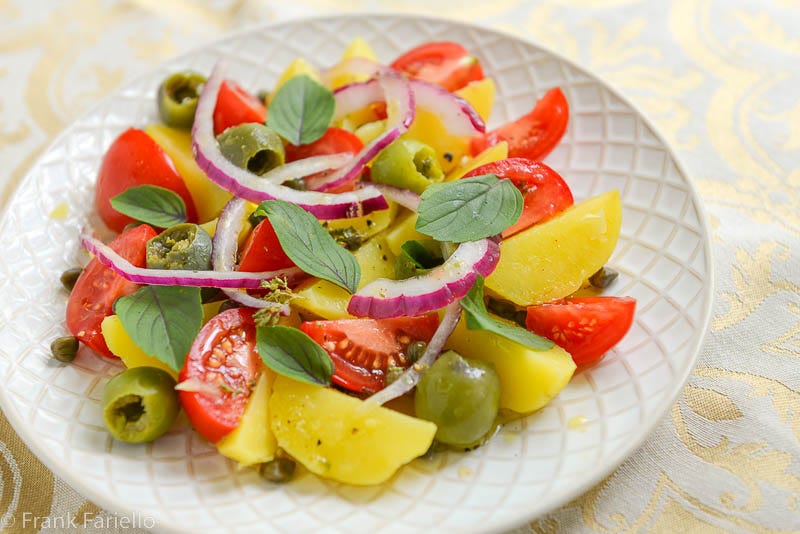
Salads. I find myself making lots of salads in the summer. Tomato salad. made more substantial by adding olives and crumbled tuna, might be my favorite for a light summer meal. Even more filling are bread salads like Tuscany’s panzanella, Campania’s caponata or Puglia’s cialledda Yet another salad that can easily serve as a light meal is Sicily’s insalata pantesca, where tomatoes are tossed with boiled potatoes, onion, basil, and an olive and vinegar dressing.
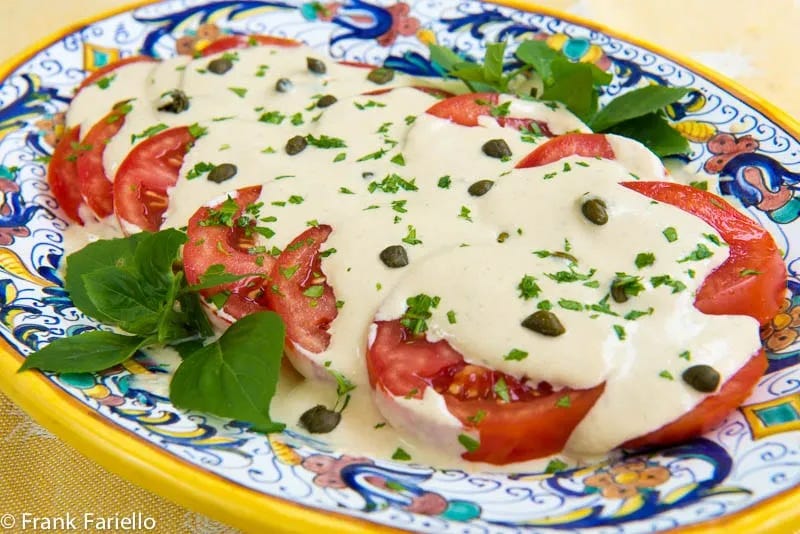
Salsa tonnata. This quickly made no cook sauce of mayo whizzed together in a blender or food processor with tuna, capers and anchovies has become a summer go to for me. I like to slather this delicious sauce on sliced tomatoes, as pictured above. But it’s also delicious on grilled and griddled summer vegetables like eggplant and peppers.
Pastas with no cook sauces. Only the pasta needs cooking. The most classic example, which goes by various names such as crudaiola (Domenica calls her version pizzaiola), is pasta tossed with a mixture of raw tomato, peeled and seeded, mixed with fresh herbs like basil, garlic and olive oil. For a more substantial sauce, I like to add some tuna for a low cook summertime version of pasta al tonno.
Fagioli e tonno. To make this classic summer antipasto, you toss cannellini beans and tuna together with sliced or diced red onion, olive oil, salt and pepper. If you use canned beans and tuna, it’s entirely no cook and takes literally seconds to throw together. I also enjoy a salad of chickpeas and sardines made the same way. (And yes, I eat a lot of canned and jarred tuna in the summer! It’s an excellent no cook source of protein.)
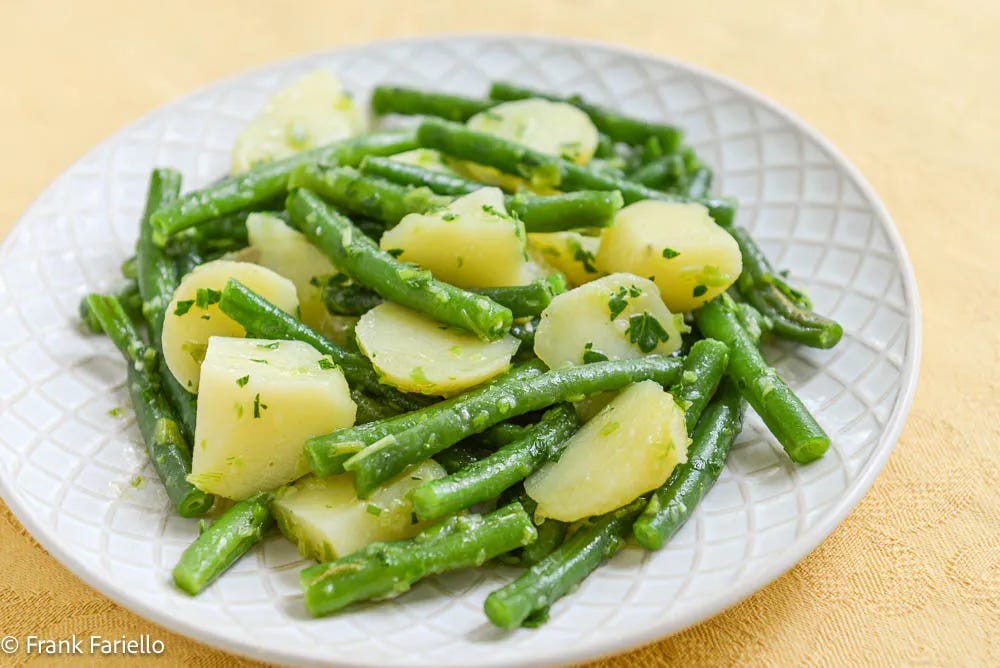
Fagiolini e patate. Another classic summer salad made with boiled green beans and potatoes dressed with oil and vinegar and scented with fresh mint.
Straccetti con la rughetta. The closest thing in Italian cookery to stir frying that I know of, this quickly made Roman favorite involves sautéing thinly sliced beef in garlic and oil, then adding a whole bunch of arugula and tossing just until it wilts. Takes about 5 minutes.
Is there any cooking technique that says ‘summer’ more than outdoor grilling? Of course, grilling is hardly unique to Italian cookery, but the thing that sets Italian grilling apart (like much of Italian cooking in general) is its simplicity. No heavy marinades or barbecue sauces here. And grilling is usually very or fairly quick as well. With the exception of porchetta, you won’t be spending hours but merely minutes over the grill.
Italian grilling is a vast topic, and we only had time to barely scratch the surface during our Live. Fortunately, I can go into a bit more detail here!
I would broadly categorize Italian grilled dishes into four categories according to how you season them:
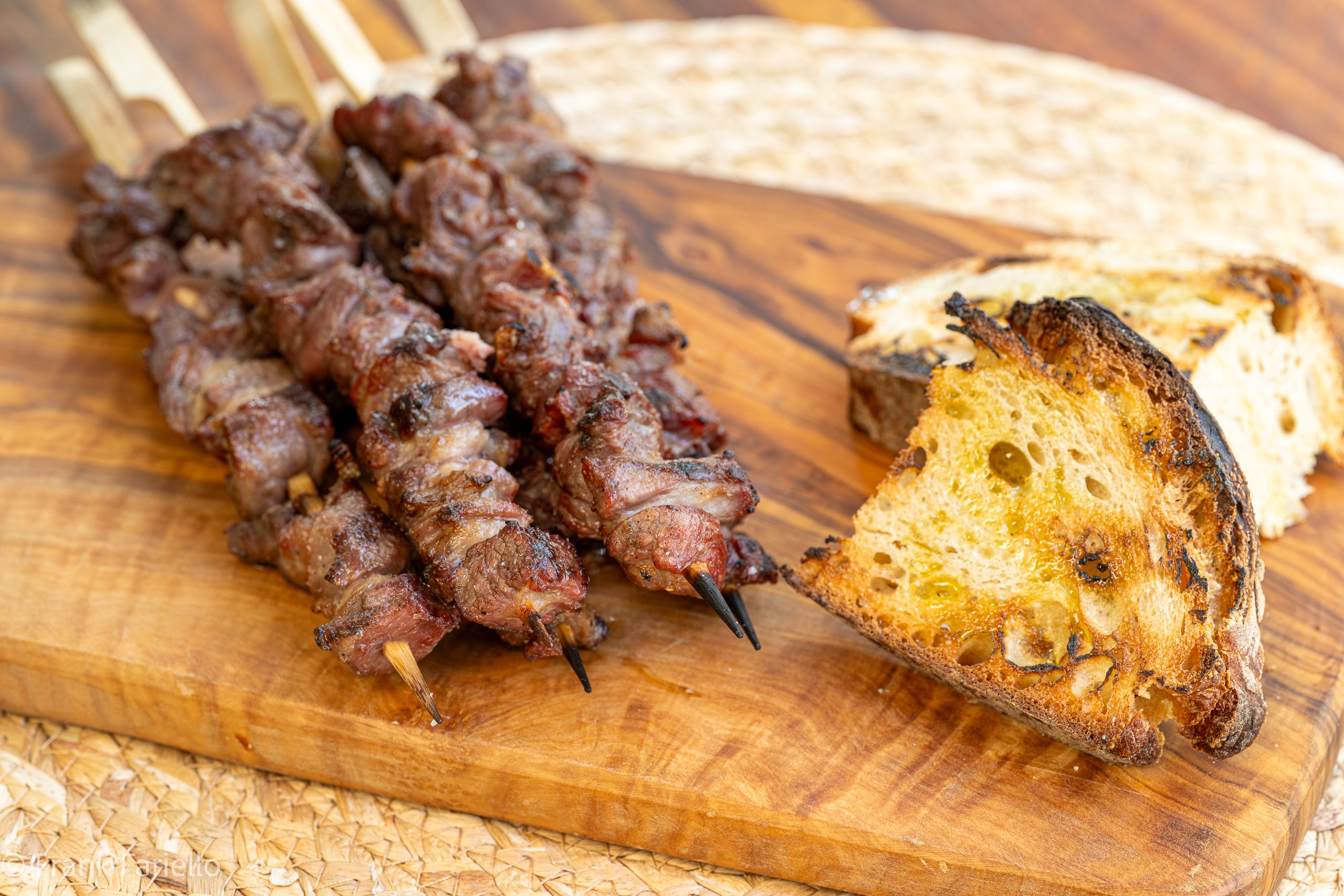
Salt. Often the only flavoring for Italian grilling is salt and fire. Perhaps the best known example is the one we mentioned during the Live, the iconic bistecca alla fiorentina. Another lesser known but equally iconic example is the delicious lamb skewers called arrosticini from Domenica’s region of Abruzzo.
Light marinades. Marinades, when they are used, are meant to highlight not mask the flavor of the main ingredient, typically lamb, chicken or seafood. Take pollo al mattone, where you marinate chicken with rosemary, garlic, olive oil. lemon juice and salt. Add some hot red pepper to the mix and you have pollo alla diavola. Or Rome’s scottaditto, rib lamb chops slathered with lard, salt and pepper then grilled. Much seafood is done this way. Shrimp can be marinated briefly in olive oil and lemon juice, sometimes with parsley or other fresh herbs, then quickly grilled and napped with more of the same mixture.
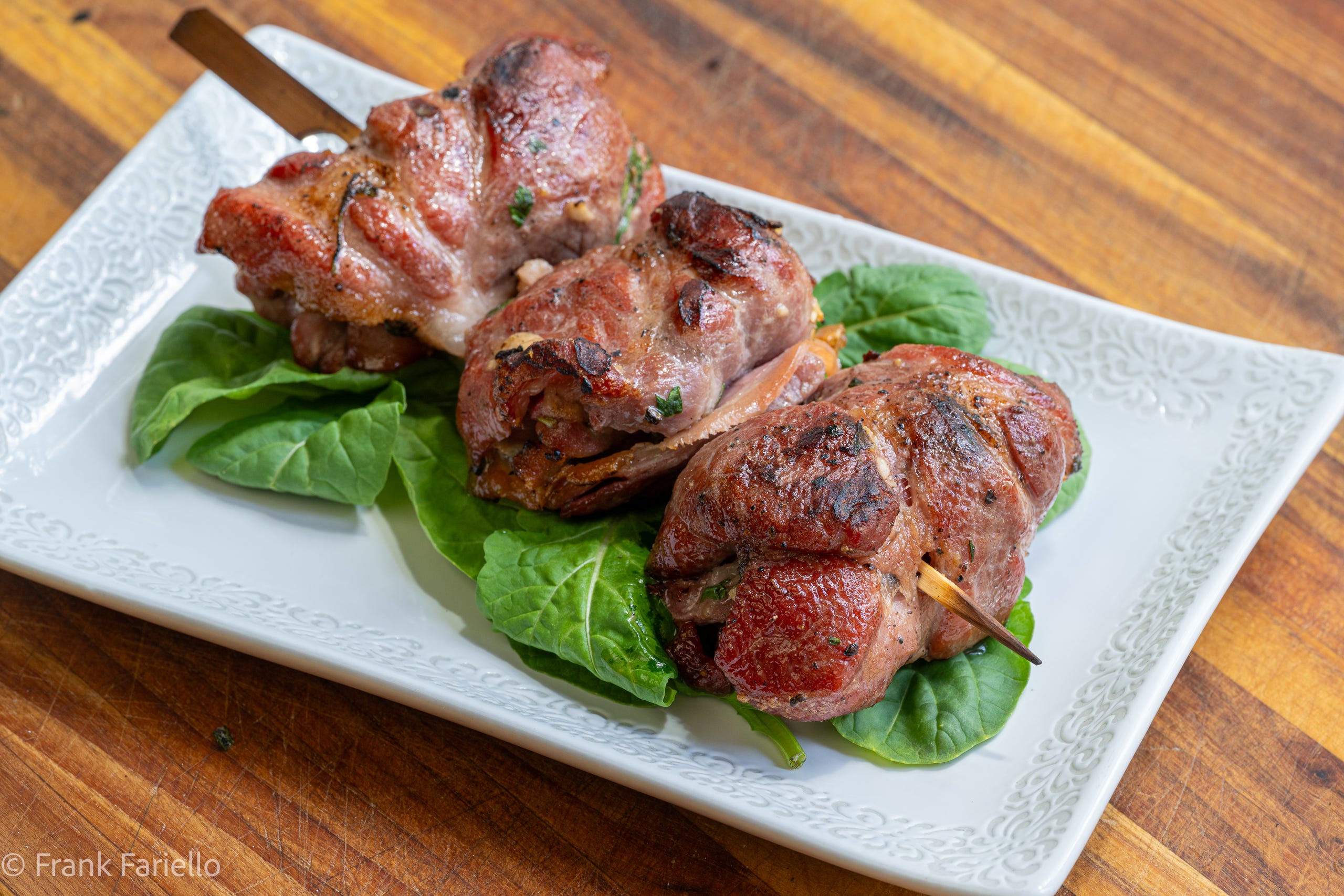
Fillings. Sometimes the flavorings go on the inside rather than the outside. As in pollo in porchetta, chicken stuffed with pancetta, garlic, pepper and juniper berries then roasted over a spit, a technique that mimics the taste of porchetta. (For that matter, porchetta itself works much the same way.) Then there’s the delicious pork rolls called bombette from Puglia, pictured above, thin slices of pork collar filled with cheese, garlic and parsley, then rolled up, skewered and grilled.
After grilling dressing. Here you grill the main ingredient with little or no condiment, but dress it up only once it’s off the grill. Most grilled vegetables work this way: they’re grilled until lightly charred, then dressed with salt and olive oil. Or tagliata di manzo con rucola, grilled steak, rested then sliced over a bed of arugula (rocket), topped with shavings of parmigiano-reggiano and drizzled with olive oil.
No primer on summer cooking techniques would be complete without at least a mention of deep frying. This technique really comes into its own in the summertime. It’s very quick and, if you’re armed with hot plate, lends itself very well to outdoor cooking.
A gorgeous fritto misto di mare, a platter of mixed fried fish, never fails to conger up memories of summers at the Italian seashore. Summer vegetables are particulary moreish lightly battered and fried. Eggplant and zucchini are my favorites. As we mentioned during the Live, if you think zucchini is boring, you’ve never tried deep-fried zucchini matchsticks. They’re every bit as additive as French fries if you ask me.
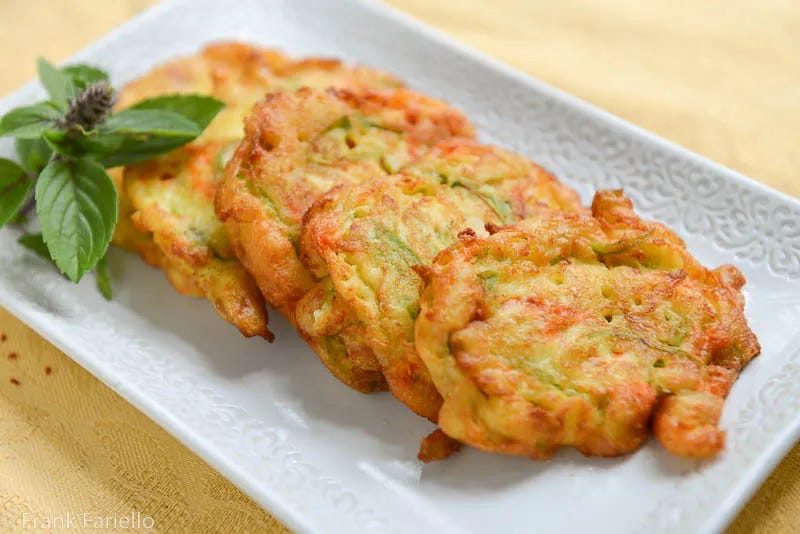
But the ne plus ultra of summer deep frying has got to be zucchini blossoms, stuffed with mozzarella and anchovy, then lightly battered and deep fried. Sheer heaven. Easier to make but also very tasty are zucchini blossom fritters.
At first glance, these dishes may not seem terribly summery. They often involve fairly elaborate and/or lengthy cooking. The specific cooking methods for these dishes vary widely, and they include baking and braising—not methods that immediately spring to mind when discussing summer cookery. And some of them, especially parmigiana di melanzane (Eggplant Parmesan) can be quite substantial if not downright heavy.
But what makes all these dishes apt for summer, besides their seasonal ingredients, is that they can be made entirely ahead and enjoyed over the following days, if you like at room temperature. They’re perfect for picnics and other outdoor eating.
Pollo con i peperoni. This chicken and bell pepper stew is a Roman favorite for the Ferragosto holiday on August 15. A summer stew may sound like an oxymoron, but this one is delicious at room temperature, and so ideal for a Ferragosto outing, whether you’re headed to the sea or to the mountains.
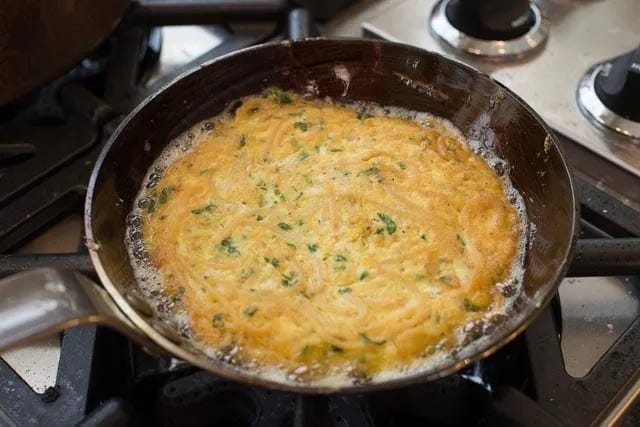
Frittata di pasta. Pasta isn’t usually a very portable dish, but it’s perfect for a picnic if you make it into a frittata di maccheroni, one of Naples’ signature dishes. Classically made with spaghetti, it’s a great way to recycle just about any leftover pasta.
Minestone and other summer soups. This culinary chameleon is popular in any season, but in summer I like to add fresh tomatoes, zucchini and green beans to my minestrone. And sometimes enrich it with some freshly made basil pesto. It’s lovely as a minestrone freddo enjoyed at room temperature. Another delicious summer soup is Sicily’s pasta con i tenerumi which we featured last week, which can be made ahead and eaten cold.
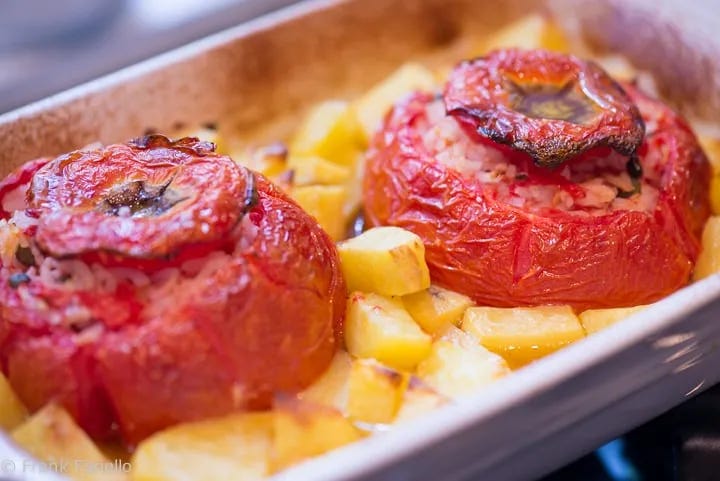
Stuffed vegetables. I eat a lot of vegetables in the summer. One way to make them even tastier and more substantial is to stuff them. Stuffing can be meat based, fish based—often our old friend tuna— or just seasoned bread or breadcrumbs. Peppers, eggplants, zucchini and tomatoes are all wonderful stuffed. In Rome pomodori ripieni di riso, tomatoes stuffed with rice and baked on a bed of potatoes, is a summer staple.
Parmigiana di melanzane. For me, this is the ultimate summer dish, even if it’s very substantial, especially if you make it like Angelina and dip your eggplant slices in flour and egg before frying them. They then get layered with tomato sauce, mozzarella and grated cheese and baked until bubbly and lightly browned on top. You can make a parmigiana lighter by frying the eggplant without a coating or, as we mentioned during the Live, lighter still if you griddle or grill the eggplant. It’s quite the project to make, but you can make a big tray and enjoy it for days afterwards. It only gets better with time.
The Live went on to discuss preserving techniques, including preserving summer vegetables sott’olio, sott’aceto and sotto sale, jarring tomatoes and other summer veg, and fruit jams and preserves. Then it was on to pasta making and baking.
For more on these techniques, watch the video or head on over to Buona Domenica and My Half Apulian Table for more information.
I’ll be taking a short hiatus for the rest of this month for a little R&R and maybe some travel. We’ll be back with another newsletter in early September.
In the meantime, enjoy the rest of your summer!
Happy cooking
Frank
Comments
Nothing yet. Say the first thing.
Sign in to join the conversation.