
A student of mine recently told me how she was feeling the enormity of writing her whole memoir, and how the bigness of it all had become a burden that was stifling her.
Even though I’m far from a mathematician, I like to do the math of writing for writers as a way to see what is possible by “compounding constancy”—and constancy can take small forms.
I start by leading a 10-minute writing sprint: give people a prompt and ask them to write with abandon—to write quickly, without too much thought. And then I ask people how many words they wrote in just 10 minutes.
People tend to write at least 200 words, and sometimes people write 300 or 400 words. I then multiply 200 by 30 (as in the days of the month), which is 6,000. Then I multiply 6,000 by 12 (as in the months of the year), which is 72,000.
72,000 words happens to be the number of words that is the conventional length of a book.
This means that … you can write a draft of a book in a year by only writing for 10-15 minutes a day.
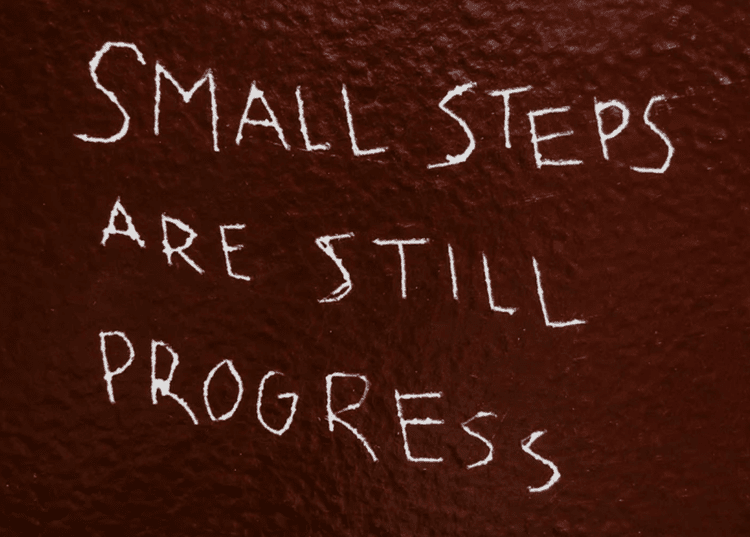
You can essentially build a mountain with pebbles. Creating something big is just a matter of taking a lot of small steps.
The irony of the writing life is that the goals most writers set for themselves—finish the chapter, write 1,000 words a day, complete the draft by Christmas— are precisely the goals most likely to keep them stuck.
That’s because the bigger the goal, the more clearly it announces the distance between where you are and where you want to be. It activates what psychologists call the “intention-action gap”—the space between knowing what you want to do and actually doing it.
Micro-goals work because they collapse the gap. Writing for 15 minutes a day is called a “micro habit.” Some people might not consider such a small amount of writing an impressive accomplishment, but B.J. Fogg, the founder of the Behavioral Design Lab at Stanford University and the author of Tiny Habits: The Small Changes That Change Everything, says that we need to tally up our tiny victories because they can be motivating.
“The best way to change long-term behavior is with tiny steps,” says Fogg.
This post is behind a paywall because our weekly dispatches are one of Memoir Nation’s paid membership benefits. We welcome you staying at the free level here on Substack, which gives you access to our monthly free newsletter. If you upgrade on Substack, you’ll get all the weekly dispatches, and/or we invite you to become a member of Memoir Nation where for $99 we’ll gift you a subscription to this newsletter, PLUS you’ll get access to many more benefits.
Thank you and write on!
Comments
Nothing yet. Say the first thing.
Sign in to join the conversation.