
The news is out! I have a new YA book, Local Gods, coming summer 2026 in the UK and the USA! In the UK, I’m once again with David Fickling Books, who published my last YA novel, HER DARK WINGS, in July 2022. In the USA, Local Gods is with Sarah Barley Books, a new imprint launched under Simon and Schuster, curated by Editorial Director, Sarah Barley, formerly an Editorial Director at Flatiron Books.
Local Gods is the book of my heart. It is the story I have most wanted to tell. It’s the book that almost killed me.
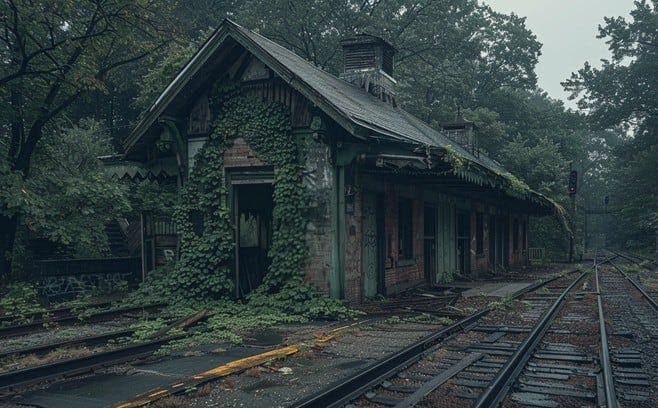
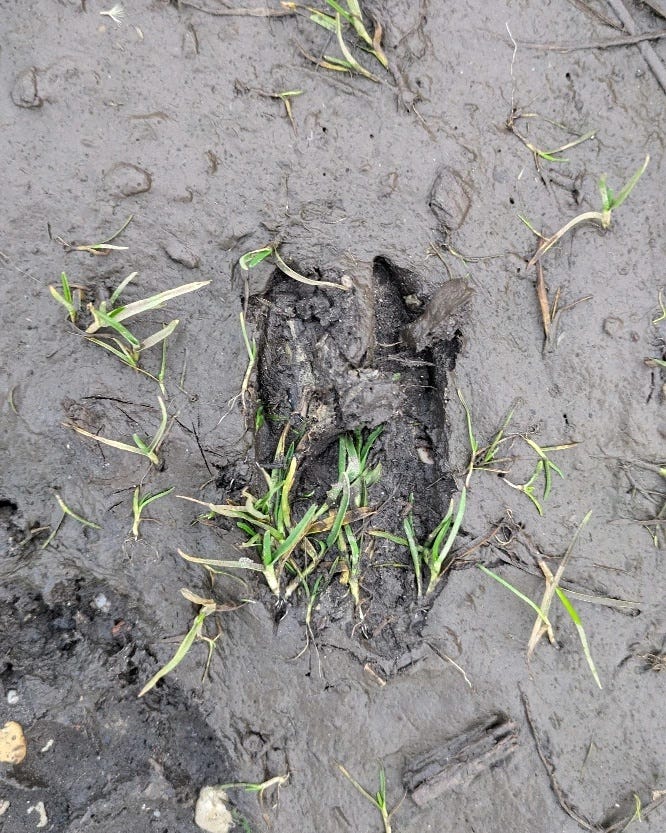
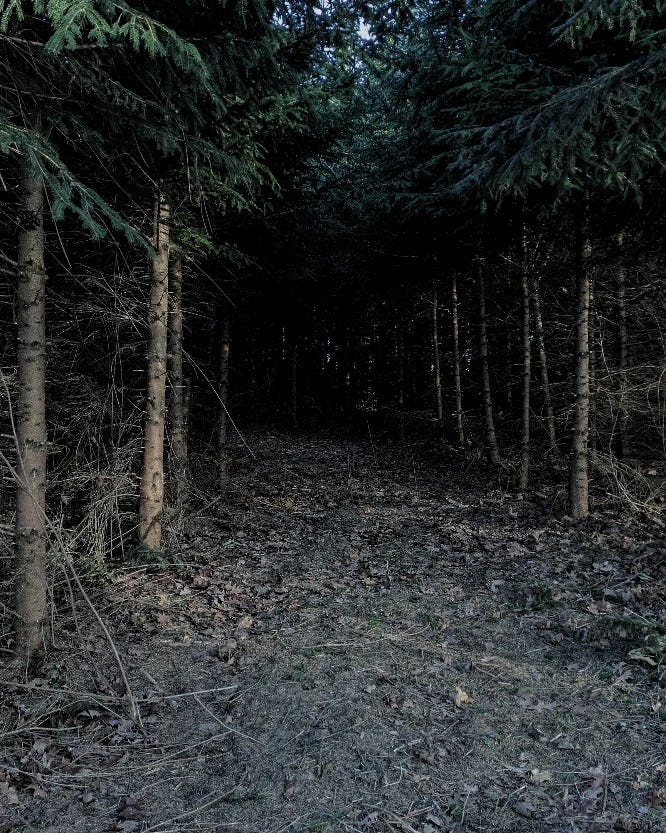
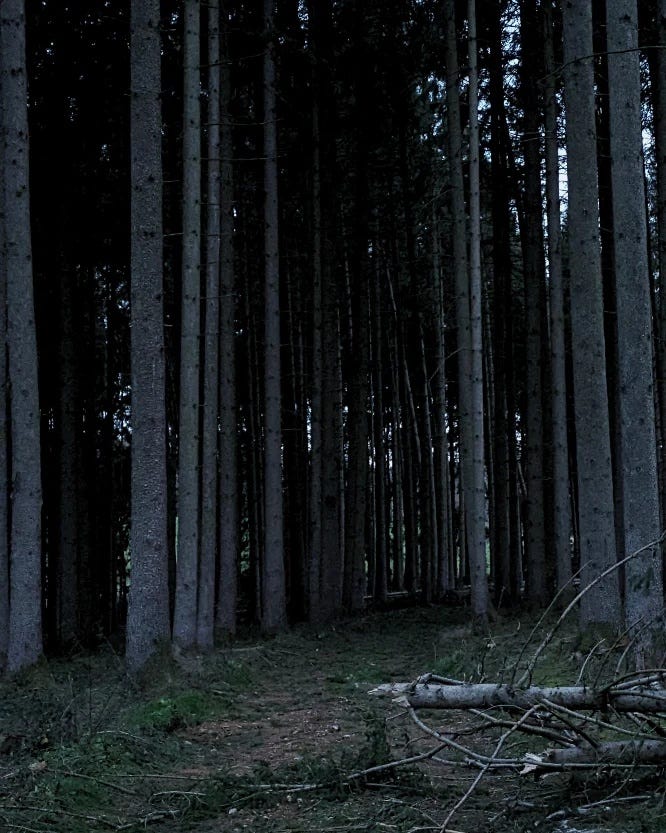
It’s a folk horror story about seventeen-year-old Sylvie Singer, who has fallen from grace in the most spectacular way. Once the shining scion of Pine Ridge Hollow, a tiny town deep in the White Mountains of New Hampshire, now she’s a pariah, living in an abandoned, unfinished train station in the West Woods, eking out a miserable existence in the hope she can graduate high school, gain access to the meagre trust fund her grandmother set up for her, and get the hell out of there.
And then she meets Illican. Wasted, weak and decidedly not human, something in him calls to Sylvie and for the first time in her life she begins to believe magic is possible. But Illican’s appearance in the West Woods means that the town is in terrible trouble and when Sylvie decides that saving Illican might mean her own path to redemption, she sets in motion a chain of events that will change her, and Pine Ridge Hollow, forever.
Everyone knows that publishing is slow, at least as far as the public-facing stuff goes, and in fact the US auction for Local Gods happened last November, the week of the presidential election, meaning I’ve been sitting on this news for almost a whole year.
Whereas in the UK, I signed the contract in December 2022.
Almost three years ago.
And the reason you’re all only learning about it now isn’t actually because publishing is slow, but because sometimes publishing is very kind.
Back before, when this newsletter was fully public and I wasn’t worried about data scraping by LLMs or my enemies gathering intel, I used to write a monthly update that detailed—among other things—what I was writing at the time. If you kept the emailed newsletters from that time, then you’ll probably have figured out by now that the folk horror I was working on is Local Gods.
You might also remember that I was having a hard time of it. Month after month after month I wrote about how I was struggling to say what I wanted to say, how I was trying to fill the well in the hope that an increased art input would lead to a better writing output. Later, how I was wondering if I was really cut out for this job and whether maybe I’d just got lucky before. After all, the invites to launches and parties and meet-ups had stopped coming. Fewer and fewer people wanted me to blurb their books. Writers I’d previously thought of as friends didn’t message anymore, didn’t like my posts or watch my stories. Maybe I’d had my turn, and it was over. It happens all the time.
I couldn’t quite accept that, though. Mostly because I don’t have any other skills or talents. I am a writer. That’s all I am. If I’m not that, what’s the point of being here at all? (You’ll note I severely lack the resilience and thick skin you’re supposed to develop as a writer. I’m made of wet tissue paper and run on hope.)
Besides, I was so excited when I started writing the first draft back in 2022. I could feel in my guts this was something.
And that feeling lasted right up until the point I realized I couldn’t make the story I wanted to tell out of the words that were in my head.
I could hold the feeling of it, could see it so clearly in my mind. I knew what I wanted it to do and say but somehow, I couldn’t make it happen on the page.
It was terrifying for someone who’d done this seven times before; I thought I knew how to write a book. When I talk to people about writing, I say that often writing each new book is like writing one for the first time, because what the book needs often changes according to the nature of the story and so I can’t always rely on what worked in the past to work in the present. But this time I had nothing. Nothing worked.
I couldn’t make it work. I wasn’t a good enough writer.
When the deadline came around, I sent the draft to my editor, Anthony Hinton at DFB, largely because I had no idea what else to do with it and I was hoping that maybe it wasn’t as bad as I thought, but I knew in my heart that not only was it bad, but I didn’t even want to try to salvage it, I wanted a do-over. After a heartfelt chat with my agent and Anthony, they agreed. So, in 2023, I scrapped the entire ninety-thousand-plus words and set about trying again.
I failed again.
It was closer to what I wanted—in fact a couple of scenes from that iteration made it into the final version—and Anthony said it was definitely better and with a little work we could easily bring it up to the level we wanted it to be at. So, we met up to go over it, chapter by chapter, to collaborate on a structural edit that would finally, finally make it into the book I knew it could be. After all, isn’t a first draft just the author telling themselves the story? And Anthony and I have worked this way before - we’re good at working to together to work things out. He’s the kind of editor who knows how to guide, not lead, and he’s always made it so clear that the most important thing is making sure I’m telling the story I want to.
Except around halfway through the meeting, I had to face up to the truth: This still wasn’t the story I wanted to tell; I’d told myself the wrong story. Again. It just wasn’t what I knew it should and could be.
You see, Local Gods is about lots of different things. It is, as all of my books are, about a teenage girl living in a liminal space, neither here nor there, occupying no world truly. It’s about realizing you can’t go home. That maybe home never existed in the first place, and certainly not in the way you thought it did before, but either way, there’s no going back. It’s about the fabric of small towns and isolated communities. All Classic Melinda Salisbury topics.
But it’s also about how societies are structured, and the role of the outsider or scapegoat in social cohesion—the idea that groups need something to focus their dislike and distrust on to create unity between them. A common enemy.
The four pillars holding up this story are Carrie, and The Crucible, the recent revival of Oklahoma!, and The Wicker Man; all stories about communities enacting horrors upon individuals based on their perceived outsideness and how it’s often a need to reinforce a sense of community (and maintain a place in it) that enables atrocities to happen. It’s in conversation with the idea of the end justifying the means, and how easy it is to other, to blame others for our misfortunes, to demonize and dehumanize them to excuse how we act and behave towards them.
And all of this was too much for me to write about in 2022. And in 2023. I simply wasn’t an experienced enough writer yet. I wasn’t good enough to tell the story I wanted to tell and I now knew it.
So, I asked again, for one last chance. One last go at it. And very kindly, even though the original publication date had passed by, Anthony agreed.
I went away and thought very deeply about what the heart of the story is and what the story needed from me. For the first time in years, I didn’t go to Germany over Christmas, I didn’t let myself run away or take a break. Instead, I stayed in the UK, and I used the dark months to go really, really deep into myself and what I wanted from Local Gods, and then I sat down and wrote it all from scratch, again.
I introduced new characters. I fleshed out existing ones. I drew family trees and maps of the town. I wrote scenes from other characters points of view so I could see how they’d rub up against Sylvie’s perspective. I forced myself to get inside their heads and write something that felt real from all sides, that I could hold up to the light. I pushed everything as far as it could go, further than I knew I could.
And throughout this I assigned myself a crash-course of studying writing structure and tropes, plotting and pacing. I read short stories and broke them down, chapter by chapter, paragraph by paragraph to see what they were made of and how it all came together. I read horror and translations and adult speculative stuff to immerse myself in the tones I wanted to strike. I went back and read all the books that I loved growing up, tracking the roots of Local Gods through them to figure out how my past loves fed this present work.
I wrote three other books, tech horror-thrillers for teenagers, designed for a really discerning audience of reluctant and Dyslexic readers, so every single word had to count. They allowed me to flex my writing muscles in ways that felt productive, to have fun writing again, and to keep some skin in the game. Without those books and the support and encouragement and excitement of Ailsa and everyone at Barrington Stoke, I would have simply sunk.
The four pillars I mentioned earlier—I took them apart too, endlessly watching them, reading them, going to London to see the theatrical versions. I threw myself into the study of Surrealist art. I started volunteering in a cinema so I could watch films I wouldn’t naturally gravitate to, and I used everything I learned to finally, finally make Local Gods work. It was a tiring, uncomfortable and relentless process, but by June 2024 I had a draft of Local Gods to send to my UK editor, and I knew it was (barring edits) The One.
The version you’ll get to read next summer is almost identical to The One I sent to DFB, and the one that went out on auction last November. Obviously, it’s had a little bit of what I call a ‘hair and make-up edit’, which is to say we’ve done some work to pretty it up and make sure it’s doing what it needs to be doing. But it’s the story I meant to tell. And now I am a much, much better writer because of it.
And today it was announced, and soon I’ll get to share the cover with you, and there will be big, exciting things happening. That’s all I have for you right now.
I will add a funny little story, though, about the auction. Despite the fact I almost exclusively write about people living liminally and on thresholds, I, as previously mentioned, am a delicate little flower. I hate uncertainty and so I’ve asked my agent teams and publishing teams to only tell me when things are definite. I can be infinitely patient when is something is definite, but I can’t function in spaces where things ‘might’ happen. So, when I was told I was going out on submission in the USA, I reminded everyone not to update me on things unless it was definite.
And so of course they respected my needs, and I didn’t hear anything for three days, when they sent an email telling me I was going out to auction the following day as they’d had multiple expressions of interest. The first offers deadline was set for 10.30am EST—that’s 17.30 BST.
By 6pm no one had emailed, so I made dinner.
By 7pm no one had emailed, so I put on a film I couldn’t concentrate on.
By 8pm no one had emailed, so I stopped pretending to watch a film and decided to go to bed to wait for the horrible news in the morning that actually, everyone had changed their minds and it wasn’t happening. Oh, and also Trump is president again. Happy Friday!
By 8.30pm I had multiple offers on the table, and they’d gone back out to get final offers.
By 10pm I had a six-figure deal.
By 10.05pm I’d opened the bottle of ice wine I had bought in December 2023 to be opened in the event of getting a six-figure deal for Local Gods. I drank it all (they come in 500ml bottles, so it was only really a pint of wine, or two large glasses).
If you read this far, you get one final secret.
I’m dedicating this book to myself. I earned it.
No posts
Comments
Nothing yet. Say the first thing.
Sign in to join the conversation.