
I’ve inadvertently consumed a bunch of media that interrogates artistic ownership and integrity lately and so obviously I can’t stop thinking about it.
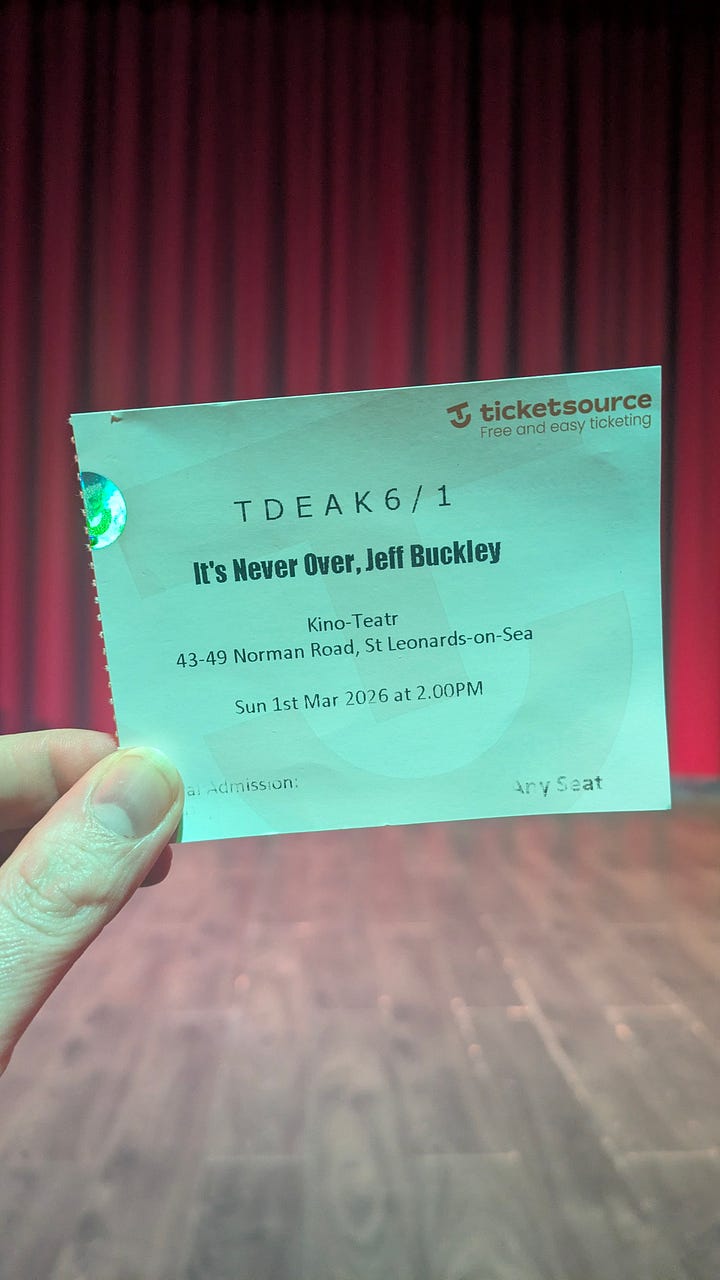
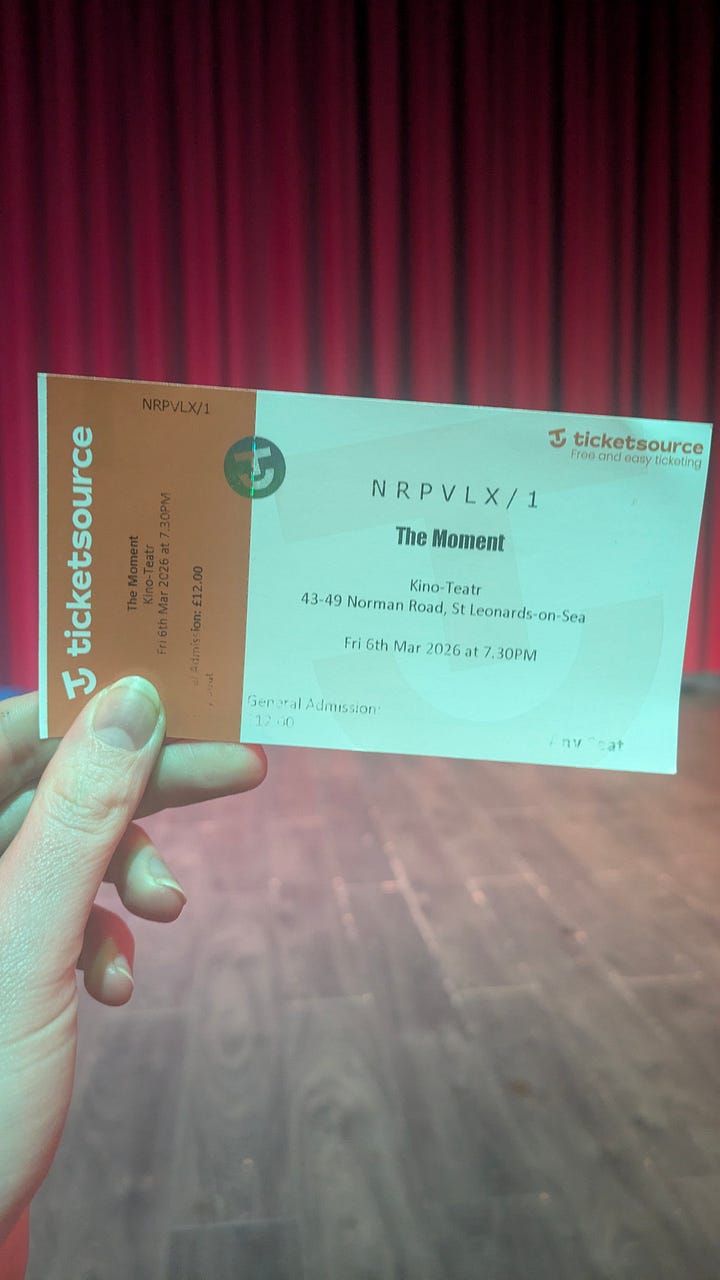
I saw Charli XCX’s The Moment, then read her Substack post about the realities of being a pop star (she’s only posted a few pieces so far but I really like her thoughts on art and I wish I could sit down with her and drink pink wine and talk about it). I watched the Jeff Buckley biopic (twice), then re-read Dream Brother: The lives and music of Jeff and Tim Buckley. Somewhere between Charli and Jeff, I read Maud Ventura’s Make Me Famous (translated by Gretchen Schmid), a novel about a young woman who pursues fame at any and every cost. And of course, I work in the arts too. I write books and sometimes I have to do things in the creation and promotion of those books that makes me feel a little weird, a little humiliated or compromised.
I think a lot about being younger, hearing about artists selling out and it being such a badge of dishonour, and how you never really hear that anymore because a crucial part of being successful as an artist in the twenty-first century is selling out, selling yourself, becoming the product and embracing everything that comes with that. So maybe artistic integrity as we used to recognize it is now a privilege granted to people who can afford not to play the game, or who have the power to set the terms. That for everyone else, selling out is just part of the biz, the grind, the hustle.
Right now, I’m supposed to be writing a letter to booksellers and potential blurbers to entice them to support LOCAL GODS, which is coming out in late summer. And so I’m feeling a little weird and compromised—not because I have to write a letter; I like that bit, I like talking about this book—but because of the unspoken part that sometimes comes after this, where for branding purposes and maximizing exposure I’d become the physical manifestation of the book for the duration of the promotional cycle. Ideally I’d dress thematically like the book (or even like it’s characters which, to be honest, wouldn’t even be that much of stretch) and I’d mostly post things that allude to the book or are in its service. If I had children or pets, I’d definitely dress them up and photograph them with the book, because people eat up posts with animals and cute kids. I’d rope my friends into filming bits where we’d lip sync to memetic dialogue or songs or do funny skits that relate to the book’s tropes. I’d do fan casts and playlists and post things like Chantry’s Favorite Horror Movies (Chantry’s Last Four Watched! Chantry’s Four Favorites!) or Zelda’s suggestions for teas and crystals to soothe whatever ails you. I would call it the book of my heart and we’d all pretend I didn’t say the same thing about the last one and I won’t say it about the next one, as if I’m a Timelord or an octopus or a serial monogamist (although I’ve never actually said any book was the book of my heart before and I think Local Gods actually is it. For real. We’ll get to that later). While I was writing this I scrolled back through my Instagram and I could tell what book had been published in what year based solely on the colors on the grid. This is not my first rodeo. Baby, I’ve been selling out since 2014.
Charli first, because The Moment and her relationship with what happened after the initial Brat fever really struck me and I think she did an incredible job of capturing the mirror world of success. On the one hand, you want the moment to last forever because you worked so hard for it and you wanted it so badly. It’s what you dreamed of and what you prayed for and you gave up so much to get it and now it’s here and you never want it to end.
And then it’s still here and after a while (although you’ll never, ever say it out loud) you’re a little bit bored of it, actually, and you’re itching to start working on something else, and also it’s beginning to get weird, a bit unwieldy and sometimes you don’t even recognize the thing you made anymore. And that’s when it tips over into the fear it won’t end and you’ll end up stuck in this moment forever, which—assuming you were fine with that and you didn’t actually want to move on emotionally or creatively—might still be ok, except in order for the moment to continue you have to continuously find ways to perpetuate it; repackaging it and selling it over and over again in a relentless bid to both hold your own and bury the competition. And this is where we’re at, at the top of The Moment.
In the film, the need to keep the Brat train rolling manifests in Charli reluctantly becoming the face of a limited edition Brat green credit card aimed specifically at queer people, while at the same time putting together an arena tour, of which a film will be made, helmed by a creepy, pretentious director who is slowly leaching all the creative control from Charli and her team. She makes a comment to her social media manager wondering if it’s cringe to keep calling things Brat and he retorts that it’s all cringe, with an insouciant shrug. But it wasn’t cringe when she wrote it. It wasn’t a cynical marketing plan that she’d honed and workshopped with her team and focus groups for maximum exposure. It was her sixth album (her second to top the charts; Wikipedia makes a point of mentioning how her first album failed to meet commercial expectations [we’ll come back to this with Jeff Buckley a little later]).
So by any metric, she earned it. She wasn’t an overnight success, she didn’t get lucky by hitting a zeitgeist; it was the result of over a decade of honing her craft and developing her art and maturing as a creator. But now she’s kind of trapped in this holding area where she has to keep being Brat because it’s making too much money for her to be allowed to move on. By now, Brat is so saturated and so many other people have taken ownership of what Brat means that whatever it initially meant to Charli has been drowned out and she’s becoming disconnected from her own work. And the moment she stops trusting herself, the vultures circle and undermine her and things start to go wrong.
It’s a savvy, sly, incisive piece of film, but at the same time often brutally self-deprecating—Charli makes sure she is the butt of the jokes and her self-awareness is painful to watch because there’s nothing protecting her from anyone, least of all herself. They need her to keep the product alive but you can’t help getting the impression everyone would prefer to pop her in a box and make the decisions, wheeling her out for the publicity parts. It made me think a lot about what it means to be a creator and to give up ownership of your work—your name might be on the cover, but as soon as you put it someone else’s hands, you lose the majority of the control you had over it. And you have to find a way to live with that. It’s the nature of the beast.
And it’s something that really came through in parts of It’s Never Over, Jeff Buckley, too. Like Charli, Jeff’s first album, the now-seminal Grace, didn’t perform as well as Columbia expected it to. The buzz around him had been growing since he appeared, out of the blue as far as the mainstream music community was concerned, at a tribute concert for his estranged father, Tim Buckley. But like Charli, he’d been working for years as a musician in California before his arrival in New York set him on the path to stardom—he’d even attended a music school. Numerous labels courted him, mostly for his talent and his looks and a little for his story – Jeff understood his allure as the lost son of a maverick artist who died aged twenty-eight. But he also knew about his father’s experiences with the demands of the music industry, and possibly believed the way it had effectively strangled many of Tim’s creative experiments made it at least partially responsible for his fate. In Dream Brother, David Browne writes that at one point, Jeff asked his lawyer, George Stein, if there was any way to avoid signing with a major label, seemingly wanted not to be part of the juggernaut if he could help it.
He went with Columbia because they’d produced so many of the artists he loved. He also cleverly managed to retain a lot of creative control over his work, including approval of the album cover art (how many authors would kill for the same?!).
Eventually, Jeff Buckley recorded Grace. He chose the cover image and his managers forced Columbia to behave like an indie label when it came to marketing it, wanting Jeff’s growth to feel organic. And for a while he got everything he wanted; they were willing to do it his way, because he’s that good and they’re not stupid, they knew the value of what they had. The UK and Europe and Australia fell in instant, mind-bending love with Grace and Jeff. The USA was receptive, but not gaga—Grace only sold two thousand copies in its first week—and so the answer was to send Jeff on tour and bring his music to the masses.
He stayed on tour for almost two years, during which he had multiple clashes with the label as he began to test out his creative chops and experiment with his music. Because once you’re inside the machine you’re not supposed to experiment anymore. You sold yourself as something and it’s really hard to break out of that mold once it’s set. Actors end up typecast, authors generally have to write under a different name, musicians often aren’t supported by their labels or their fans when they start to change. Jeff chafed against it, growing almost resentful of the work he’d done as it shackled him to its image, and I think in the end all artists in his position do. I think it’s rare that a creator wants to keep doing the same thing, over and over—actually, I’m just going to come out and say I think it’s weird. Our art changes and grows as we change and grow – it comes from everything we absorb and the more varied your art diet is, and the more you consume, the more scope there is for change. If it’s not changing, it means you’re not changing.
Except you’re not allowed to. You have to remain as you were, caught in the amber of whatever your first success is. Whether that success is your debut, or your breakout, you become a living photograph, captured at a particular moment in time.
So, on to Maud Ventura’s novel, Make Me Famous.
It’s a little different to the other things I’ve talked about, being entirely a work of fiction, as opposed to mockumentary or biography. It’s also less concerned with the idea of artistic change and growth and wrestling with that means. But what it does have in common with the others is a person dealing with the fallout of fame and the costs of having a dream come true. Cleo Louvant, the main character of the novel, wants more than anything to be famous, but by the end of the book it’s clear she will never, ever be happy. Largely this is her own fault, but the book doesn’t shy away from the expectations of the industry she’s in (also music) in order to keep her at the top of the food chain. Cleo micromanages every aspect of her life in order to maintain the position she thought she wanted, but she’s utterly miserable, constantly dissatisfied and bitter with it. Make Me Famous is scarily insightful about the true costs of fame, which in Cleo’s case is the complete loss of self (and she didn’t have much, beyond her all-consuming desire for fame, in the first place). When the curtain falls, she has nothing real. Nothing is really hers and no one really cares about her because no one knows her. This is fame dissected, pinioned and splayed open for the reader and it is an ugly thing. Not just because of Cleo’s ruthlessness, but the actions of an industry that will discard her in a heartbeat the second she stops performing in the way they need her to.
Which brings everything together quite neatly, I think. It’s what we’re all afraid of. That every moment might be the last one.
A recent meeting with my UK marketing team elicited the comment “I know you have strong boundaries” and while it’s true, the subtext felt a little like, “Sometimes you make this harder on yourself and us than it could be.” I don’t think it was intended to send me into an existential crisis, I know it was said as a mark of respect and understanding that I do have hard lines and I am good at reinforcing them.
And that’s scary because, as I said above, Local Gods really is the book of my heart. And I want it to do so well because it’s part of my heart. I want it to be so, so successful and to soar and to be a bestseller and even win—not just be nominated for—awards. I want it to get (positive!) attention and become some kind of moment and right now, I feel like if getting all (or even any) of that means being caught in the amber of this story forever, I might be able to pay that price. And so I’m looking at all the strong boundaries I have and I’m trying to figure out how porous they are. What are the hard lines I won’t cross for this book? What endorsements will I grin and bear if it means good publicity? How much of myself will I give away to give this story the best shot it has? What am I willing to do to make this work? What will I compromise? Will I get a cat and dress it up like an owl for the clicks? Will I dress up as a owl and jump off walls at people in a cynical bid to go viral? Will I buy a pair of ram horns to wear to events?
I guess we’re about to find out how hard I’m going to make this on myself. I guess I’m about to find out what having a book of my heart means.
No posts
Comments
Nothing yet. Say the first thing.
Sign in to join the conversation.