
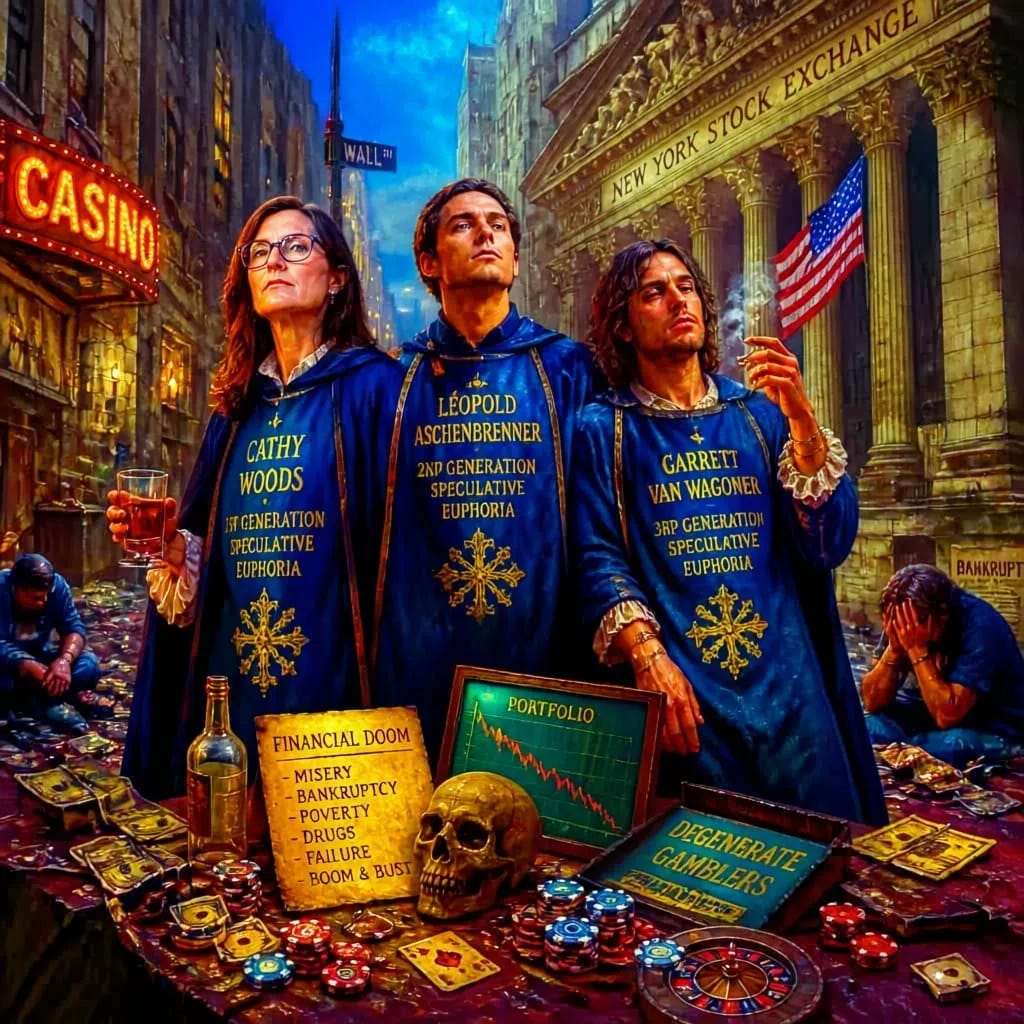
Hindsight is indeed 20/20; thus the ominous collapse of “boy wunder” Leopold Aschenbrenner seems rather obvious now. Just a few months ago, he was hailed as the next Warren Buffett, the genius “valedictorian,” the 24-year-old who seemingly transformed a small $224M fund into a multi-billion-dollar investment juggernaut in just two years. Jim Cramer even quipped, “Everything he touches turns to gold.”
Move aside, old Warren, with your “value investing” bullshit, and make way for a new talent more attuned to the needs of AI. The twit-sphere and the casino Street heaped praise on this otherworldly genius while skeptics like me were ignored.
No one really gives a damn now. Especially the investors who trusted the inexperienced first-time fund manager with their wealth and lost millions, maybe even hundreds of millions. Ken Griffin’s Citadel just bought the fund on the “down low,” yet everyone found out, and the market is rallying on this news as I scribe this paragraph.
Buying opportunity maybe? We shall soon find out in due time.
Meanwhile, the lessons are more important than the individuals who recurrently epitomize markets’ follies throughout financial history. That’s because outside of horror movies and ritualistic sacrifices, the world of finance is among the most terrifying and ghastly realms known to humanity.
Leopold Aschenbrenner is not the first nor the last boy wonder or boy plunger (Jesse Livermore RIP) ever recorded. He is, in fact, the most recent fallen domino in an industry built on hubris, pretense, and greed.
Let’s analyze three generations of heralded geniuses that were sold to the masses as the next great ones: Garrett Van Wagoner, the rock star of 1999. Cathie Wood, the prophet of 2020s. And Leopold Aschenbrenner, the current symbol of the AI infrastructure mania.
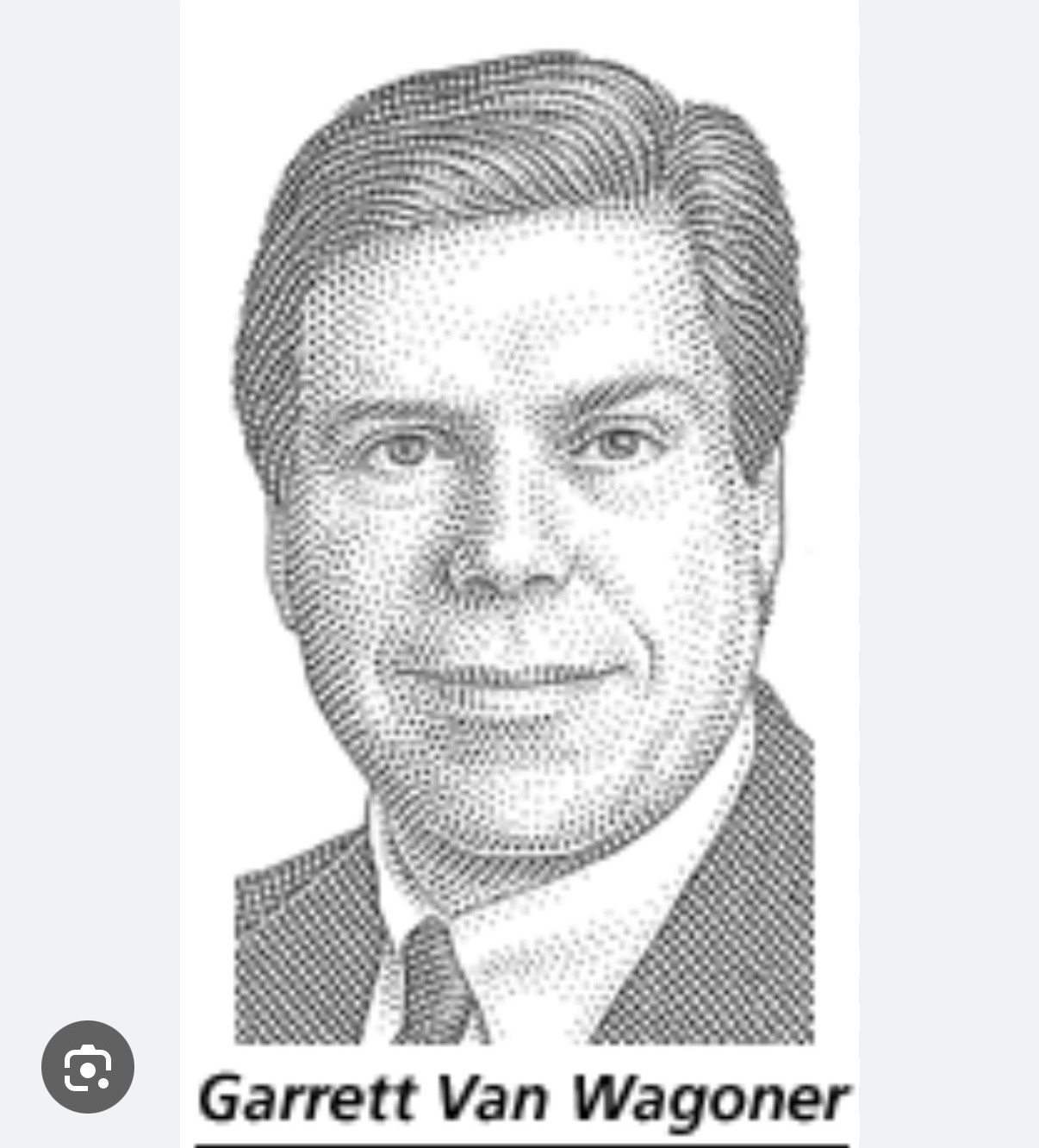
In a 2008 Kiplinger article announcing the shutdown of his fund, Garret Van Wagoner tepidly acknowledged: “My track record is not good at all. I wish I had done better.” Warren Buffett had presciently warned in 1996: “You can’t tell who is swimming naked until the tide goes out.” Mr. Van Wagoner was unfortunately caught with his pants down when the bear market hit tech stocks three years later.
Garrett Van Wagoner emerged from relative obscurity in the mid-1990s as a specialist in small-cap technology companies. After relocating to San Francisco in 1993 to develop a small-cap business for the UK-based Govett, he struck out on his own in 1996, launching the Van Wagoner Funds.
His edge came from two disciplines: direct product research and “pre-IPO” investments in late-stage private companies before they went public.
Van Wagoner Emerging Growth Fund gained 291% in 1999. AUM ballooned to almost $1.5 billion, up from $189 million a year earlier. A $10,000 investment in Emerging Growth at the beginning of 1997 would have been worth more than $45,000 by March 2000.
Those riches didn’t come without risk. Garrett Van Wagoner was known for trading aggressively and successfully, and his hard-charging style suited the times. By the time PBS featured the rising star on an episode of “Frontline” in January 1997, Mr. Van Wagoner was being compared to legendary investor Peter Lynch of Fidelity Magellan Fund.
The Fall.
Emerging Growth lost 21% in 2000 as the Nasdaq began its slow grinding collapse. Then it dropped almost 60% in 2001, and fell 65% in 2002, when assets slipped below $100 million. That $45,000 amassed by early 2000 would have dwindled to $3,300 by the end of September 2002.
For every dollar invested at the height of the euphoria, investors were left with eight cents. The mathematics of catastrophic drawdowns are unforgiving — a 92% loss requires a 1,150% gain just to break even.
Van Wagoner stepped down in 2008, by which point the fund had delivered an annualized return of negative 7.8% since inception.
A New York Post article reported later that:
Well-known mutual fund manager Garrett Van Wagoner was barred from serving as a fund director or officer for seven years after the Securities and Exchange Commission alleged that he and his company duped investors about the value of his funds.
Van Wagoner and his firm, San-Francisco based Van Wagoner Capital Management, would later pay $800,000 in fines to settle allegations of improperly pricing securities.
He tried a comeback in 2018 with a Van Wagoner Venture Fund II focused on helping to build the smart grid of the future by leading the financing of the Fourth Generation Industrial Revolution by investing in vanguard companies that are building a cleaner, more sustainable, connected, and intelligent transportation ecosystem. His thesis was based on what he deemed an investment in the Fourth Industrial Revolution around transportation and connectivity.
The PitchBook website states that the fund had been liquidated.
Van Wogener is now retired in Palm Beach, Florida; his latest attempt at a comeback seems to have failed as the website for a Van Wogener private equity fund was shut down.
This is a hard fall from a man who ruled the market in the late 90s and was compared to Warren Buffett at some point.
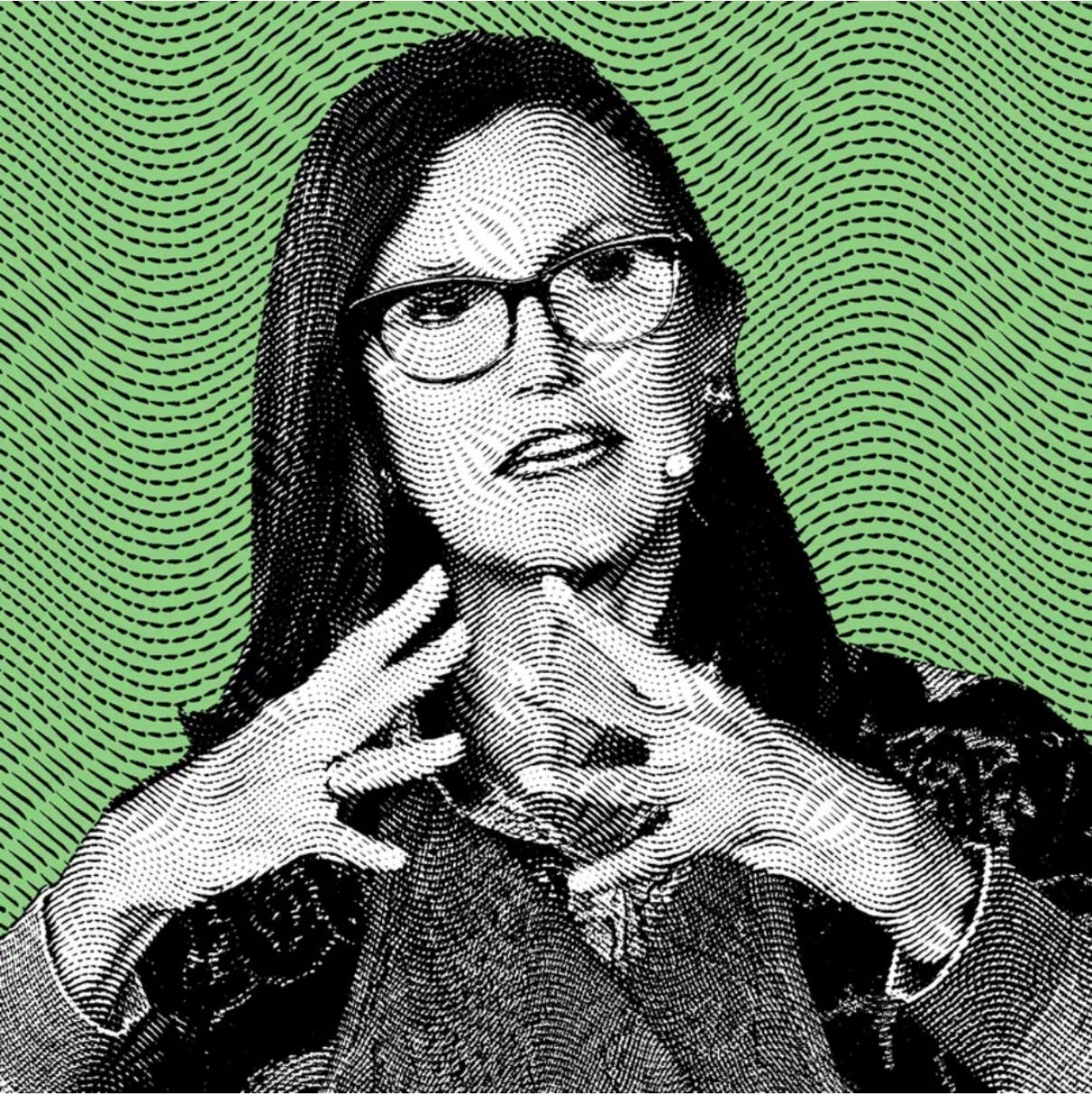
Cathie Wood was mentored by “ fame” supply-side economist Art Laffer. It all makes sense in aggregate: She is a trained economist! Red flag numero uno.
Supply-side was extremely popular in the 80s and is still dominating conservative old-school Wall Street today. Supply-siders love a good government spending, especially when the credit and the policies support the financial markets.
Trillions of dollars of capital have been invested on the back of that theory, and Wall Streeters have cheered it ever since. Supply-side economics made mainstream waves in theaters with the popular Oliver Stone 1987 movie “Wall Street” starring Charlie Sheen and Michael Douglas. The famous “Greed is Good” speech delivered by Gordon Gekko has left a sour taste in many people’s understanding of Free-Market Capitalism ever since. Supply-side is flawed. Woundedly so!
Cathie Wood is also connected to Bill Hwang of Archegos Capital with whom she shares a strong faith in Christ. In an interview with CNBC, she said that BH provided seed capital for Ark’s first four exchange-traded funds. Red flag numero dos!
Cathie Wood spent 12 years at AllianceBernstein managing $12 billion of capital focused on growth stocks until she decided at age 57 to form her own fund.
She started ARK after reportedly clashing with her former employer: Her old boss at AllianceBernstein told the Financial Times that “her biggest blind spot is managing risk and volatility” — a serious charge against someone responsible for other people’s money. Wood credited the inspiration for starting ARK — which offers nine exchange-traded funds that anyone can buy like a stock, making them accessible to rank-and-file investors in a way that hedge funds are not — to a divine “calling” from the Holy Spirit. The fund is named after the Ark of the Covenant, a religious storage chest and relic held to be the most sacred object by the Israelites.
Cathie Wood was one of the earliest promoters of Tesla around 2014, when the company’s survival was uncertain. She bought initial shares at approximately $15 per share, adjusted for stock splits.
Her rise to fame coincided with post-COVID government spending policies and a stock market boom, as a combination of government stimulus, near-zero interest rates, and a surge in retail trading skyrocketed the markets, particularly tech stocks. Her flagship ARK Innovation ETF ( ARKK) gained 153% in 2020 and she became one of the most talked about investment stars. She quickly rose to icon status, praised for her bold, long-term forecasts on artificial intelligence, DNA sequencing, and blockchain.
AUM exploded from roughly $1.8 billion at the start of 2020 to $17 billion by December 2020, then peaked at $27.9 billion in February 2021. Wood even began to promise investors 40% compounding annual returns over the next five years.
The Fall.
A Morningstar analysis written in 2023 found that Cathie Wood's ARK Invest destroyed approximately $14.3 billion in shareholder wealth from 2014 to 2023, the highest for a fund family during that period. High-growth tech bets and rising interest rates drove these losses, with the ARK Innovation ETF (ARKK) accounting for roughly $7.1 billion of the total.
Wood, despite her background as an economist, did not anticipate the Federal Reserve would begin raising interest rates in 2022; her portfolio—full of unprofitable, long-duration growth companies that only work in a zero-rate world—collapsed. Her inability to manage volatility had come home to roost.
ARKK fell more than 70% from its all-time high. Investors who had rushed in at the peak, once again drawn by recent performance, absorbed the bulk of the losses.
Wood has never fully recovered her earlier status. She continues to manage money, make projections, and attract the kind of media attention that a 150% year buys you in perpetuity. But the investors who loaded up at the top are still waiting.
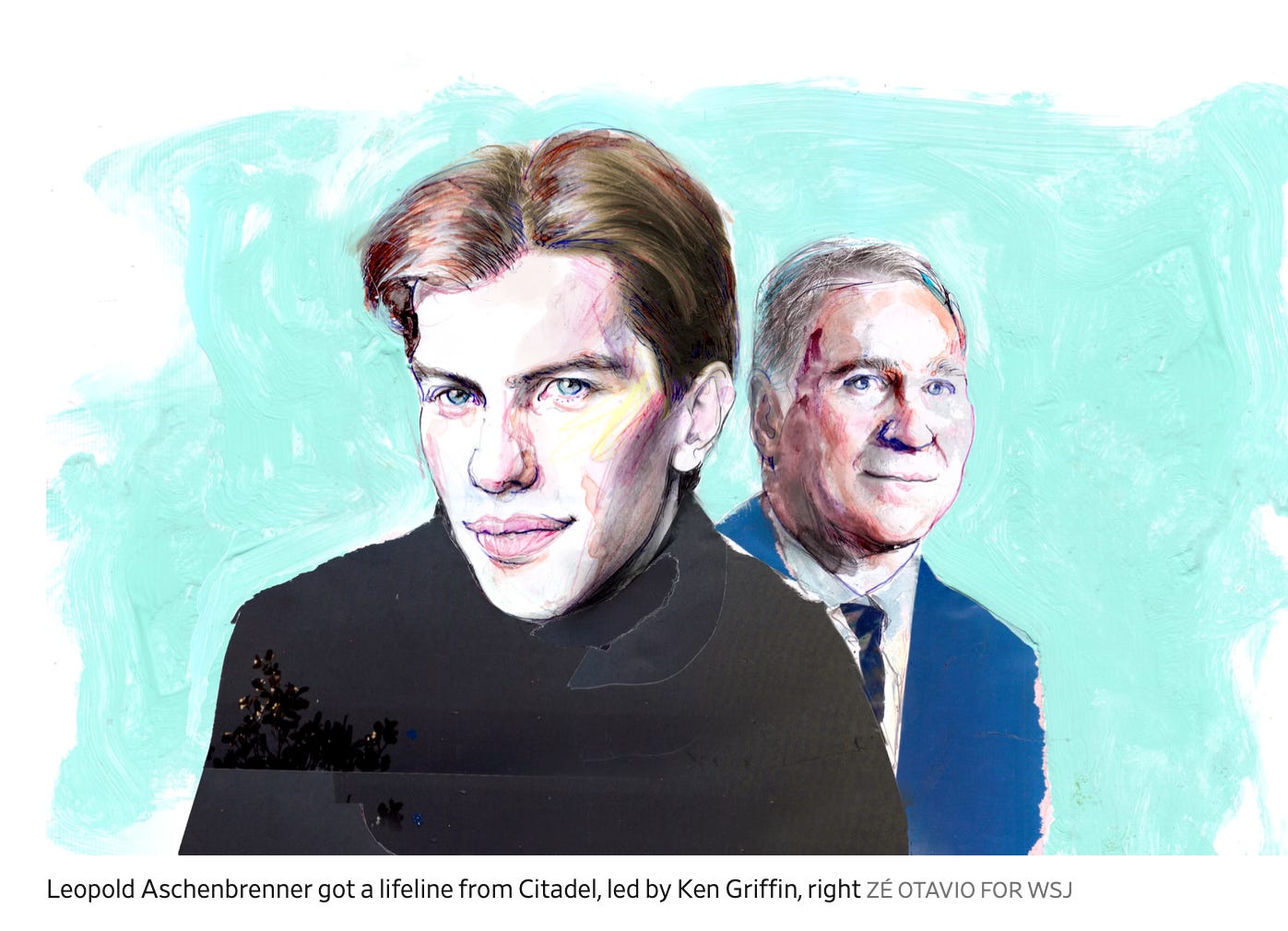
“ When he touches something, it turns to gold...” Jim Cramer.
The official story, so far, about Leopold Aschenbrenner is that he got caught with his pants down because of his overleveraged positions.
As of July 30, 2026, Situational Awareness LP — the AI infrastructure hedge fund run by former OpenAI researcher Leopold Aschenbrenner — has sold its entire public equity book to Ken Griffin’s Citadel following forced margin calls from Goldman Sachs, JPMorgan Chase, and Bank of America. The fund had reached $45 billion in AUM and boasted a 439% net return through June 30. It took less than three weeks for 4x leverage to turn that triumph into a forced liquidation.
That story is only partially accurate. In reality, his whole thesis was flawed from the get-go, and his selection of securities would have doomed him sooner or later, leverage or not. Just as his predecessors, Wagoner and Wood, Aschenbrenner's stock selection has been less than remarkable, built on momentum and hype with a complete disregard for the “art” of securities analysis and fundamental research.
In an alert 🚨 that I posted on my X account on May 25th, 2026, I clearly highlighted the red flags 🚩 of his selected investments.
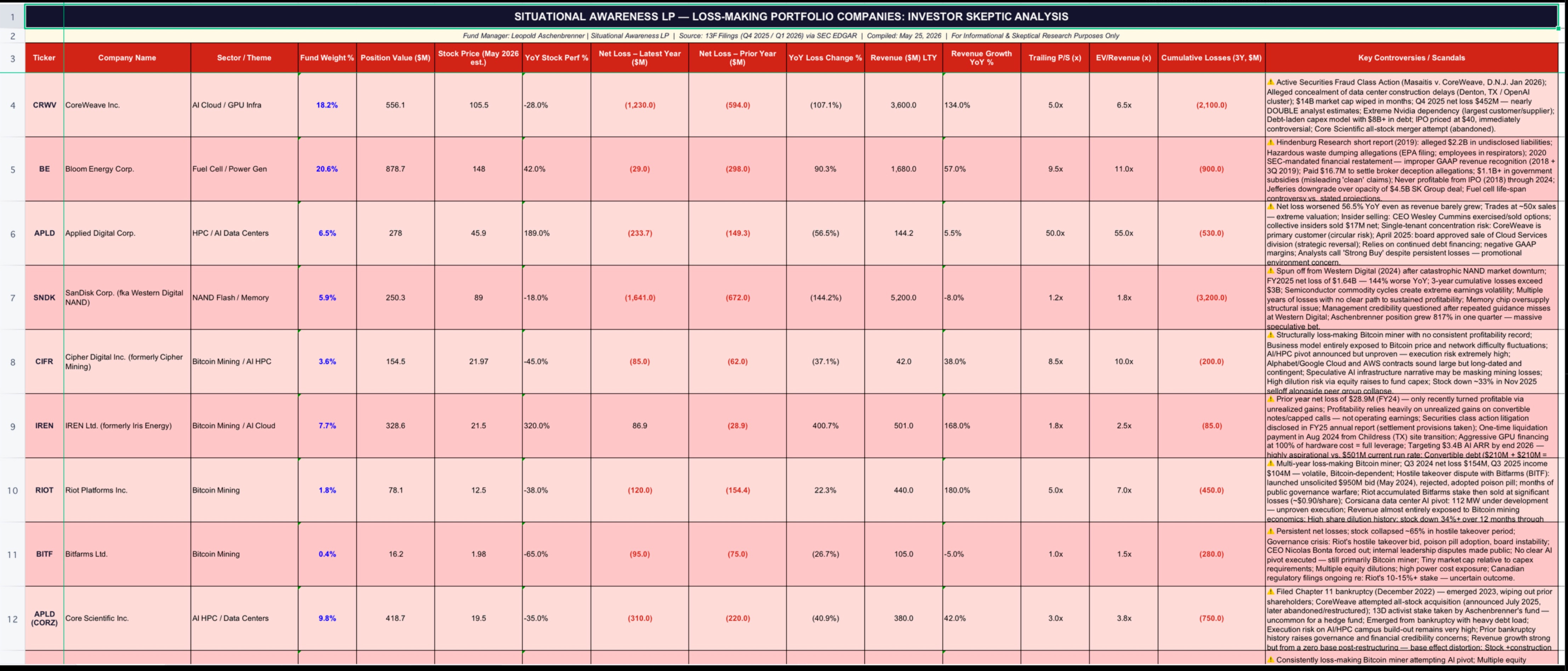
My research — see the accompanying Loss Portfolio analysis — covers the 16 loss-making companies inside Situational Awareness LP’s disclosed holdings.
Bloom Energy (BE) — Largest non-semi long (~$879M). Fuel cell power play. Trades at P/S ~33x, forward P/E 126-160x+, P/B ~85x. GuruFocus GF Value shows ~900-990% overvalued (e.g., ~$26 fair vs. ~$280-290 price). Negative or razor-thin historical margins; speculative AI power demand. No margin of safety.
Core Scientific (CORZ) (~$389M). Bitcoin miner/AI hosting pivot. P/S ~22-25x, forward P/E 167x, negative P/B. Highly volatile crypto-adjacent; earnings erratic. Graham would reject due to lack of consistent profitability and asset backing.
IREN (Iris Energy) (~$401M). Similar miner-to-AI pivot. P/E 220x+, P/S ~25x, P/B ~8-9x. Extreme multiples on growth hopes; history of dilution and crypto cyclicality. Far from Graham’s “bargain” threshold.
CleanSpark (CLSK). Crypto miner/HPC. Elevated P/S (often 5-15x+ in rallies), volatile earnings. Benefits from the AI narrative but lacks a defensive balance sheet or a low valuation.
Riot Platforms (RIOT). Analogous to above—high P/S, speculative pivot risks, no stable earnings track record for Graham-style analysis.
Applied Digital (APLD). Data center/AI infrastructure. Similar high-multiples growth story with execution and funding risks typical of the sector.
CoreWeave (CRWV) (~$556M). GPU cloud provider. Post-IPO growth stock with premium valuation (P/S often 8-10x+ on projections). Heavy on future AI contracts; debt and capex intensive. Speculative, not asset-based value.
SanDisk (SNDK) (~$724M). Memory/storage. Benefits from AI data needs but trades on cyclical hype; valuation stretched vs. normalized earnings.
9-10. Other miners/infra proxies (e.g., Bitfarms/BITF, smaller positions) and selective longs like certain power/storage plays follow the pattern: narrative-driven premiums, weak current profitability, and vulnerability to delayed AI capex or competition.
Several of these companies are not merely unprofitable; they are deeply, structurally, persistently overvalued. Applied Digital traded at approximately 50 times sales while losing more money than it earns in revenue.
SanDisk posted a $1.64 billion net loss in FY2025, 144% worse than the year before.
CoreWeave, the fund’s second-largest position, is facing an active securities fraud class action, reported a $452 million net loss in Q4 2025 alone, and issued guidance that missed Wall Street estimates by more than 15%.
These are not small imperfections in an otherwise solid portfolio. These are structural red flags that would disqualify most of these companies from serious institutional analysis — were it not for the gravitational pull of the AGI narrative draping everything in inevitability.
While the leverage effect has precipitated the Fund collapse, the fundamental value of the heralded companies is still in limbo while the AI infrastructure thesis remains a major concern for investors with the entry of competitive Chinese companies and the growing fragility of hyper-scaling giants in the US and in South Korea.
How long will the party last?
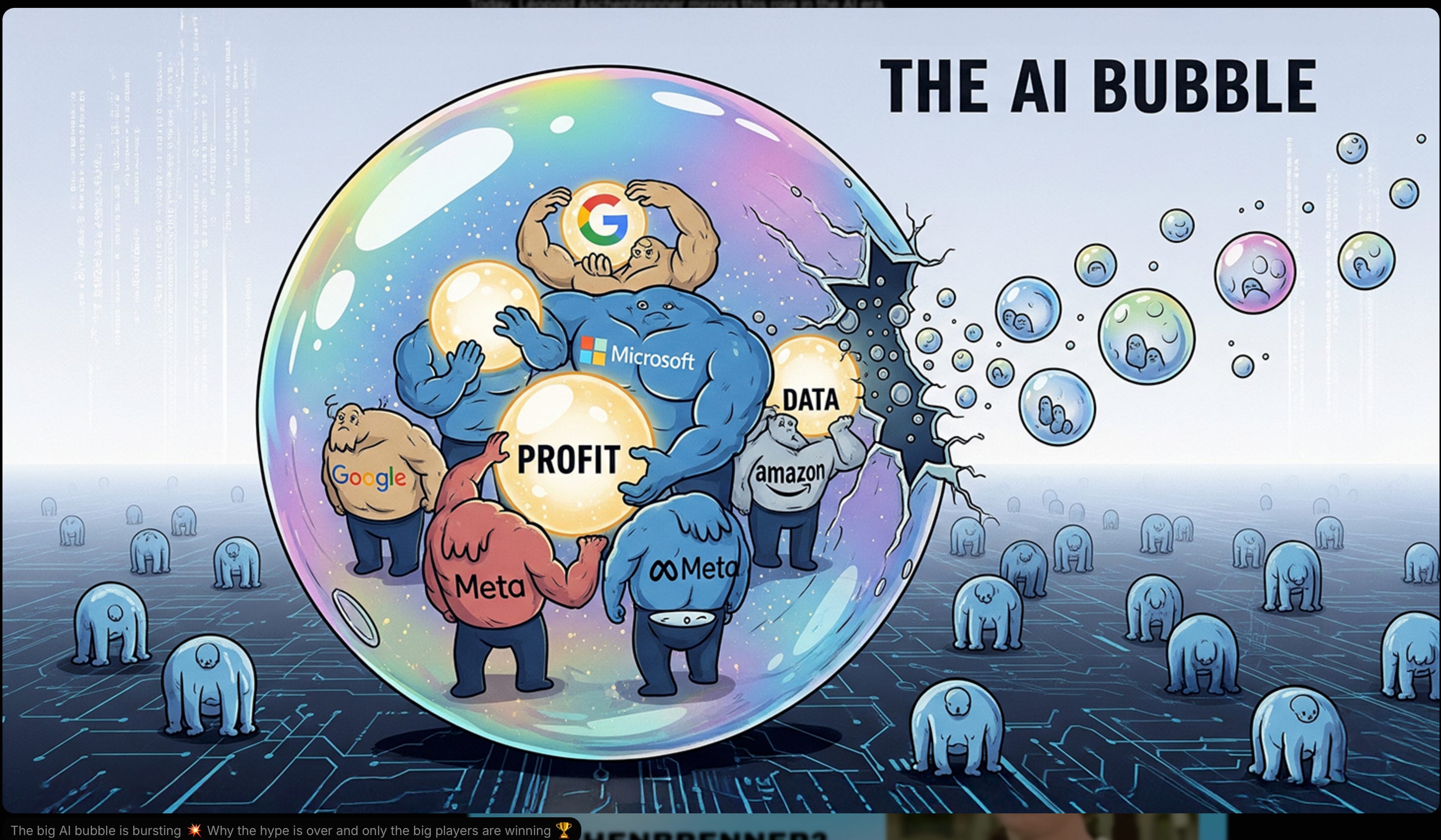
The history of speculative bubbles is always personified by the meteoric rise and inevitable fall of central figureheads. While they are exalted as heroes at the beginning, their swift fall is soon regarded as a cautionary tale. In reality, they were mere symbols of the blissful and blinding exuberance that periodically sweeps over the markets under the pretense of world-changing technological themes, only to end up in tatters when reality sets in.
The 90s were marked by the dot-com internet bubble. While that era gave birth to revolutionary companies such as Google and Amazon, the plethora of zombie pretenses that populated that bubble led to the bankruptcy of Garret Van Wagoner. For a brief moment, Van Wagoner rose from an obscure analyst into a celebrity financial expert hailed as the next Peter Lynch. As quickly as his rise occurred so was his fall.
Cathie Wood preached Tesla in the early 2010s, before everyone else would recognize the company's worth. And she benefited greatly. Covid stimulus further heralded her vision, and her Ark fund became a staple for the average investor seeking exposure to world-changing technologies. She is now worth up to $200M. But her fund returns have been abysmal. And she has become a subject of mockery across social media and internet platforms. She was right on Tesla…But missed the boat on literally everything else despite close to 4 decades as an investment professional!
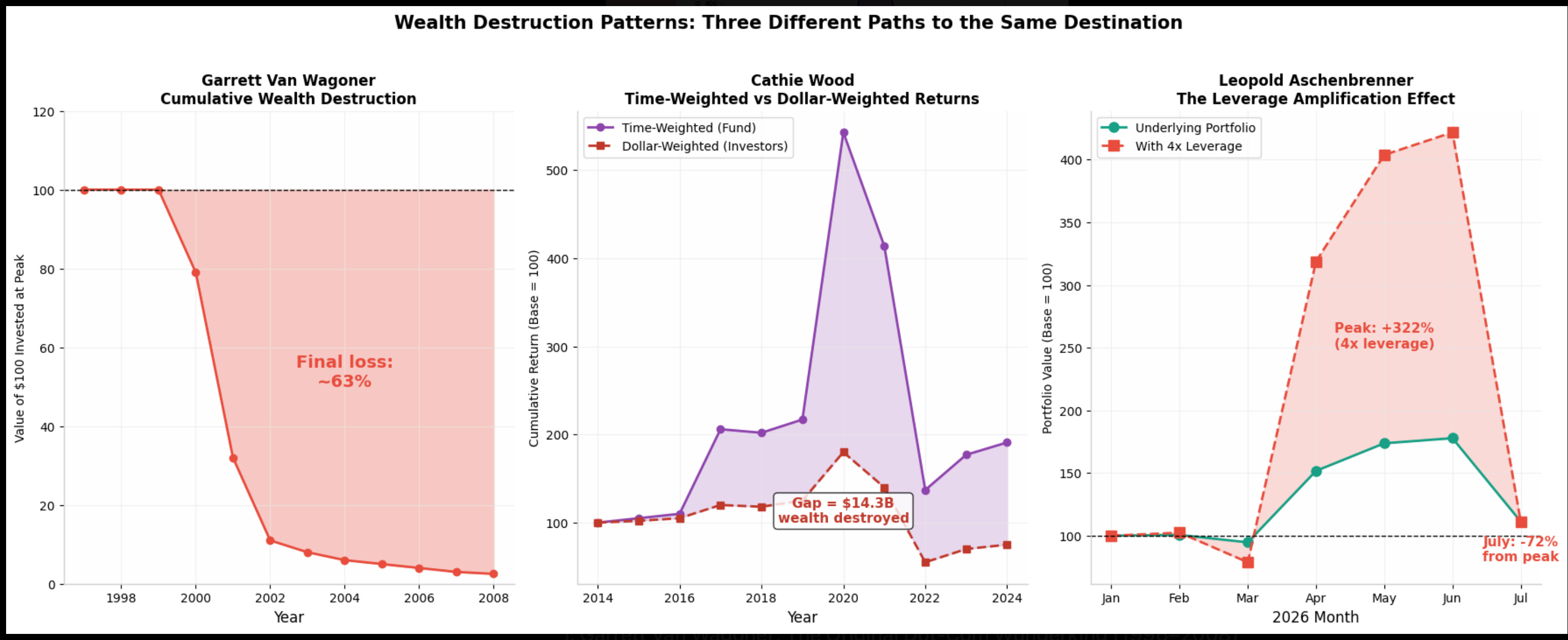
Last but not least: Boy Wunder “New Warren Buffett” Aschenbrenner. The most recent archetype of market folly! It's rather perplexing how an inexperienced 24-year-old was even elevated to a hedge fund principal to begin with. His proximity to Sam Bankman-Fried, and to the very controversial Sam Altman as well as his intimate relationships with Anthropic's Chief of Staff should have raised eyebrows.
Eyebrows,I did raise! Not so much because of Leopold Aschenbrenner’s ties to Silicon Valley’s elites, but because of serious qualitative and quantitative valuation concerns. The vast majority of Aschenbrenner’s stocks are (his fund has been co-opted by Ken Griffin’s at Citadel) mediocre perennial hype-cycle riders (Bloom Energy), zombified crypto-to-AI infrastructure pivots (WhiteFiber), and unprofitable insiders’ stock-dumping schemes (Coreweave).
Although young “King” Leopold's story ended abruptly on his wedding day, his stock portfolio selection has not been wiped off the map. In fact, in some corners of the market, investors view the recent mini-crash as buying opportunity. This is utterly reckless!
Good old Warren must be laughing at the utter foolishness once again. These “actors” were prompted by certain media to replace his buy-and-hold and don’t-borrow “boring” strategy over three decades. All of them have eaten dust; one has vanished from the scene, retired. The lady is now a laughingstock to her former followers, and a young man has just learned a brutal lesson on the pitfalls of uber-leverage.
Finally, I believe the wider public must carefully reassess the fundamental value of these AI-related securities in light of global trends and risks. The 'AI infrastructure theme has hit a critical juncture, and the failure of 'SITUATIONAL UNAWARENESS' could be a major market top signal that may potentially trigger a significant downturn in the near future... KABOOM!!!!
You have been ALERTED.
( This article was written for intellectual stimulation only. None of the authors opinion should be conflated for investment advice. Always consult a trusted advisor before buying or selling financial securities. Wall Street is not your friend.)
Comments
Nothing yet. Say the first thing.
Sign in to join the conversation.