
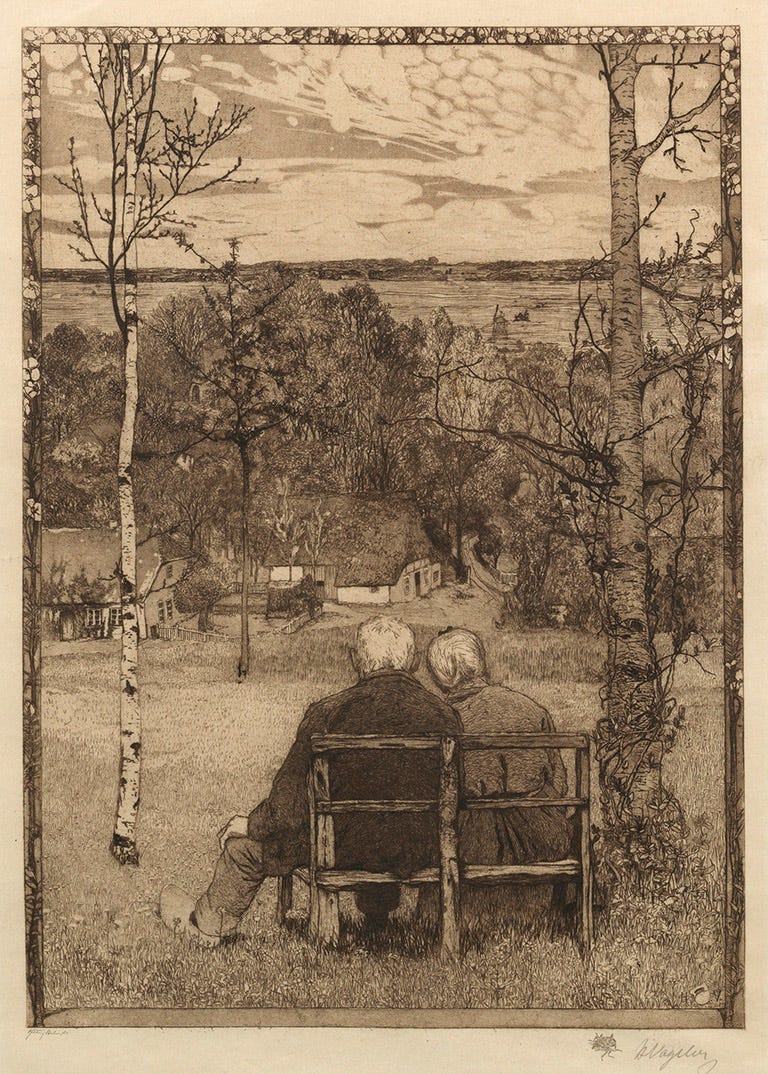
For a while now I’ve been visiting (involuntarily) a country called Burnout. I don’t want to talk about it; but it’s why I’ve been more scarce around here than I’d like. My self care has involved spending afternoon hours in the hammock, bingereading the Vorkosigan Saga and the Dresden Files, and avoiding writing and responsibility like the plague.
I have, however, been keeping up with laundry and dishes and listening to children talking about Minecraft etc. So it’s the bigger responsibilities I’ve been shirking— phone calls, paperwork, school planning, writing transcripts—not the daily, one-foot-in-front-of-another tasks.
I recently did a sleep study which determined that I have severe sleep apnea. So now my husband and I have matching CPAPs. I’m hoping that some of the brain fog clears now that I’m actually getting more oxygen at night. For a while I’ve been more tired, but I’ve also been regularly sleeping eight-hour nights multiple times a week, which barring sickness and pregnancy exhaustion, I haven’t done since my oldest was born twenty years ago.
So here’s catching up on my reading log, beginning with what I was reading in May. I’m no going to chronicle here every volume of the two series I’ve been bingeing—that might come later. But suffice it to say that I think the self-prescribed rest cure has been doing its magic. I had started to sort of subconsciously think of reading as a kind of self-improvement project and had forgotten about re-reading favorites for the sheer pleasure of losing myself in a world and characters that I enjoy. Now I’ve remembered that I’ve always read that way as a form of self-care. It’s nothing to be ashamed of or to view as a moral failure. Reading for education and formation and self improvement are good reasons for picking up a book, but that’s not the full picture of what reading can be and for me it’s a very stunted and stifling approach when not balanced with reading for recreation.
I pull the stopwatch from my toga (the best ancient Greek philosophers always carried stopwatches in their togas).
I first read Project Hail Mary when it was originally released and loved it even more than The Martian, which was a thoroughly enjoyable novel.
PHM’s protagonist, Ryland Grace, is more interesting than The Martian’s Mark Watney—and so are the book’s scenario and the science. I love the way the science and technical challenges drives the plot without sacrificing character development. PHM uses Grace’s amnesia, and the series of flashbacks that help him to recover lost bits of memory and self, to excellent effect.
Re-read after watching the movie. Just as good as I remembered it.
My sister and I had a marvelous discussion spurred by a First Things article, Project Hail Mary’s Unresolved Moral Dilemmas, whose argument we both disagree with, Charlotte Allen argues that Stratt murders Grace whereas my sister argues that she is drafting him and that his resistance is a shirking of his clear moral duty. It became an interesting exploration of the themes of duty vs desire, just warfare doctrine. We also talked about memory and identity and suicide and ethics of suicide, ethics of suicide missions in general and the PHM mission specifically. Sadly, I don’t have the energy to recreate the discussion here right now. But if anyone wants to talk about it the comments, I might be able to dredge something up.
I do want to argue that it’s not a coincidence that the protagonist is named Grace and that while the name Project Hail Mary might have been a bit of a joke on Weir’s part and while Allen overstates it’s important, I do find the theme of grace quite compelling and read this as an excellent example of a story with a beautiful redemption arc and compelling thread that shows the movement of grace.
Olav Audunsson/Master of Hestviken Book II
I’ve slowed down and stalled out near the beginning of volume 2. I know I’ll get back to it, but I definitely needed a summer break. Undset is wonderful and rich and delightful, but she is also demanding.
The Books of Imirillia Book I
I love Beth Brower’s The Unselected Diaries of Emma M. Lion, which is well-crafted with brilliant characters. This, an early novel, was available for cheap on Kindle, so I snagged it.
Sadly, I found it a bit of a slog. It clearly reads like a self-published first novel. There are some interesting themes and ideas and characters, but they are not well developed. The pacing is painfully slow at times and there are a lot of rough edges that need polishing. I can see the promise of a good novelist learning her craft, doing some interesting world building, but she’s definitely not there yet. I’m debating with myself about finishing the series once I get to the end of this first volume. My curiosity to see where the plot is going is having a hard time winning out against my frustrations.
*Especially some logistica and world-buildingl frustrations like the queen having only one bodyguard. How on earth is that supposed to work? Does he never sleep? Or why does a small country which is geographically isolated have a complex but also poorly-developed and much too time-consuming system for calling up the levies when facing an invasion— not all invaders are liable to give you a month’s warning before an invasion.
Murderbot Diaries #8
Happy to have a new installment of this favorite series. It came at the perfect time, reminding me that I love reading series and science fiction series in particular.
I got out of the vehicle and Farai and the juvenile piled out after me. The militia looked at us and immediately broke ranks to usher us through. The fact that I still had a human child attached to my chest probably had something to do with it.
A few years ago, when my sister first told me she was reading the Murderbot Diaries, I thought the premise sounded weird. But she was really into it and so were several other friends so I gave it a shot. It’s now a favorite series and a favorite re-read.
Murderbot is the self-deprecating name that a cyborg security unit (Sec Unit) gives to itself privately in its own mind. It doesn’t actually murder people. Instead it reprograms itself, disconnecting its governor module, which is supposed to control its behavior. Murderbot is antisocial and would rather be watching serials like its favorite, The Rise and Fall of Sanctuary Moon. It doesn’t like having to babysit and protect humans from their own stupidity.
But it somehow manages to befriend one particular group of client who are researchers from a system that is outside the highly corporate Corporation Rim— basically space hippies. It saves them from a disaster and they adopt it and take it home with them. Or try to. It runs away because it doesn’t want to be a pet. But their fates seemed to be bound together. It befriends a robot transport ship and eventually frees some other Sec Units. Is it inadvertently starting the robot revolution?
(Emotion check: Angry. It’s never a good idea to try to do complicated things when you’re angry. Like coding. Coding is complicated. Especially when people are shooting at you. But I do that all the time.)
Dresden Files #18.5
Another installment in a different series that I love dropped in the same week as the new Murderbot!!! What riches!
In my head, the spirit of my best friend, a good man, murmured, It is never unworthy work to attempt to redeem one who is lost and wishes to be found.
Out Law is Dresden Files novella, sequel to The Law, the second in a projected trilogy of novellas. These novellas fill in some of the spaces between the main novels. This is great idea because at this point the cast of characters has become a little unwieldy and the primary plot doesn’t give Harry much time for old fashioned detective work. Here we see him getting back to the basics, pursuing the smaller side-quests: his work for the little guy, for the lost and broken of Chicago. I love Butcher’s shorter fiction as a means of exploring lore and characters that are ancillary to the main storyline but deeply enriching.
The Dresden Files is a sweeping urban fantasy saga. Set in Chicago, it follows Harry Dresden, a young wizard with a traumatic past. The first few novels were written for a creative writing class and are fairly formulaic: Harry, a private detective, solves cases that the police can’t solve involving black magic, werewolves, vampires, necromancers, etc.
Most people in Harry’s world can’t see the supernatural, don’t believe in it. But the powers of good and evil are real and over the course of 18 books (and novellas and short stories) we see just about every flavor of supernatural being out there drawing on myths and legends and folktales from around the world.
Harry often pairs up with a Chicago cop, the fiesty Karin Murphy and his best friend is Michael Carpenter, a faithful Catholic and a Knight of the Sword, dedicated to fighting evil and saving souls. And over the course of the series he makes more friends, makes more enemies, gathers allies, and gradually comes of age becoming gradually wiser and more powerful and becoming a force to be reckoned with. As he becomes more powerful, the stakes are higher and he gets to know more about the higher levels of the fight between the forces of good and the forces of evil: angels and demons. The stakes are real, good people die when Harry makes mistakes, or even when he doesn’t make mistakes— but he always blames himself.
Butcher is masterful at ret-conning his own work, mining the details of the early novels for what later becomes lore, making it feel like the greater designs were planned all along. He develops minor side characters into important secondary characters, giving them satisfying story arcs and character development. Villains are revealed to be more complicated than we thought at first. And there are often glimpses that even they might have the possibility of redemption offered to them.
“Choose your hard,” I said. “What?” “Life is hard, man. All of it. Nothing you can do will change that. But you can mostly choose what kind of hard stuff you want in it.”
[. . .]
Making an honest living is hard too. But they’re different kinds of hard. You don’t spend time in the pen when you play it straight. But there’s a lot of boring stuff, and most days, you’re making yourself do stuff you’d rather not do. You get to choose which kind of hard you want.”
“What about the easy life?”
“Maybe some people get that, sometimes, for a while. But people weren’t made for easy. We were made to work and scrap and struggle to make our lives into something better. We aren’t supposed to lie around, doing nothing, for very long. People who get away from that forward drive get weird fast.”
This novella explores in a small way—but maybe not-so-small after all— my favorite theme in the Dresden Files: redemption. While Harry wrestles with the fear that he himself is beyond hope of redemption, we see him working for the redemption of his enemies. He fights monsters and demigods and beings of pure evil, but the greater battle is the battle for the human soul.
Ultimately, we know that the real battle of the Dresden Files is the battle is for Harry’s own soul; but it is in the fact that he can still care for the small people that he shows that his humanity. His soul, is not lost, no matter how many mistakes he makes and some of the compromises along the way with demons, with the fae, with gangsters, with vampires. He is essentially a good man—though he is the last person to be able to see it.
“You must be kidding,” I said, harshly. “This guy?” “During the Battle,” Marcone said smoothly, “you challenged me on the practice of my principles. It was uncomfortable and necessary. I now return the compliment. Are your principles actually principled, Dresden? Or do they only apply to the people you happen to like.” Marcone is an asshole. And I was furious. But some part of me realized that I would not have been so angry if he didn’t have a point in there somewhere. And I was past the point in my life where I would let my anger direct my reactions.
(Content warning: the Dresden Files series deals with dark and heavy and mature themes and is NOT appropriate for young readers or sensitive readers. There is a lot of sex and violence —though it is thematically appropriate and not gratuitous—and while my husband and I talk about them with our kids, we don’t let the teens read them yet.)
Reading the new Murderbot and Dresden books reminded me how much I enjoy being immersed in a series when I’m feeling overwhelmed and stressed and burned out— which as I’ve said has increasingly been my state in the past months.
So in late May I started binge reads of two favorite series. I re-read Lois Bujold’s adventure/space opera/romance saga, the Vorkosigan series. I simultaneously started listening to the audiobooks of the Dresden Files. James Marsters is a great narrator even if he occasionally pronounces a word in a way that makes me cringe—like “writhing”or “sidhe'“.
I'll try to write more later about why I love these particular series and how binge reading is restorative. Also I want to write a separate post about all the new poetry books I’ve been dipping into. But for now, I’m just happy to finally get this post out of drafts and published so I can get on with other things.
Comments
Nothing yet. Say the first thing.
Sign in to join the conversation.