
On a Sunday afternoon in August I accepted a last-minute invitation from my friend Zina Gomez-Liss to accompany her to New Hampshire to visit Eagle Pond Farm, the home of the poet and essayist Donald Hall and his wife the poet Jane Kenyon.
I’m far from being well-versed in the poetry of Kenyon or Hall, but Kenyon’s Collected Poems does grace my poetry collection and I’ve poked into it from time to time. I know some of her better-known poems. My kids and I love Donald Hall’s Oxcart Man with the illustrations by Barbara Cooney— we have an extensive collection of Cooney’s books. And I know some of his other work as well.
It’s enough. You don’t have to be an expert or show your credentials to tour a poet’s home. The house is welcoming to all comers no matter who they are or why they are coming. And maybe this excursion will make me want to brush up on my Hall and Kenyon.
And well, who wouldn’t want a Sunday afternoon drive with a friend, talking about poetry, about our lives? Zina and I haven’t had an excursion together in far too long. So despite having just travelled up to Maine and back the day before to drop my kids off at scout summer camp, I joined Zina for a poetry adventure.
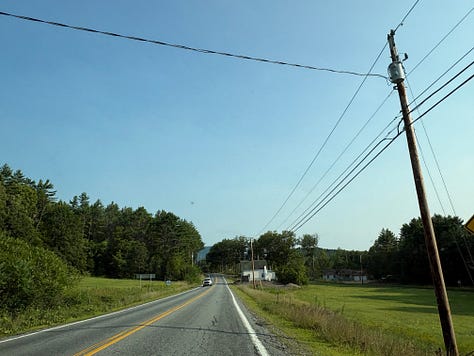
The drive up from Massachusetts to New Hampshire was wonderful: beautiful scenery, braided conversation with Zina, interrupted by occasional peeks at the printed directions, cross-checking, hoping the GPS wouldn’t steer us wrong.
Zina and I have known each other for years. I have photos of our third children crawling on the floor together at a conference long ago. And we have been deliberately meeting up since my youngest and her second-youngest were born a couple of weeks apart. We are both mothers of five children, both poets and poetry lovers. Even though we both live in the Boston area, we live far enough apart that our in-person meetings happen a handful of times a year.
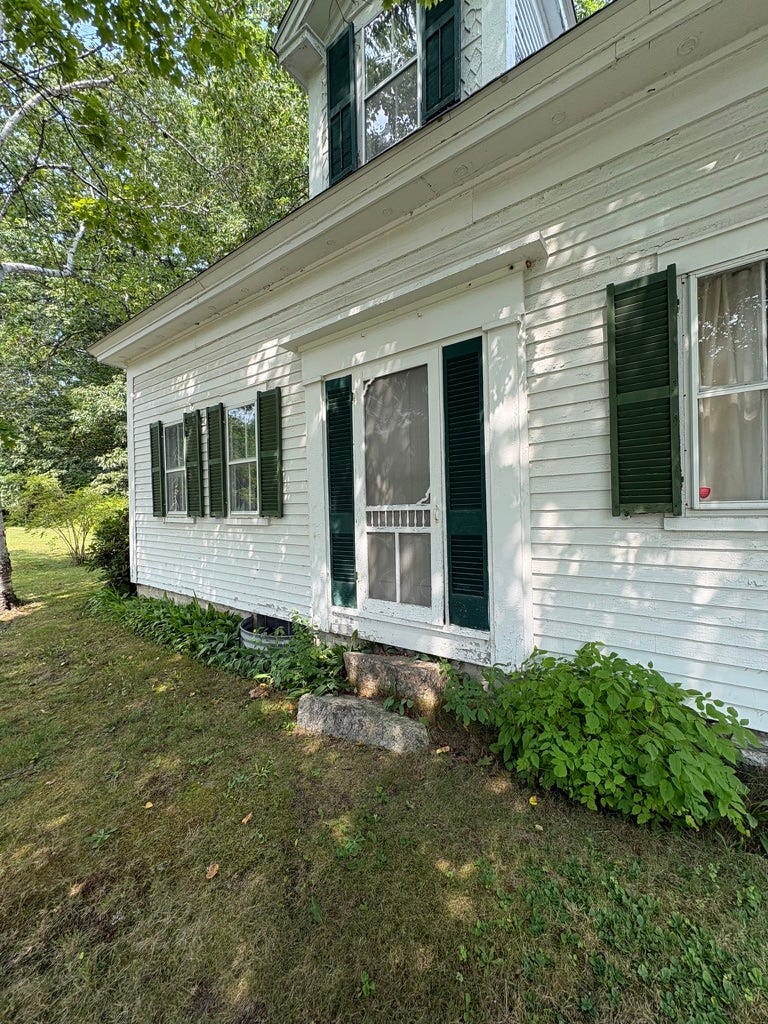
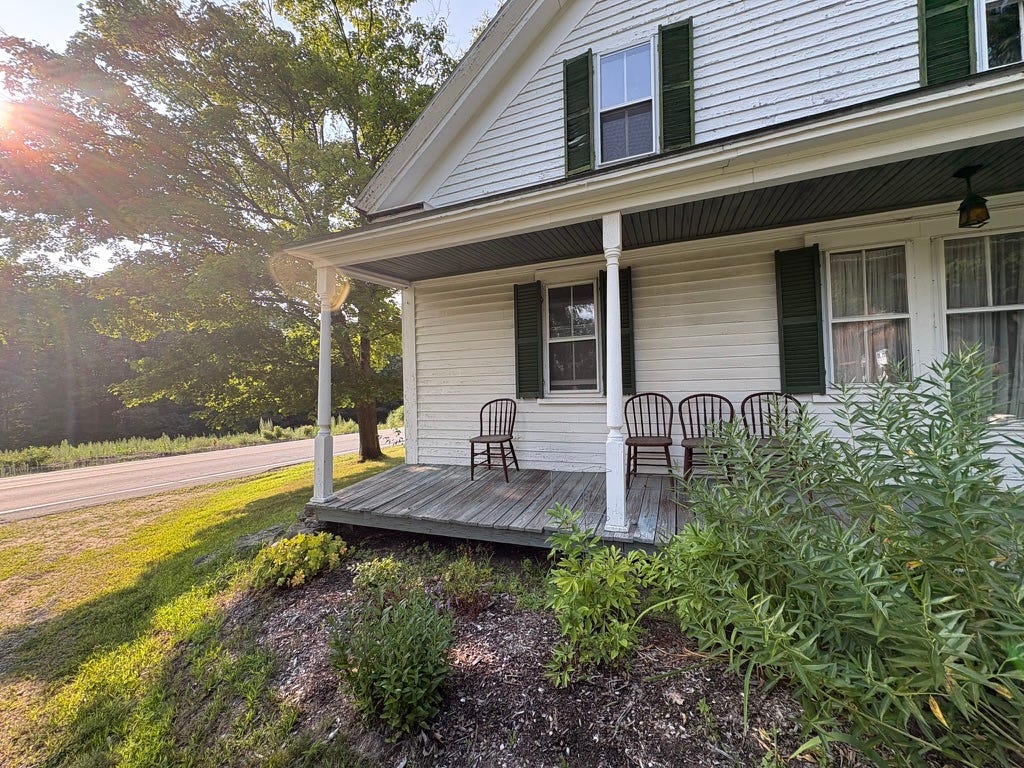
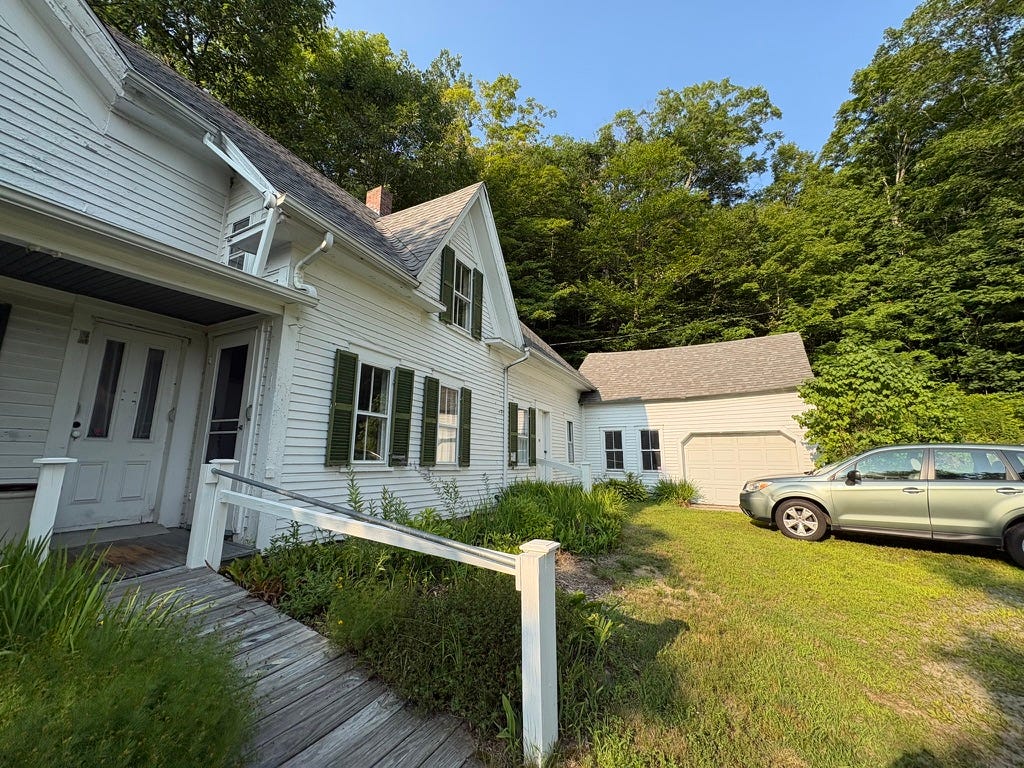
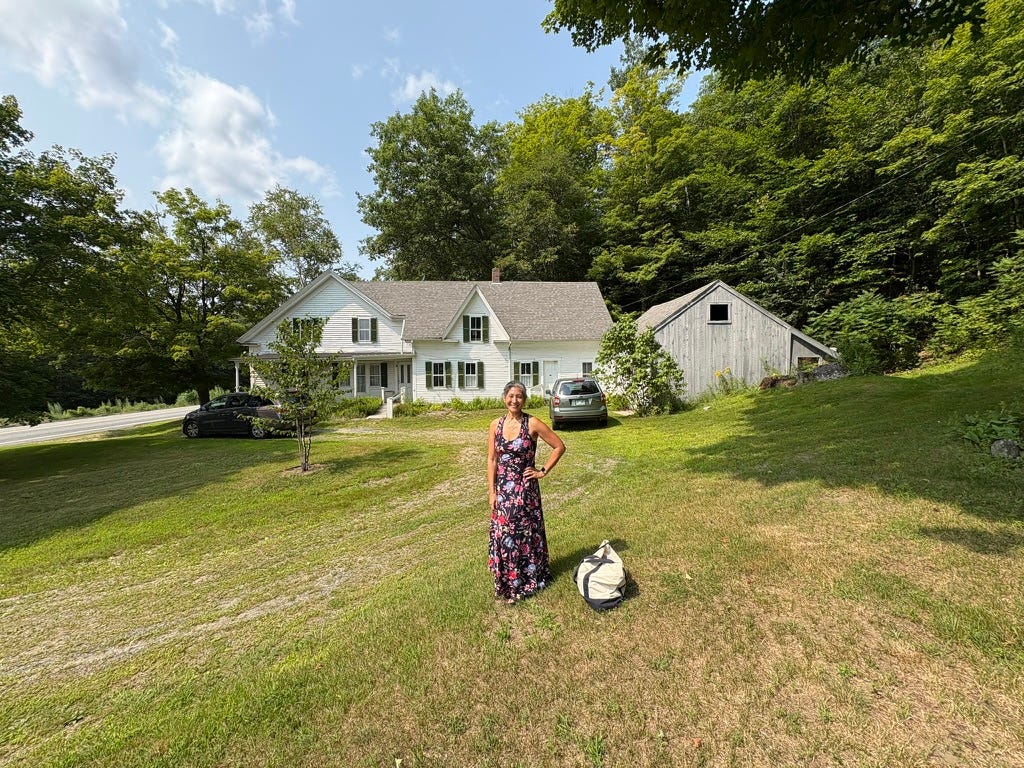
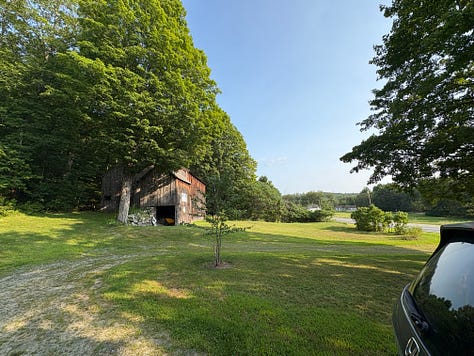
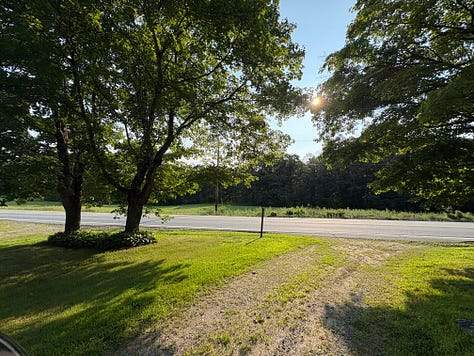
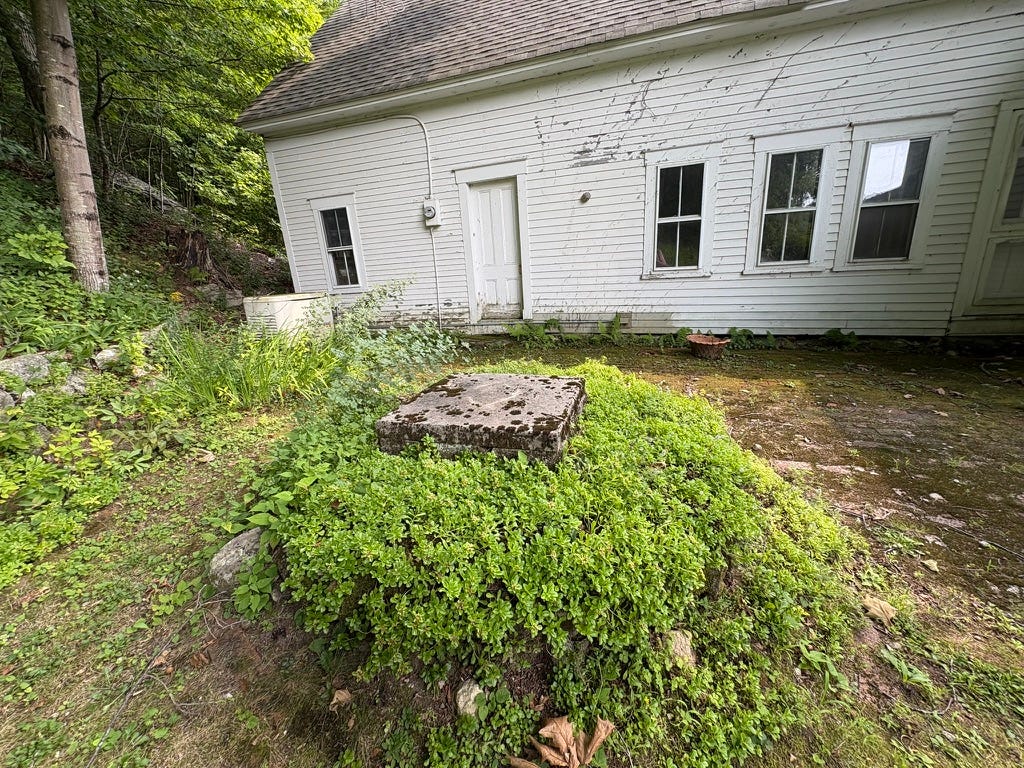
Unbelievably we made it to Eagle Pond Farm with no wrong turns. We passed the house without noticing it and had to turn around, but soon we were pulling off of Route 4 into a green yard between an old weathered barn and an old white New England farmhouse with a precariously tilting porch and dark green shutters. We knocked on the door, but there was no answer, even though there was a car there.
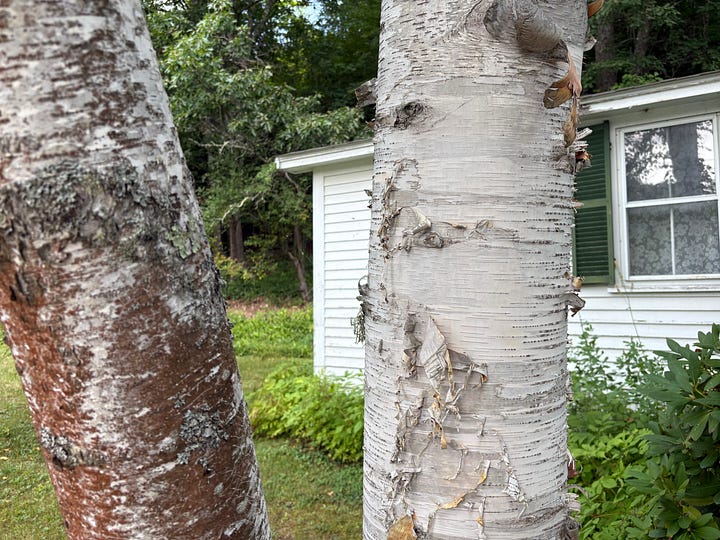
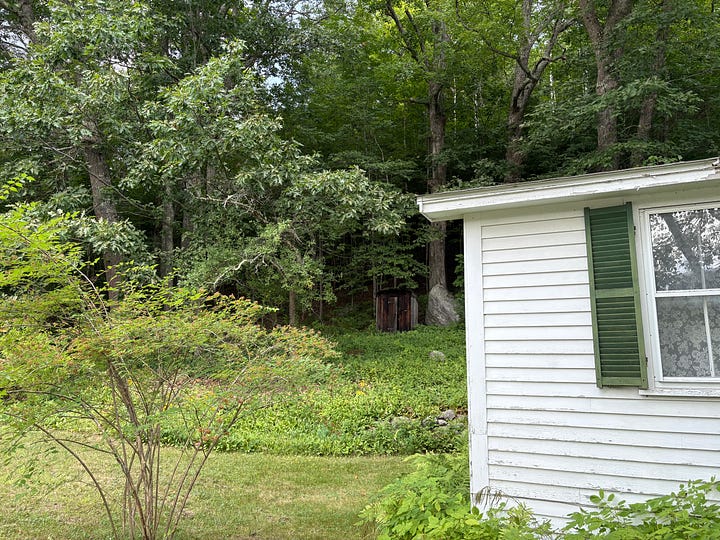
We were a bit early so we walked around the house, exploring the yard. I thought I spied someone through a window sitting in the sunlight in a backroom. I wasn’t sure.
Soon enough another car pulled into the drive and parked and a woman in peach-cream overalls told us that she was not Mary Lyn—but that was her car over there. Did we knock? she asked.
We knocked again and this time a short woman with shoulder length curls of grey hair answered the door. Our most gracious hostess and tour guide. Wearing a blue dress and a green cardigan, her voice had shades of Irish vowels. Zina introduced herself and me as her companion.
And we stepped through the door and immediately began the tour in the kitchen, where our guide pointed out the light switch plate: Michelangelo’s David, with the switch in the expected place, slightly naughty place. She told us the original had been lost, but they’d bought a replacement. (I was reminded of the postcard my mom’s fellow choir member bought when at the age of thirteen I accompanied their choir trip to Italy: O DAVID it said. With the O circling his genitals. I was rather shocked.)
Don’t let the house fool you, Mary Lyn said. It was full of Jane and Don’s modern things that they brought with them. They lived a very modern life in this old farmhouse.
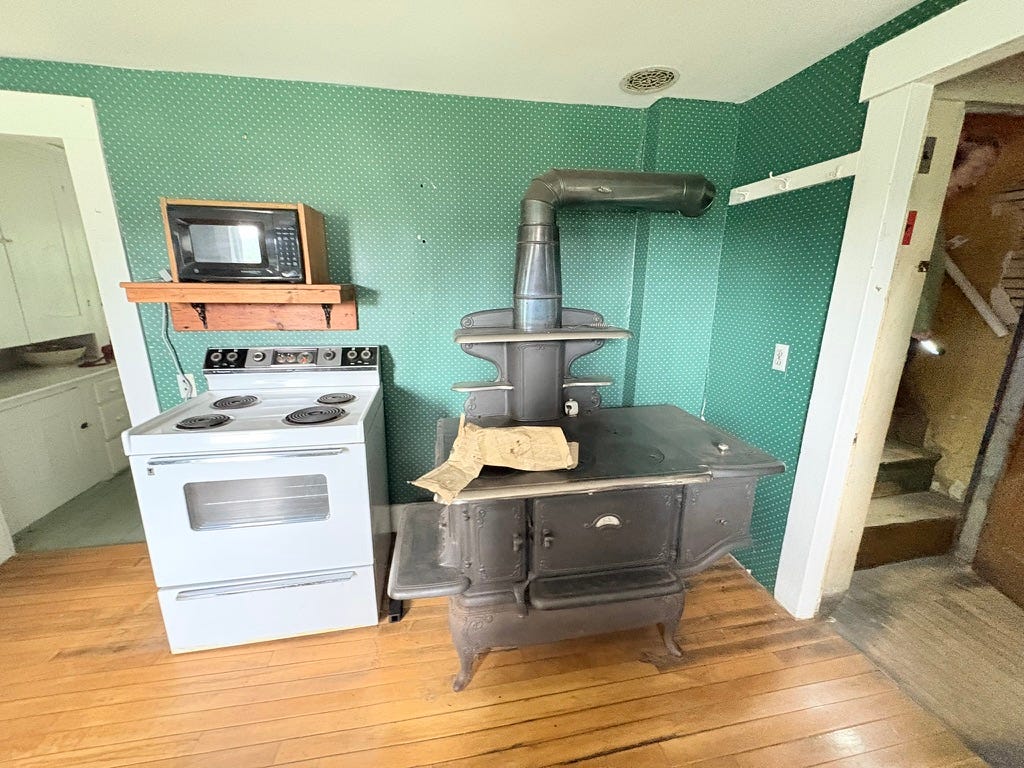
Jane writes1:
Text within this block will maintain its original spacing when published
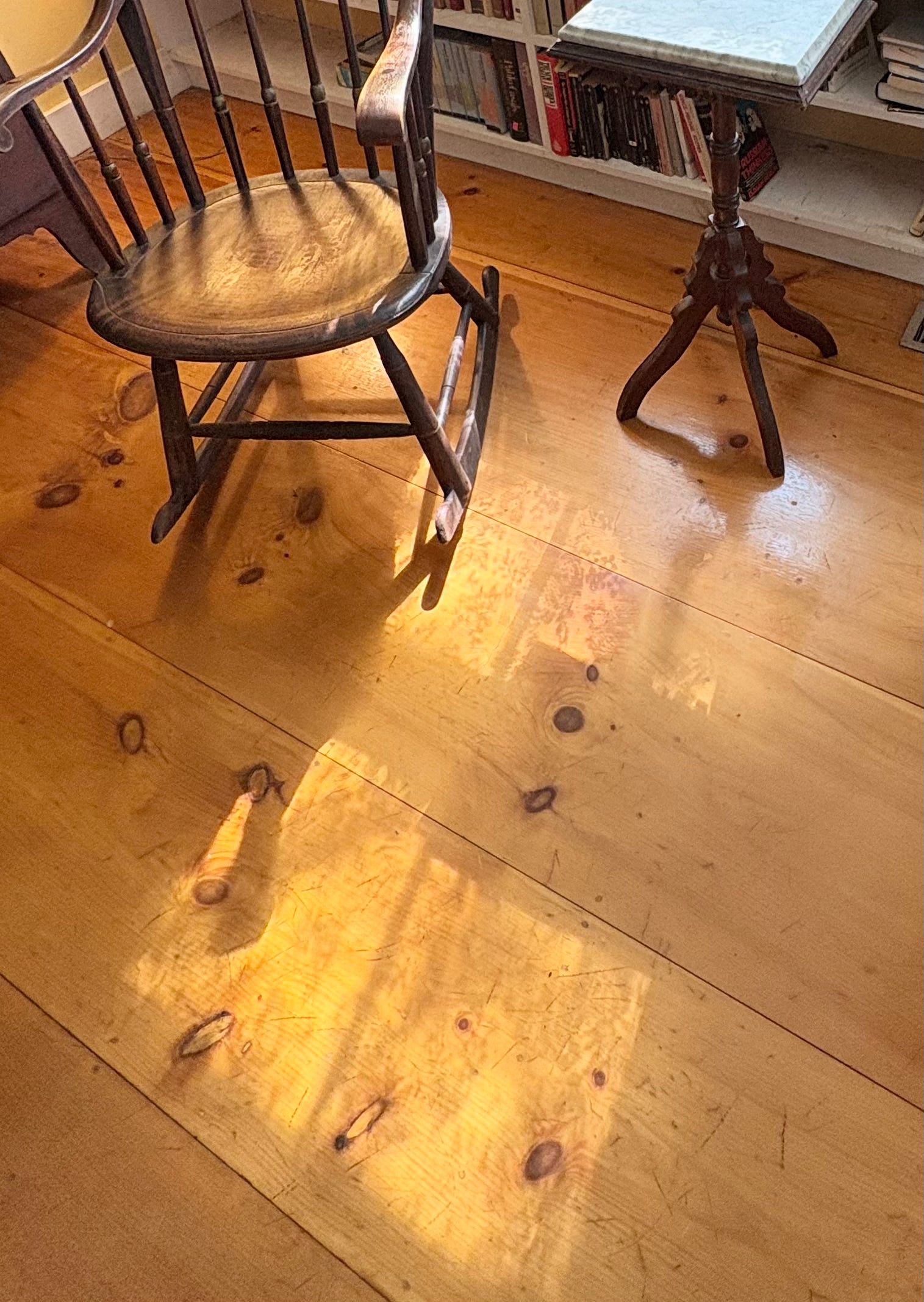
I scrub the long floorboards
in the kitchen, repeating
the motions of other women
who have lived in this house.
And when I find a long gray hair
floating in the pail,
I feel my life added to theirs.
This kitchen feels that weight of history and I can imagine myself as Jane imagining her life added to theirs.
I try to be even-minded and welcoming of both poets as we toured the house, but it’s Jane who haunts me more. Jane who came here as a stranger and made the place her own. I, a native Texan who have made my home here in New England, feel a kinship with her sense of adopted place.
Jane writes2:
Text within this block will maintain its original spacing when published
I read the evening paper
with five generations
looking over my shoulder.
In the woodshed
darkness is all around and inside me.
The only sound I hear
is my own breathing. Maybe
I don't belong here.
Nothing tells me that I don't.
and3:
Text within this block will maintain its original spacing when published
I feel my life start up again
like a cutting when it grows
the first pale and tentative
root hair in a glass of water
Likewise, I can imagine myself putting down roots here. Already I love this old farmhouse more than I love the house where my husband and I have been raising our family for the past 18 years. After our tour, Zina and Mary and I will sit in the sitting room and talk about this and that. Mary talks about the light that inhabits the rooms in the afternoons. I talk about how our house has stingy windows that don’t let in enough light. I don’t love my house and I never have. And yet I feel mean to say so. It has tried its hardest to be a shelter to us. It can’t help it that it was never made to be beautiful, never made for love. That it doesn’t stand up to comparison with this old New England farmhouse that has rooted itself in place for more than two hundred years.
Jane writes4:
Text within this block will maintain its original spacing when published
We ate dinner together
at a table with silver
candlesticks. It might
have been otherwise.
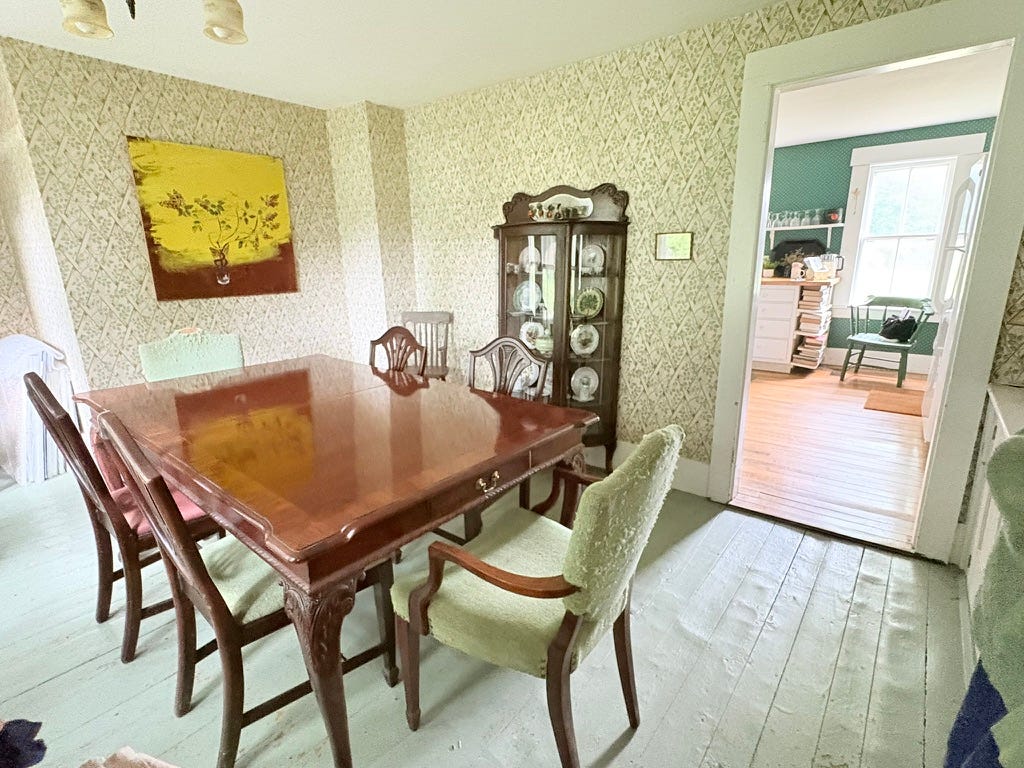
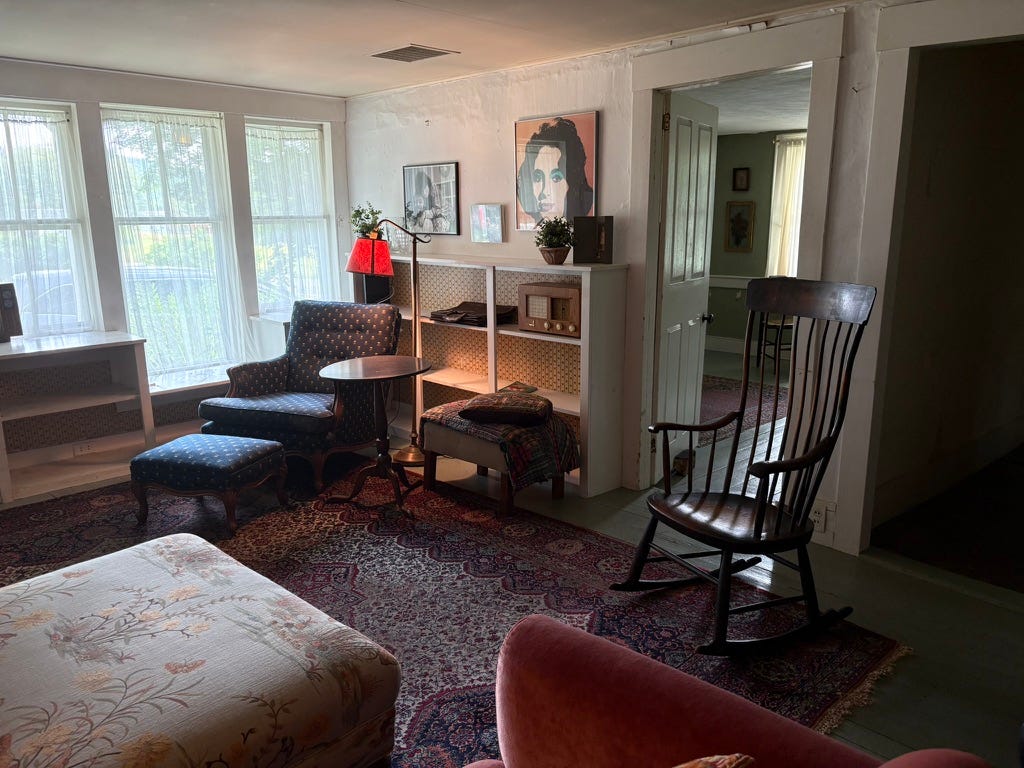
We moved from the kitchen to the dining room, peeking at the china in the glass-door china cabinet and in the built-in cupboard and there are the candlesticks, rescued from the estate sale. The red phone on the built-in sideboard. The chairs that have been mauled by the cats and thus were spared being sold off at the estate sale.
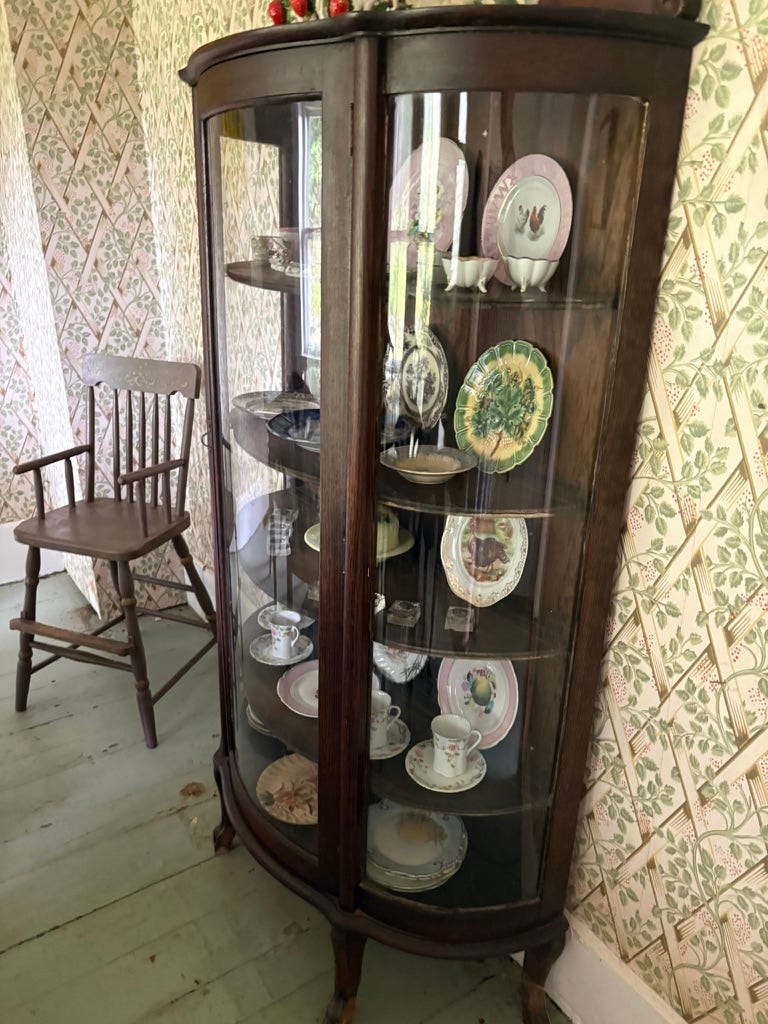
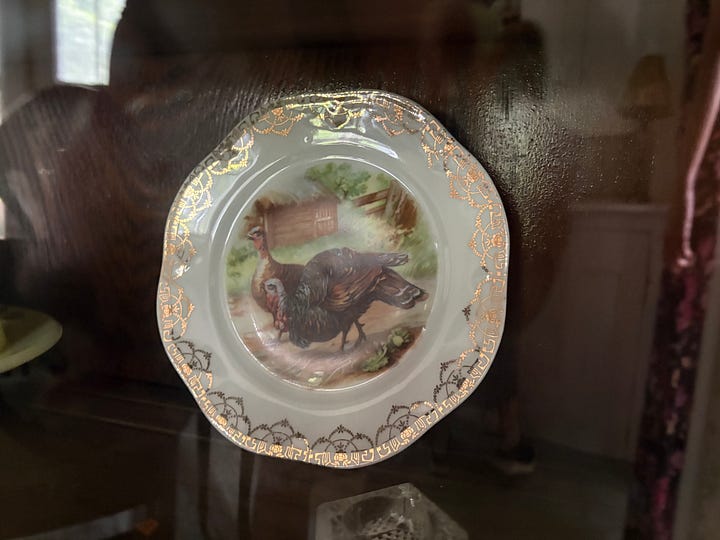
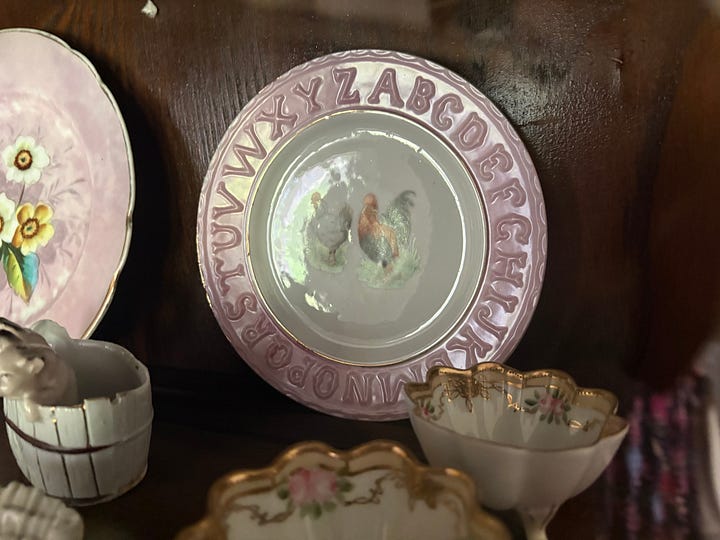
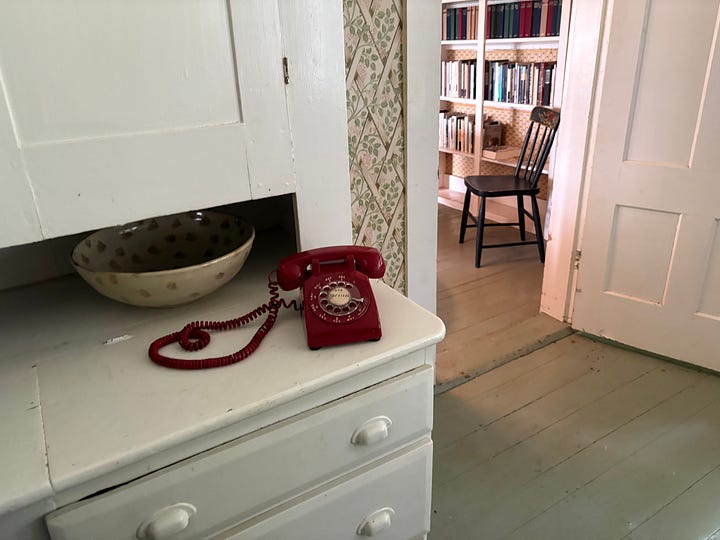
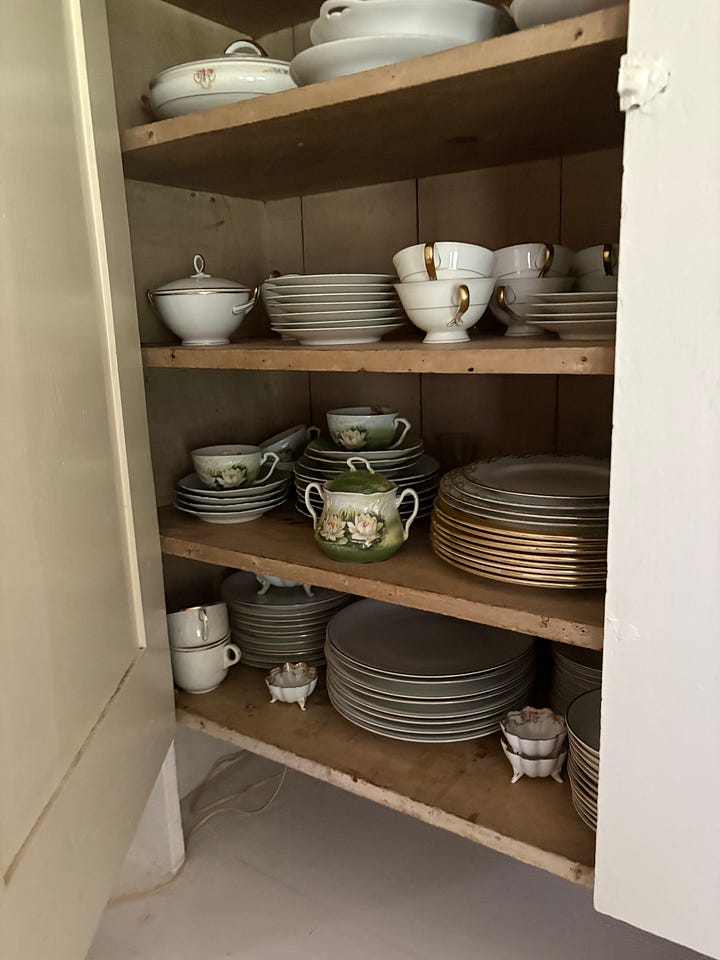
We learn how much was lost and how some objects have been rescued and are even now finding their way back. The house is full of empty hooks, but a few pictures have been restored. Modern pictures in this old farmhouse.
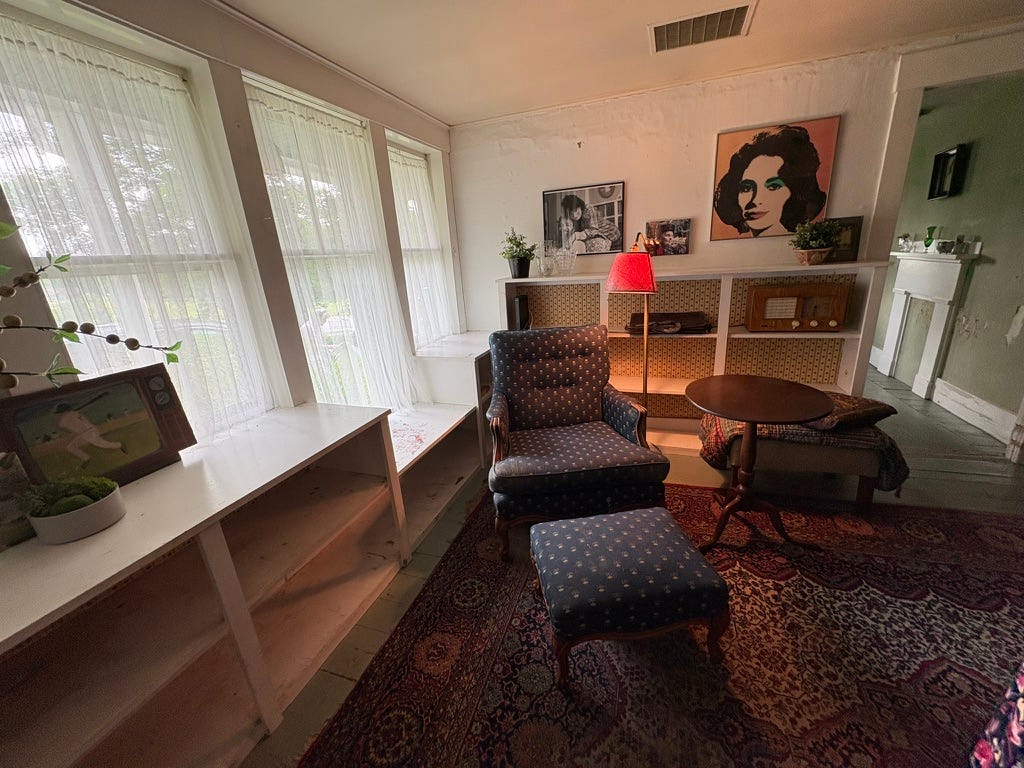
Mary is something of a poet herself. As we stand by the bookshelf in the living room admiring the toy ox cart and team of painted wooden oxen, she says the house is a poem. She says the loss perhaps is better than everything having been preserved as it was the day Don died. The last Boston Globe on the table by the chair. The empty space makes space for poets to come and find room for themselves and for their own words.
I jot down words that want to settle themselves into lines, stretch towards becoming their own poems:
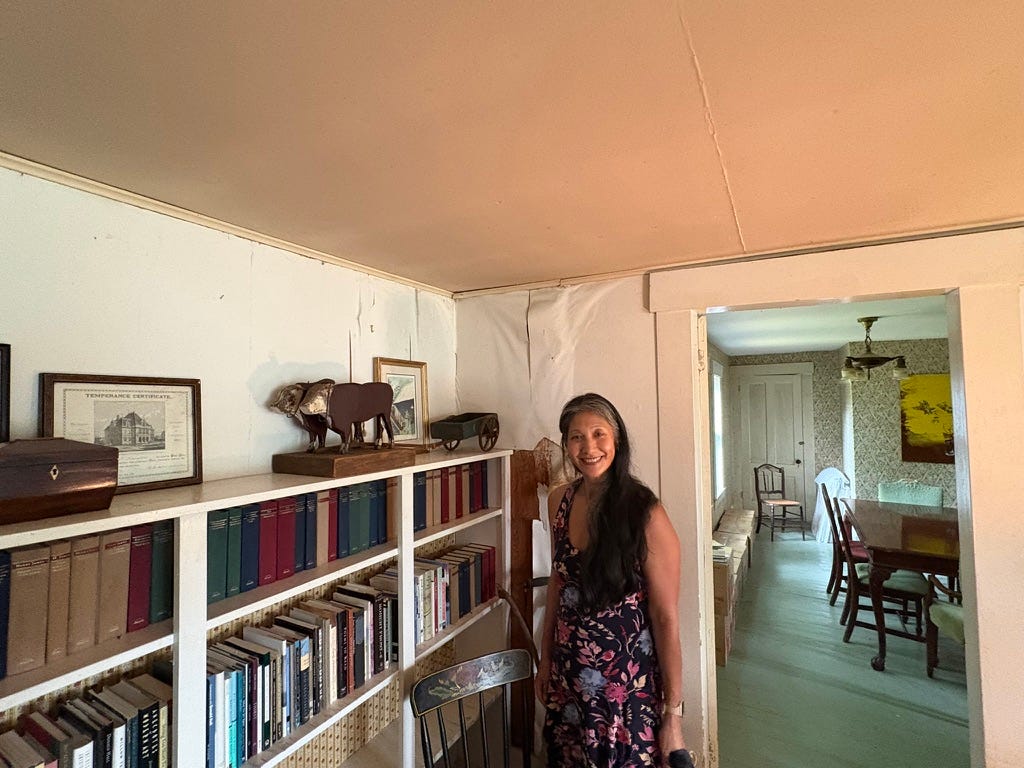
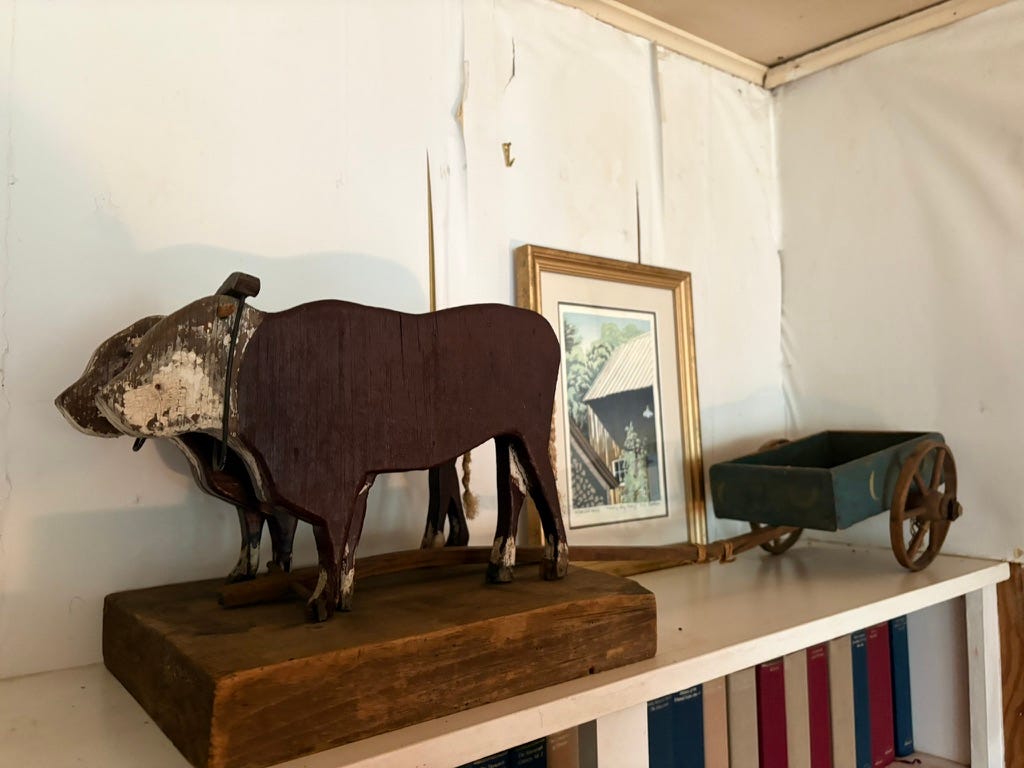
Mary Lyn talks about the hopes for future residencies and the very great need for roof repair and fundraising. Interspersed with anecdotes about Jane and Don are discussions about plans for the future of the non-profit, repairs to the plumbing, the work being done here and there.
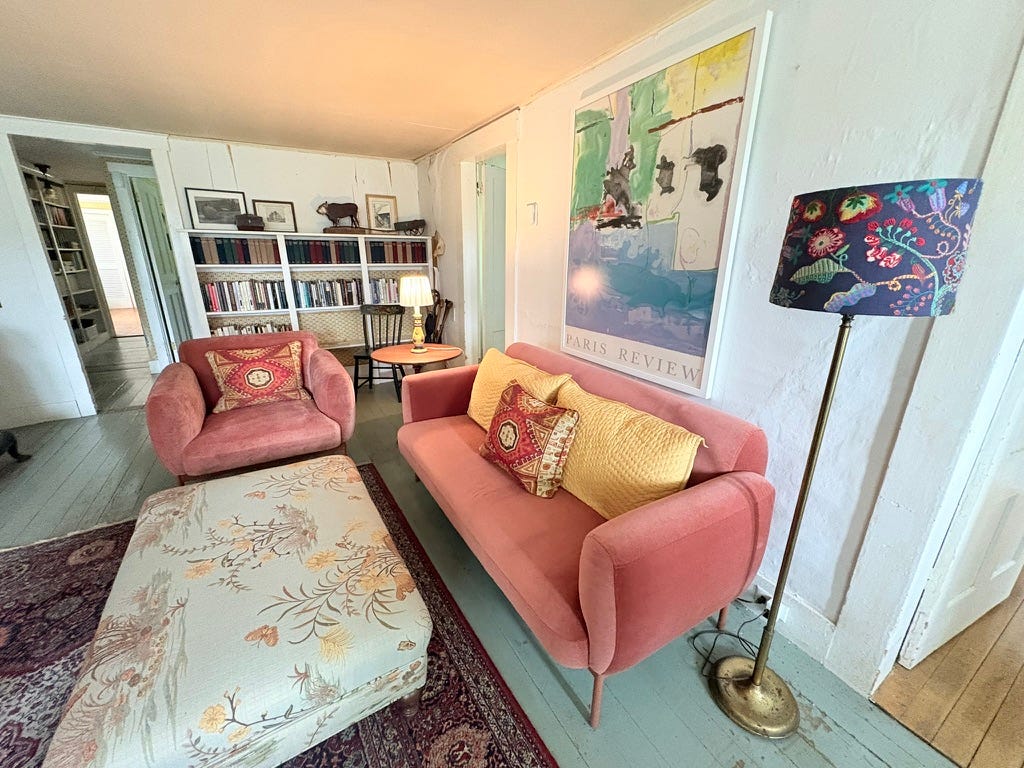
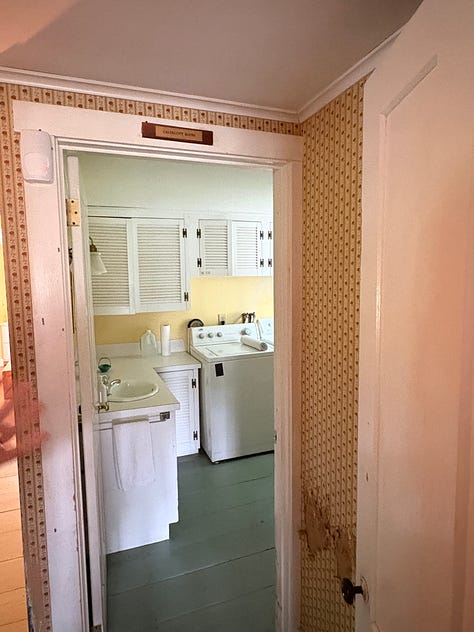
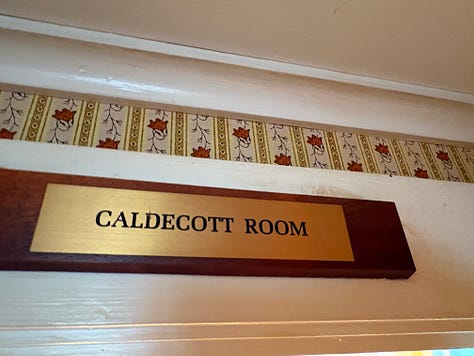
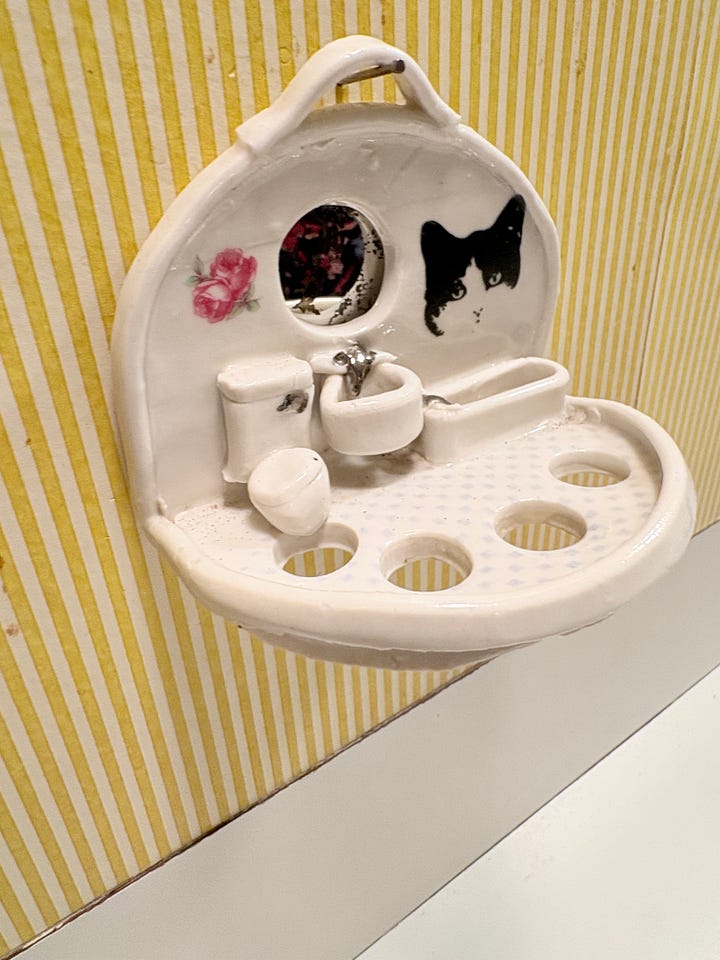
Mary Lyn has been a neighbor for a long time. When we poke our heads into the bathroom (the plaque in the hallway says Caldecott Room since it was built with money from Donald Hall’s Caledcott Prize for The Ox-Cart Man.) Mary tells us about brushing her teeth at this sink and looking at the comical toothbrush holder when she was dog-sitting while Don and Jane were out of town.
She tells us about reading gallies of new poetry that came in the mail and about writers she met, about answering the phone and talking to writers.
I imagine the serious conversations about literature and poetry and art. Donald Hall says this farm grew poetry. And I like to think it will continue to grow poetry. I feel seeds of poems planting themselves in dark places in my brain.
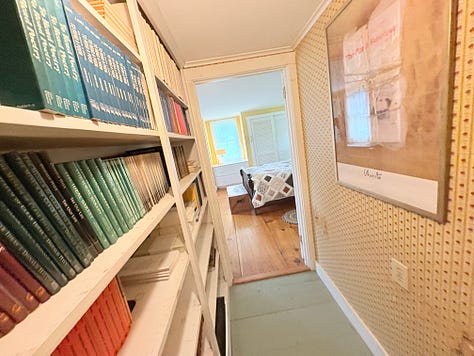
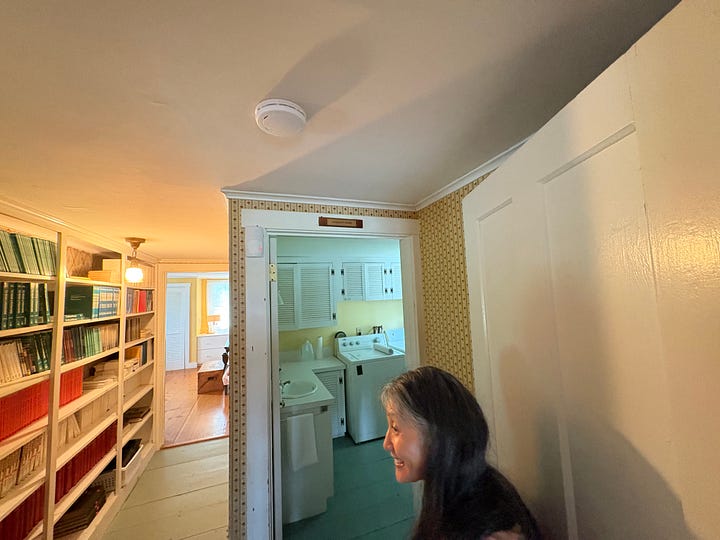
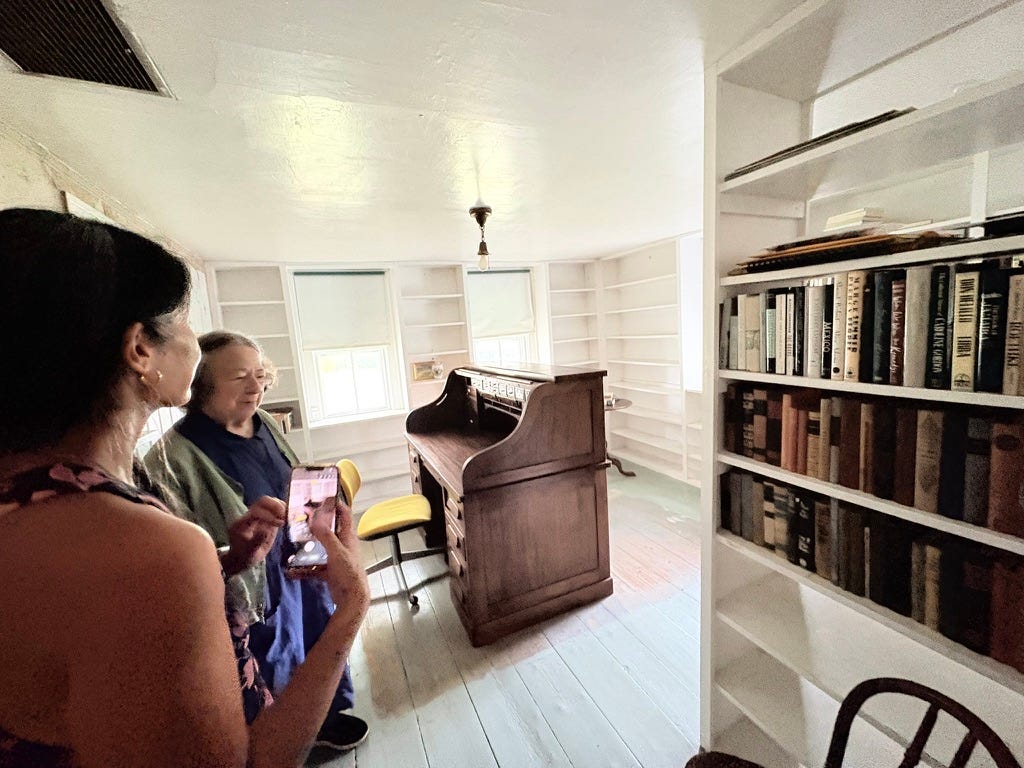
Every room has built-in shelves and so does the back hall. They are mostly empty, but some books have been reclaimed. Empty and not empty. The house doesn’t feel like a museum. It doesn’t feel inhabited, but neither does it feel abandoned or deserted. It holds onto its sense of self and Mary’s stories and memories keep its spirit alive. What will it be when those who remember are gone? Will it then fade into museumhood?
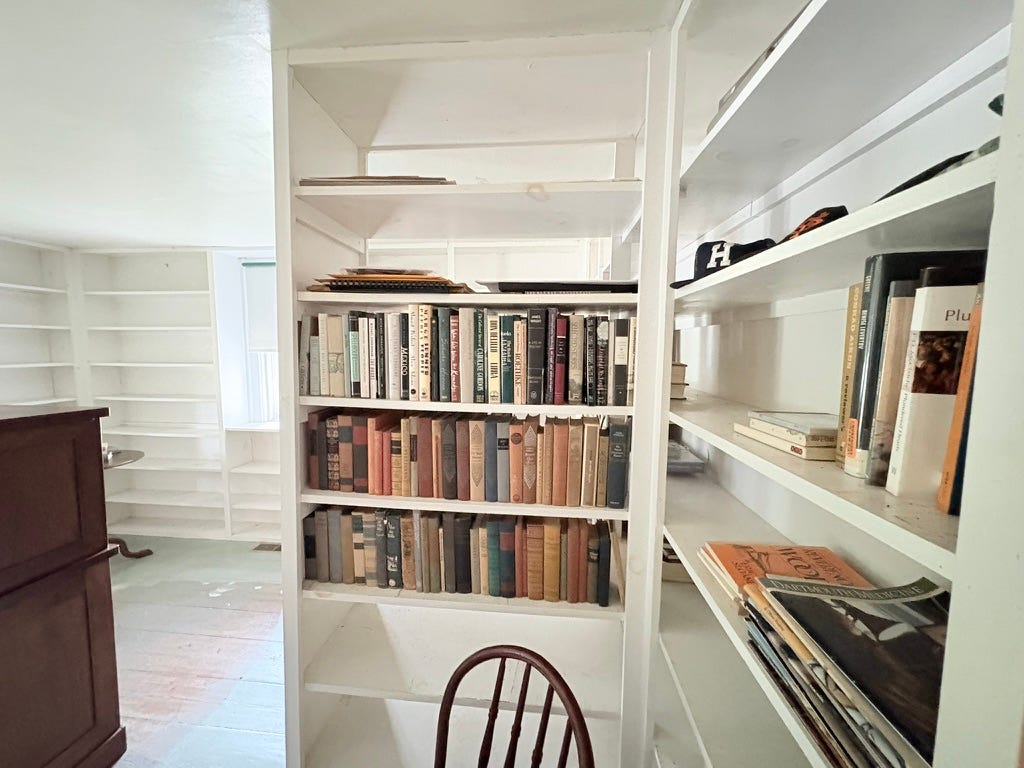
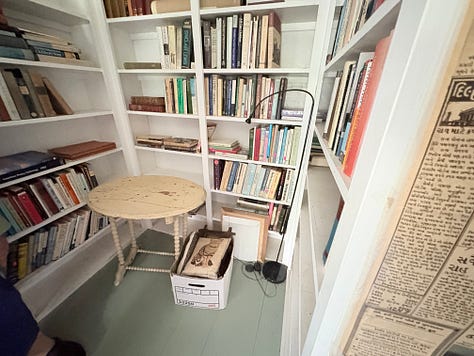
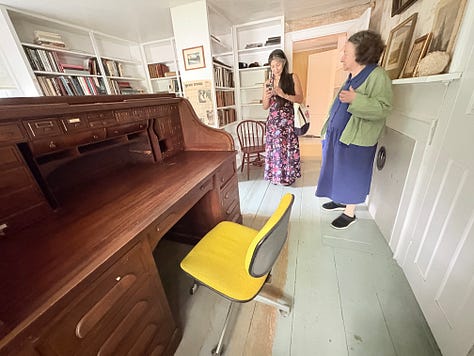
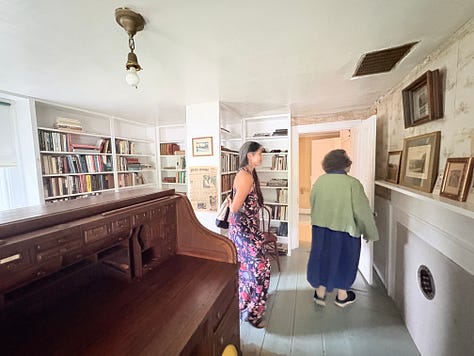
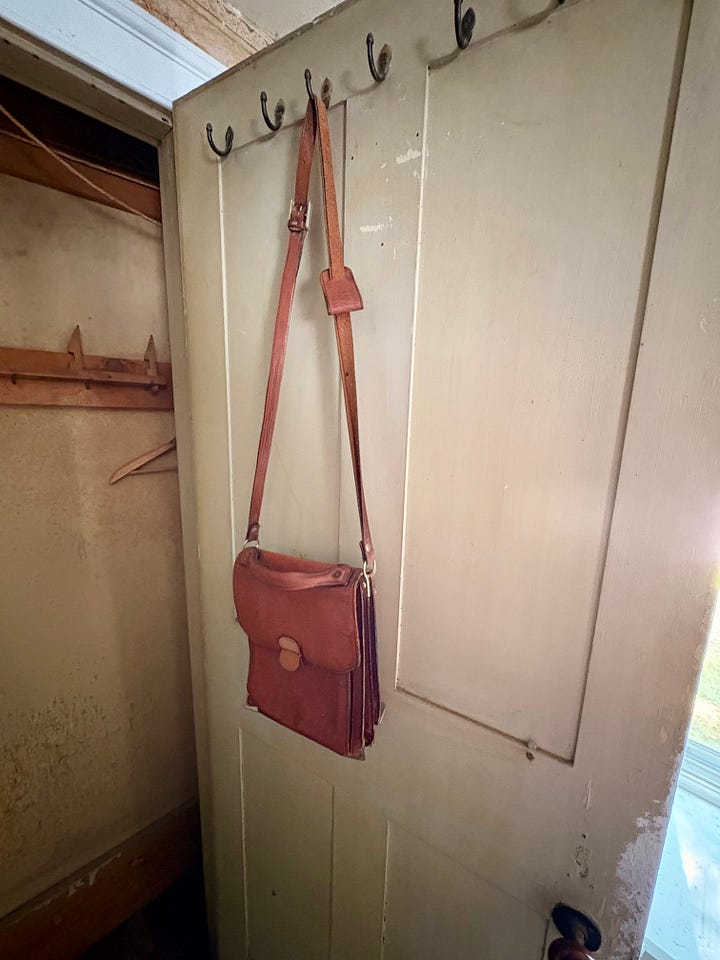
Don’s office/workroom has so many built-in shelves, even one that sticks into the room. A rickety little table for the fax machine is propped up in a corner. The large dark wood desk with the rolling chair from Staples in Boston. Here’s the closet with the leather satchel that held books when he was going to readings. I covet the satchel, dare to lift it in my hands and open it, to peek inside and imagine slipping books into its pocket and slinging it over my shoulder. I’m tempted to sit in the desk chair and roll across the floor.
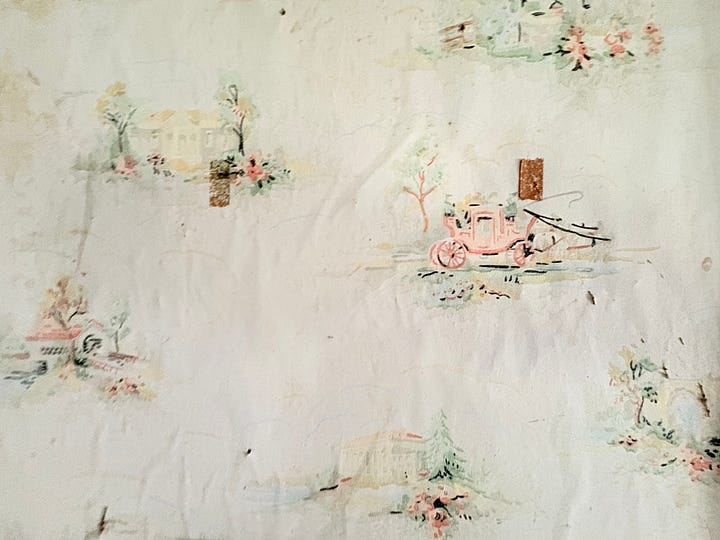
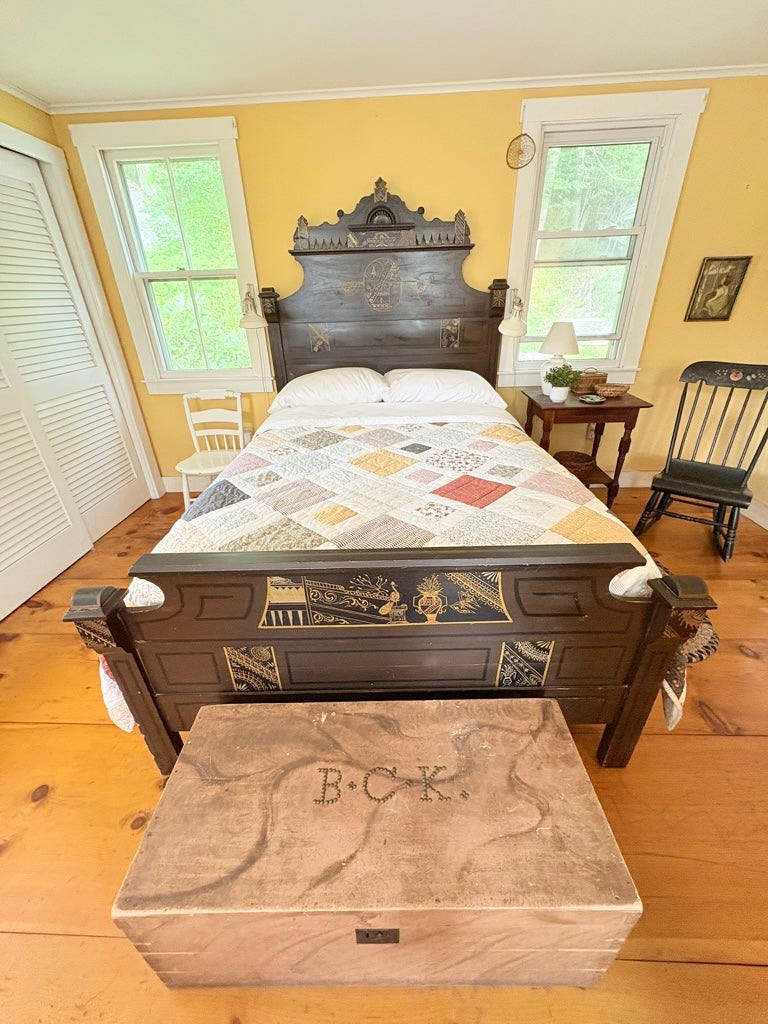
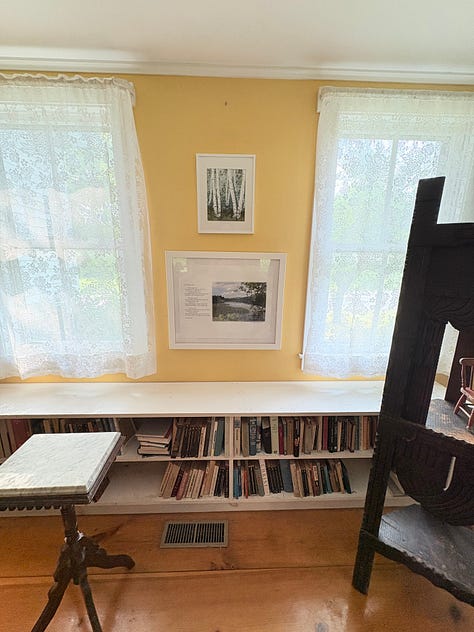
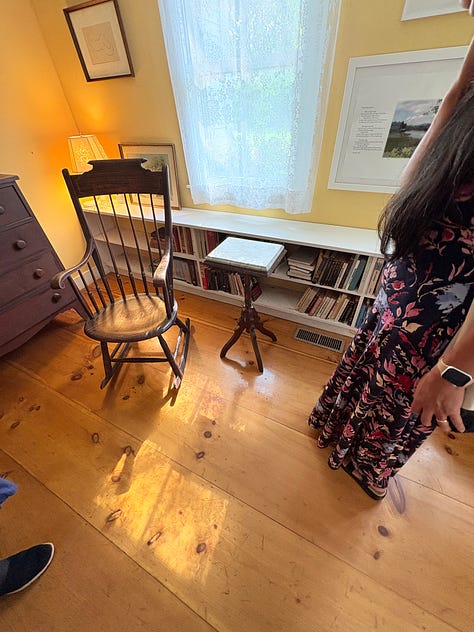
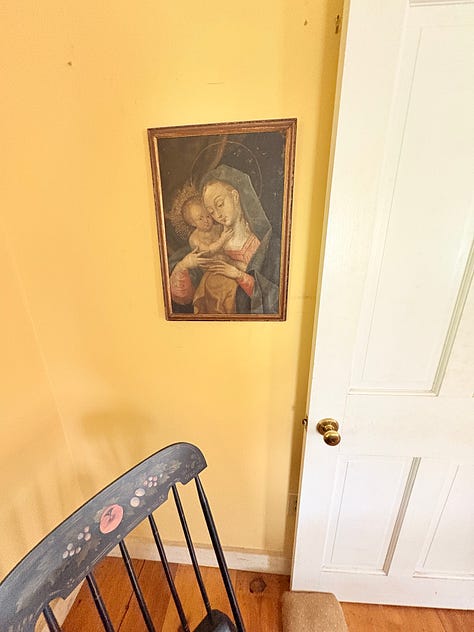
The yellow bedroom with the painted bed5 and paintings on the walls feels like one of the most put together rooms in the house. A beautiful place to sit and dream. The windows with lace curtains look out to the pond, which is now hidden by trees.
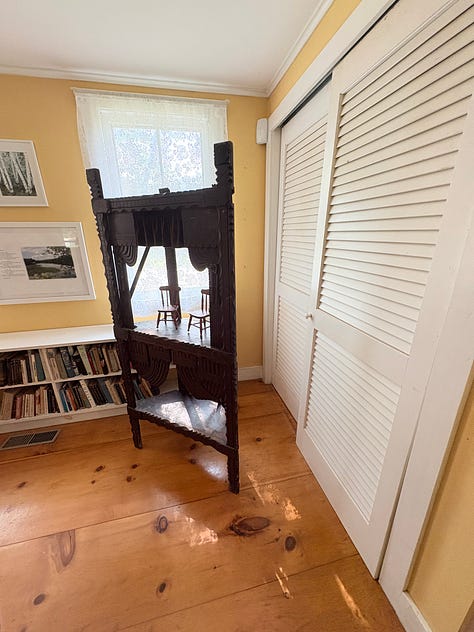
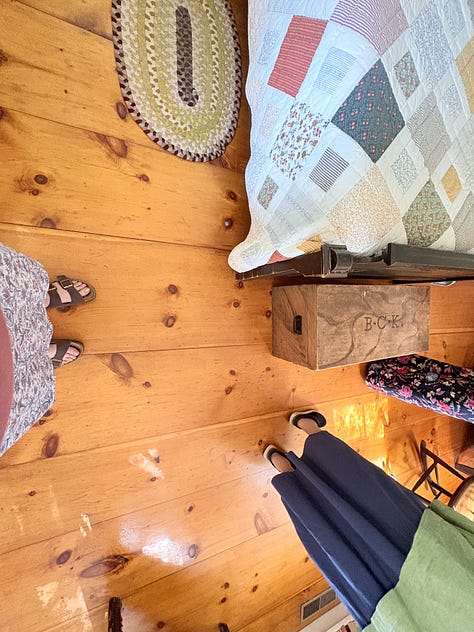
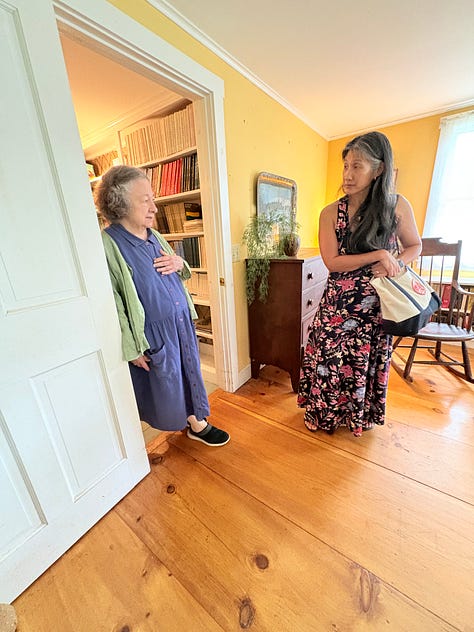
We head up perilously steep stairs to the mostly unused second floor: the best bedroom where they put guests, the bedroom where a cousin used to stay in winter when he came down from the mountain.
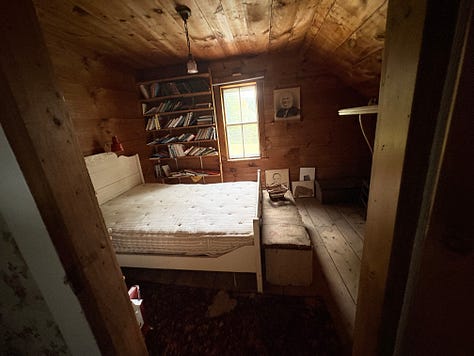
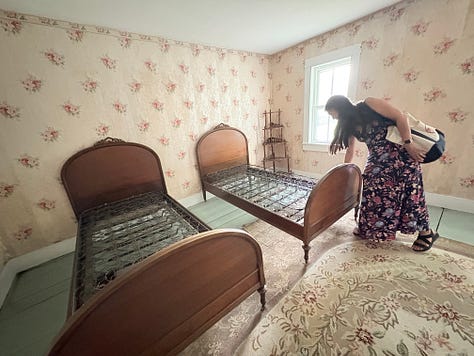
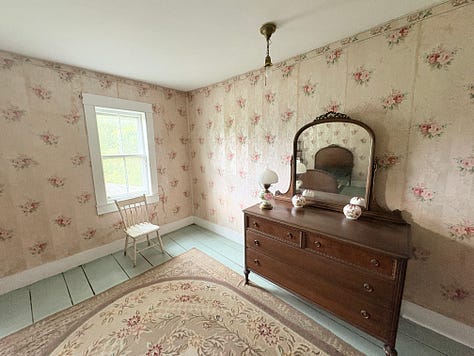
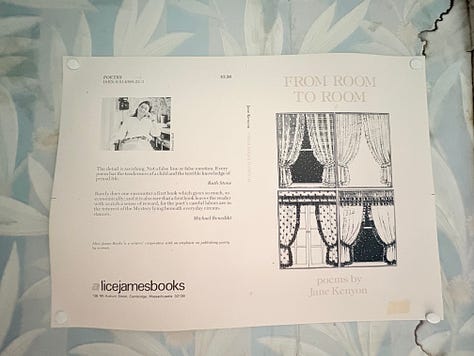
And the office that used to be Don’s where the proof for Jane’s first book is tacked on the wall next to the window from which you can no longer see Mount Kearsarge.
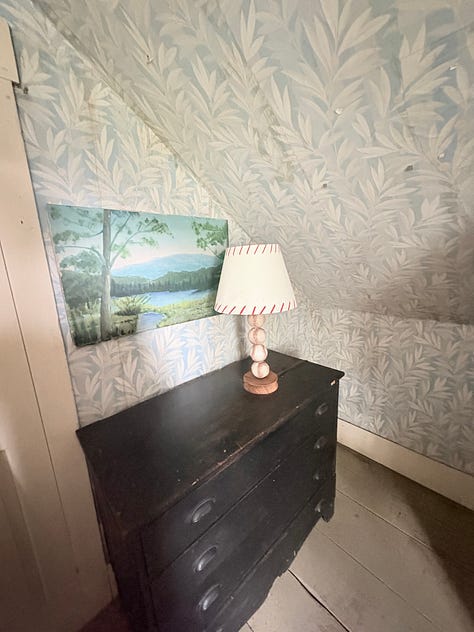
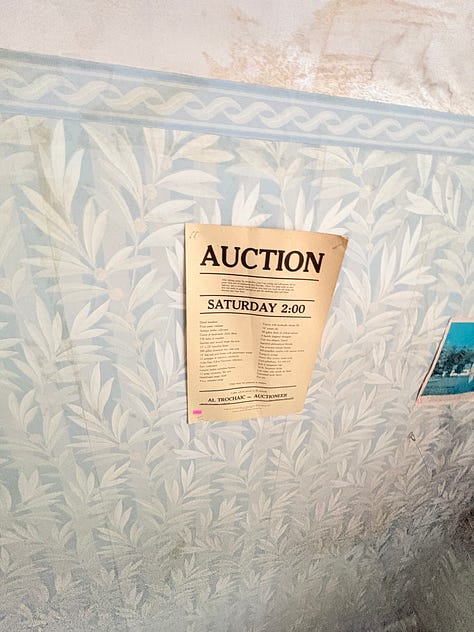
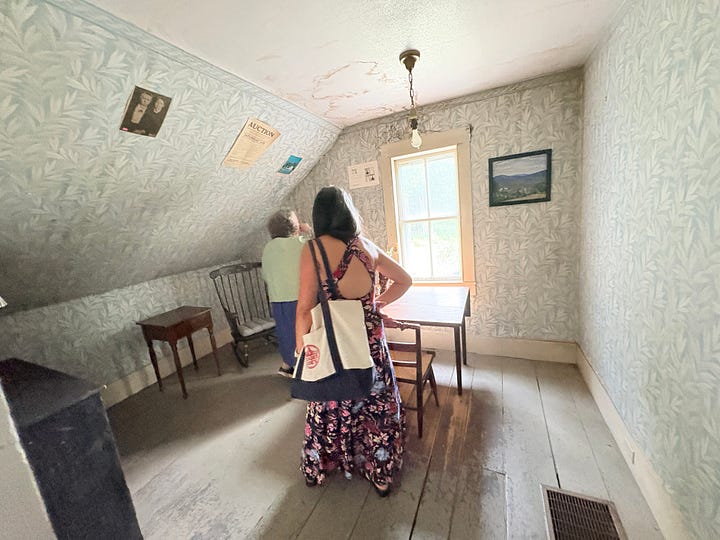
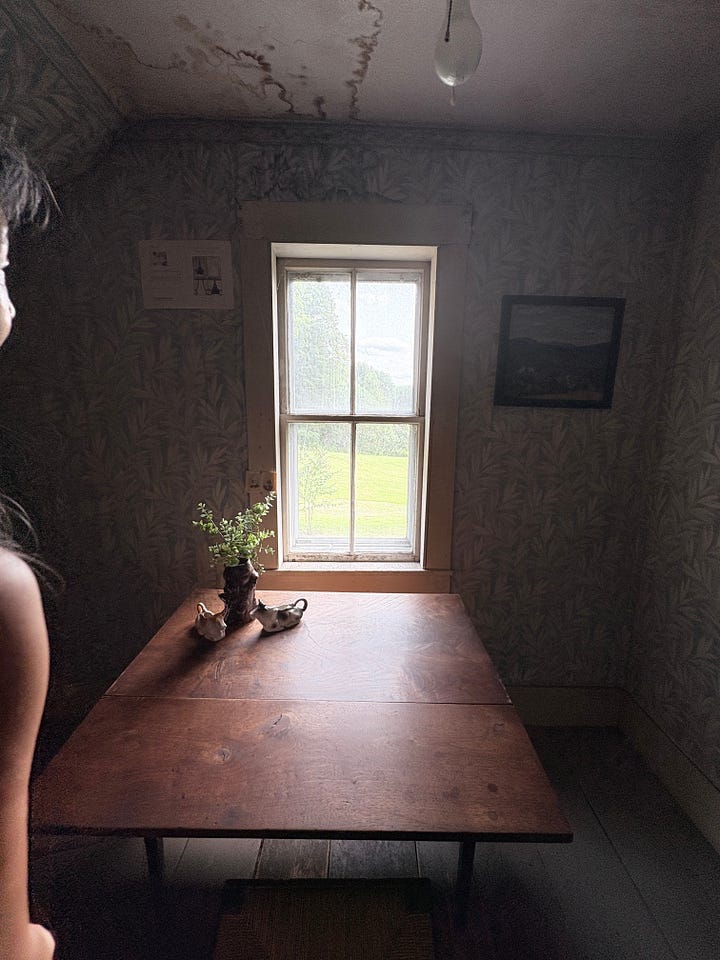
We go through an attic space and into the back room and across some planks that groan and shift alarmingly— but Mary says they are safe— to find Jane’s workspace.
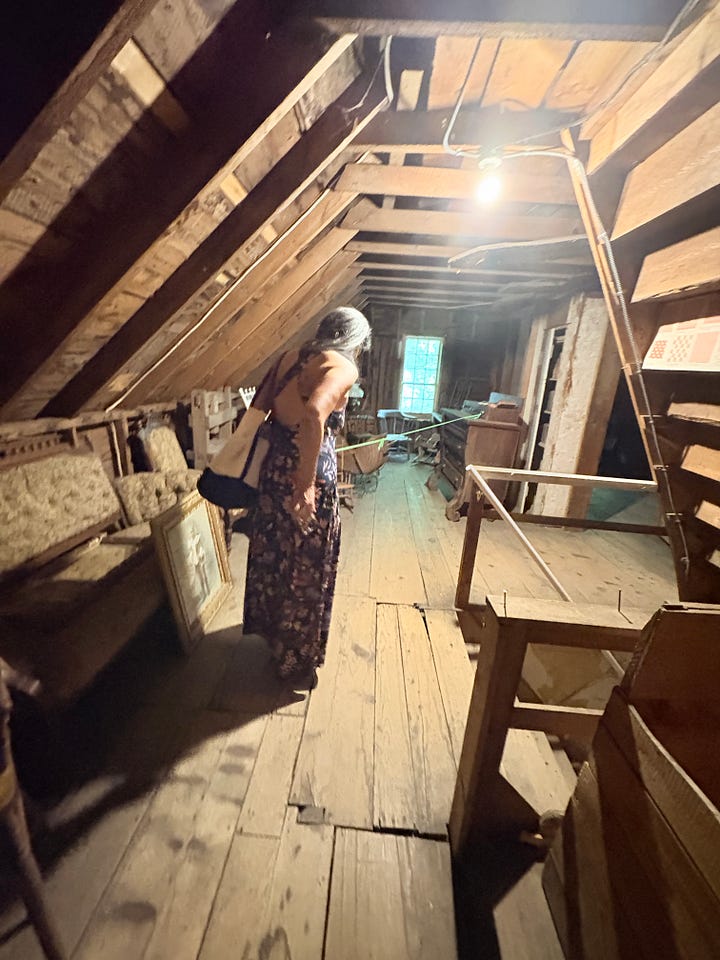
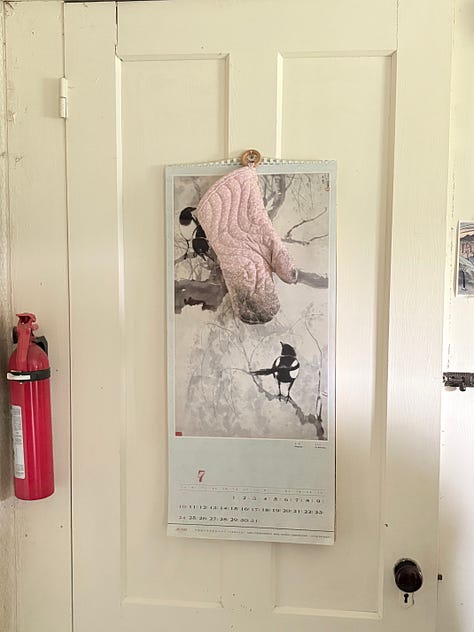
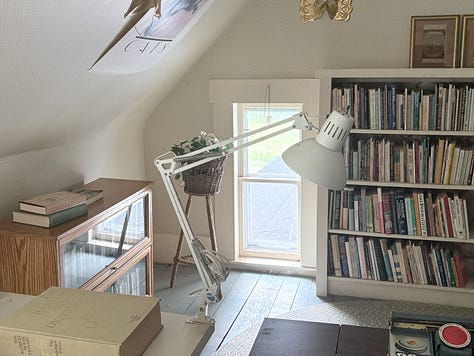
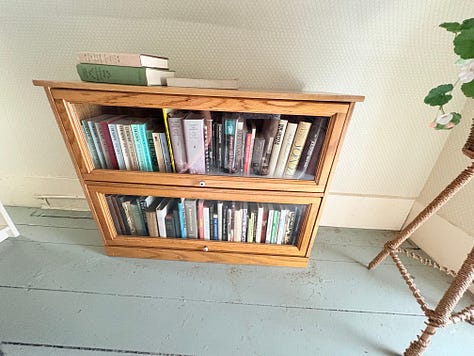
Jane’s is a perfect office, bright and cheerful with a desk that looks out the window, her quilted cushion on her desk chair. There’s a large cast iron stove, a sitting area with bookshelves, a cozy chair, a rug. On the back of the door hangs a Chinese calendar and a homely oven mitt— necessary for the tending of the stove, but I also imagine Jane running down to tend to something in the kitchen below before coming back up here to write a bit more.
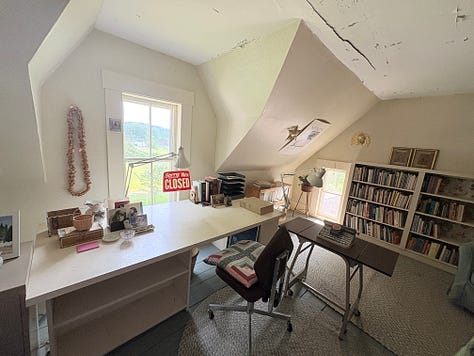
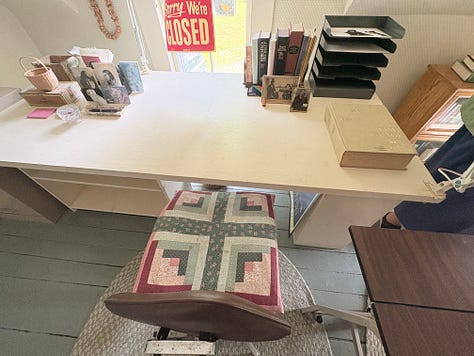
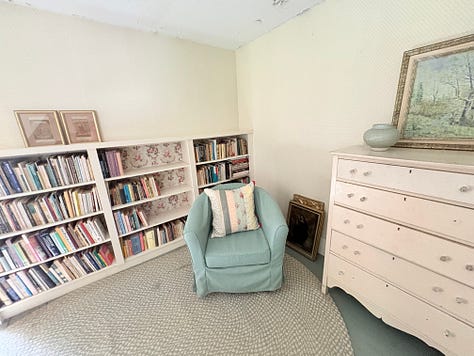
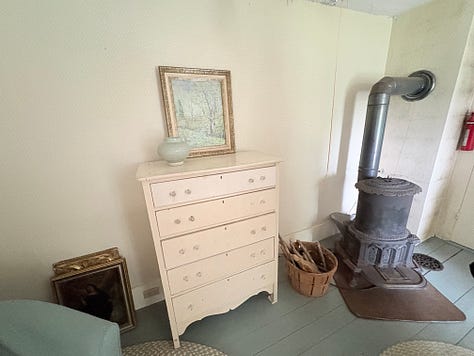
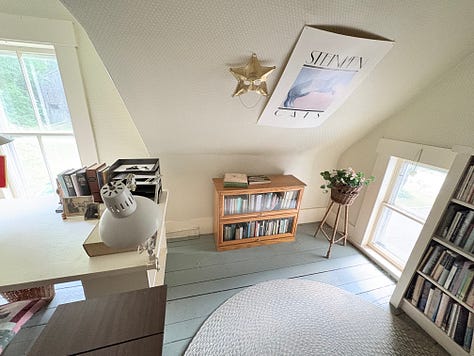
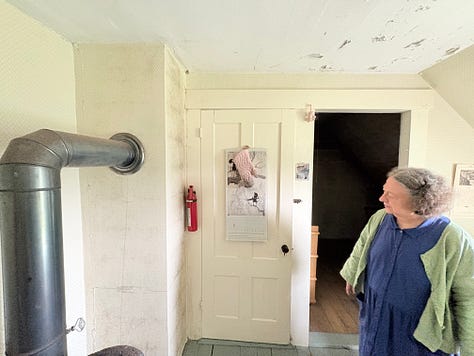
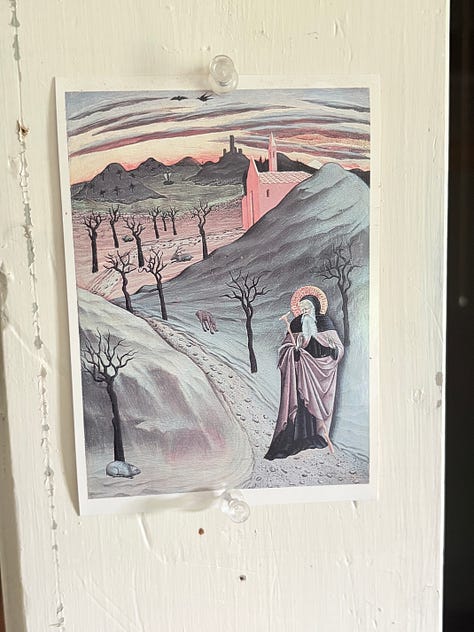
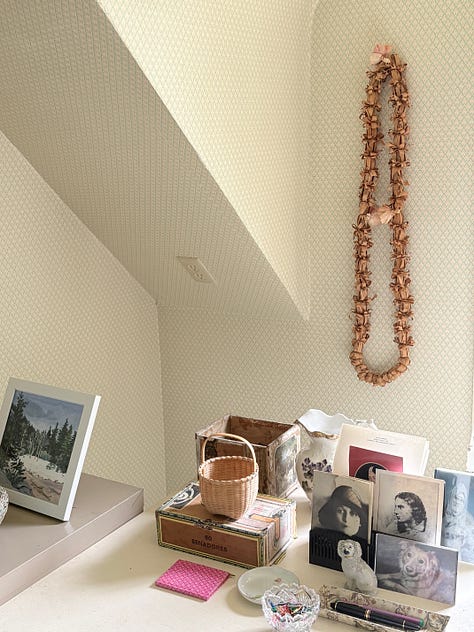
There’s a second window, charmingly low right at the floor, and the ceiling slants under the roof. Oh yes I crave a chance to spend a day here reading and writing and dreaming. Did Jane know how lucky she was to have this perfect room of her own? Not that I would truly exchange my family for this solitude for more than a few days or a week; but oh it does look like bliss from where I type this in my bedroom on the southwest corner of my little 1950s Campanelli ranch house.
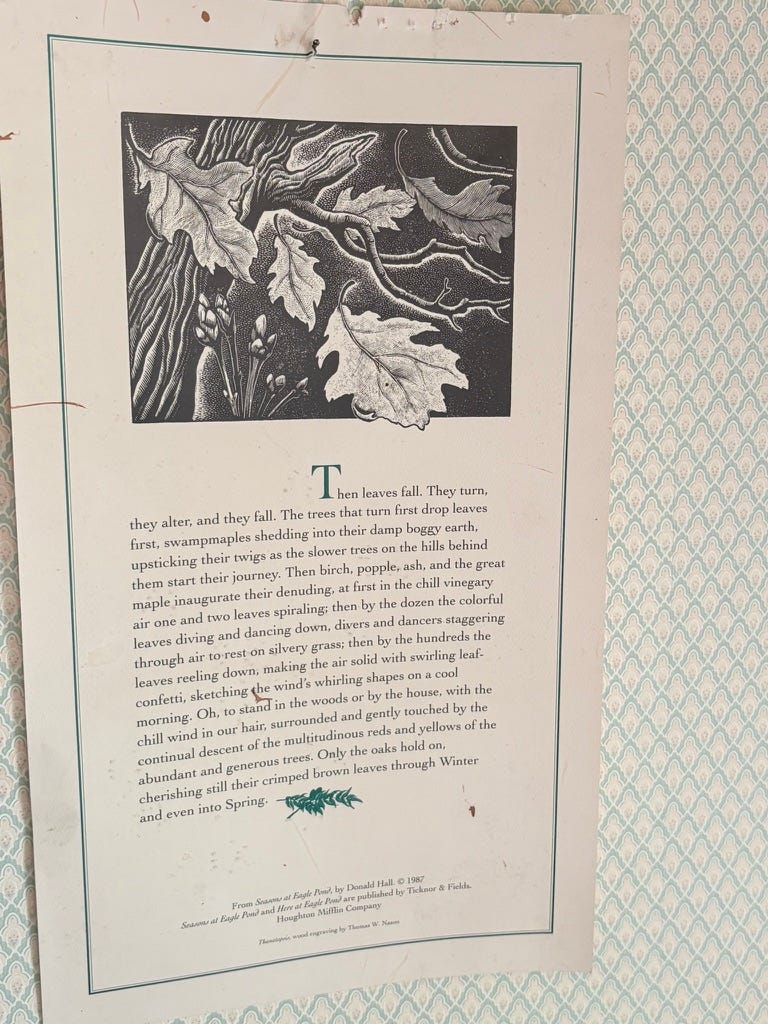
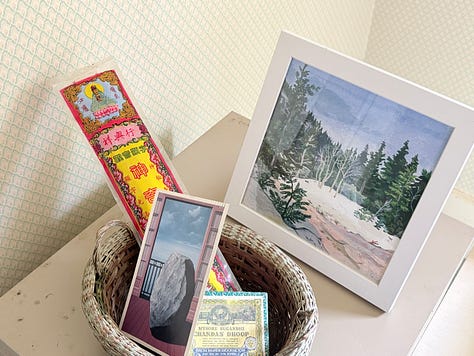
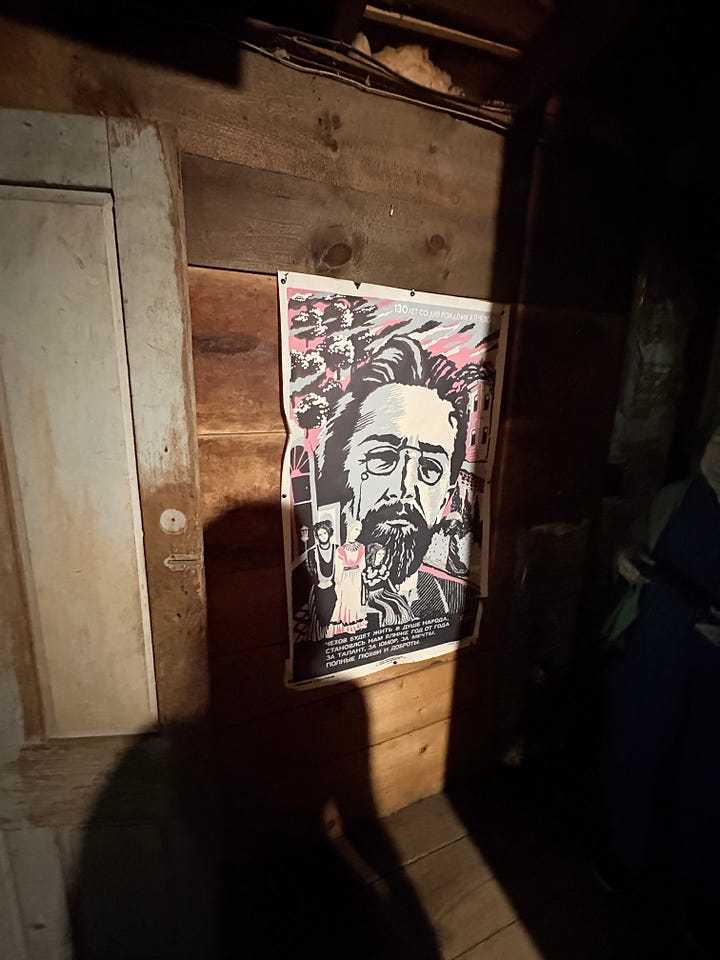
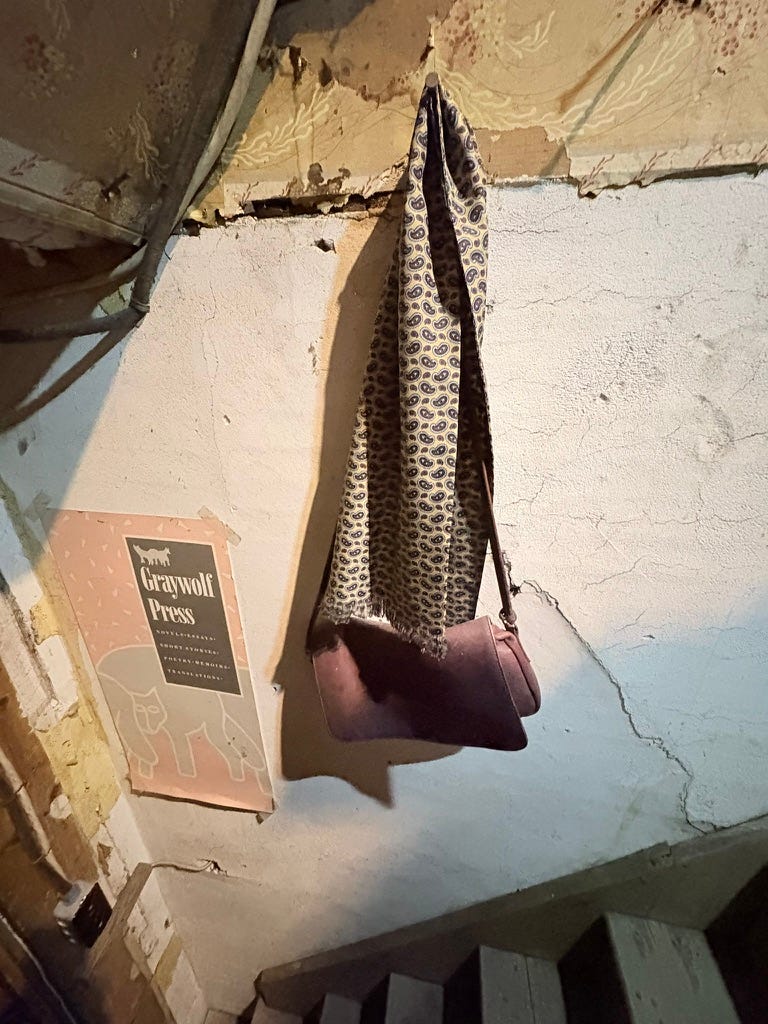
We descend from Jane’s office down a small back stairs that opens into the kitchen. At the bottom of the stairs is a hook where someone has placed a handbag and a scarf. There’s a poster for Graywolf Press there too, beside the door.
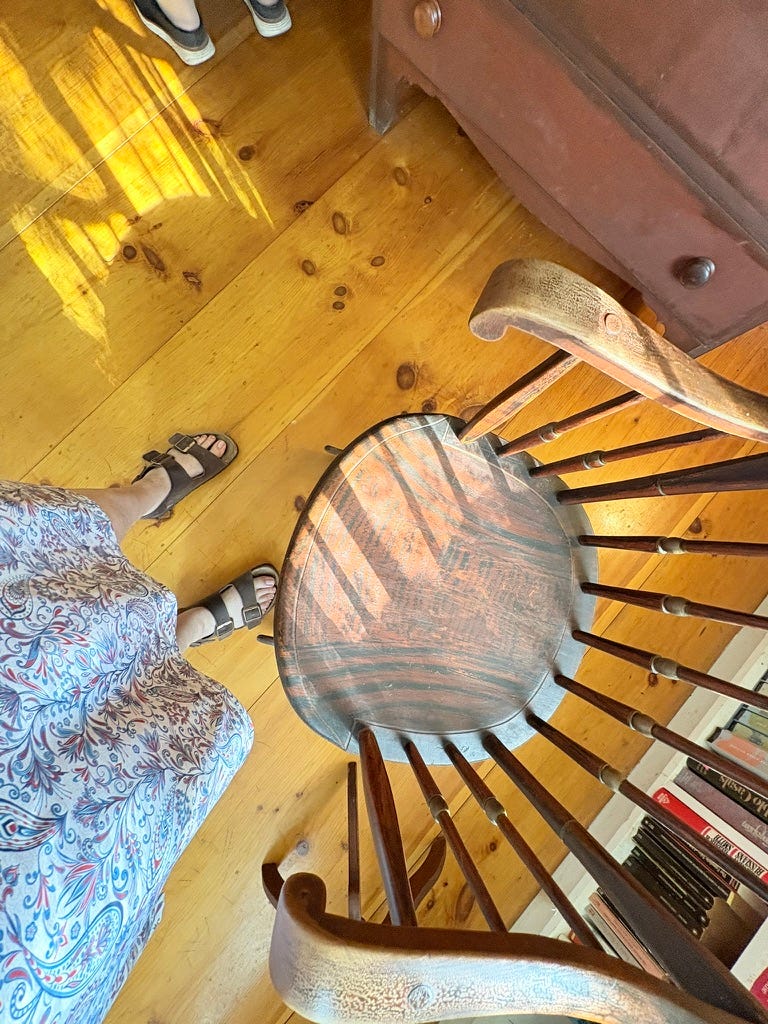
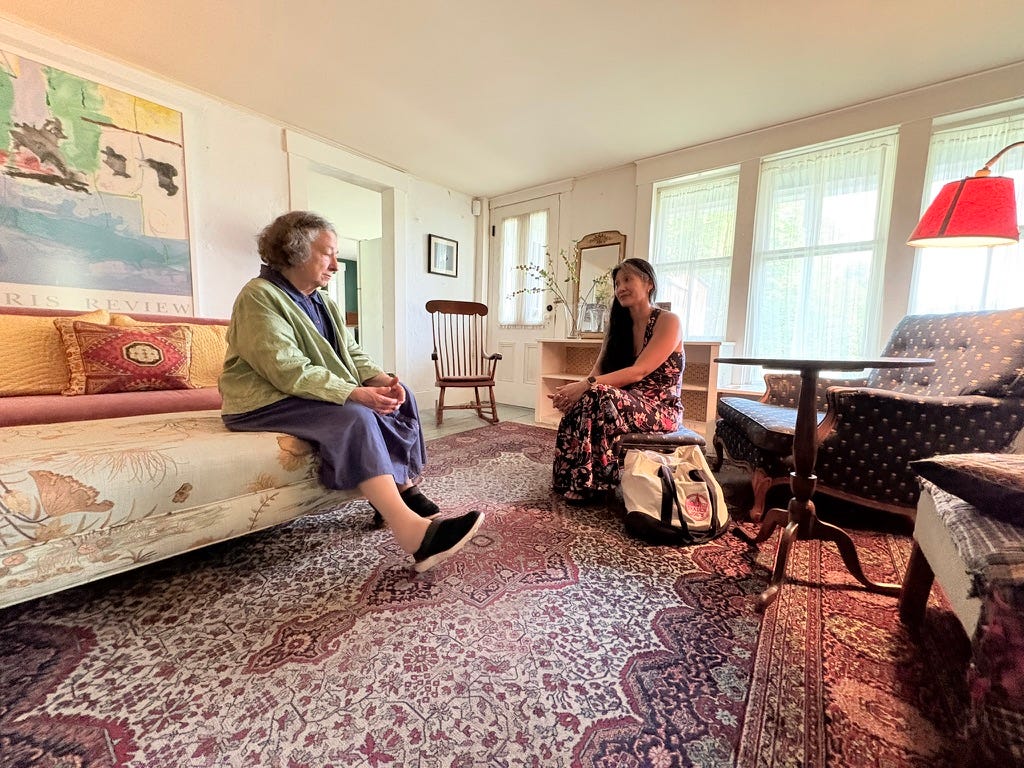
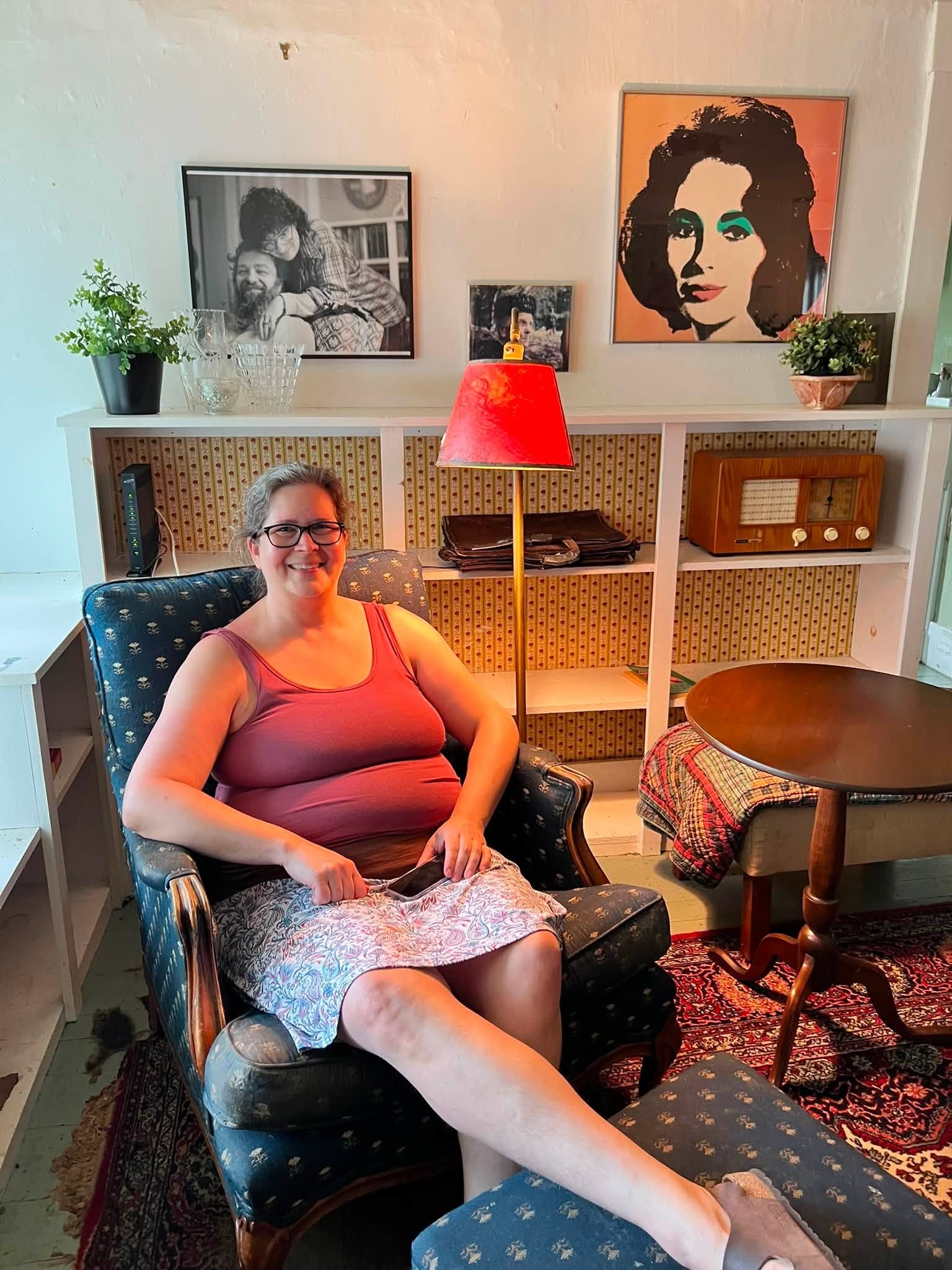
We start to say goodbye, but it feels too soon, so we return to the sitting room where Zina and I take turns sitting in the blue chair.
We learn that there were once two blue chairs facing each other across the room, one for Jane and one for Don. Sometime in the years after she died he fell asleep in his chair with a cigarette, something that happened more than once, and the chair caught fire and ended up being dragged into the yard by the fire department and hacked to bits. Then Jane’s chair took its place.
So while we were sitting in Don’s chair, we were also sitting in Jane’s chair. A lovely bit of history playing out in Mary’s story.
This video contains more views of the Eagle Pond farmhouse as it is now, paired with a recording of Jane reading her melancholy and prophetic poem, ‘Otherwise’. One day, she says, I know it will be otherwise. One day she will not be here. And so it is today. And one day I will not be here either.
Be sure to visit the At Eagle Pond website to read the wonderful newsletters that are full of stories and photographs. I’m sure Zina will have her own post and photos up soon, I’ll link them here when she does.
Jane Kenyon “Finding a Long Gray Hair” from Room to Room, 1978 and reprinted in Collected Poems, 2003.
Jane Kenyon excerpt from “Two Days Alone” from Room to Room, 1978 and reprinted in Collected Poems, 2003.
Jane Kenyon excerpt from “Here” from Room to Room, 1978 and reprinted in Collected Poems, 2003.
Jane Kenyon, excerpt from “Otherwise” from Constance, 1993 and reprinted in Collected Poems, 2003.
Comments
Nothing yet. Say the first thing.
Sign in to join the conversation.