

I’m writing to you from the aisle seat, en route to New York to launch and tour ARE YOU MAD AT ME?. Before I get into that, I firmly believe that flights are designed for the following:
Looking through old photos and
swimmingdrowning in nostalgia.Replaying every social interaction you’ve ever had.
Reflecting on every major life decision you’ve made.
Fantasizing about a life you have yet to see, but know is waiting for you.
So really, there’s no better place to free-write a newsletter to you. I wanted to take a quiet moment to sit and chat, catch up, and share what’s on my mind before the launch craziness begins.
Shall we both take a deep breath in through our nose for 4-3-2-1, and slooooowly release for 6-5-4-3-2-1.
That was nice. Take a few more if you need.
Last week, the podcast episode I recorded with Modern Love was released. I talk about a lot of things relating to the book: why we worry are you mad at me?, how people pleasing makes us lose our sense of self, and I share personally about grief, but the kind of grief that isn’t always talked about: grief in the form of longing. Grieving a relationship that’ll never be what you need. Cutting that last thread of hope that someone — a parent, a partner, a friend — could change and be the person you yearn for. Since then, I’ve been touched to see so many of you reach out. How funny that the feelings we feel the most alone in, are the ones that are the most shared - we only feel alone in them because they’re kept hidden, tucked away in shame and secrecy.
In my book, I have an entire chapter about processing grief, and with that, processing anger. And I structured the book this way because I don’t think we can jump straight to acceptance or compassion without first allowing ourselves to feel the emotions that we’ve been taught to shove down.
“Grief isn’t just about losing someone when they pass; it’s also about what you didn’t have. It’s wanting to be nurtured but not having a parent who can nurture you. It’s watching other families be with one another on holidays in a way you’ve only dreamed of. It’s wanting to call your parent just to talk but knowing that they won’t listen. It’s a feeling of I want to go home when you’re in your own family’s house. It’s knowing that you would be a family- oriented person if only you had a family to be that person with. It’s letting go of that last sliver of hope that someone could change and be the person you need them to be. It’s letting go of the hope for a childhood, a family, a parent relationship, a sibling relationship that you didn’t have but deeply wanted. This, right here, is a necessary step in the fawner’s healing process. We can’t jump straight to acceptance and compassion without first acknowledging the ways in which it hurts, too.” - page 65
For many of us who resonate with this question of are you mad at me? — being hyper-attuned to that question really speaks to a deeper feeling. When I try to put language to that feeling, I come up with:
Am I in trouble? Do you like me? Am I secretly “bad” and it’s just a matter of time before everyone finds out? Is something inherently wrong with me? If I show you all of me, will you stay or will you judge, reject or abandon me? Am I safe?
For many, this deeper feeling stems from a much younger place, and wondering are you mad at me? was very necessary during a period of time. Maybe you had a volatile caregiver, and being hyper-attuned to their moods was how you felt in control in an an environment that otherwise felt very out of your control.
Maybe conflict was dealt with in extremes (yelling, door-slamming, silent treatment) and was then brushed under the rug. Maybe you learned your parents’ moods by the sound of their footsteps on the stairs. Maybe you learned to blame yourself for everything because nothing was ever acknowledged.
Maybe you hold an identity that has forced you to morph yourself into someone that the majority would approve of. Maybe you’ve had to mask, conceal and contort yourself so that you could feel a sense of safety and belonging.
There are many circumstances and environments that feed into that foundational need to please — these are just some of them.
When we’ve needed to abandon ourselves in order to obtain safety: this is the fawn response. When our body is detecting some sort of threat — we appease the threat, satisfy it, try to be liked by it, prove ourselves to it. In order to feel okay, I need to do more and try harder — and it’s never, ever enough.

Sometimes, we need to fawn, whether it’s appeasing an abuser for genuine safety or appeasing our boss for a paycheck.
But when we’re in this survival response all the time, when we’re doing it in relationships that are actually safe, that’s when it leads to exhaustion, resentment in our relationships, chronic people pleasing, constant overthinking (why did they ‘thumbs up’ my message instead of ‘hearting it’?!), avoiding conflict at all costs, saying yes when we want to say no, feeling like we’re “performing” in our relationships because we feel like we can only show people the “best” versions of ourselves, being drawn to people that hurt us, silencing our needs, and feeling disconnected from who we really are because we’ve spent our lives being hyper-attuned to what other people need, feel and want.
“For most of my life, I thought fawning was just my personality. I almost took pride in it, thinking I was simply a cool girl who didn’t have many preferences or opinions. I could be a chameleon in social circles that I didn’t even want to be a part of and adjust my personality to be palatable to whomever I was trying to please. That chameleon–cool-girl vibe was genuinely protective for a long time. I’d closely monitor my dad’s moods and say the right thing at the right time, or not say anything at the wrong time. When I noticed my dad’s behavior start to escalate, I did anything I could to prevent an explosive outburst. Honestly, it was just easier to make sure he was happy than deal with what would happen if he wasn’t. Maybe if I’m happy and perfect and good, he’ll be happy, too. Maybe if I’m likable, he won’t get upset at me. None of this was conscious, deliberate thought—fawning is an unconscious response.” - page 14
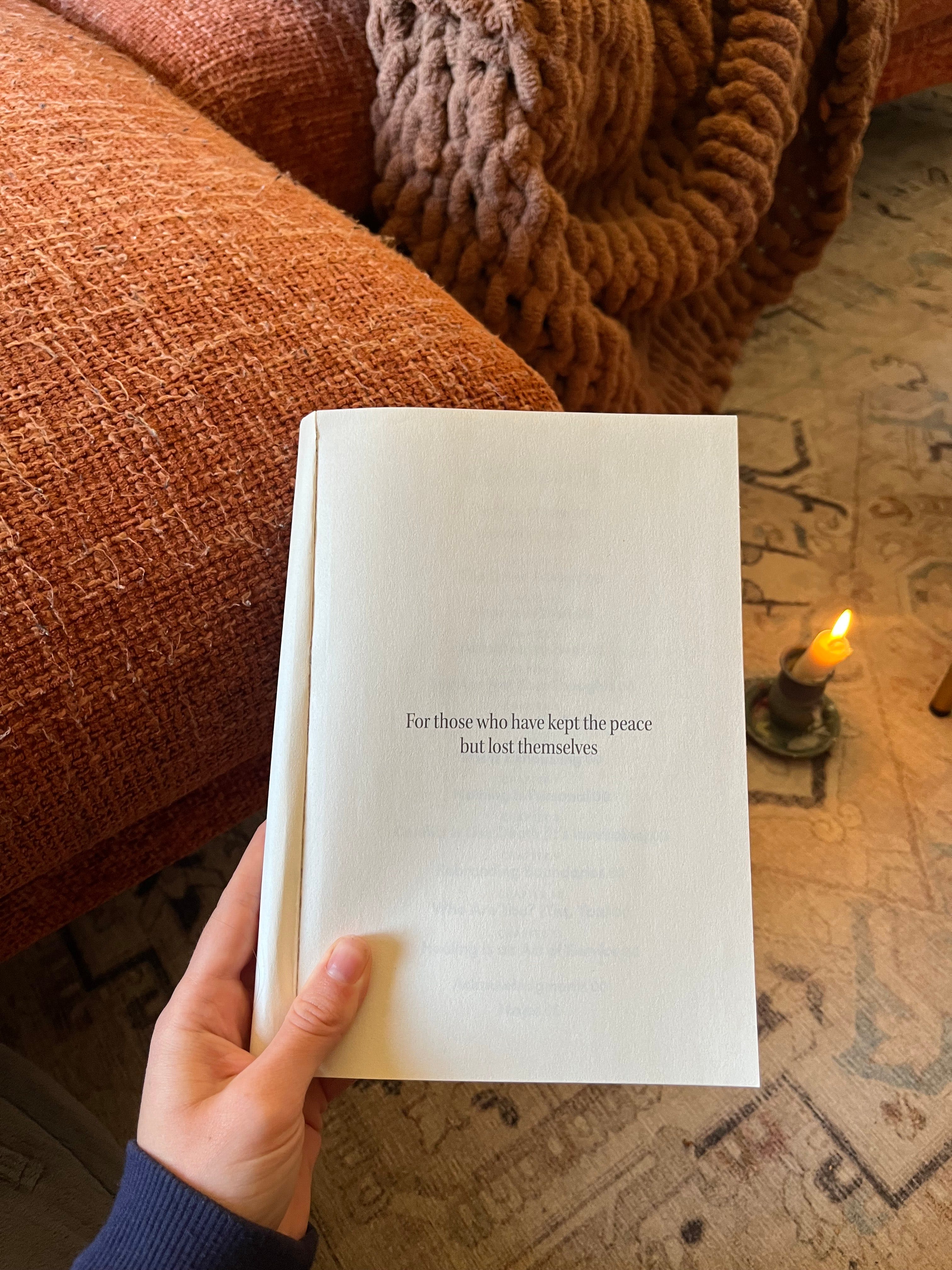
It’s exhausting. And there’s a way out.
This is where I tie it back to processing grief, and anger, and all the messy emotions that we’ve been taught to silence, shove down and suffer silently with.
How can we feel at ease when our bodies have a backlog of unprocessed grief and anger?
How can we move forward into a new way of being if our bodies are still stuck in the past?
How can we rewire old people pleasing patterns when our bodies think we still need them every waking moment?
We can’t trick ourselves into feeling safe. We have to really feel it in order for our bodies to believe it. You don’t need to navigate this alone. I’m right there with you on every page — processing, reflecting and healing with you along the way.
In a few hours, ARE YOU MAD AT ME? is officially out in the world. My greatest, deepest hope that this book is a portal into self-understanding, compassion and clarity.
All I could ever want is for this book to support you in coming back to who you really are.
Ending today’s newsletter feels particularly emotional. Is it because I’m on an airplane? (please refer to point #1: airplanes are designed for drowning in nostalgia). Is it because I am so nervous I could vomit? Is it because you, as a newsletter reader, have been here with me through every step of this process? Yes, both, all of the above.
(These are directly pulled from Chapter 3 in my book! Each chapter ends with a set of reflection questions, and an affirmation):
Is there something that you’re grieving? Notice if any resistance comes up as you acknowledge it—that’s okay.
Is there something you feel angry about? (You’re allowed to feel angry.)
As you reflect on your past, are conflicting emotions coming up for you?
Thank you so much for being here, exactly as you are.
Until next time,
♡ Meg
No posts
Comments
Nothing yet. Say the first thing.
Sign in to join the conversation.