
Nigel Tufnell, David St Hubbins, and Derek Smalls stand beside Elvis's grave.
David: "Well, this is thoroughly depressing."
Nigel: “It really puts perspective on things, though, doesn't it?"
David: "Too much. A little too much fucking perspective."
— This is Spinal Tap
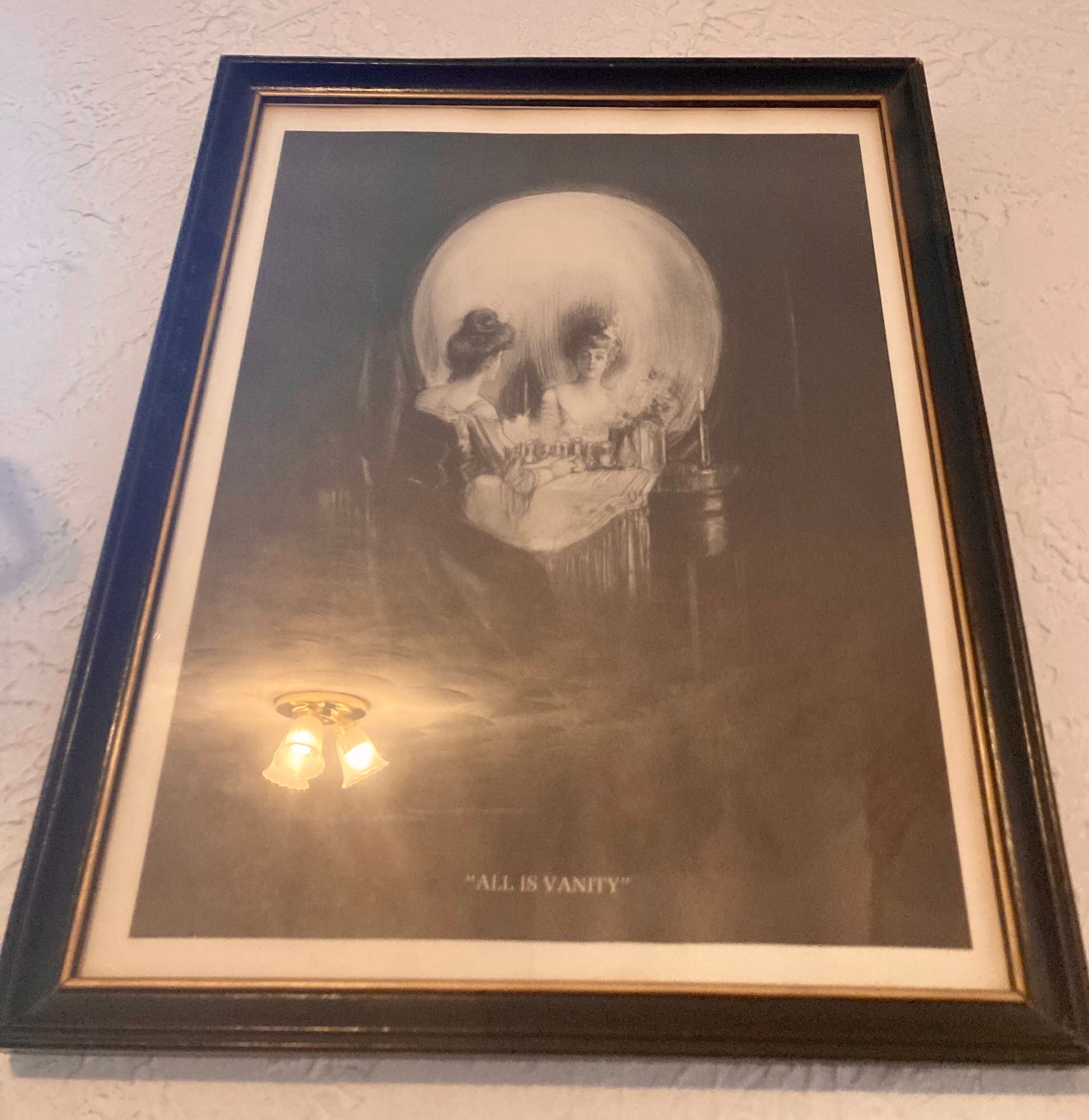
In the above quote, Nigel Tufnel alludes to the classical concept of memento mori (Latin for “Remember you will die”). When a triumphant general led a Roman victory parade, he was accompanied by a slave who would whisper memento mori in his ear. The message was that glory—like shame, and all other human highs and lows—is temporary. Hora fugit: the hour flees. Our pleasures in life are finite, so we should acknowledge their impermanence and enjoy them while they last. Similarly, our sufferings in life are finite, so we should bear them with the knowledge that they, too, shall pass.
We prefer to pretend that we’re immortal rather than to dwell on death. Although we secretly know otherwise, we act as if our accomplishments, our youth, and our relationships will last forever. To bring death’s secret into the light is to confront our own mortality and that of everyone and everything we love. It is to reveal that we’ve invested our time and effort and soul into building castles of sand. Sooner or later—maybe even today—death’s coming tide will knock them over. Hence “a little too much fucking perspective.”
But if all that we love is impermanent, so is all that we hate. If our triumphs are fleeting, so are our failures. Kafka’s The Trial ends with a cry of eternal humiliation: “‘Like a dog,’ he said, as if the shame would outlive him.” But the shame, too, will fade. Our trials, too, will adjourn. Bad moods dissipate. Embarrassments are forgotten. Death disposes of all witnesses. When we’re at our lowest as well as our highest, we should follow the Roman example and memento mori. Or, if you prefer the Hebraic tradition, recall the stirring words of our maker: “Dust you are and to dust you will return” (Genesis 3:19).
Teenagers, especially, suffer from the opposite of the concern so eloquently expressed by St Hubbard at Elvis’s graveside: Too little fucking perspective. They assign too much weight to impermanent things. They value what’s trending over what’s meaningful, their peers’ judgments over their own, their schoolyard over the world outside of it. They fret over social standing while forgetting the great equalizer. (Per the Roman poet Horace: “Pale death, with impartial step, knocks at the hut of the poor and the towers of kings.”).
The insecurities of adolescence are hard wired into our monkey brains. In How the Mind Works, Steven Pinker observes that parents’ waning influence over teenagers is because “as far as reproduction is concerned, the home is a dead end. The child will have to compete for mates, and before that for the status necessary to find and keep them, in other arenas, which play by different rules.” Our teenage years are when we struggle to master the “different rules” necessary to acquire status, and thereby, from our selfish genes’ perspective, reproductive success.
However, in recent years, “normal” teenage woes have gotten quantifiably worse. According to the CDC’s 2021 Youth Risk Behavior Study, 42% of high school students said they experienced “persistent sadness or hopelessness” (up from 28% in 2011) and 22% said they “seriously considered attempting suicide” (up from 16% in 2011). The numbers are worse for girls, with the majority (57%) saying that they experience persistent sadness or hopelessness (up from 36% in 2011) and almost a third (30%) saying they seriously considered suicide (up from 19% in 2011).
Jonathan Haidt persuasively assigns blame for the trend to the shift in the 2010s to a “phone-based childhood which blocks normal human development by taking time away from sleep, play, and in-person socializing, as well as causing addiction and drowning kids in social comparisons they can’t win.” He notes that the rise in teenage despair coincided with the founding of Instagram, the release of the iPhone 4, and the normalization of selfie culture. His collaborative review document outlines the research showing the causative link between the rise of social media and the spike in adolescent mood disorders.
An illustrative example of the phenomenon is a New York Times story on a 14-year-old girl who took her own life after a video of her getting beat up in school was posted on TikTok. According to her father, “She said, ‘I don’t want to be that girl who gets beat up on video and made fun of.’ Can you imagine walking through the school with her face beat in?” As the article notes, “Most children who are bullied do not take their own lives. And experts say the factors that lead to suicide are complicated and often cannot be traced to any single cause.” But clearly, a vulnerable young mind and an easy outlet for public humiliation is a toxic combination.
With the benefit of perspective, it’s obvious that the insults and opinions of teenagers are beneath contempt. But when you’re a teenager–“in the shit,” to use military parlance–it’s hard to look beyond the locker room. You haven’t yet realized that the social hierarchy that seems so consequential will be flattened into meaninglessness by time, distance, and maturity. To take your own life over the most ephemeral of life stages seems absurd, but only at a later stage in life is this absurdity made manifest.
If I had the sense of perspective I have now, I would have enjoyed my teenage years for their relative absence of responsibility, freedom to experiment, and fullness of hair. But the wisdom to give the appropriate amount of fucks came later. I had to lose friends, make new friends, have sex, visit different countries, read existentialist tracts, suffer loss, and experience the various and sundry other markers of adulthood before relative confidence subsumed anxiety. My adolescence was an insecure, unhappy time of transition, as I suspect is true of most non-sociopaths.
I’m thankful I didn’t do anything irrevocable when I was young and stupid, and I’m grateful social media wasn’t around to amplify and encourage the irrevocable. While it risks providing a little too much fucking perspective, the liberating power of memento mori is to remind us that everyday worries are as nothing in the shadow of the grave. Today’s high school hallways are tomorrow’s casket-filled catacombs. The seemingly endless TikTok feed is but the blink of an eye compared to death’s eternity. Ironically, contemplation of mortality (or “training for death,” as Socrates called philosophy) is one panacea for thoughts of suicide.
The mental illness epidemic among teenagers calls for policy and parenting solutions. But it also calls for metaphysical solutions. The social media samsara-sphere is designed to be all-encompassing. As an adult, I have enough perspective to see that TikTok is less important than my family, vocation, or values, to pick three notable examples. Often enough, teenagers are alienated from their families, ungrounded by responsibilities, and value only the opinions of their peers. In response, the algorithms sharpen their teeth.
Whether it be through social media sabbaths, IRL communities, or, as with Spinal Tap, graveside meditation, today’s teenagers—really, people of all ages—need to establish practices that teach and reinforce proper perspective. Otherwise, too many of us will continue to mistake Facebook friends for actual friends, Instagram likes for genuine affection, and TikTok feeds for exposure to reality. As Montaigne, the great heir to the classical tradition put it, “Premeditation of death is premeditation of freedom. He who has learned how to die has unlearned how to be a slave.” We need to memento mori, to remember the eternal or we’ll be enslaved by the insta. Better too much fucking perspective than too little.
Comments
Nothing yet. Say the first thing.
Sign in to join the conversation.