
The filmography of Harry Hurwitz presents a somewhat bumpy ride. I’ve been fascinated by his work since I first saw his sublime ode to cinemaddiction (and the great movie heroes of the Thirties and Forties), The Projectionist. That film remains my favorite of his works, but whenever another one of the “personal” films (as opposed to the straight-to-video projects that he worked on in later years) shows up online, I make haste to check it out, wherever it pops up.
In the case of the lost-up-until-now Richard (1972), the results are indeed “bumpy.” The film is never screened and hasn’t surfaced in the usual locations on the Internet. Now a copy of it is on YouTube, and we can see what has been “escaping” those of us Hurwitz fans all these years.
Sadly, it’s nowhere in the ballpark of The Projectionist (1970). It conjured up for me the pieced-together quality of Hurwitz’s Comeback Trail — which was, I was told, never completely scripted, so the cast ad-libbed some of the dialogue; there are at least two very different edits of the film (I was informed there were even more than that). I wrote about the film and its permutations here on the Media Funhouse blog.
When I interviewed the great Robert Staats, he noted that he and various others told Hurwitz the plot of Comeback Trail (shot from 1971 to ’79; released in ’82) was too similar to The Producers, but Hurwitz shot it, and then continued to add newly shot sequences to it over a period of several years. (With the later cut having oddities like a character based on John Travolta in his Tony Manero guise, called “Tom Revolta.”)
Hurwitz’s later That’s Adequate (a mock-documentary released in 1989 in which we see the films made by a low-budget studio) also has a pieced-together quality, with the scenes clearly shot in NYC (with great New York presences like Stiller and Meara, Tony Randall, Joe Franklin, and Professor Irwin Corey) being wonderfully funny, and the stuff done in L.A. much less so.
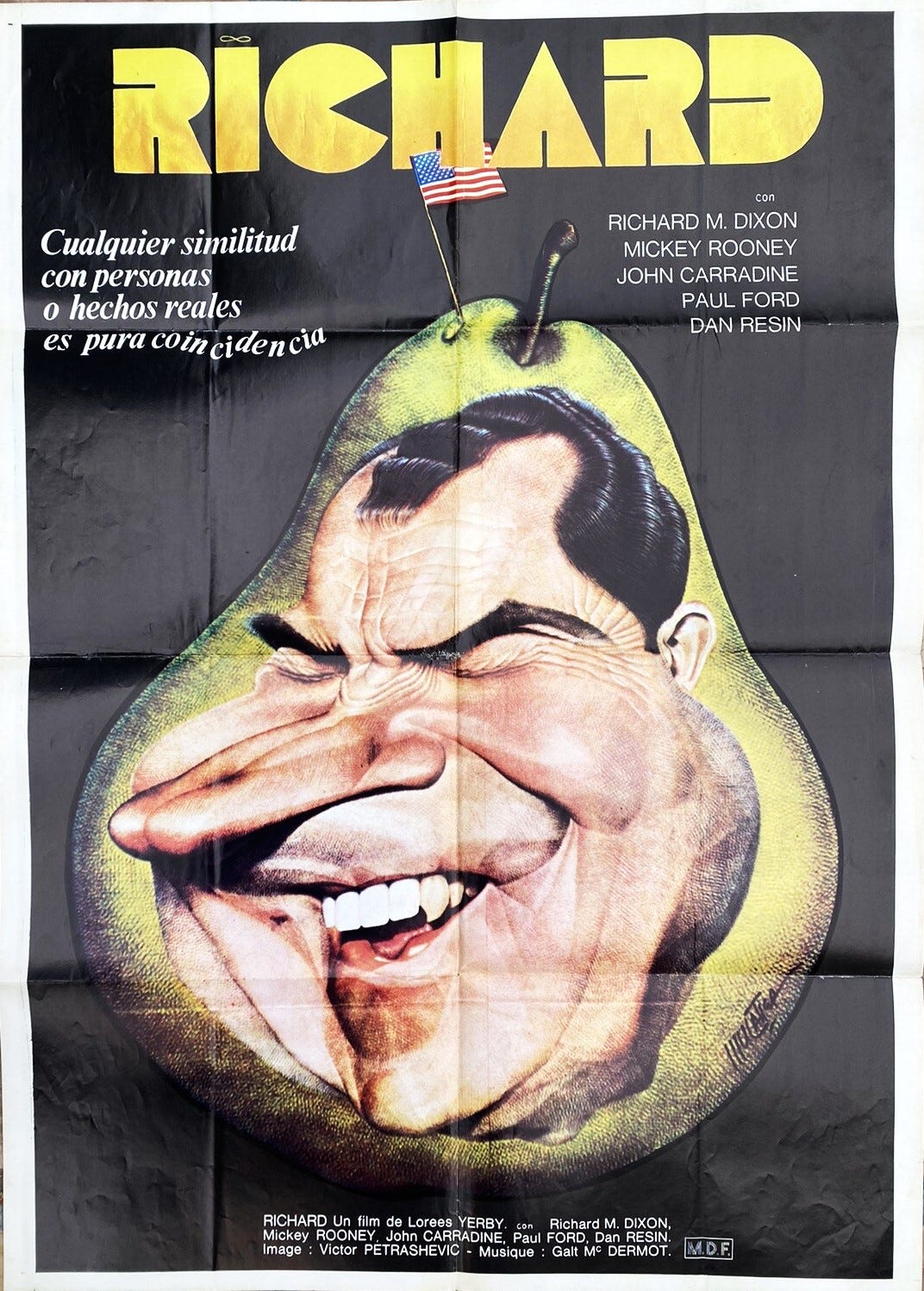
So, what about Richard? It’s a comedy fantasia centered around Richard Nixon, made and released before Watergate was revealed to the public. It’s a very unusual hodgepodge of elements — some of which clearly had to be abandoned as the film was being shot. In its better moments, it does remind us what an odd duck Nixon was as a man; in its worst sequences, it belabors devices that Hurwitz (and other comic filmmakers in the late Sixties/early Seventies) used to much best advantage elsewhere. One can see why it disappeared after it was released — it bounces around stylistically and actually doesn’t seem to bring up any salient points about Nixon’s politics. It in fact makes him seem pretty sympathetic.
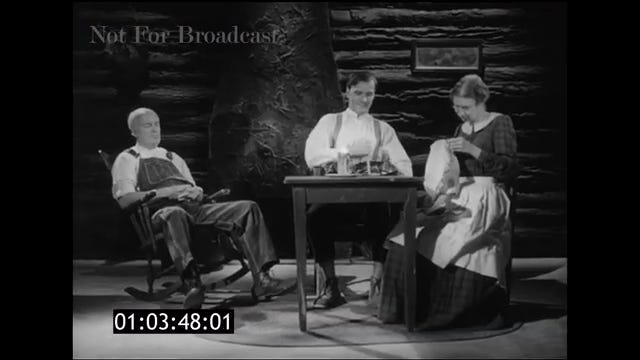
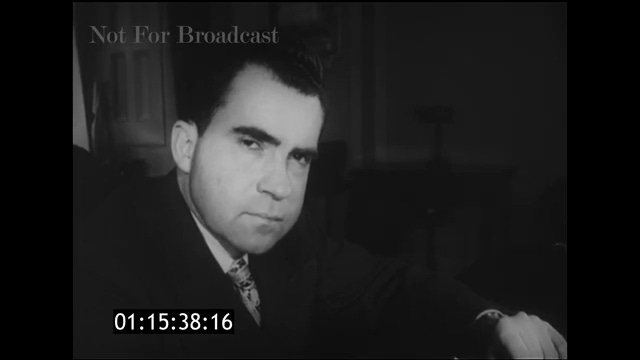
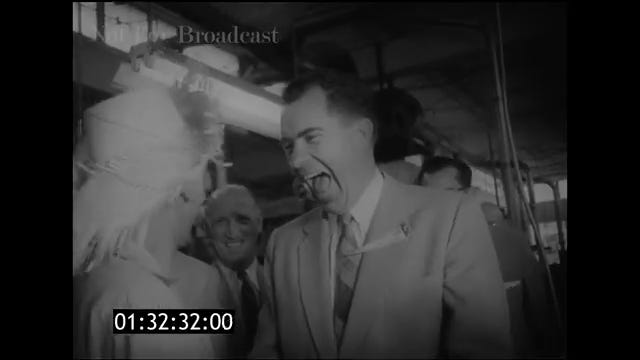
It breaks down this way: The film begins with an “early years” portrait of Nixon (played in these scenes by Dan Resin, the utilitarian comic actor who was best known at one time for being the “Ty-D-Bol man”) shot in black-and-white, showing Hurwitz’s uncanny ability to simulate old Golden Age movies. Then, it becomes an assemblage of rare footage of the real Nixon rehearsing things for the camera and not-at-all-rare footage of things like his infamous “Checkers speech.”
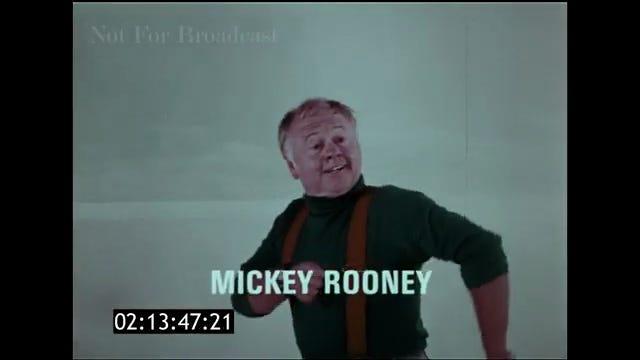
Then, it introduces a major character — a guardian angel for Nixon, played by Mickey Rooney! — only to abandon that character very shortly thereafter (Mickey walked off the picture?) and turns into, well… a very weird satire of a then-current film. And then it goes back to being a “found footage” picture in which the movie’s characters interact with real news footage of Nixon.
From that description alone, it’s obvious that the film was a misguided effort that seems to have gone through various transformations, all of which were left in the film. (And it’s still only 76 minutes long!) The point where it seems on steadiest ground is when the found footage is shown, and Hurwitz and co-scripter Lorees Yerby weave it in with the footage. (That is something that Hurwitz did beautifully in The Projectionist and the other two “nostalgia pictures” mentioned above.)
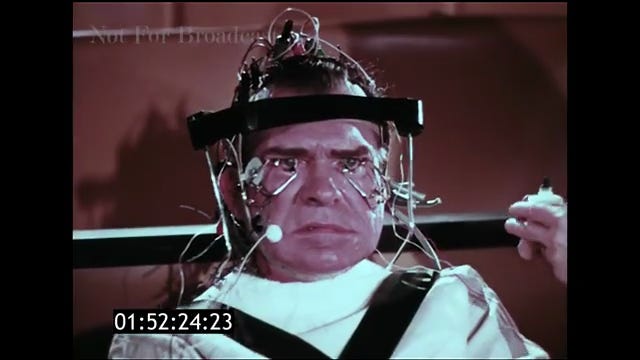
The most bizarre passage in the film is when the Rooney guardian-angel subplot is completely dumped and then we’re suddenly in a very odd parody of the conditioning scene (the “Ludovico Technique”) from A Clockwork Orange. In this case, Nixon (now played by sorta-kinda lookalike “Richard M. Dixon”) is forced to watch home movies of his nemeses (namely, the Kennedys) and also footage of himself being awkward and coy as Ike’s vice president.
One wonders if dark humorist Nelson Lyon (writer-director of the bizarro cult film The Telephone Book), who gets a tiny “guest star” appearance as himself in the film and wrote the lyrics for the film’s theme song (with melody by Hair’s Galt MacDermot), somehow influenced that particular bit of odd comedy.
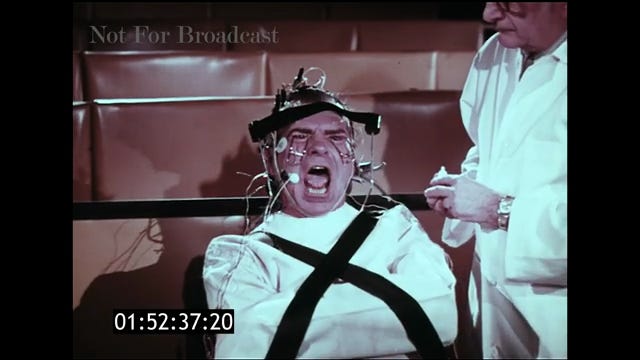
This spoof comes equipped with menacing, Walter/Wendy Carlos-sounding music and a punchline wherein the related sequence in Clockwork is recreated. After the “treatment” Nixon now can’t say coy things like he had in the Fifties or he will begin to gag and retch. It’s not a good payoff — Mad magazine made funnier repeated mentions of “Little Alex” wanting to vomit when he sees violence in their takeoff on Clockwork.
So, what can be praised about Richard? Well, as was always the case, Hurwitz filled the supporting cast with some great presences: John Carradine, Kevin McCarthy, Paul Ford (from “Bilko”), and Vivian Blaine, among others. Dixon couldn’t act, but he’s *supposed* to look awkward in most of his scenes here, so that’s passable. (Did I forget to mention that in between the Clockwork passage and the final clump of found footage that there’s a too-long and not-funny “Sixties party” scene where Nixon circulates amid pot-smoking hippie chicks?)
The Rooney bit is nearly surreal — for the rest of the film, Nixon has a trio of “packagers” who make him presentable to the public, but in this instance, suddenly the movie is an out-and-out fantasy and it seems like Mickey will be staying alongside Nixon as he comes back to run for office in 1968. But that isn’t the case — Rooney just disappears (leaving the Richard M. Dixon narration to include the line, “Then the little angel was gone, and I was alone again.”), and one wonders why his short scenes were even left in the movie, aside from supplying one “marquee name.” (Was Rooney really a marquee name in ’72?) His total screen time: three minutes.
But what can be said about a picture that includes jokes about how Kevin McCarthy’s appearance changes in one scene drastically? (He’s doesn’t have dyed hair, as he had in the previous scenes, and he has no mustache — clearly the “Sixties party” scene was shot before they arrived upon the character he played earlier in scenes with Paul Ford.)
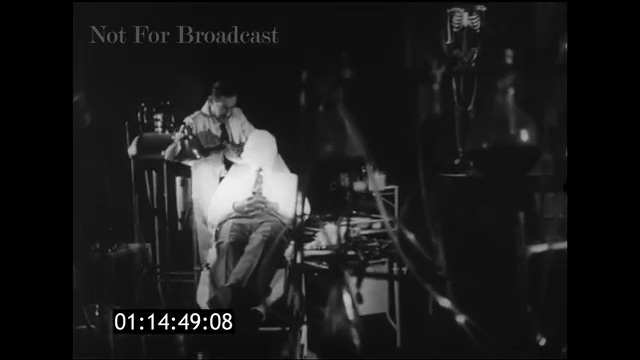
The single weirdest thing about the film isn’t the Mickey Rooney thread that is abandoned. It’s that the film winds up making one feel sorry for Nixon — here is he presented as a kind of gullible yokel, who kept being packaged by different people and was really a schlub with no deep opinions of his own. This is true even when the few mean jokes about him crop up— as when mad scientist (supposed to be a plastic surgeon) John Carradine makes the decent-looking younger Nixon into a “monster” (represented by footage of him in the late Forties/early Fifties with his oddly shaped head and the ski-nose).
This off-kilter spoof of the man is thus one of the stranger artifacts of a time when there were a lot of parodies of Nixon about (with David Frye’s wildly cartoonish impression being the most impressive, and the many Watergate comedy LPs — own a few of them, played ’em once at best — being the least impressive). When you’re setting out to mock a leader who has kept America in an unwinnable war (that couldn’t happen again, could it?), it’s best to keep on one track in terms of the satire.
The oddest piece of info I encountered: Co-director/co-scripter/co-producer Lorees Yerby and her husband, producer Bertrand Castelli, invested so much money into this film that the pic’s ensuing failure wrecked their finances and killed their marriage.
Summation: I’m glad I finally got to see Richard, but I can only recommend it for diehard Hurwitz fans and fans of early Seventies comedy misfires.
Big thanks for Robert Nedelkoff for discovering that Richard had been publicly posted for the first time ever.
No posts
Comments
Nothing yet. Say the first thing.
Sign in to join the conversation.