
In-store retail media has come a long way in three years. Still, it’s barely scratched the surface of its potential.
Although digital displays have been a staple of retail in Europe, Asia, Latin America, and Australia for years, the US has struggled to get out of the starting gate. Primarily due to two factors: CX and CapEx.
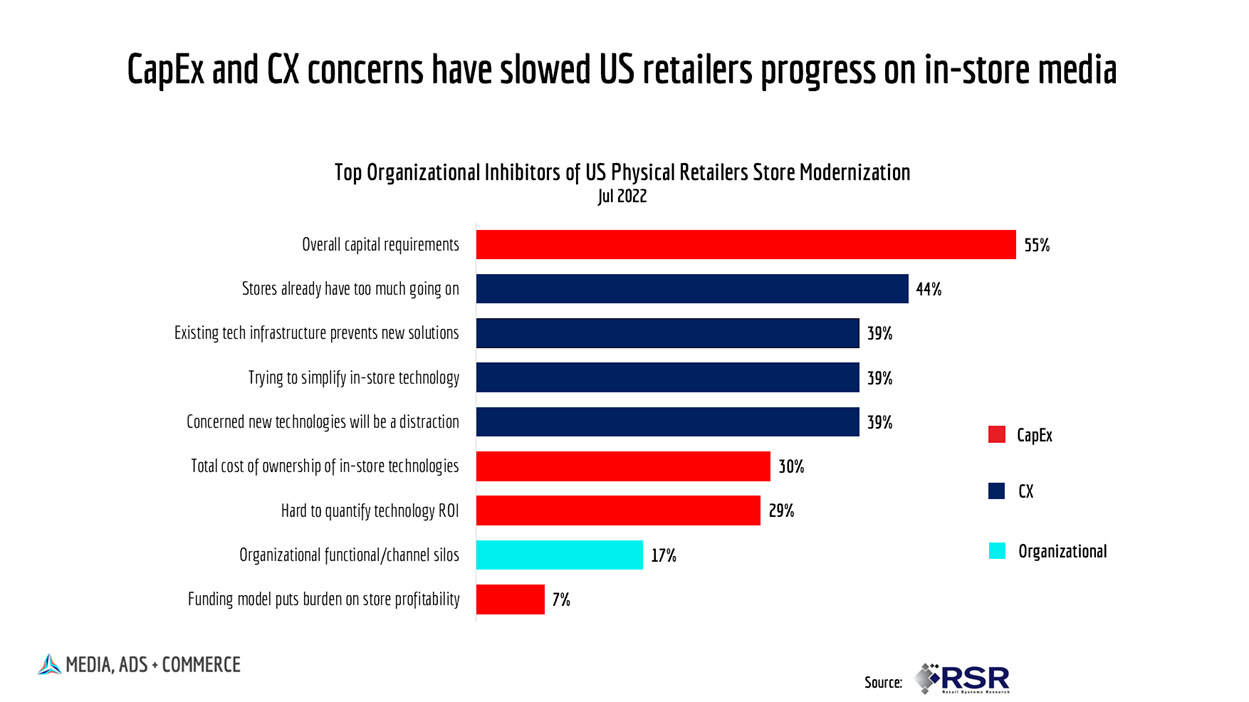
A July 2022 study from Retail Systems Research found that while CapEx was the top inhibitor of in-store digitization, the next four concerns were all related to CX.
Fast forward to 2026 and in-store retail media is finally beginning to ramp. National retailers like Kroger, Albertsons, Ahold Delhaize, and CVS, are active in market and expanding quickly. Regional grocers everywhere are looking to digital displays to modernize their stores and bolster their margins.
Any shopper marketer will tell you that in-store retail media has been around for decades, it just wasn’t digital. But now that consumers routinely encounter digital displays, it turns out they actually like the experience.
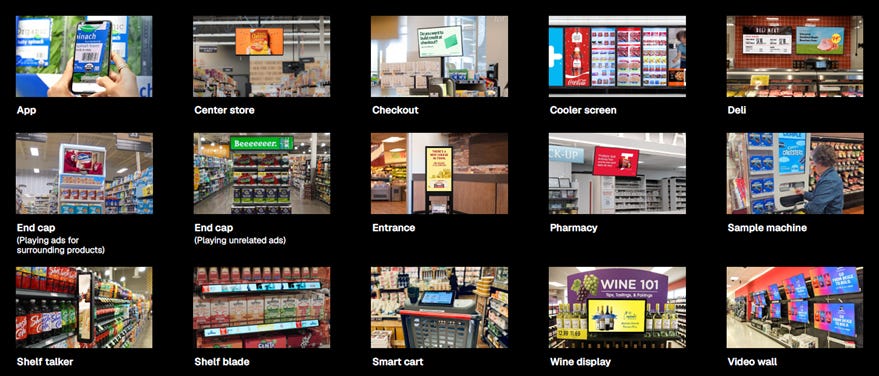
Grocery TV conducted a March 2026 study of US shoppers to understand how digitizing 15 in-store displays affects their perception of in-store CX. In each instance, shoppers were shown existing static in-store displays side-by-side with new digital displays, and asked whether the digital versions had a positive, neutral, or negative impact on CX. These results were also compared to a 2023 version of the study.
The study found a 10-point increase in US shoppers’ positive reception to in-store digital displays over that 3-year period. A majority of these shoppers (51%) said these displays would improve in-store CX, while most other respondents had a neutral view of their impact.
Across the 15 displays, the majority of shoppers had an overall acceptance rate of 80%+, led by the Store Entrance (88.5%). High dwell-time areas like the Deli Counter (86.6%), Checkout Aisle (84.5%) and Pharmacy (84.1%) all ranked near the top.
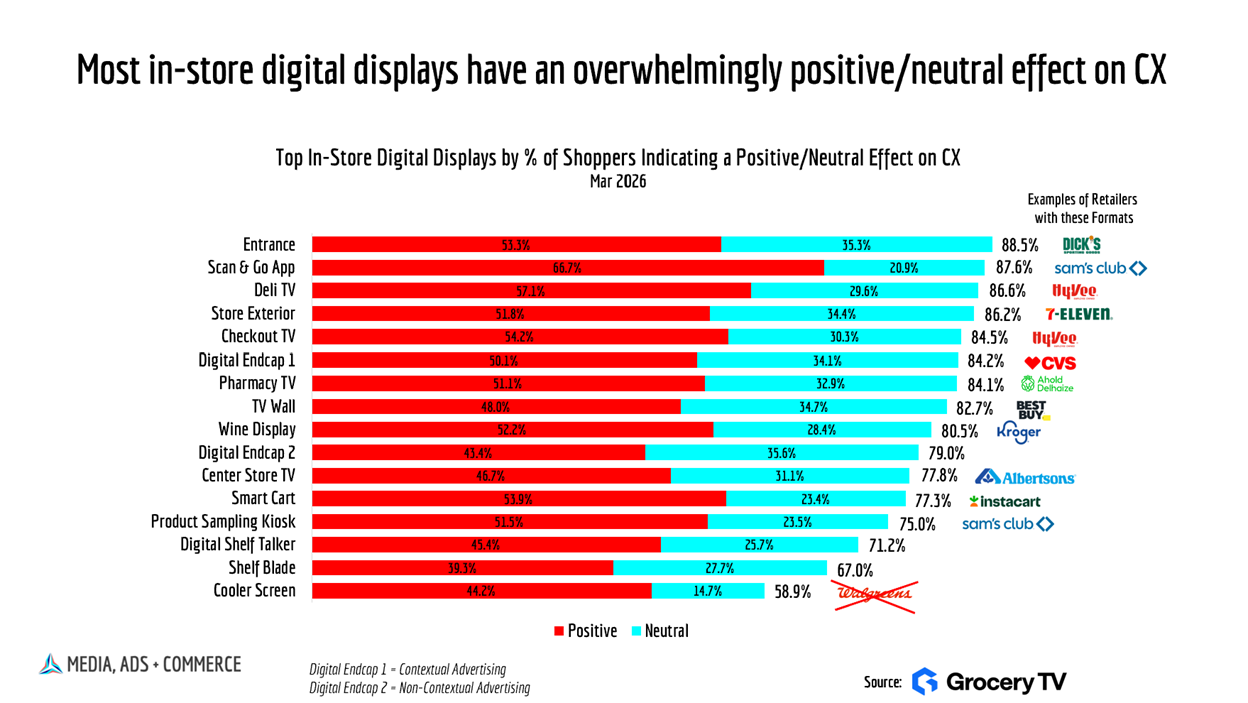
Although most in-store digital displays had broad consumer acceptance, three of them—shelf talkers, shelf edge, and cooler doors—fell below 75%. These displays offer interesting clues as to what constitutes positive or negative in-store CX. And more importantly, how that CX can be improved.
The easy answer for retailers would be to simply discard these options as they build their in-store networks. And that’s a valid approach right now, since low-risk / high-impact displays should be prioritized.
But I would argue even these low performers are viable options with the right modifications, underscoring just how much potential has yet to be tapped.
Comments
Nothing yet. Say the first thing.
Sign in to join the conversation.