
Interstate US 29 between Washington DC and Charlottesville, VA is densely lined with tobacco and vape shops. A modern vestige I suppose of the crop that defined the area, and the thousands of small and large-scale plantations where enslaved people toiled and died for 246 years. According to DNA records, my West African ancestors were deposited on one (or perhaps more than one) of these.
The irony of my job with our nonprofit Immigrant Kitchen is that I work with dozens of women for whom their culinary traditions and foodways are a defining cultural touchstone. Without them, these women would be much less connected to their personal and familial identities. Though far from home, they insist on clinging to these traditions, and we are all richer for it. As I mixed race person, understanding and grasping similar identities is a lifelong journey, filled with frustration and longing. My forthcoming book, with the working title:
How you experience being descended from enslaved Africans might vary significantly depending on so many factors. Indeed, some of us might merrily live our daily lives hardly ever thinking about it at all (though in today’s America, this is likely rare.) But, scarcely thinking about it is what my American public education seemed to encourage, at least until high school, when independent thinking kicked in, and the Autobiography of Malcolm X fell into my hands.
But walk onto one of the Virginia plantations where during the peak of the agricultural boom, at least a half million people were enslaved, and the experience of enslavement might become much more impeding and and intimate. It did for me.
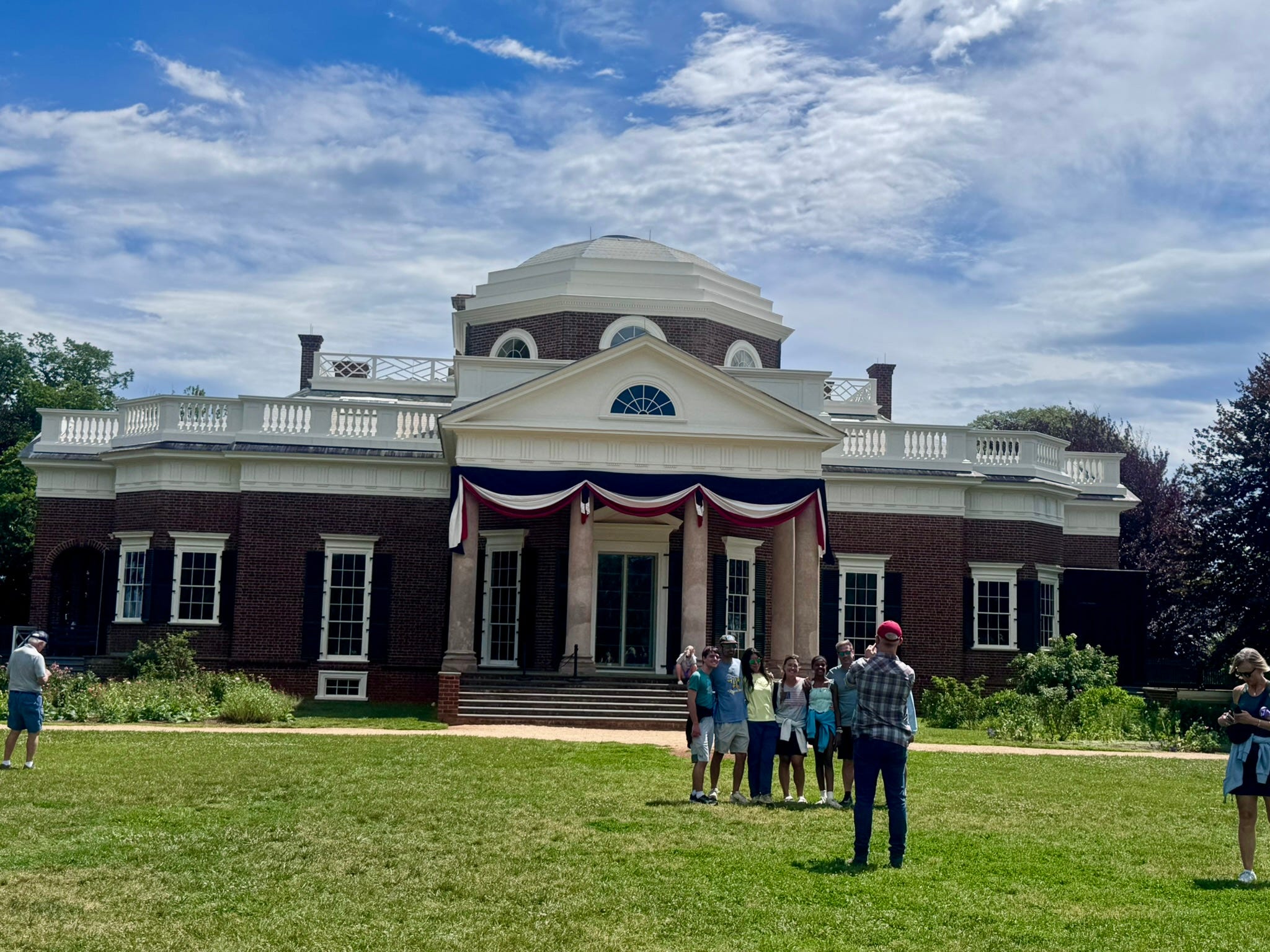
It’s nearly the 250th anniversary of the signing of the Declaration of Independence, and while I did not mean to visit this part of the country during this particular time in history, it’s coincidental that I did. Driving through the area in a rental car equipped with a driver’s seat that automatically taps me on the ass every time I get too close to a road margin, patriotic bunting and fan flags made popular during the Civil War adorn what seems like every bridge, balcony, and storefront. Robert E. Lee’s name is stamped on street signs and park courtyards, and many of the people who have come to visit the same plantations that I have-- Thomas Jefferson’s Monticello and James Madison’s Montpelier— wear T-Shirts with sections of the declaration emblazoned on the front.
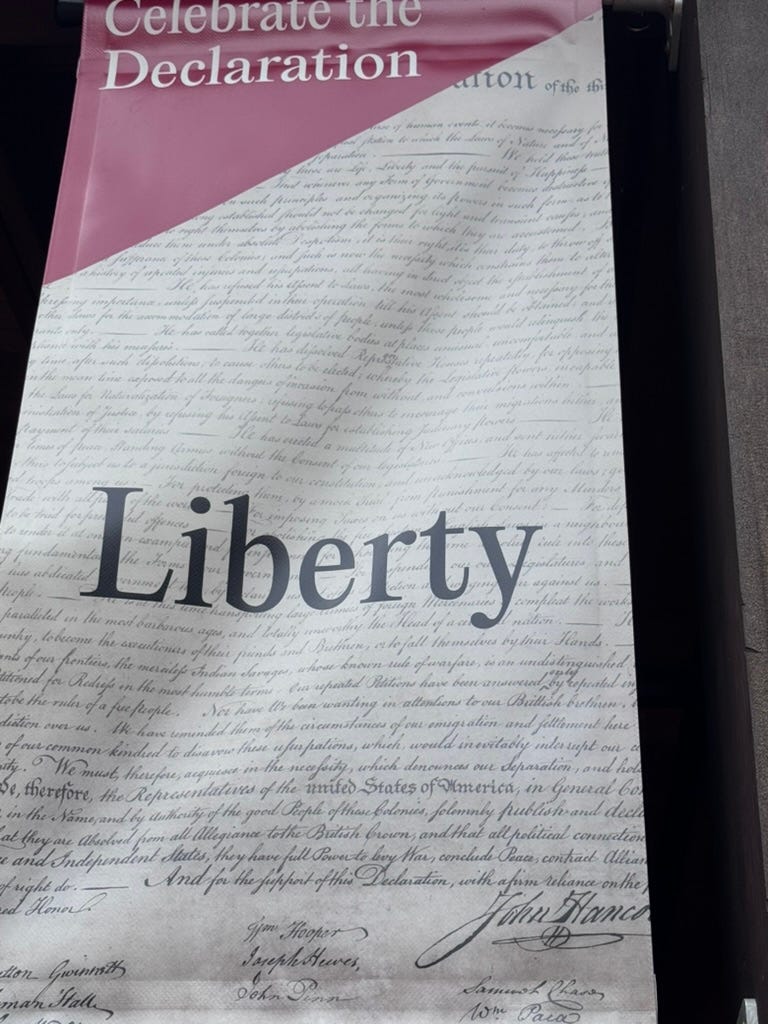
“We hold these truths to be self-evident,” the shirts read. Or sometimes, simply, “We the People.”
But unlike the T-shirt wearers, I didn’t come to marvel over the splendors of the big houses or the declaration (though I saw some of that, too) but instead to contemplate and honor my ancestors, and hope, in even an infinitesimal way, to better understand what they might have seen, heard, or felt. Strolling out of the parking lot of what is now an independently operated museum complete with gift shop and cafe, visitors are immediately confronted with a sign reading “Enslaved Persons Graveyard,” which sits a few yards behind the lot. While this might seem like a savvy beginning to the tour, starting with the heart of the matter, that assumption would be incorrect. It’s simply that the graveyard was slated to be paved over for yet more parking lot, until local African American community members intervened. And yet for me, it served as an apt reminder of what much of America was, and is, and why I had traveled far to be here.
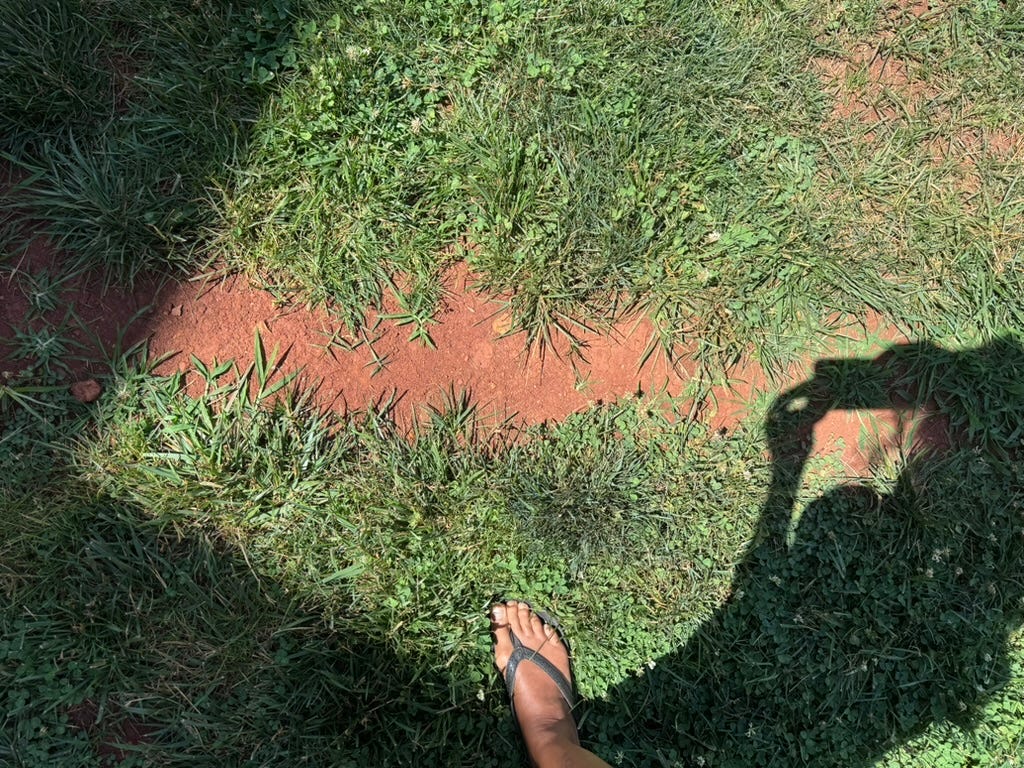
Entering the security corridor of the plantation, I was already off to an inauspicious start to experiencing anything my ancestors might have. After all, I had a breakfast sandwich tucked in my purse, I stopped off in the clean and air conditioned restroom, and sat waiting leisurely for the tour to start. All minor privileges I gook for granted, making note that my people would not have been likely to experience any of them. As we climbed the winding road of the 5,000 acre plantation in an air-conditioned bus, we heard segments of the declaration read by an actor meant to depict Jefferson. I didn’t catch the most famous section: “...that all men are created equal, that they are endowed by their Creator with certain unalienable Rights, that among these are Life, Liberty and the pursuit of Happiness,” but no matter, it was plastered across gift shop coffee mugs and magnets, on flags adorning the courtyard, and on replica monuments seen everywhere. (The original signed Declaration of Independence is permanently displayed at the National Archives Museum in Washington, D.C.)
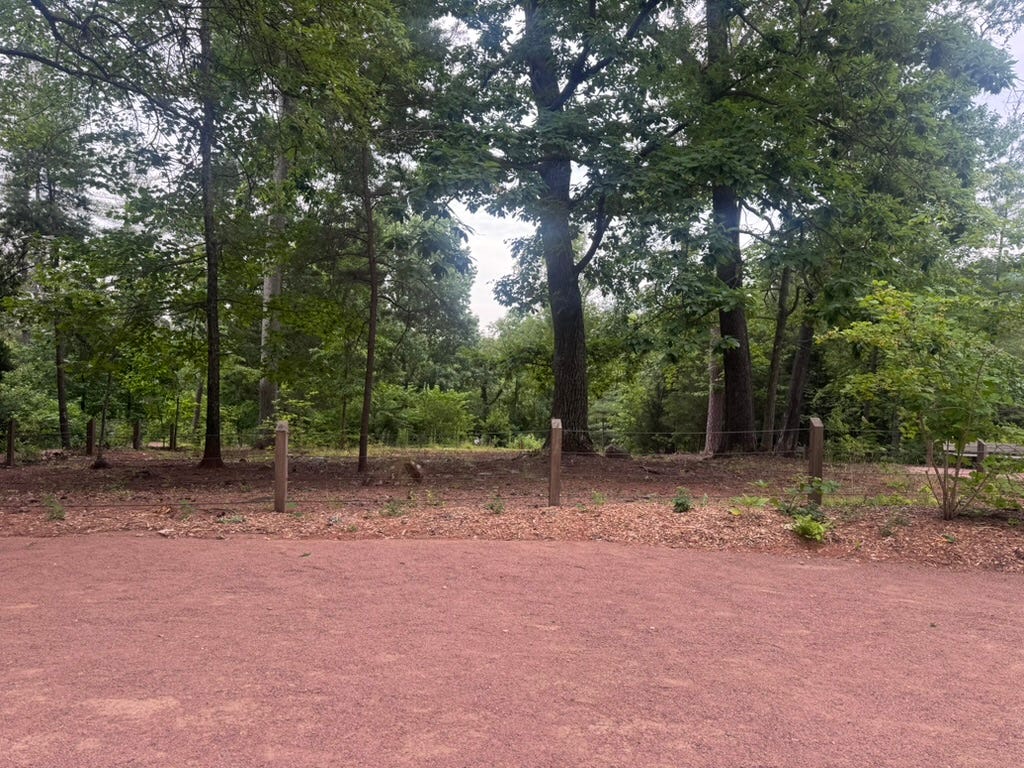
The first stop on the tour was in fact the enslaved persons graveyard, where we sat on benches in the rapidly increasing heat and listened to our guide read a description of an enslaved burial, written by Virginia Jefferson Randolph Trist, spouse of Nicholas Trist, a diplomat and lawyer closely tied to Jefferson. No written record by a Black person of an enslaved burial exists on the plantation. A mother and father were burying their child. “. . . [the mother] ventured to take a last look at the little face before the coffin was closed, which completely upset the poor creature and her sobs and tears were very affecting. She stood by her husband and hid her face on his shoulder.”
What I take from this is that the Trist seems surprised to think that a Black mother would feel the same set of emotions that anyone would when losing a child.
Of course, dehumanization-- thinking of Black people as nothing more than livestock, as “creatures,” is one of the touchstones of enslavement. And dehumanize they did.
And yet, as Clint Smith remarks in his powerful book, How The Word is Passed, A Reckoning with the History of Slavery Across America, slavery actually depended on the human capacity of enslaved people. Depended on their human capacity for reproduction, labor, sentience, intelligence (ability to learn) and the human capacity to be tortured, raped, beaten, humiliated and killed (as incentive to stay alive) and yes, to remain human. Slave owners did not actually have to believe that enslaved were less than human, he says. They just had to believe that the enslaved did not have the power to stop what was happening to them.
Since my book is one about identity through the lens of food, in addition to standing on the land where my ancestors once did, I thought I would get some clues about myself via ingredients or historical cooking techniques while here. But the excellent catfish, greens, grits, and barbeque I was enjoying in the Charlottesville and DC area started to taste bitter in my mouth as I contemplated the history of what had brought me here. I did learn that the enslaved here were given paltry rations of cornmeal and salted pork or fish twice per day. To supplement their diets, they would have fished, foraged, or grown their own food before or after 15+ hour work days. Malnutrition was rampant on plantations, as were diseases like malaria, dysentery, and worms (when parasites life inside of your digestive tract and feed on your body for nourishment.) Rotten teeth, too.
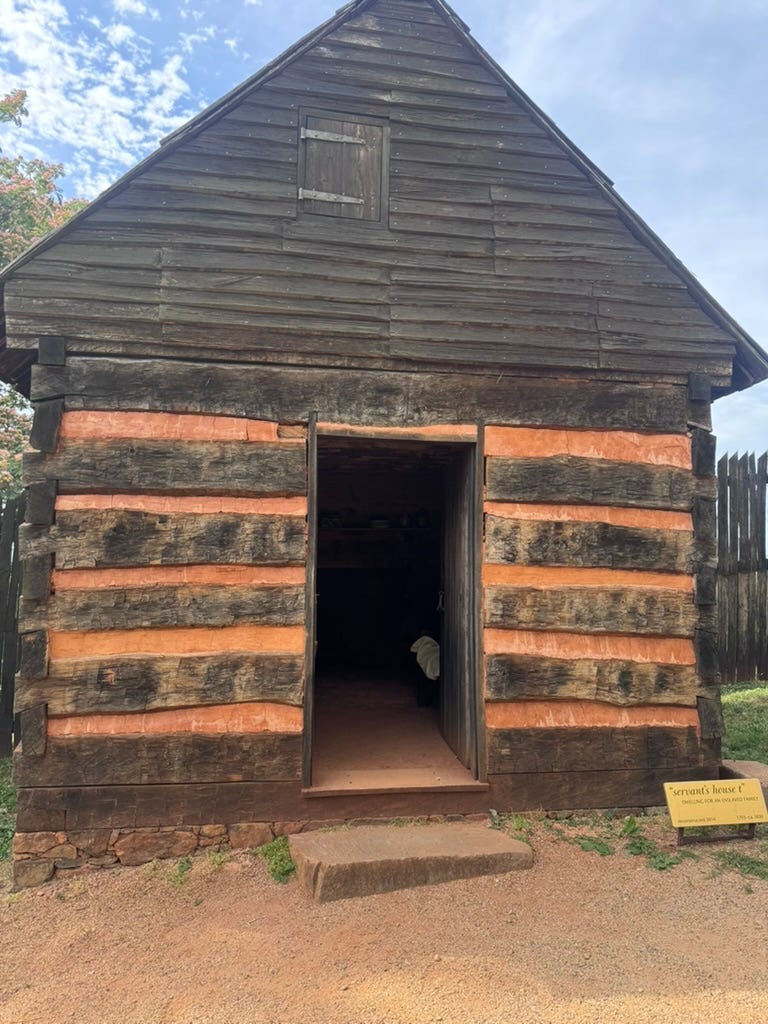
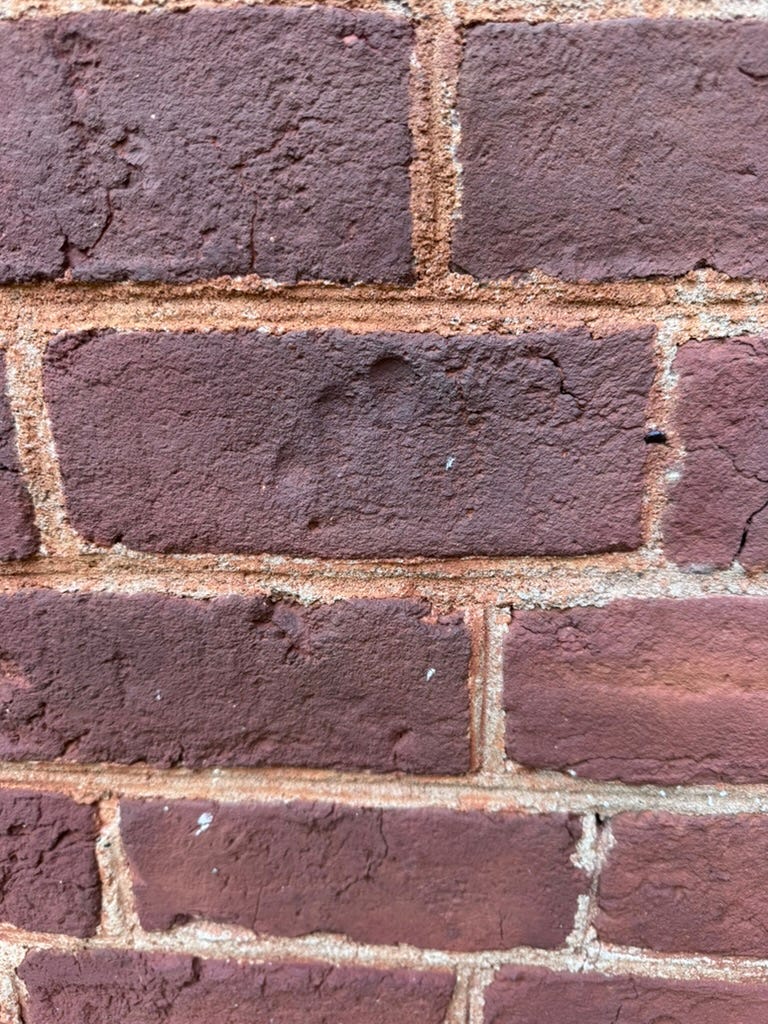
After seeing the juxtaposition of the reproduction of a slave quarters in the shadow of Jefferson’s house where the fingerprints of the enslaved who hand packed every brick with Virginia red clay were still visible, and the throngs of tourists posing in front of the big house (but not the little house) I stole away under some shade provided by a manicured line of forest, and sadly ate my sandwich of sausage inside a flaky biscuit.
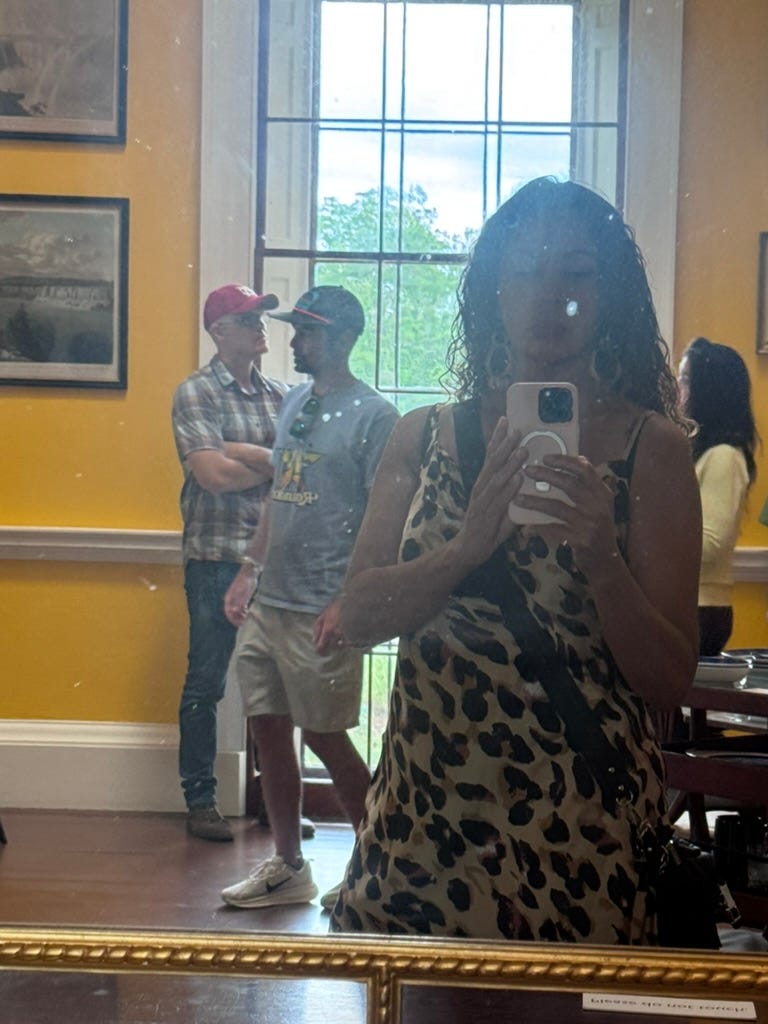
I looked out over the property and the undeniably breathtakingly beautiful landscape and wondered if my endeavor was a foolish one, to stand here on the most famous (and maybe infamous) Virginia plantation that still stands, and wonder if my ancestors were also here once. Probably not. But, maybe? Maybe not, but maybe a place like this one not very far away. There would have been thousands of tobacco plantations in the surrounding area. I glanced at the ground and picked up a singular yellow leaf, unique among all of the other green ones under my shoes, and slipped it into my purse. Back at the hotel I pressed it into a book. Proof that I was here, as were my people, someplace not far from here, not all that very long ago.
I continued on, and encountered a memorial to the 600 or so enslaved who lived here, some of them dying here, many of them sold to other places, an iron wall with their names punched out for the landscape to peek through. Some of them read only: “child.” I walked along it and took a crude video. It took a disturbingly long time to reach the end. Six hundred of the 10+ million people who never saw a single day of freedom in this country. (Actually, some were freed here-- Jefferson freed four of his own enslaved children after they reached adulthood-- a promise he made to the enslaved mother of those children-- Sally Hemings.) She was 16 when she gave birth to the first. Jefferson was 46.
Trudging back up the hill, I stopped to take in another, shorter enslaved tour, where a white man raised his hand and asked the guide how Jefferson treated his slaves. This grated on me, as it seems to be a big question among some people, as if there is any such thing as a good slave owner. I fantasized about tapping him on the shoulder and saying I owned him now, and forcing him into my car. We could stop for a smoothie along the way, but he was mine, and I would say whatever he could and couldn’t do until he died. He would be paid nothing, and his wife and kids would be left behind, never to be seen again.
Of course I didn’t do that, and instead listened to the guide explain how an enslaved nailmaker called James attempted escape twice, and was brutally lashed 29 times in front of his community to help ensure compliance among them.
When it was time to depart, I thought of walking the long dirt road to the parking lot instead of taking the air conditioned bus back, as a tiny glimpse into what they might have endured traveling these thousands of acres on foot each day, barefoot in the fields, as young as eight years old. I sheepishly report to you I did not, as the heat was now imposing, rainclouds were bearing down, my stomach a bit upset from the biscuit, and the and mental upheaval of all I had seen.
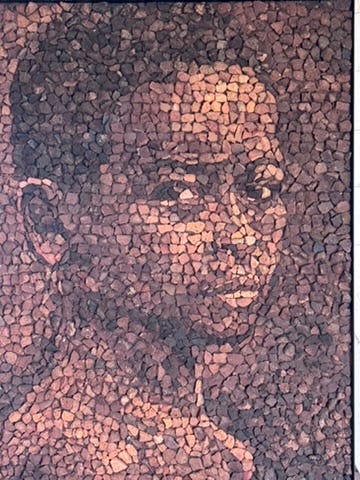
I did in fact “exit through the gift shop,” and bought a book, Bound to the Fire, How Virginia’s Enslaved Cooks Helped Invent American Cuisine as well as a refrigerator magnet depicting an image of a mosaic created by artist Rebecca Warde, illustrating the face of an enslaved child, made with brick remnants collected on the plantation. It’s an affecting image, where the child seems to quietly implore you to remember him.
I plan to put it on my refrigerator as a small reminder of what it took for me to get here, each time I reach for food, whenever I get the urge to have some.
Next time:
My tour of James Madison’s Montpelier Plantation. To pay to subscribe to this page, click here
-or-Donate to BIPOC Foodways Alliance and Immigrant Kitchen
Comments
Nothing yet. Say the first thing.
Sign in to join the conversation.