
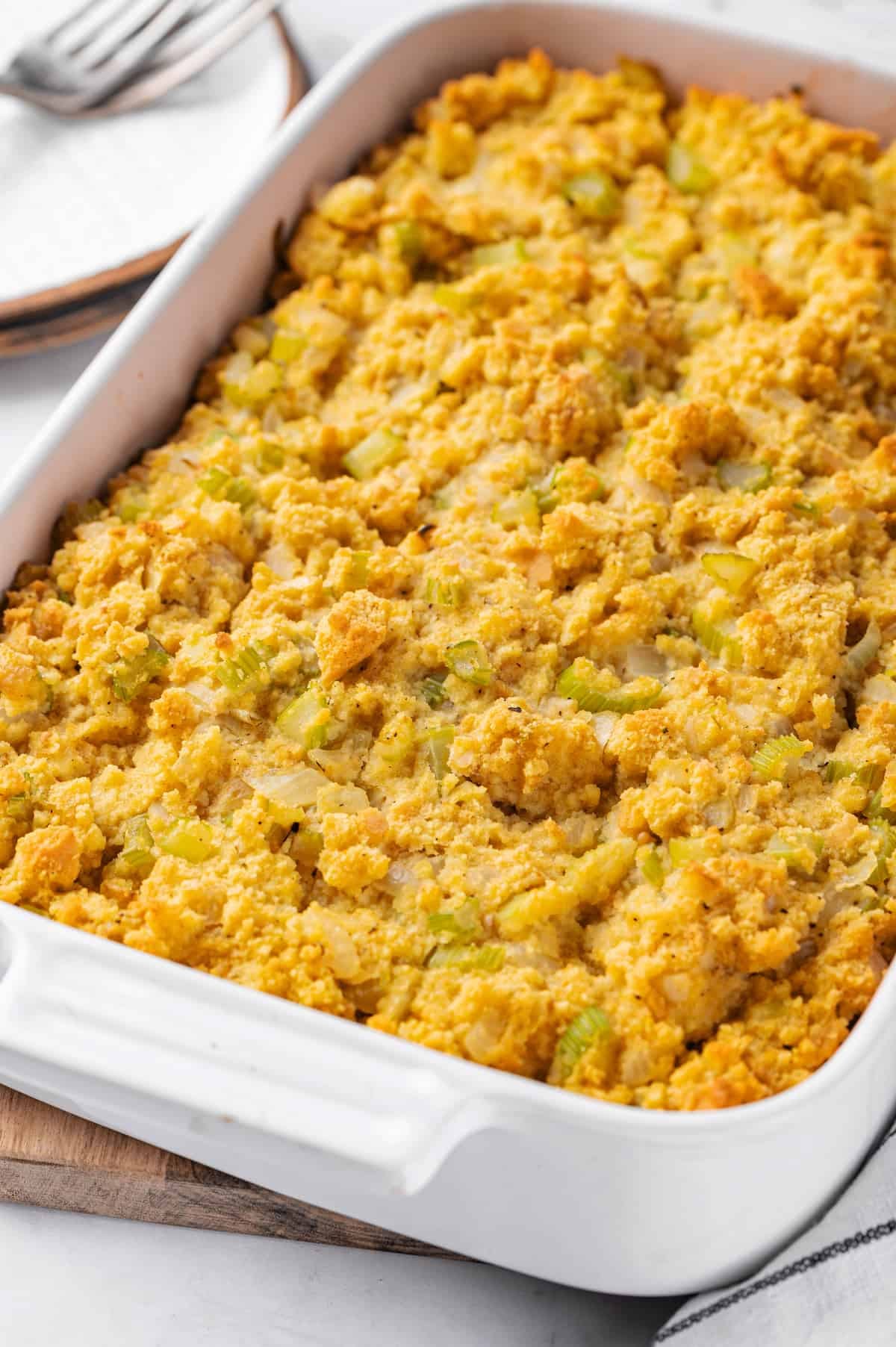
I’m 25 years old, and it’s Christmas Day at my in-law’s house.
Judy and I just got married earlier this year and we decided to split the holidays fairly this season.
We’d spend Thanksgiving with my parents back home in Louisiana, then Christmas Eve and Christmas Day with her parents.
It seemed like the right thing to do, and besides, I was still learning what it meant to be part of another family.
Mr. Williams meets me somewhere between the kitchen and the living room, already busy with the turkey and everything else that has to happen before everybody sits down.
He’s my new father-in-law, and I’m still figuring out exactly where I fit in this family.
He’s a military man. Judy tells me stories about when they lived in Japan and everywhere else they’ve lived and traveled. And there’s a confidence about him that comes from having seen more of the world than most people ever will.
Judy tells me her dad makes the stuffing every holiday. That’s the tradition in their house.
They call it stuffing where they’re from.
Back home in northwest Louisiana, we call it dressing.
I know they’re talking about the same thing, more or less, but it still sounds funny to me. In my family, it has always been dressing. That’s just what you call it.
But I’m willing to learn.
After all, I’m the new son-in-law.
And Christmas is about family.
Mr. Williams starts pulling things out for the stuffing.
I watch as he opens a box of Stove Top dry stuffing mix and starts following the directions. There’s nothing mysterious about it. The box tells him what to do, and he does it.
But then he starts making it his own.
He adds white bread. He adds some of his own ingredients and touches that aren’t printed on the box. He’s clearly made this before, and I can tell by the way he moves around the kitchen that he knows exactly what he’s doing.
This isn’t somebody who dumped a box into a bowl and called it supper.
This is his stuffing.
Judy and the rest of the family are already talking about it. They know what he’s making. They know how good it’s going to be, and there’s something almost ceremonial about watching somebody prepare the dish everybody expects to see on the Christmas table.
I’m standing there watching him, taking it all in.
I’m witnessing a family tradition that my new wife and her family have been doing for decades.
Eventually everything is ready.
The turkey is carved. The sides are on the table. Everybody finds a chair, and we say a blessing before we start passing plates around.
I take some of the stuffing.
Judy looks over at me.
“How do you like it, Gary?”
I smile.
“It’s good,” I say.
But there are some things you don’t say to your new father-in-law on your first Christmas as his son-in-law.
I don’t say that it isn’t Mama’s dressing, the one Judy and I just had three weeks earlier at my parent’s house.
I just smile and take another bite.
But if I’m honest with myself, and I try to be, there’s a quiet thought running underneath the conversation that I don’t say out loud.
I don’t want to be disrespectful to Mr. Williams.
He has opened his home to us this holiday. He has just spent the morning putting together his family recipe.
That means something.
I don’t take it lightly.
I understand people have their own ways of doing things.
I’m not judging him for reaching for that box of dry stuffing mix, because most nights most of us reach for the same kind of shortcut without thinking twice.
But if I’m being honest, this isn’t the stuffing I’d make for someone I invited into my home for the holidays.
It’s good.
It could be great.
And the more I sit with that thought, the more I realize it isn’t really about Mr. William’s recipe.
It’s about mine.
It’s about all of ours.
There’s a difference between good and great, and it isn’t really about taste.
It’s about intention.
Good can be a box of Stove Top, a set of directions, a few extra ingredients, and dinner on the table. There’s nothing wrong with that, especially when you’re busy and you’ve got a house full of people waiting to eat.
Great is something else.
Great starts with real just-made cornbread baked in cast iron until golden brown with a crunchy crust.
Great is boiling the chicken and picking it off the bone and shredding it by hand to add to the cornbread mixture along with the chicken broth and sauteed vegetables.
Great is using all fresh ingredients that you put together yourself.
Great stuffing isn’t about what’s printed on the box. It’s about what’s passed down at the table.
Somewhere underneath all of it is a belief we don’t say out loud anymore. A meal isn’t supposed to just get somebody through the evening.
It’s supposed to tell them they were worth the effort.
We were never meant to settle for meals that simply fill a stomach.
We were meant for meals that fill something more.
I think about my mama’s cornbread dressing more than I probably should.
She always started with cornbread baked in cast iron.
That was the secret.
Cast iron skillet on the stove.
Fresh whole chickens simmering at the same time.
Mama standing right there the whole time because you couldn’t walk away from it if you tried.
No recipe card.
No measuring.
Just years of doing it enough times that her hands knew what her eyes were checking for.
I’m not telling you this because I think I know better than anybody who’s ever opened a box of Stove Top stuffing mix.
I’ve done the same thing plenty of times myself.
I understand busy.
I understand tired.
I understand the dry box convenience aisle.
I’m telling you because I’ve seen the other way.
I’ve stood in that kitchen and watched what it looks like when somebody decides you’re worth the extra effort.
And once you’ve seen it, you don’t forget it.
Here’s what bringing it back actually looks like. Not a complicated recipe. Not a whole day in the kitchen.
Just three things:
Start with real and fresh ingredients instead of what’s already dried and boxed for you.
Cook the cornbread in cast iron instead of just using white bread off the shelf.
Give it the time it needs so the flavors can come together the way they should.
That’s it.
That’s the whole plan.
Nothing complicated. Just the willingness to make it yours instead of somebody else’s shortcut.
Now, before anybody gets upset with me, let me say this. I don’t hate Stove Top.
There’s nothing wrong with opening a box, following the directions, adding a few things of your own and putting a good dish on the table.
Mr. Williams did exactly that, and his family loved it.
It’s easy.
It’s reliable.
It gets the job done.
But let’s not let convenience become our definition of stuffing.
A box can give you stuffing.
But real stuffing, what I call dressing, starts with cornbread that was made from scratch. Cornmeal and flour on the counter. Seasoning mixed by hand, not a factory. A cast iron skillet heating patiently in the stove, and somebody willing to stand there, because there’s no shortcut through it.
Dry box convenience food fills your stomach.
Homemade dressing feeds something else.
One gets you through the evening.
The other becomes a memory you carry for the rest of your life.
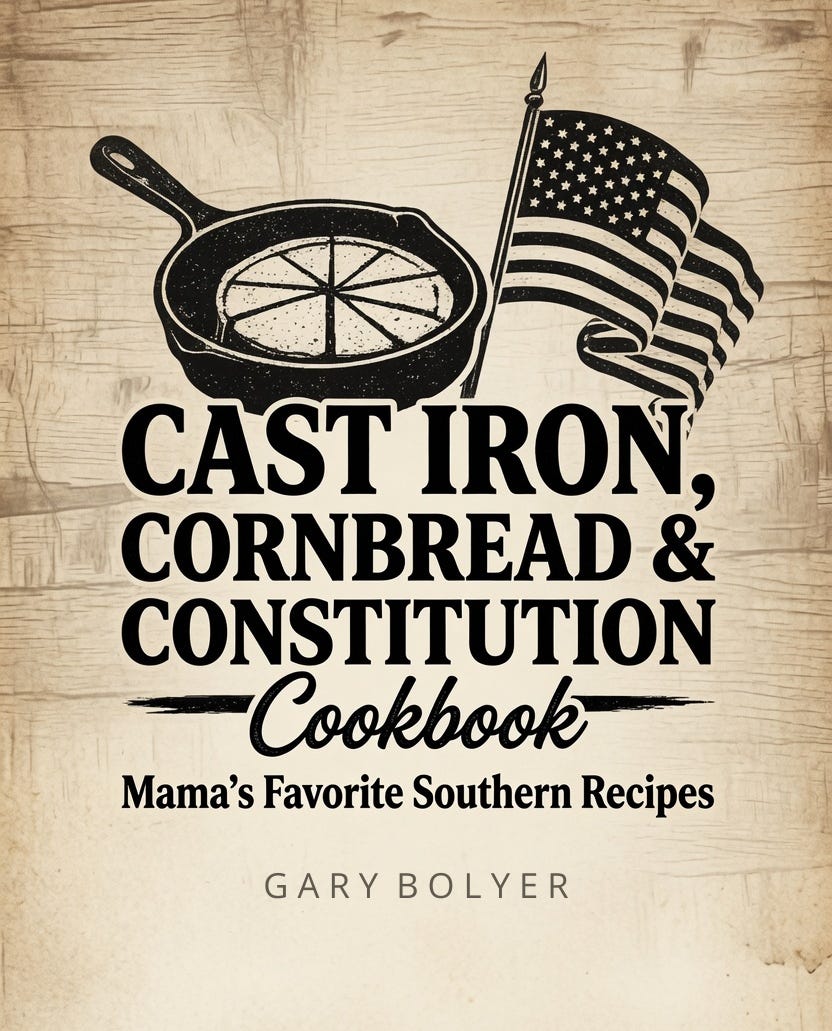
That’s one of the reasons I wrote my cookbook. Not because I think every meal has to be homemade.
Not because I think convenience is the enemy. And certainly not because I think there’s only one right way to cook Southern food.
I wrote it because I don’t want us to forget. I want people to remember that cooking can be more than getting food on the table.
It can be one of the ways we tell the people we love that they’re worth the effort.
That’s what I was watching that Christmas Day when Mr. Williams made his stuffing.
He was making food his family loved.
Three weeks earlier, Mama had been doing the same thing for mine. Different families. Different states. Different names. Different traditions. But underneath all of it was the same thing.
Somebody cared enough to make something for the people sitting around the table.
That’s what I want to preserve.
My Cast Iron, Cornbread & Constitution Cookbook is filled with the kind of Southern cooking that belongs in a kitchen, not just on a recipe card.
It’s about cast iron, real ingredients, simple food and the kind of meals that give people a reason to sit down together.
If you’ve been wanting to bring some of that old-fashioned cooking back into your own kitchen, that’s exactly why I wrote it. It’s not just a collection of recipes. It’s an invitation to make something worth remembering.
And right now, for a limited time, you can get the Early Bird Presale. But hurry, price goes up soon.
Here’s the part that bothers me.
Imagine twenty years from now. Nobody remembers how Mama made the dressing.
Nobody remembers what she put in it, or how she knew when it was right, or the smell of it cooking. Maybe the recipe is gone. Maybe the people who knew how to make it are gone too.
That’s how traditions disappear.
Not with some dramatic announcement that says, “We’re never making this again.”
They disappear quietly.
One generation doesn’t learn.
The next generation doesn’t ask. And eventually nobody even remembers there was something to miss.
The failure isn’t eating Stove Top on Christmas.
The failure is never learning how your family made theirs.
Now imagine something different.
Imagine your grandchildren standing in your kitchen someday while you’re making Thanksgiving dinner.
They’re watching you mix the dressing. They’re asking questions. “How much do you put in?” And maybe you laugh because you don’t really measure it. You tell them, “You’ll know when you make it enough times.”
They watch.
They taste.
They learn.
And twenty years later, they’re making it for their own family.
Maybe they change it a little. That’s okay. That’s how traditions work. Mr. Williams changed his. He took a box of Stove Top and added his own white bread and his own touches, and his family loved it because it was his.
Tradition doesn’t mean you have to freeze a recipe in time. It means somebody has to care enough to pass something forward.
It was never just stuffing. It was never just dressing either. It was never just the turkey or the cornbread or the fried chicken or the biscuits.
Those foods are the vehicles. They’re how the memories get carried.
They’re how Mama gets remembered. They’re how a child grows up and one day realizes that the smell coming from the kitchen is the same smell that used to make them run to the table when they were six years old.
And that’s something worth protecting.
We don’t need another kitchen gadget promising to make everything easier. We don’t need another box telling us exactly what to add and exactly how long to cook it. Sometimes we need to remember that the best parts of cooking were never about making things easier.
They were about making something for somebody. They were about standing in the kitchen a little longer. They were about learning from somebody who learned from somebody before them. They were about sitting down together and passing something on.
Because a box can make stuffing.
A recipe can teach you how to make dressing.
But only a family can make a tradition.
And every family has something worth passing down.
Make stuffing great again.
Here’s to good eats,
Gary
P.S. Price on the Cast Iron Cookbook goes up soon. This is your chance to get it at the lowest price it will ever be. Clock is ticking. Tick. Tock.
Comments
Nothing yet. Say the first thing.
Sign in to join the conversation.