
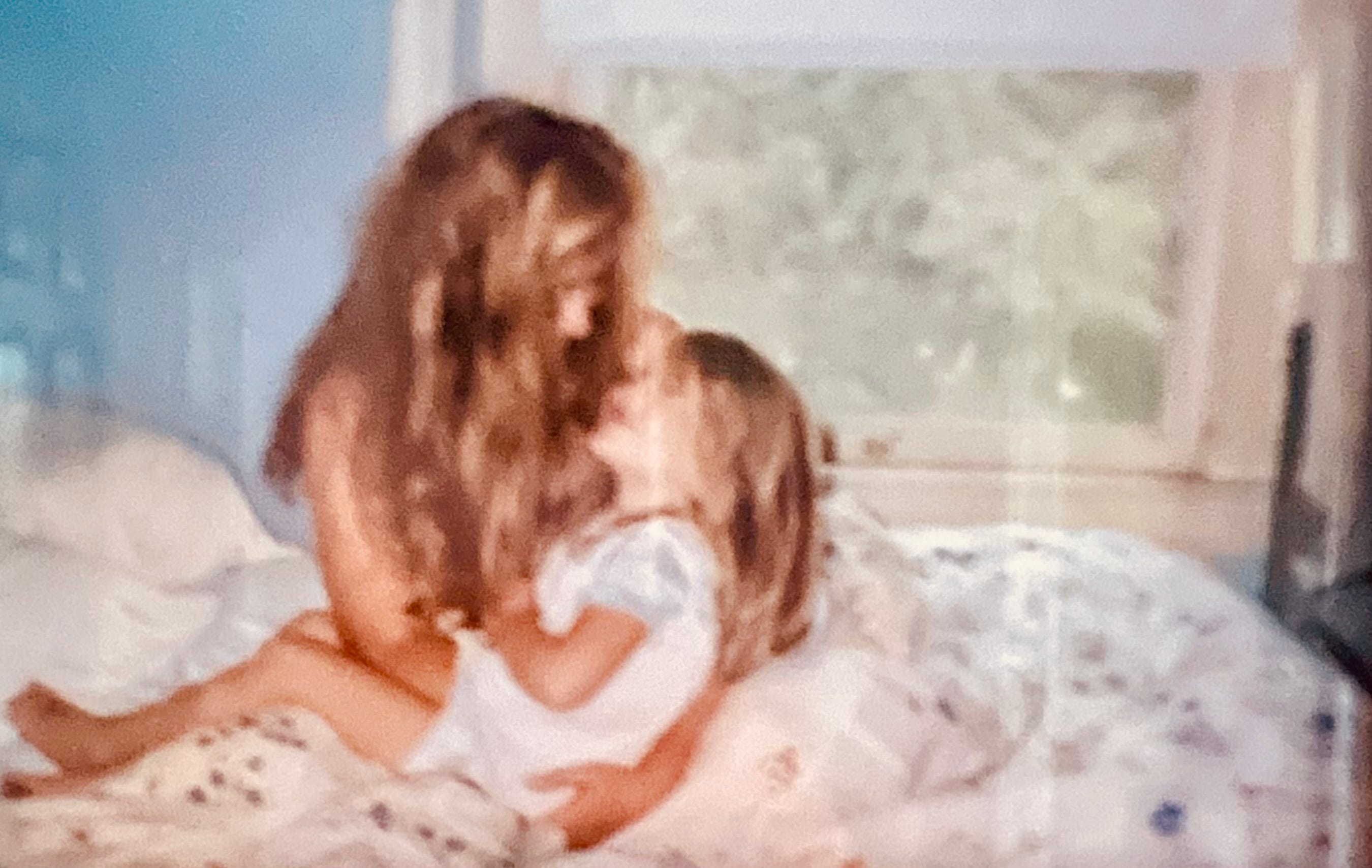
When I wrote a post about the Mother Wound last year, I defined it as the trauma handed down between women who are required to obey structures that do not protect them. The un-lived life of a mother (her silenced words, her deferred desires, her terror of being punished for wanting more) is passed to her daughter like an heirloom. And the daughter grows inside that inheritance with a pulse of doubt in her throat: Be good. Be small. Be generous. Do not need.
When women are exiled from their own fullness, daughters are born into exile, too.
The mother wound is not about the ways your mother wounded you. It is about the ways patriarchy moves through the mother-daughter bond and destroys us from within.
Many women wrote to me privately after that, with some version of the same question: How do we keep from passing this wound to our daughters?
Whether they are our biological or spiritual daughters, young women look to us for evidence of what a woman is allowed to become.
Many of us were taught to use self-abandonment as a survival tool. Our mothers raised us within a wider culture, in which it’s considered safer to be sweet and self-sacrificing, to require very little space, and to anticipate what men want before they have to ask.
To survive, many of us have separated ourselves from the parts of femininity that make us most alive: intuition, connection, expressiveness, trust, playfulness, desire, fluidity, sensuality, vulnerability, surrender, and the ability to receive.
Most women, mothers or not, are still afraid to embrace these aspects of ourselves. And even if we’ve begun reclaiming them, we may remain afraid of what our fullness will cost us.
And our daughters see this.
They see what we apologize for, what we deny ourselves and how quickly we abandon our bodies, desires, anger, creative work, and pleasure whenever someone else needs something from us.
Patriarchy supports the parts of us that produce, control, endure, and override the body. It teaches us to despise the parts that feel, receive, soften, play, and want.
And it does not maintain itself only through ideas. Patriarchy is enforced through humiliation, economic dependence, sexual coercion, physical violence, abandonment, and the threat of death. We are taught to fear strangers, but the men most likely to harm us are the men with intimate access to our homes, our money, our children, and our bodies. Men who say they love women can still rape, beat, stalk, coerce, impoverish, and kill them.
Our mothers knew this, whether or not they had language for it.
Some taught us to be pleasing because they believed pleasing women were safer. Some taught us to distrust our anger because angry women are punished. Some taught us to endure because leaving can be the most dangerous moment in a woman’s life. Some tried to make us less visible, less desirous, less alive, because they knew what men have done to women who live out loud.
We call this protection. But protection that requires self-erasure is a form of wounding.
The wound enters the relationship between mothers and daughters whenever a mother teaches her daughter to distrust the very qualities she needs to be whole.
In my case, my mother understood masculinity as the only reliable path to power, autonomy and righteousness. She vehemently denigrated femininity, associating it with weakness and danger, and she did everything she could to keep her three daughters from becoming feminine. She taught us that softness is foolish, sensuality is shameful, desire is dangerous and need is contemptible.
Our mothers loved us in the ways they knew how. But they were raising us in a world where expressing ourselves can be dangerous, where refusal can provoke punishment, and where the men closest to us often pose the greatest danger.
So how do we stop passing this wound on?
We return to our aliveness.
We allow ourselves to want, to receive pleasure, to rest before our bodies collapse, to make art and invest time in our friendships.
We stop teaching daughters to accommodate men who frighten them, and we leave relationships, institutions, and belief systems that require us to disappear.
We stop making ourselves small to escape punishment and stop letting our daughters be groomed to be good prey.
Our daughters need to know that women can remain loving without surrendering our bodies, our voices, our anger, or our place in our own lives.
We show the daughters where the water is. We show them where the exits are. We bare our teeth when we hear the word protection used to cover the action of control.
And when they call us crazy, which they will, we say no, we are alive.
And alive women are difficult to govern.
Step into a whole year of experiences.
If You’re New Here
I’m Michelle, a writer, teacher, and lifelong forager shaped by the mountains of California. I grew up in an apocalyptic cult, where I learned to survive from the land, distrust the world beyond it, and listen closely for what lives beneath the surface.
My memoir, Forager: Field Notes for Surviving a Family Cult, a Golden Poppy Award finalist, tells the story of how I left everyone and everything I believed in, what I carried with me, and why escape was only the beginning.
Today, my work explores how attention, creative practice, embodiment, and the living world help us become more fully alive. Through this newsletter, retreats, workshops, and seasonal communities, I invite others into that practice.
For the Secret Garden cohort: We meet tomorrow at 1:00 PT on Zoom.
Please share one way your practice has helped you return to your aliveness.
How might you celebrate that this week?
Comments
Nothing yet. Say the first thing.
Sign in to join the conversation.