
Happy New Year everyone!
2026 is going to be a great year and is a year that I am personally excited for in both my personal life and career.
Over the next decade, AI is going to be one of the best opportunities for both career and skill development.
I’ve been working at a startup that has aggressively been pursuing building AI applications and have been able to learn a lot of different skills.
The fun part about it is that there isn’t really an “AI Playbook” on how to build stuff a specific way or old stack overflow posts from 12 years ago explaining how to do it a specific and effective way.
We are all figuring out the best methods as we go along.
It also feels like there are 100 new tools, concepts, or LLMs that come out every day so it can start to feel overwhelming.
But there are some core foundations that are very important in building AI applications so here’s what I would focus on if I wanted to get started in AI development and building this year.

LLMs and AI all work with prompting.
Knowing how to properly prompt and how to make prompts effective, simple, and not overly complex will make or break your AI applications.
Too many times when working with AI applications I have been seeing poor results with my application because of a bad prompt.
This can come from things like:
Not being specific with instructions
Overfitting the prompt to work with specific examples
A very long prompt that bloats the context for the LLM
Prompting becomes something of a science and an art at the same time.
Usually you want to keep them as as simple as possible, but you need to make sure that they explain everything you want your agent or LLM to do.
The more you try it, you’ll start to figure out what works and how LLMs behave when prompted certain ways.
There’s a ton of great learning resources for prompting LLMs, you can start out with this one which is the one I’ve used to get the general concepts down.
AI assisted coding tools are allowing developers, and non developers, ship code at an unprecedented rate.
When I first started using them, I was actually pretty skeptical because the first ones were mainly just me starting to write the code and then I would have to hit “Tab” a bunch.
But now, AI assisted coding tools are so good, they write most of my code for me.
As these tools get better the speed, accuracy, and cost is only going to get better as well.
Learning how to use these tools is going to be one of the most important skill set you can learn.
You’ll increase your ability to ship code and build things that weren’t possible before for just a single or small group of developers.
At my job, we are a group of eight engineers and we are all able to take on two-three tasks at minimum thanks to the likes of Claude Code and other AI development tools.
Some people say you don’t need to read the code, but I am in the camp that you should still understand what it is doing.
Understanding the structure of the AI written code is going to help you a lot when debugging eventually comes around.
In AI applications, you use API’s to handle calling the LLM and everything in between.
When a user comes in and asks a question, the application will make a call to an api which has the prompt or logic that needs to be fulfilled, and then the API also handles receiving and returning the logic back from the code that executes the prompt.
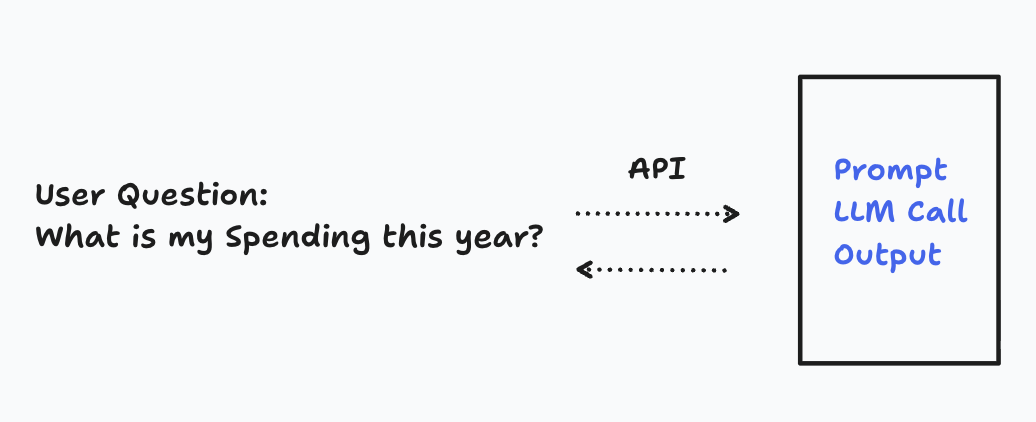
A simple chat application like ChatGPT will allow the user to enter text and then will run the input through an api endpoint which has code that takes the prompt, puts it into an LLM model, and then takes the output and then will stream it back to the user.
Seems simple but there’s a lot of stuff that has to happen that isn’t related to the actual LLM call and is hidden from the end user.
Gather recent message history
Format any data that was passed in
Handle if any images were passed through
Determining the user’s intent
Handling and structuring the output correctly
Learn to build the API layer and you can build actual AI applications, not just build simple LLM calls or functions.
LLMs still suffer from not having context of everything.
They only really have context of their training data.
The real trick with LLMs and agents is getting them to understand what the context of the application or prompt is, what the question or inquiry is, what data it needs to output, does it need to go fetch data, etc.
Managing that context in a database, api layer, etc is another beast that also has to be handled.
Context is crucial for LLMs because without it, they behave unexpectedly and aren’t very good at doing what needs to be done.
How I handle context management is in two different places.
System prompts
Prompt injection
The system prompt is where you give the LLM it’s static instructions on how to behave or what it needs to do each time it is called.
If you had an LLM call that handled taking a users request about dinner recommendations, your system prompt would probably look like this:
You are a dinner recommendation expert.
You're goal is to provide the user with an adequate amount of dinner reservations based on their question.
You should provide as many as they ask, but if not asked, do not provide more than 5 recommendations.
This is a simple example, but you can see that we gave it context of who it is and what it’s goal is.
With prompt injection we might do something like this on a financial spending analyst application:
The user has asked this question: {question}
They uploaded this data: {data}
Use the context of the question and the data to create a spreadsheet with an analysis that analyzes their spending for quarter three.
Another really basic example but we can see we can now start to inject data into our own “background messages” to give the LLM more context.
Context management is an area that a lot of companies still struggle with and the tooling around it isn’t great.
Like I said before, there isn’t really an AI playbook so we have to adapt as new stuff comes out and based on our own discoveries.
AI still is pretty terrible at data retrieval, working with databases, and having full context of proprietary data.
A lot of large companies are still struggling with using AI to effectively:
Understand data
Keep data secure
Extract data from their data systems
Write SQL queries that work based on context
LLMs aren’t the best data engineers so we have to use a lot of tooling and outside work to get them to behave properly.
This is a big focus of mine at work and something that I am actively seeking to build around.
We’ve tried a lot of different data retrieval methods and truthfully building a data retrieval or text to sql agent is harder than it seems.
If you can learn this skill, you’ll be set up to help a lot of companies in getting the most out of their own data.
The downside of LLMs writing code and LLMs outputting all the data is that LLMs are probabilistic in their outcomes, meaning they can vary in their outputs. This is pretty evident if you go ask Claude Code to do something it will come back with a different solution or implementation most times.
This makes it so LLMs can do a lot of things that weren’t possible before but it also makes it so that we need to have evaluation protocols in place to make sure we aren’t getting any undesired outputs.
The way I’ve been doing it is through two different methods
Individual prompt testing
If you have multiple prompts that are strung together in a workflow, you can set up tests on each section to test that the output is close or exactly what you desired. This helps with being able to test and tweak sections of applications and workflows
System testing
This admittedly is harder but with things like chatbots, workflows, agents you want to make sure they are behaving all together and working together correctly.
Being able to run your whole system through and evaluate its outputs on every step is an important piece of building AI apps, especially as we write more code with LLMs and AI agents.
But that’s it for the skills to learn this year.
As AI inevitably changes this year, more tooling will come out that might make some of these easier, but when building AI applications, these core skills will be constants for building great apps.
Until next time
McKay
No posts
Comments
Nothing yet. Say the first thing.
Sign in to join the conversation.