
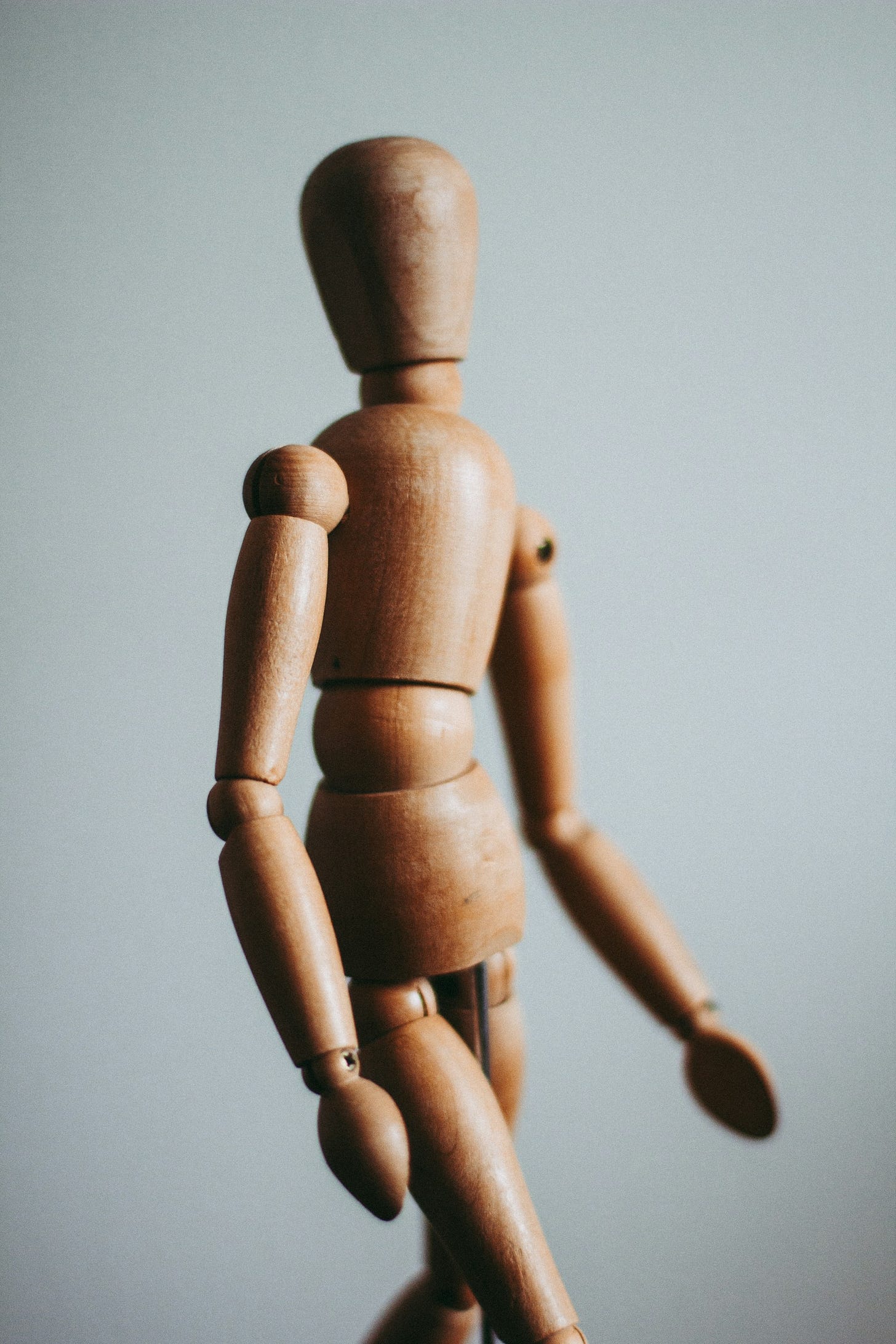
I want to propose (or at least remind us of) a kind of exercise that we can do all day long. We never really break a sweat doing it, and like most light exercise it has numerous health benefits. We might even improve the profiles of our gluteus maximi. What is this magical exercise, and how much will it cost to take classes?
It’s free. It’s determined, doggedly good posture. But before I present the case for posture as a kind of exercise, let me review the amazing basics with a run-on sentence. Good posture supports reduced pain in joints and ligaments, better spinal alignment which reduces wear and tear on discs, improved breathing that allows full lung expansion, enhanced digestion from less mechanical pressure on the whole works, better circulation from reduced compression of nerves and arteries, fewer headaches generated from the cervical spine, improved mood from all of the above and standing taller, and better upstream/downstream joint health particularly in shoulders hips and knees.
Good stuff, right? So let’s move on to the overlooked aspect of posture as exercise. Regular standing burns only seven to nine more calories an hour than sitting consumes. So if we just stood for most of our days that would burn off the extra calories of one lousy banana. But that average 7-9 calories more per hour of standing assumes that all standing and all standers are created equal. We are not. Studies show wide variation, with roughly two-thirds of us qualifying as energy savers who can stand with quite minimal extra calories burned as compared with sitting. But slouching is different than what a body can do when it consciously, actively, purposefully takes on gravity like a free weight. Can we improve calories burned with standing?
Small numbers of calories add up. Have you heard of “NEAT?” It means Non-Exercise Activity Thermogenesis. One journal explains it this way:
NEAT is the energy expended for everything we do that is not sleeping, eating or sports-like exercise. It ranges from the energy expended walking to work, typing, performing yard work, undertaking agricultural tasks and fidgeting. Even trivial physical activities increase metabolic rate substantially and it is the cumulative impact of a multitude of exothermic actions that culminate in an individual's daily NEAT.
I don’t know why actively standing with good posture gets snubbed.
In researching this post I came across this study which found that with overeating the strongest predictor of who gained the most weight was how much people unconsciously moved. Not consciously exercised. As I will explain below, if we can keep moving, fidgeting, and incorporate more standing with active engagement of core, gluteal, and back muscles, the total calories spent and NEAT generated might be surprising. For example, another study found that shifting two hours a day from sitting to light upright activity added 134 calories burned. That would be about the same as a brisk, scheduled, half-hour walk. Do that too if you can.
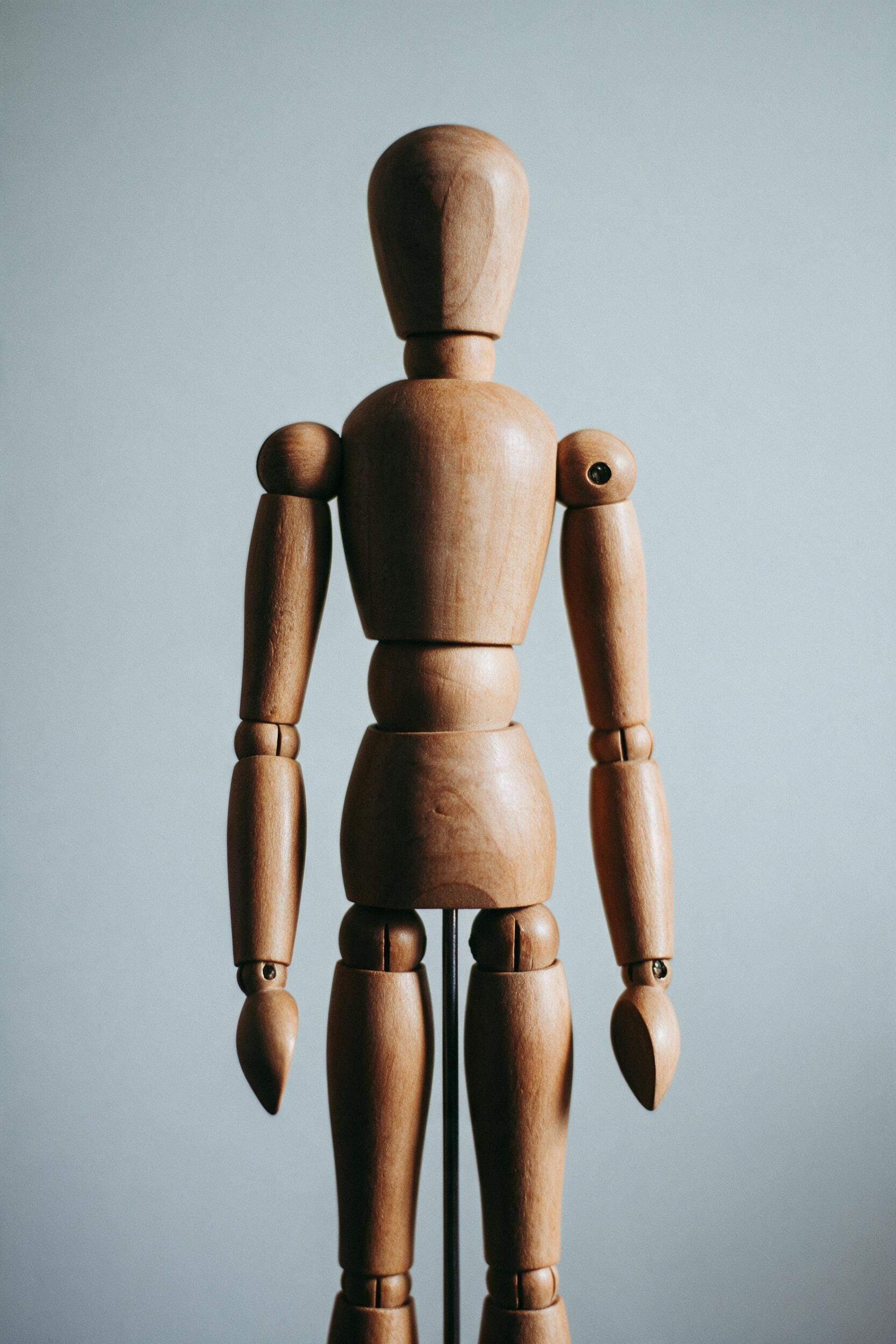
Let’s make an intuitive, common sense differentiation between the kind of standing most of us do by default and the kind we can aspire to practice. The former has the shoulders rolled forward, the belly slack, the buttocks barely firing, the head and neck tilted downwards. The skeleton and joints are doing much of the work against gravity, with only the essential stabilizer muscles recruited. Now picture the latter with a second run-on sentence. Shoulders rolled back and pulled there by scapular heroics, paraspinal muscles like tenderloin ropes on a thoracic crane, the belly tight and held firm by abdominal and core muscles firing, the flexed gluteus muscles tilting the pelvis backwards from its tendency to spill forward, the head and neck also level with the plane of the Earth as it spins below. It’s kind of hard work if we’re not used to it. Try it right now and tell me you don’t feel the hint of a work out!
Speaking of which, this Good Posture Workout™ also produces isometric thermogenesis. Isometric muscle contractions like the ones used for standing involve active energy expenditure, muscle firing, and metabolic heat generation all while the length of the muscle stays the same. Other people don’t even see our workout in progress, but they do subconsciously sense something more confident and powerful going on. One lab measurement found that a moderate sustained contraction of muscle roughly doubles the resting thermogenesis rate. Taken by itself, good posture is not going to produce meaningful weight loss, but when added to the NEAT grand total for the day, it absolutely makes a beneficial contribution. Plus, our bones, ligaments, tendons, hearts and lungs appreciate the protection and gravity assist.
Now let’s consider the gluteal muscles specifically. The gluteus medius, minimus and maximus keep our pelvises level while we are standing on one leg. Watching someone walk in slow motion reveals that we actually spend a good amount of time standing on one leg while the other swings forward. Weakness of the glutes is associated with injurious falls in older adults. Strong butts (and upper thigh muscles) are also associated with longevity, and are pleasing to many folks, not just Sir Mix-a-Lot.
So, can super-standing, with exaggerated tensing of the buttocks, actually build muscle here, too? It seems there is a study for everything. This one found that eight weeks of daily gluteal squeezes alone, using no weights or movement, matched bilateral bridge exercises for hip extension strength and significantly bumped up gluteal size. Passive standing won’t cut it, but active standing just might.
Now it should be stated that prolonged isometric muscle contractions, like with this sort of hyper-engaged standing, will cause temporary increases in blood pressure. But just like regular exercise, after we are done exerting our muscles, blood pressures usually settle in at a lower and better level than before said activity. Short, medium, and longer term BP reductions are typical with exercise that we can safely tolerate. Here are some references that back up this physiological phenomenon. Control uncontrolled high blood pressure and make sure heart disease is stable.
Engaging the whole trunk musculature while standing recruits deep stabilizers even better than fancy “hollowing” movements. I had to look up hollowing, which sounds like a great thing to do but takes some fuss:
Hollowing is a core-strengthening exercise where you lie on your back, press your lower back flat into the floor, and lift your shoulders and straight legs slightly to form a shallow "boat" or "U" shape.
Isometric training has also been shown to reinforce torso stiffness better than dynamic exercises.
I don’t think there are any official guidelines for the Good Posture Workout™, especially since I just coined that and now plan to sell it to Peter Attia or Andrew Huberman. There are plenty of workouts that aim to strengthen the muscles that improve posture, but I couldn’t find any that just dive into posture itself as a kind of slow workout. So let’s agree that intermittent contraction is preferable to prolonged. Like trying out ten to thirty seconds of isometric engagement while we are standing, and trying to get up and stand several times an hour. That’s pretty much in line with the isometric training literature.
Are you going to try more active, intentionally good posture? Anecdotally I use a standing desk for half of my patient encounters. Every once in a while a patient will join me standing. At the end of a standing visit I’m ready to sit, and at the end of a sitting visit I’m ready to stand. My axial skeleton feels better at the end of a day in which I’ve remembered to tighten up and straighten up. Maybe there’s a little muscle gain here and there. Posture won’t replace that 150 minutes of real exercise we are supposed to shoot for each week, but it is certainly a NEAT addition to our daily puttering and positioning.
When I’m discussing posture with a patient, usually in the context of back and neck pain, both of us shoot upward like bean sprouts for a good 5-10 seconds before we wilt back to our baselines. If only good posture were automatic like breathing.
Gravity can be a constant bully, can’t it?
Let’s keep standing up to it while we can.
Comments
Nothing yet. Say the first thing.
Sign in to join the conversation.